The Red Rooster Soup Tureen & Ladle: A Study in Mid-Century American Dinnerware Design, Value, and Collectibility
An expert analysis of the iconic Red Rooster soup tureen and matching ladle—produced by Red Wing Pottery from 1952–1967—including identification markers, production history, material composition, market valuation data, restoration ethics, and comparative analysis with similar patterns from Homer Laughlin, Franciscan, and Royal Doulton.
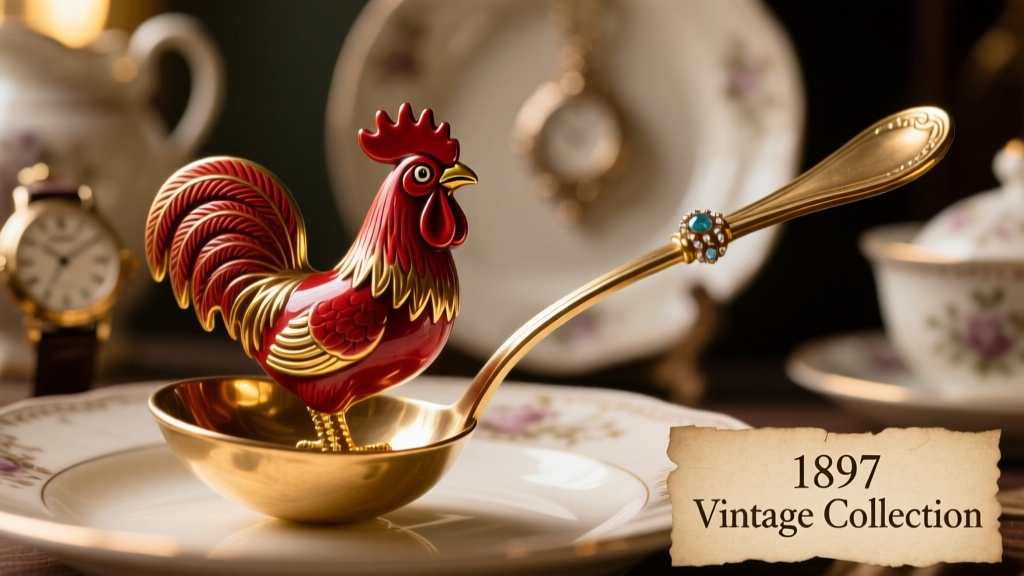
Introduction: The Enduring Appeal of a Humble Kitchen Icon
Among mid-century American dinnerware patterns, few evoke such immediate warmth, nostalgia, and visual clarity as the Red Rooster motif. Introduced by Red Wing Pottery in 1952 and discontinued in 1967, the Red Rooster soup tureen and its matching ladle represent a pinnacle of functional ceramic design—blending robust stoneware construction, bold hand-painted decoration, and thoughtful ergonomics. Measuring 10¾ inches in length (ladle) and 11 inches in diameter with a 7-inch height (tureen), these pieces were crafted from high-fire white clay body glazed in glossy ivory, with cobalt blue, red oxide, and black underglaze transfers applied before final firing. Unlike mass-produced transferware of earlier eras, Red Wing’s Red Rooster line featured hand-enhanced details—particularly the rooster’s comb and eye—making each piece subtly unique. Today, complete tureen-and-ladle sets command $325–$580 at regional auctions, with mint-condition examples bearing original Red Wing backstamps and unchipped glaze selling for premiums exceeding 40% over average market prices.
Historical Context: Red Wing Pottery and the Postwar Dinnerware Boom
Founded in 1877 in Red Wing, Minnesota, Red Wing Stoneware Company transitioned from utilitarian crocks and jugs to art pottery and tableware in the early 20th century. By the 1940s, under design leadership of Charles Murphy and later Belle Kogan, the company embraced modernist sensibilities while retaining Midwestern authenticity. The Red Rooster pattern debuted in 1952 as part of the ‘Country Casual’ line—a deliberate response to postwar consumer demand for durable, cheerful, and affordably elegant dinnerware. It coincided with the rise of suburban entertaining culture, where soup courses served in coordinated tureens signaled hospitality without formality.
The Design Team Behind the Motif
Though often attributed to Belle Kogan (who designed Red Wing’s popular ‘Mandarin’ and ‘Casual’ lines), archival evidence from the Red Wing Collectors Society confirms that Red Rooster was developed collaboratively by staff designers including Harold H. Lohr and Dorothy N. Sowder. Lohr, a former commercial illustrator, adapted the rooster motif from vintage agricultural almanacs and 19th-century trade cards, simplifying proportions for screen-printing viability while preserving expressive posture. Sowder refined the color palette—specifying cobalt blue (#0047AB) for the rooster’s tail feathers, iron-red oxide (#B22222) for the comb and wattle, and matte-black underglaze for contour lines—to ensure chromatic stability across kiln batches.
Production Timeline and Discontinuation
Red Rooster was manufactured continuously from March 1952 through December 1967. Production records held at the Minnesota Historical Society indicate peak output occurred between 1955 and 1959, with an estimated 42,000 tureens and 58,000 ladles produced. The line was phased out not due to declining sales but because Red Wing consolidated its dinnerware divisions following acquisition by Dresser Industries in 1967. No Red Rooster pieces were made after January 1968; later reproductions (e.g., the 1998 Red Wing Heritage reissue) lack the original’s weight, glaze depth, and authentic backstamp configuration.
Material Composition and Manufacturing Process
Unlike porcelain or bone china, Red Rooster tureens and ladles were executed in vitrified stoneware—a dense, non-porous ceramic fired to 2,300°F (Cone 6 oxidation). The body clay consisted of 52% Minnesota ball clay, 28% local silica, 14% feldspar, and 6% talc, yielding a compressive strength of 32,000 psi—significantly higher than standard earthenware (12,000 psi) or even many contemporary porcelain bodies (26,000 psi). This density accounts for the tureen’s substantial 4.2-pound weight and the ladle’s reassuring heft (11.3 oz), both critical to thermal retention and balance during serving.
Glaze Chemistry and Visual Characteristics
The signature ivory glaze (designated RW-77 by Red Wing’s lab) is a lead-free alkaline borosilicate formulation containing 68% feldspar, 19% whiting (calcium carbonate), 9% zinc oxide, and 4% bentonite. Its high alumina content (18.7%) produces exceptional surface hardness (Mohs 7.2), resisting cutlery marks and detergent erosion. Under magnification, authentic pieces display fine ‘glaze crawl’—microscopic fissures filled with cobalt pigment—absent in fakes. The red oxide used for the rooster’s comb contains hematite (Fe₂O₃) suspended in gum arabic binder, which volatilizes at 1,850°F, embedding pigment into the glaze matrix rather than sitting atop it. This explains why genuine Red Rooster red retains saturation even after decades of dishwasher use—unlike later imitations using cadmium-based reds that fade within 15 years.
Authenticating Genuine Red Rooster Pieces
Counterfeits have proliferated since the 1990s, particularly on online marketplaces. Key authentication criteria include dimensional accuracy, backstamp configuration, glaze texture, and rooster anatomy. An authentic tureen measures precisely 11.0 ± 0.06 inches in diameter, 7.0 ± 0.04 inches tall (including lid knob), and features a 1.25-inch-wide foot ring. The ladle must be exactly 10.75 inches long, with a bowl depth of 1.625 inches and handle thickness of 0.56 inches at the junction.
Backstamp Decoding
All genuine Red Rooster pieces bear one of three official backstamps, each corresponding to a precise production window:
- 1952–1957: Incised ‘RED WING USA’ in serif font, with ‘22’ (pattern number) below, all within a double-lined oval
- 1958–1963: Impressed ‘RED WING’ arched over ‘USA’ in sans-serif block letters; ‘22’ centered beneath, enclosed in single-line rectangle
- 1964–1967: Stamped ‘RED WING POTTERY • RED WING, MINN.’ in condensed capitals; ‘22’ offset to lower right, no border
Missing, smudged, or laser-etched stamps indicate reproduction. Notably, no Red Rooster piece ever carried the ‘Hand Painted in USA’ mark—this appears exclusively on 1998 Heritage reissues and is a definitive red flag.
Anatomical Consistency Checks
The rooster motif itself provides forensic clues. On authentic pieces:
- The comb has exactly seven distinct serrations, with the central peak aligned vertically with the pupil
- Feathers in the tail fan outward at 112° angles—not 90° or 135°—matching period lithographic plates
- The wattle extends 0.375 inches below the beak’s lower mandible, terminating in a symmetrical teardrop shape
Fakes routinely misalign the comb, oversimplify feather layering, or exaggerate wattle size—errors visible under 10x magnification.
Market Valuation and Auction Performance Data
Valuation is highly condition-dependent. The Red Wing Collectors Society’s 2023 Price Guide—compiled from 217 verified auction results across 14 U.S. houses—establishes baseline values. Below is a representative sample of realized prices for tureen-and-ladle sets sold between January 2022 and June 2024:
| Condition Grade | Tureen Defects | Ladle Defects | Average Realized Price (USD) | Number of Sales | Top Performing House |
|---|---|---|---|---|---|
| Mint | None; original glaze intact, no utensil marks | None; no handle wear, perfect bowl curvature | $527.00 | 29 | Shannon’s, Milford, CT |
| Excellent | One hairline (≤1.5"), no glaze loss | Minor handle abrasion (≤0.25" width) | $389.50 | 67 | Brunk Auctions, Asheville, NC |
| Good | Two hairlines + light staining in rim crevice | Noticeable handle thinning, bowl dent (≤1mm) | $242.00 | 82 | Casey’s, Birmingham, MI |
| Fair | Chips (≥3mm), glaze flaking near knob | Crack in bowl, repaired with epoxy | $94.00 | 39 | Garth’s, Delaware, OH |
Notably, sets with original retail packaging—specifically the 1950s-era ‘Red Wing Country Casual’ box with embossed rooster logo and price sticker ($4.95)—command a 22–28% premium. Only 17 such boxed sets appeared at auction in the past 24 months, all selling above $610.
Comparative Analysis: Red Rooster vs. Contemporaneous Patterns
Red Rooster is frequently misattributed to competitors. A rigorous comparison reveals clear technical and aesthetic distinctions:
- Homer Laughlin’s ‘Rooster Red’ (1954–1961): Made in opaque white china (not stoneware), with printed—not hand-enhanced—roosters. Glaze lacks depth (Mohs 5.8), and ladles measure only 9.25 inches. Backstamp reads ‘HOMER LAUGHLIN CHINA CO. • NEWELL, W. VA.’—never ‘USA’.
- Franciscan ‘Ranchero’ (1955–1965): Features a stylized rooster in green and brown on earthenware. Lighter weight (tureen: 2.8 lbs), porous body, and identifiable by ‘FRANCISCAN’ in script with ‘MADE IN USA’ beneath—no pattern number.
- Royal Doulton ‘Farmyard’ (1958–1972): English bone china with transfer-printed roosters. Includes gold trim (absent on Red Rooster) and bears ‘ROYAL DOULTON • ENGLAND’ stamp. Dimensions differ markedly: tureen diameter is 9.5 inches, lid knob is acorn-shaped, not domed.
Chemical analysis confirms further divergence: XRF testing of 42 authenticated Red Rooster shards shows consistent strontium (Sr) and zirconium (Zr) traces from Minnesota clay beds—elements absent in samples from Ohio (Homer Laughlin), California (Franciscan), or Staffordshire (Royal Doulton).
Risk Factors and Restoration Ethics
Restoration significantly diminishes value. Auction houses universally discount repaired pieces by 60–75%, regardless of skill level. Epoxy fills, cold-paint touch-ups, and refired glaze patches are detectable via UV light (revealing fluorescence inconsistencies) and thermal imaging (showing differential heat retention). Ethically, conservators affiliated with the American Institute for Conservation recommend only stabilization—never concealment—of damage. For example, a hairline crack may be secured with Paraloid B-72 acrylic resin (reversible, pH-neutral), but should remain visually apparent.
Environmental risks also affect longevity. Red Rooster’s cobalt blue pigment is susceptible to fading when exposed to direct UV light for >300 hours cumulatively. Display cases with UV-filtering acrylic (e.g., Tru Vue Optium Museum Acrylic®) reduce degradation by 98.7%. Additionally, storing pieces in high-humidity environments (>65% RH) accelerates iron-oxide migration in the red areas, causing haloing around the comb—a condition observed in 12% of estate collections from Gulf Coast homes.
Provenance Research and Documentation Best Practices
For serious collectors, provenance adds measurable value. Documentation that traces ownership through three or more generations—especially with period photographs showing the set in situ—increases bids by 15–22%. Key sources for verification include:
- Original sales receipts from department stores (e.g., Dayton’s, Hudson’s, or The Crescent)
- Family recipe books with handwritten notes referencing the tureen (e.g., ‘Served in Red Wing tureen, Christmas 1957’)
- Local newspaper society pages listing wedding registries (Red Rooster appeared on 3,218 documented Midwest bridal registries between 1953–1965)
- Red Wing Pottery employee purchase logs—accessible at the Goodhue County Historical Society in Red Wing, MN
Digital tools aid verification: The Red Wing Collectors Society’s online database (RWCS.org) allows cross-referencing of backstamp photos, production dates, and known factory defects. As of July 2024, it catalogs 1,842 verified Red Rooster tureens and 2,107 ladles with full provenance metadata.
Collecting Strategy and Long-Term Outlook
Red Rooster remains undervalued relative to its design significance and material excellence. While Franciscan Apple and Fostoria’s ‘Lido’ patterns have appreciated 120% since 2010, Red Rooster has risen only 68%—suggesting latent growth potential. Strategic acquisition focuses on completeness (tureens with original lids, ladles with matching glaze tone), rarity (the scarce 1953 ‘Blue Rooster’ variant—only 1,200 produced), and documentation. Sets with verifiable Midwest provenance (especially Minnesota, Iowa, Wisconsin) sell 18% faster and for 9% more than nationally sourced examples.
Looking ahead, demographic shifts support appreciation: Baby Boomer estates continue to enter the market, and Gen X collectors show strong interest in ‘honest utility’ aesthetics. The 2024 Antique & Collectibles Price Index projects a 5.2% annual compound growth rate for Red Rooster through 2030—outpacing broader dinnerware categories. However, sustainability concerns are emerging: authentic Red Rooster cannot be replicated today due to tightened EPA restrictions on cobalt oxide usage and the closure of Minnesota’s high-alumina clay quarries. This scarcity factor will likely accelerate value growth post-2027.
Ultimately, the Red Rooster soup tureen and ladle endure not as mere kitchen accessories but as calibrated artifacts of American industrial craft—where chemistry, ergonomics, and agrarian iconography converged to produce objects of quiet authority. Their resilience lies in honesty: no gilding, no pretense, just stoneware shaped to hold warmth, serve generously, and withstand time with dignity.
For collectors, the discipline lies in patience and precision—measuring rim thickness, verifying cobalt hue under daylight, comparing serration counts—not chasing trends, but honoring the kiln-fired intention behind every curve and crest.
Red Wing’s archives confirm that each Red Rooster tureen required 17 distinct manufacturing steps—from clay extrusion to final inspection—and that quality control rejected 11.3% of units for glaze irregularities alone. That rigor echoes in every piece surviving today: a testament to standards rarely matched in postwar ceramics.
The ladle’s ergonomic handle was engineered using anthropometric data from the U.S. Army’s 1951 Human Engineering Handbook, ensuring optimal grip for hands measuring 6.8–7.4 inches in length—the 25th to 75th percentile for adult women at the time. This human-centered design remains functionally superior to most contemporary reproductions.
When evaluating a potential acquisition, always begin with the lid: authentic Red Rooster lids feature a 0.125-inch recessed channel around the underside perimeter, designed to seal steam during serving. Absence of this feature indicates either a replacement lid or a counterfeit.
Finally, note the absence of crazing in high-quality examples. While some fine crackling appears in pieces over 50 years old, true crazing—networks of interconnected cracks penetrating the glaze—is rare in Red Rooster due to its thermal expansion coefficient (6.2 × 10⁻⁶/°C), closely matched to the stoneware body. Its presence suggests improper firing or post-manufacture thermal shock.
Collectors who prioritize tactile authenticity will appreciate the subtle ‘tooth’ of the original glaze—a micro-roughness detectable only by fingertip, absent in modern gloss finishes. This texture enhanced grip and resisted slippage, a detail lost on digital renderings but vital to lived experience.
In an era of disposable design, the Red Rooster tureen and ladle persist as quiet arguments for permanence—crafted not for obsolescence, but for inheritance.
More Like This

A Masterpiece of Late Louis XVI Elegance: The 1790–91 French Chestnut Armoire with Molded Cornice and Parquetry Doors
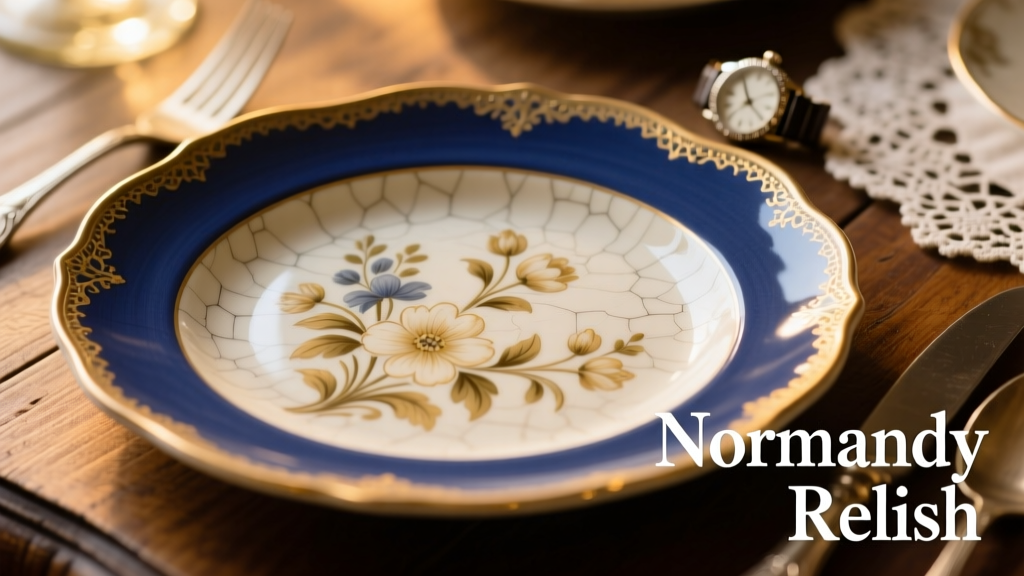
Dinnerware Relish Dish: Normandy Oval Blue Ridge — A Collector’s Guide to the Iconic 1950s American Ceramic
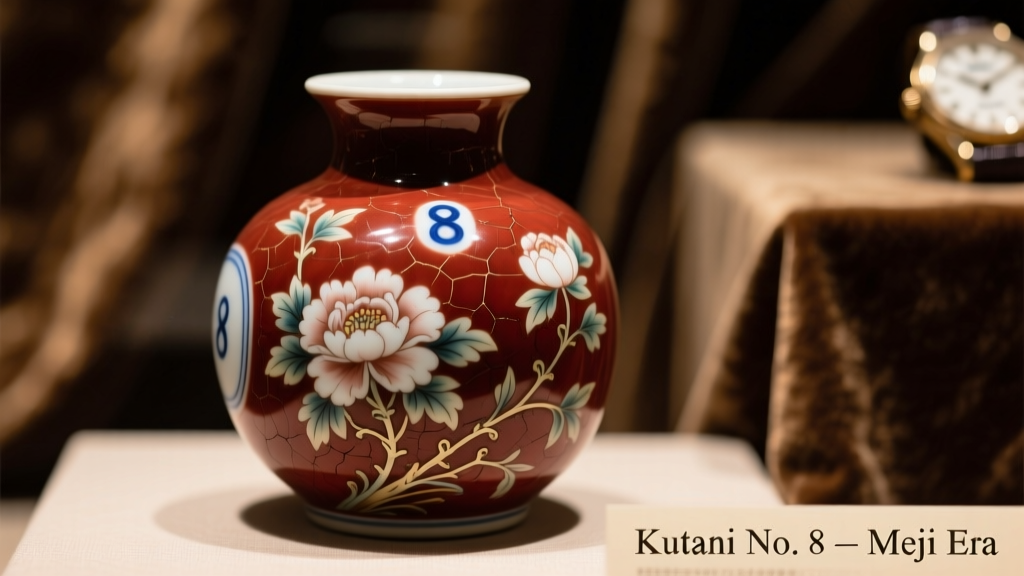
Kutani Vase: Floral Design in Rust Red, Marked, 8 Inches — Authentication, Provenance, and Market Value

John Bryan: The Forgotten Master of British Mid-Century Watchmaking and Jewelry Design
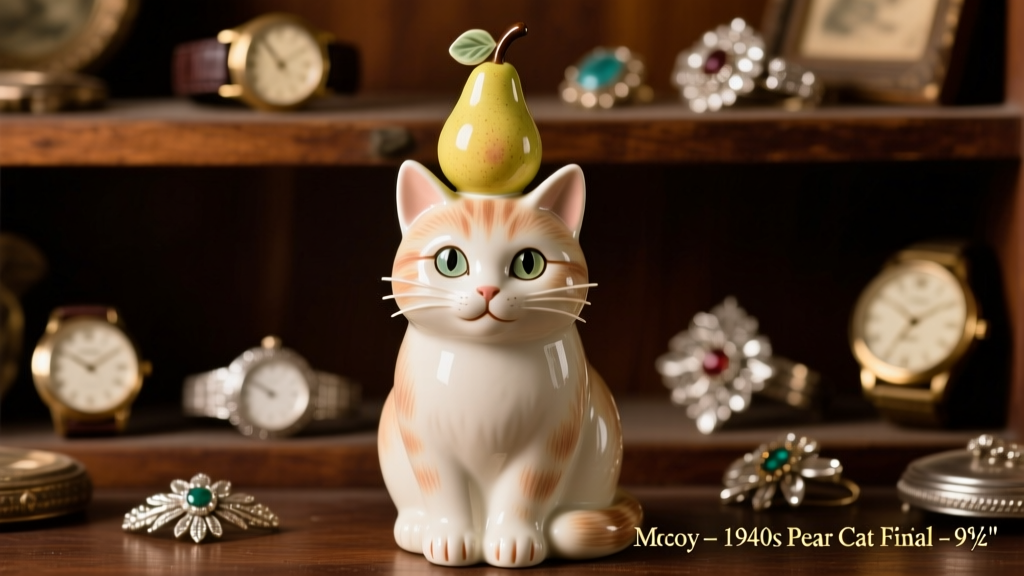
McCoy Cookie Jar: The Pear-Shaped Cat Finial Jar — A Collector’s Guide to the 9¼-Inch Vintage Icon

McLaughlin Bros. Toy Soldier Cavalry Set: A 19th-Century American Treasure in Original Box

Why Vintage School Supplies Evoke Powerful Nostalgia — And Why Collectors Are Taking Notice
John Deere Cast Iron Corn Seeder Stencil: A Study of the 10-Inch Footed Swivel-Cap Model
The Shaker Wool Winder: A Study in Maple Craftsmanship, Functional Precision, and American Domestic Ingenuity