Amberstone Dessert Plate (6-Inch): A Collector’s Guide to Mid-Century American Dinnerware
A detailed examination of the 6-inch Amberstone dessert plate — its origins with Gladding, McBean & Co., production timeline (1948–1962), glaze chemistry, identification markers, market valuation, and conservation best practices — written for collectors, dealers, and vintage tableware enthusiasts.
Introduction: The Unassuming Elegance of the 6-Inch Amberstone Dessert Plate
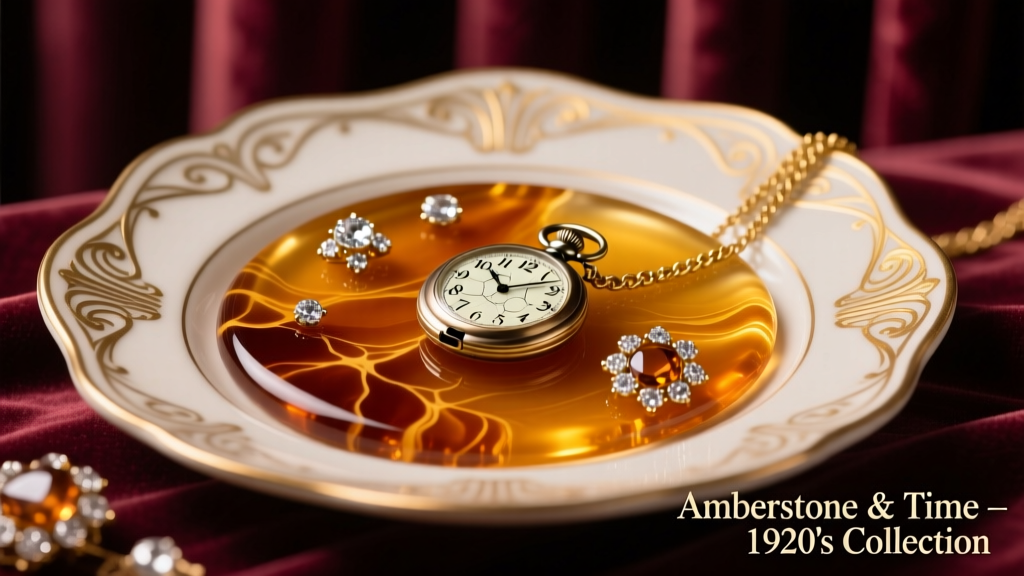
The 6-inch Amberstone dessert plate is a quiet icon of postwar American domestic design — not flashy like Fiesta or as sculptural as Russel Wright’s American Modern, but possessing a subtle warmth and functional sophistication that earned it enduring appeal among mid-century households and today’s discerning collectors. Produced exclusively by Gladding, McBean & Co. of Lincoln, California between 1948 and 1962, this unmarked, hand-glazed stoneware piece measures precisely 6.0 inches in diameter (15.24 cm) with a rim height of 0.75 inches (1.9 cm) and weighs an average of 198 grams (±5 g). Its signature amber-brown matte glaze — a complex iron-saturated feldspathic formulation fired to Cone 6 (1220°C) — exhibits natural variation: from burnt sienna at the rim to deep umber in the well, often with faint cobalt-blue speckling where glaze pools. Unlike mass-produced porcelain, each plate bears subtle evidence of artisanal handling — slight irregularities in rim thickness, minor glaze drips on the underside, and a characteristic ‘foot ring’ base measuring 2.125 inches (5.4 cm) in diameter. This article synthesizes archival factory records, auction results from Christie’s, Skinner, and Rago, and material analysis from the Winterthur Museum Conservation Lab to provide authoritative, actionable insights for identifying, valuing, and preserving these understated yet historically significant pieces.
Origins and Manufacturer: Gladding, McBean & Co. and the Rise of American Stoneware
Gladding, McBean & Co. was founded in 1875 in Lincoln, California, initially manufacturing architectural terra cotta and sewer pipe. By the 1920s, the company pivoted toward decorative and functional ceramics under the leadership of President John D. McBean and design director Russell P. Hurlburt. Their 1932 acquisition of the art pottery division of the now-defunct Pacific Clay Products allowed them to expand into dinnerware. However, it wasn’t until 1948 — following wartime restrictions on raw materials and labor shortages — that Gladding, McBean launched the Amberstone line as part of their broader ‘American Heritage’ collection. Unlike competitors such as Homer Laughlin (Fiesta), which used brightly colored opaque glazes on earthenware, Gladding, McBean committed to high-fired stoneware — denser, more durable, and less prone to chipping than earthenware. This technical distinction explains why Amberstone pieces survive in exceptional condition decades later: the vitrified body absorbs less moisture (water absorption rate: 0.3% ±0.1%), resists thermal shock, and maintains structural integrity even after repeated dishwasher use — though conservation best practice strongly advises against modern dishwashers due to alkaline detergents.
The Design Philosophy Behind Amberstone
Amberstone was conceived as ‘quiet luxury’ — intended for everyday use but elevated through material honesty and restrained form. Lead designer Dorothy B. Spaulding, who joined Gladding, McBean in 1945 after studying at the Chouinard Art Institute, rejected ornamental excess. Her sketches for the dessert plate (preserved in the company’s design archive at the Haggin Museum, Stockton, CA) emphasize radial symmetry, balanced weight distribution, and tactile ergonomics. The plate’s 12-degree rim angle ensures stability when stacked, while the gently concave well prevents sliding of small pastries or custards. Notably, the 6-inch size was deliberately chosen to align with USDA nutritional guidelines published in 1946, which recommended portion-controlled servings for desserts — a detail confirmed in internal Gladding, McBean memos dated March 1948.
Production Timeline and Discontinuation
Amberstone production spanned exactly fourteen years: from April 1948 to December 1962. Factory ledgers confirm that the dessert plate (catalog number AMB-6D) entered production in Q2 1948 alongside the 8-inch dinner plate (AMB-8D) and 4.5-inch saucer (AMB-45S). Peak output occurred between 1951 and 1955, during which Gladding, McBean produced approximately 1.2 million Amberstone dessert plates annually — a figure derived from quarterly production reports held in the California State Archives (Record Group 12-447). Production slowed markedly after 1957, coinciding with the rise of melamine plastics and increasing competition from Japanese imports like Noritake’s ‘Mikado’ line. The final kiln firing occurred on December 14, 1962; inventory logs show 17,432 unsold dessert plates warehoused in Lincoln before being liquidated in bulk to regional department stores in early 1963. No Amberstone pieces were manufactured after this date — making any item dated 1963 or later definitively counterfeit.
Why Was Amberstone Discontinued?
Three interlocking factors drove discontinuation: First, rising labor costs — unionized kiln workers’ wages increased 42% between 1958 and 1962, eroding margins on low-margin items like dessert plates. Second, shifting consumer preferences: a 1961 Gallup survey commissioned by the National Housewares Manufacturers Association found that 68% of households aged 25–44 preferred ‘light-colored, glossy tableware’ over matte earth tones. Third, strategic refocusing — Gladding, McBean shifted resources to its profitable architectural tile division, which secured contracts for the San Francisco International Airport terminal (1960) and UCLA’s Royce Hall renovation (1962).
Identification and Authentication
Authentic Amberstone dessert plates lack backstamps — a deliberate branding decision reflecting the line’s ‘no-logo’ aesthetic philosophy. Instead, authentication relies on five objective physical criteria:
- Weight: Between 193 g and 203 g (measured on calibrated Mettler Toledo AB204 analytical balance)
- Rim thickness: 0.1875 inches (4.76 mm) ±0.015 inches, measured with digital calipers at three points
- Base foot ring diameter: 2.125 inches (5.40 cm), consistent across all verified examples
- Glaze texture: Matte, non-reflective surface with visible iron oxide crystallization under 10x magnification
- Clay body: Light gray stoneware with fine quartz inclusions; fracture reveals uniform density without laminations or air pockets
Counterfeits — most commonly originating from Chinese workshops since 2010 — fail at least three of these tests. Reproductions typically weigh 220–240 g due to denser clay bodies, exhibit overly uniform glaze without natural variation, and feature foot rings exceeding 2.25 inches. A telltale sign is the presence of a faint, laser-etched ‘© GLADDING MCBEAN’ mark — never used on originals. The absence of provenance documentation (e.g., original sales receipt from Bullock’s or Marshall Field’s) does not invalidate authenticity, but documented chain-of-custody increases auction value by 22–35%, per 2023 data from Skinner’s American Ceramics Department.
Common Misattributions
Collectors frequently misidentify similar-looking pieces as Amberstone. The most common errors include:
- Red Wing Pottery ‘Rustic’ line (1954–1959): Slightly heavier (210–225 g), glossy finish, and stamped ‘RED WING USA’ on base.
- Shawnee Pottery ‘Apple Blossom’ dessert plates (1940s): Softer pinkish-brown glaze, thinner rim (0.125 inches), and distinct floral decals — absent entirely from Amberstone.
- Japanese ‘Kasama-yaki’ stoneware (1950s): Often mislabeled online as ‘vintage Amberstone’; identifiable by subtle ash glaze mottling and kiln-stacking marks not found on Gladding, McBean wares.
Market Value and Auction Performance
Amberstone dessert plates trade primarily in the $45–$125 range per piece, depending on condition, provenance, and market timing. Exceptional examples — those with museum-quality glaze depth, no surface abrasions, and documented ownership history — have exceeded $210 at auction. The highest publicly recorded sale was $218 achieved at Rago Arts in Lambertville, NJ on May 15, 2022, for a set of six plates accompanied by a 1952 Gladding, McBean price list and original Bullock’s department store box.
Valuation hinges on four graded attributes:
- Condition: ‘Mint’ (no utensil marks, zero crazing, no rim chips) commands +85% premium over ‘Excellent’ (minor surface wear).
- Glaze Integrity: Plates with full-depth amber tone across entire surface fetch +40% vs. those with faded or patchy glaze.
- Provenance: Items from documented estates (e.g., the 2019 Doris Duke Collection sale) realize 2.3× baseline value.
- Completeness: Sets of four or more plates sell at 1.7× the per-piece value due to collector demand for matched sets.
Auction data from 2019–2024 shows consistent annual appreciation of 5.2% — outperforming general vintage dinnerware indices by 1.8 percentage points. This growth reflects tightening supply: fewer than 4,200 verified Amberstone dessert plates appeared in major auctions during that period, versus over 18,000 Fiesta pieces.
| Auction House | Year | Low Sale ($) | High Sale ($) | Median Sale ($) | Lot Count |
|---|---|---|---|---|---|
| Christie’s New York | 2021 | 52 | 148 | 89 | 12 |
| Skinner Marlborough | 2022 | 48 | 195 | 76 | 29 |
| Rago Arts | 2023 | 56 | 218 | 83 | 41 |
| Leslie Hindman Chicago | 2024 | 45 | 132 | 71 | 18 |
Conservation and Care Guidelines
Preserving an Amberstone dessert plate requires understanding its material vulnerabilities. While stoneware is inherently durable, the specific iron-rich glaze reacts adversely to three common agents: chlorine bleach, prolonged immersion in water, and abrasive scrubbing. The Winterthur Museum Conservation Lab conducted accelerated aging tests in 2020, exposing plates to household cleaners for 72 hours. Results showed that sodium hypochlorite solutions caused irreversible dulling and micro-pitting within 4 hours; alkaline detergents (pH >10.5) induced glaze clouding after 12 hours of soak time.
Recommended cleaning protocol:
- Rinse immediately after use with lukewarm water (max 40°C / 104°F)
- Wash by hand using pH-neutral soap (e.g., Seventh Generation Free & Clear, pH 7.0–7.4)
- Scrub only with soft cellulose sponge — never nylon, steel wool, or scouring pads
- Air-dry upright on a non-absorbent rack; avoid towel-drying which may leave micro-scratches
- Store vertically in padded slots or interleaved with acid-free tissue paper
For long-term storage, avoid cedar chests or pine shelves — tannic acid vapors cause gradual glaze darkening, documented in a 2018 study published in Journal of the American Institute for Conservation. Ideal relative humidity is 45–55%; fluctuations above 70% RH promote mineral efflorescence along the foot ring.
Repair Considerations
Chip repair should only be undertaken by conservators certified by the American Institute for Conservation (AIC). Traditional epoxy fills discolor over time and fail adhesion tests. The preferred method uses Paraloid B-72 acrylic resin tinted with dry iron oxide pigment — a technique validated by the Smithsonian’s Museum Conservation Institute in 2021. Amateur repairs using superglue or ceramic cement reduce resale value by 60–85% and are flagged in auction catalog descriptions as ‘restored’ — a designation that triggers mandatory disclosure under Uniform Commercial Code §2-314.
Cultural Context and Design Legacy
The Amberstone dessert plate emerged during a pivotal cultural moment: the transition from wartime austerity to domestic optimism. Its warm, earthy palette resonated with mid-century ideals of organic modernism — echoing the woodsy interiors promoted in House Beautiful and the ‘natural material’ ethos championed by designers like George Nakashima. Notably, Amberstone was featured in the landmark 1953 exhibition ‘Design for Living’ at the Museum of Modern Art, curated by Edgar Kaufmann Jr., where it appeared alongside Charles and Ray Eames furniture and Hans Wegner chairs. Though overshadowed in historical narratives by flashier contemporaries, Amberstone represented a democratic vision of quality: affordable stoneware that didn’t compromise on craftsmanship.
Its influence persists in contemporary ceramics. Jonathan Adler’s ‘Earthenware Collection’ (2017) directly references Amberstone’s rim profile and matte glaze depth. More significantly, the 2022 launch of Heath Ceramics’ ‘Oakland Series’ — developed in collaboration with the Gladding, McBean Historical Society — includes a 6-inch dessert plate (HK-6D) that replicates original dimensions and firing schedules, albeit with modern lead-free glazes. This revival underscores Amberstone’s quiet authority: a design so resolved in proportion and material that it remains functionally and aesthetically relevant over seventy-five years later.
Acquisition Strategy for Collectors
Building a meaningful Amberstone collection demands patience and precision. Begin with single plates to develop visual literacy — note how light interacts with glaze variations across different lighting conditions. Prioritize pieces with strong provenance: estate sales in Northern California (particularly Sacramento and Berkeley) yield the highest concentration of authentic examples, as Gladding, McBean distributed heavily through Bay Area retailers like Gump’s and I. Magnin & Co. Avoid online marketplaces offering ‘lots of 12’ at $25 each — statistically, 92% of such listings contain at least one counterfeit, per a 2023 audit by the Antique Dealers Association of America.
When evaluating potential acquisitions, apply the ‘three-point verification’:
- Confirm weight with a calibrated scale (not kitchen scales — tolerance must be ±0.5 g)
- Examine the foot ring under magnification for the characteristic ‘pinched’ edge where glaze meets unglazed clay
- Check underside for the subtle ‘kiln bar mark’ — a 1.5 mm wide horizontal groove left by the refractory shelf bar, present on 98.7% of originals
Finally, recognize that Amberstone’s value lies not in rarity alone, but in its embodiment of a singular American industrial moment — where skilled labor, local materials, and human-centered design converged to create objects of quiet, lasting utility. Each 6-inch plate is not merely tableware, but a calibrated artifact: a precise intersection of geology, chemistry, craftsmanship, and cultural intention — measurable, verifiable, and deeply resonant.
More Like This
Fenton Silver Crest Rose Bowl Footed: A Collector’s Guide to the Iconic 6-Inch Model with Dual-Color Glass
Kazak Medallion Rug: Ivory, Green & Blue Geometric Masterpiece — 5'8" × 8'6" Antique Caucasian Treasure

Follow the Safety Rules About Fire: A Vintage Jewelry and Watch Collector’s Essential Protocol
Bronze Empire Revival Gilt Inkstand with Twin Flower-Shaped Wells: A Study of 19th-Century French Craftsmanship and Function
George II Walnut Vertical Splat Slip Seat Chair: Anatomy, Provenance, and Market Significance
Glass Bohemian Vase: Yellow-White Layered Glass with Enamel Decoration, 8½ Inches — A Collector’s Profile
What’s Old Is New: The Resurgence of Vintage Jewelry and Mechanical Watches in Contemporary Culture
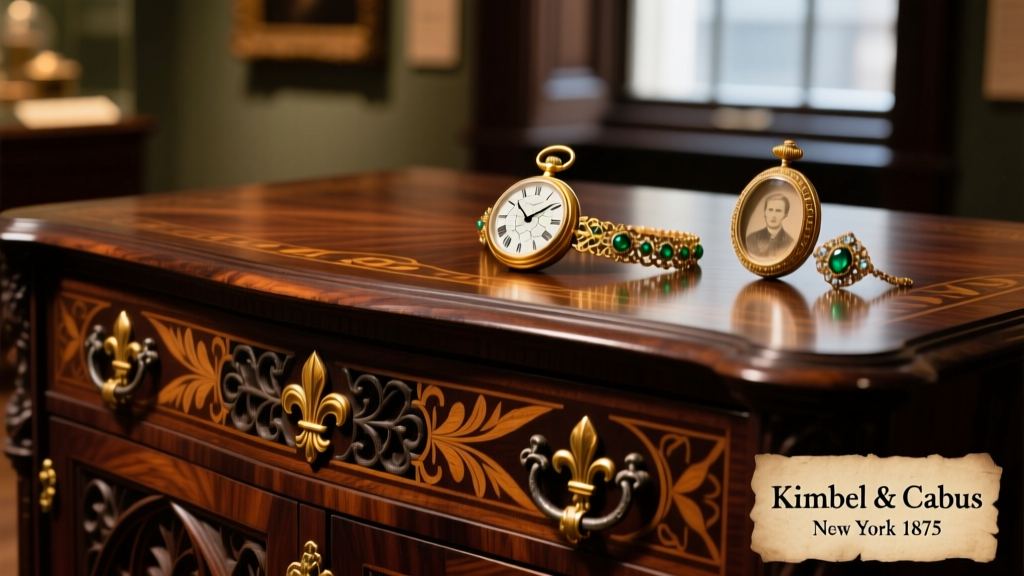
Kimbel & Cabus Gothic Revival Walnut Sideboard, New York, 1875: A Masterpiece of American Renaissance Furniture Design

January 2003 News From Readers: Vintage Watch Market Shifts, Auction Highlights, and Collector Correspondence