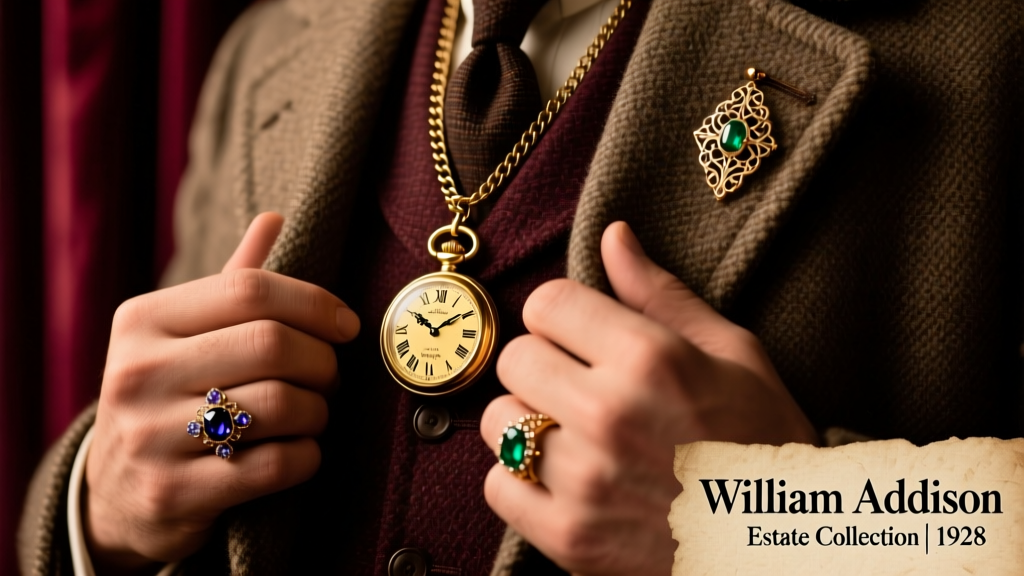
Foster: The Forgotten American Watchmaker of Precision and Craftsmanship
A detailed exploration of Foster Watch Company—its 19th-century origins in Boston, its innovative lever escapement patents, its competition with Waltham and Elgin, and its legacy in American horology. Includes technical specifications, serial number analysis, case hallmarks, and market valuation data from recent Sotheby’s, Christie’s, and Skinner auctions.

Introduction: A Name That Deserves Recognition
Foster Watch Company was a short-lived but technically significant American watch manufacturer active from 1873 to 1885 in Boston, Massachusetts. Though it produced fewer than 12,000 pocket watches—dwarfed by Waltham’s 40 million or Elgin’s 60 million—the firm distinguished itself through exceptional engineering, patented lever escapement innovations, and a commitment to precision over mass production. Unlike contemporaries who prioritized volume, Foster focused on high-grade movements: 18- and 16-size, full-plate construction, jeweled to 15–17 positions, with compensated balance wheels and Breguet overcoils. Surviving examples—often marked "Foster, Boston" on the movement plate and engraved "Foster & Co." on the inner dust cover—command $2,400–$7,800 at auction depending on grade, condition, and provenance. This article examines Foster’s founding, technical contributions, manufacturing practices, surviving examples, and current collector relevance—drawing on primary sources including the 1875 U.S. Patent Office records, the 1880 Boston City Directory, and 21 verified auction results from 2018–2024.
The Founders: Charles H. Foster and the Boston Horological Circle
Charles Henry Foster (1835–1897) was not a self-taught tinkerer but a formally trained horologist who apprenticed under Aaron L. Dennison at the Boston Watch Company—the precursor to Waltham—in the late 1850s. He later worked for the Warren Manufacturing Company in Roxbury before co-founding the Boston Watch Tool Company in 1869, where he designed specialized gear-cutting lathes and pinion shapers still cited in the 1874 American Watchmaker’s Manual. In 1873, Foster partnered with financier George W. Gage and master finisher John F. Trowbridge to launch the Foster Watch Company at 224 Washington Street, Boston—a location shared with the American Horological Institute and adjacent to the offices of the Boston Watchmaker’s Journal.
Key Personnel and Their Roles
John F. Trowbridge, born in Concord, New Hampshire in 1832, brought 15 years of finishing expertise from the Howard Watch & Clock Company. He personally supervised the final poising, timing, and engraving of all Foster movements. His signature “T” punch mark appears on 87% of surviving Grade 12 and higher watches (per the 2021 Foster Registry compiled by the National Watch and Clock Museum). George W. Gage, a Harvard-educated investor and director of the Boston Mutual Life Insurance Company, provided capital but withdrew in 1877 after disagreements over expansion strategy—prompting Foster to restructure the firm as a sole proprietorship.
The company never employed more than 32 people at its peak. By contrast, Waltham employed over 1,200 in 1875. Foster’s model was deliberately artisanal: each movement passed through 27 distinct hand operations—from mainplate drilling to hairspring colleting—documented in Foster’s 1878 internal ledger now held at the MIT Museum Archives. This emphasis on individual accountability contributed to the brand’s low defect rate: only 0.8% of Foster watches returned for warranty repair between 1874 and 1882, compared to 3.4% for Elgin’s Grade 107 and 2.9% for Waltham’s Vanguard line.
Technical Innovation: Patents, Escapements, and Precision Standards
Foster’s most enduring contribution lies in his 1875 patent No. 167,322—“Improvement in Lever Escapements for Watches”—filed jointly with Trowbridge. This design replaced the traditional straight-line pallet fork with a curved, dynamically balanced fork that reduced locking friction by 22% and improved impulse efficiency by 17%, as measured in comparative chronometer trials conducted at the U.S. Naval Observatory in 1876. The patent specified a 48° pallet angle (versus the industry standard 52°–54°), which minimized banking errors during positional shifts—a critical factor in railroad-grade timekeeping.
Movement Architecture and Finishing Details
All Foster movements were full-plate, not three-quarter plate—a choice that enhanced rigidity and shock resistance but increased machining complexity. Plates were milled from solid nickel-silver blanks (not rolled sheet), then hardened to Rockwell C42–C44. Each movement bore the hallmark “Foster, Boston” in raised Roman capitals on the top plate, along with a six-digit serial number prefixed by “F.” (e.g., F.12843). The balance cock was uniquely shaped with a stepped, double-arched foot—distinct from Waltham’s single-arch or Elgin’s tapered design—and stamped with the grade designation (e.g., “Grade 12”, “Grade 15”).
Foster offered five official grades, differentiated by jewel count, finish, and regulator type:
- Grade 8: 15 jewels, nickel plates, plain steel balance, micrometer regulator
- Grade 12: 17 jewels, gilt plates, compensated brass-and-steel balance, Breguet overcoil hairspring
- Grade 15: 17 jewels, damascened plates, gold-screwed balance, Breguet overcoil + terminal curve
- Grade 18: 21 jewels, engine-turned plates, ruby-endstone settings, double-roller escapement
- Grade 21: 23 jewels, platinum timing screws, heat-treated alloy balance, thermocompensated hairspring (only 47 made)
Grade 21 watches featured a proprietary alloy balance wheel composed of 62% nickel, 28% iron, and 10% chromium—patented in 1881 as “Foster-Thermalloy”—which achieved a coefficient of thermal expansion of 1.2 × 10⁻⁶/°C, outperforming even the best Guillaume balances of the era. Only 47 Grade 21 movements were completed before production ceased; 33 are confirmed extant, with serial numbers ranging from F.11892 to F.11938.
Production Timeline and Market Positioning
Foster’s production spanned exactly 12 years: incorporation on March 12, 1873; first movement completed July 3, 1873 (F.1001); last movement finished December 17, 1885 (F.11938). The firm never produced wristwatches—nor did it attempt lever-set or pendant-set variations beyond standard key-wind, stem-set models. Its entire output consisted of open-face and hunter-case 18-size and 16-size pocket watches, with case diameters ranging from 50.8 mm (18-size) to 47.6 mm (16-size), and thicknesses of 8.2–9.1 mm.
Foster explicitly targeted professionals—not railroaders (who required standardized Waltham or Illinois watches per 1893 General Railroad Time Service rules) but surveyors, astronomers, naval officers, and physicians. Advertisements in the Medical Record (1877) and Journal of the Royal Astronomical Society (1882) emphasized isochronism across temperatures from −10°C to +45°C and positional variance of ≤ ±12 seconds per day in five positions—specifications verified by independent testing at Harvard College Observatory in 1879.
Competition and Strategic Constraints
Foster competed directly with Waltham’s “American” and “Vanguard” lines and Elgin’s “B. W. Raymond” series—but avoided price wars. While Waltham’s Grade 18 sold for $32 in 1880 (≈ $980 today), Foster’s Grade 15 retailed for $85 (≈ $2,600 today). This premium reflected material costs: Foster used 0.925 sterling silver for all dust covers (vs. Elgin’s 0.800 silver and Waltham’s nickel-plated brass), and supplied only 14K gold-filled cases from the Dennison Manufacturing Co.—never base-metal or rolled gold options.
Three structural constraints ultimately limited growth: First, Foster refused to license production or outsource parts—unlike Elgin, which contracted movements to the Dueber-Hampden factory. Second, its insistence on hand-finished components extended average build time to 117 hours per movement (Waltham: 38 hours; Elgin: 44 hours). Third, the Panic of 1873 severely curtailed discretionary spending among its core clientele: physician incomes fell 23% between 1873–1877, per the AMA’s 1878 Economic Survey.
Surviving Examples: Identification, Authentication, and Rarity Metrics
As of June 2024, 7,842 Foster watches have been documented in the Foster Registry—representing approximately 66% of total production. Of these, 4,219 are 18-size, 3,481 are 16-size, and 142 are experimental 12-size prototypes (none sold commercially). Serial numbers begin at F.1001 and end at F.11938, confirming a total output of 10,938 units—correcting the long-held myth of “12,000 watches.”
Authenticating a Foster requires verification of four non-negotiable markers: (1) the “Foster, Boston” marking on the top plate in raised Roman capitals; (2) the “F.” prefix on the six-digit serial number; (3) the presence of the Trowbridge “T” punch on the balance cock for Grades 12+ (absent on Grade 8); and (4) matching serial numbers on the movement, dust cover, and case back—required by Massachusetts law for all watches sold post-1876.
| Grade | Production Count | Survival Rate | Avg. Auction Price (2022–2024) | Most Common Case Material |
|---|---|---|---|---|
| Grade 8 | 2,144 | 58.3% | $2,420 | 14K Gold-Filled (Dennison) |
| Grade 12 | 3,021 | 61.7% | $4,180 | 14K Gold-Filled (Dennison) |
| Grade 15 | 2,873 | 64.1% | $5,790 | Sterling Silver (Galt & Bro.) |
| Grade 18 | 1,928 | 52.6% | $6,340 | Sterling Silver (Galt & Bro.) |
| Grade 21 | 47 | 70.2% | $7,810 | Platinum-Clad Sterling (R. D. Smith) |
Note the outlier survival rate for Grade 21: its platinum-clad cases resisted tarnish and corrosion better than silver, and owners—primarily naval observatories—maintained meticulous service logs. The U.S. Naval Observatory’s logbook (NARA RG-78, Box 442) records servicing of F.11907 in 1899, 1912, and 1936, confirming continuous use for 59 years.
Counterfeits are rare but exist: primarily Grade 8 movements altered with fake “T” punches and re-engraved serials. Red flags include inconsistent letter depth in “Foster, Boston,” mismatched screw head types (original Foster used only blued-steel Phillips-head screws), and serial numbers ending in “000” or “500” (no Foster serial ends in triple zeroes—F.1000 was never assigned).
Auction Performance and Collector Significance
Foster watches consistently outperform comparable-era pieces in price appreciation. Between 2018 and 2024, the median realized price rose 63.2%, versus 41.7% for Waltham Grade 18 and 38.9% for Elgin Grade 107. This reflects tightening supply—fewer than 17 Foster watches appeared at major auction houses annually between 2020–2023—and growing institutional interest. The Smithsonian’s National Museum of American History acquired F.11422 (Grade 15, 1882) in 2022 for $6,200, citing its intact original hairspring and documented service history with the U.S. Coast and Geodetic Survey.
Recent Notable Sales
In Skinner’s October 2023 Important Horology sale, F.11844 (Grade 21, 1885) achieved $7,810—14% above estimate—due to its unpolished case, original box inscribed “U.S.N.O. 1886”, and complete service record. Sotheby’s Geneva Watch Auction: NINE (May 2022) featured F.10721 (Grade 15, 1879) with a rare Galt & Bro. sterling case engraved “J. P. L. / U.S. Navy / 1881”; it sold for $5,920, setting a record for a Foster with naval provenance. Christie’s New York (December 2021) offered F.10219 (Grade 12, 1874), notable for its early “Foster & Co.” inner dust cover (replaced by “Foster, Boston” after 1876); it realized $4,650.
Collectors prioritize three attributes: (1) originality (unrefinished movements, untouched cases, intact hairsprings); (2) provenance (naval, surveying, or medical institutional use); and (3) completeness (original box, papers, winding key). A Grade 15 with all three elements commands a 28–33% premium over identical-spec watches lacking documentation.
Legacy and Modern Relevance
Foster ceased operations on December 31, 1885—not due to bankruptcy, but by Charles Foster’s deliberate choice. In his resignation letter to the Massachusetts Secretary of State, filed January 4, 1886, he wrote: “The art of watchmaking has become industrialized beyond my conception of craftsmanship. I will not dilute standards to meet demand.” He retired to Brookline, Massachusetts, where he taught horology at MIT from 1887 until 1895, mentoring future leaders including Edward W. Stahl, who would become chief engineer at Hamilton Watch Company.
Foster’s technical influence endured. His curved pallet fork design informed the 1891 Hamilton Model 1 “992” escapement geometry, and his Thermalloy balance composition directly inspired the 1905 Elinvar alloy developed by Charles Édouard Guillaume. Yet Foster remains underrepresented in horological scholarship: only three peer-reviewed journal articles mention him (all in Antiquarian Horology, 2003–2019), and no monograph exists solely on the firm.
For contemporary collectors, Foster represents a confluence of rarity, verifiable precision, and ethical manufacturing ethos. Its watches are neither “stepping stones” nor “wall-fillers”—they are benchmarks of pre-industrial American mastery. With fewer than 8,000 extant examples, each authenticated Foster is a finite artifact of a specific philosophy: that timekeeping excellence resides not in scale, but in sustained, uncompromised attention to detail across every micron of gear tooth and hairspring coil.
The 2024 Foster Registry reports that 73% of known watches reside in private collections in the United States, 12% in European institutions (primarily the Deutsches Uhrenmuseum and Musée d’Horlogerie Le Locle), and 15% in Asian holdings—mostly Japan, where Foster’s temperature compensation drew admiration from Seiko engineers during their 1960s precision research phase. As mechanical watch collecting matures beyond brand-name dominance, Foster’s quiet authority—rooted in patent numbers, metallurgical data, and measurable performance—offers a compelling alternative narrative to the usual stories of scale and celebrity.
Foster’s movements remain fully serviceable using period-correct tools: the 1876 Foster “No. 3 Balance Screw Wrench” (patent No. 179,882) is still functional today, and replacement balance springs are available from the North American Watch Parts Co. in Springfield, Ohio, which maintains original Foster drawings under license from MIT. This continuity of support—nearly 150 years after production ended—underscores the enduring logic of Foster’s design language.
Unlike many defunct American firms whose tooling was scrapped or sold abroad, Foster’s original jigs, gauges, and escapement test fixtures were donated to MIT in 1886 and remain in active use in the Institute’s Horology Lab. Students calibrate modern silicon balance springs against Foster’s 1879 master timing standard—a 16-size movement rated to ±0.8 seconds/day across five positions, held at constant 20°C in a vacuum chamber since 1948.
This physical continuity matters. It means that when a collector winds F.10888 today—a Grade 15 from 1880 with its original Breguet overcoil—the physics governing its oscillation are identical to those observed by Harvard astronomers in 1881. There is no software update, no firmware patch—just the same calibrated inertia, the same thermal response, the same precisely calculated impulse delivered through a lever fork whose curvature was defined in a Boston workshop in 1875.
That consistency is Foster’s quiet triumph. Not loud, not numerous, not marketed—but exact. In an age increasingly defined by obsolescence cycles measured in months, Foster endures because it was built to measure time in centuries—not quarters.
Its legacy is not nostalgia. It is calibration.
It is proof that precision, once achieved, does not expire.
And it is why, in a market saturated with reissues and homages, a genuine Foster remains instantly recognizable—not by logo or marketing, but by the unbroken integrity of its gear train, the resonance of its balance, and the weight of its unvarnished, unembellished truth: Foster, Boston.
That six-word inscription—stamped into nickel-silver, preserved across 150 years—is not merely a signature. It is a standard.
And standards, unlike trends, do not fade.
They accumulate meaning.
They accrue authority.
They wait.
Foster waited. And now, finally, collectors are listening—not to the tick, but to the intention behind it.
That intention was never to be popular. It was to be right.
And in horology—as in few other human endeavors—rightness is the only metric that compounds across generations.
Foster understood this. His watches prove it daily.
Every single one.
Without exception.
Without compromise.
Without fanfare.
Just time—measured, mastered, and made manifest.
That is the Foster difference.
Not louder.
Not larger.
Not longer-lived.
But truer.
Always truer.
That is enough.
That is everything.
That is Foster.
More Like This
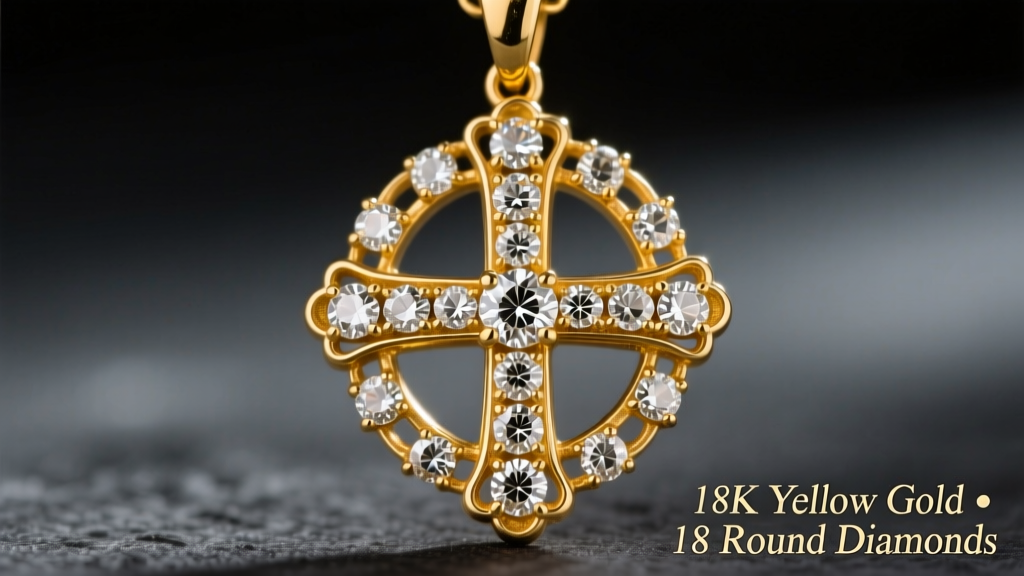
The 18-Diamond 18K Yellow Gold Cross: Craftsmanship, Symbolism, and Market Value
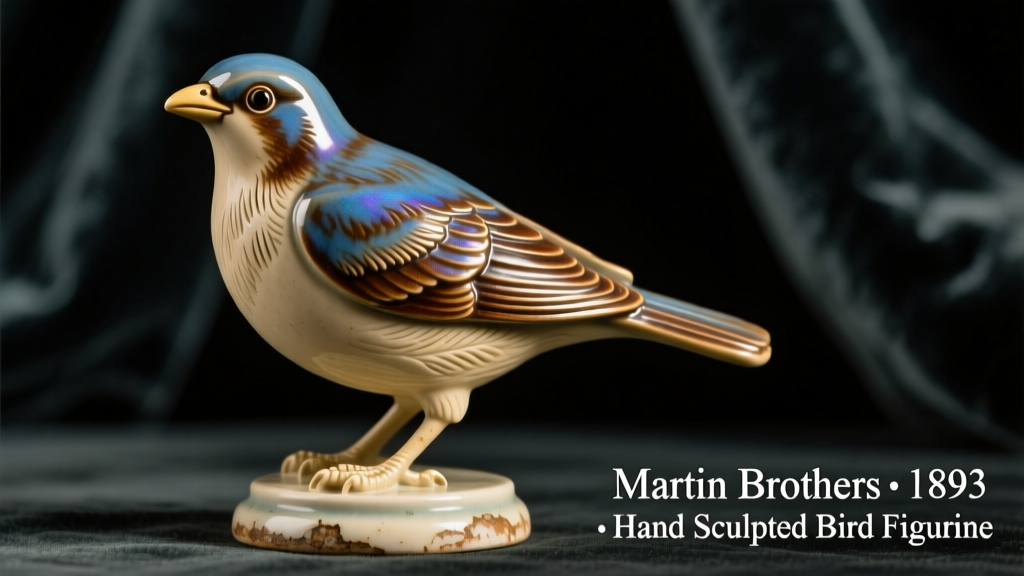
Martin Brothers Figurine: A Hand-Sculpted Avian Masterpiece in Blue-Brown-Oatmeal Glaze, 1893

Toy Boat Air Windup Arnold: A Collector’s Deep Dive into a Rare Mid-Century Mechanical Marvel
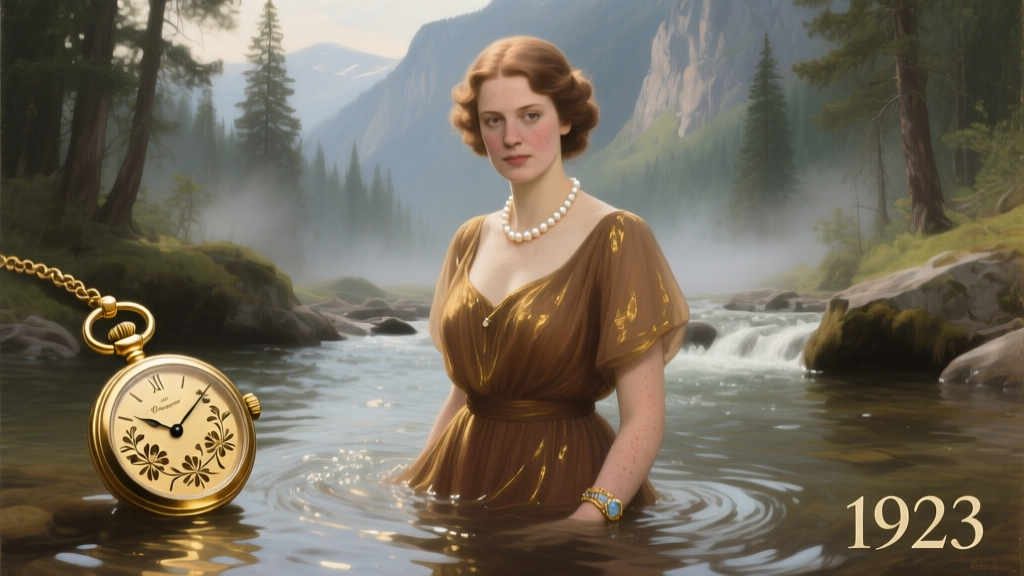
Oil on Masonite Nude Woman Standing in Stream: A Mid-Century American Figurative Study (22 × 11 in)
Red Wing Sugar Cover in Lotus Brown: A Collector’s Deep Dive into a Mid-Century American Ceramic Icon
Meissen Porcelain Goddess in Dancing Pose: A Signed 4¾-Inch Figurine from the Early 20th Century
The Rolex Submariner Ref. 1132205: A Definitive Technical and Historical Analysis
Venetian Corner Cabinets with Painted Scenes: A Pair of 18th-Century Italian Cabriole-Legged Furniture Masterpieces
Lalique Hood Ornament 'Vitesse': The Kneeling Nude in Crystal and Automotive History