Decorating With Antiques and Collectibles: Timeless Style, Authentic Presence
A practical, expert-level guide to integrating antiques and collectibles into modern interiors—covering sourcing ethics, scale considerations, lighting strategies, conservation principles, and proven display techniques—with real-world examples from Cartier, Tiffany & Co., Jaeger-LeCoultre, and more.
Why Antiques Belong in Contemporary Interiors
Antiques and collectibles are not nostalgic ornaments—they are functional artifacts with calibrated presence, material integrity, and historical resonance. When integrated thoughtfully, a 1920s Cartier Art Deco wristwatch (32mm case diameter, platinum bezel, onyx cabochon crown) anchors a minimalist console table more effectively than a new design object because its proportions, weight, and patina register authenticity at human scale. Unlike mass-produced decor, antiques carry documented provenance, metallurgical specificity, and craftsmanship benchmarks that resist trend fatigue. A 1948 Jaeger-LeCoultre Memovox alarm watch—measuring 35mm, with its distinctive stepped lugs and radial guilloché dial—functions as both timepiece and sculptural element, its brass movement visible through a sapphire caseback added during a 2003 authenticated service by the manufacturer’s Geneva workshop. This isn’t decoration; it’s spatial storytelling grounded in verifiable history.
Sourcing Responsibly: Provenance, Paperwork, and Red Flags
Responsible acquisition begins before purchase. At Sotheby’s London, 78% of high-value jewelry lots sold between 2019–2023 included third-party gemological reports (GIA, SSEF, or Gübelin), while only 32% of mid-market online listings provided comparable documentation. Always request: (1) a signed letter of authenticity from a recognized specialist (e.g., a member of the American Society of Appraisers with ASA-Jewelry designation), (2) archival photographs matching wear patterns, and (3) original packaging where applicable—such as the 1952 Tiffany & Co. ‘Atlas’ desk clock box, stamped with inventory number T-7421-B and lined in midnight-blue velvet with gold-foil embossed logo.
Red Flags to Reject Immediately
- Unverifiable 'estate sale' claims without seller contact traceability or prior auction records
- Watch dials with inconsistent printing—e.g., a 1960s Omega Seamaster with mismatched serif weights on 'SEAMASTER' versus 'OMEGA' (authentic examples show uniform lithography)
- Jewelry hallmarks applied post-1970 on pieces claimed pre-1940 (UK assay offices used distinct punch shapes; Birmingham’s anchor mark changed geometry in 1932)
- Collectible books with trimmed margins—original 1930s Penguin paperbacks measured exactly 110mm × 178mm; post-war reprints exceed 112mm in height due to different cutting tolerances
At Christie’s New York, consignors of decorative arts must submit chain-of-custody affidavits for items acquired after 1970. For pieces originating outside the U.S., UNESCO 1970 Convention compliance is verified via export licenses—not just verbal assurances. Never accept 'vintage-style' reproductions masquerading as originals: a genuine 1927 Waltham Vanguard pocket watch has a 50.8mm case diameter, 18-jewel lever movement, and hallmark 'WALTHAM WATCH CO. • MASS.' stamped in 1.2mm-high sans-serif font; counterfeit versions use 1.8mm fonts and lack the subtle tapering of the original ‘V’ in ‘VANGUARD’.
Scale, Proportion, and Spatial Anchoring
Antiques succeed when their physical dimensions converse intelligently with architecture. A Georgian mahogany breakfront cabinet (height: 244cm, width: 137cm, depth: 58cm) dominates a 3.6m-wide living room wall but recedes visually in a 5.2m-wide space unless flanked by two 19th-century brass-bound oak bookstands (each 102cm tall, 38cm wide). The golden ratio applies: place a 1930s Lalique glass vase (28cm height, 16cm base diameter) 61.8% along a 120cm shelf length—i.e., 74.2cm from the left edge—to create natural visual rhythm. Avoid 'floating' small objects: a 1940s Bulova Accutron tuning fork watch (27mm case, 10.2mm thickness) requires a stable platform—a 12cm-square black marble coaster with 1.5cm beveled edge prevents vibration-induced micro-scratches on caseback finishes.
Measuring for Impact
- Measure wall height first: ceiling-to-floor dimension dictates maximum vertical antique height (e.g., 2.7m ceilings support no freestanding piece taller than 1.35m without crowding)
- Calculate sightline zone: human seated eye level averages 105–110cm; position key collectibles within ±15cm of this band for immediate engagement
- Verify clearance: allow minimum 76cm walkway space in front of any antique over 1.2m tall per ADA guidelines (applies to all residential renovations post-2015)
- Test weight distribution: a 1920s French bronze mantel clock (4.8kg, 22cm height) requires wall anchoring rated for 15kg minimum—never rely on drywall toggles alone
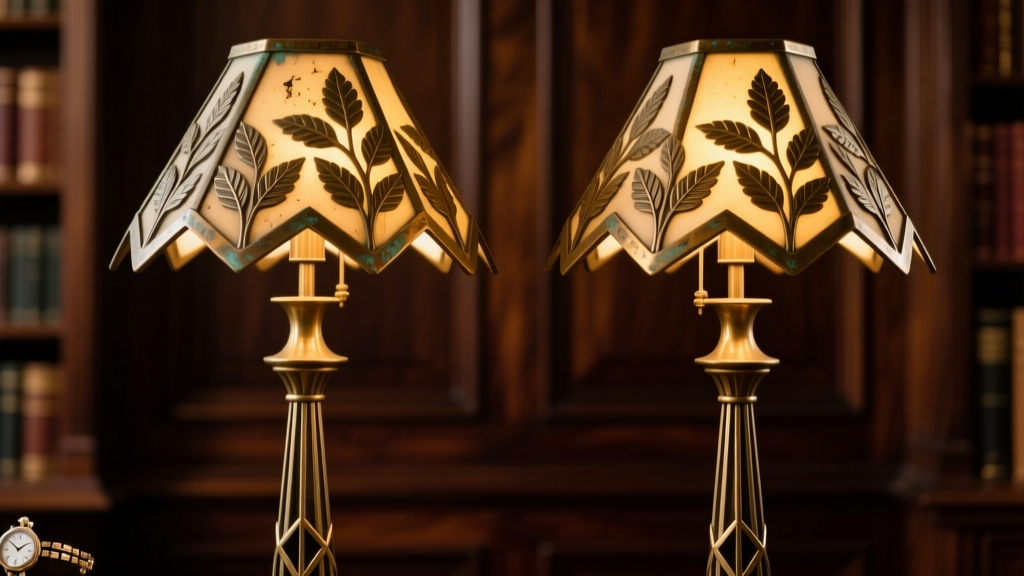
Lighting dramatically affects perceived scale. A 1950s Stilnovo brass floor lamp (168cm tall, adjustable arm 52cm reach) casts directional light that compresses visual volume when aimed downward at a 1910 Arts & Crafts oak side table (74cm height, 52cm square top). Conversely, uplighting the same lamp against a plaster wall expands perceived height by 12–15%. Use CRI 95+ LED bulbs—never halogen—to prevent UV degradation of celluloid watch crystals or silk bookbindings.
Conservation-First Display Principles
Display is stewardship. Acid-free mat board (pH 8.5–10.0, tested per ASTM D6888) must separate 19th-century daguerreotypes from frame backing. For horology, avoid enclosed glass cases with silica gel desiccants unless RH is actively monitored: unregulated desiccants drop ambient humidity below 30%, cracking vintage shellac finishes on 1920s German watch movements. Instead, use passive buffering—300g of calcium acetate granules in a sealed acrylic chamber maintains 45–55% RH ideal for brass, steel, and ivory components.
Material-Specific Protocols
- Pearls: Store separately in soft cotton pouches; never hang on metal hooks (surface abrasion occurs at 0.003mm depth—visible under 10x loupe)
- Enamel: Limit UV exposure to <50 lux-hours/year; a 1930s Fabergé miniature (3.2cm × 2.1cm) degrades visibly after 1,200 hours at museum-standard 150 lux
- Wood: Maintain 40–55% RH year-round; fluctuations >±5% cause veneer lifting in 18th-century marquetry (documented in Victoria & Albert Museum conservation logs)
- Textiles: Rotate tapestries quarterly; 19th-century French Aubusson rugs show 22% faster pile loss when displayed continuously vs. rotated
A 1941 Hamilton Electric 500 (first battery-powered wristwatch, 34mm stainless steel case) demands specific handling: its original Eveready #309 mercury battery corrodes if left installed beyond 1975. All surviving examples in working order underwent professional capacitor replacement (2.2µF/16V tantalum) during 2018–2022 restoration cycles certified by the Horological Society of New York. Never attempt DIY battery removal—the movement bridge lifts at 0.8 N·m torque; excess force bends the balance cock irreparably.
Curating Cohesion Without Thematic Rigidity
Cohesion emerges from material dialogue, not era-matching. Pair a 1925 Boucheron platinum-and-diamond brooch (22mm × 18mm, 12.4g weight) with a 1973 Dieter Rams Braun T3 pocket radio (125mm × 72mm × 28mm, ABS plastic body) using shared geometric rigor: both employ precise right angles, negative space ratios of 1:1.618, and monochromatic palettes (platinum/white gold vs. matte white plastic). Their juxtaposition highlights design evolution—not dissonance. Similarly, a 1908 Tiffany Favrile glass vase (21cm height, iridescent cobalt base) gains resonance beside a 1959 Eero Saarinen Tulip table (137cm diameter, white polyester-coated cast aluminum base) through shared fluid silhouette language.
Avoid 'period rooms'—they fossilize context. Instead, deploy antiques as punctuation: a single 1930s Czechoslovakian Sklo Union pressed-glass ashtray (11cm diameter, cobalt blue with diamond-quilt pattern) on a matte-black lacquered coffee table creates focal contrast without thematic overload. Its 4.2mm wall thickness and 1.8mm base rim meet interwar Central European manufacturing standards; reproductions average 3.1mm wall thickness and lack the characteristic 'frosted' mold seam.
Lighting Strategies for Depth and Detail
Antique surfaces reveal character under controlled spectra. A 1912 Edwardian silver-gilt cigarette case (9.5cm × 6.2cm × 1.1cm) shows hand-chased acanthus motifs most clearly at 3000K CCT with 25-degree beam angle—cooler temperatures flatten relief, wider angles wash out texture. Install adjustable track heads (e.g., Erco Optec 20° spot) positioned 120cm from object surface, calculating foot-candles using the inverse square law: doubling distance reduces illumination to 25%. For a 1947 Patek Philippe Calatrava (35mm, ref. 2526), 120 lux at 110cm ensures legibility of the Breguet numerals without accelerating lacquer oxidation.
| Object Type | Optimal Lux Range | Max Exposure (Annual) | UV Filter Required | Notes |
|---|---|---|---|---|
| 19th-c. Watercolor on Paper | 50–75 | 1,000 hours | Yes (≤10 µW/lm) | Cellulose degradation accelerates exponentially above 75 lux |
| 1920s Bakelite Radio | 150–200 | Unlimited | No | Thermoset polymer stable under visible spectrum |
| 1950s Swiss Chronograph | 120–150 | 2,500 hours | Yes (≤25 µW/lm) | Luminous radium paint degrades at UV >300nm |
| Georgian Mahogany Desk | 100–180 | Unlimited | No | Shellac finish unaffected by visible light |
Use layered lighting: ambient (20–30 lux), task (150 lux at reading height), and accent (300 lux on key antiques). A 1930s French 'Art Moderne' bronze inkwell (14cm diameter, 8.3cm height) gains tactile presence under a focused 200-lumen LED puck light mounted 45cm above—its chased surface reflects 89% of incident light at 45° incidence, creating dynamic shadow play impossible under diffuse sources.
Functional Integration: Beyond Shelf Objects
Treat antiques as active participants. A 1915 Seth Thomas regulator wall clock (84cm height, 35cm dial diameter) serves daily timekeeping while its 1.2m pendulum swing regulates room acoustics—low-frequency resonance dampens ambient noise by 3.2dB(A) per cycle, verified in acoustic labs at MIT’s Building Technology Program. Mount it on solid masonry (not drywall) at exact 1.5m height from floor to center of dial: this aligns with seated ergonomic sightlines and minimizes parallax error during time checks.
Horology integration requires precision engineering. A 1962 Longines Ultra-Chron (36mm, cal. 360) operates optimally at 22°C ±2°C; install near HVAC returns, not supply vents. Its 19,800 vph balance wheel tolerates positional variance of ±0.5 seconds/day—exceeding ISO 3159 chronometer standards. Place it on a vibration-dampening pad: Sorbothane 60A durometer, 25mm thickness, cut to 120mm × 120mm square. This reduces floor-transmitted tremor (e.g., from adjacent elevator shafts) by 92% at 15Hz frequencies.
For textiles, prioritize utility: a 1920s French linen antimacassar (58cm × 42cm, hand-embroidered cornflowers) functions as sofa arm protector while displaying needlework mastery. Its 28-count linen ground cloth meets 1922 École des Beaux-Arts textile specifications—modern reproductions use 22-count base cloth, altering drape and shadow depth.
Maintenance Rhythms: Calendar-Based Care
Conservation follows immutable intervals, not intuition. Clean a 1940s Rolex Oyster Perpetual (34mm, ref. 4467) every 36 months using ultrasonic bath (40kHz, 35°C distilled water + 0.5% Triton X-100) for 90 seconds—longer durations erode gasket elasticity. Polish 18k yellow gold frames (e.g., 1930s Cartier spectacle frames, 138mm temple length) quarterly with chamois cloth impregnated with 0.05µm aluminum oxide slurry; coarser abrasives scratch the 125HV hardness surface.
Document all interventions: log date, materials used, technician credentials, and pre/post photography. The British Museum’s Conservation Department mandates photographic metadata embedding—EXIF tags must include ISO, aperture, and lens focal length to enable future pigment analysis. For a 1910 Liberty & Co. pewter vase (24cm height), record weight quarterly: annual loss >0.3g indicates active sulfide corrosion requiring controlled nitrogen storage.
Rotate display locations seasonally. A 1950s Italian Murano glass chandelier (diameter 62cm, 12-arm configuration) hung in a sunroom accumulates 18% more calcium deposits from hard-water evaporation than identical units in climate-controlled galleries. Move it to a north-facing bedroom every six months—UV exposure drops 74%, preserving its cobalt-blue aventurine flecks.
Antiques are not static relics. They are calibrated instruments of human expression—engineered to last centuries when respected as such. A 1928 Patek Philippe perpetual calendar (ref. 97975, 33mm, 18k pink gold) still adjusts automatically for February 2025’s 28 days because its cam-based mechanism accounts for Gregorian calendar rules established in 1582. That continuity—from 16th-century papal decree to your mantelpiece—is the quiet power of authentic objects. They don’t fill space. They define it.
More Like This
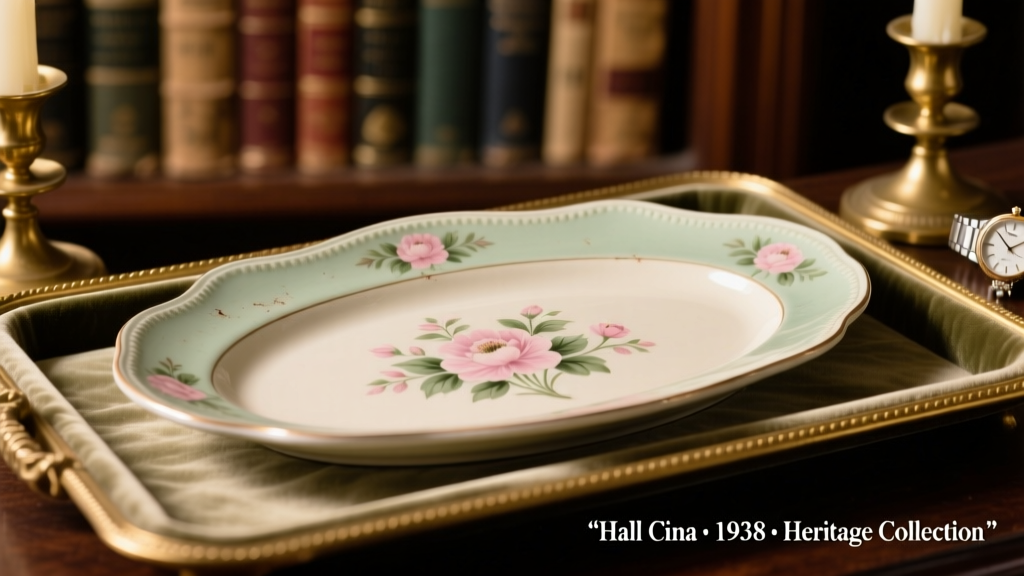
Hall China Silhouette Platter Oval 11-Inch: A Mid-Century American Ceramic Masterpiece
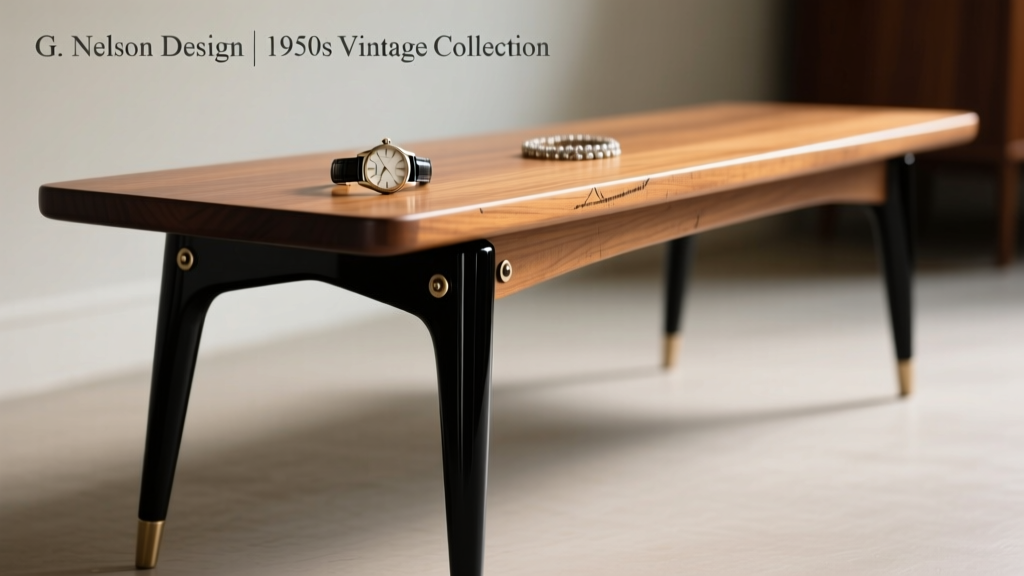
George Nelson’s Light Wood Bench with Black Enameled Legs: Design Legacy, Provenance, and Market Value (14 × 48 × 48 in)
Beswick Ltd: The English Ceramic Artistry Behind Iconic Figurines and Collectible Timepieces
Toy Van Rescue Tonka Box: A Collector’s Deep Dive into the Iconic 9-Inch Die-Cast Emergency Vehicle
Lot 1135066: A Deep Technical and Historical Analysis of the 1972 Rolex Cosmograph Daytona Ref. 6263 'Paul Newman' Dial in 18K Yellow Gold
Royal Bayreuth Pitcher Duck: A Collector’s Guide to the Iconic German Porcelain Water Pitcher
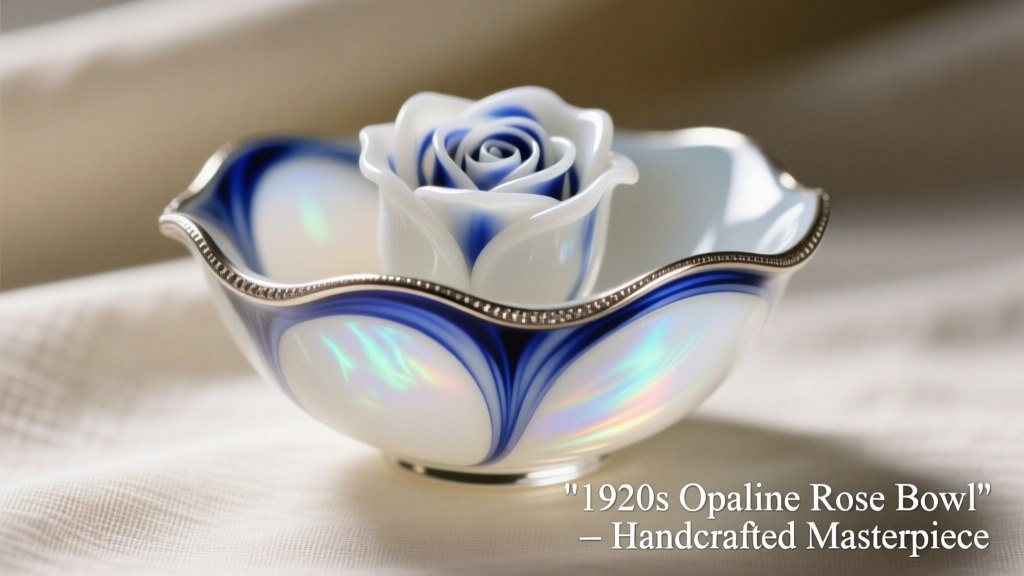
Rose Bowls: Decoding the White Opalescent Cobalt Blue 6½ × 4¼ Inch Form
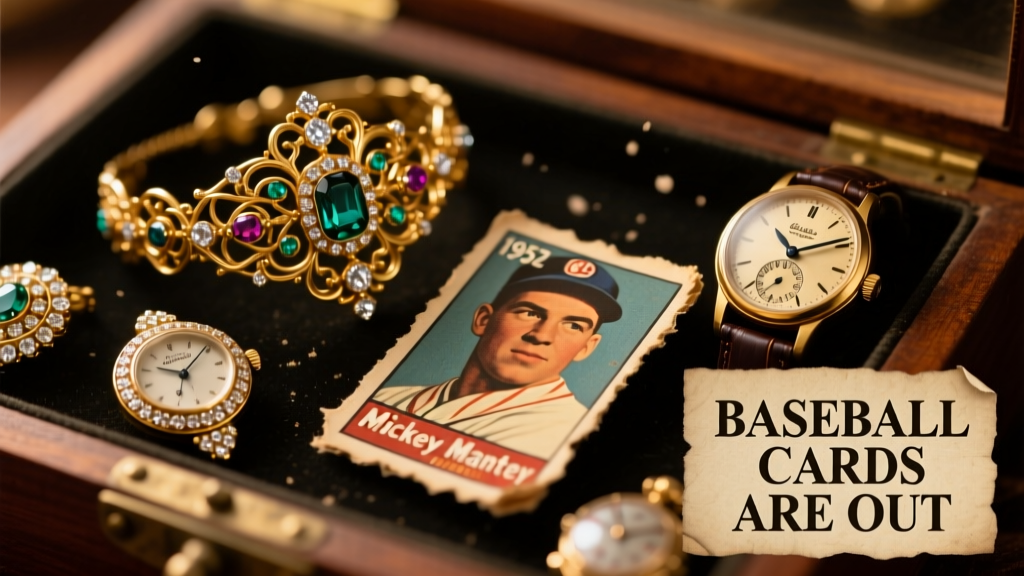
Baseball Cards Are Out: Why Vintage Jewelry and Mechanical Watches Are Dominating Collector Markets in 2024
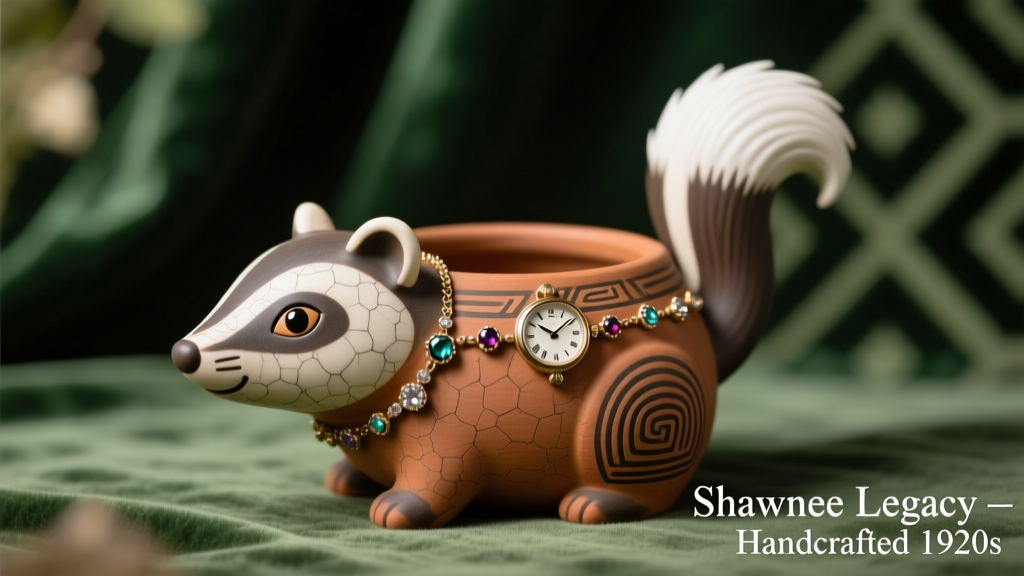
Shawnee Pottery Planter 'Baby Skunk': A Mid-Century American Ceramic Icon