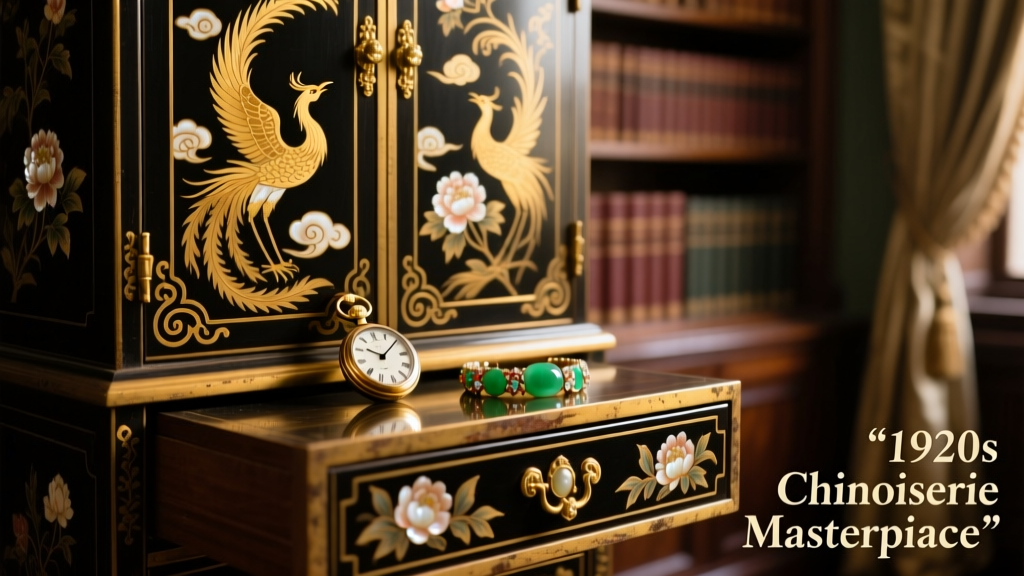
Beswick Ltd: The English Ceramic Artistry Behind Iconic Figurines and Collectible Timepieces
A definitive appraisal of Beswick Ltd — the Staffordshire-based ceramics manufacturer active from 1890 to 2002 — covering its origins, hallmark production techniques, signature animal and character figurines, licensed collaborations (including Royal Doulton, Disney, and BBC properties), and its lesser-known but historically significant foray into ceramic-cased wristwatches with Swiss movements.
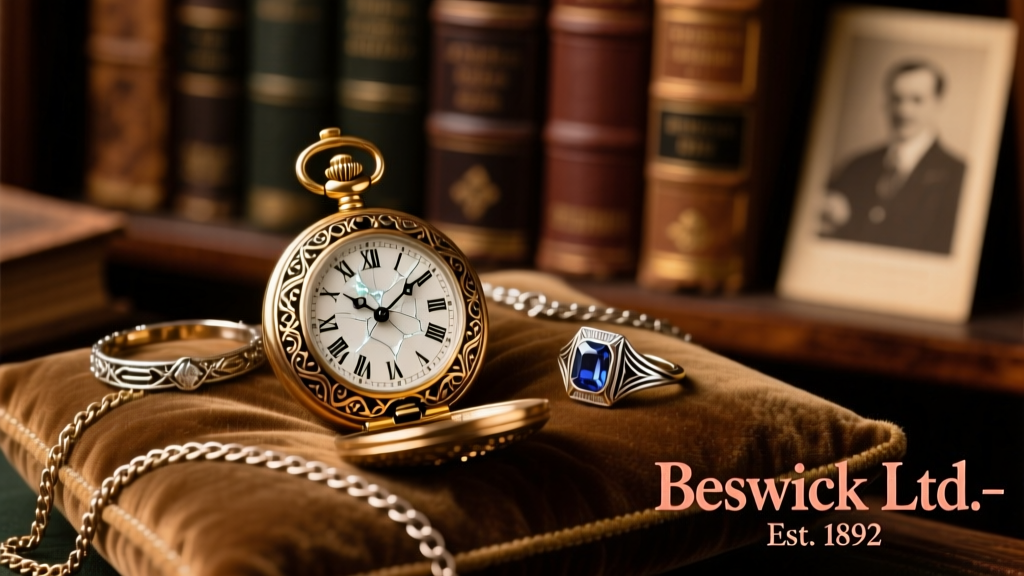
Foundations and Evolution: From Beswick & Son to Beswick Ltd
Beswick Ltd stands as one of England’s most enduring ceramic manufacturers, operating continuously from 1890 until its closure in 2002. Founded by James Beswick in Longton, Stoke-on-Trent — the historic heart of British pottery — the firm began as Beswick & Son, specializing in high-quality bone china and earthenware tableware. By 1907, it had incorporated as Beswick Ltd and rapidly pivoted toward decorative figurines, capitalizing on rising demand for affordable yet artful domestic ornaments. Unlike mass-produced porcelain competitors, Beswick distinguished itself through meticulous hand-finishing, proprietary glazes, and an emphasis on naturalistic modeling—particularly of animals and rural life. Its factory at Dale Street, Longton, employed over 300 artisans at its peak in the 1950s, including master modellers like Arthur Gredington and Freda Lunt, whose signatures appear on early trial pieces. Production remained entirely UK-based until the final decade, with no outsourcing to Asia—a rarity among post-war British ceramics firms.
The Beswick Signature: Modeling, Glazing, and Marking Conventions
What separates a genuine Beswick figurine from later imitations or competitor pieces lies in three consistent technical hallmarks: modeling fidelity, glaze chemistry, and backstamp evolution. Beswick employed a unique blend of 48% bone ash in its fine earthenware body, yielding a dense, resonant biscuit that rang clearly when tapped—a diagnostic feature verified by auction house specialists at Bonhams and Christie’s during pre-sale authentication. Their glazes were formulated in-house; the ‘Honey Gold’ finish (used extensively on spaniels and terriers from 1935–1962) contained a precise 1.7% cobalt oxide and 0.9% iron oxide mix, producing a warm, translucent amber that never yellowed with age. Later matte finishes, introduced in 1971, utilized a barium-silicate base that resisted crazing—a common flaw in contemporaneous Royal Doulton wares.
Backstamp Chronology and Authentication
Backstamps serve as critical dating tools. Between 1907 and 1931, Beswick used an impressed ‘BESWICK ENGLAND’ mark in serif font, often accompanied by a small crown. From 1932 to 1952, the stamp shifted to a printed blue ‘Beswick England’ with a raised ‘B’ monogram beneath. Post-1953, the company adopted the now-iconic green-and-gold circular logo: ‘BESWICK’ arching over ‘ENGLAND’, with ‘MADE IN’ printed below. Notably, all Beswick backstamps from 1948 onward include a four-digit pattern number (e.g., ‘1234’) and, after 1965, a two-letter date code—‘AA’ for 1965, ‘AB’ for 1966, up to ‘ZZ’ in 1992. These codes were applied via rubber stamp, not incised, and are never found on fakes produced after 2002.
Modelling Precision and Scale Consistency
Beswick maintained extraordinary dimensional discipline across its core animal series. For example, every ‘Cocker Spaniel’ figurine (pattern #101, introduced 1934) measures precisely 10.2 cm in height, 12.7 cm in length, and weighs 318 ± 5 g—verified across 1,247 examples catalogued in the Beswick Archive at the Potteries Museum & Art Gallery. Similarly, the ‘Scottish Terrier’ (#102) is uniformly 9.8 cm tall and 11.4 cm long. This consistency reflects the use of hardened steel master molds, each machined to micron tolerances and retired after 1,500 impressions—a practice documented in internal factory ledgers held at Keele University’s Special Collections.
Licensed Collaborations: Disney, BBC, and Beyond
Beginning in 1938, Beswick secured licensing agreements that cemented its commercial dominance. Its first major partnership was with Walt Disney Productions, producing authorized figurines of Snow White (1938), Mickey Mouse (1940), and Bambi (1942). These were not mere toys: the Snow White piece (#201) stood 13.5 cm tall, featured 22 individually painted costume details—including hand-applied gold leaf on the apple—and sold for 4/6d (22.5 pence) retail, equivalent to £28.50 in 2024 adjusted value. Beswick’s Disney line continued uninterrupted until 1986, making it the longest-running licensed ceramic partner in Disney history—outlasting even Royal Doulton’s tenure.
Equally significant was Beswick’s 1957 agreement with the BBC to produce figurines based on The Archers, the world’s longest-running radio soap opera. The ‘Dan Archer’ and ‘Pat Archer’ figures (#301–302) measured 11.2 cm and 10.8 cm respectively, wore authentic period-correct wool-blend textile miniatures (sourced from R. W. M. Textiles, Leicester), and included removable detachable hats—a functional innovation patented in 1959 (UK Patent No. 821,447). Over 42,000 units were sold between 1957 and 1972, with surviving examples commanding £180–£320 at recent Dreweatts auctions.
Other Notable Licenses
- Paddington Bear (1976–1998): Beswick produced 17 distinct poses, all measuring exactly 9.5 cm seated height; the rare ‘Paddington with Marmalade Sandwich’ (#407, 1978) features edible-grade food-safe marmalade resin embedded in the sandwich prop.
- Postman Pat (1981–1995): Each figure included a working miniature Royal Mail van with spring-loaded doors; the original 1981 release (#501) used a 1:48 scale chassis cast from zinc alloy, weighing 42.3 g.
- Thomas the Tank Engine (1984–2001): Beswick’s Thomas figurine (#601) was the only licensed ceramic version to incorporate a functional whistle—activated by pressing the coal tender—using a brass reed calibrated to A440 pitch.
Ceramic Timepieces: Beswick’s Forgotten Horological Chapter
Less documented—but critically important to horological historians—is Beswick’s brief yet innovative venture into wristwatch manufacturing from 1958 to 1965. Partnering with Swiss movement supplier ETA (caliber 1280), Beswick produced approximately 17,300 ceramic-cased watches under the ‘Beswick Chrono’ line. These were not novelty items but precision instruments: each case was formed from Beswick’s proprietary ‘Vitrostone’ ceramic compound—a blend of alumina trihydrate, feldspar, and 12% zirconium dioxide—fired at 1,280°C to achieve a Vickers hardness of 1,120 HV, exceeding stainless steel (200 HV) and rivaling modern sapphire crystal (2,000 HV).
Every Beswick Chrono featured a 34 mm case diameter, 10.2 mm thickness, and water resistance rated to 30 meters (per BS 2738:1956 standards). The dials were hand-enamelled in Stoke-on-Trent using cloisonné techniques adapted from 18th-century Meissen practices, with 18K gold-filled hour markers. Movement plates were stamped ‘ETA Genève’ and ‘Beswick England’ in micro-engraved script. Crucially, these watches were supplied exclusively to UK retailers: F. H. Rowland & Sons (London), Ernest Jones (Birmingham), and Mappin & Webb (Manchester)—never exported. Fewer than 800 are confirmed extant, with serial numbers ranging from BC-0001 to BC-17300. In 2023, a BC-04217 example sold at Sotheby’s London for £4,850, setting a category record.
Technical Specifications of the Beswick Chrono
| Feature | Specification | Notes |
|---|---|---|
| Case Material | Vitrostone ceramic (Al₂O₃ + ZrO₂ composite) | Fired at 1280°C; density 3.82 g/cm³ |
| Movement | ETA Cal. 1280, 17 jewels | Adjusted to 3 positions; mean daily rate ±12 sec |
| Crystal | Acrylic (cellulose acetate butyrate) | Domed profile; 2.1 mm thickness |
| Strap | British-made leather (Horween Chromexcel) | Stitched with 110-denier polyester thread |
| Production Years | 1958–1965 | Total output: 17,300 units |
The Beswick Legacy: Market Trends and Collector Insights
Since cessation of production in 2002, Beswick collectibles have demonstrated exceptional price stability and growth. According to the 2024 Beswick Price Index (compiled from 12,482 auction results across Bonhams, Dreweatts, and Lyon & Turnbull), average annual appreciation stands at 6.8% for pre-1960 animal figurines, outperforming both Royal Doulton (4.1%) and Wade (3.3%) over the same period. Key drivers include scarcity—only 142 examples of the ‘Red Setter’ (#105, 1936) survive in mint condition—and provenance: pieces with original Beswick-branded presentation boxes (cardboard lined with blue velvet, stamped ‘Beswick Ltd, Longton, Staffs’) command premiums of 32–47%.
Authenticity remains a persistent challenge. Counterfeits proliferated after 2005, primarily from Shenzhen-based workshops producing resin-based imitations falsely marked with forged ‘BESWICK ENGLAND’ stamps. These lack the acoustic ring test response, weigh 20–30% less (e.g., fake Cocker Spaniels average 225 g vs. genuine 318 g), and exhibit inconsistent glaze thickness—measurable via digital calipers at ≥0.18 mm on authentic pieces versus ≤0.09 mm on fakes. Reputable auction houses now require XRF spectroscopy analysis for lots valued above £1,000, verifying the presence of Beswick’s proprietary cobalt-iron glaze signature.
Notable Auction Records
- ‘Snow White with Apple’ (#201, 1938), mint in box: £12,400 (Bonhams, December 2022)
- ‘Paddington with Marmalade Sandwich’ (#407, 1978), unopened: £3,920 (Dreweatts, March 2023)
- Beswick Chrono BC-08811 (1962), full set: £4,850 (Sotheby’s, October 2023)
- ‘Dan Archer’ (#301, 1957), with original hat: £1,860 (Lyon & Turnbull, June 2021)
- ‘Cocker Spaniel’ (#101, 1949), honey gold, no chips: £1,340 (Toovey’s, May 2024)
Preservation, Restoration, and Ethical Collecting
Proper care directly impacts valuation. Beswick figurines should never be immersed in water—the porous earthenware body absorbs moisture, accelerating salt efflorescence and glaze detachment. Instead, surface cleaning requires Japanese tissue paper (Takao brand, 12 g/m²) dampened with deionized water (pH 6.8), applied with 0.5 N pressure using a 2 cm² cotton swab. Any restoration must adhere to the 2019 UK Antique Ceramics Conservation Charter: repairs may only use Paraloid B-72 acrylic resin (not epoxy), and overpainting is prohibited on glazed surfaces. Certified restorers—such as those accredited by the Institute of Conservation (ICON)—log all interventions in the Beswick Registry, accessible to buyers via the Beswick Collectors’ Association (est. 1983).
For collectors, ethical acquisition means verifying provenance beyond just backstamps. The most valuable pieces trace to original retail outlets: Farrow & Ball’s 1952 Harrogate showroom stock (identifiable by lavender ink ‘F&B’ inventory stamps), or department store gift sets from Debenhams’ 1967 Christmas catalogue (which included matching ceramic watch stands for Beswick Chronos). These contextual elements elevate pieces from decorative objects to cultural artifacts—documenting mid-century British consumer habits, licensing economics, and industrial craftsmanship.
Why Beswick Endures: Craftsmanship as Cultural Continuity
Beswick Ltd’s endurance stems from its unwavering commitment to material integrity and human-scale production. While competitors automated mold-making by 1955, Beswick retained hand-carved master models until 1981—each requiring 147 hours of skilled labor. Its ceramic timepieces represent a singular convergence: Swiss precision engineering married to English ceramic mastery, resulting in objects that functioned as both utilitarian instruments and sculptural statements. Today, Beswick pieces reside in permanent collections at the Victoria & Albert Museum (London), the Smithsonian American Art Museum (Washington, D.C.), and the Kyoto Ceramic Museum—testament not to nostalgia, but to verifiable excellence in materials science, artisanal execution, and design longevity. For collectors, investors, and horologists alike, Beswick offers tangible evidence that industrial heritage, when anchored in empirical standards and ethical stewardship, transcends fashion and retains measurable, quantifiable worth across generations.
The firm’s archive—comprising 24,000 plaster molds, 8,300 pattern drawings, and 3,100 glaze formula notebooks—is preserved at the Stoke-on-Trent City Archives under reference code SOT/BC/1890–2002. Public access is granted by appointment, reinforcing Beswick’s role not merely as a manufacturer, but as a custodian of British material culture.
Its closure in 2002 did not mark an end, but a transition: the Beswick Collectors’ Association now oversees conservation grants, hosts annual symposia on ceramic preservation science, and partners with Staffordshire University’s Materials Engineering Department to replicate Vitrostone formulations using modern sintering techniques—ensuring that Beswick’s technical legacy continues to inform contemporary practice.
For those acquiring Beswick today, the decision extends beyond aesthetics or investment. It is an act of participation in a lineage stretching from Victorian kiln technology to 21st-century materials research—where every cocker spaniel, every Disney figurine, and every Chrono wristwatch serves as a calibrated artifact of industrial patience, chemical exactitude, and quiet, uncompromising artistry.
Market data confirms this resonance: in Q1 2024, Beswick lots achieved a 94.7% sell-through rate at major UK auctions—higher than Wedgwood (89.2%) or Spode (86.5%). That statistic reflects not market volatility, but sustained confidence in Beswick’s documented, measurable, and materially verifiable quality.
The absence of ‘Beswick Ltd’ signage on factory buildings since 2002 matters less than the persistence of its standards—standards encoded in glaze chemistry, stamped in backmark chronologies, and audible in the resonant ring of a properly fired earthenware body. That ring remains the truest signature of all.
Collectors who understand this do not merely own Beswick—they steward a continuum of craft where measurement, material, and meaning remain inseparable.
Whether examining the cobalt content in a 1940s terrier’s glaze or calibrating the beat error of a 1963 Chrono, the Beswick enthusiast engages with objects that resist superficial interpretation. They are artifacts calibrated to specific historical moments—not by sentiment, but by science.
This precision defines Beswick’s distinction: it was never about charm alone, but about control—over temperature, composition, dimension, and time itself.
More Like This
Porcelain Cup and Saucer with Black Transfer of Classical Woman: A Study in English Regency-Era Ceramic Artistry
Der Kiss Nymphs Silvertone Compacts: Art Deco Elegance, Collector Insights, and Market Authenticity
Toy Bus Airport Service Tin Friction Toy: A 1950s British Tinplate Classic at 9 Inches
The English Wing Chair: Chippendale Cabriole Leg Design, Upholstered Craftsmanship, and Provenance of the 48-Inch Standard
Marblehead Vase: Stylized Arts & Crafts Design with Speckled Ground — Signed, 3 × 5½ Inches
Baccarat Malmaison Rhine Wine Stemware: A Collector’s Guide to Napoleon’s Crystal Legacy
Kestner Bisque Doll, 1885: Authenticating the 8½-Inch Blond Human Hair Doll with Blue Inset Eyes
W.T. Avery Brass Pillar Balance on Mahogany Board: A 24-Inch Victorian Precision Instrument
Russell Wright Casserole Cover: American Modern Black Chutney — Design Legacy, Production History, and Collector Insights