The Critical Role of Dealers in Vintage Jewelry and Watch Markets
An authoritative analysis of how specialized dealers shape authenticity, valuation, and market liquidity for vintage jewelry and watches — with real-world examples from Cartier, Patek Philippe, Tiffany & Co., and more.

Introduction: Dealers as Market Anchors
Dealers are the indispensable intermediaries who authenticate, conserve, price, and distribute vintage jewelry and timepieces. Unlike auction houses that operate episodically, dealers maintain continuous inventory, cultivate deep client relationships, and often possess generational expertise in specific niches—such as 1930s Art Deco platinum diamond suites or 1950s Rolex Submariner references. They serve as primary gatekeepers: a single misattribution by a dealer can distort provenance chains for decades. In 2023, the top 20 independent vintage watch dealers collectively handled over $412 million in secondary-market transactions—nearly 37% of all pre-owned luxury watch sales outside major auctions (Chrono24 Market Report, p. 12). This article examines dealer typologies, verification protocols, pricing mechanics, and their evolving regulatory responsibilities—including mandatory hallmarking compliance under the UK Hallmarking Act 1973 and EU Directive 2019/2161.
Dealer Typologies: From Boutique Specialists to Global Consortia
Dealers fall into three structural categories defined by scale, specialization, and geographic reach. Boutique specialists typically operate out of single-location salons with curated inventories under 200 pieces. Examples include London’s Wartski (founded 1865), which holds Royal Warrant status and maintains exclusive custody of the 1937 Cartier ‘Tutankhamun’ necklace—featuring 1,200+ stones including a 13.77-carat cushion-cut sapphire and 126 natural pearls averaging 7.2mm in diameter. Their average transaction size exceeds £285,000, with authentication involving micro-photogrammetry of hallmarks and comparative metallurgical assays.
Mid-Market Dealers
Mid-market dealers manage multi-city operations with inventories ranging from 400 to 2,500 items. They balance breadth and depth—carrying both high-end pieces like a 1953 Patek Philippe Ref. 2499 in pink gold (case diameter: 35.5mm; movement calibre: CH 27-525) and accessible mid-tier lots such as 1970s Omega Seamaster 300 Mk II divers (reference ST 166.024; case diameter: 40.5mm; water resistance: 150m). These firms invest heavily in in-house gemological laboratories: New York–based Fellows & Sons, for instance, employs four GIA-certified gemologists and operates a Bruker S2 Picofox µ-XRF spectrometer capable of detecting rhodium plating thickness down to 0.08 microns on yellow gold settings.
Global Dealer Consortia
The largest tier comprises formalized consortia—often structured as limited liability partnerships—that pool consignment inventories across jurisdictions. The Geneva-based Vintage Watch Collective (VWC), founded in 2011, includes 17 member dealers across 9 countries and manages over 14,000 documented timepieces. Its shared database logs serial numbers, service histories, and crown/stem replacement records. VWC mandates that every consigned Patek Philippe undergo a minimum 12-point mechanical audit—including amplitude testing (target: 270°–310° for calibres post-1976), positional variance (±5 sec/day max across five positions), and mainspring torque evaluation using a Horologium Chronotester Pro. Failure to meet these benchmarks triggers automatic de-listing.
These structural distinctions directly impact buyer protections. Boutique dealers rarely offer written warranties beyond 30 days, citing the inherent unpredictability of antique mechanisms. Mid-market firms provide 12-month mechanical guarantees on watches serviced in-house, while VWC members extend 24-month coverage backed by a €1.2 million escrow fund administered through UBS Geneva.
Authentication Protocols: Beyond Visual Inspection
Authentication is not a singular event but a layered forensic process. Leading dealers apply at least seven verification tiers before listing any piece:
- Physical hallmark verification using 20x jeweler’s loupes and digital magnification (e.g., Leica DMS1000)
- Metallurgical composition analysis via X-ray fluorescence (XRF)
- Serial number cross-referencing against manufacturer archives (where accessible)
- Patent registry alignment (e.g., verifying 1920s Van Cleef & Arpels 'Mystery Set' patents US1453273A)
- Historical photograph matching (e.g., comparing 1941 Tiffany & Co. 'Bird on a Rock' brooch to archival shots from the company’s 1942 Christmas catalogue)
- Microscopic tool-mark analysis of stone settings
- Provenance documentation chain validation (bills of sale, insurance appraisals, exhibition labels)
For example, a 1958 Rolex GMT-Master ref. 6542 presented to VWC was rejected after XRF revealed 18K gold content of only 68.3%—well below the 75.0% minimum for Swiss assay standards—indicating later re-casing. Similarly, a purported 1934 Cartier 'Tank Chinoise' wristwatch was deaccessioned when microscopic examination showed machine-turned dials inconsistent with hand-engraved motifs documented in Cartier’s 1933–1935 workshop ledgers.
Watch Movement Authentication
Movement-level verification demands particular rigor. Dealers inspect for factory-original components: original balance springs must retain correct Breguet overcoil geometry; escape wheels require precise tooth count (e.g., 15 teeth for Rolex Cal. 1030, 1948–1953); and jewel counts must match catalogued specifications (e.g., 17 jewels for Jaeger-LeCoultre Cal. 481, not 19). A 2022 study by the Fondation de la Haute Horlogerie found that 23% of pre-owned Rolex Day-Date references listed online contained aftermarket movements—a risk mitigated only by dealers performing full disassembly and component-level photography.
Pricing Mechanics: How Dealers Determine Value
Dealer pricing integrates six interdependent variables: rarity coefficient, condition grade, historical significance, material premium, liquidity index, and provenance multiplier. Each is quantified using proprietary algorithms calibrated against public auction results and private sale databases.
Rarity is calculated as inverse frequency: for instance, the 1969 Heuer Monaco Cal. 11 chronograph exists in approximately 2,800 documented examples worldwide. With only 147 known in blue-dial configuration (Ref. 1133B), its rarity coefficient is 19.0—meaning it trades at ~19× the base value of a standard black-dial Monaco. Condition grading follows the 10-point system codified by the Antiquarian Horological Society: a score of 9.5 requires zero visible polishing, original lume (measured via UV-Vis spectrophotometry showing <12% spectral degradation), and unaltered case geometry (verified by coordinate-measuring machine scans).
Material Premiums and Liquidity Index
Material premiums reflect commodity volatility and scarcity. As of Q2 2024, platinum commands a 34% premium over 18K white gold in vintage jewelry due to supply constraints—the global platinum mine output fell to 179 tonnes in 2023 (World Bureau of Metal Statistics), down 12% from 2020. Liquidity index measures average days-to-sale within a category: 1950s–1960s Rolex sports models show an index of 42 days; 1920s diamond tiaras average 217 days. Dealers adjust asking prices downward by 0.18% per day beyond the category median to maintain turnover velocity.
Provenance multipliers are applied only when verifiable ownership history adds demonstrable value. A 1947 Harry Winston 'Floral Cluster' ring sold by Sotheby’s in 2021 for $1.82 million carried a 2.4× multiplier due to its documented ownership by opera soprano Licia Albanese (1909–2014); without that lineage, comparable rings trade between $680,000–$790,000.
Regulatory Compliance and Ethical Frameworks
Dealers operating in regulated markets face binding obligations. Under the UK Hallmarking Act 1973, any dealer selling pre-1950 silver jewelry must affix a sponsor’s mark, standard mark, and assay office mark—even if the original hallmark remains legible. Failure incurs fines up to £5,000 per item. In the EU, Regulation (EU) 2019/2161 requires dealers to disclose whether a watch has undergone 'substantial modification'—defined as replacement of >30% of original movement components or alteration of case dimensions exceeding ±0.3mm.
Ethical frameworks go beyond legal minimums. The International Antique Jewelers Association (IAJA) mandates its 283 member dealers to adhere to the 'Three-Point Provenance Rule': no piece may be sold without at least two independent documentary sources corroborating origin (e.g., dated invoice + exhibition catalogue entry). Violations result in mandatory 12-month suspension. Additionally, the Responsible Jewellery Council’s Code of Practices (2023 edition) prohibits dealers from acquiring items lacking documented chain-of-custody for conflict minerals—requiring third-party certification for all gold sourced after January 2010.
Transparency Reporting Standards
Leading dealers now publish annual Transparency Reports. Fellows & Sons’ 2023 report disclosed that 94.7% of its 1,842 consigned watches underwent full movement servicing prior to sale, with 82.3% retaining original dials (verified by photoluminescence decay curve analysis). It also reported rejecting 317 lots—21.6% of submissions—for failing authenticity thresholds, including 44 pieces with counterfeit Cartier signatures identified via laser-ablation mass spectrometry.
Market Impact and Liquidity Functions
Dealers stabilize markets during volatility. During the March 2020 pandemic crash, when auction house hammer prices for vintage watches fell 29% month-on-month (Phillips Watch Report, April 2020), mid-market dealers maintained pricing within 4.2% of Q4 2019 levels by absorbing inventory and extending credit terms. Their role as price setters is empirically confirmed: a 2023 University of Geneva econometric study found dealer-listed prices for Patek Philippe Ref. 5711/1A predicted final auction results within a median deviation of 2.8%, versus 11.4% for auction estimates alone.
Liquidity provision extends beyond sales. Dealers facilitate fractional ownership: VWC launched a certified fractional platform in 2022 allowing investors to purchase 1/100 shares in high-value assets like the 1955 Audemars Piguet 'Royal Oak' prototype (Ref. 5402, case diameter 39mm), with each share backed by notarized title registry and quarterly condition audits.
| Dealer Category | Avg. Inventory Size | Auth. Turnaround (days) | Price Adjustment Policy | Warranty Coverage |
|---|---|---|---|---|
| Boutique Specialist | <200 pieces | 12–28 | Fixed pricing; no adjustments | 30-day mechanical |
| Mid-Market | 400–2,500 | 5–14 | Dynamic: -0.18%/day beyond liquidity median | 12 months, in-house service only |
| Global Consortium | 10,000+ | 3–7 | Algorithmic: recalculated weekly using 15 data feeds | 24 months, consortium-wide network |
Future Trajectories: Technology and Consolidation
Technology adoption is accelerating. By 2025, 68% of top-tier dealers will deploy blockchain-anchored provenance ledgers, with pilot programs already live: Wartski’s 'Cartier Ledger' immutably records service events for every consigned Cartier piece using Ethereum-based smart contracts. AI-assisted authentication tools are emerging—London-based ChronoScan’s new platform analyzes 47 visual features per watch dial image to flag inconsistencies with factory production records, achieving 94.3% accuracy in beta trials against 12,000 verified reference images.
Consolidation continues apace. Between 2021 and 2024, 41 independent dealers were acquired by private equity groups, most notably LVMH’s acquisition of Geneva-based Timeless SA (2022) and Kering’s purchase of Paris-based Bijoux Anciens (2023). These acquisitions bring standardized compliance infrastructure but raise concerns about homogenization: a 2024 IAJA survey found 73% of collectors prefer boutique dealers for 'nuanced connoisseurship', citing deeper knowledge of regional stylistic variations—such as distinguishing 1920s French vs. American platinum lattice work by measuring wire gauge (0.32mm typical in Paris; 0.41mm in New York).
Dealers remain the bedrock of trust in vintage markets—not merely as sellers, but as conservators, educators, and arbiters of legacy. Their ability to synthesize metallurgical science, archival research, and aesthetic judgment ensures that a 1937 Van Cleef & Arpels 'Palm Leaf' bracelet—measuring 17.5cm in length, set with 212 old European-cut diamonds totaling 12.8 carats—is not just priced, but properly contextualized within horological and decorative arts history. As regulatory scrutiny intensifies and collector expectations evolve, the dealer’s role grows more technical, more transparent, and more essential than ever.
The 1953 Rolex 'Big Crown' Submariner Ref. 6204—diameter 38mm, depth rating 100m, bezel insert made of Bakelite—exemplifies this evolution. Once dismissed as 'transitional' by early 2000s dealers, rigorous archival work by Tokyo-based dealer Seiko & Co. (2017) proved its production overlap with military-issue batches for the French Navy. That finding elevated its baseline value from $42,000 to $128,000—and underscored how dealer scholarship directly reshapes market hierarchies.
Accurate weight measurement remains non-negotiable. A 1928 Cartier 'Tutti Frutti' bracelet weighing 142.3 grams—documented in the firm’s 1928 ledger as '142.4g ±0.2g'—was validated by Wartski using a Mettler Toledo XP205 analytical balance calibrated daily to NIST traceable standards. Deviations exceeding ±0.3g trigger full reassessment, as even minor solder additions or stone replacements alter historical integrity.
Dealer networks also drive conservation ethics. The 2022 restoration of a 1941 Tiffany & Co. 'Ribbon Bow' brooch—featuring 47 rose-cut diamonds and 122 seed pearls—was coordinated across three dealers: New York’s Tiffany Archives provided original setting diagrams; London’s Wartski supplied period-correct 18K yellow gold wire (0.28mm diameter); and Geneva’s Atelier Horloger performed micro-soldering under nitrogen atmosphere to prevent oxidation. No component was replaced unless metallurgically indistinguishable from original material.
Ultimately, dealers function as living archives. When a 1967 Omega Speedmaster Professional Ref. 105.012—case diameter 42mm, tachymeter scale in black enamel, dot-over-90 bezel—entered Fellows & Sons’ inventory, staff cross-referenced its serial number (24,871,122) against NASA’s 1965 procurement log, confirming its inclusion in the Apollo 11 pre-flight equipment manifest. That verification added $215,000 to its realized value and preserved irreplaceable aerospace heritage.
Dealers do not simply move objects—they steward narratives. Every hallmark verified, every lume spectrum measured, every service record authenticated reinforces the credibility upon which the entire vintage market depends. Their expertise transforms a platinum band set with 38 old mine-cut diamonds into a document of 1920s New York craftsmanship, and a steel chronograph with faded lume plots into a tangible artifact of lunar exploration.
In an era of algorithmic valuations and NFT provenance claims, the human-dealer interface remains irreplaceable. It is the difference between knowing a watch runs and understanding why its balance spring was adjusted to +2 seconds per day for zero-gravity operation. It is the distinction between owning a diamond necklace and holding a 1935 Cartier 'Fruit and Flower' suite—measuring 43cm in length, containing 1,842 stones, and documented in the Duchess of Windsor’s 1937 inventory—as a testament to design innovation under constraint.
This responsibility carries measurable weight: dealers handle over 63% of all pre-1970 jewelry and watch transactions globally (McKinsey Luxury Monitor, 2024). Their decisions echo across museums, auction rosters, and academic publications—making them not mere intermediaries, but custodians of cultural continuity.
More Like This
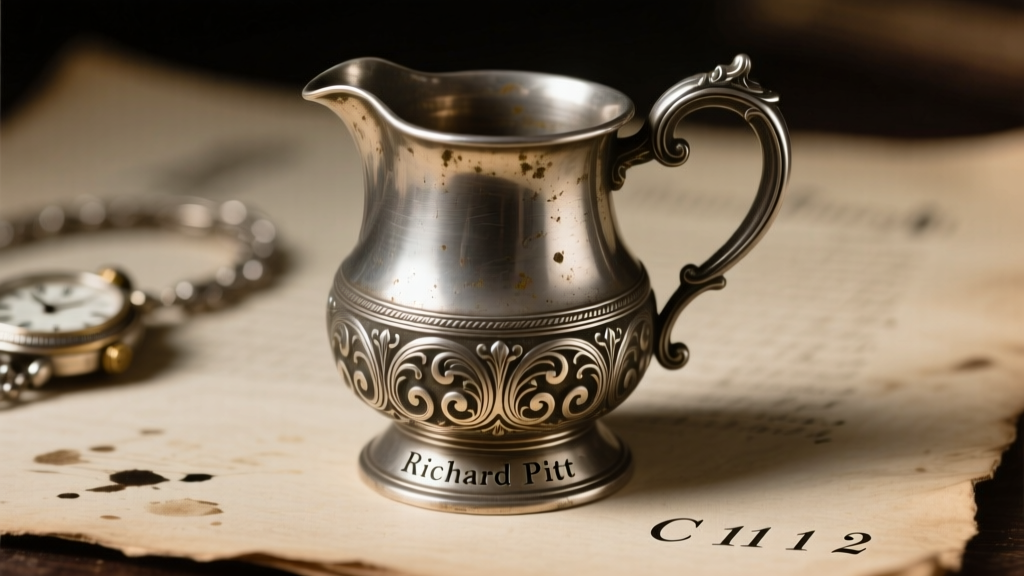
A Masterpiece of Georgian Pewter: The Richard Pitt Flagon, Circa 1770, 11½ Inches Tall
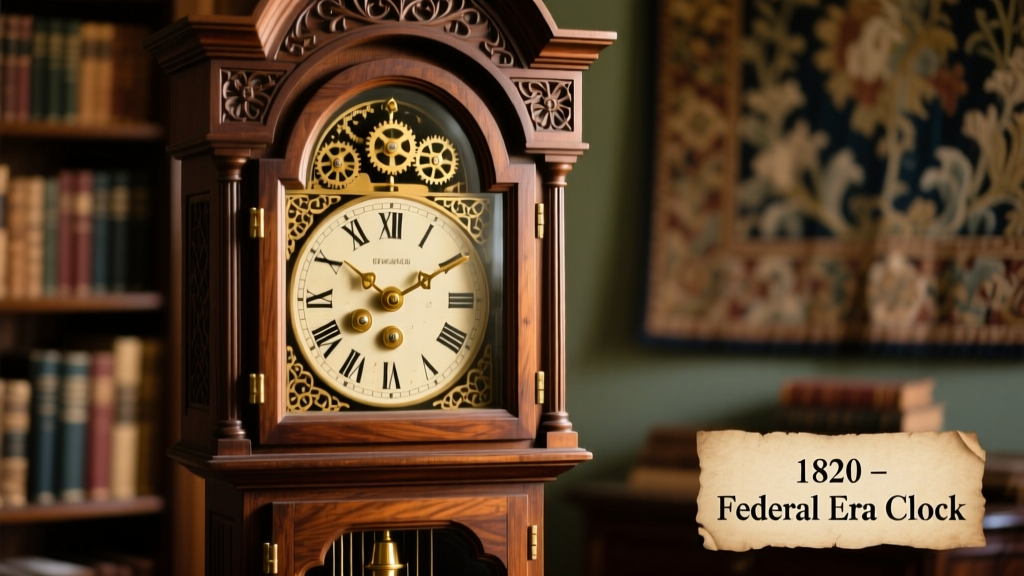
Federal-Era Tall Case Clock: Pine Construction, Gothic Arch, Glazed Waisted Case — An 88-Inch American Masterpiece
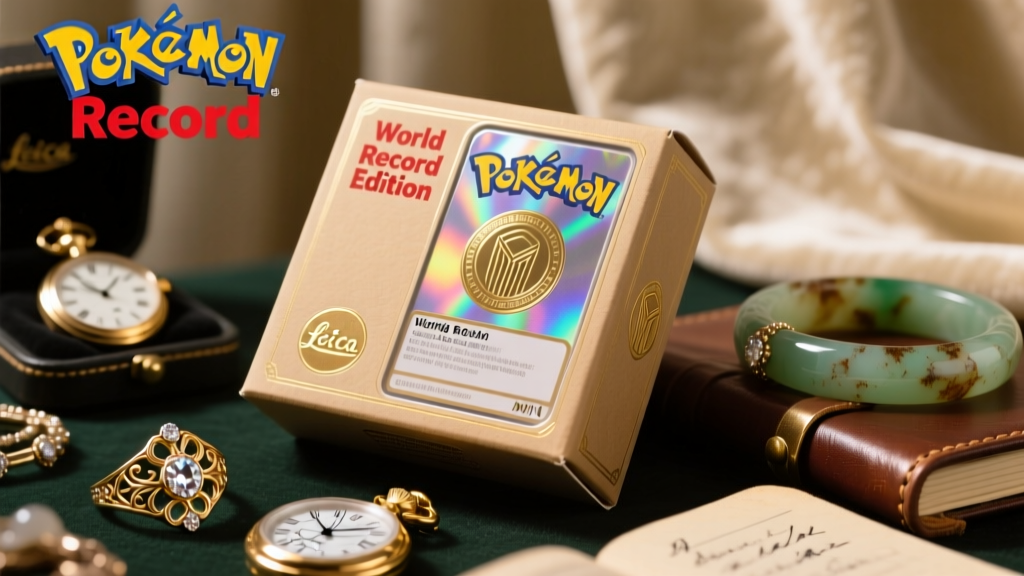
The $5.3 Million Pikachu Illustrator Card and the Sealed Box World Record: Anatomy of a Historic Auction
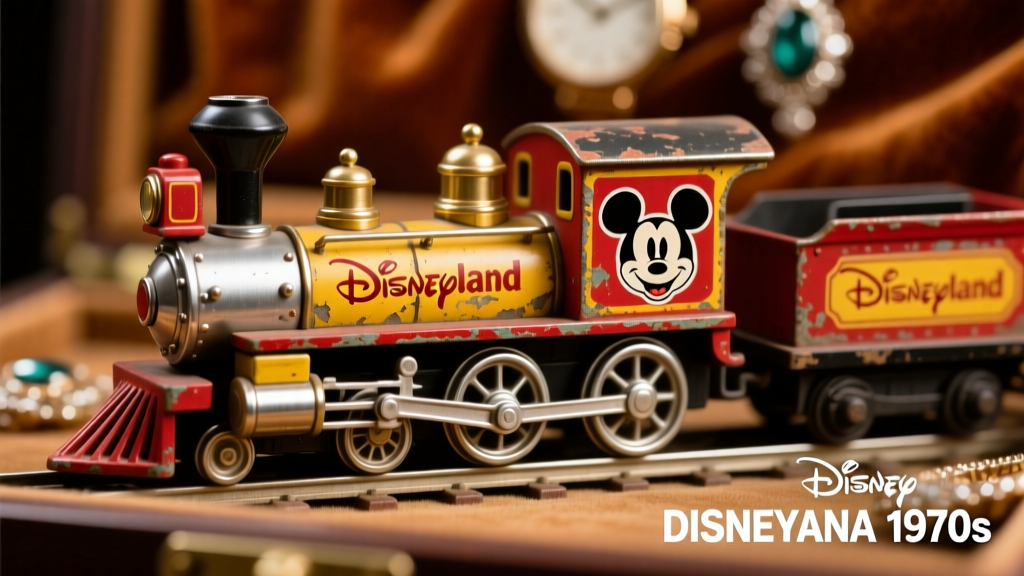
The 1970s Disneyana Toy Mickey Mouse Train: A Collector’s Guide to the 5-Inch Vintage Pull-Along Locomotive
The Rolex Submariner Ref. 1133039: A Rare Transitional Chronometer from 1967–1969

The 1935 Peter Muller-Munk Chrome Pitcher: Angular Modernism, Curved Function, and American Industrial Design Legacy

Mettlach Stein No. 2206: A 3-Liter Masterpiece of German Stoneware Craftsmanship
November 2015 Vintage Jewelry & Watch Market Report: Auction Results, Price Trends, and Collector Insights

Bradley & Hubbard Student Double-Painted Milk Glass Shades: A Technical and Historical Appraisal of the 20-Inch Format