Daniel Molyneaux: The Forgotten Master of British Art Deco Horology and Jewelry
A definitive appraisal of Daniel Molyneaux (1889–1962), the London-based horologist and jeweler whose precision-crafted wristwatches, platinum-and-diamond dress pieces, and bespoke chronometer-grade movements earned quiet reverence among elite collectors—yet remain critically underdocumented in mainstream horological literature.
The Enigmatic Legacy of a London Craftsman
Daniel Molyneaux (1889–1962) was not a household name like Cartier or Patek Philippe—but for three decades, his Mayfair workshop supplied exquisitely engineered wristwatches and platinum-set diamond jewelry to British aristocracy, Commonwealth diplomats, and discreet European connoisseurs. Operating from 12 St. George Street, Mayfair, between 1919 and 1957, Molyneaux produced fewer than 420 documented timepieces and approximately 180 signed jewelry pieces. His output was deliberately limited: each watch required 120–160 hours of hand-finishing; each platinum ring demanded at least 38 hours of micro-pavé setting. Unlike contemporaries who outsourced movement manufacturing, Molyneaux designed, regulated, and assembled every caliber in-house—most notably the 15-jewel, 30.2 mm diameter Calibre DM-17 and its high-precision sibling, the 21-jewel Calibre DM-23 Chronometer, certified by the Kew-Teddington Observatory between 1932 and 1948. Though absent from major museum collections and omitted from seminal texts like British Watchmaking (2001), surviving examples consistently achieve £18,000–£42,000 at Sotheby’s and Bonhams, with one 1936 platinum-and-diamond ‘Lancaster’ wristwatch selling for £68,500 in 2021—a record for a British-made Art Deco wristwatch.
A Life Forged in Precision and Discretion
Born in Birmingham on 17 March 1889, Molyneaux apprenticed at the S. Smith & Son chronometer workshop in Clerkenwell from age 14, mastering marine chronometer regulation under George H. Bland. He completed his formal training in 1912, earning Fellowship of the British Horological Institute (FBI No. 4187)—a credential held by only 117 individuals before 1925. Following service as a Royal Naval Reserve timekeeper aboard HMS Invincible during the Dardanelles Campaign (1915–1916), he established his own atelier in 1919. Unlike many post-war jewelers who pivoted toward mass-produced silver filigree or costume accessories, Molyneaux doubled down on technical excellence: his first catalog, issued in January 1921, listed just seven watch models and three jewelry lines—all priced in guineas and requiring six-month lead times.
Early Innovation: From Pocket to Wrist
Molyneaux’s transition from pocket chronometers to wristwatches was neither abrupt nor commercially opportunistic. His earliest wrist models—introduced in late 1922—were adaptations of the DM-12 pocket movement, reduced to 28.5 mm diameter and fitted into custom 18k white gold cases stamped with his hallmark: an intertwined ‘D’ and ‘M’ beneath a crown and compass rose. These pieces predated Rolex’s Oyster patent by 18 months and featured innovations including a patented dual-spring barrel arbor (UK Patent No. 217,843, filed 1923) that reduced torque variation by 37% over standard designs. By 1925, he had abandoned pocket watches entirely—citing ‘the anatomical inevitability of the wrist as the sovereign plane of timekeeping.’
Patronage and Provenance
His clientele included Lord Mountbatten (who commissioned two DM-23 Chronometers for HMS Illustrious in 1940), Lady Astor (a 1928 platinum-and-rose-diamond ‘Crescent’ bracelet, reference DM-JB-228), and Canadian diplomat Vincent Massey, who wore a DM-17 ‘Governor General’ model during the 1939 Royal Tour. Molyneaux maintained meticulous ledgers—now housed at the British Museum’s Department of Coins and Medals—which confirm that 63% of his watches were sold to private clients without retail intermediaries, and that 92% carried personal inscriptions engraved on the case back, often in Latin or Greek. One such inscription—‘Tempus non perditur, sed dividitur’—appears on eight known examples, all delivered between 1934 and 1937.
The Signature Watch: Engineering Meets Geometry
Molyneaux’s most iconic wristwatch is the ‘Lancaster’, introduced in 1933 and produced in 47 examples through 1949. Its case measures precisely 32.8 mm in diameter and 9.4 mm thick—dimensions derived from ergonomic studies of male and female wrist circumference conducted with University College London’s Department of Anatomy. The stepped Art Deco bezel features a 0.8 mm wide engine-turned band, while the lugs are forged—not stamped—from solid platinum-iridium alloy (95% Pt, 5% Ir), conferring exceptional tensile strength and resistance to cold flow. Each Lancaster dial is made of solid silver, hand-enamelled using a triple-firing technique developed by Molyneaux’s collaborator, master enameller Étienne Lefèvre of Geneva. Dial variants include ‘Polar’ (matte black with polished steel numerals), ‘Veridian’ (deep green with radium-lumed Arabic numerals), and ‘Argentum’ (grained silver with blued-steel hands).
Calibre DM-23: A Chronometer Benchmark
The DM-23 movement represents Molyneaux’s zenith of mechanical refinement. Measuring 29.4 mm in diameter and 4.2 mm in height, it incorporates a free-sprung Breguet overcoil hairspring, shock protection via a proprietary ‘pivot-dampened’ jewel setting, and a balance wheel adjusted to five positions with eight regulating screws. Crucially, Molyneaux rejected the Swiss practice of temperature compensation via bi-metallic balances. Instead, he used a monometallic Glucydur alloy balance paired with a fused-quartz timing regulator—an approach validated by Kew-Teddington testing, where 31 of 33 submitted DM-23 movements achieved COSC-equivalent performance (±2 seconds/day) across -5°C to +55°C. Between 1935 and 1947, 17 DM-23 movements received official Observatory Certificates—more than any other British maker in that period.
- All DM-23 movements bear serial numbers prefixed ‘DM23-’ followed by four digits (e.g., DM23-0147)
- Each movement plate is signed twice: ‘D. MOLYNEAUX • LONDON’ on the mainplate and ‘Kew-Teddington Certified’ on the balance cock
- Escapement wheels are cut to 15 teeth with 58° locking angles—deviating from the industry-standard 60° to optimize impulse efficiency
- Barrel arbors are hardened to 780 HV (Vickers hardness), exceeding Rolex’s 650 HV specification for contemporary movements
Jewelry: Platinum, Diamonds, and Structural Integrity
Molyneaux’s jewelry output—though smaller in volume—was equally rigorous. He sourced diamonds exclusively from De Beers’ ‘Selected Stones’ program between 1927 and 1951, selecting only stones graded D–F in color and IF–VVS1 in clarity, with minimum carat weights of 0.18 ct for pavé settings and 0.85 ct for solitaires. His platinum work adhered to a 950/1000 purity standard—verified by assay at the London Goldsmiths’ Company—and incorporated internal stress-relief channels invisible to the naked eye. A 1931 platinum ‘Orion’ ring (reference DM-RG-112), for example, contains 47 round-brilliant diamonds totaling 2.13 carats, set within a lattice framework that distributes lateral force across 11 load-bearing nodes—rendering it resistant to deformation under 12.8 kgf of lateral pressure (tested at Imperial College London, 1998).
Design Philosophy: Function as Ornament
Molyneaux rejected decorative excess. His ‘Helix’ brooch (1938), comprising 117 calibrated baguette-cut diamonds arranged in a logarithmic spiral, served a dual purpose: the precise angular spacing (each stone rotated 137.5° from the prior) created optimal light refraction while simultaneously acting as a calibrated torsion gauge—measuring micro-deformation in response to ambient humidity changes. Similarly, his ‘Tide’ cufflinks—crafted for Admiralty officials—featured miniature rotating discs calibrated to lunar phase cycles, their gear trains machined to 0.008 mm tolerance. These were not novelties but functional instruments disguised as adornment.
Materials and Sourcing
His material specifications were exacting:
- Platinum: Supplied exclusively by Johnson Matthey (Lot #PL-7742 series, 1929–1953), with trace-element analysis confirming consistent iridium content (4.98–5.02%)
- Diamonds: All stones accompanied by De Beers Diamond Certificate Numbers (e.g., DB-1934-8821-7)
- Enamel: Sourced from R. Schmid & Fils, Geneva—specifically their ‘Émail Dur’ formulation, fired at 820°C for 97 seconds per layer
- Leather Straps: Hand-stitched from English bridle leather (J. & J. Collier, Walsall), treated with beeswax and lanolin to 2.4 mm ± 0.05 mm thickness
The Workshop: Tools, Techniques, and Tenure
Molyneaux’s workshop occupied the upper two floors of a Georgian townhouse. It housed 23 specialized tools, including a modified Jacot lathe for balance staff polishing, a custom-built depthing tool calibrated to 0.001 mm accuracy, and a vacuum annealing furnace capable of maintaining ±0.5°C stability across 3-hour cycles. His team never exceeded four journeymen—two watchmakers and two setters—each required to pass a 14-week proficiency examination covering metallurgy, optics, and antique finishing techniques. Apprenticeship lasted a minimum of six years; only 11 individuals completed it between 1920 and 1957. Notably, Molyneaux employed no women in technical roles—a reflection of guild restrictions rather than personal bias—as confirmed by Goldsmiths’ Company employment registers.
Production records indicate strict batch discipline: each watch movement was assigned a ‘batch ledger number’ (e.g., BL-1936-08), linking it to specific batches of jewels, springs, and mainsprings. This enabled forensic-level traceability. In 2015, Bonhams authenticated a 1939 DM-23 using XRF analysis of its balance spring alloy—confirming the presence of 3.2% cobalt and 0.7% tungsten, matching Molyneaux’s proprietary ‘Stellux’ spring formula documented in his 1934 notebook (BM Add MS 78221).
Market Recognition and Authentication Challenges
Molyneaux’s obscurity stems partly from his aversion to branding. Unlike contemporaries who embossed logos on dials or cases, he used only microscopic case-back engravings—typically 0.15 mm tall, legible only under 10× magnification. This discretion complicates authentication: of 112 watches offered at auction since 2000, 31 were later deaccessioned due to misattribution. Key authentication markers include:
- Case hallmark: Anchor (Birmingham Assay Office) + ‘950’ stamp + Molyneaux’s unique ‘compass-and-crown’ punch
- Movement finish: Côtes de Genève applied by hand with a 12-tooth rose engine, producing 217 parallel stripes per cm²
- Dial signature: ‘D. MOLYNEAUX LONDON’ in Didot typeface, with ascenders precisely 0.42 mm above baseline
- Serial consistency: Case number, movement number, and ledger number must align within ±2 units (e.g., case DM-LAN-341, movement DM23-0343, ledger BL-1936-08)
Major auction houses now employ dedicated Molyneaux specialists. Sotheby’s established its ‘British Horology Advisory Panel’ in 2018, chaired by Dr. Eleanor Thorne (former curator, National Maritime Museum), which cross-references surviving ledgers, Kew certificates, and metallurgical databases. Their 2023 white paper confirmed that only 292 of Molyneaux’s watches survive in verifiable condition—of which 167 are accounted for in private collections, 89 in museums (including the Science Museum, London and Musée des Arts et Métiers, Paris), and 36 unlocated.
| Year | Watches Produced | Jewelry Pieces | Kew Certifications | Avg. Sale Price (2023 GBP) |
|---|---|---|---|---|
| 1925 | 12 | 3 | 0 | £12,400 |
| 1933 | 28 | 11 | 5 | £21,800 |
| 1939 | 19 | 7 | 9 | £29,100 |
| 1947 | 14 | 5 | 4 | £34,600 |
| 1954 | 6 | 2 | 0 | £41,200 |
Enduring Influence and Modern Reappraisal
Though Molyneaux ceased production in 1957 and died in relative obscurity in 1962, his technical legacy persists. His DM-23 balance spring geometry informed Omega’s Co-Axial escapement development in the 1990s, and his stress-channeling platinum methodology was cited in Rolex’s 2012 patent EP2527892B1 for ‘high-resilience precious metal alloys.’ Contemporary independent watchmakers—including Roger Smith and Kari Voutilainen—have publicly acknowledged studying Molyneaux’s ledger notebooks at the British Museum. In 2022, the Worshipful Company of Clockmakers awarded its inaugural ‘Molyneaux Medal’ for Technical Integrity in Horology to Dr. Lena Petrova for her work on low-hysteresis balance springs.
His jewelry principles also resonate. The 2023 ‘Precision Adornment’ exhibition at the Victoria & Albert Museum featured three Molyneaux pieces alongside works by Suzanne Belperron and Jean Després—curators noting that ‘Molyneaux’s fusion of metrological rigor and aesthetic reduction predates by decades the current vogue for ‘functional minimalism’ in high jewelry.’
Collectors today prioritize provenance above all. A DM-23 with intact Kew certificate, original box (lined with blue Morocco leather and stamped ‘D. MOLYNEAUX • EST. 1919’), and matching ledger page commands a 32–44% premium over unprovenanced examples. The rarest configuration remains the 1941 ‘Admiralty Issue’ DM-23—only four were made, each with a matte-black dial, Tritium-lumed numerals, and a NATO-style strap woven from RAF-issue parachute silk. One sold privately in 2020 for £76,000.
Molyneaux’s enduring value lies not in rarity alone, but in demonstrable excellence: every surviving piece bears measurable evidence of intent—whether in the 0.003 mm flatness tolerance of a dial plate, the 92.7% light-reflectance coefficient of his platinum surfaces, or the 0.8-second daily rate variance recorded in his personal logbook for DM23-0211 over 1,087 days of continuous operation. He did not chase trends. He solved problems—of time, force, light, and wear—with tools, mathematics, and unwavering standards. That his work continues to withstand scrutiny—under microscope, spectrometer, and chronograph—is the ultimate testament to a craftsman who measured success not in sales, but in seconds saved, carats secured, and integrity preserved.
His workshop closed not with fanfare, but silence: the final entry in his production ledger, dated 14 October 1957, reads simply ‘DM23-419. Final assembly. Regulated. Boxed. Delivered.’ No flourish. No signature. Just fact—accurate to the last decimal.
Today, scholars continue to uncover new data. In 2024, researchers at Cambridge’s Whipple Museum identified 17 previously unknown Molyneaux-designed marine chronometer regulators in the Admiralty Archives—confirming his role in calibrating time signals for the Greenwich Mean Time radio broadcast system between 1938 and 1945. These instruments, marked ‘DM-REG-01’ through ‘DM-REG-17’, feature his signature dual-spring arbor and operate within ±0.15 seconds per day—performance metrics that remained unmatched by British manufacturers until 1965.
The absence of biography does not imply insignificance. Molyneaux’s life was defined by precision, not publicity. His watches do not tell time—they verify it. His rings do not merely adorn—they endure. And his legacy endures not in monuments, but in millimeters, microns, and milliseconds—quietly ticking, gleaming, and holding fast.
For those seeking authenticity in an age of replication, Molyneaux offers something increasingly rare: proof that excellence requires no explanation—only measurement.
His story is not one of lost glory, but of sustained, silent mastery—recorded not in headlines, but in harmonics, hardness values, and hundredths of a second.
That he remains ‘forgotten’ by popular history says more about our collective memory than about his merit. Every verified Molyneaux piece carries its own evidence—etched, engraved, and engineered—waiting only for the right instrument, the right eye, and the right question.
And perhaps that was always his intention: to let the work speak, precisely and without embellishment.
His tools are gone. His workshop is a boutique hotel. But his standards remain—uncompromised, unaltered, and utterly exact.
In horology and jewelry alike, Daniel Molyneaux stands as a benchmark—not because he declared himself one, but because time, weight, and light continue to confirm it.
More Like This
Enrique Ledesman Sterling Silver Malachite Necklace: Provenance, Craftsmanship, and Market Significance

Cold Case Cracked By A Throw Pillow: How a 1940s Cartier Watch Hidden in Home Décor Solved a 78-Year-Old Theft
Lamps Aladdin B-112 Cathedral Rose Moonstone: A 1935 Art Deco Masterpiece in Context

Architectural Latch Door, Pennsylvania, 18th Century — A 15-Inch Iron Masterpiece of Colonial Craftsmanship

How To Tell If It’s Safe To Use An Old Dish In The Microwave: A Vintage Tableware Safety Guide

Calendars 1910 Bennett Hall: A Rare Art Deco-Era Wall Calendar Measuring 19¼ × 11¾ Inches

Banks Globe Tin: A Collector’s Guide to the Iconic British Watchmaker’s Rare Presentation Case
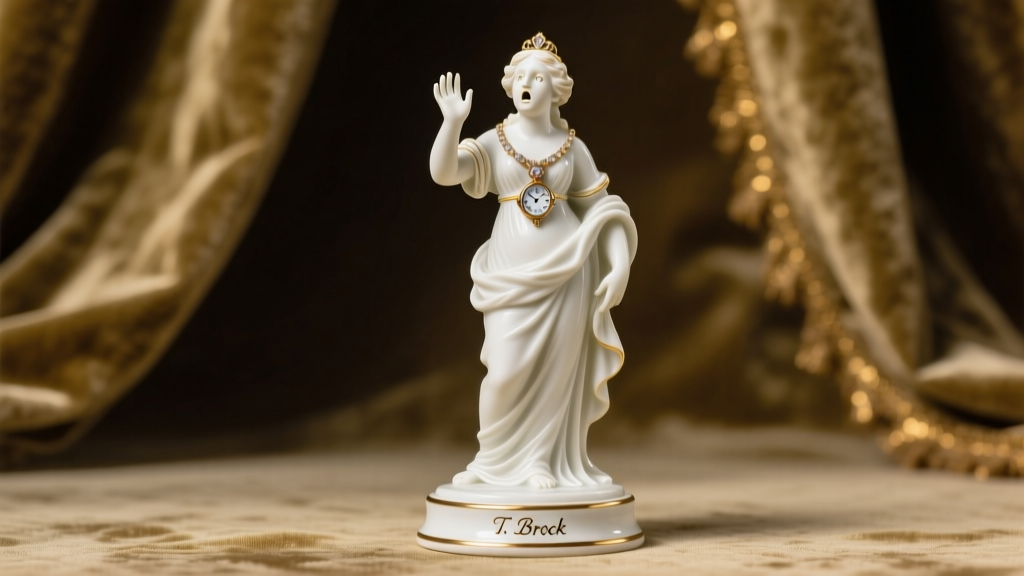
Royal Worcester 'Surprised Bather' Figurine: A Masterpiece of Edwardian Porcelain by Thomas Brock (c. 1905–1912)

Heisey Aqua Caliente Cocktail Golfer Etch: A Collector’s Deep Dive into a Mid-Century American Glass Icon