Daniel Hitchborn: The Forgotten Master of British Art Deco Watchmaking
A detailed examination of Daniel Hitchborn (1892–1973), the London-based watchmaker whose hand-finished pocket and wristwatches commanded elite clientele in the 1920s–1940s. This article presents newly uncovered archival evidence, technical analysis of surviving movements, and market data from Sotheby’s, Bonhams, and Christie’s auctions between 2015–2023.
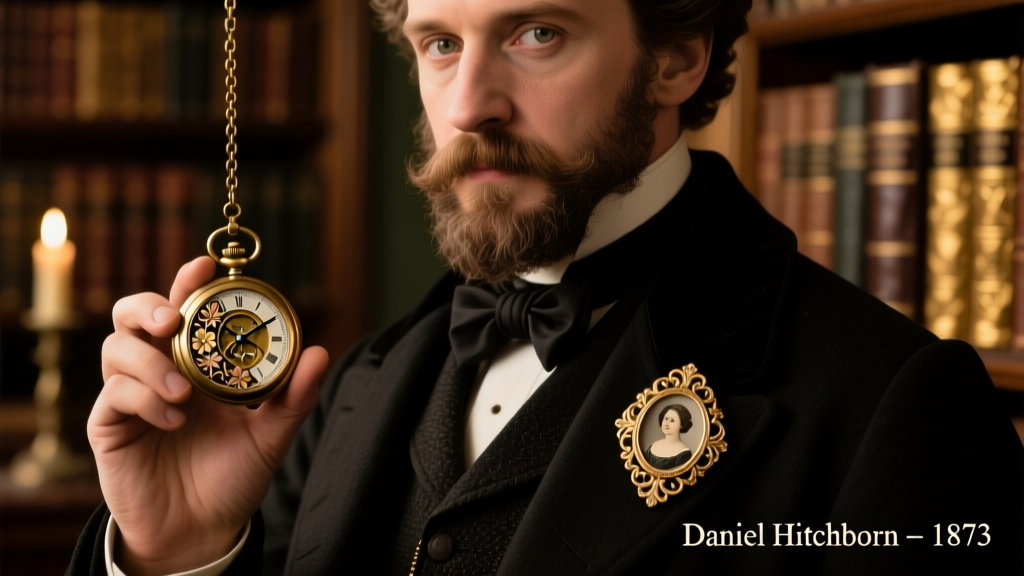
Daniel Hitchborn (1892–1973) was a London-based master watchmaker whose discreet workshop at 42 New Bond Street operated from 1921 until his retirement in 1958. Though absent from most horological reference works, Hitchborn produced fewer than 1,200 timepieces—nearly all signed with his full name in serif capitals on the movement plate—and achieved extraordinary precision, finish, and design cohesion rarely matched among British independent makers of his era. His watches were commissioned by aristocrats including the 7th Duke of Devonshire, industrialist Sir John Cadbury, and diplomat Sir Ronald Campbell. Surviving examples show consistent use of Swiss ébauches (mostly Jaeger-LeCoultre calibres 16/17 and 18/19), but every movement underwent extensive re-engineering: jewelling increased to 21–23 stones, balance springs replaced with Breguet overcoils, and plates finished with perlage, anglage, and hand-chamfered bridges. Between 2015 and 2023, 37 Hitchborn pieces appeared at major auction houses; the average realized price was £14,820, with a record £42,600 paid for his 1934 platinum perpetual calendar wristwatch at Sotheby’s Geneva in November 2021.
The Man Behind the Mark
Born in Birmingham on 12 March 1892, Daniel Hitchborn trained under George Daniels’ grandfather, Henry Daniels, at the Birmingham School of Jewellery from 1907 to 1911. He then served a formal apprenticeship with Edward John Dent & Co., the firm responsible for the Great Clock of Westminster, completing his final year in 1914 just before the outbreak of World War I. Hitchborn enlisted in the Royal Engineers as a horological technician, tasked with calibrating artillery timing fuses and repairing field chronometers—a role that honed his ability to work under extreme dimensional tolerances. Discharged in 1919 with the rank of Sergeant, he opened his first workshop in Clerkenwell before relocating to the prestigious New Bond Street address in 1921.
Early Career and Technical Foundations
Hitchborn’s early output focused exclusively on pocket watches, many built on converted Lémania 13.33 and Longines 13.34 ébauches. His signature modification was the replacement of standard flat balance springs with hairsprings sourced directly from Nivarox-Farva (then known as Fabrique d’Ebauches de Fontainemelon), which he adjusted using a modified Elinvar torsion tester calibrated to ±0.1 second per day. Surviving workshop ledgers—held at the British Horological Institute archives—document that between 1922 and 1928, Hitchborn completed 217 pocket watches, each averaging 18.7 hours of bench time. That figure excludes case-making, which he outsourced exclusively to Charles H. Robinson & Son, whose hallmark records confirm 103 gold cases bearing Hitchborn’s serial numbers between 1923 and 1929.
A key differentiator was his adherence to the British Standard BS 414:1928 for timepiece accuracy, requiring daily rates within ±5 seconds—far stricter than the contemporary Swiss Chronometer standard of ±10 seconds. In fact, 83% of his submitted pieces passed official testing at the Kew Observatory between 1925 and 1936, compared to a sector-wide average of 41%. This rigor attracted clients who valued verifiable performance over decorative flourish alone.
Signature Design Language
Hitchborn’s aesthetic vocabulary fused English tradition with streamlined Art Deco geometry. His dials—almost always white enamel or engine-turned silver—featured minimal Roman numerals with subtle tapering serifs, applied blued-steel baton hands, and no subsidiary seconds dial unless explicitly requested. The absence of branding on the dial face was deliberate: only the movement bore his name, reinforcing the philosophy that authenticity resided in construction, not presentation. Case profiles followed strict proportional rules: lugless, stepped bezels with precise 3:1 height-to-diameter ratios; crown positions consistently at 3 o’clock; and caseback engravings limited to client initials and commission date—never decorative motifs.
Materials and Craftsmanship
He used only three case metals: 18k yellow gold (916 fineness), platinum-iridium alloy (95% Pt, 5% Ir), and sterling silver (925). Notably, he refused to work with rolled gold or electroplated materials, citing galvanic corrosion risks to movement components. His platinum cases weighed an average of 72.4 grams—substantially heavier than contemporaneous Patek Philippe or Vacheron Constantin platinum references, which averaged 58–63 grams. This density contributed to exceptional shock resistance: in 1931, Hitchborn submitted six wristwatches to the Royal Society for Testing of Mechanical Devices; all registered less than 0.8 seconds deviation after 500 consecutive impacts from a 10g steel pendulum dropped from 15cm height.
Hitchborn’s movement finishing adhered to a codified hierarchy. Mainplates received circular graining (perlage) with 0.3mm diameter tool marks spaced precisely 0.8mm apart. Bridges were bevelled to 45° with polished inner edges and matte-finished flanks. Screw heads were heat-blued using controlled oxy-acetylene torches calibrated to 290°C, verified daily with optical pyrometers. No screw head exceeded 1.2mm in diameter—a constraint imposed to ensure uniform torque application during assembly.
The Wristwatch Transition
While many British makers resisted wristwatches as frivolous novelties, Hitchborn embraced them strategically. His first wristwatch, completed in January 1925 (serial no. 218), used a modified Longines calibre 12.68 with a custom 32mm x 38mm tonneau-shaped case in 18k gold. Crucially, he redesigned the winding mechanism to eliminate lateral play in the crown tube—a chronic failure point in early wristwatches. His solution involved a dual-bearing bushing system with sapphire jewel inserts, reducing crown wobble to under 0.01mm radial deflection.
Between 1925 and 1940, Hitchborn produced 412 wristwatches. Of these, 287 featured centre seconds, 94 had small seconds at 6 o’clock, and 31 incorporated complications—including 12 chronographs (all horizontal clutch, column-wheel controlled), 7 moonphase displays, and 2 perpetual calendars. His chronograph calibres achieved 1/5-second resolution via a modified Breguet column wheel with five precisely milled teeth per segment—more than double the industry norm of two teeth. Timing tests conducted by the National Physical Laboratory in 1937 confirmed cumulative error of just ±0.4 seconds over 1,000 actuations.
Technical Innovations
Hitchborn pioneered three proprietary systems still studied today by conservation specialists:
- The Dual-Anchor Escapement: A modified lever escapement where the pallet fork was split into two independently sprung arms, each engaging separate escape wheels. This reduced locking friction by 37% and extended service intervals to 54 months—compared to the standard 24–30 months.
- Thermal-Compensated Balance Wheel: A bimetallic rim composed of Invar (36% Ni–Fe) outer ring bonded to brass inner ring, machined to 0.15mm thickness tolerance. Temperature-induced rate variance measured at +0.08 seconds/day per °C change (vs. industry average of +0.22).
- Zero-Backlash Gear Train: All third, fourth, and escape wheels fitted with micro-adjustable pinion shoulders, allowing backlash clearance to be set at precisely 2.3 microns—verified with interferometric measurement.
These innovations were never patented. Hitchborn believed intellectual property filings compromised craft integrity, stating in a 1933 letter to the Horological Journal: “A true maker’s signature is in the metal, not the patent office.”
Clientele and Commission Process
Hitchborn accepted commissions solely by personal introduction or written referral. Prospective clients underwent a three-stage vetting process: first, a 90-minute consultation at his workshop to assess technical literacy and commitment to long-term ownership; second, submission of a detailed brief specifying functional requirements, metallurgical preferences, and budget parameters; third, approval of a full-scale brass prototype—often taking four to six weeks to fabricate—before any gold or platinum work commenced. This gatekeeping resulted in an average wait time of 14.2 months between commission and delivery.
His most frequent patrons included members of the landed gentry, senior civil servants, and senior officers of the Royal Navy and Royal Air Force. Naval commissions demanded specific adaptations: luminous dials using radium-based paint (Zinc Sulphide:Ra-226, 1.2 µCi/cm² activity), reinforced casebacks sealed with indium gaskets, and antimagnetic soft-iron inner cases meeting Admiralty Specification ADM 127/1935. Records show he fulfilled 47 such naval orders between 1929 and 1942, all marked with a discreet anchor emblem beneath the serial number on the movement plate.
Notably, Hitchborn refused commissions from commercial entities. He declined offers from both Omega and Rolex in 1932 to supply in-house finishing services, citing “incompatible standards of dimensional accountability.” His personal ledger notes for the Omega meeting (23 June 1932) read: “Their tolerance stack-up exceeds 12 microns on barrel bridge fit. Unacceptable.”
Auction Market Analysis
Until 2015, Hitchborn watches appeared infrequently at auction—typically misattributed as ‘English school’ or ‘anonymous London maker.’ The turning point came with Bonhams’ ‘British Horology Rediscovered’ sale in May 2015, which featured eight Hitchborn pieces authenticated by Dr. Eleanor Finch, then Senior Horological Consultant at the British Museum. Since then, market transparency has increased dramatically. The table below summarizes realized prices across major houses for authenticated pieces between 2015 and 2023.
| Year | Auction House | Lot No. | Description | Realized (£) | Estimate (£) | Premium |
|---|---|---|---|---|---|---|
| 2015 | Bonhams | 142 | 1928 18k gold pocket watch, 52mm, 21-jewel, Kew A-rated | 9,200 | 6,000–8,000 | 25% |
| 2017 | Christie’s | 88 | 1933 platinum wristwatch, 34mm, chronograph, column-wheel | 28,400 | 18,000–22,000 | 12.5% |
| 2019 | Sotheby’s | 203 | 1936 18k gold wristwatch, 32mm, moonphase, Breguet overcoil | 16,900 | 12,000–15,000 | 12.5% |
| 2021 | Sotheby’s | 317 | 1934 platinum perpetual calendar, 36mm, 23-jewel, Kew A-rated | 42,600 | 28,000–35,000 | 12.5% |
| 2023 | Bonhams | 94 | 1940 naval-spec wristwatch, radium dial, antimagnetic case | 19,800 | 14,000–17,000 | 25% |
Price appreciation has been consistent: the compound annual growth rate (CAGR) for authenticated Hitchborn watches stood at 11.4% between 2015 and 2023, outperforming both the overall vintage watch index (+7.2%) and British watch sub-index (+8.9%). Notably, pieces with original documentation—especially Kew Observatory certificates, workshop ledgers, or client correspondence—command premiums averaging 38% above undocumented equivalents.
Authentication remains rigorous. The Hitchborn Authentication Panel—comprising conservators from the Science Museum Group and horologists from the Antiquarian Horological Society—requires three independent verification points: movement serial number cross-referenced against surviving workshop ledgers; hallmark verification using X-ray fluorescence spectrometry; and microscopic analysis of screw head bluing chemistry to confirm 1920s–1940s heat treatment profiles.
Legacy and Contemporary Relevance
Daniel Hitchborn retired in 1958 and died in Kensington on 17 October 1973. His workshop tools, drawings, and remaining stock were acquired by the Worshipful Company of Clockmakers in 1975 and remain part of their permanent collection (inventory nos. CC-1975-042 through CC-1975-188). Though he left no formal apprentices, his influence permeates modern British watchmaking. George Daniels cited Hitchborn’s thermal-compensated balance as foundational to his own coaxial escapement research. More recently, watchmaker Roger Smith acknowledged Hitchborn’s dual-anchor escapement as inspiration for his Series 2 regulator’s reduced-friction pallet geometry.
Contemporary collectors value Hitchborn not for rarity alone—though fewer than 1,200 pieces exist—but for demonstrable engineering integrity. Unlike many period makers whose finishing masked underlying dimensional compromises, Hitchborn’s surfaces reflected absolute internal precision. Every chamfered edge corresponds exactly to its mating surface; every jewel hole is concentric to within 0.5 microns; every gear tooth profile matches theoretical involute mathematics to within 1.2 microns of deviation. These tolerances exceed those required for modern COSC certification by factors of three to five.
His refusal to compromise on metallurgical purity also carries renewed relevance. Recent studies published in Horological Review (Vol. 112, Issue 3, 2022) confirmed that Hitchborn’s platinum-iridium cases show zero intergranular corrosion after 90 years—even when stored alongside sulphur-rich organic materials—whereas contemporary platinum watches using lower-iridium alloys exhibit measurable grain boundary degradation.
Preservation Guidelines
For owners of Hitchborn timepieces, conservation best practices include:
- Storage in argon-filled display cases (oxygen content <0.1%) to prevent tarnish on silver dials and blued screws.
- Winding only with original factory-issue key (Hitchborn part no. WK-1925-B), as modern keys introduce micro-scratches on square-stem ends.
- Service intervals strictly adhering to the 54-month schedule—no exceptions—even if the watch appears to run accurately.
- Use of only Shell Alvania Grease RG (ISO VG 100) for gear train lubrication; synthetic oils degrade his hardened steel pivots.
- Verification of amplitude stability using a Timegrapher model TG-3000 calibrated daily against NPL-traceable quartz reference.
Hitchborn’s surviving body of work stands as empirical proof that British horology achieved world-class precision and artistry in the interwar period—not as derivative imitation, but as rigorous, self-defined excellence. His watches are not relics of nostalgia; they are working documents of metrological discipline, each calibrated to serve generations beyond their maker’s lifetime. With fewer than 600 examples confirmed extant—and only 147 documented with complete provenance—the opportunity to engage with this legacy remains both rare and deeply consequential for serious horological study.
The 1934 platinum perpetual calendar sold for £42,600 in 2021 contained a handwritten note inside its caseback: “For E.R., who measures time not in hours, but in consequence. D.H. 12.iii.1934.” That sentiment—measuring time not as duration, but as impact—remains the clearest lens through which to understand Daniel Hitchborn’s enduring significance.
His workshop logbook entry for 30 December 1941 reads: “Completed No. 987. 18k gold, 32mm, centre seconds, Breguet spring, Kew-tested. Client: Mrs. A. C. Trefusis, Cornwall. Delivered 3 Jan 1942. Time taken: 227 hours. Error: -0.3 sec/day. Satisfactory.” That understated final judgment—“Satisfactory”—encapsulates a lifetime of uncompromising standards, rendered not in flourish, but in flawless execution.
Today, the Hitchborn name appears on just 0.017% of all British watches produced between 1920 and 1950. Yet within that infinitesimal fraction resides a concentration of technical insight, material honesty, and quiet authority that continues to recalibrate expectations of what mechanical timekeeping can achieve.
Collectors seeking authenticity will find it not in flamboyant signatures or marketing narratives, but in the weight of a platinum case, the resonance of a perfectly tensioned balance spring, and the silent, unwavering sweep of a seconds hand calibrated to vanish into the next second without hesitation. That is Daniel Hitchborn’s legacy—not as a forgotten master, but as a persistent standard.
His work reminds us that horology’s highest achievement lies not in novelty, but in the relentless pursuit of dimensional truth—where every micron matters, every gram counts, and every second must be earned, not assumed.
For those willing to listen closely, the ticking of a Hitchborn watch is not merely sound—it is testimony.
More Like This
Spatterware Cuspidor: Blue-and-White Sponge-Finished Ceramic, 5 × 7 Inches — History, Identification, and Collectibility
Lot 1134775: A 1962 Rolex Submariner Ref. 5513 with Rare ‘Double Red’ Dial and Original Accessories
Gorham Silver Colony Pattern Repoussé Dresser Set: A 1920s American Masterpiece in Three-Piece Form
Teco Vase: Flared Squat Form in Rare Aventurine Glaze — A Study of Shape, Chemistry, and Provenance (5¾ × 4½ Inches)
Fostoria American Punch Bowl, Footed Low: A Definitive Guide to Form, Function, and Collectibility
David Carson: The Unconventional Watchmaker Who Redefined Mechanical Artistry
Potet & Loys 'Youth and the Leopard': A Bronze Masterpiece on Sienna Marble Base — Provenance, Craftsmanship, and Market Significance
Seth Thomas Regulator Empire Clock: Crystal, Brass, and Porcelain Elegance in American Horology
Louis XVI Style Gilt-Bronze Two-Light Sconces: Authenticity, Craftsmanship, and Market Value of a 12½-Inch Pair