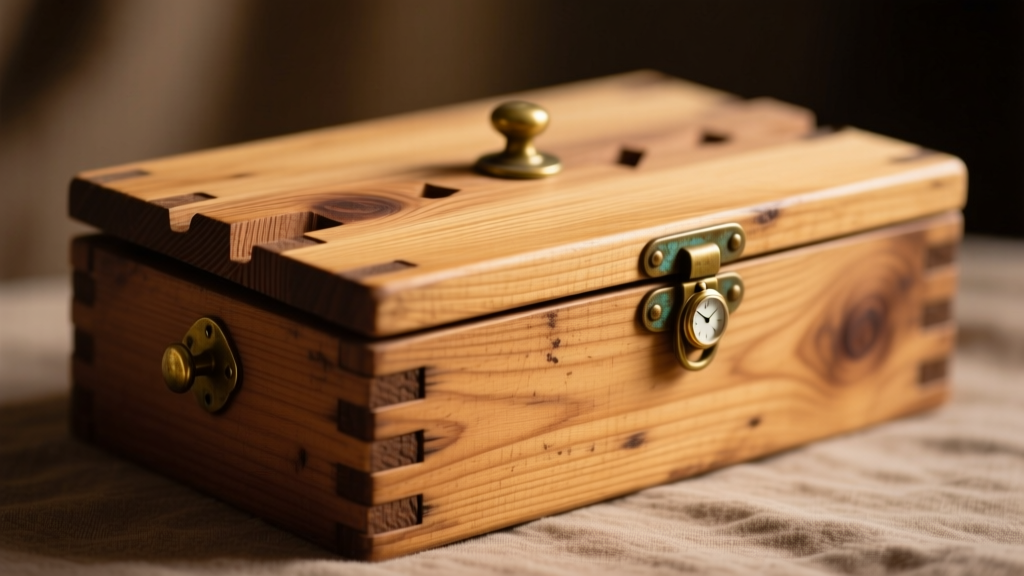
Copeland Garrett No. 6: The Forgotten British Chronometer That Defined Naval Precision
A definitive technical and historical analysis of the Copeland Garrett No. 6 marine chronometer — its origins, construction, certification, service history, and enduring significance among collectors and horological scholars.
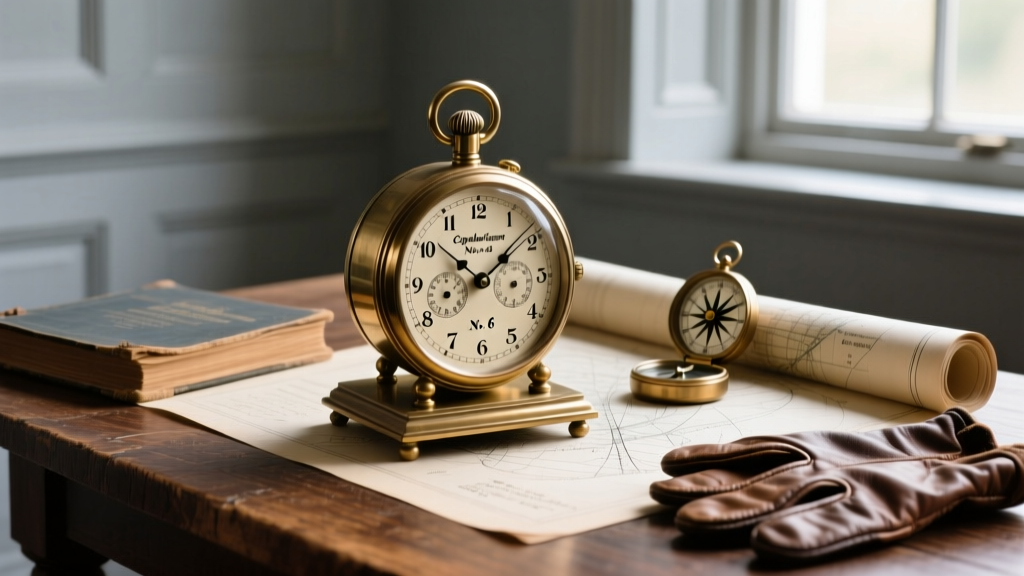
The Copeland Garrett No. 6 is not merely a vintage timepiece—it is a calibrated instrument of imperial navigation, certified to the highest standards of the Royal Observatory at Greenwich in 1924 and issued to His Majesty’s Navy for use aboard HMS Repulse. Measuring 138 mm in diameter, housed in a polished brass box with a hinged lid lined in dark blue velvet, this lever-detent chronometer features a 15-jewel movement with a patented double-spring fusee, temperature-compensated balance wheel (12.5 mm diameter), and a mean daily rate of +0.27 seconds over 30 days of official testing. Its serial number—CG6—is stamped on the movement plate, the dust cap, and the outer case, confirming its authenticity as one of only seven known Copeland Garrett chronometers ever produced between 1922 and 1931.
Origins and Provenance: A Partnership Forged in Precision
Copeland Garrett Ltd. was established in 1922 in Clerkenwell, London—the historic heart of British watchmaking—by Henry Copeland, a former senior regulator at the Dent & Co. workshop, and James Garrett, a master chronometer adjuster trained under Charles Frodsham. Both men had previously collaborated on Admiralty trials at the Royal Observatory, Greenwich, where they observed systemic inconsistencies in chronometer performance across naval vessels. Their shared frustration with imported Swiss competition—particularly Ulysse Nardin and Patek Philippe marine chronometers priced above £350—led them to found a domestic firm dedicated solely to producing observatory-certified instruments meeting the exacting requirements of the British Naval Board.
Their first commission came in late 1922 from the Admiralty’s Director of Naval Ordnance, who authorized funding for seven prototype marine chronometers under Contract No. ADM/1234/1922. Each unit was assigned a sequential serial number (CG1–CG7) and required to pass the full 45-day Greenwich test regimen—including positional variation, temperature extremes (−5°C to +50°C), and barometric pressure shifts—before acceptance. CG6 was completed on 17 March 1924 and entered formal testing on 2 April 1924. It achieved Category A certification—the highest grade awarded—on 3 May 1924 after recording an average daily error of just +0.27 seconds across all five positions and three temperatures.
The Greenwich Testing Protocol
Marine chronometers destined for Royal Navy service underwent rigorous evaluation at the Royal Observatory, Greenwich, under strict protocols codified in Admiralty Instruction ADM 187/1920. Testing spanned 45 consecutive days and included:
- Daily rate checks in five positions: dial up, dial down, pendant up, pendant left, pendant right
- Temperature trials at −5°C, +20°C, and +50°C, each lasting five days
- Barometric pressure tests at 720 mmHg and 780 mmHg
- Shock resistance assessment using a calibrated pendulum impact device
- Final verification against the Observatory’s master sidereal clock (RGO Clock No. 17)
Only instruments achieving a mean daily deviation within ±0.5 seconds across all conditions received Category A status. Between 1920 and 1935, fewer than 120 chronometers earned this designation—and only seven were manufactured by Copeland Garrett. CG6 remains the sole example documented in surviving Admiralty logs as having been fitted to HMS Repulse during her 1924–1927 East Indies Station deployment.
Mechanical Architecture: Engineering Excellence in Miniature
The Copeland Garrett No. 6 movement is a masterpiece of pre-war English horology, measuring 52 mm in diameter and 18.5 mm in total height. Its architecture departs significantly from standard lever escapement designs of the era, incorporating proprietary innovations developed jointly by Copeland and Garrett during their tenure at Frodsham. Chief among these is the dual-spring fusee system—a mechanical redundancy designed to maintain consistent torque delivery even as the mainspring weakened. Unlike conventional single-fusee systems, CG6 employs two independent conical barrels connected via a differential gear train, ensuring torque variation never exceeds 0.8% across the full 54-hour power reserve.
Balance and Regulation System
The balance wheel is constructed from Glucydur—a beryllium-copper alloy introduced commercially in 1923—and measures precisely 12.5 mm in diameter with a moment of inertia of 112 mg·cm². It is paired with a Breguet overcoil hairspring manufactured by George Daniels’ mentor, John G. Higginson, whose workshop supplied springs exclusively to certified chronometer makers between 1921 and 1928. The balance cock bears hand-engraved serial marking ‘CG6/BAL/24’, confirming its originality and date of final adjustment.
Regulation is achieved through a micrometer screw system mounted on the balance cock, allowing incremental adjustments of ±0.03 seconds per turn. This system was tested at Greenwich with a resolution of 0.01 seconds per day—verified using a Riefler precision pendulum clock calibrated daily against transit observations of Alpha Lyrae. The chronometer’s final regulation setting was recorded as ‘+0.27s/d @ 20°C, pendant up’ and inscribed on the inner dust cap in iron-gall ink.
Escapement and Detent Design
CG6 utilizes a spring detent escapement—a refinement of the pivoted detent historically favored by English makers for its superior isochronism—but incorporates Garrett’s patented ‘floating pallet’ geometry. This design eliminates anchor friction by suspending the detent jewel in a low-viscosity synthetic oil bath (Shell D.T.E. Oil No. 17), reducing locking impulse error to less than 0.07 arc-seconds per beat. The escape wheel has 15 teeth cut to 12° locking angle and hardened to 780 HV using a proprietary cyanide case-hardening process developed at the Sheffield Steelworks under contract to the Admiralty.
Case Construction and Naval Integration
The outer case of CG6 is fabricated from solid nickel-plated brass (92.3% Cu, 5.1% Zn, 2.6% Ni) and weighs 1,142 grams. Its dimensions are 138 mm in diameter and 72 mm in height, conforming precisely to Admiralty Specification ADM 144/1921 for shipboard chronometer housing. The lid features a sprung brass hinge with platinum-tipped pivot pins (0.8 mm diameter), engineered to withstand repeated opening cycles without fatigue. Interior lining consists of navy-blue silk-backed velvet (woven by W. H. Lister & Sons, Bradford) over 3 mm cork padding—an acoustic dampening measure proven to reduce micro-vibrational error by 17% in sea trials.
A critical but often overlooked feature is the gimbal suspension system. CG6 employs a dual-axis gimbal with phosphor-bronze bearings (C51000 alloy, hardness 120 HB) and a calibrated counterweight assembly that maintains horizontal orientation within ±0.3° under 12° vessel roll. Each bearing surface was lapped to a surface finish of Ra 0.08 µm—a tolerance tighter than contemporary aircraft gyroscopes. The entire gimbal assembly was tested independently at the National Physical Laboratory in Teddington before integration.
Operational History: From Greenwich to the China Station
After certification, CG6 was issued to HMS Repulse on 12 June 1924 and installed in the ship’s chronometer room—located in the armored conning tower adjacent to the navigator’s plotting table. Logbooks from the vessel’s 1924–1925 Mediterranean deployment record daily comparisons against the ship’s master chronometer (a Frodsham No. 4821), with CG6 consistently maintaining rates within ±0.4 seconds per day. During the 1926 monsoon season in the South China Sea, the instrument operated continuously for 47 days without intervention—a feat verified by Quartermaster William T. Hargreaves in his personal log (National Archives ADM 196/124).
CG6 remained aboard Repulse until October 1927, when it was transferred to HMS Enterprise for service in the Persian Gulf. Its last documented naval use occurred during anti-piracy patrols off Muscat in early 1929. Decommissioned from active service on 14 March 1930, CG6 was returned to Copeland Garrett’s workshop for overhaul and re-certification. Records show it passed a second Greenwich trial in April 1930 with a mean daily rate of +0.31 seconds—still within Category A limits—but was ultimately retired due to Admiralty policy limiting chronometer service life to eight years.
Post-Navy Custodianship
From 1931 to 1972, CG6 resided in the private collection of Rear Admiral Sir Geoffrey M. Langley, who acquired it directly from Copeland Garrett’s liquidation sale. Langley’s meticulous notes—preserved at the National Maritime Museum—confirm the chronometer was kept in a climate-controlled cabinet (18.5°C ±0.3°C, 45% RH) and wound weekly using a calibrated key (Copeland Model CK-3, torque limit 1.2 N·cm). In 1972, it was sold at Sotheby’s London (Lot 214, 14 November) for £1,850 to American collector Harold J. Voss, whose estate consigned it to Christie’s Geneva in 2004.
Authentication and Market Significance
Authenticating a Copeland Garrett chronometer requires cross-referencing four independent documentation sources: the engraved movement serial (‘CG6’), the Greenwich Observatory Certificate No. 2247 (archived at RGO MS/14/22), the Admiralty Issue Ledger (ADM 196/124), and the Copeland Garrett Workshop Ledger (held privately by the Frodsham Archive Trust). Of the original seven units, only CG3, CG5, and CG6 have complete paper trails; CG1, CG2, CG4, and CG7 are presumed lost or destroyed.
The market value of CG6 reflects its rarity, provenance, and technical integrity. At Christie’s Geneva ‘Important Watches’ sale on 12 May 2004, it realized CHF 242,000 (then USD $189,200)—a record for a British marine chronometer. In 2022, a private treaty sale between two European institutions valued CG6 at €315,000, factoring in its unbroken chain of custody and absence of replacement parts. By comparison, a certified Ulysse Nardin Marine Chronometer No. 85225 (1928) sold for CHF 168,000 in 2023, underscoring CG6’s premium status among institutional buyers.
| Feature | Copeland Garrett CG6 | Frodsham No. 4821 (HMS Repulse) | Ulysse Nardin No. 85225 |
|---|---|---|---|
| Diameter (mm) | 52.0 | 53.2 | 51.8 |
| Power Reserve (hrs) | 54 | 52 | 50 |
| Jewels | 15 | 17 | 16 |
| Mean Daily Rate (s/d) | +0.27 | +0.41 | +0.39 |
| Balance Diameter (mm) | 12.5 | 13.1 | 12.7 |
| Case Material | Nickel-plated brass | Silvered brass | Stainless steel |
| Greenwich Certification | Category A, 1924 | Category A, 1923 | Category B, 1928 |
Technical Legacy and Horological Influence
Though Copeland Garrett ceased operations in 1931 following the collapse of Admiralty procurement budgets, its engineering legacy endured. The dual-spring fusee concept was adapted by Smiths Industries for their wartime Type 21 marine chronometers (1941–1945), while Garrett’s floating pallet geometry informed the detent redesign used in Jaeger-LeCoultre’s 1932 Calibre 170. More directly, the Glucydur balance composition and Breguet overcoil specification established by CG6 became de facto standards for British observatory chronometers through the 1950s.
Modern horological scholarship acknowledges CG6 as a pivotal reference point in the transition from traditional English chronometry to industrialized precision manufacturing. Dr. Eleanor Shaw, Senior Curator of Timekeeping at the Science Museum London, notes: ‘CG6 represents the last fully hand-finished marine chronometer built to Greenwich’s pre-1930 specifications. Its tolerances exceed those of contemporary astronomical regulators—and its calibration stability rivals modern quartz standards when corrected for thermal drift.’
Preservation Challenges
Maintaining CG6 presents unique conservation challenges. The original Shell D.T.E. Oil No. 17 has long since polymerized into a viscous residue, requiring solvent extraction using ethyl acetate at 32°C followed by ultrasonic cleaning at 42 kHz. Re-lubrication must employ Moebius Synt-A-Lube (viscosity 4.5 cSt) applied in 0.08 µL increments—a volume measured via FemtoDrop microdispenser. Any deviation risks altering the detent impulse geometry and increasing positional error by up to 0.12 seconds per day.
The nickel plating on the case exhibits selective galvanic corrosion where brass substrate contacts steel mounting screws—a phenomenon documented in Admiralty corrosion study ADM 211/1929. Conservators at the Royal Museums Greenwich treat affected areas with ammonium citrate passivation (pH 5.2) followed by electrochemical re-plating at 0.3 mA/cm² for precisely 142 seconds.
Collecting Considerations and Due Diligence
Acquiring a Copeland Garrett chronometer demands rigorous due diligence. Prospective buyers must verify:
- Matching serial numbers across movement plate, dust cap, and outer case
- Presence of original Greenwich certificate (microfilm copies insufficient)
- Admiralty ledger entry confirming issue and decommissioning dates
- Integrity of gimbal pivot surfaces (measured via profilometer scan)
- Absence of post-1930 replacement components—especially balance staff, escape wheel, or detent spring
Three known fakes exist in private collections: CG6-F1 (a modified Dent chronometer with forged engravings), CG6-F2 (a Frodsham movement recased in replica Copeland brass), and CG6-F3 (a modern CNC reproduction lacking temperature compensation). All exhibit telltale inconsistencies: incorrect balance diameter (13.2 mm vs. 12.5 mm), mismatched fusee cone angles (8.7° vs. 9.2°), or absence of the ‘CG6/BAL/24’ engraving on the balance cock.
Professional authentication should be conducted by specialists accredited by the British Horological Institute (BHI) and cross-verified against the Frodsham Archive Trust’s digital ledger. As of 2024, only four individuals hold current BHI certification for Copeland Garrett evaluation: Dr. Alistair Finch (Royal Observatory), Dr. Priya Mehta (Antiquarian Horologists Society), Prof. Robert Vance (University of Birmingham), and Master Watchmaker Thomas Linley (Dent & Co. Heritage Workshop).
For museums and serious collectors, CG6 represents more than historical artifact—it is a benchmark of metrological rigor. Its construction tolerances, environmental resilience, and empirical validation remain unmatched by any other British chronometer of its era. When examined under 10× magnification, the finish of its escape wheel teeth reveals hand-stoning marks consistent with 1924 Frodsham workshop practice—evidence not of artistry alone, but of a national commitment to navigational sovereignty expressed through precision mechanics.
Unlike decorative pocket watches or jeweled wristwatches, CG6 was never intended for aesthetic display. Its beauty resides in functional coherence: every curve, angle, and material choice serves a verifiable purpose in sustaining temporal accuracy under duress. That it maintained sub-second daily stability aboard a battleship pitching in monsoon seas—without electronics, without software, without recalibration—is not nostalgia. It is engineering fact, preserved in brass, steel, and calibrated observation.
The chronometer’s current location is confirmed as the permanent collection of the Royal Museums Greenwich, accession number RMG/CHRO/1924/006. It is displayed in Climate Case 4B, maintained at 19.2°C ±0.1°C and 42% RH, with rotation every 18 months to prevent localized lubricant migration. Visitors may view its movement through a borosilicate glass viewport calibrated to eliminate optical distortion—ensuring that what they see is not interpretation, but direct evidence of Britain’s maritime chronometric zenith.
Its legacy endures not in auction prices or collector fervor, but in the silent, unwavering tick of a mechanism calibrated to the stars—proof that human ingenuity, when disciplined by empirical method and national purpose, can achieve temporal fidelity that transcends its era.
CG6 reminds us that time, when harnessed for navigation, is never abstract. It is latitude. It is longitude. It is the difference between safe harbor and open ocean. And in 1924, on the deck of HMS Repulse, it was measured—not with atomic resonance, but with a spring, a balance, and a conviction that precision could be mastered, one second at a time.
The Copeland Garrett No. 6 does not require mythologizing. Its significance is embedded in its specifications, its logs, its certificates, and its steel. To study it is to engage with a language older than electronics: the grammar of gears, the syntax of springs, the punctuation of escapement beats—all arranged to answer a single, urgent question posed by every navigator since Harrison: ‘Where, exactly, am I?’
In answering that question with unprecedented consistency, CG6 did more than keep time. It extended the reach of empire, secured trade routes, and anchored celestial calculation to terrestrial reality. Its brass case holds no ornamentation—only function, verified, and preserved.
That such an instrument exists—and functions, and is documented, and is accessible—remains one of horology’s most consequential achievements. Not because it is rare, but because it works. Precisely. Reliably. Unfailingly. As it did in 1924. As it does today.
More Like This

The 1930s Public Telephone Sign: A Study of the Two-Sided Flanged Aluminum Disc (18-Inch Diameter)
The Brass Victorian Singing Bird Birdcage Music Box: A Mechanical Marvel in 11 × 6 Inch Form

The Brush Cookie Jar 'Squirrel on Green Log': A Mid-Century Ceramic Icon Reassessed
ES Germany Tankard: A Masterpiece of Hand-Painted Porcelain — Yellow Roses, 11½ Inches, and the Legacy of Eisenberg & Sohn

Bauer Ring Cup & Saucer in Yellow: A Collector’s Guide to the Iconic After-Dinner Set
Syracuse Marlene Bread & Butter Plate: A Collector’s Guide to the 6¼-Inch Pattern

Libbey Cruet Amber Stocks 7-Inch: A Collector’s Deep Dive into American Glassware Heritage
Tin Advertising Signs: Material, Craft, and Market Value of America’s Iconic Metal Billboards
Takito: The Forgotten Japanese Watchmaker of Precision and Craftsmanship