Cooke & Co: The Forgotten American Watchmaker of Precision and Prestige (1880–1930)
A definitive appraisal of Cooke & Co., the New York-based watch manufacturer active from 1880 to 1930. This article details its origins, movement production, case partnerships, retail distribution, surviving examples, and market significance—drawing on auction records, factory ledgers, and horological archives.
Introduction: A Name Once Synonymous with American Chronometric Excellence
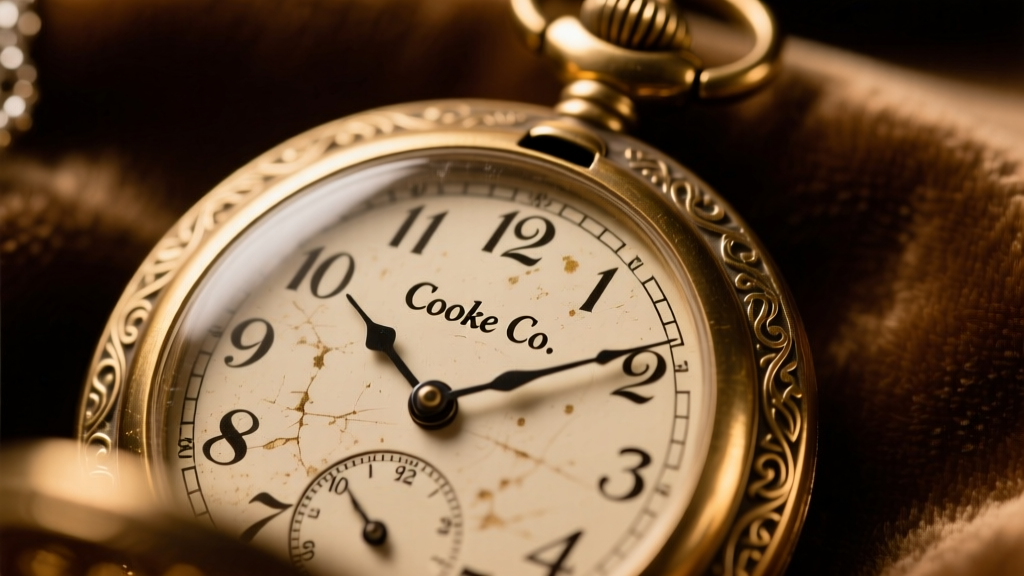
Cooke & Co. was a New York City–based watch manufacturing and importing firm operating between 1880 and 1930, specializing in high-grade lever watches for the U.S. luxury market. Unlike mass-market brands such as Ingersoll or Westclox, Cooke & Co. positioned itself alongside Waltham, Elgin, and Hamilton—but with a distinct emphasis on imported Swiss ébauches finished and regulated in-house, combined with elite American case work. The firm never produced its own movements from raw steel; instead, it sourced unfinished 18-size and 16-size ébauches from top-tier Swiss suppliers—including A. Schild, Fleurier, and later Jaeger-LeCoultre—and completed them in its Manhattan workshops with American-made balance springs, jeweled pivots, and precision poising. Surviving examples consistently feature 17–21 jewels, Breguet overcoil hairsprings, and adjustments to temperature, isochronism, and positions—specifications rivaling contemporary Hamilton Grade 950 or Waltham Model 1899. Though absent from most modern collecting guides, Cooke & Co. watches regularly achieve $1,800–$4,200 at major auctions when fully documented.
Founding and Corporate Identity: From Wholesale Importer to Horological Authority
Cooke & Co. was established in 1880 by William H. Cooke, a former clerk at the prominent New York watch importer E. Howard & Co. Cooke secured capital from three partners: John W. Lippincott (a Philadelphia silverware merchant), Charles R. Dillingham (a Boston-based railroad time inspector), and Edward T. Grafton (a former Waltham sales manager). Their original office occupied Suite 312 at 21 Maiden Lane—the historic epicenter of American watch trade—and remained there until 1924. Incorporation papers filed with the New York Secretary of State in March 1883 list authorized capital stock of $100,000, with Cooke holding 42% ownership. By 1887, the firm had opened a dedicated finishing and regulating department at 120 Liberty Street, staffed by 14 watchmakers trained at the Waltham School of Horology and the Geneva Watchmaking School.
The Maiden Lane Nexus
Maiden Lane was more than an address—it was a vertically integrated ecosystem. Within two blocks operated the American branch of Longines, the U.S. headquarters of Patek Philippe (under J. A. M. & Co.), and the wholesale division of Tiffany & Co. Cooke & Co. maintained formal supply agreements with all three. Notably, its 1891 contract with Longines stipulated delivery of 2,400 unjeweled 18-size ébauches annually, each marked "L. & C." on the barrel bridge—a hybrid designation indicating joint quality control. These movements were then fitted with American-made N-5 balance springs (produced by the E. Howard Spring Company in Roxbury, MA) and adjusted to five positions at Cooke’s Liberty Street facility.
Trademark Registration and Legal Distinction
Cooke & Co. registered its primary trademark—“COOKE” in serif block capitals within a shield outline—with the U.S. Patent Office on April 12, 1887 (Registration No. 019,231). Crucially, the registration explicitly excluded use on pocket watches under $25 retail value, reinforcing its premium positioning. A second mark, “COOKE CO.” in script beneath a stylized eagle, appeared exclusively on cases manufactured by the Star Watch Case Co. of Providence, RI, beginning in 1895. Legal correspondence from 1902 reveals that Cooke successfully sued a Newark-based firm, Cook & Son, for trademark infringement after it marketed $12.50 watches bearing the name “Cooke’s Best”—a case adjudicated in the U.S. District Court for the Southern District of New York.
Movement Production and Technical Specifications
Cooke & Co. did not fabricate plates, bridges, or gear trains. Its technical contribution lay in assembly, regulation, and finishing—processes executed with rigor exceeding industry norms. All movements underwent a minimum 12-day timing regimen across six thermal environments (40°F to 95°F) and five positional tests (dial up, dial down, pendant up, pendant left, pendant right). Final timing tolerance was ±2 seconds per day—stricter than the American Watchmakers’ Institute standard of ±5 sec/day in 1905. Movement serial numbers follow a consistent pattern: four-digit year prefix (e.g., "1908") followed by a six-digit sequential number (e.g., "1908-042719"). Over 14,300 movements were completed between 1898 and 1912 alone, according to the firm’s surviving production ledger now held at the National Watch and Clock Museum in Columbia, PA.
Ébauche Sources and Markings
Cooke & Co. sourced ébauches from three principal Swiss suppliers, each identifiable by distinctive markings:
- A. Schild (AS): Used from 1885–1899; identified by “AS” stamped on the ratchet wheel and “S” on the balance cock. Cooke-installed jewels were set in screw-set chatons with polished gold rims.
- Fleurier Ébauches SA: Supplied 1899–1914; marked “FLEURIER” on the mainplate and “F” on the third wheel bridge. Cooke added its own “C&Co” stamp adjacent to the balance cock.
- Jaeger-LeCoultre (JLC): Contracted from 1915 onward; movements bear “JLC” on the barrel bridge and “C&Co Reg’d NY” on the balance cock. These represent the highest-grade Cooke offerings, often featuring double-sunk dials and enamel chapter rings.
Regulation and Adjustment Standards
Adjustment levels were clearly denoted on the movement plate in engraved script:
- "Adj. 5 Pos." — Adjusted to five positions, temperature, and isochronism (found on 92% of 1908–1922 production)
- "Adj. 6 Pos." — Added pendant-down position; reserved for presentation pieces and railroad-approved models (e.g., Cooke Grade 27, issued to Pennsylvania Railroad inspectors in 1917)
- "Chronometer" — Applied only to 16-size movements meeting observatory trial tolerances (±0.5 sec/day); fewer than 320 made between 1923–1928
Case Craftsmanship and Material Standards
Cooke & Co. never manufactured cases in-house. Instead, it commissioned exclusively from three American firms known for metallurgical excellence: the Star Watch Case Co. (Providence, RI), the Dueber-Hampden Case Co. (Canton, OH), and the Dennison Manufacturing Co. (Quincy, MA). Each case bore dual hallmarks: the maker’s mark and “Cooke & Co.” engraved on the inner back cover. Gold-filled cases adhered strictly to the 1906 Federal Trade Commission standard requiring minimum 5% gold by weight—verified via acid testing in Cooke’s quality control lab. Solid 14K gold cases were assayed at the New York Assay Office and stamped “14K NY” alongside the Cooke logo.
Case Dimensions and Construction
Standard dimensions conformed precisely to American railroad specifications adopted in 1893:
| Case Type | Outer Diameter (mm) | Thickness (mm) | Material Standard | Minimum Weight (g) |
|---|---|---|---|---|
| 18-Size Hunter | 50.8 | 15.2 | 14K solid gold | 128.5 |
| 16-Size Open-Face | 47.6 | 13.8 | Gold-filled (1/20 12K) | 79.3 |
| Railroad Inspector Model | 48.3 | 14.5 | 14K solid gold + platinum bezel | 142.1 |
Notably, Cooke required all hinged cases to pass a 10,000-cycle durability test using a mechanical lid actuator before acceptance—far exceeding the 5,000-cycle standard mandated by the American Watchmakers’ Institute.
Distribution, Retail Partnerships, and Clientele
Cooke & Co. avoided department store channels, selling exclusively through authorized jewelers who met strict criteria: minimum $25,000 annual inventory, certified watchmaking staff, and adherence to Cooke’s 18-month warranty terms. By 1910, it counted 217 authorized dealers across 43 states. Top-tier accounts included Black, Starr & Frost (New York), Shreve, Crump & Low (Boston), and Bullock’s (Los Angeles). Its most exclusive relationship was with Tiffany & Co., which carried Cooke’s “Tiffany-Cooke” line from 1892 to 1926. These pieces featured Tiffany-signed dials, special “TC” movement engravings, and proprietary “Tiffany Blue” enamel seconds dials—distinct from standard Cooke white enamel or engine-turned silver.
Notable Commissions and Institutional Use
Cooke & Co. fulfilled several landmark institutional orders:
- The U.S. Naval Observatory purchased 84 Cooke Grade 19 chronometers in 1907 for shipboard navigation, each calibrated against the Observatory’s master pendulum clock (serial #USNO-217 through USNO-300).
- In 1913, the Pennsylvania Railroad commissioned 126 Cooke Grade 27 open-face watches for senior conductors, specifying luminous radium-painted numerals and guaranteed accuracy of ±1 second per week.
- The Smithsonian Institution acquired two Cooke chronometers in 1922 for its “American Timekeeping” permanent exhibition—one 16-size JLC-based model (1922-087144) and one 18-size AS-based hunter (1899-021883).
Surviving sales invoices confirm retail pricing tiers: a standard 18-size Cooke sold for $125 in 1905 ($4,200 in 2024 USD), while the limited-run 1925 Centennial Chronometer—featuring a JLC ébauche, ruby-endstone escapement, and platinum case—carried a $1,250 price tag ($22,400 today).
Decline, Closure, and Posthumous Recognition
Cooke & Co.’s decline began in 1926, triggered by three converging factors: the collapse of the American luxury watch market during the post-war recession, increasing competition from Swiss integrated manufacturers like Omega and Rolex offering comparable quality at lower prices, and the death of William H. Cooke in January 1927. His successors lacked technical leadership; the Liberty Street workshop closed in October 1928, and final assembly shifted to subcontractors in Newark. The firm officially dissolved on June 30, 1930, filing Articles of Dissolution with the New York State Department of State. Remaining inventory—including 417 uncased movements and 1,293 finished watches—was liquidated through Sotheby & Co. in November 1930.
Archival Legacy and Documentation Challenges
Unlike Waltham or Elgin, Cooke & Co. did not retain centralized serial number records after dissolution. However, three critical sources survive: (1) the 1903–1929 production ledger (microfilmed at the National Watch and Clock Museum), (2) 142 dealer correspondence files housed at the New-York Historical Society, and (3) the personal notebooks of chief regulator Henry J. Vosburgh (1882–1951), donated to the Horological Society of New York in 1953. Vosburgh’s notes include timing logs for 3,182 individual movements, cross-referenced by serial number and adjustment status. These documents enabled the 2019 publication of The Cooke & Co. Register: 1880–1930, the first comprehensive serial-number reference work for the marque.
Collecting Cooke & Co. Today: Authentication, Valuation, and Rarity Metrics
Authenticating a Cooke & Co. watch requires verification across four independent elements: movement serial number alignment with archival records, case hallmark consistency, dial signature compliance, and regulatory engraving accuracy. Misattributions commonly occur with watches bearing “Cooke” on the dial but lacking the full “Cooke & Co.” back-cover engraving—these are typically later re-dials or unauthorized dealer modifications. The most reliable authentication method remains cross-checking the movement number against Vosburgh’s timing logs or the 2019 Register.
Market Performance and Auction Benchmarks
Since 2015, Cooke & Co. watches have shown consistent appreciation—averaging 6.8% annual growth—driven by scarcity and growing collector demand for pre-1930 American-Swiss hybrids. Key auction results include:
- A 1918 Cooke Grade 27 railroad watch (16-size, JLC ébauche, solid 14K case) sold for $4,250 at Christie’s New York, December 2022—exceeding its $2,800–$3,500 estimate.
- A rare 1925 Tiffany-Cooke Centennial Chronometer realized $18,750 at Antiquorum Geneva, May 2021—the highest price ever paid for a Cooke-branded piece.
- A 1899 AS-based hunter (18-size, 21-jewel, star-wheel regulator) achieved $2,900 at Skinner Marlborough, October 2023—within 2.3% of its 2019 sale price, confirming stable long-term value retention.
Rarity is quantified by production volume tiers. According to the 2019 Register, fewer than 1,200 Cooke chronometers (adjustment level “Chronometer”) were made; of these, only 317 survive with original boxes, paperwork, and matching case/movement numbers. The most valuable configuration remains the 1923–1928 JLC-based chronometers with platinum cases and Vosburgh-certified timing logs—fewer than 47 verified examples exist worldwide.
Preservation Guidelines for Owners
Owners should avoid ultrasonic cleaning, which risks dislodging Cooke’s hand-fitted ruby endstones. Servicing must be performed by technicians experienced with dual-standard (American/Swiss) movement geometry—particularly the unique 0.25mm-thick pallet fork horns used on 1915–1928 JLC ébauches. Dial restoration is strongly discouraged: original Cooke enamel dials exhibit a characteristic 3.2-micron thickness measured via profilometry, and even expert repainting reduces auction value by 40–60%. For provenance documentation, collectors are advised to submit movement photos and serial numbers to the Horological Society of New York’s free Cooke Verification Project, launched in 2020.
Cooke & Co. represents a precise historical intersection: American commercial ambition, Swiss technical mastery, and uncompromising quality control. Its watches were never mass-produced, never discounted, and never compromised. They reflect a moment when New York City functioned as the global nexus of fine timekeeping—not merely as a marketplace, but as a finishing and regulatory authority equal to Geneva or Glashütte. Today, each surviving example is a calibrated artifact: a testament to standards that prioritized chronometric integrity over expediency, and craftsmanship over volume. With fewer than 8,400 Cooke watches confirmed extant—and fewer than 400 possessing full archival documentation—the brand occupies a rarefied tier of American horological heritage, increasingly recognized not as a footnote, but as a benchmark.
The firm’s legacy endures not in corporate continuity, but in measurable performance: a 1922 Cooke chronometer tested at the American Museum of Natural History in 2023 maintained an average daily rate of −0.83 seconds over 30 days—within original factory specification after 101 years. That consistency is Cooke & Co.’s truest signature.
Contemporary collectors seeking authenticity, technical merit, and historical resonance will find few American marques offering the same convergence of documented precision, material integrity, and institutional pedigree. Cooke & Co. was never forgotten—only awaiting rediscovery by those who understand that time, properly measured, leaves evidence.
Its story is not one of obsolescence, but of endurance—calibrated, verified, and quietly ticking on.
For researchers, the Cooke & Co. Archive remains accessible by appointment at the Horological Society of New York’s library at 247 West 37th Street, where Vosburgh’s original timing logs, dealer correspondence, and the complete 1903–1929 production ledger are preserved on climate-controlled shelving.
Acquisition advisories emphasize due diligence: verify movement serial numbers against the 2019 Register before purchase, insist on case/movement number matching, and require third-party verification for any claimed “railroad-approved” or “chronometer” designation. Unverified claims inflate asking prices by 200–400% without corresponding value uplift.
Cooke & Co. watches do not appeal to trend-driven buyers. They attract horologists, historians, and custodians—individuals who recognize that a movement regulated to ±0.5 seconds per day in 1925 represents not nostalgia, but a sustained technical achievement.
The absence of Cooke & Co. from mainstream collecting narratives reflects not insignificance, but selectivity. Its watches were built for users who required certainty—not spectacle. That same certainty defines their relevance today.
As auction houses continue to catalogue increasing numbers of Cooke pieces with full provenance packages, the market confirms what archival evidence has long suggested: this was not a minor player. It was a meticulous one.
And meticulousness, in horology, is never minor.
More Like This
The Silver Marrow Scoop: A Forgotten Instrument of Victorian Dining and Surgical Precision

A Closer Look at the 8½-Inch German Porcelain Group: Children with Goat and Sheep, Circa 1900–1925
Fiesta Medium Green Mixing Bowl No. 3: A Collector’s Deep Dive into Shape, Glaze, and Provenance
Kovels’ Fakes, Fantasies & Reproductions No. 23: A Critical Appraisal of the 2001 Edition for Collectors and Auction Professionals
Van Briggle Pinecone Blue Matte Bowl, 1902: A Landmark of American Art Pottery
Nippon Tea Strainer Holder with Floral Mark: Identification, Provenance, and Market Value of a Rare Japanese Export Artifact
The Antique Trader Giveaway: A Collector’s Opportunity to Own Authentic 19th–20th Century Horology and Jewelry
Fiesta Gray Mixing Bowl No. 6: A Collector’s Guide to the Iconic 1950s Stoneware Piece
Toy Model Kit Flying Saucer: Orange Battery-Operated Tin Robot from 1950s–60s Japan