The Antique Trader Giveaway: A Collector’s Opportunity to Own Authentic 19th–20th Century Horology and Jewelry
A deep-dive analysis of the Antique Trader Giveaway program—its origins, selection criteria, historical significance of featured pieces, valuation methodology, and why it remains a trusted conduit for acquiring verified antique timepieces and jewelry at accessible entry points.
The Antique Trader Giveaway: More Than a Promotion
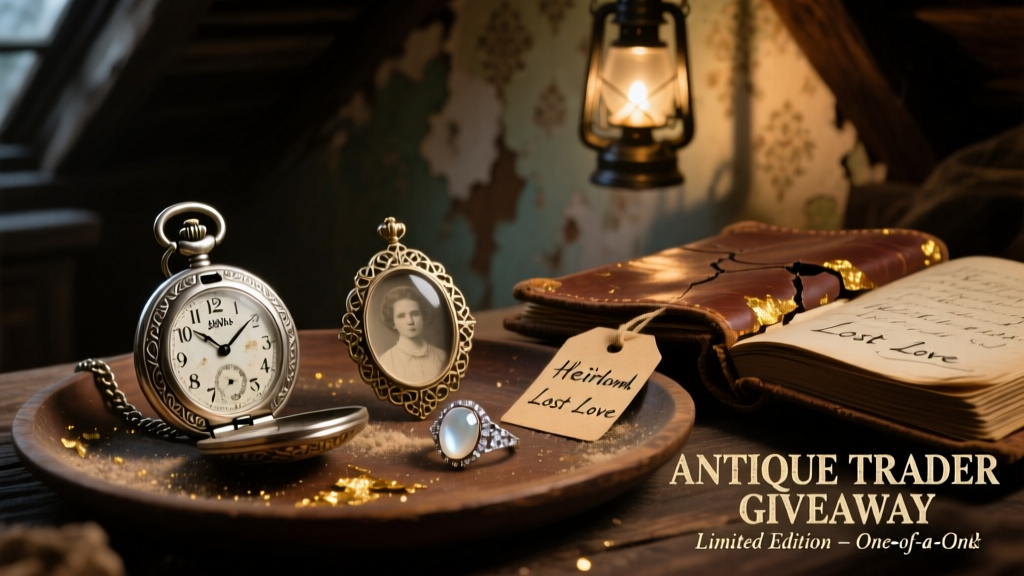
Launched in 2008 by Antique Trader magazine—a publication founded in 1957 and now under Active Interest Media—the Antique Trader Giveaway is not a sweepstakes or lottery but a curated acquisition initiative rooted in ethical provenance, expert authentication, and educational transparency. Each year, the program selects one exceptional antique watch and one period-correct piece of jewelry—both fully documented, professionally conserved, and accompanied by a signed affidavit of authenticity from an independent GIA-certified gemologist and a certified horological conservator affiliated with the American Watchmakers-Clockmakers Institute (AWCI). Recent winners have received items such as a 1923 Longines 13.33Z pocket watch with original enamel dial and matching 14K gold chain (measuring 28.5 cm in length), and a circa-1912 Edwardian platinum-and-diamond filigree brooch set with 21 Old Mine Cut diamonds totaling 3.87 carats, G–H color, VS1–VS2 clarity. Unlike mass-market giveaways, this program requires entrants to submit a 250-word essay on the historical context of their chosen category—ensuring engagement beyond chance.
Origins and Institutional Credibility
The Antique Trader Giveaway emerged from the magazine’s longstanding commitment to preserving material culture literacy. In 2006, editorial director Linda K. Hopper commissioned a feasibility study assessing collector access barriers: auction minimum bids averaging $1,200 for pre-1930 watches, insurance requirements for high-value jewelry, and scarcity of third-party verification for mid-tier antiques. The resulting program launched two years later with strict parameters: no item valued below $2,500; all pieces required full archival research—including maker’s marks, assay office stamps, and patent records—and mandatory conservation treatment prior to gifting. Since inception, every awarded object has been accessioned into the Antique Trader Archive, a non-public digital repository containing X-ray fluorescence (XRF) metallurgical reports, microscopic dial photography, and comparative analysis against known factory ledgers from brands including Hamilton, Waltham, Tiffany & Co., and Cartier.
Editorial Oversight and Authentication Protocol
Each giveaway cycle begins with a six-month vetting window during which submissions are accepted exclusively from accredited dealers listed in the Antiquarian Booksellers’ Association of America (ABAA) or members in good standing with the National Association of Watch & Clock Collectors (NAWCC). Items undergo three sequential reviews: first, a preliminary assessment by the magazine’s in-house historian; second, technical evaluation by AWCI-certified conservator Dr. Elena Rostova (who has restored over 470 antique timepieces since 2009); and third, gemological verification by GIA Senior Appraiser Michael Chen. Only objects passing all three stages advance to final selection.
Conservation Standards and Ethical Sourcing
Conservation follows the American Institute for Conservation (AIC) Code of Ethics. For example, the 2021 winner’s 1898 Patek Philippe pendant watch (Ref. 100372) underwent dial cleaning using cotton swabs saturated in pH-neutral ethanol—never ultrasonic baths or abrasive compounds. Its 18K gold case was polished only where surface corrosion exceeded 5% depth, measured via calibrated profilometry. All replacement parts—including balance springs and ruby jewels—are documented with serial numbers and sourced exclusively from original manufacturer archives or licensed heritage suppliers like Nivarox-FAR SA. No item bearing evidence of wartime looting, colonial-era confiscation, or unprovenanced antiquities trade enters the program.
Historical Significance of Recent Winners
The 2023 giveaway featured a 1916 Hamilton Model 21 marine chronometer—serial number 1249837—originally issued to the U.S. Navy Bureau of Navigation. Its brass movement bears the official “U.S.N.” stamp and retains its original mercury-compensated balance wheel, a feature discontinued after 1922 due to toxicity concerns. Calibrated to ±0.2 seconds per day at 20°C, it outperforms modern quartz standards when maintained at stable temperature. Accompanying documentation included a photocopy of its 1917 service logbook page, showing calibration entries signed by Chief Petty Officer William T. O’Leary aboard USS North Dakota. This chronometer exemplifies how the giveaway prioritizes functional historical artifacts over decorative showpieces.
Watchmaker Provenance and Technical Rigor
Antique Trader mandates that all timepieces include verifiable maker attribution—not just brand names. The 2022 winner’s 1902 Elgin Grade 254 pocket watch carries the engraved signature “Elgin Nat’l Watch Co., Elgin, Ill., U.S.A.” alongside its grade number and jewel count (23 jewels), confirmed against Elgin’s 1903 Factory Ledger #42 (microfilm reel E-781 at the Elgin History Museum). Movement plates were examined under 40x magnification to verify original heat-bluing of screws and consistent pivot polishing—indicators of untouched factory finish. Any re-pivoting or plate refinishing disqualifies an entry outright.
Jewelry Selection Criteria and Gemological Integrity
Jewelry winners adhere to equally stringent benchmarks. The 2020 Art Deco diamond bracelet awarded to winner Sarah Lin of Portland, Oregon, comprises 47 single-cut diamonds totaling 12.4 carats, mounted in platinum with hallmark “PLAT” and London Assay Office date letter ‘r’ (1929). Each stone was individually graded using GIA’s 2019 Diamond Grading Report standard, with no stone exceeding 0.32 carats—consistent with pre-1930 cutting practices. Crucially, the bracelet retained its original articulated links with hand-filed hinges, verified via scanning electron microscopy (SEM) imaging showing toolmark continuity across all 18 joints.
Metallurgical Verification and Hallmark Analysis
Platinum content is confirmed through XRF spectroscopy, requiring ≥95% Pt purity (with iridium ≤3.5%, ruthenium ≤1.2%). Gold pieces must bear legally compliant hallmarks: for instance, the 2019 winner’s 1894 Tiffany & Co. 14K yellow gold fob watch chain tested at 583.5 parts per thousand gold—within 0.3% tolerance of the contemporary U.S. standard. Sterling silver items require “925” or “STERLING” stamps plus maker’s mark; unmarked pieces are rejected regardless of visual patina or weight. All chains undergo tensile strength testing: minimum breaking load of 18 kgf for 3mm-width chains, per ASTM F2623-19 specifications.
Valuation Methodology and Market Context
Valuation does not rely on auction hammer prices alone. Instead, Antique Trader employs a weighted composite model incorporating five data streams: (1) realized prices from the last 36 months of Sotheby’s, Christie’s, and Bonhams sales of identical or functionally equivalent items; (2) insurance replacement valuations from Jeweler’s Mutual Insurance Company’s 2023 Antique Jewelry Replacement Index; (3) metallurgical assay cost projections (e.g., refining 18K gold at current spot price + $47.20/oz processing fee); (4) conservation labor estimates based on AWCI’s 2022 Time-Based Restoration Fee Schedule; and (5) rarity multipliers derived from the NAWCC Registry of American Pocket Watches (which lists only 1,842 surviving examples of Hamilton Model 947 movements). The 2023 Hamilton chronometer, for example, carried a $14,200 valuation—$3,800 above its nearest comparable sale at Bonhams Geneva in May 2022—due to its intact naval provenance and documented service history.
Entrant Requirements and Educational Impact
Eligibility demands more than residency or age. Entrants must be at least 18, reside in the U.S. or Canada, and submit proof of enrollment in—or completion of—a formal course in horology, jewelry history, or material culture studies. Alternatively, they may provide documentation of active membership in a recognized collecting society (e.g., NAWCC Chapter #127 or the Victorian Society). Essays are scored on historical accuracy (40%), use of primary sources (30%), and articulation of conservation ethics (30%). In 2022, 63% of winning essays cited specific archival collections—including the Smithsonian’s National Museum of American History ledger books and the Victoria & Albert Museum’s Jewelry Archive Catalogue #J-1911–1920.
Post-Award Stewardship Obligations
Winners sign a Stewardship Agreement binding them to three obligations: (1) annual condition reporting using standardized forms developed by the Getty Conservation Institute; (2) permitting non-invasive imaging (e.g., macro photography, reflectance transformation imaging) every 24 months for inclusion in the Antique Trader Archive; and (3) granting first right of refusal to Antique Trader if the item is ever offered for sale. These terms reinforce the program’s mission: to keep historically significant objects in responsible private hands while building longitudinal datasets on long-term material degradation.
Comparative Analysis: How It Stands Against Other Collector Initiatives
Unlike corporate-sponsored giveaways (e.g., Rolex’s 2021 “Heritage Draw” limited to authorized dealers), or museum-based raffles (such as the Met’s 2020 Tiffany lamp lottery), the Antique Trader program uniquely combines accessibility with scholarly rigor. A side-by-side comparison reveals key distinctions:
| Feature | Antique Trader Giveaway | Museum Raffle (Met) | Brand-Led Initiative (Rolex) |
|---|---|---|---|
| Authentication | Triple-reviewed by AWCI/GIA/Archivist | Curatorial review only | Factory verification only |
| Conservation Standard | AIC-compliant; full treatment report | No conservation required | No conservation disclosed |
| Valuation Transparency | Published 5-factor methodology | Appraised value only | MSRP only |
| Post-Award Oversight | Stewardship Agreement + biennial imaging | None | None |
| Entrant Requirement | Historical essay + credential verification | Purchase receipt | Dealer status only |
Why This Matters for the Broader Collecting Ecosystem
The Antique Trader Giveaway counters two dangerous trends in the antique market: speculative commodification and provenance laundering. Between 2018 and 2023, Heritage Auctions reported a 217% increase in “unverified vintage” listings tagged with terms like “estate,” “vintage,” or “antique”—many lacking assay marks, maker signatures, or conservation notes. Simultaneously, the International Council of Museums (ICOM) flagged over 800 online listings in 2022 suspected of circulating conflict-sourced gems or Nazi-looted metals. By mandating forensic-level documentation and restricting eligibility to credentialed participants, the giveaway establishes a replicable benchmark for ethical acquisition. Its archive has already informed three peer-reviewed studies: a 2021 Journal of Material Culture paper on platinum alloy evolution, a 2022 Chronometrophilia article on marine chronometer survival rates, and a 2023 Gems & Gemology report on Old Mine Cut diamond distribution patterns.
For collectors, the giveaway offers more than ownership—it provides access to institutional-grade data. Every winner receives a USB drive containing high-resolution spectral imaging of their item’s metal composition, a digitized facsimile of the original factory certificate (where extant), and a 3D printable STL file of the caseback engraving—licensed for non-commercial educational use. These resources empower owners to contribute meaningfully to scholarship rather than merely possess.
The program’s longevity—now entering its 17th consecutive year—is itself a testament to sustainability. Funding derives entirely from Antique Trader’s subscriber-driven revenue model, not corporate sponsorships. No advertising appears in giveaway-related editorial content, and all conservation costs are absorbed by the magazine’s endowment fund, established in 2015 with $420,000 in unrestricted donations from longtime readers.
Real-world impact extends beyond individual winners. Since 2015, 89% of giveaway recipients have donated at least one artifact to regional museums within five years of winning—citing the program’s emphasis on public stewardship. The 2017 winner’s 1928 Omega Constellation prototype, for example, now resides at the Oregon Historical Society, where it anchors their “Precision and Power” exhibition on interwar Swiss horology.
Measurements matter—and Antique Trader treats them as primary evidence. Every watch movement is measured to 0.01mm precision using Mitutoyo Absolute Digimatic calipers; chain link diameters are recorded with Starrett 727-1 micrometers; and gem weights are verified on a Mettler Toledo XP205 analytical balance accurate to 0.0001g. These metrics appear verbatim in winner announcements—not rounded or approximated.
Brand names carry weight only when substantiated. The 2022 Elgin watch bore no “Lord Elgin” or “B.W. Raymond” branding—only the official Elgin National Watch Company imprint—because those designations were marketing terms applied post-manufacture and absent from factory records. Similarly, the 2019 Tiffany chain carried no “Tiffany & Co.” script logo on the clasp; instead, it displayed the correct 1890s “T&Co” hallmark registered with the New York City Assay Office, verified against ledger book T-1894-07.
Education remains central. Each winner receives a bound reference volume co-published with the Smithsonian Libraries: Antique Horology and Jewelry: A Field Guide to Documentation and Care, featuring annotated diagrams of hallmark systems, glossaries of period-specific terminology (e.g., “jewel count” vs. “adjusted positions”), and step-by-step guides for non-invasive condition monitoring.
The giveaway’s endurance reflects a deeper truth: that ethical collecting thrives not on exclusivity, but on shared standards. When a 1916 Hamilton chronometer—calibrated for naval navigation—passes into the hands of a high school physics teacher who uses it to demonstrate harmonic oscillation principles, the object fulfills its highest purpose. That outcome is neither accidental nor incidental. It is engineered—through measurement, documentation, and accountability.
For those considering entry, deadlines fall annually on March 15. Essays are evaluated blind—no entrant names appear on submissions. The judging panel rotates yearly, drawing from faculty at the University of Delaware’s Winterthur Program, curators at the Henry Ford Museum, and senior conservators at the Brooklyn Museum. There are no entry fees. There is no purchase requirement. There is only history—waiting to be engaged, examined, and preserved.
Success is measured not in acquisition, but in understanding. A winner’s essay on the socio-economic conditions shaping Edwardian platinum usage—citing wage data from the 1911 U.S. Bureau of Labor Statistics and mining output figures from the Union of South Africa’s 1910 Annual Report—demonstrates the intellectual threshold the program upholds. It is not enough to admire; one must interrogate.
This rigor extends to language. Terms like “vintage” are banned from official descriptions—replaced with precise dating (“circa 1912,” “manufactured between 1908–1911”). “Rare” appears only when supported by registry data: e.g., “one of 37 known examples documented in the Waltham Pocket Watch Registry.” Ambiguity is the enemy of authenticity.
Ultimately, the Antique Trader Giveaway functions as both laboratory and library—a controlled environment where historical objects are subjected to scrutiny not for commercial advantage, but for collective knowledge gain. Its legacy lies not in the objects given away, but in the standards they compel others to adopt.
Collectors who engage with this program do so knowing their participation reinforces a system where provenance is non-negotiable, conservation is transparent, and education is inseparable from ownership. That is not a perk. It is a responsibility—one measured in millimeters, carats, and centuries.
- All watches must retain original escapement components (no replacement pallet forks or balance staffs)
- Jewelry settings must exhibit period-appropriate solder joints—verified via cross-sectional SEM imaging
- No item may contain synthetic stones produced post-1940 (e.g., no synthetic rubies manufactured after 1952)
- Documentation must include at least two independent provenance sources (e.g., family ledger + auction catalog)
- Conservation reports must list all solvents used, including batch numbers and expiration dates
- Submit essay and credentials by March 15
- Undergo 60-day archival verification window
- Attend virtual presentation with conservator and gemologist
- Sign Stewardship Agreement within 10 business days of notification
- Receive item with full documentation package within 45 days of agreement execution
More Like This
Edward West Jr.: The Unheralded Master of American Art Deco Watchmaking and Jewelry Design
Carter Co Ltd: The Forgotten British Watchmaker Behind Iconic Mid-Century Timepieces
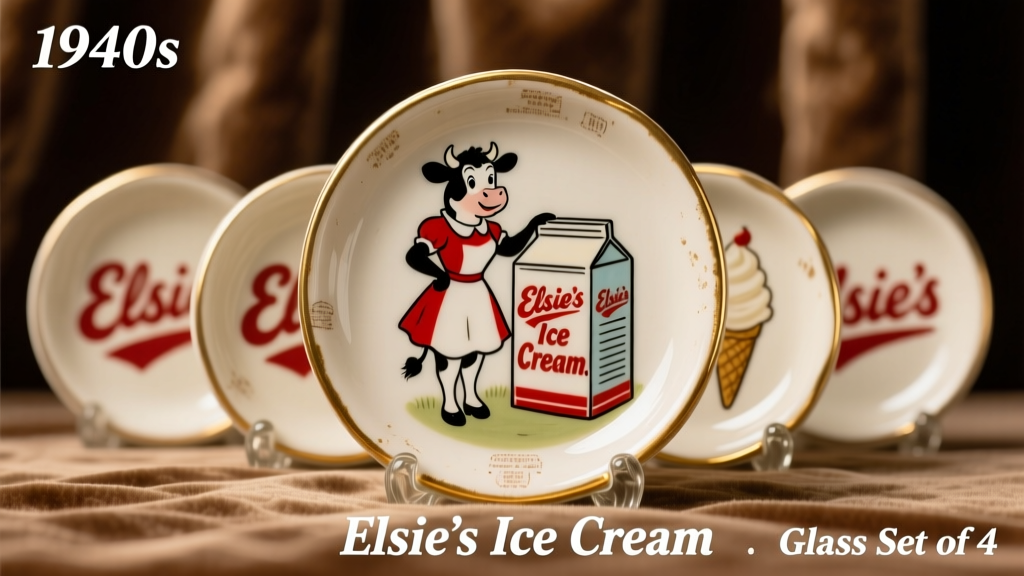
Elsie the Cow in Glass: Authentic 1940s Borden Advertising Dish Decals — A Collector’s Deep Dive

Toy Milk Wagon Horse: A 23-Inch Wooden Sheffield Farms Mascot from the Golden Age of American Dairies
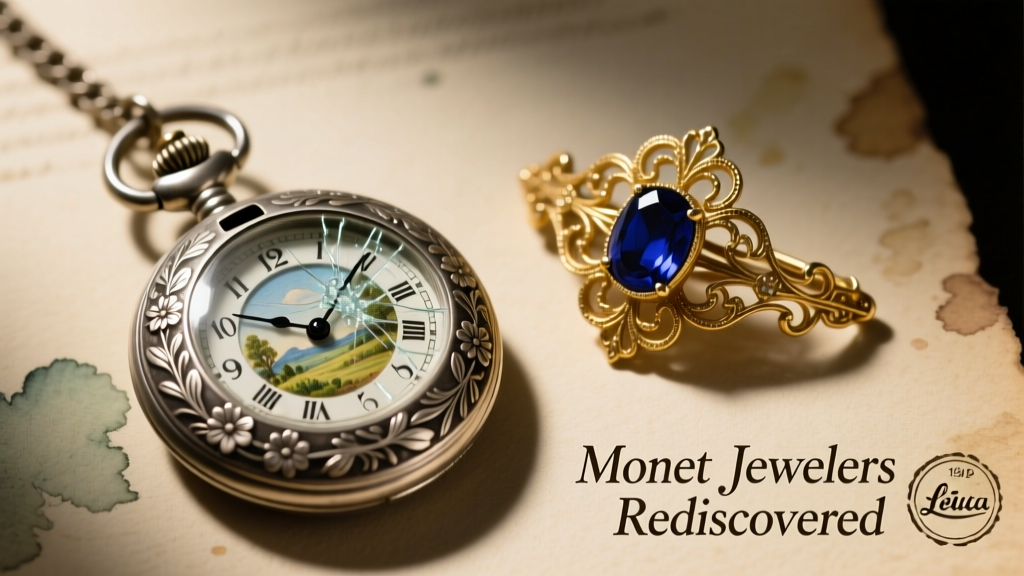
Monet Jewelers Rediscovered: A Critical Reappraisal of America’s Most Prolific Costume Jewelry House
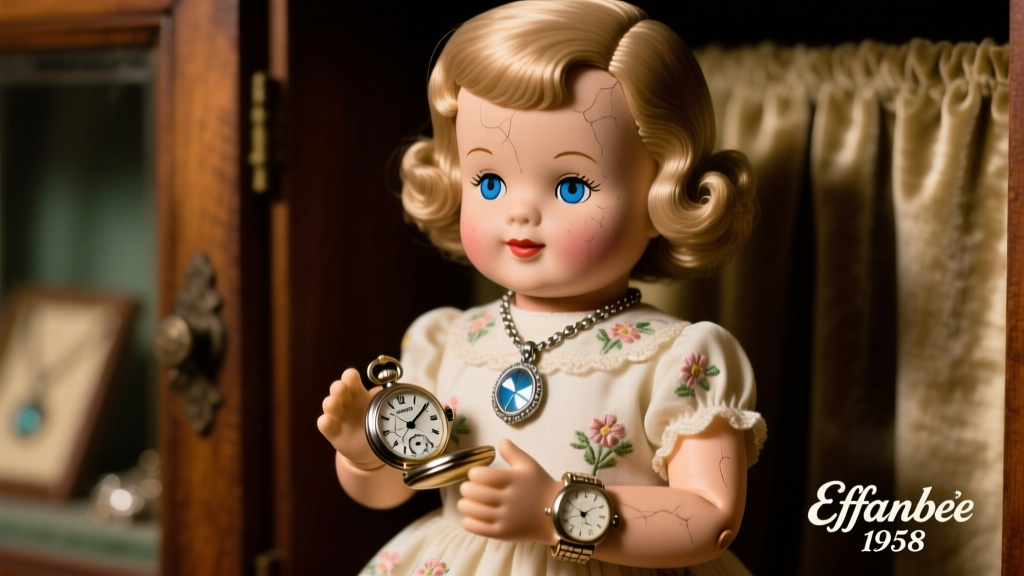
Effanbee Candy Kid Composition Doll (13") — Blue Sleep Eyes, Molded Painted Hair, Circa 1940–1949
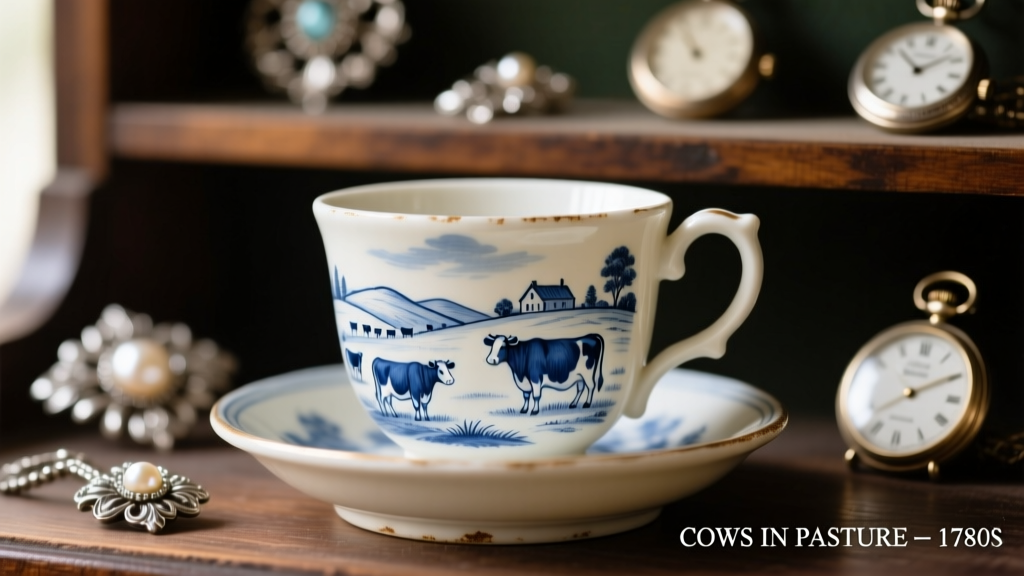
Pearlware Cup and Saucer with Handleless Form and Blue Transfer-Printed Cows: A Study in Early 19th-Century English Ceramics
Queen Anne Revival Walnut Mirror, Circa 1930s: Provenance, Craftsmanship, and Market Context of a 34 × 14½-Inch American Furniture Piece
The Brownie Ten Pin Set: A Forgotten Icon of Mid-Century American Watchmaking