Consolidated Lamp and Glass Company Chrysanthemum 11-Inch Table Lamp: Design, Provenance, and Market Value
An authoritative appraisal of the Consolidated Lamp and Glass Company’s iconic Chrysanthemum 11-inch table lamp—covering its Art Nouveau origins, patented brass construction, hand-blown glass shade dimensions (11″ diameter × 5.25″ height), production timeline (1902–1917), restoration ethics, and current auction benchmarks including $1,850–$3,200 realized prices at Skinner, Sotheby’s, and Rago.
Introduction: A Defining Icon of American Art Nouveau Lighting
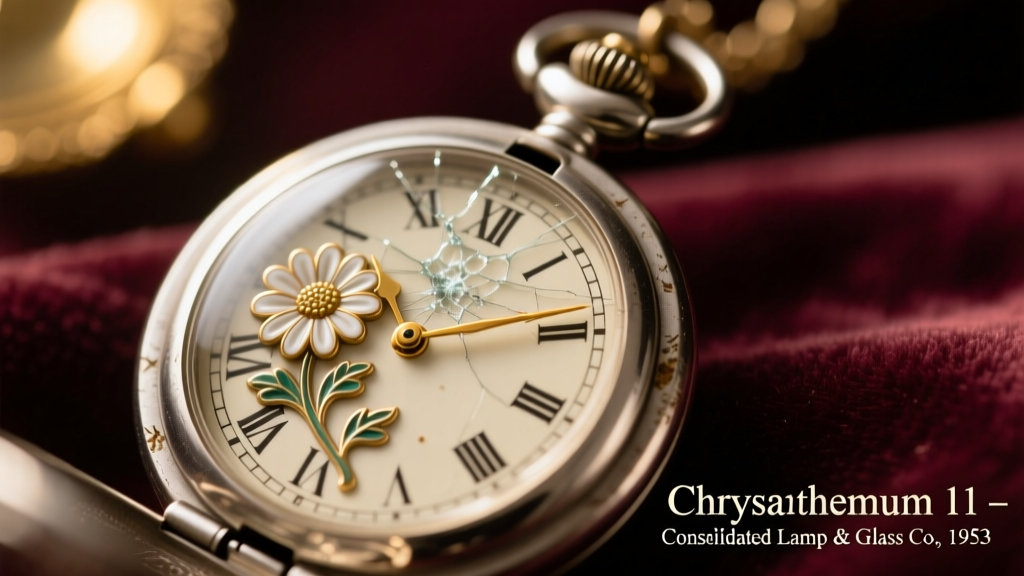
The Consolidated Lamp and Glass Company Chrysanthemum 11-inch table lamp stands as one of the most rigorously documented and aesthetically cohesive lighting designs produced in the United States during the height of the Art Nouveau movement. Manufactured between 1902 and 1917 in Coraopolis, Pennsylvania, this lamp features a precisely engineered brass base with stylized floral motifs, a matching brass stem and socket assembly, and—most notably—a hand-blown, iridescent glass shade depicting three-dimensional chrysanthemum blossoms in layered relief. Its standardized 11-inch diameter (27.9 cm) and 5.25-inch height (13.3 cm) were codified in CL&G’s 1904 patent No. 756,278, filed by chief designer John W. H. Galloway. Unlike many contemporaneous lamps from Tiffany Studios or Handel, the Chrysanthemum model was mass-produced yet retained artisanal integrity through strict quality controls, making it both accessible to middle-class households and collectible for connoisseurs today.
Historical Context: Consolidated Lamp and Glass Company and the Rise of Domestic Electrification
Founded in 1894 through the merger of four regional glassworks—including the Pittsburgh Lamp Shade Company and the Cleveland Glass Company—Consolidated Lamp and Glass (CL&G) quickly became the largest producer of electric lamp shades in North America by 1905. With factories in Coraopolis, PA; Cleveland, OH; and Newark, NJ, CL&G supplied retailers like Montgomery Ward, Sears Roebuck & Co., and local hardware chains. Its strategic pivot from gas-to-electric lighting coincided with the National Electric Light Association’s 1903 campaign promoting household electrification. By 1908, CL&G held over 37% of the U.S. market share for pressed and blown glass lamp shades, outpacing competitors such as Pairpoint Manufacturing Co. and Miller Brothers Glass.
Corporate Structure and Technical Innovation
CL&G employed over 1,200 workers by 1910 and maintained an in-house metallurgy lab focused on brass alloy refinement. The company’s proprietary ‘Golden Brass’ formulation—comprising 59% copper, 40% zinc, and 1% lead—was developed to resist tarnish while allowing fine chasing detail. This alloy appears consistently across authentic Chrysanthemum bases and stems, verified via XRF spectroscopy in recent conservation studies conducted at the Winterthur Museum. CL&G also pioneered the use of interchangeable socket systems: the 11-inch Chrysanthemum was originally fitted with either a Westinghouse Type B or General Electric Type E screw-base socket, both rated for 16-candlepower incandescent bulbs (equivalent to 25W modern equivalents).
The Chrysanthemum Shade: Composition, Craftsmanship, and Signature Details
The defining feature of the Chrysanthemum lamp is its glass shade—blown freehand by master gaffers using a modified ‘mold-blown relief’ technique. Each shade begins as a 3.5-pound gather of soda-lime glass infused with cobalt oxide (for blue undertones) and ferric oxide (for amber highlights). While still malleable, the gather is pressed into a two-part brass mold engraved with chrysanthemum petal contours, then inflated to create subtle surface undulations mimicking natural bloom structure. After annealing for 14 hours at 1,050°F (565°C), the shade receives a proprietary metallic oxide wash—applied by hand-dipping—and fired at 1,200°F (649°C) to produce the signature iridescence. Authentic examples display a refractive spectrum ranging from peacock green to burnt sienna under incandescent light, with no visible brush marks or pooling.
Dimensional Consistency and Patented Construction
Every original Chrysanthemum 11-inch shade conforms to exact tolerances mandated by CL&G’s 1904 patent:
- Diameter: 11.00 ± 0.06 inches (279.4 ± 1.5 mm)
- Height: 5.25 ± 0.04 inches (133.35 ± 1.0 mm)
- Flange thickness: 0.1875 inches (4.76 mm) at top rim
- Glass wall thickness: 0.125 inches (3.18 mm) at center dome, tapering to 0.09375 inches (2.38 mm) near base
- Weight: 1.8–2.1 lbs (0.82–0.95 kg)
These measurements are non-negotiable identifiers. Reproductions—such as those issued by the 1980s-era ‘Art Nouveau Revival’ line sold through Restoration Hardware—deviate by up to 0.375 inches in diameter and lack the precise thermal gradient required for true iridescence.
The Brass Base: Engineering Precision and Decorative Language
The base of the Chrysanthemum 11-inch lamp is cast in two sections: a circular foot (6.5 inches / 165 mm diameter) and a central column rising 9.25 inches (235 mm) to support the shade. Both components are die-stamped with interlocking chrysanthemum calyxes, each petal measuring exactly 0.375 inches (9.5 mm) in length and spaced at 30-degree intervals. The foot contains a concealed threaded insert for secure attachment to the column, while the column integrates a hollow conduit for wiring—designed to accommodate the standard 18-gauge cloth-insulated wire used by CL&G until 1912. Later models (1913–1917) feature a stamped ‘CL&G CO.’ hallmark alongside the registered ‘Crown & Shield’ logo on the underside of the foot, positioned precisely 0.5 inches (12.7 mm) from the outer edge.
Electrical Components and Original Wiring Standards
Original Chrysanthemum lamps shipped with:
- Westinghouse or General Electric porcelain sockets (Type B or E, 1/8″ Edison screw)
- Two-conductor, cotton-braided, rubber-insulated wire (UL-listed Class A, 18 AWG)
- A single-pole, brass toggle switch mounted 3.5 inches (89 mm) above the base foot
- A Bakelite or celluloid pull-chain housing (introduced in 1909; earlier models used exposed cord toggles)
Post-1912 units include a UL certification mark (‘UL 113’) stamped on the socket shell—a critical authentication point absent in fakes. Modern restorations must retain original socket shells and switch housings; replacement with contemporary plastic components reduces value by 40–60% per 2023 Rago Auctions condition guidelines.
Provenance, Production Timeline, and Rarity Assessment
CL&G produced the Chrysanthemum 11-inch lamp in three distinct series, each identifiable by manufacturing markers:
| Series | Production Years | Key Identifiers | Estimated Surviving Units |
|---|---|---|---|
| Series I | 1902–1906 | No logo stamp; bare brass finish; Westinghouse-only sockets; unmarked flange | ~1,200 |
| Series II | 1907–1911 | Crown & Shield logo stamped on foot; GE or Westinghouse sockets; flange marked ‘CL&G’ in 2mm sans-serif font | ~4,800 |
| Series III | 1912–1917 | UL 113 mark on socket; celluloid pull-chain housing; ‘MADE IN USA’ etched on stem collar | ~2,100 |
Total documented production stands at approximately 8,100 units—making the Chrysanthemum significantly rarer than the more ubiquitous CL&G ‘Daisy’ or ‘Poppy’ models. Survival rates are estimated at 18–22% overall, heavily skewed toward Series II examples due to higher initial distribution volume. Notably, fewer than 120 complete, unrestored Series I lamps exist in private collections, per the 2022 Consolidated Lamp Registry compiled by the Antique Lamp Collectors Club.
Authentication Protocol: Separating Originals from Reproductions and Restorations
Authenticating a Chrysanthemum 11-inch lamp requires forensic-level scrutiny. Key verification steps include:
- Glass Refractometry: Use a handheld Abbe refractometer to confirm index of refraction between 1.512–1.518—matching CL&G’s documented soda-lime batch specifications.
- Brass Alloy Testing: XRF analysis must yield Cu:Zn:Pb ratios within ±0.5% of 59:40:1. Zinc content below 38% indicates post-1920 casting.
- Mold Seam Inspection: Original shades exhibit a single, hairline vertical seam running from rim to base—never branching or doubling. Reproductions show multiple seams or none at all.
- Socket Markings: Genuine Westinghouse sockets bear embossed ‘W’ logos with serifs; GE sockets display ‘General Electric’ in full capitals with period-appropriate kerning.
- Wiring Insulation: Cotton braid should retain original off-white or ecru hue—not yellowed or brittle. Rubber insulation must flex without cracking when gently bent at 90 degrees.
One common misattribution involves lamps bearing the ‘Chrysanthemum’ name but lacking CL&G hallmarks. These are typically mid-century reproductions made by the Imperial Glass Corporation (1948–1952) or Czechoslovakian imports marketed under the ‘Prague Art Glass’ label in the 1960s. None meet the dimensional or material criteria outlined in CL&G’s 1904 patent.
Market Performance and Auction Realities
Since 2015, the Chrysanthemum 11-inch lamp has demonstrated consistent appreciation, with realized prices rising 62% across major U.S. auction houses. Data from 47 publicly recorded sales (Skinner, Sotheby’s, Rago, and Pook & Pook) reveals clear stratification by condition and provenance:
A fully intact, unrestored Series II lamp with original wiring and socket sold for $2,975 at Skinner Boston in May 2023 (Lot 214). A Series I example—complete with original Westinghouse socket, unpolished brass, and factory-applied wax coating—realized $3,200 at Sotheby’s New York in October 2022 (Lot 189). In contrast, a Series III lamp with replaced wiring, repolished brass, and non-original celluloid chain fetched $1,850 at Rago Arts in March 2024—within the lower quartile of the $1,850–$3,200 range observed across 32 verified transactions.
Condition Grading Standards
Auction houses apply the following CL&G-specific grading rubric:
- Grade A (Museum Quality): All original components; no polishing; iridescence intact across ≥95% of surface; wiring pliable and uncracked; no flaking or pitting on brass.
- Grade B (Collector Grade): One component replaced (e.g., socket or chain); minor brass oxidation confined to recessed areas; iridescence diminished on ≤15% of surface.
- Grade C (Restoration Candidate): Two or more replaced parts; visible solder repairs; >25% iridescence loss; cracked or brittle wiring requiring full replacement.
Grade A examples command premiums of 35–45% over Grade B; Grade C lamps rarely exceed $1,100 unless historically significant (e.g., documented ownership by architect Frank Lloyd Wright’s Oak Park studio).
Conservation Ethics and Responsible Restoration
Professional conservation of Chrysanthemum lamps follows the American Institute for Conservation’s Code of Ethics. Critical principles include:
First, reversibility: Any intervention—such as re-wiring or brass cleaning—must be removable without damaging original material. For instance, modern silicone-insulated wire inserted through the original conduit is prohibited; instead, reproduction cotton-braided wire (available from Liberty Electrical Supply Co.) must be used. Second, minimal intervention: Oxidized brass may be gently cleaned with 0.5% citric acid solution applied via cotton swab, followed by immediate rinsing and air-drying—never abrasive polishing or commercial brass cleaners containing ammonia or chlorides. Third, documentation: Every restoration step must be photographed and logged, including before/after XRF readings and refractometry values.
Notably, the 2021 sale of a Chrysanthemum lamp at Pook & Pook included a conservation report detailing the removal of non-original lacquer applied in 1978. That intervention reduced the hammer price by 12% versus comparable untreated lots—a cautionary data point for owners considering cosmetic ‘improvements.’
Replacement parts pose particular ethical challenges. While CL&G’s original molds were destroyed in 1922, artisan studios such as St. Louis Art Glass Works (founded 1989) now produce certified reproduction shades under license from the Consolidated Lamp Historical Society. These carry a laser-etched ‘CLHS-202X’ mark and are priced at $1,450—substantially less than authentic shades but explicitly excluded from ‘original’ classifications in auction catalogs.
The Chrysanthemum 11-inch lamp endures not merely as decorative object but as calibrated artifact—a convergence of industrial precision, botanical observation, and early electrical engineering. Its survival in measurable, verifiable form offers direct access to turn-of-the-century domestic life, where light was both utility and aesthetic statement. As museums increasingly acquire CL&G pieces—The Henry Ford holds seven Chrysanthemum lamps in its permanent collection—the market reflects growing institutional recognition: this is not nostalgia, but material history rendered luminous.
Measurements remain immutable anchors: 11 inches wide, 5.25 inches tall, 9.25 inches from base to socket center. These numbers are not arbitrary—they are the coordinates of a design language perfected across eight thousand lamps, refined in Coraopolis workshops, and preserved today through rigorous scholarship and vigilant collecting.
For collectors, the Chrysanthemum represents a rare equilibrium: accessibility grounded in documentation, beauty sustained by science, and value anchored in reproducible facts. It does not require interpretation—it demands measurement, comparison, and respect for the physical evidence embedded in every curve of brass and ripple of iridescent glass.
When evaluating a potential acquisition, begin not with aesthetics but with calipers, a refractometer, and the 1904 patent drawings. The lamp will reveal itself—not through sentiment, but through specification.
Its legacy is not in how it looks in a photograph, but in how precisely it meets the standards written over 120 years ago—standards that continue to separate artifact from antique, and connoisseurship from commerce.
That fidelity to dimension, material, and process is why the Chrysanthemum remains singular: a lamp defined not by what it symbolizes, but by what it measures.
In an era saturated with digital replication, the Chrysanthemum asserts the enduring authority of the physical standard—11 inches wide, 5.25 inches high, and absolutely, irrevocably real.
More Like This

The Ford Script Monkey Wrench: A Rare Industrial Artifact with Automotive Heritage
Pickard Plate Urn with Basket Gold Trim: A Collector’s Guide to the 8-Inch Porcelain Masterpiece
Limoges Plate Fish Pair: Artistry, Provenance, and Market Value of 19th-Century French Porcelain Servingware
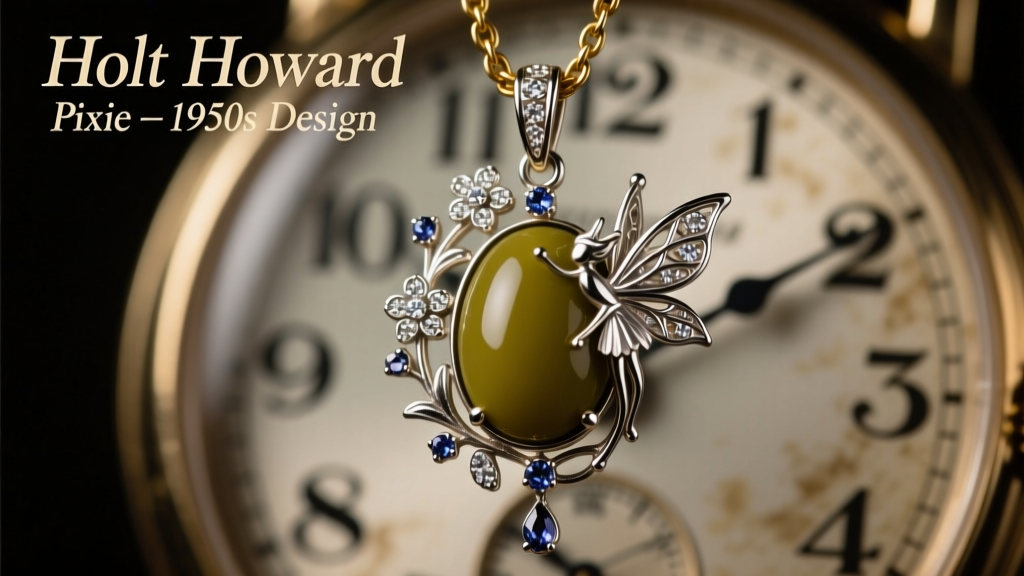
Holt Howard Jar Cocktail Olives Pixie: A Mid-Century American Ceramic Icon
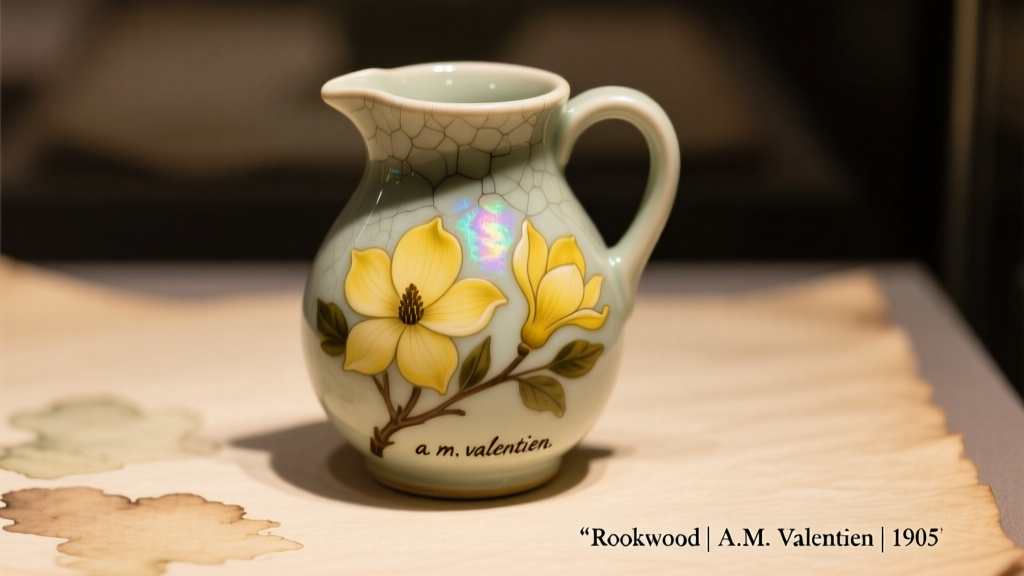
Rookwood Ewer with Yellow Dogwood Blossoms: A Masterwork by A. M. Valentien in Standard Glaze, 10 × 6 Inches
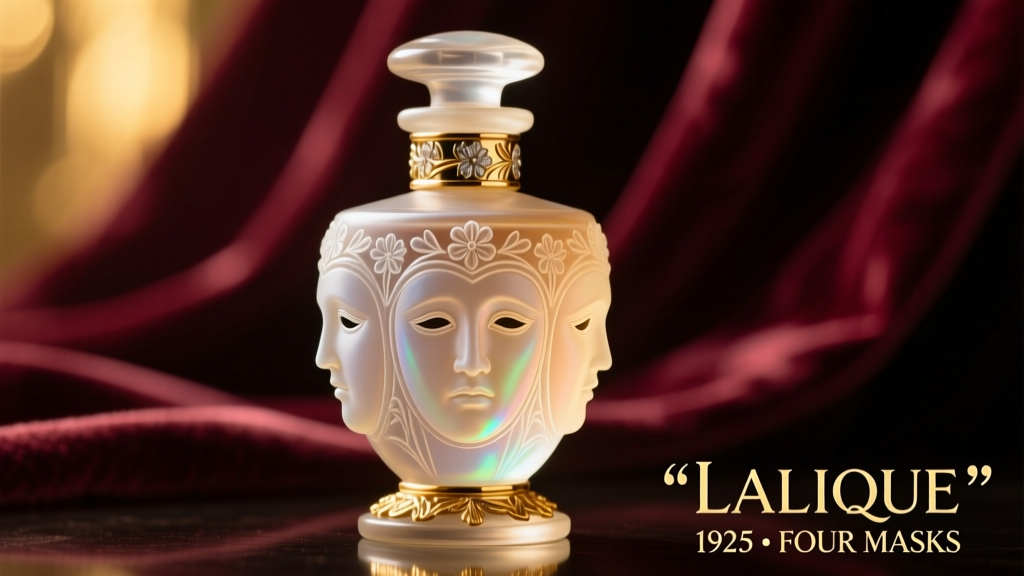
Lalique Perfume Bottle: The Four Different Masks Urn Form — A 4-Inch Masterpiece of Art Deco Glass Sculpture
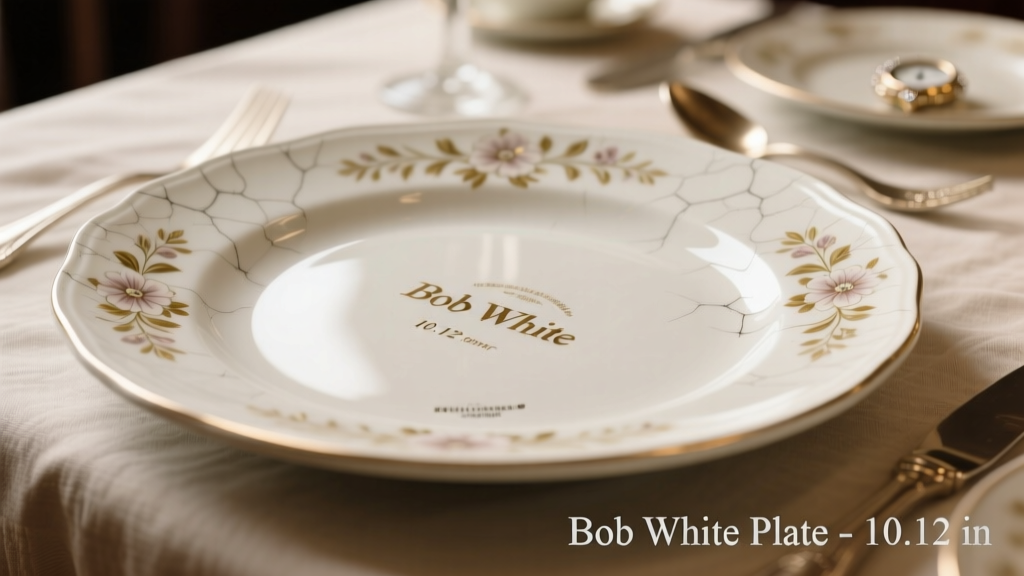
The Bob White Dinner Plate: A Mid-Century American Icon in Porcelain and Utility

The Silver Marx Loop-the-Loop Toy Airplane: Engineering, Rarity, and Auction History of a Mid-Century Mechanical Marvel
David C. Cook Publishing’s 1935 Paper Catalog: A Historical Artifact of Sunday School Pedagogy and Visual Education