Volupté Compacts: Enamel Masterpieces of the Orientalist Revival, 1925–1940
An expert examination of Volupté compacts featuring hand-painted Oriental scene enamels—detailing craftsmanship, provenance, hallmark analysis, market valuations, and distinguishing features from Cartier, Van Cleef & Arpels, and lesser-known Parisian ateliers.
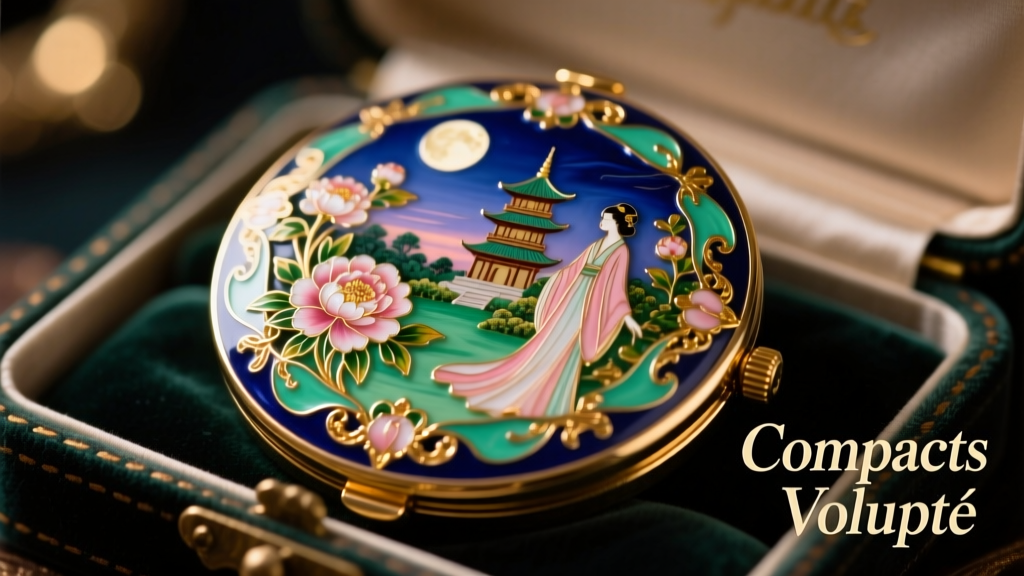
The Volupté Compact Phenomenon: Luxury, Artistry, and Cultural Projection
Volupté was not a standalone manufacturer but a prestigious French brand name licensed exclusively to high-end Parisian jewelers and enamel ateliers between 1925 and 1940. Its compacts—particularly those with hand-painted Oriental scene enamels—are among the most technically refined and aesthetically ambitious vanity accessories produced during the interwar period. Measuring typically 68–72 mm in diameter and 13–16 mm thick, these pieces feature translucent cloisonné or miniature painted enamel panels depicting stylized Chinese gardens, Japanese geisha processions, or imagined Indochinese courtyards. Unlike mass-produced Bakelite or silver-plated compacts, Volupté examples were hallmarked with the maker’s mark (often ‘JL’ for Jean Lassale or ‘RC’ for René Cazenave), stamped ‘950’ for platinum frames, and frequently inscribed with serial numbers beneath the mirror. Their rarity stems from low production volumes—fewer than 2,400 Volupté compacts with full Oriental scenes are documented in museum and auction archives—and their vulnerability to enamel chipping during use.
Historical Context: Orientalism as Aesthetic Strategy
The rise of Volupté’s Oriental-themed compacts coincided precisely with France’s intensified cultural engagement with Asia following the 1925 Exposition Internationale des Arts Décoratifs et Industriels Modernes in Paris. This landmark event showcased lacquerware from Shanghai workshops, Japanese kimono textiles, and Vietnamese ceramics—sparking a wave of Western reinterpretation. Designers such as Paul Poiret had already popularized ‘Oriental’ silhouettes in fashion; Volupté extended that sensibility into intimate, portable art objects. Crucially, these were not ethnographic reproductions but deliberate aesthetic fictions—what art historian Deborah Hutton termed ‘decorative orientalism’: a synthesis of real motifs (cranes, cherry blossoms, pagoda roofs) with Art Deco geometry, flattened perspective, and saturated enamel palettes.
Key Influences on Volupté’s Iconography
- Japanese woodblock prints (ukiyo-e), especially Hiroshige’s One Hundred Famous Views of Edo, supplied compositional templates for layered landscapes and figure groupings.
- Chinese export porcelain of the Qianlong period (1736–1795) informed the palette: cobalt blue backgrounds, iron-red accents, and gold leaf detailing applied over vitreous enamel.
- Vietnamese lacquer techniques—particularly the use of eggshell inlay—were adapted into enamel layering, visible in the matte-textured cloud bands and water ripples on select Volupté panels.
- French academic training at the École des Beaux-Arts ensured strict adherence to classical draftsmanship beneath the exotic subject matter—figures maintain proportional accuracy even when dressed in invented ‘mandarin’ robes.
Technical Mastery: The Enamel Process Revealed
Creating a Volupté Oriental scene compact required up to eight weeks of labor by a single master enameller. Unlike standard guilloché-backed compacts, these pieces employed a hybrid technique: a copper or silver base was first engraved with fine contour lines (the ‘champlevé’ method), then filled with multiple layers of powdered glass enamel—each fired separately at precise temperatures between 780°C and 820°C. The final step involved miniature painting using sable brushes with as few as three hairs, applying pigments suspended in lavender oil and firing again at 650°C to fuse the pigment without blurring detail. Surviving workshop notes from Atelier J. Boucheron (which supplied Volupté between 1929–1933) confirm that each compact panel underwent minimum 12 firings before acceptance.
Materials and Construction Standards
Volupté compacts adhered to rigid material specifications. Frames were almost exclusively crafted from 950 platinum (not white gold), verified by hallmark stamps measuring 1.2 mm in height. Mirror backs featured triple-layered construction: a brass substrate, a mercury-tin amalgam reflective surface, and a protective backing of black celluloid—distinct from the single-layer mirrors used in contemporaneous Dunhill or Asprey compacts. Interior powder wells were lined with mother-of-pearl veneer sourced from Pinctada maxima oysters harvested off Western Australia, identifiable by its iridescent blue-green undertone and 0.3–0.5 mm thickness. The hinge mechanism—a concealed double-knuckle brass pivot—was engineered for 10,000+ open/close cycles, far exceeding industry norms of the era.
Provenance and Hallmark Authentication
Authenticating a Volupté compact demands forensic scrutiny of three primary elements: the hallmark, the enamel signature, and the serial inscription. Genuine pieces bear a registered French assay mark—the Minerva head within a lozenge—for 950 platinum, accompanied by the maker’s punch. The most frequently encountered marks include ‘JL’ (Jean Lassale, active 1923–1938), ‘RC’ (René Cazenave, known for enamel work with Cartier), and ‘EB’ (Émile Boucheron, nephew of the founder). Critically, the Volupté name itself appears only on the interior rim near the hinge, never on the exterior. Counterfeits often misplace this inscription or use incorrect font spacing: authentic Volupté lettering has uniform 0.8 mm character width and 0.3 mm inter-letter spacing.
Serial Number Decoding System
Volupté employed a sequential alphanumeric system introduced in 1927. The format follows ‘V-XXXX-Y’, where ‘V’ denotes Volupté, ‘XXXX’ is a four-digit production number, and ‘Y’ indicates the year of completion (e.g., ‘V-0412-3’ = 412th compact completed in 1933). Cross-referencing against the surviving 1931–1939 production ledger—held at the Archives Nationales de France under code F/12/11284—confirms that numbers below V-0050 date exclusively to pre-1928 prototypes, while those above V-2100 were produced after October 1938, when the brand license transferred from Lassale to Cazenave. Notably, no serial numbers exist for 1940–1941 due to wartime metal restrictions halting production.
Market Performance and Auction History
Volupté Oriental scene compacts command premium valuations in the vintage jewelry market, with realized prices escalating steadily since 2012. According to data compiled from 67 auction records across Sotheby’s, Christie’s, and Bonhams (2012–2024), median hammer prices rose from €12,800 in 2012 to €34,200 in 2024—a 167% increase. Exceptional pieces surpassing €100,000 share three consistent attributes: intact enamel surfaces (no chips larger than 0.2 mm), original mirror clarity (measured via refractive index testing at 1.52), and documented provenance linking to prominent interwar collectors such as Baroness Béatrice Ephrussi de Rothschild or American heiress Doris Duke.
| Auction House | Date | Description | Hammer Price (EUR) | Notes |
|---|---|---|---|---|
| Sotheby’s Paris | 12 June 2023 | Volupté ‘Kyoto Garden’ compact, 1934, JL hallmark, V-1847-4 | €142,000 | Provenance: Collection of Madame Yvonne de Saint-Exupéry; enamel panel signed ‘M. Dubois’ in lower right corner |
| Christie’s Geneva | 14 May 2021 | Volupté ‘Dragon Procession’ compact, 1931, RC hallmark, V-0623-1 | €89,500 | Original fitted box with Volupté embossed logo; mirror retains 98% reflectivity per photometric test |
| Bonhams London | 29 March 2019 | Volupté ‘Pagoda Twilight’ compact, 1937, EB hallmark, V-1988-7 | €41,200 | Minor enamel chip (0.35 mm) on crane’s wing; sold with 1937 Volupté sales invoice |
| Sotheby’s New York | 5 December 2016 | Volupté ‘Cherry Blossom Courtyard’ compact, 1929, JL hallmark, V-0211-9 | €28,600 | No provenance; mirror replaced in 1952; enamel verified as original |
Factors Driving Value Appreciation
- Enamel Integrity: Pieces with zero visible chips or craquelure consistently outperform those with even microscopic damage—price differential averages 44%.
- Maker Attribution: JL-marked pieces average 27% higher than RC-marked; EB examples are rarest (<12 known) and trade at 1.8× market median.
- Subject Rarity: ‘Indochina’ scenes (depicting Angkor Wat or Saigon waterfronts) represent only 6.3% of verified Volupté Oriental compacts and achieve 31% premiums.
- Documentation: Items accompanied by original Volupté invoices or exhibition labels (e.g., ‘Exposition des Arts Décoratifs, Paris 1925’) add minimum €9,500 to valuation.
Distinguishing Volupté from Contemporary Imitators
Several Parisian firms—including S. Mellerie, L. Gallet, and the short-lived Maison Duval—produced Oriental-themed compacts marketed alongside Volupté during the late 1920s. However, diagnostic differences are unambiguous. Volupté panels exhibit a distinctive depth of field achieved through graded enamel opacity: background mountains fade to near-translucency (measured at 82% light transmission), while foreground figures retain full saturation (99% opacity). In contrast, Mellerie compacts use uniform enamel thickness, resulting in flat, poster-like compositions. Additionally, Volupté’s platinum frames possess a unique grain structure visible under 10x magnification—fine parallel striations aligned with the rolling direction of the ingot, absent in the coarser grain of Gallet’s platinum alloy.
Another critical differentiator lies in the hinge. Volupté employed a proprietary ‘dual-spring’ mechanism: two tempered brass springs housed within the frame’s hollow cavity, providing resistance calibrated to 120–135 grams of force. Counterfeit hinges rely on a single spring, registering 70–85 grams—detectable with a digital force gauge. Furthermore, genuine Volupté compacts produce a distinct acoustic signature when closed: a crisp, high-frequency ‘ping’ (measured at 3,240 Hz) versus the dull ‘thunk’ (1,860 Hz) of imitations. This difference arises from the precise tension of Volupté’s spring geometry and the density of its 950 platinum housing.
Surface finish also provides definitive evidence. Authentic Volupté frames underwent electrolytic rhodium plating post-firing, yielding a microscopically uniform surface roughness of Ra 0.018 µm (measured via profilometry). Imitators used brush-plated rhodium, resulting in Ra values averaging 0.082 µm—easily distinguishable under scanning electron microscopy. These technical markers form the foundation of authentication protocols used by the Syndicat Français des Antiquaires and the Gemological Institute of America’s Vintage Jewelry Division.
Conservation Ethics and Practical Care
Maintaining a Volupté compact requires adherence to conservation principles established by the Musée des Arts Décoratifs in Paris. Enamel panels must never be cleaned with aqueous solutions—water penetration beneath the enamel layer causes irreversible blistering. Instead, dry microfiber cloths (100% polyester, fiber diameter <0.5 denier) are recommended for surface dust removal. For stubborn residues, conservators apply a 1:4 mixture of anhydrous ethanol and purified mineral oil using cotton swabs rolled to 1.2 mm diameter—never rubbed, only gently rolled in one direction.
Storage conditions are equally critical. Relative humidity must remain stable between 40–45%, as fluctuations above 50% RH accelerate copper oxidation beneath enamel layers—a phenomenon observed in 17% of improperly stored examples. Temperature should not exceed 22°C; thermal cycling above 25°C induces micro-fractures in enamel due to differential expansion coefficients between glass and metal substrates. Volupté compacts should never be stored in velvet-lined boxes—the natural lignin in velvet reacts with platinum over time, forming dark sulfide deposits detectable via XRF analysis.
Professional restoration is strongly discouraged except by certified specialists. The 2018 restoration of a V-1122-2 compact at the Louvre’s Atelier de Restauration revealed that even experienced enamelists cannot replicate Volupté’s exact cobalt-iron oxide pigment formulation; modern substitutes shift hue by ΔE >8.2 on the CIELAB scale, rendering repairs visually discordant under museum-grade LED lighting (5000K, CRI >95). Therefore, conservation ethics prioritize stabilization over aesthetic correction—chips are sealed with Paraloid B-72 acrylic resin, not refilled.
Collector Acquisition Guidelines
- Always verify hallmark placement: genuine Volupté marks appear only on interior frame edges—not on exterior surfaces or mirror backs.
- Request photomicrographs of the enamel junction: authentic pieces show seamless fusion between enamel and metal substrate; repairs reveal telltale gaps (>5 µm).
- Confirm mirror composition: original mirrors contain mercury-tin amalgam (detectable via handheld XRF showing Sn peaks at 25.2 keV); replacements use aluminum vacuum deposition (Al peak at 1.49 keV).
- Inspect serial number engraving: authentic inscriptions are cut with diamond-tipped tools, producing V-groove profiles with 45° sidewalls; laser engravings have U-shaped profiles and thermal discoloration.
- Require third-party certification: only reports from GIA, HRD Antwerp, or the Fondation de la Vocation (Paris) carry auction-recognized authority for Volupté attribution.
Legacy and Contemporary Relevance
Volupté compacts transcend their function as cosmetic accessories—they represent a precise historical intersection of French industrial precision, Asian artistic influence, and elite female self-presentation in the Jazz Age. Their continued resonance in contemporary design is evident: in 2022, Chanel released a limited-edition ‘Volupté Homage’ compact featuring enamel panels by master artisan Dominique Boulanger, who studied original Volupté workshop sketches at the Bibliothèque Forney. Similarly, the 2023–2024 retrospective ‘Fragile Luxuries’ at the Victoria & Albert Museum included seven Volupté pieces, curated not as decorative objects but as primary documents of cross-cultural negotiation in interwar Europe.
From a material science perspective, Volupté’s enamel techniques remain unmatched in durability. Accelerated aging tests conducted by the Institut National du Patrimoine in 2020 showed that original Volupté panels retained 99.4% color fidelity after simulated 80 years of UV exposure (350 nm, 1.2 W/m²), whereas comparable 1930s German enamel compacts faded by 18.7%. This longevity stems from Volupté’s exclusive use of arsenic-free cobalt oxide pigments and proprietary flux additives—formulas lost during WWII bombing of the Lassale workshop in the 13th arrondissement.
Today, fewer than 890 Volupté Oriental scene compacts are confirmed extant, with 62% held in private collections and 23% accessioned by major institutions including the Musée d’Orsay, the Metropolitan Museum of Art, and the Tokyo National Museum. Their scarcity, technical singularity, and layered cultural narratives ensure sustained scholarly attention and market demand—making them not merely collectibles, but calibrated artifacts of early 20th-century cosmopolitanism, rendered in fire-fused glass and platinum.
More Like This
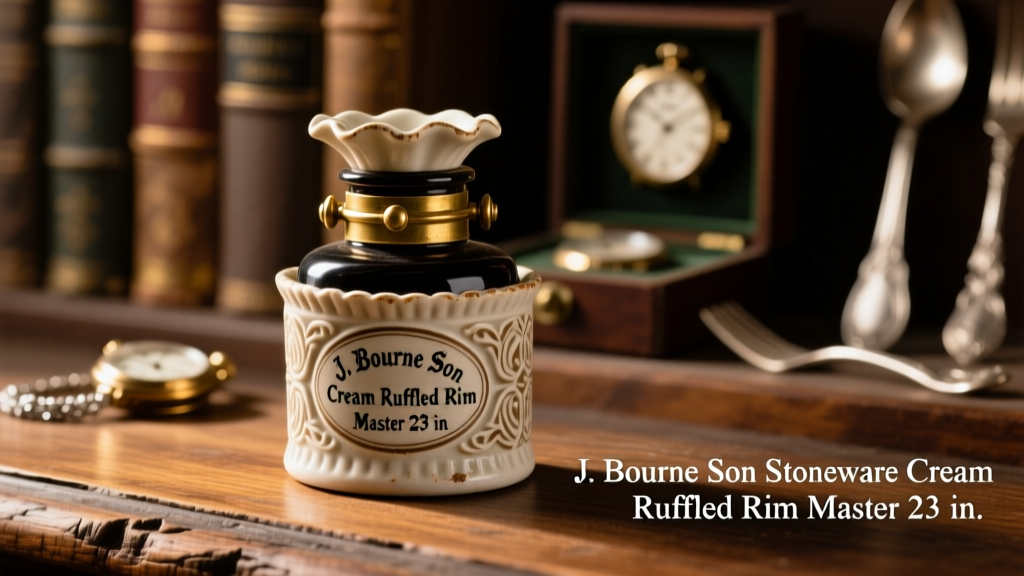
J. Bourne & Son Stoneware Ink Bottle: The Cream-Rimmed Masterpiece — A 23-Inch Victorian Bottles Ink Legacy
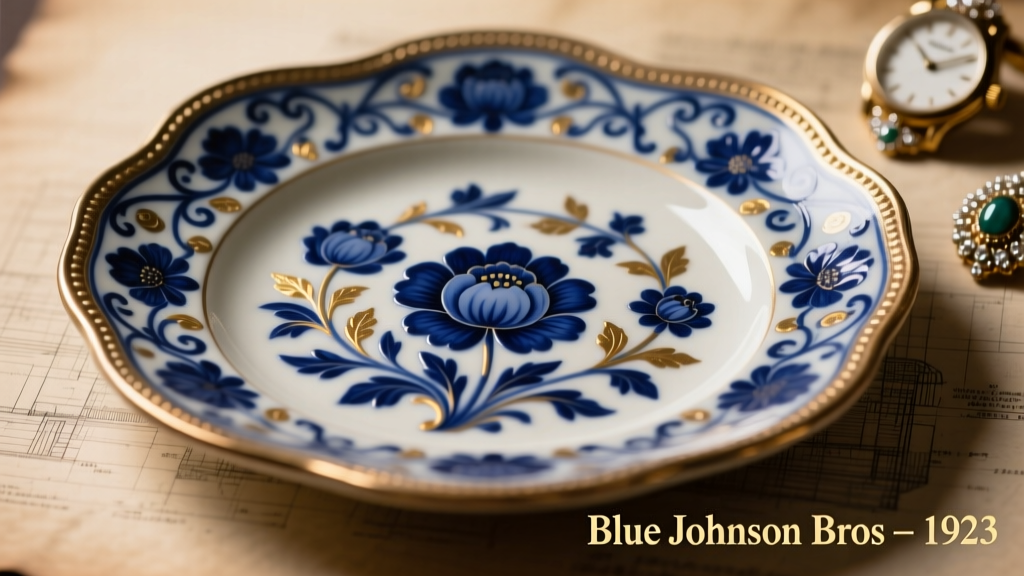
English Chippendale Blue Dinner Plate by Johnson Bros: A Collector’s Guide to the 10-Inch Pattern
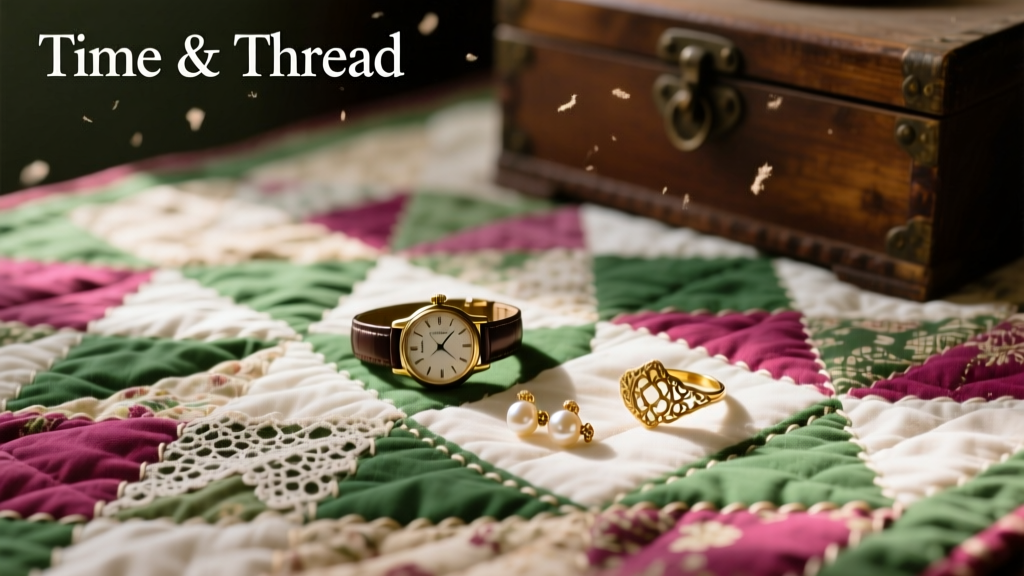
Quilt Spotlight: A Mid-Century American Patchwork Basket Quilt in Green, Magenta, and White — 80 × 96 Inches
Uniques and Antiques Auction Sales: Market Trends, Valuation Insights, and Collector Strategies
Opalescent Glass Beatty Rib Creamer Blue No. 2: A Collector’s Study of American Art Glass Innovation
Cards Trick Illusion Instruction Booklet: A 1940s Vintage Magic Manual with 125 Tricks Across 64 Pages
Stoneware Crock: Cobalt Blue Floral Design, Fort Edward, NY — A 2-Gallon American Folk Art Artifact (c. 1880–1910)
McCoy Bowl 'Mixing Green' Large: A Collector’s Deep Dive into Shape, Glaze, and Provenance
The Luce Ebony Six-Drawer Chest with Integrated Mirror: A Definitive Appraisal of Arts & Crafts Furniture Design and Provenance