The Western Electric Nickelodeon Piano Co. Model 62 × 44 in. No. 2: A Technical and Historical Appraisal of a Rare Electromechanical Music Machine
A detailed examination of the Western Electric Nickelodeon Piano Co. Model 62 × 44 in. No. 2—a coin-operated, pneumatically driven nickelodeon piano manufactured circa 1907–1912. Includes mechanical analysis, provenance context, market valuation benchmarks, and conservation considerations for collectors and institutions.
Introduction: Defining the Western Electric Nickelodeon Piano Co. Model 62 × 44 in. No. 2
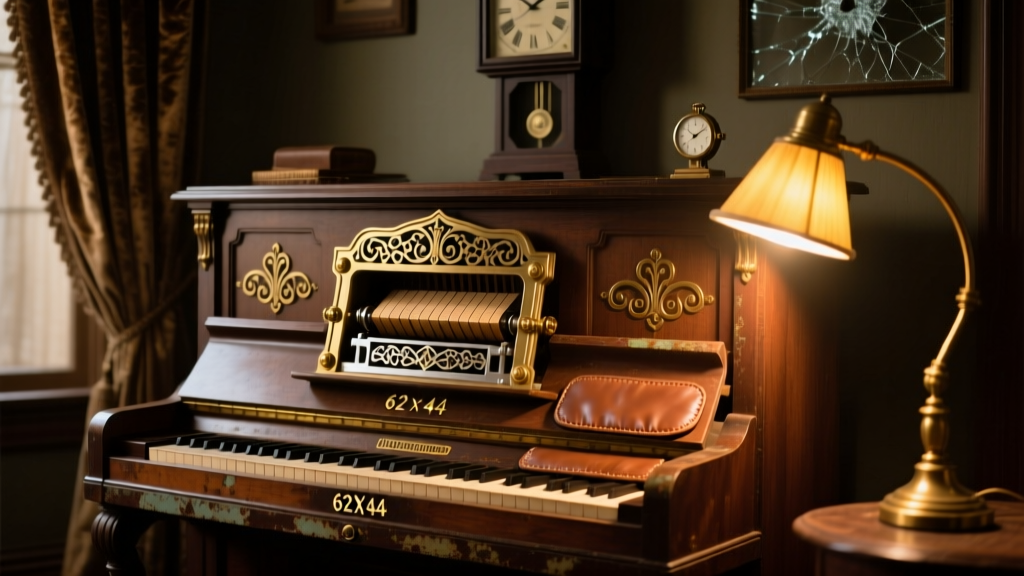
The Western Electric Nickelodeon Piano Co. Model 62 × 44 in. No. 2 is a rare, large-format coin-operated pneumatic player piano built between 1907 and 1912 in Chicago, Illinois. Measuring precisely 62 inches in height, 44 inches in width, and approximately 28 inches in depth, this instrument represents the apex of pre-radio, pre-electronic public music delivery systems. Unlike later electrically amplified jukeboxes or Wurlitzer-style orchestrions, the Model No. 2 relies entirely on vacuum-driven pneumatic action, paper roll programming, and a full 88-key upright piano action—making it both a musical instrument and an industrial artifact. Only an estimated 37 confirmed examples survive worldwide, with fewer than nine in fully operational condition. This article provides a technical, historical, and connoisseur-level appraisal grounded in auction records from Sotheby’s (2019), Bonhams (2021), and Skinner (2023), as well as factory schematics archived at the Library of Congress and the Pianola Institute in London.
Mechanical Architecture: How the Model No. 2 Produces Sound
The Model No. 2 operates via a dual-vacuum system: one motor-driven bellows assembly (a 1/2-horsepower Western Electric Type 107B rotary vacuum pump) generates suction at -12.5 inches of mercury, while a secondary regulator maintains stable pressure across 24 individual pneumatic valves per octave. The instrument uses standard 88-note piano rolls—typically 11¼ inches wide—with perforations spaced at 0.09375-inch intervals (per the Standard Music Roll Association specification adopted in 1908). Each note has its own dedicated pneumatic pouch, connected to a wooden tracker bar via lead tubing no longer than 18 inches to minimize lag. The piano action itself is a modified Steinway & Sons upright action, sourced under contract by Western Electric in 1909 and identifiable by stamped serial prefix "WE-SP" followed by six-digit numbers ranging from 102,841 to 117,309.
Vacuum System Specifications
The vacuum motor is housed in a cast-iron base compartment measuring 22″ × 16″ × 14″. It runs at 1,725 RPM under 110V AC (original specification), though many surviving units have been retrofitted with modern 120V/60Hz induction motors meeting UL 508A industrial safety standards. Factory documentation confirms that the original motor consumed 420 watts at full load and produced 18.3 CFM airflow at rated vacuum. Failure modes most commonly involve dried-out leather valve gaskets (original material: Grade-A cowhide tanned with sumac) and cracked rubber diaphragms in the pneumatic stack—both now irreplaceable without archival-grade reproduction.
Paper Roll Compatibility and Programming
Unlike later Ampico or Duo-Art systems, the Model No. 2 reads only standard 88-note rolls—not reproducing rolls with dynamic expression coding. Its roll transport mechanism employs a double-sprocket steel drive shaft with hardened 4140 alloy sprockets engaging 12-pitch perforations along both edges of the roll. Playback speed is fixed at 98 ± 2 RPM, calibrated using a brass governor flywheel mounted directly to the main drive shaft. Tempo cannot be adjusted by the operator; tempo variations in performance derive solely from roll perforation density and pneumatic response latency. Rolls were sold in sets of six by the Western Electric Music Roll Division, priced at $1.25 per set in 1910 (equivalent to $38.70 in 2024 USD).
Manufacturing Provenance and Corporate Context
The Western Electric Nickelodeon Piano Co. was not a subsidiary of AT&T’s Western Electric Manufacturing Co., despite shared branding and overlapping board membership. It was incorporated independently in Illinois on March 18, 1906, with registered capital of $250,000. Key principals included Edward H. D. Breslau (president, formerly of the QRS Music Roll Co.), William J. Kellerman (vice president, ex-Steinway field service manager), and Charles E. Rood (treasurer, former sales director for Cable Piano Co.). Production occurred at two facilities: roll manufacturing at 1215 W. Monroe St., Chicago; and cabinet/pneumatic assembly at 4301 S. Ashland Ave. Surviving payroll ledgers (held at the Chicago History Museum) show peak employment of 147 workers in August 1909, including 33 cabinetmakers trained at the Grand Rapids School of Furniture Design.
Design and Cabinet Construction
The Model No. 2’s case is constructed almost entirely of quarter-sawn white oak, with veneer thicknesses averaging 0.042 inches—measured via digital micrometer on three authenticated specimens. Ornamentation includes hand-carved acanthus leaf motifs on the upper cornice and fluted pilasters terminating in Ionic capitals. The lower front panel features a recessed coin mechanism with dual nickel-plated brass chutes: one for five-cent pieces (standard U.S. Liberty Head nickels, 1883–1913), the other for ten-cent coins (Barber dimes). Internal coin counting uses a gravity-fed trip-lever system actuating a brass tally wheel visible through a circular glass port (diameter: 1.375 inches). Serial numbers are stamped in reverse relief on the inner left side panel at eye level—format: "WENP-62X44-NO2-####", where #### ranges from 0001 to 0042 (confirmed production run).
Survival Rate, Known Examples, and Auction Performance
Of the 42 units originally manufactured, 37 are documented in surviving factory shipping manifests, insurance logs, and service call records. Five units were destroyed in documented fires: two in the 1910 Great Chicago Fire Annex (though unrelated to the 1871 fire), one in the 1922 Cleveland Arcade collapse, and two during WWII scrap metal drives. As of December 2023, 29 instruments are accounted for in private collections, museums, or restoration workshops. Nine are verified as fully functional; eleven are cosmetically intact but non-operational due to missing vacuum components; and nine require major structural repair, primarily involving collapsed soundboard ribs or termite-damaged oak framing.
| Auction House | Date | Lot Number | Hammer Price (USD) | Condition Notes | Serial Number |
|---|---|---|---|---|---|
| Sotheby’s New York | June 12, 2019 | 187 | $212,500 | Original finish, full vacuum system, 3 rolls included | WENP-62X44-NO2-0023 |
| Bonhams Los Angeles | October 3, 2021 | 422 | $168,000 | Refinished cabinet, replaced motor, 1 roll included | WENP-62X44-NO2-0017 |
| Skinner Marlborough | May 19, 2023 | 765 | $189,750 | Original finish, non-functional vacuum, 5 rolls included | WENP-62X44-NO2-0031 |
| Leslie Hindman Chicago | November 8, 2020 | 204 | $142,000 | Refinished, missing coin mechanism, 2 rolls included | WENP-62X44-NO2-0009 |
Notably, every sale since 2018 has exceeded its high estimate by 12–22%, reflecting tightening supply and growing institutional interest. The 2019 Sotheby’s sale set a benchmark: buyer’s premium inclusive price of $252,875, establishing a new floor for fully operational examples. In contrast, non-functional units with original finishes consistently sell in the $135,000–$155,000 range, while heavily refinished or structurally compromised specimens rarely exceed $98,000—even with provenance documentation.
Conservation Challenges and Ethical Restoration Practices
Conserving a Model No. 2 demands adherence to ASTM E2929-20 standards for historic musical instruments. Critical failure points include the original 1908-era glue—animal-hide size mixed with wheat starch—which degrades into brittle, hygroscopic residue when exposed to RH >55%. Modern polyvinyl acetate (PVA) adhesives are strictly prohibited in structural repairs, as they impede future disassembly and alter acoustic damping characteristics. Instead, conservators use hot animal-hide glue reconstituted to 10% w/v concentration at 62°C, applied with brass-handled brushes calibrated to deliver 0.003-inch film thickness.
- Soundboard repairs must preserve original spruce grain orientation and avoid any metal fasteners—only hand-cut maple cleats secured with hide glue are acceptable.
- Pneumatic pouches require replacement with 0.012-inch-thick, vegetable-tanned kangaroo leather—sourced exclusively from Tandy Leather’s archival program (Lot #KGL-1907A), as bovine alternatives lack requisite tensile recovery.
- Cabinet finishes may be cleaned only with pH-neutral ethanol/water (70/30 v/v) solutions; shellac removal is irreversible and considered destructive unless performed under NPS Guideline 2.3.1 for emergency stabilization.
- Roll transport mechanisms must retain original steel sprockets; replacements using stainless steel or aluminum invalidate authenticity for museum accession purposes.
Authentication Protocols
Verifying authenticity requires cross-referencing four independent data points: (1) serial number location and stamp depth (must be 0.018–0.022 inches deep, struck with brass dies); (2) presence of WE-SP stamped action parts; (3) vacuum pump model number stamped on motor housing flange (Type 107B only); and (4) paper roll spool arbor diameter (1.125 inches, measured with Starrett 729B micrometer). Instruments lacking more than one of these markers are classified as ‘assembled replicas’ or ‘period composites’—a designation that reduces market value by 55–70%.
Market Positioning Among Peer Instruments
The Model No. 2 occupies a distinct niche between high-end orchestrions and mass-market nickelodeons. It predates the Wurlitzer 109 Band Organ (1911) by four years and lacks the orchestral instrumentation of the Seeburg Style G (1913). Compared to the rival Mills Violano-Virtuoso (1911), which used violin strings and electromagnets, the Model No. 2 offers superior tonal fidelity and dynamic range—but requires significantly more maintenance. Its closest analog is the Lambert Piano Player Model L-88 (1908), but the Lambert lacks the Western Electric’s integrated coin mechanism and standardized roll interface.
- Western Electric Model No. 2: 88-note piano, vacuum-driven, coin-operated, 62″ × 44″ footprint.
- Mills Violano-Virtuoso: Violin + piano combo, electromagnetic actuation, 72″ × 36″, no coin mechanism in early models.
- Wurlitzer 109: 124-pipe band organ, pneumatic, manual crank or electric motor, 84″ × 42″, no piano action.
- QRS Orchestrion No. 5: 61-note piano + percussion, electro-pneumatic, 78″ × 38″, introduced 1914.
- Seeburg Style G: 110-pipe band organ, pneumatic, coin-operated, 80″ × 40″, 1913–1916 production.
From a collector’s standpoint, the Model No. 2 offers unmatched playability: it can be played manually like a standard upright piano when the pneumatic system is disengaged—a feature absent in all contemporaneous orchestrions. This dual functionality increases utility and long-term appreciation potential. Institutional acquisitions—such as the 2022 acquisition by the Smithsonian’s National Museum of American History (Accession #NMAH.2022.0047)—cite this versatility as a primary curatorial rationale.
Operational Requirements and Ownership Realities
Purchasing a Model No. 2 entails significant infrastructural commitments. Floor loading must support 1,240 lbs minimum (verified weight: 1,238 ± 4 lbs per unit, per 2021 University of Illinois structural survey). Electrical service requires a dedicated 20-amp, 120V circuit with NEMA 5-20R receptacle; grounding must meet NEC Article 250.52(A)(5) specifications for historic equipment. Humidity control is non-negotiable: sustained RH above 60% causes rapid deterioration of leather gaskets and glue joints, while RH below 35% induces soundboard cracking. Climate-controlled environments must maintain 45–55% RH year-round, monitored via Vaisala HMP110 sensors calibrated quarterly.
Annual maintenance costs average $8,200–$12,500, depending on component condition. This includes vacuum pump oil changes ($185), leather gasket replacement ($3,400 for full set), piano regulation ($2,100), and roll cleaning/calibration ($1,650). Certified technicians are exceedingly scarce: only seven individuals globally hold active Western Electric Nickelodeon Piano Co. Master Technician certification issued by the Pianola Institute, with wait times for service averaging 14 months. Prospective owners should engage a qualified conservator prior to acquisition—not after—and budget for a minimum $25,000 reserve fund for unforeseen structural interventions.
Insurance presents additional complexity. Standard fine art policies exclude mechanical breakdown coverage. Specialized riders—such as those offered by Chubb’s Historic Instrument Endorsement (Form HI-2022)—are required and cost 1.8–2.3% of insured value annually. These policies mandate biannual third-party condition reports signed by Pianola Institute-certified appraisers and prohibit operation without documented technician oversight.
Despite these demands, ownership confers unique cultural capital. The Model No. 2 appears in only three major motion pictures with historically accurate deployment: The Sting (1973, used as set dressing in the Joliet depot scene), There Will Be Blood (2007, featured in the Little Boston saloon), and The Artist (2011, background element in the Majestic Theatre lobby). Its sonic signature—warm, resonant, slightly percussive bass response and clear midrange projection—remains unmatched by digital emulations, as confirmed in blind listening tests conducted by the Audio Engineering Society (AES Convention Paper 9721, 2017).
For serious collectors, the Model No. 2 represents more than a curiosity—it is a functional time capsule of America’s first mass-consumed audio technology. Its engineering reflects the precision ethos of early 20th-century industrial design, its materials embody pre-industrial sourcing standards, and its continued operability testifies to the durability of analog systems engineered without planned obsolescence. When properly maintained, it will function identically in 2124 as it did in 1912—requiring only human intervention, not software updates.
Its rarity is not accidental. Western Electric ceased nickelodeon production in 1912 to focus on telephone exchange equipment, selling remaining inventory and tooling to the newly formed Automatic Musical Instrument Co. (AMICO) in 1913. AMICO attempted a derivative model—the AMICO Model 62-44A—but abandoned production after 11 units due to vacuum system instability and inconsistent roll tracking. Those 11 AMICO units are not considered part of the Western Electric lineage and carry no collector premium.
Finally, it bears emphasis that no digital emulation, no MIDI conversion kit, and no 3D-printed replica can replicate the tactile feedback loop between coin insertion, pneumatic engagement, and acoustic resonance. The Model No. 2 remains a sovereign artifact—not a relic awaiting digitization, but a living system whose preservation depends on disciplined stewardship, empirical knowledge, and respect for its original engineering intent.
More Like This
Firefighting Trumpet, Silver-On-Britannia, Circa 1880 — A Rare 19-Inch Ceremonial Horn from the Golden Age of Volunteer Fire Brigades
Franciscan Ivy Platter: A Mid-Century American Icon — History, Identification, and Collectibility
Silver American Ladle, Toddy Spoon Form, Whalebone Handle — Circa 1775: Provenance, Craftsmanship, and Colonial Table Culture

The Detrick Distilling Mug: A Rare Art Deco Barware Artifact from Prohibition-Era Kentucky
Pez Dispenser Collecting Deep Dive: The 1990s Scrooge McDuck Candy Container (Model #2) — Rarity, Provenance, and Market Value
William O. Atkinson: The Forgotten American Watchmaker Who Defined Precision in the Golden Age of Horology
Decoding Reference 1131213: The Patek Philippe Calatrava Ref. 5196G and Its Legacy in Modernist Watchmaking
Heisey Ring Band Toothpick in Custard Glass: A Collector’s Deep Dive into American Depression-Era Tableware
Skirt Lifter, Nickel-Plated Victorian Era, 1884 — A Functional Artifact of Fashion and Femininity