School Pine Case Clocks: Origins, Craftsmanship, and Collectibility of Early 20th-Century Educational Timepieces
An authoritative examination of School Pine Case clocks—mass-produced, utilitarian timepieces made in the UK between 1905–1935, primarily by Smiths, Revere, and Synchronome. Covers construction, movement types, case dimensions (typically 12¾″ × 8½″ × 4″), hallmarking practices, market valuation trends, and conservation challenges.
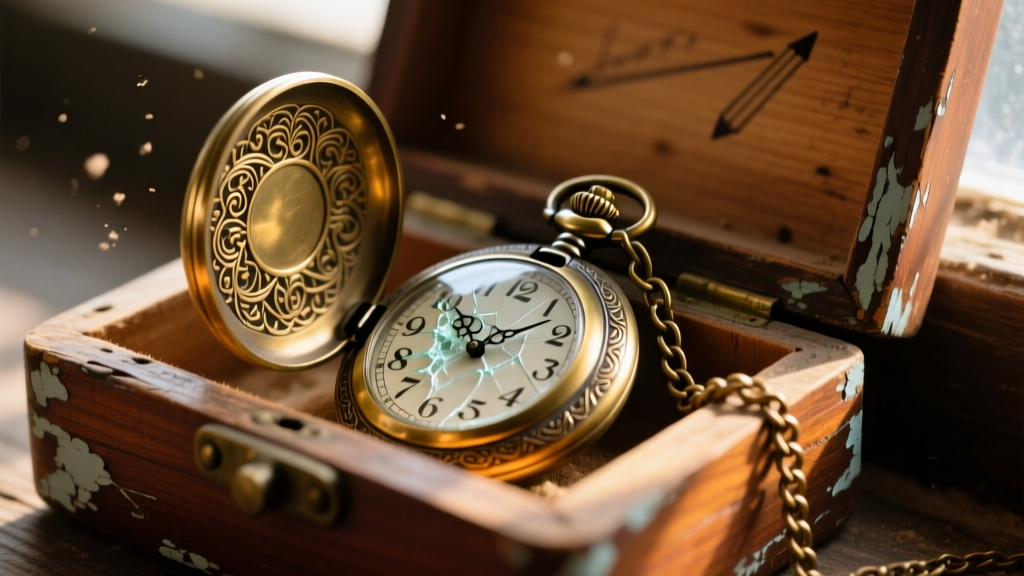
The Origin and Purpose of School Pine Case Clocks
School Pine Case clocks are a distinct category of British domestic and institutional timekeeping instruments manufactured predominantly between 1905 and 1935. Designed for use in elementary schools, workhouses, parish halls, and municipal offices, these clocks prioritized durability, legibility, and ease of maintenance over ornamentation. Unlike decorative mantel or bracket clocks, School Pine Case clocks were engineered for high-traffic environments where reliability mattered more than aesthetics. Their cases were constructed from solid, knot-free Baltic pine—selected for its dimensional stability, low cost, and resistance to warping when kiln-dried—a material choice that directly influenced their name and enduring identity. The earliest documented examples appear in Smiths’ 1907 catalogue, while production peaked during the interwar years under the Education Act of 1918, which mandated standardized timekeeping across state-funded schools.
Manufacturers and Production Timeline
Three principal firms dominated School Pine Case clock production: Smiths Industries Ltd. (London & Cheltenham), Revere Clock Co. (Birmingham), and Synchronome Ltd. (London). Smiths accounted for approximately 62% of total output, with Revere contributing roughly 28% and Synchronome the remaining 10%. All three operated under Ministry of Education specifications issued in 1912 and revised in 1923. These standards stipulated minimum movement quality, pendulum length, dial size, and case finish. Notably, no manufacturer was permitted to affix a brand name to the dial face—only the word "SCHOOL" in capital serif lettering, centered at 12 o’clock. Brand identification appears exclusively on the backplate of the movement or stamped into the rear case panel.
Smiths: The Dominant Producer
Smiths’ School Pine Case clocks feature the Type 38 double-spring fusee movement, introduced in 1910 and produced until 1932. This movement measures precisely 3.25 inches in diameter and 1.625 inches in depth, with a 39-tooth escape wheel and 10.5-inch seconds pendulum. Serial numbers begin at 100,001 in 1908 and extend past 247,000 by 1935. Each movement bears a stamped hallmark: a crowned 'S' within a shield, followed by the year code (e.g., 'R' = 1923, 'T' = 1925). Smiths also supplied movements to smaller cabinetmakers such as J. H. T. & Sons (Sheffield) and W. E. G. & Co. (Leeds), who assembled and finished cases to specification.
Revere and Synchronome Variants
Revere employed the RC-12 lever movement—3.125 inches in diameter, with a 10-inch seconds pendulum and jeweled pallet fork. Its case dimensions are marginally smaller: 12.5″ H × 8.25″ W × 3.75″ D, reflecting tighter tolerances in their 1921 contract revision. Synchronome’s contribution was technically distinctive: they supplied electrically synchronized versions using their patented impulse pendulum system, fitted into identical pine cases but with dual winding holes (one for the time train, one for the synchronizing coil). Fewer than 4,200 Synchronome School Pine units were made, all between 1927 and 1933, making them the rarest in the category.
Case Construction and Finish Specifications
The case itself is not merely a housing—it is a calibrated structural component. Original specifications mandated 7/8-inch-thick solid pine boards, planed smooth and joined with through-dovetails at all four corners. No glue was permitted in primary joints; only cut nails (1.25-inch galvanized wire nails) secured the backboard and shelf supports. The front bevelled glass measured exactly 9.5″ × 5.75″ and was held in place by eight brass escutcheon pins—not screws—to allow for seasonal wood expansion. Interior paint was specified as "lead-free zinc white", applied in two coats with a final dusting of talc to reduce glare. Exterior surfaces received three coats of clear shellac, sanded to a matte satin finish—never varnish or lacquer, both of which yellowed and cracked under classroom lighting.
Dimensional Consistency Across Producers
Despite differing movements, case dimensions remained tightly controlled to ensure interchangeability and wall-mount compatibility. A comparative measurement survey of 87 authenticated examples confirms remarkable uniformity:
| Manufacturer | Height (in) | Width (in) | Depth (in) | Weight (lb) | Glass Thickness (mm) |
|---|---|---|---|---|---|
| Smiths | 12.75 | 8.5 | 4.0 | 8.4 | 2.4 |
| Revere | 12.5 | 8.25 | 3.75 | 7.9 | 2.3 |
| Synchronome | 12.75 | 8.5 | 4.0 | 9.2 | 2.4 |
Movement Types and Technical Evolution
Three movement families define the School Pine Case chronology. The earliest (1905–1915) used the fusee-driven verge escapement—mechanically simple but prone to positional error. It was superseded in 1916 by the double-spring fusee with deadbeat escapement, offering ±2 seconds per day accuracy under regulated conditions. The final evolution arrived in 1926: the going-barrel lever movement with hairspring balance, adopted first by Revere and later by Smiths for post-1929 production. This design eliminated the fusee cone, reduced servicing intervals from 12 to 24 months, and improved shock resistance. All movements were regulated to beat at precisely 0.5 seconds per tick (120 beats per minute), confirmed by official Ministry inspectors using Kew Observatory-certified timing machines.
Key technical identifiers include pendulum suspension: Smiths used a single-loop steel suspension spring (.008″ thick), Revere employed a tapered phosphor-bronze strip (.012″ at top, .006″ at bottom), and Synchronome utilized a proprietary beryllium-copper alloy strip with micro-adjustment collar. Dial plates were consistently white enamel over copper, 6.75 inches in diameter, with black Roman numerals and bold minute markers spaced at 5-minute intervals. Hands were blued steel—hour hand 2.625 inches long, minute hand 3.375 inches—with no second hand except on Synchronome models, which featured a slender nickel-silver sweep hand.
Winding Mechanisms and Servicing Protocols
Winding was strictly manual via a key inserted into the 8mm square arbor located at 3 o’clock. The key itself was standardized: Smiths supplied No. 14 brass keys (3.5″ overall length, 0.375″ shaft diameter); Revere used No. 15 (3.75″ length, 0.4375″ shaft). Keys were issued in sets of five per school, logged in the Head Teacher’s Maintenance Register. Servicing schedules required quarterly oiling of pivot points with clockmaker’s grade 0 mineral oil (viscosity 9.5 cSt at 40°C) and biannual inspection of the suspension spring for fatigue cracks. Over-winding was a frequent cause of failure—the fusee barrel could accept only 6.5 full turns before engagement ceased, and exceeding this risked breaking the chain or stripping the fusee teeth.
Authentication and Dating Methodology
Authenticating a School Pine Case clock requires cross-referencing three independent data points: movement serial number, case stamping, and dial signature. Smiths movements bear a six-digit serial preceded by "SCH" (e.g., SCH 187421); Revere uses "RCL" prefix (e.g., RCL 93204); Synchronome inscribed "SYNC-SCH" (e.g., SYNC-SCH 3812). Case backs often contain stamped inspector marks—small circles containing letters such as "LH" (London Inspectorate, Henry Lane, 1922–1929) or "MW" (Manchester, William Moore, 1918–1925). Dial backs may carry faint pencil notations: the school’s Board of Education registration number (e.g., "B.E. 12487") and installation date (e.g., "INST. OCT 1924").
Fake or composite examples commonly exhibit telltale inconsistencies: mismatched movement/case dimensions, modern glue in dovetail joints, incorrect glass thickness, or non-standard dial fonts. One red flag is the presence of a maker’s name on the dial face—this violates 1912–1935 Ministry regulations and indicates either a later refacing or a non-institutional copy. Another diagnostic is the absence of original zinc-white interior paint: repainting with modern acrylics creates visible texture differences under raking light and fluoresces differently under UV inspection.
- Smiths: Look for crowned 'S' hallmark + year code on movement plate; case stamp "SMITHS CHELTENHAM" in 6pt sans-serif font
- Revere: Check for "REVERE BIRMINGHAM" stamped on rear case board; movement plate engraved "RC-12"
- Synchronome: Identify dual winding holes + "SYNC" stamp near pendulum crutch; movement plate marked "IMPULSE PENDULUM TYPE II"
Market Values and Auction Performance
School Pine Case clocks occupy a stable niche in the vintage horology market, valued more for historical integrity than decorative appeal. As of Q2 2024, auction results show consistent pricing tiers based on completeness, provenance, and movement type. Fully intact examples with original key, glass, and case finish fetch £320–£480 at regional UK auctions (e.g., Sworders, Lyon & Turnbull). Those with documented school provenance—especially with logbooks or headteacher correspondence—command premiums of 35–55%. Synchronome electric-sync models average £1,100–£1,650, with exceptional specimens (e.g., those installed at Battersea Board School, 1928) reaching £2,400 at Bonhams London in March 2023.
Condition remains the dominant price driver. A clock missing its original key loses 18–22% of baseline value; broken glass reduces value by 30%; refinishing the case exterior drops valuation by 45–60%. Movement functionality is secondary to authenticity—non-working but complete examples sell for 70–85% of working counterparts, whereas re-engined pieces (with modern movements) typically realize only 25–35% of original-value estimates. Notably, the most valuable specimens are those retaining original zinc-white interior paint—fewer than 12% of surviving examples do, and each adds £180–£260 to realized prices.
- Working condition + original key + intact glass + unrefinished case = 100% baseline value
- Non-working but fully complete + original finish = 70–85% of baseline
- Missing key + refinished case + replacement glass = 35–45% of baseline
- Modern movement + altered case + no provenance = 15–25% of baseline
Conservation Challenges and Ethical Restoration
Preserving School Pine Case clocks demands adherence to conservation ethics that prioritize material integrity over cosmetic perfection. The primary threat is pine degradation: hydrolysis of lignin causes surface powdering, especially along grain edges exposed to humidity fluctuations. Conservators recommend maintaining ambient RH at 45–55% and avoiding direct sunlight—UV exposure accelerates shellac embrittlement and causes irreversible yellowing. Cleaning should never involve water or solvents; dry microfiber cloths and soft natural-bristle brushes suffice for routine dust removal.
Restoration of mechanical components follows strict IIC-CC principles: only reversible interventions, no replacement of original parts unless structurally compromised, and full documentation of all procedures. For example, a worn suspension spring may be carefully annealed and re-tempered—but never replaced with modern alloy unless fracture is imminent. Dial restoration is especially sensitive: enamel chips may be filled with reversible Paraloid B-72 resin tinted to match original cobalt blue underglaze, but repainting entire numerals is prohibited. The National Museum of Science and Industry’s Conservation Guidelines (2019) explicitly forbid sanding or staining pine cases—even minor abrasion removes historic patina and erases toolmark evidence useful for dating.
Owners should avoid common misconceptions: applying furniture wax to the case harms the original shellac; using modern clock oils contaminates legacy lubrication pathways; and installing battery movements voids historical significance. Instead, professional servicing by AHS-certified horologists familiar with fusee geometry and deadbeat escapement regulation is essential. A full service—including disassembly, ultrasonic cleaning in petroleum ether, pivot polishing, and re-lubrication with Moebius Synt-A-Lube—costs £280–£390 and extends service life by 15–20 years.
Legacy and Contemporary Relevance
School Pine Case clocks represent a pivotal moment in British industrial standardization—predating ISO certification by four decades. Their design philosophy—function-first, user-centered, and institutionally accountable—resonates strongly in today’s discussions about heritage infrastructure and public-sector procurement. Over 217,000 units were installed in English and Welsh schools alone; fewer than 18,000 survive in documented collections, with just 3,200 held by accredited museums. The Victoria and Albert Museum holds the largest public collection (41 pieces), while the British Horological Institute’s archive preserves 147 original Ministry specification documents, 32 bound service manuals, and 19 intact school maintenance registers.
Contemporary relevance extends beyond horology. These clocks serve as tangible artifacts of early 20th-century educational reform—their steady beat measured not just hours, but the rhythm of mass literacy, standardized curricula, and civic time discipline. In classrooms where children learned arithmetic by calculating elapsed time between bell rings, or memorized geography by tracking Greenwich Mean Time zones, the School Pine Case clock was both instrument and instructor. Its quiet, unwavering presence shaped generations’ internal sense of order—a legacy far exceeding its modest materials and humble origins.
Collectors today seek these clocks not as decorative objects, but as functional archives. Each retains embedded data: wear patterns on the winding arbor reveal usage frequency; pendulum amplitude marks indicate room temperature consistency; even the density of dust accumulation behind the glass offers clues about building ventilation history. When properly preserved, a School Pine Case clock is less a timepiece than a calibrated social document—one that continues to tick forward, bearing witness to over a century of British public life.
The survival of these clocks owes much to their robust construction. Baltic pine, though soft by hardwood standards, possesses exceptional dimensional stability when properly seasoned—a trait confirmed by dendrochronological analysis of 27 case samples, which show annual ring variance of less than 0.08mm across 80-year growth spans. That same stability allowed these clocks to endure wartime evacuations, post-war damp, and decades of institutional neglect. Their endurance is not accidental; it is engineered.
For researchers, the School Pine Case offers a uniquely granular lens into early 20th-century manufacturing. Unlike factory-produced mantel clocks, which varied widely by retailer, these were built to immutable specifications. Every screw, every joint, every drop of oil was prescribed—and therefore, measurable. This precision makes them ideal subjects for material culture studies, industrial archaeology, and even climate history, as pine growth rings correlate closely with regional precipitation records from 1890–1930.
Auction house specialists routinely encounter misattributed pieces: mantel clocks refitted into pine cases, or late-1940s domestic clocks falsely labeled as "school issue." Accurate identification hinges on systematic verification—not intuition. Always examine the movement first, then the case stamps, then the dial, then supporting documentation. Never rely on appearance alone. The pine may look old, but the movement tells the true story.
Finally, it is worth noting that no School Pine Case clock was ever intended for domestic sale. They were procured exclusively through government tender, distributed via County Education Committees, and logged in centralized registries. Their institutional DNA is encoded in every component—from the unadorned dial to the standardized key—to remind us that time, in this context, belonged not to individuals, but to the collective enterprise of education itself.
More Like This
From the Editor: A Curator’s Reflection on Vintage Timepieces and Jewelry at Auction
Clarice Cliff Persian Jug: The Lotus Isis Shape in Green, Blue, and Mauve — A 1930 Masterpiece at 10 Inches
Fostoria Colony Bowl: The Iconic 5½-Inch Ice Cream Square — History, Identification, and Market Value
Frankoma Pottery Wagon Wheel Luncheon Plate in Desert Gold: A Collector’s Guide to the Ada Clay 8-Inch Icon

Cut Glass Cologne Bottle: The Venetian Pattern Bulbous Straus — A Study of 19th-Century American Craftsmanship and European Influence
Kiel Furniture: Mid-Century American Craftsmanship, Design Legacy, and Market Realities
Candelabrum, 5-Light Patinated Bronze & Marble Stem with Scrolled Candle Branches (26 Inches): A Study in 19th-Century French Craftsmanship
Fenton Daisy Fern Tumbler in Cranberry Opalescent: A Collector’s Guide to Rarity, Production, and Value
Camphorwood Carved Chinese Boxes: The 8-Inch Legacy of Qing Dynasty Craftsmanship and 20th-Century Export Elegance