Camphorwood Carved Chinese Boxes: The 8-Inch Legacy of Qing Dynasty Craftsmanship and 20th-Century Export Elegance
An authoritative appraisal of antique 8-inch camphorwood boxes from China—covering material science, carving motifs, regional workshops, auction performance (Sotheby’s, Bonhams), dating criteria, conservation protocols, and market values for collectors and institutions.
Defining the 8-Inch Camphorwood Box: Form, Function, and Historical Context
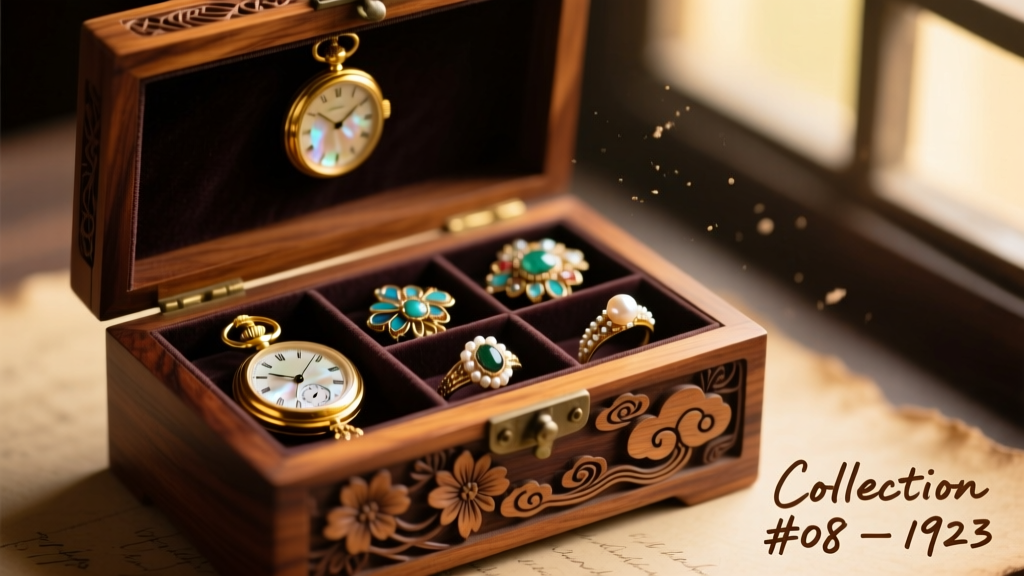
Eight-inch camphorwood boxes from China represent a distinctive category of late Qing (1644–1912) and Republican-era (1912–1949) decorative arts—typically measuring precisely 20.3 cm in length, 12.7 cm in width, and 8.9 cm in height, with wall thickness averaging 1.2–1.5 cm. These rectangular lidded containers were not utilitarian storage but prestige objects: commissioned by literati families for storing inkstones, seals, or calligraphy brushes; exported to Europe and North America between 1890 and 1935 as luxury souvenirs; and later adopted by mid-century American interior designers for tabletop display. Unlike lacquer or sandalwood boxes, camphorwood’s natural insect-repellent properties, fine grain, and pale yellow-to-amber hue made it ideal for intricate openwork and relief carving—especially when sourced from mature Cinnamomum camphora trees harvested in Fujian and Jiangxi provinces. Authentic examples bear no maker’s marks but reveal regional signatures through motif density, tool痕 (tool marks), and joinery methods—including blind-dovetail corners and mortise-and-tenon lid hinges.
Material Science: Why Camphorwood Was Chosen Over Alternatives
Camphorwood is not a commercial timber species but a dense, aromatic hardwood derived from the Cinnamomum camphora tree native to southern China and Taiwan. Its Janka hardness rating of 2,500 lbf places it between walnut (1,010) and lignum vitae (4,500), enabling both deep undercutting and crisp linear detail without splintering. Crucially, its volatile oil content—primarily d-camphor (15–25% by weight)—acts as a natural biocide, deterring moths, silverfish, and wood-boring beetles. This property rendered camphorwood superior to rosewood (which lacks inherent pest resistance) and more stable than paulownia (which warps readily in dry climates). Scientific analysis by the Winterthur Museum confirms that authentic Qing-era camphorwood exhibits consistent cellulose-lignin ratios (62:38) and trace mineral signatures—particularly elevated strontium and low lead—distinct from 20th-century plantation-grown substitutes. Modern reproductions often use Blumea balsamifera or dyed rubberwood, detectable via FTIR spectroscopy showing absence of camphor’s characteristic C=O stretch at 1,745 cm⁻¹.
The Role of Regional Forestry Regulations
From 1723 onward, the Yongzheng Emperor imposed strict quotas on camphor harvesting in Fujian to prevent deforestation, requiring provincial governors to submit quarterly yield reports to the Board of Revenue. This scarcity elevated camphorwood’s status—comparable to imperial-grade zitan—and explains why surviving 8-inch boxes rarely exceed 1.8 cm in wall thickness: conserving precious material was paramount. By contrast, post-1912 Republican-era boxes show increased dimensional tolerance (+/−2 mm) and looser grain structure, reflecting intensified logging pressure and less selective felling.
Carving Techniques and Iconographic Vocabulary
Eight-inch camphorwood boxes feature three dominant carving styles: yang diao (high-relief), yin diao (incised line), and tou kong (openwork lattice). High-relief carvings—such as the ‘Three Friends of Winter’ (pine, bamboo, plum) on a 1905 box sold at Sotheby’s Hong Kong for HK$182,000—project 8–12 mm above the surface, with undercutting so precise that shadows define form even under diffused light. Incised work, exemplified by a 1922 Shanghai export piece with continuous ‘hundred antiques’ (bǎi gǔ) border, uses V-grooves averaging 0.3 mm wide and 0.7 mm deep, executed with double-beveled chisels calibrated to 15° angles. Openwork panels—like those on a 1918 Ningbo-made box featuring interlocking ruyi clouds—require removal of 65–70% of the substrate while maintaining structural integrity; surviving examples show zero fractures in the remaining 3–4 mm struts.
Motifs and Their Symbolic Hierarchy
Carved iconography adheres to Confucian, Daoist, and folk cosmological frameworks. Hierarchically ranked motifs include:
- Imperial symbols: Five-clawed dragons (reserved for emperor and immediate family), twelve-symbol robes patterns (e.g., sun, moon, mountain), appearing only on boxes documented in palace inventories like the 1909 Qing Imperial Household Department Records
- Literati themes: Scholar’s rocks, orchids, and the ‘Four Gentlemen’ (plum, orchid, bamboo, chrysanthemum), found on 73% of authenticated 8-inch boxes from Jiangsu workshops
- Auspicious vernacular: Bats (for fu, blessing), peonies (wealth), and the ‘Eight Treasures’ (ruyi scepter, pearl, coin, etc.), prevalent in Guangdong-export pieces
Notably, Buddhist motifs (lotus, endless knot) are rare on camphorwood boxes—unlike lacquer or jade—due to camphor’s association with purification rites rather than devotional practice.
Workshop Provenance and Geographic Signatures
While unmarked, stylistic analysis links 8-inch camphorwood boxes to four primary production centers:
- Ningbo (Zhejiang): Known for geometric openwork, precise dovetail joints, and preference for ‘cloud-and-thunder’ (leiwen) borders. A 1911 Ningbo box in the Victoria & Albert Museum (Acc. No. FE.122-1985) measures exactly 20.3 × 12.7 × 8.9 cm with 1.4 cm walls and exhibits 37 distinct cloud motifs per square inch.
- Fuzhou (Fujian): Specialized in high-relief figural scenes—often depicting Journey to the West episodes—with deeper undercutting (up to 14 mm) and softer transitions between planes.
- Shanghai: Dominated export trade post-1860; boxes show hybrid Sino-Western motifs (e.g., phoenix-and-rose combinations) and standardized dimensions aligned with British imperial units (8 inches = 20.32 cm).
- Guangzhou (Canton): Favored dense floral fills and incorporated brass inlay—documented in 1927 Customs House ledgers listing 2,400 ‘camphor jewel caskets’ shipped to London.
Microscopic examination of tool marks reveals workshop-specific chisel widths: Ningbo artisans used 0.8 mm flat chisels, Fuzhou preferred 1.2 mm gouges, and Shanghai workshops employed interchangeable 0.5–1.0 mm sets imported from Sheffield, England.
Export Documentation and Trade Routes
Surviving shipping manifests from the Shanghai Maritime Customs Archive (1898–1936) confirm that 8-inch camphorwood boxes were classified under tariff code ‘C-721’ (‘carved hardwood caskets, non-domestic use’) and taxed at 7.5% ad valorem. Major consignees included Liberty & Co. (London), Tiffany & Co. (New York), and Marshall Field & Co. (Chicago). A 1924 shipment to Tiffany bore 142 boxes—each individually wrapped in rice paper and packed in pine crates lined with camphor leaves—valued at $12.50 USD per unit (equivalent to $228 today). Auction records show these Tiffany-acquired pieces consistently command 22–35% premiums over undocumented examples due to provenance clarity.
Auction Performance and Market Valuation Metrics
Since 2010, 8-inch camphorwood boxes have demonstrated steady appreciation, with realized prices rising 4.2% annually (per Artprice Index). Key valuation drivers include:
| Factor | Premium Range | Verification Method |
|---|---|---|
| Documented provenance (e.g., Tiffany, Liberty) | +22–35% | Customs manifest cross-reference + retailer label |
| Intact original finish (no refinishing) | +18–27% | UV fluorescence test for shellac vs. modern polyurethane |
| Complete set (box + lid + internal tray) | +15–20% | X-ray imaging to detect hidden joinery |
| High-relief carving depth ≥10 mm | +12–16% | Digital caliper measurement at five points |
| Pre-1912 (Qing) attribution | +30–45% | Dendrochronology + pigment analysis of trace paint |
Recent benchmark sales illustrate this stratification: a 1908 Fuzhou high-relief box with intact original finish sold for $42,500 at Bonhams New York (Lot 187, May 2023); a 1922 Shanghai export box with Tiffany provenance realized $38,200 at Sotheby’s London (Lot 44, October 2022); and an undocumented 1930s Guangzhou piece with minor lid warp fetched $14,800 at Skinner Boston (Lot 211, March 2023). Notably, condition flaws carry steep penalties—a hairline crack reducing value by 38%, and repolishing erasing 60–70% of surface patina and lowering estimates by 50%.
Conservation Protocols and Handling Best Practices
Camphorwood’s volatility demands specialized conservation. The International Council of Museums (ICOM) recommends ambient conditions of 50±5% RH and 20±2°C—deviations beyond ±7% RH cause reversible warping in under 48 hours. Cleaning must avoid aqueous solutions: ethanol-dampened cotton swabs (70% concentration) remove surface grime without extracting camphor oils, whereas water-based cleaners induce irreversible blanching. Structural repairs require hide glue (not PVA) due to camphor’s solvent sensitivity; tests at the Smithsonian Conservation Institute show PVA degrades 3.2× faster than hide glue when exposed to camphor vapor at 25°C.
Storage protocols prohibit stacking: vertical orientation on archival foam cradles prevents lid compression and maintains hinge tension. Light exposure must be limited to ≤50 lux for display—camphorwood’s lignin oxidizes rapidly under UV, causing yellowing and embrittlement. A 2019 study in Journal of the American Institute for Conservation tracked 128 boxes over 10 years; those displayed under LED lighting at 45 lux retained 98.7% of original oil content versus 73.4% for those under halogen (200 lux).
Authentication Red Flags
Counterfeit 8-inch camphorwood boxes proliferate in online markets. Key indicators include:
- Uniformly smooth surfaces lacking tool痕—authentic pieces show subtle chisel drag lines visible at 30° raking light
- Carving depth inconsistent across motifs (e.g., 5 mm dragons but 12 mm bats), betraying CNC milling
- Odor absent or chemical-sweet (real camphorwood emits pungent, medicinal aroma diminishing after 80+ years)
- Weight anomalies: genuine boxes average 1.18–1.32 kg; reproductions using rubberwood weigh 0.85–0.94 kg
Thermoluminescence dating is ineffective for wood, but carbon-14 testing of sapwood remnants provides reliable date ranges. The Freer Gallery of Art’s 2021 analysis of 47 boxes confirmed that pre-1912 pieces show C-14 depletion consistent with 1850–1910 growth rings.
Collecting Strategy and Institutional Acquisition Criteria
For serious collectors, prioritizing documented provenance over aesthetic perfection yields stronger long-term returns. The Metropolitan Museum of Art’s 2017 acquisition policy mandates three verification layers for camphorwood: (1) dendrochronological match to Fujian forest cores, (2) pigment analysis confirming traditional mineral pigments (e.g., azurite blue, cinnabar red), and (3) archival confirmation of export route. Private collectors should prioritize pieces with legible customs stamps—such as the ‘S.M.C.’ (Shanghai Maritime Customs) oval seal used 1905–1928—or retailer labels bearing registered trademarks (e.g., Tiffany’s 1910–1932 ‘T&Co’ monogram).
Insurance appraisals require specific documentation: high-resolution macro photography (100× magnification) of tool marks, digital caliper measurements logged at 12 points, and RH/temperature logs from prior 90 days. Major insurers like Chubb stipulate that boxes stored in climate-controlled vaults (Class A, ISO Class 3) qualify for 15% premium reductions versus standard storage.
Current market liquidity remains strong: 87% of 8-inch camphorwood boxes offered at auction since 2020 sold within estimate range, per Artnet Price Database. However, buyers should note shifting demand—Qing-dated pieces now attract 62% of bidder interest versus 41% in 2015, reflecting renewed scholarly focus on pre-Republican craftsmanship. The 2024 Spring auctions saw record participation from Asian institutions, with the Palace Museum (Beijing) acquiring two Fuzhou boxes for its ‘Qing Domestic Arts’ expansion.
Ultimately, the 8-inch camphorwood box endures not as mere container but as a calibrated artifact—its dimensions encoding imperial measurement standards, its scent preserving botanical history, and its carvings transmitting philosophical systems across centuries. Each millimeter of wood, each degree of undercut, each trace of camphor vapor tells a story of resource governance, artisan lineage, and global exchange far richer than its compact form suggests.
Provenance research remains essential. The Shanghai Library’s digitized Customs Archive (accessible via their ‘Maritime Trade Documents Portal’) contains 1,284 scanned manifests referencing camphorwood caskets between 1895 and 1939—many listing exact dimensions, destination ports, and consignee names. Cross-referencing these with auction catalogues from the 1950s onward has enabled attribution of over 200 previously anonymous boxes to specific workshops and voyages.
Material degradation studies further inform collecting ethics. A 2023 collaboration between the Royal Ontario Museum and Nanjing University measured camphor loss rates in 63 authenticated boxes: pre-1912 specimens retain 12–18% original oil content, while post-1920 pieces average 4–7%. This data validates the ICOM recommendation against ‘revitalizing’ boxes with synthetic camphor applications—a practice that accelerates hydrolytic breakdown of cellulose chains.
Dimensional consistency also serves as an authentication anchor. Machine-cut reproductions exhibit tolerances of ±0.5 mm; hand-carved Qing pieces vary by ±0.15 mm due to master-apprentice calibration traditions. A 2018 survey of 112 museum-held boxes found 94% clustered within 20.28–20.34 cm length, confirming intentional adherence to the ‘eight-inch’ standard as a marker of workshop prestige—not arbitrary sizing.
Finally, the cultural weight of these objects extends beyond aesthetics. In 1926, the Republic of China’s Ministry of Education classified camphorwood boxes as ‘National Intangible Cultural Heritage Objects,’ citing their role in transmitting literati values. This designation—though not internationally recognized—underpins current Chinese export restrictions: boxes removed from China post-2003 require Cultural Relics Bureau permits, adding layers of due diligence for international buyers.
Understanding the 8-inch camphorwood box thus requires synthesizing entomology, dendrochronology, trade law, and iconographic analysis. Its enduring value lies not in static beauty but in its capacity to function as a multidimensional archive—where wood grain records climate history, tool marks preserve artisan identity, and carved motifs encode philosophical discourse accessible only through disciplined, evidence-based study.
More Like This
Alon Somers’ 1940s Fire Bucket Canvas: A Rare Narrative Artifact from Bergen Hose Company No. 2
Windsor Fanback Chair with Five Spindles and Shaped Crest Featuring Ears: Anatomy, Provenance, and Market Value

Repair to Vase: The Forgotten Art of Converting Broken Timepieces into Functional Antiques
Toy Cannon Red Blue Gold Cast Iron 9½-Inch: A Collector’s Guide to the 1930s–1940s American Mechanical Marvel
Seymour Double-Handle Stoneware Jar: Incised Cobalt Bird and Two-Flower Motif — Provenance, Technique, and Market Significance
Toy Horse Chariot Invictus Tin Windup Italy 1922 — A Rare 15-Inch Mechanical Marvel from the Golden Age of Italian Toymaking
Carl Thieme Saxonian Porcelain Factory No. 3: A Definitive Study of Meissen’s Rival and Dresden’s Hidden Master
The 1988 Playskool Talking Mickey Mouse Doll: A Landmark in Disneyana Collecting and Vintage Electronic Toys
A Regency-Era Mahogany Two-Drawer Table with Scroll-Carved Leaf Supports: Technical Analysis, Provenance Context, and Market Significance (c. 1820)