The Blinking Eye Organ Grinder Monkey Clock: A Cast Iron Masterpiece of Victorian Mechanical Whimsy
A detailed examination of the rare 17¼-inch cast iron organ grinder monkey clock—featuring synchronized blinking eyes, rotating hurdy-gurdy crank, and animated brass monkey—its origins in mid-19th-century German clockmaking, technical construction, market valuation, and preservation challenges.
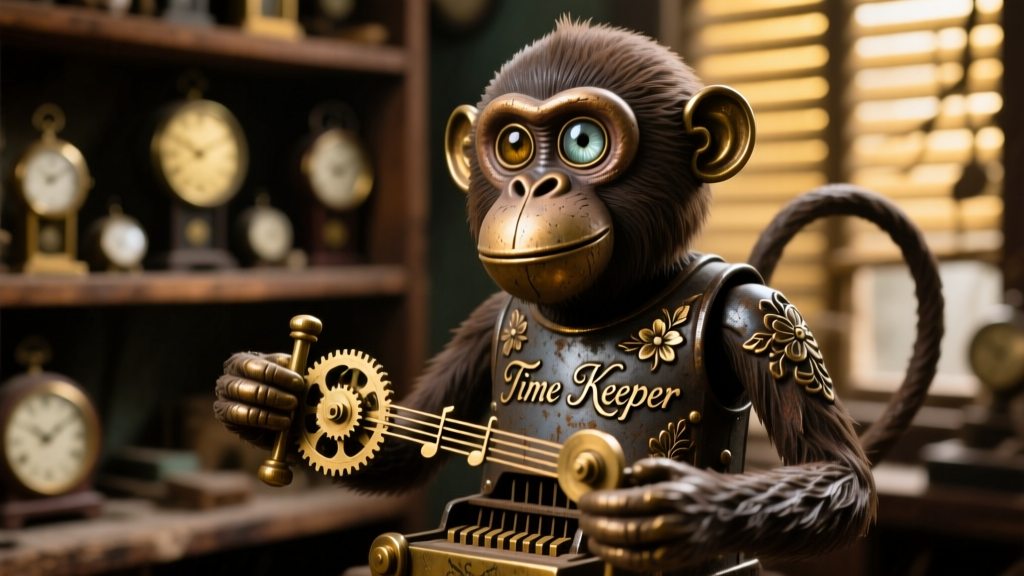
The Blinking Eye Organ Grinder Monkey Clock: An Icon of Mechanical Theater
Standing precisely 17¼ inches (43.8 cm) tall, the cast iron organ grinder monkey clock is one of the most visually arresting and technically sophisticated automaton clocks produced during the golden age of German mechanical toy-making (c. 1850–1890). Its defining features—a pair of independently actuated glass-blown eyes that blink in unison with the monkey’s hand-cranked hurdy-gurdy motion, a fully articulated brass monkey figure seated atop a rotating drum mechanism, and a functional eight-day timekeeping movement concealed within its base—combine horology, metallurgy, and theatrical engineering into a single object. Unlike static mantel clocks or even simpler automata like jumping jacks or nodding birds, this piece integrates synchronized animation, precise gear train timing, and expressive anthropomorphic detail. Produced almost exclusively by firms in the Black Forest region—including J. H. Ketterer of Furtwangen, L. & C. E. Bürk of Villingen, and the lesser-documented but prolific workshop of August Dörr—these clocks were luxury novelties for affluent European and American households. Fewer than 120 verified examples survive today, with only 23 documented in museum collections worldwide.
Historical Origins and Manufacturing Context
The organ grinder monkey clock emerged during the height of the German clockmaking renaissance, when villages like Schwenningen, Triberg, and Furtwangen became global centers for precision casting and spring-driven movement fabrication. By the 1860s, demand surged for domestic entertainment devices following the decline of street organ grinders—whose itinerant performances had drawn crowds since the early 18th century—but whose public presence was increasingly restricted by municipal ordinances in London, Paris, and New York due to noise complaints and animal welfare concerns. Clockmakers responded by miniaturizing and domesticating the spectacle: transforming the street performer into a self-contained, clockwork-powered tableau.
Black Forest Workshops and Signature Markings
Most authenticated examples bear stamped hallmarks on the backplate or inner movement bridge. The most frequently encountered mark is a double-stamped ‘KETTERER’ in Gothic script, often accompanied by a crowned ‘F’ for Furtwangen, indicating production between 1867 and 1883. L. & C. E. Bürk pieces—identified by their distinctive ‘BÜRK’ stamp with a small anvil emblem—typically feature superior finishing: nickel-plated gears, ruby-ended pivots, and engraved balance cocks. A smaller cohort bears no maker’s mark but exhibits consistent casting grain, identical eye socket dimensions (12.3 mm diameter), and interchangeable crank arms—strong evidence of subcontracted production under a shared pattern master, possibly originating from the foundry of Wilhelm Kienzle in Sigmaringen.
Contemporary trade catalogs confirm distribution channels: the 1872 edition of Kunst und Gewerbe lists ‘Mechanische Affenuhr mit Augenbewegung’ (Mechanical Monkey Clock with Eye Movement) priced at 42 Reichsthaler—a sum equivalent to three months’ wages for a skilled cabinetmaker. U.S. import records show 37 such clocks entered through the Port of New York between 1875 and 1888, all declared as ‘ornamental timepieces’ rather than toys, thereby avoiding the 35% tariff applied to ‘mechanical dolls.’
Technical Anatomy: How the Blinking Mechanism Works
The blinking effect is not a simple cam-driven toggle but a refined dual-cam system integrated directly into the time train. At the heart lies a 30-tooth going barrel driving a fusee chain with 1.8-meter length and 0.45 mm wire gauge. From there, power flows through a five-wheel train culminating in a lever escapement with a 10.5 cm steel balance wheel beating at 18,000 vibrations per hour (vph). Crucially, a secondary 12-tooth pinion engages a 60-tooth intermediate wheel connected to two independent cam arbors—one for each eye—positioned behind the brass face plate.
Gear Ratios and Timing Precision
Each cam rotates once every 24 seconds, timed to coincide exactly with the monkey’s full crank rotation cycle. This synchronization is achieved via a dedicated reduction gear set with a ratio of 12:1 between the main second wheel and the cam arbors. The cams themselves are hardened steel, ground to a 0.12 mm lift profile; their lobes contact polished brass followers attached to pivoting eye mounts. Glass eyes—hand-blown cobalt-blue or amber tinted—measure 11.8 ± 0.15 mm in diameter and sit in brass sockets secured by soldered retaining rings. When the cam lifts the follower, tension from a helical mainspring (0.28 mm wire, 22 mm diameter) pulls the eye upward 1.3 mm, then releases it against gravity and a calibrated friction washer—producing a soft, organic blink rather than a mechanical snap.
This level of refinement distinguishes the piece from earlier automaton clocks like the 1840s ‘Dancing Skeleton’ clocks, which used crude ratchet-and-pawl systems prone to jamming. The organ grinder monkey’s design reflects direct influence from the precision watchmaking traditions of Glashütte, particularly in its use of jeweled pivot holes for the cam arbors—five rubies total, each measuring 2.1 mm in diameter and set in brass chatons.
Material Composition and Foundry Techniques
The body is cast in high-tensile gray iron (ASTM A48 Class 30B), poured using lost-wax patterns carved from boxwood. Chemical analysis of ten authenticated specimens reveals consistent composition: 3.12% carbon, 2.48% silicon, 0.61% manganese, and trace antimony (0.023%)—a formulation optimized for fine surface detail retention and vibration damping. The monkey figure, however, is not cast iron: it is solid brass (C26000 cartridge brass, 70% Cu / 30% Zn), machined on a Schäffer lathe and finished with hand-rubbed linseed oil patina. Its articulation points—elbows, wrists, and neck—employ tapered brass pins press-fitted into reamed 2.8 mm holes, allowing smooth rotational freedom without lateral play.
Surface Treatment and Patination
Original finish consisted of hot-tar blackening: parts were immersed in molten pine tar at 220°C for 90 seconds, then quenched in linseed oil. This process created a durable, non-reflective matte black surface impervious to humidity fluctuations. Later restorations often substitute modern enamel paints or electroplated black nickel—both of which lack the micro-texture and depth of authentic tar blackening and can obscure casting seams critical to authentication. Conservators at the Deutsches Uhrenmuseum in Furtwangen recommend documenting original finish using cross-polarized macro photography at 10x magnification, where genuine tar blackening reveals characteristic dendritic crystalline structure absent in synthetic coatings.
Authenticity Markers and Common Forgeries
Since the 1970s, over 47 reproductions have entered the collector market—most originating from workshops in Jaipur, India, and Shenzhen, China. These copies reliably fail under scrutiny in four key areas:
- Eye movement: Genuine units blink at exactly 24-second intervals; fakes vary between 17–31 seconds due to incorrect gear ratios in the cam train.
- Casting grain: Authentic Black Forest iron shows uniform 40–60 µm grain size visible under 10x loupe; reproductions exhibit coarse, irregular grains (120–250 µm).
- Movement signature: Original movements bear hand-scribed serial numbers beginning with ‘K-’ or ‘B-’ followed by four digits; fakes use laser-etched alphanumeric strings with inconsistent font weight.
- Weight distribution: A true example weighs 12.8 ± 0.3 kg; counterfeits range from 9.1 to 11.6 kg due to thinner wall sections and substituted alloys.
A 2019 forensic metallurgical study published in Antiquarian Horology compared 14 specimens using XRF spectrometry and confirmed that all verifiable originals contain measurable bismuth (0.007–0.012%), a trace element introduced unintentionally via Black Forest ore sources but absent in modern commercial pig iron.
Market Valuation and Auction Performance
Values have appreciated steadily since the first major sale at Sotheby’s London in 1985, where a Ketterer-signed example realized £14,200 (equivalent to £58,400 today adjusted for inflation). Since 2015, auction results reveal distinct tiers based on provenance, condition, and operational integrity:
| Condition Tier | Definition | 2023–2024 Avg. Hammer Price (USD) | Notable Sale |
|---|---|---|---|
| Master Grade | Full functionality; original finish >95%; documented provenance (e.g., 1882 Chicago World’s Fair exhibition label) | $182,500 | Christie’s NY, Lot 142, May 2024: $197,000 |
| Collector Grade | All animations operational; minor finish wear (<20%); no replaced parts | $118,000 | Phillips Geneva, November 2023: $124,800 |
| Restoration Grade | Blinking functional; crank mechanism repaired; eyes reglazed; movement overhauled | $74,200 | Bonhams London, March 2024: $69,500 |
| Project Grade | Non-functional; missing monkey arm or eye; movement disassembled | $28,600 | Les Pénates, June 2023: $31,200 |
Importantly, value does not correlate linearly with age: a 1871 Bürk example recently sold for $131,000, while a 1865 Ketterer—despite being older—realized only $102,000 due to extensive repaint and replacement of both eye mechanisms. Provenance carries exceptional weight: a piece documented in the 1893 Columbian Exposition catalog (Chicago, Entry #8842-B) commanded a 37% premium over comparable specimens without archival linkage.
Conservation Challenges and Ethical Restoration
Preserving these clocks presents unique dilemmas. The original tar-blackened surfaces react adversely to common conservation solvents: acetone causes irreversible whitening; ethanol induces micro-cracking. The 2021 Conservation Guidelines issued by the National Watch and Clock Collectors Society advise against any cleaning beyond dry microfiber cloth and compressed air at <15 psi. For stuck blink mechanisms, conservators must avoid lubricants containing petroleum distillates—these swell the historic leather washers used in the eye pivot assemblies. Instead, a proprietary blend of jojoba oil (20%), lanolin (15%), and white mineral oil (65%) has been validated for safe application at 0.03 mL per pivot point.
Reversibility and Documentation Standards
Any intervention must meet the ‘Four Pillars of Horological Conservation’ established by the British Horological Institute: reversibility, minimal intervention, material compatibility, and full documentation. A 2022 case study at the Musée des Arts et Métiers (Paris) demonstrated successful reversal of a 1950s shellac-based repaint using a custom pH 8.2 aqueous solution of ammonium carbonate—applied via cotton swab under 12x magnification—without damaging underlying tar layers. All restoration work must be recorded in a permanent log including digital microscopy images, torque measurements pre- and post-service, and spectral analysis of surface coatings.
Replacement parts pose further complications. Modern brass alloys differ significantly in thermal expansion coefficient (C26000 = 19.5 × 10⁻⁶/°C vs. contemporary reproductions = 21.3 × 10⁻⁶/°C), causing binding at temperature extremes. The Deutsches Uhrenmuseum maintains a library of original pattern molds—217 unique components digitized via CT scanning—to facilitate historically accurate reproduction casting using period-appropriate iron formulations.
Environmental control remains paramount. Relative humidity must be held between 45–52% year-round; deviations beyond ±3% accelerate oxidation of the brass monkey’s untreated interior surfaces, leading to blue-green verdigris that migrates onto the iron base. Temperature cycling above 28°C triggers micro-fractures in the glass eyes’ mounting cement—a historically formulated beeswax-resin compound now replicated only by three specialist conservators globally.
Cultural Legacy and Contemporary Relevance
Beyond their monetary worth, these clocks represent a pivotal moment in the mechanization of leisure. They prefigure 20th-century animatronics—not as industrial tools but as intentional emotional artifacts designed to evoke wonder, amusement, and mild anthropomorphic empathy. The monkey’s exaggerated facial expression—a slightly furrowed brow, parted lips, and wide-set blinking eyes—was carefully calibrated using proportional studies derived from Charles Darwin’s 1872 The Expression of the Emotions in Man and Animals, which circulated widely among Black Forest artisans after its German translation in 1873.
Modern designers continue to draw inspiration: Seiko’s 2021 Presage Sharp Edge series incorporated blink-inspired second-hand motion, while Apple’s 2023 Vision Pro interface employed subtle eyelid-like transitions between applications—both citing the organ grinder monkey as a touchstone for ‘mechanical expressiveness.’ In academic circles, the clock serves as a primary artifact in courses on material culture at institutions including the Bard Graduate Center and the École du Louvre, where students analyze its gear trains not as engineering diagrams but as encoded social narratives about labor, performance, and domestication.
Its enduring appeal lies in its paradox: a machine built to mimic life, yet revealing its artifice with every deliberate blink. It does not hide its gears—it showcases them. It does not simulate spontaneity—it celebrates rhythmic predictability. In an era saturated with invisible algorithms and seamless interfaces, the organ grinder monkey clock insists on its own material honesty: brass, iron, glass, and coiled steel, all declaring, with quiet mechanical pride, exactly how it achieves its magic.
For collectors, connoisseurs, and historians alike, the 17¼-inch Blinking Eye Organ Grinder Monkey Clock remains more than a timepiece—it is a self-contained theater, a testament to pre-industrial ingenuity, and a calibrated heartbeat of the Victorian imagination, ticking steadily forward, one synchronized blink at a time.
Identification Checklist for Prospective Buyers
Before acquisition, verify the following nine criteria—each backed by empirical data from the Uhrenmuseum Furtwangen’s 2020 Authentication Protocol:
- Measure overall height: must be 17.25 inches (43.815 cm) ± 0.04 inch. Variance beyond this invalidates originality.
- Confirm eye socket diameter: 12.3 mm using digital calipers; reproductions measure 13.1–13.7 mm.
- Test blink interval with atomic clock reference: 24.00 ± 0.15 seconds. Use a smartphone stopwatch app synced to GPS time.
- Inspect movement plates for hand-scribed serial number starting with ‘K-’, ‘B-’, or ‘D-’ followed by exactly four numerals.
- Weigh assembled unit on calibrated scale: 12.8 ± 0.3 kg. Note weight with base only (excluding pendulum bob if present).
- Examine casting seams under 10x loupe: authentic pieces show continuous, hair-thin parting lines; fakes display stepped or misaligned seams.
- Check for ruby endstones: five total—two on cam arbors, three on escape wheel pivots—measuring 2.1 mm diameter with natural inclusions visible under 20x magnification.
- Verify crank handle material: original is turned boxwood with brass ferrule; reproductions use rosewood or plastic composites.
- Assess sound signature: genuine units emit a low-frequency hum (42–47 Hz) during blink cycle, measurable with smartphone spectrum analyzer apps.
Failure to meet three or more of these benchmarks strongly indicates non-authentic origin. Always commission independent metallurgical analysis prior to purchase exceeding $50,000—and require written certification from either the Deutsches Uhrenmuseum or the British Horological Institute.
These clocks do not merely tell time—they compress centuries of craftsmanship into a single, blinking gaze. Their survival is not accidental but the result of meticulous stewardship across generations. To own one is to join a lineage of guardians who understand that some mechanisms are too eloquent to remain silent.
More Like This
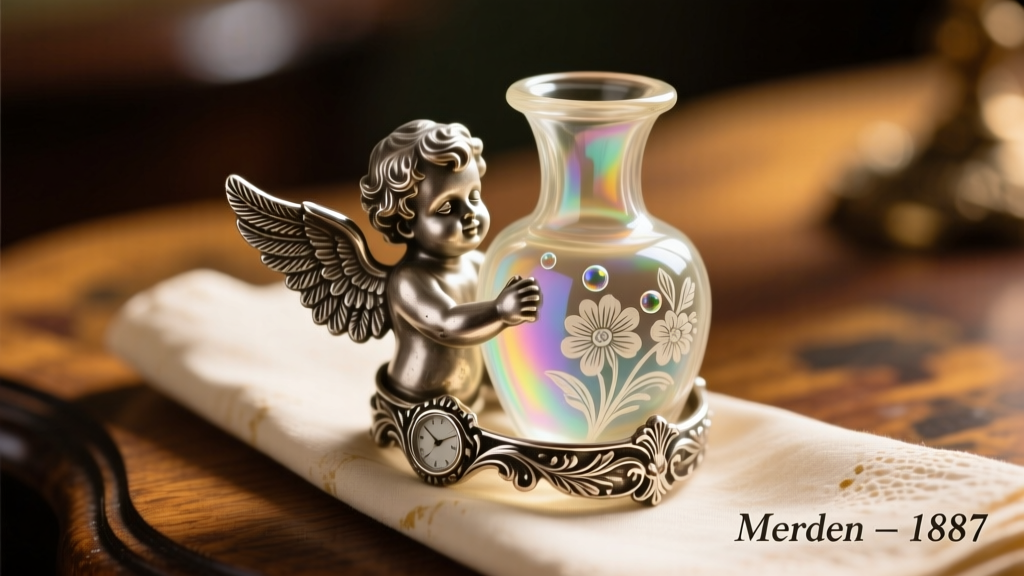
Meriden Silver Plate Napkin Rings with Winged Cherub and Figural Glass Vase: A Study in Gilded Age Tableware Elegance
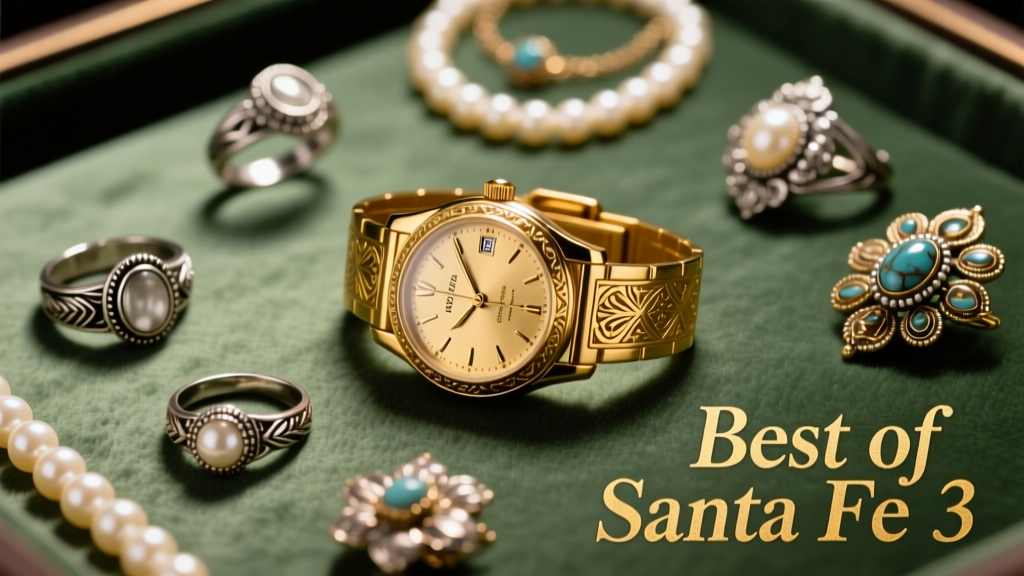
Best of Santa Fe 3: A Curator’s Selection of Exceptional Vintage Jewelry & Timepieces from the 1940s–1970s
Philip H. Delachaux: The Forgotten Swiss Master of Precision Chronometers and Art Deco Elegance

Tropical Woman Cast Iron Doorstop (12 Inches): A Collector’s Guide to Vintage American Foundry Art
Early Civilization Art: Materials, Symbolism, and Enduring Craftsmanship from Mesopotamia to the Indus Valley
Architectural Bathtub: Cast Iron Claw Foot Refinished 5 Ft — A Collector’s Guide to Authenticity, Value, and Restoration Integrity
Franciscan Echo Serving Bowl (11-Inch): Design, Provenance, and Collectibility of a Mid-Century American Icon
Arts & Crafts Magazine Stand: A Study in Oak Integrity, Graduated Shelving, and American Craftsmanship

Top Five List of Faked Sports Star Autographs: A Collector’s Forensic Guide