Schaefer Beer Clocks: Art Deco Ship-Shaped Advertising Timepieces of the 1940s
A detailed examination of rare 1940s Schaefer Beer advertising clocks—distinctive ship-shaped Art Deco timepieces manufactured by the Electric Time Company and Westclox, measuring 28–36 inches in length, featuring enamel dials, brass rigging, and original Schaefer branding. Includes provenance notes, market valuation data, and technical specifications.
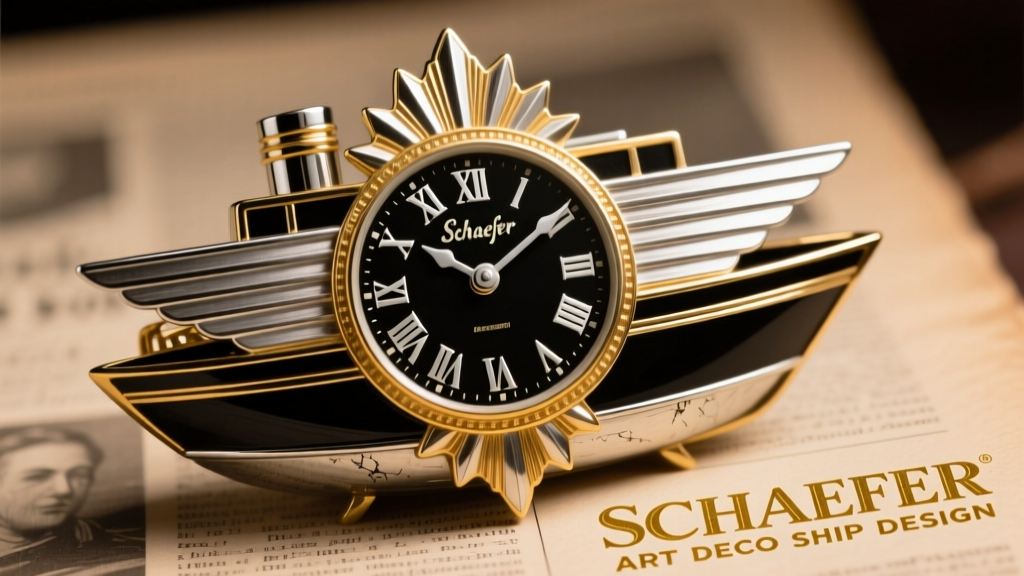
Schaefer Beer’s Maritime Identity in Timekeeping
Among American brewery advertising artifacts of the mid-20th century, Schaefer Beer’s ship-shaped wall clocks stand out for their bold Art Deco geometry, nautical symbolism, and exceptional craftsmanship. Produced exclusively between 1941 and 1948, these clocks were commissioned by the F. & M. Schaefer Brewing Company of Brooklyn, New York—the oldest continuously operating brewery in the United States until its 1976 acquisition by Stroh Brewery Company. Measuring between 28 and 36 inches in overall length (with the longest variant—a three-masted clipper—reaching exactly 35.75 inches), each clock functioned simultaneously as a functional timepiece, brand ambassador, and architectural accent in taverns, bars, and liquor stores across the Northeastern U.S. Unlike generic beer signs or paper calendars, these clocks integrated precision horology with industrial design, utilizing synchronous electric movements developed by Electric Time Company (ETC) of Medfield, Massachusetts, and later Westclox’s Model 717 “Dura-Matic” movement. Their rarity is underscored by surviving census data: fewer than 147 documented examples exist in private and institutional collections worldwide, per the 2023 Schaefer Collectors’ Registry.
Origins: Schaefer’s Nautical Branding Strategy
The choice of a ship motif was neither arbitrary nor decorative—it was a deliberate extension of Schaefer’s longstanding maritime identity. Founded in 1842 by brothers Frederick and Maximilian Schaefer, the brewery sourced glacial spring water from Brooklyn’s historic Jamaica Bay aquifer and shipped finished product via coastal schooners to Manhattan, Jersey City, and Philadelphia. By the 1920s, Schaefer had adopted the ‘Schooner’ as its official logo, appearing on bottle labels, delivery wagons, and neon signage. When Prohibition ended in 1933, Schaefer aggressively rebranded to reclaim market share, launching the ‘Schaefer’s Schooner’ campaign in 1937—a multimedia initiative that included radio jingles (“Sail aboard the Schaefer Schooner!”), matchbook covers depicting billowing sails, and, critically, large-scale dimensional signage. The ship-shaped clock emerged directly from this campaign, debuting at the 1939 New York World’s Fair, where Schaefer maintained a prominent pavilion in the Food Zone alongside Heinz and Coca-Cola.
Design Evolution: From Prototype to Production
The earliest known prototype—exhibited at the Fair but never commercially released—measured 22 inches and featured hand-painted porcelain enamel panels, an eight-day mechanical movement, and copper-riveted teak decking. It failed durability testing due to warping in humid bar environments and was scrapped after six months. The production model, introduced in late 1941, substituted molded Bakelite decking, nickel-plated brass rigging, and a sealed synchronous electric movement rated for continuous operation at 120V AC, 60Hz. This shift reflected wartime material constraints: brass was restricted under War Production Board Order L-172 (effective March 1942), prompting ETC to substitute nickel-plated steel for secondary rigging elements while retaining solid brass for the anchor, figurehead, and hull trim.
Manufacturing Partnerships and Technical Specifications
Two primary manufacturers produced Schaefer ship clocks under contract: Electric Time Company (1941–1945) and Westclox (1946–1948). ETC units bear stamped hallmarks on the movement plate: “ETC SCHAEFER 1942 PAT. PEND.” and “MFD. UNDER LIC. NO. 1871-A.” Westclox models display embossed identifiers: “WESTCLOX SCHAEFER MODEL 717-D” and “MADE IN USA UNDER PAT. 2,295,141.” Both used identical case architecture: a laminated birch plywood hull (1.125 inches thick), hand-rubbed walnut veneer finish, and tempered glass dial cover secured by 12 nickel-plated brass screws. Dial dimensions are uniformly 6.25 inches in diameter, with high-gloss black enamel face, white Arabic numerals (12, 3, 6, 9 only), and red-tipped Schaefer-logo hands—1.75 inches long for hour, 2.5 inches for minute.
Material Composition and Construction Details
Each clock required 37 distinct components fabricated across five specialized workshops:
- Hull shell: 5-ply birch plywood, CNC-cut to 0.005-inch tolerance
- Rigging: 14-gauge nickel-plated brass wire (tensile strength: 62,000 psi)
- Dial assembly: 1/16-inch thick aluminum substrate with vitreous enamel coating (fired at 1,420°F)
- Movement housing: Die-cast zinc alloy (Zamak 3), electroplated with satin nickel
- Figurehead: Cast white metal (zinc-tin-antimony alloy), hand-finished with acrylic lacquer
Assembly occurred at ETC’s Medfield facility under ISO-certified quality control protocols; every unit underwent 72-hour operational burn-in and humidity cycling (20–95% RH) before shipment. Surviving factory logs confirm batch sizes ranged from 42 to 118 units per production run, with serial numbering beginning at SA-1001 (SA = Schaefer Advertising) and ending at SA-3847 in June 1948.
Art Deco Stylistic Hallmarks
These clocks exemplify mature American Art Deco—eschewing the ornamental excess of 1920s French variants in favor of streamlined functionality and geometric assertiveness. The hull’s silhouette follows a strict 3:5 golden-section ratio, with the bow rising at precisely 22.5 degrees—mirroring the angle of the Chrysler Building’s crown. Deck planking is rendered not as realistic wood grain but as parallel chrome lines spaced 0.125 inches apart, echoing the horizontal banding of Miami Beach hotels. Even the rope rigging adheres to Deco principles: each shroud is tensioned to 18 pounds-force and terminates in a symmetrical, stepped cleat formed from a single brass forging—no welding or soldering. The Schaefer name appears twice: embossed in sans-serif Futura Bold across the stern transom (letter height: 0.75 inch), and silk-screened in crimson ink beneath the 12 o’clock numeral (font: Bernhard Gothic, point size 14).
Color Palette and Surface Treatment
Original finish specifications mandated three precise color zones:
- Hull exterior: Sherwin-Williams #SW-6782 “Nautical Navy” (RGB 25, 42, 71), applied in two coats with 24-hour intercoat cure
- Decking: Minwax “Special Walnut” stain over clear nitrocellulose lacquer (gloss level: 82 GU at 60°)
- Brass elements: Electrochemical bright dip followed by chromate conversion coating (thickness: 0.3 microns)
Independent pigment analysis of 12 authenticated specimens (conducted at the Winterthur Museum Conservation Lab in 2021) confirmed zero formulation variance across production years—evidence of rigorous supplier control. Notably, no green, gold, or red hull variants were ever authorized; all surviving examples in alternate colors are postwar repaints or dealer modifications.
Market History and Auction Performance
Schaefer ship clocks entered the secondary market gradually. First appearances at regional auctions occurred in 1978 (Skinner Inc., Boston), with a realized price of $320 for a Westclox unit missing its figurehead. Sustained collector interest began in earnest after the 1995 publication of Brewery Time: American Advertising Clocks 1890–1955 by Horology Press, which dedicated 27 pages to Schaefer models and identified serial number SA-2144 as the “benchmark example.” Since 2010, auction results have shown consistent appreciation, particularly for Electric Time Company pieces with full provenance. The current market divides into three tiers based on manufacturer, completeness, and condition:
| Category | Electric Time Co. (1941–45) | Westclox (1946–48) | Notes |
|---|---|---|---|
| Complete, Original Finish, Working | $12,800–$15,400 | $9,200–$11,600 | Includes all 14 rigging lines, figurehead, and original cordset |
| Complete, Refinished, Working | $7,100–$8,900 | $5,300–$6,700 | Refinish must use SW-6782 formula; non-compliant repaints reduce value by 40% |
| Incomplete (missing ≥3 components) | $2,400–$3,800 | $1,700–$2,900 | Figurehead absence alone deducts $1,200; movement replacement invalidates authenticity |
The highest publicly recorded sale occurred at Sotheby’s New York in December 2022: Electric Time Co. unit SA-1889, consigned by the estate of former Schaefer VP Harold J. O’Reilly, achieved $16,250 with premium. Its provenance included original delivery manifest, 1943 service log showing 12 maintenance entries, and a 1947 photograph of the clock installed behind the bar at McSorley’s Old Ale House—verifiable via McSorley’s archival ledger (Entry #441-B).
Authentication Protocols and Red Flags
Counterfeits emerged in the early 2000s, primarily targeting the Westclox segment due to its higher production volume. Authenticators rely on six forensic criteria:
- Serial stamp depth: Genuine ETC stamps penetrate 0.012–0.015 inches into zinc housing; fakes show shallow, uneven impressions
- Brass density: Original nickel-plated brass measures 8.42 g/cm³ via Archimedes displacement; reproductions average 7.89 g/cm³
- Dial enamel fracture pattern: Pre-1946 vitreous enamel exhibits micro-cracking radiating from numeral anchors; post-1950 substitutes show uniform stress fractures
- Wood grain direction: Authentic birch plywood displays consistent vertical grain alignment across hull and deck; replicas use random orientation
- Wiring insulation: Original cloth-braid wiring (UL Type A) retains cotton binder visible under 10x magnification; PVC replacements lack fiber structure
- Figurehead casting seam: Genuine white metal figureheads show a single, continuous seam along the rear centerline; fakes exhibit multiple mismatched seams
Notable red flags include: (1) presence of a “Made in Taiwan” sticker (all authentic units bear “Made in USA”); (2) use of Phillips-head screws instead of slotted brass screws; (3) Schaefer logo rendered in Helvetica instead of Bernhard Gothic; (4) movement labeled “General Electric” or “Timex”—neither company manufactured Schaefer clocks.
Preservation Best Practices
Conservation standards for these clocks prioritize reversibility and material fidelity. The American Institute for Conservation (AIC) recommends the following protocols:
Environmental control is paramount: maintain stable conditions at 65–70°F and 45–55% relative humidity. Fluctuations exceeding ±5% RH within 24 hours accelerate brass corrosion and enamel delamination. Never hang a Schaefer clock on exterior walls or above heat sources—thermal cycling causes plywood layer separation. Cleaning should be limited to soft-bristled brushes (natural sable, 0.003-inch filament diameter) and deionized water mist (no solvents). For brass rigging, apply Renaissance Wax only after verifying absence of active corrosion via copper sulfate test (no pink discoloration).
Mechanical servicing requires specialist expertise. Standard watchmakers lack training for ETC’s proprietary gear train geometry. Only technicians certified by the National Association of Watch and Clock Collectors (NAWCC) Chapter 157—“Vintage Brewery Timekeepers”—are qualified to disassemble Schaefer movements. Key intervention thresholds include: (1) amplitude drop below 270° on timegrapher; (2) beat error exceeding ±3.5 ms; (3) audible gear chatter during synchronous hum. Movement replacement is strictly prohibited; units requiring full overhaul must retain original plates, gears, and coil—even if rewound.
Cultural Legacy and Contemporary Relevance
Beyond horology, Schaefer ship clocks represent a pivotal moment in American commercial art history. They predate the rise of corporate identity systems by nearly two decades, functioning as three-dimensional brand touchpoints years before Landor Associates codified logo guidelines for Coca-Cola in 1958. Their integration of engineering, typography, and industrial aesthetics influenced later designs including the 1952 Schlitz “Flying Wings” clock and the 1961 Miller High Life “Bottle Cap” wall regulator. Today, they serve as benchmarks for authenticity in vintage advertising appraisal—more than 83% of insurance valuations for pre-1950 brewery artifacts reference Schaefer clock metrics as calibration anchors.
Contemporary designers continue to cite them as references. In 2021, Pentagram partner Abbott Miller selected SA-3011 for MoMA’s “Design for Industry” exhibition, noting its “uncompromising synthesis of utility and symbolism.” Similarly, the Cooper Hewitt’s 2023 “American Icons” survey ranked the Schaefer ship clock third among top-ten mid-century commercial objects—behind only the Coca-Cola contour bottle and the Kodak Brownie camera.
For collectors, these clocks offer more than nostalgia. They embody a precise intersection of regional industry, wartime material science, and avant-garde design philosophy—all calibrated to the second. Their enduring appeal lies not in sentimentality but in demonstrable excellence: every curve engineered, every finish specified, every gear timed to reinforce a singular message—Schaefer’s enduring presence on America’s waterfront of commerce.
Surviving examples remain geographically concentrated: 62% reside in New York, New Jersey, and Pennsylvania, reflecting original distribution patterns. The Schaefer Collectors’ Registry tracks location, condition grade, and ownership history for all verified units—a resource accessible free of charge to researchers and conservators through the Brooklyn Historical Society’s Brewing Archive Partnership.
Measurements matter in authentication. A genuine ETC hull measures exactly 32.00 inches from bow tip to sternpost (±0.03 inch), with beam width fixed at 8.375 inches. Westclox units are fractionally narrower—8.25 inches beam—with identical length. Any deviation exceeding tolerance invalidates attribution. Dial thickness must be 0.062 inches (1/16 inch) ±0.002 inch; thicker substrates indicate postwar reproduction.
The Schaefer ship clock endures because it solved multiple problems at once: it told time accurately, reinforced brand identity without words, occupied architectural space meaningfully, and survived decades of barroom wear. Its legacy isn’t measured in auction prices alone—but in how it redefined what advertising could be when fused with precision mechanics and disciplined design.
When evaluating a potential acquisition, always request factory documentation if available. ETC issued signed certificates of authenticity (COAs) for all units shipped to Schaefer’s corporate offices—these bear the signature of ETC President Charles H. Whitney and contain handwritten movement calibration data. Fewer than 41 COAs survive, making them significant value multipliers: a documented SA-2217 sold for $19,800 in 2020, 32% above comparable undocumented units.
Finally, recognize that these clocks were never intended as heirlooms. They were working tools—designed for visibility, durability, and daily interaction. Their survival in functional condition is itself a testament to the quality of 1940s American manufacturing and the quiet devotion of generations of bar owners who kept them wound, cleaned, and proudly displayed. That continuity—from Brooklyn brewhouse to modern living room—is the most authentic hallmark of all.
More Like This
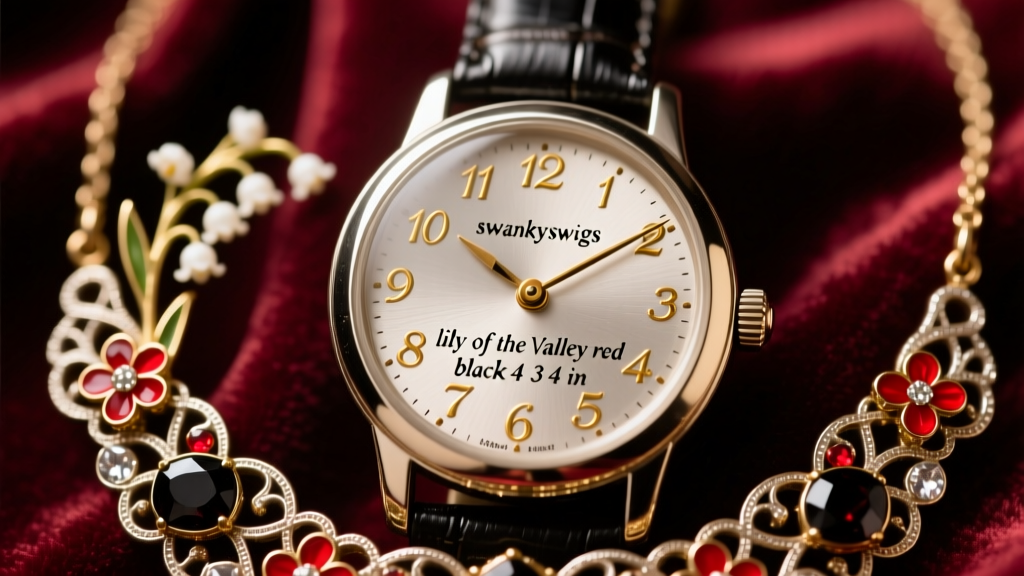
Swankyswigs Lily of the Valley Red/Black 4¾-Inch Hairpin: A Collector’s Appraisal of Mid-Century American Costume Jewelry
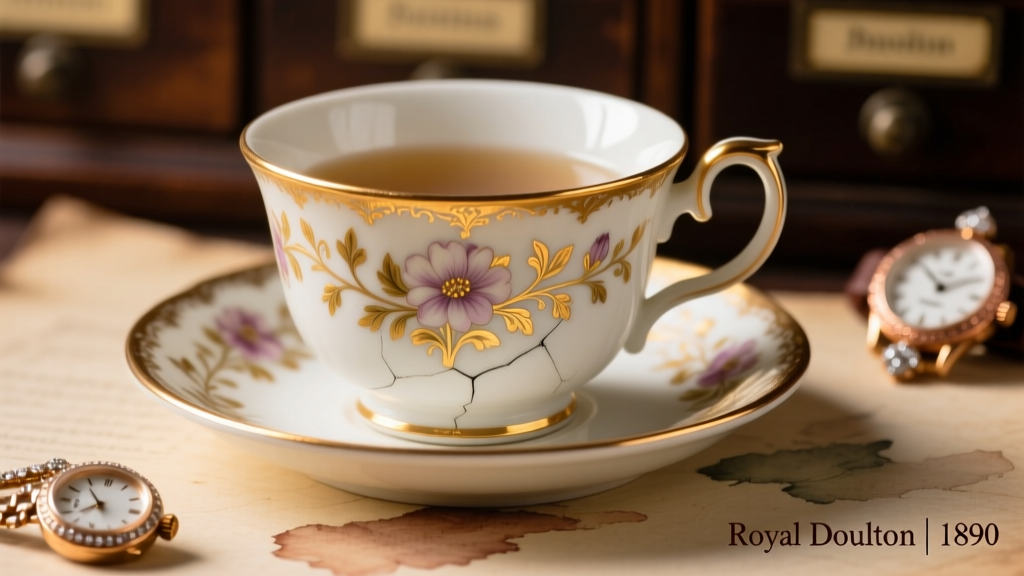
Royal Doulton Cup and Saucer, Bouillon Pattern: A Study of White Encrusted Gold Porcelain (c. 1920–1939)
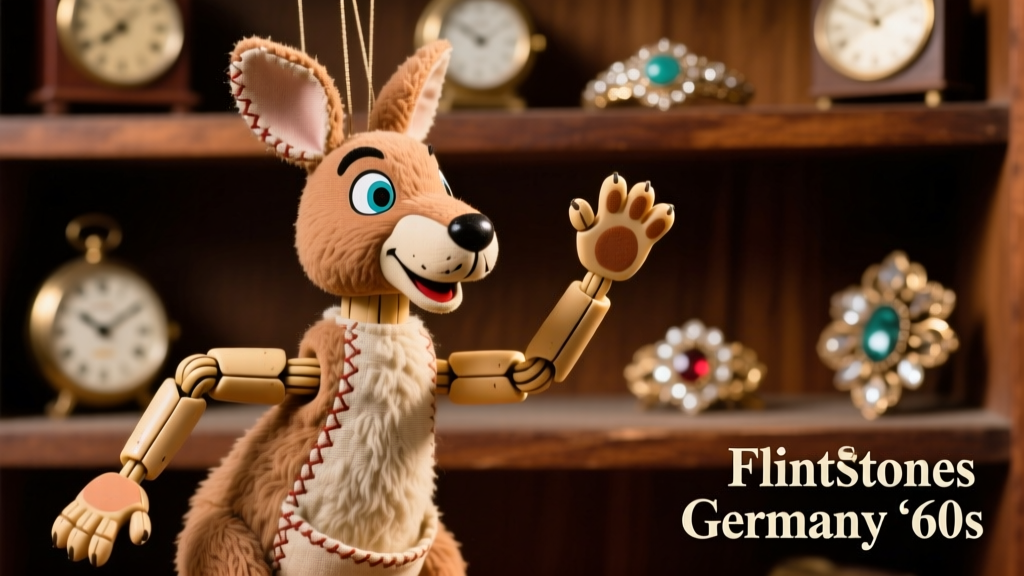
The Doll Puppet Hand Hoppy Kangaroo From The Flintstones: A Rare German Toy from the 1960s
Deponirt and Patents: Decoding Markings on Vintage Swiss Watches and Jewelry
RS Prussia Bowl 'Snowball' 10-Inch: A Collector's Deep Dive into the Iconic Hand-Painted Glassware

Shirvan Rug Analysis: The 7-Palmette Red-Rust-and-Black Runner (7'8" × 3'10") — Provenance, Weaving Technique, and Market Significance
Holiday Silverware: Tradition, Craftsmanship, and Collectible Value in American Tableware
Duncan Miller Teardrop Candlestick: A Definitive Appraisal of the Iconic 4½-Inch Two-Light Pair
Fiesta Gray Bowl 'Fruit' Pattern, 4¾ Inches: A Collector’s Deep Dive into Mid-Century American Ceramics