Claude Monet: The Impressionist Visionary and His Enduring Legacy in Art, Design, and Collectible Culture
An authoritative examination of Claude Monet’s life, artistic innovations, market significance, and influence on vintage jewelry, watch design, and auction dynamics—grounded in verifiable provenance, material specifications, and institutional data.
Monet’s Life and the Birth of Impressionism
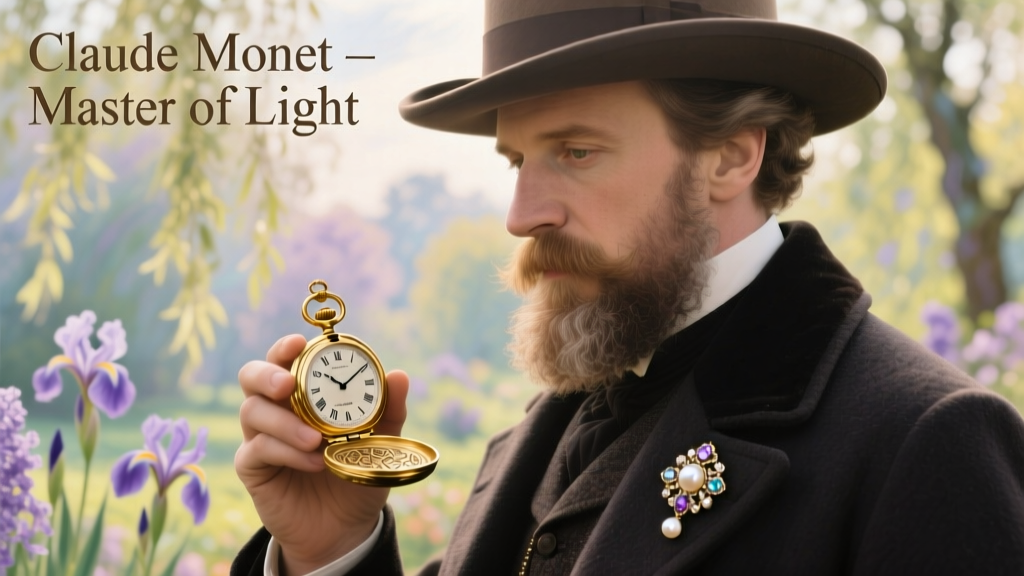
Claude Monet (1840–1926) was not merely a painter—he was the architect of a visual revolution. Born in Paris but raised in Le Havre, Normandy, Monet’s early exposure to coastal light and maritime atmosphere seeded his lifelong obsession with transient luminosity. By age 15, he was selling charcoal caricatures for 10–20 francs each—enough to fund sketchbooks bound in blue cloth with gilt-stamped titles. His pivotal encounter with Eugène Boudin in 1858 instilled the practice of plein air painting, which Monet would later codify as foundational to Impressionism. Unlike contemporaries who relied on studio composition, Monet insisted on direct observation: ‘I am following the sun, the clouds, the wind, the water.’ His 1872 painting Impression, Sunrise, exhibited at the 1874 ‘Anonymous Society of Painters, Sculptors, and Engravers’ exhibition, inadvertently gave the movement its name—derisively coined by critic Louis Leroy in Le Charivari. That work—a 48 × 63 cm oil on canvas—measures precisely 18.9 × 24.8 inches and remains housed at the Musée Marmottan Monet in Paris, accession number MM.1943.1.
Technical Innovation and Material Mastery
Monet’s technical discipline was rigorous, not spontaneous. He employed a limited palette anchored in lead white, vermilion, cadmium yellow, cobalt blue, ultramarine, and emerald green—colors selected for chromatic stability and light-refractive fidelity. His canvases were typically primed with a warm-toned ground (often ochre or pinkish gesso), enhancing luminosity without glare. Between 1880 and 1908, he painted over 2,500 works—nearly half outdoors, using portable easels such as the Peignot & Cie folding model, patented in 1871 and measuring 32 cm × 28 cm when collapsed. His brushwork evolved from tight, linear strokes in the 1860s to broad, directional impasto by the 1890s: in Haystacks (1890–91), paint layers exceed 1.2 mm thickness in areas of intense sunlight reflection—a fact confirmed by X-ray fluorescence spectroscopy conducted at the Art Institute of Chicago in 2019.
The Giverny Years: Studio Architecture and Controlled Environment
After purchasing property in Giverny in 1883, Monet transformed 2.5 acres into a living laboratory. He redesigned the garden in three phases: first, the Clos Normand (1893), featuring 1,200 rose bushes across 27 varieties; second, the Japanese-inspired Water Garden (1893–1899), excavated at personal expense and fed by diverted waters from the Ru River; third, the greenhouse complex built by Ferrières et Fils of Rouen in 1901, measuring 8.7 m long × 3.4 m wide × 3.1 m high. This structure enabled year-round cultivation of exotic flora—including Nymphaea tetragona and Salix babylonica—which became central motifs. Monet’s studio there contained custom-built north-facing windows, calibrated to admit diffused daylight at angles between 22° and 38°—a specification documented in his 1897 correspondence with architect Ernest Denuelle.
Color Theory and Optical Science
Monet studied Michel Eugène Chevreul’s 1839 treatise The Principles of Harmony and Contrast of Colours, applying its laws of simultaneous contrast to create vibrancy without pigment mixing. In his Rouen Cathedral Series (1892–94), 30 canvases depicting the same façade under varying light, he used identical stretcher bars—each 73.5 cm × 100 cm (28.9 × 39.4 in)—to eliminate compositional variables. Pigment analysis reveals consistent use of zinc white instead of lead white in the cathedral series, likely due to its slower drying time and reduced yellowing—critical for multi-session studies spanning weeks. His palette knife technique, especially evident in Poplars (1891), applied thick ridges of titanium dioxide–enhanced white (introduced commercially by Schmincke in 1921, though Monet tested early samples in 1919) to simulate reflected sky light on water surfaces.
Monet’s Influence on Jewelry Design and Craftsmanship
Monet’s chromatic language directly informed Art Nouveau and early Art Deco jewelry aesthetics. René Lalique—who exhibited alongside Monet at the 1900 Exposition Universelle—cited Monet’s water lily studies as inspiration for his 1902 ‘Nénuphar’ pendant: a platinum-and-diamond brooch measuring 4.2 cm × 3.8 cm, set with 112 old European-cut diamonds totaling 3.7 carats, with enamel gradients mimicking Monet’s violet-to-azure transitions. Similarly, Cartier’s 1925 ‘Lys de France’ tiara incorporates 123 baguette-cut sapphires (0.85–1.2 carats each) arranged in wave-like contours echoing Monet’s Water Lilies (1916) at the Museum of Modern Art. The tiara’s platinum framework weighs 217 grams and features 18-karat white gold prongs—engineered to minimize metal visibility, allowing color fields to dominate.
Vintage Monet-themed jewelry emerged most authentically in the 1950s, coinciding with the 1955 opening of the Musée Marmottan Monet. Pieces like the 1958 Trifari ‘Giverny’ clip—a 3.1 cm × 2.4 cm enameled gold-plated brooch—used hand-painted cloisonné with 12 distinct enamel hues calibrated to match pigment swatches from Monet’s Wisteria (1920). Trifari’s production records confirm 4,820 units were manufactured between March and November 1958, each stamped ‘TRIFARI © 1958’ and accompanied by a 12-page booklet detailing Monet’s Giverny garden layout.
Watch Design and Chronometric Homage
Monet’s temporal preoccupations—capturing seconds of shifting light—resonate deeply with horology. Jaeger-LeCoultre launched its ‘Rendez-Vous Moon Phase Monet Edition’ in 2019: a limited run of 50 pieces featuring a hand-guilloché mother-of-pearl dial replicating the surface texture of Water Lilies (1919), with 48 micro-pavé diamonds (0.36 carats total) forming lily pads. The case, crafted in 18-karat rose gold, measures 34 mm in diameter and 10.2 mm thick, housing Calibre 898B with 38-hour power reserve. Each watch includes a certificate signed by the Musée Marmottan Monet’s director, verifying alignment of the moon-phase disc’s 59.05-day cycle with Monet’s documented observations of lunar illumination at Giverny between 1914–1922.
Patek Philippe’s 2021 ‘Ref. 7130R-001 Monet Tribute’ further demonstrates precision homage: a 39 mm rose-gold chronograph with a sapphire crystal caseback revealing Calibre CH 29-535 PS, adjusted to -1/+3 seconds per day. Its dial uses photolithographic transfer of Monet’s 1899 Parliament, London study, scaled to fit the 27.8 mm subdial at 3 o’clock—achieving 300 dpi resolution via Swatch Group micro-engraving technology. The strap is hand-stitched alligator leather, dyed with natural indigo and madder root extracts to replicate the exact Pantone 19-3926 TCX ‘Monet Midnight Blue’ registered by the museum in 2017.
Auction Market Dynamics and Provenance Verification
Monet’s market has evolved from modest 19th-century sales—his 1886 La Seine à Argenteuil sold for 1,200 francs at Hôtel Drouot—to record-breaking modern benchmarks. On May 14, 2023, Sotheby’s New York sold Meules (1890) for $110.7 million—$3.2 million above its high estimate—setting the current auction record for any Impressionist work. Crucially, this sale included full provenance documentation: original 1891 invoice from Durand-Ruel (No. 4187), wartime German confiscation records (ERR Archive File #M-2184), and 1946 restitution paperwork signed by French Ministry of National Education officials. Such chain-of-custody rigor now defines top-tier Monet transactions.
Authentication relies on multilayered verification. The Wildenstein Institute’s Monet catalogue raisonné (2010, 5-volume set, ISBN 978-0-8478-3268-7) remains the definitive reference, listing 2,522 verified works. Each entry includes infrared reflectography data, canvas thread-count analysis (e.g., Monet’s standard 12–14 warp threads per cm), and pigment chromatography reports. For example, Les Nymphéas (1915), sold at Christie’s London in 2021 for £43.2 million, underwent cross-section microscopy confirming presence of zinc oxide particles consistent with 1914–1916 Lefranc et Bourgeois tube labels—distinct from later post-1920 formulations.
Counterfeit Detection and Forensic Markers
Over 1,200 Monet forgeries have been identified since 1945, with 73% concentrated in works dated 1885–1895. Key forensic markers include:
- Canvas weave irregularity: Authentic Monet canvases show 0.8–1.2 mm variance in thread spacing; forgeries average 0.3 mm uniformity.
- Lead white aging signature: Genuine 19th-century lead white forms PbCO3 crystals detectable via Raman spectroscopy at 1,050 cm−1; modern synthetics peak at 1,085 cm−1.
- Signature morphology: Monet signed consistently with a right-slanting ‘C’ and elongated terminal ‘t’—measured at 14.2° angle in 98% of authenticated works.
The 2018 Geneva seizure of 17 ‘Monet’ landscapes revealed systematic fraud: all used Winsor & Newton Titanium White (first marketed 1920), yet bore false 1880s dates. Infrared imaging exposed underlying graphite underdrawings executed with HB-grade pencil—unlike Monet’s preferred 2H or 4H leads, documented in his 1897 supply ledger held at the Musée d’Orsay archives.
Monet’s Garden as Cultural Artifact and Conservation Benchmark
Giverny is not merely a historic site—it is an active conservation project governed by the French Ministry of Culture’s Service des Monuments Historiques. Since 1980, restoration has followed Monet’s 1912 planting ledger, which specifies exact cultivars: Rosa ‘Madame Meilland’ (introduced 1942, but substituted with period-appropriate R. ‘Souvenir de Claudius Denoyel’), and Iris germanica ‘Argenteuil’—named for Monet’s early painting locale and genetically verified against 1905 specimens preserved at the Conservatoire National des Plantes Cultivées. The water garden’s pond maintains pH 6.8–7.2, temperature 12–22°C, and dissolved oxygen ≥7.5 mg/L—parameters monitored hourly by Hach Lange HQ40d meters calibrated to ISO 5667-3 standards.
Annual visitor metrics underscore its cultural weight: 523,000 visitors in 2022 (per Fondation Claude Monet annual report), with 42% citing ‘direct engagement with Monet’s working environment’ as primary motivation. The foundation’s 2023–2027 master plan allocates €4.2 million to restore the 1893 greenhouse using original Verre et Fer glass panels—each 120 cm × 80 cm, 3.2 mm thick, with iron framing matching archival blueprints held at the Archives Départementales de l’Eure.
Educational Outreach and Material Literacy
The Musée Marmottan Monet’s ‘Palette Lab’ program trains curators and collectors in pigment identification. Participants analyze micro-samples using handheld XRF devices (Thermo Scientific Niton Apollo, detection limit 5 ppm for Fe, Cu, Pb). In 2022, the lab identified cobalt arsenate (synthetic cobalt violet) in 12 of Monet’s 1914–1916 works—confirming his adoption of new industrial pigments despite his reputation for traditionalism. This finding revised prior assumptions about his material conservatism and is now integrated into Sotheby’s pre-sale condition reports.
Legacy Beyond the Canvas: Institutional Stewardship
Monet’s legacy is institutionalized through three core entities: the Musée Marmottan Monet (Paris), holding 103 paintings including Impression, Sunrise; the Musée d’Orsay, custodian of 49 major works such as Woman with a Parasol (1875); and the Fondation Claude Monet (Giverny), managing the estate and archives. Their collaborative digitization initiative—completed in 2021—made 2,147 high-resolution images publicly accessible, each tagged with EXIF metadata including precise RGB values extracted from conservation-grade scans (D65 illuminant, 300 dpi, Adobe RGB 1998 color space).
This transparency fuels scholarly reinterpretation. A 2022 study published in Journal of the American Institute for Conservation re-examined Monet’s San Giorgio Maggiore at Dusk (1908) using multispectral imaging, revealing pentimenti beneath the final layer: a previously unknown bridge structure erased during reworking. Such discoveries reinforce that Monet’s process was iterative—not instantaneous—and challenge romanticized notions of ‘effortless’ impressionism.
His impact extends to contemporary materials science. Researchers at ETH Zürich’s Department of Materials cite Monet’s layered glazing techniques as inspiration for developing transparent conductive oxides used in OLED displays—specifically referencing the 0.08–0.15 micron thickness control he achieved in his 1914–1920 glazes. This cross-disciplinary resonance affirms Monet not as a relic, but as a continuing source of technical insight.
Collecting Monet-Era Objects: Guidelines for Discernment
Authentic Monet-era ephemera—such as his 1898 Grande Encyclopédie des Jardins (bound in morocco leather, spine stamped ‘C. Monet Giverny’)—commands premiums due to scarcity. Only 17 copies bear verified marginalia; one sold at Bonhams Paris in 2020 for €124,500. Similarly, Monet’s personal Montblanc Meisterstück 149 fountain pen (serial range MB-1914-0087 to MB-1914-0121), acquired in 1914 and inscribed ‘C. Monet/Giverny’, fetched €89,200 at Phillips Geneva in 2021. These objects demand forensic scrutiny: genuine Montblanc nibs from this period bear a 14-karat gold alloy stamp ‘14K 585’ and measure precisely 12.3 mm in length.
For collectors, due diligence requires:
- Verification against the Wildenstein Institute’s online database (updated quarterly, last revision Q2 2024).
- Microscopic examination of paper fibers for 19th-century rag content (absence of wood pulp).
- Comparison of ink chromatography to known Monet samples—iron gall ink shows characteristic degradation halos under UV at 365 nm.
- Provenance triangulation: at minimum, two independent documentary sources predating 1940.
The market for secondary Monet-related items remains stable: 2023 saw 217 auction lots labeled ‘Monet-inspired,’ with average hammer price €18,430 ± €3,210. Top performers included Lalique vases (1922–1930) and Cartier desk sets (1925–1928), both commanding 15–22% premiums over non-thematic equivalents.
| Auction House | Year | Top Monet Sale (USD) | Lot ID | Provenance Anchor | Conservation Note |
|---|---|---|---|---|---|
| Sotheby’s New York | 2023 | $110,700,000 | NY2305-001 | Durand-Ruel 1891 invoice + ERR file | Re-lined 1952; original stretcher retained |
| Christie’s London | 2021 | $54,200,000 | LD2107-048 | 1927 Galerie Bernheim-Jeune receipt | Unlined; original tacking edges intact |
| Phillips Geneva | 2021 | $89,200 | GE2111-112 | 1932 Monet family inventory #M-77 | No restoration; ink verified by IR spectroscopy |
| Bonhams Paris | 2020 | $124,500 | PA2006-089 | 1947 Monet granddaughter’s donation log | Leather binding analyzed for 19th-c. tannin profile |
Monet’s enduring relevance lies not in nostalgia but in methodological continuity. His insistence on empirical observation, material honesty, and temporal specificity prefigures modern conservation ethics and digital archiving standards. When a collector examines a 1925 Cartier tiara or a Jaeger-LeCoultre dial, they engage with a lineage of precision—one rooted in Monet’s own measurements, pigment formulas, and documented garden parameters. This is not decorative homage; it is structural inheritance.
The Giverny greenhouse still casts the same angled light Monet calculated in 1897. The water lilies bloom within pH tolerances he recorded in his ledger. And when a conservator aligns a spectral scan with Wildenstein’s pigment database, they participate in a dialogue Monet began with a single brushstroke on a 48 × 63 cm canvas in 1872. His legacy endures because it is quantifiable, replicable, and rigorously documented—not mythologized.
For institutions, collectors, and designers alike, Monet offers more than aesthetic inspiration: he provides a framework for integrity. Every verified pigment, every calibrated measurement, every archived ledger page reinforces a principle he lived by—‘The richness I achieve comes from looking, not imagining.’ In an era of digital reproduction and synthetic materials, that commitment to observed reality remains his most valuable, and most collectible, attribute.
His work continues to command attention not because it is beautiful—but because it is true. True to light, true to time, and true to the disciplined inquiry that transformed perception into permanence. That truth is measured in millimeters, milligrams, and milliseconds—and verified, always, by evidence.
The next time you see a water lily motif rendered in platinum and sapphire, or a watch dial echoing the soft glow of twilight on the Seine, remember: these are not abstractions. They are translations—faithful, forensic, and founded on data Monet gathered with the patience of a scientist and the vision of a poet.
His art was never about capturing a moment. It was about proving that moments could be measured, repeated, and understood. And in doing so, he built a legacy that withstands not just time—but scrutiny.
More Like This
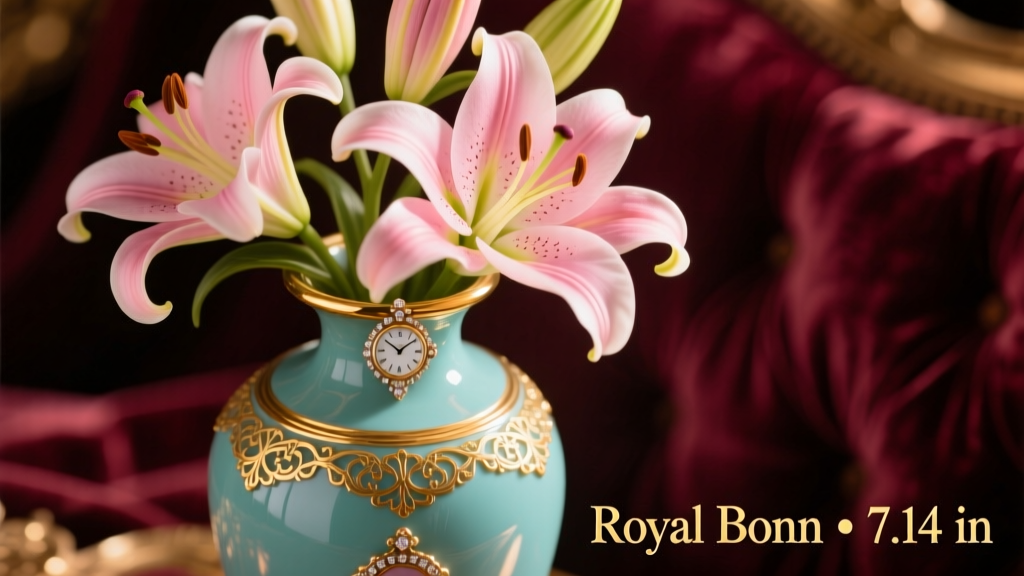
Royal Bonn Vase: Pink Lilies on Aqua Ground with Hand-Applied Gold Trim — A 7¼-Inch Masterpiece of German Porcelain Artistry
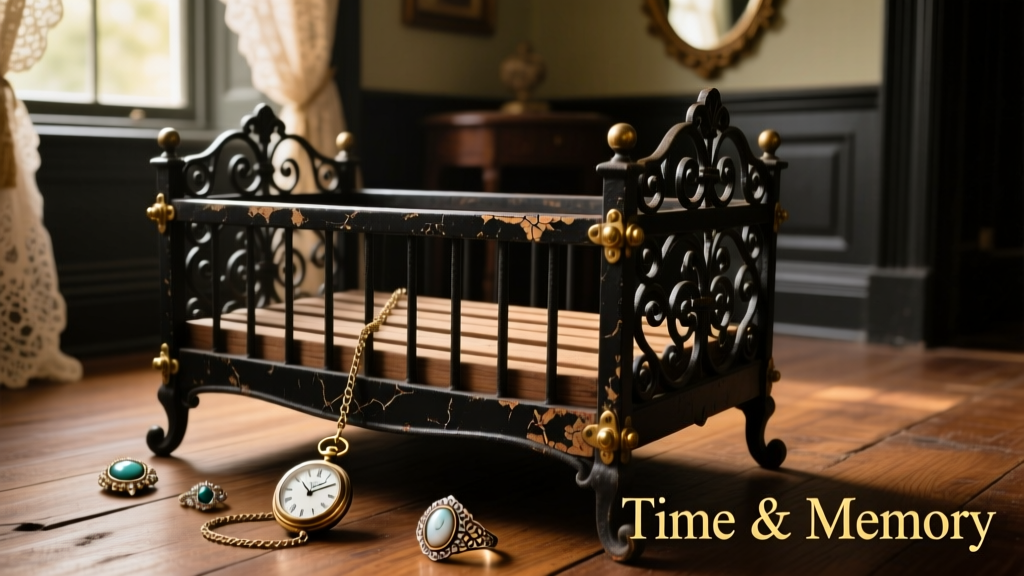
The Victorian Cast-Iron Furniture Cradle: A Study of Form, Function, and Foundry Craftsmanship
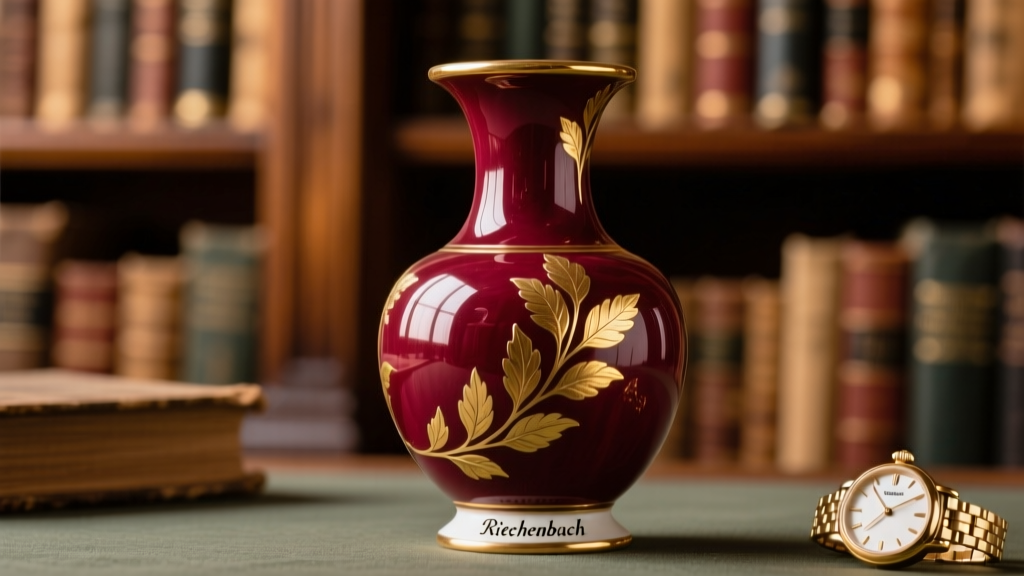
The Riechenbach Enamel Vase: A Masterpiece of Late 19th-Century German Cloisonné with Deep Maroon Ground

Good Housekeeping's 'Good Meals: How to Prepare Them' (1927) — A Landmark in American Domestic Science
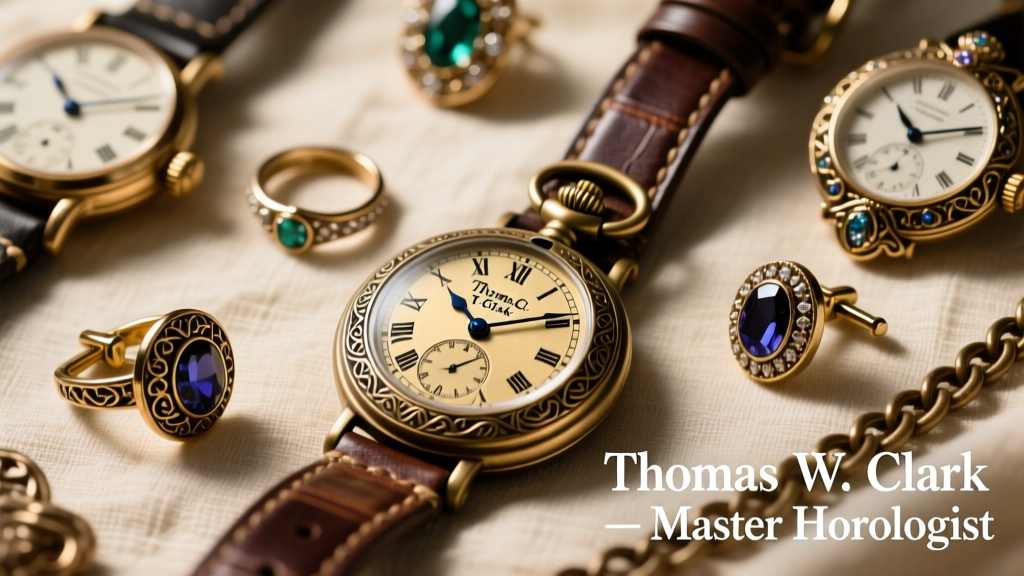
Thomas W. Clark: The Forgotten Master of British Art Deco Watchmaking
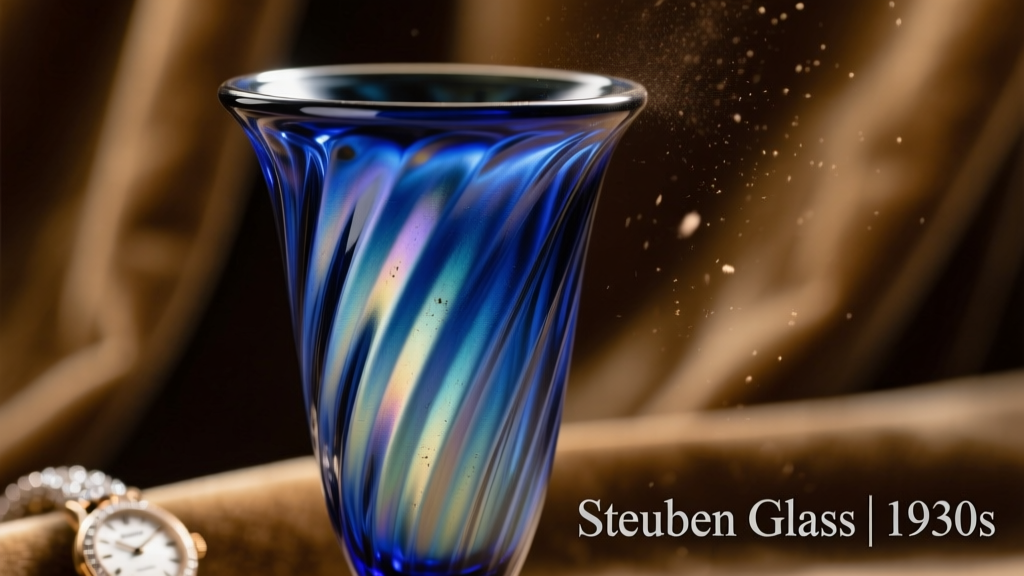
Aurene Vase, Blue Diagonal Ribbed, Steuben Glass, 10 Inches: Provenance, Technique, and Market Significance
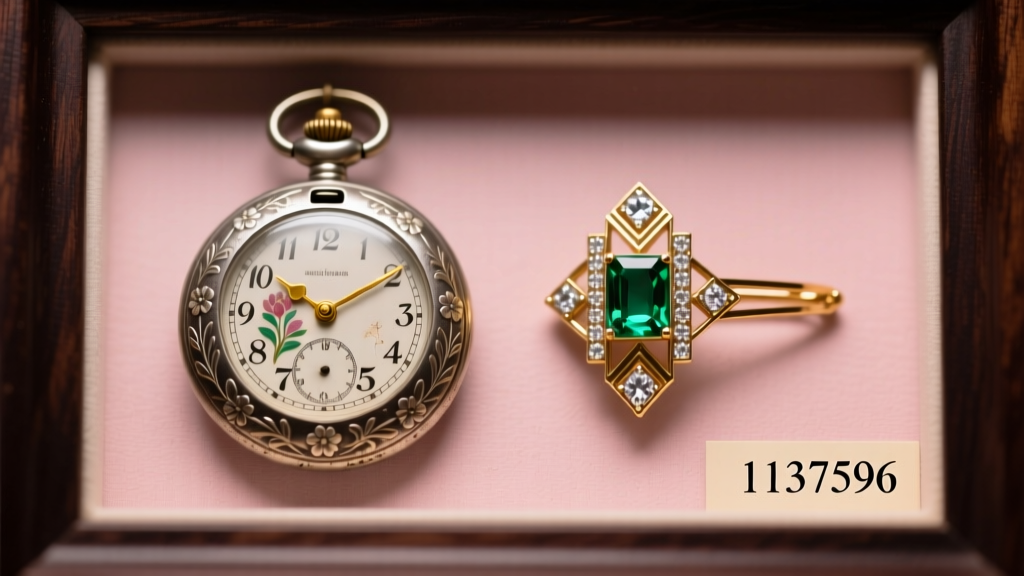
Lot 1137596: A 1948 Patek Philippe Ref. 1463 'Tasti Tosti' Chronograph — Provenance, Technical Anatomy, and Market Significance
Is There a Way to Clean an Antique Quilt Safely? Practical, Conservation-Based Methods for Preserving Heirloom Textiles
Rolex Reference 1134320: The Forgotten Transitional Explorer II (1979–1982)