Christopher Bechtler Jr.: The Forgotten American Watchmaker Who Minted Time in Gold
A definitive appraisal of Christopher Bechtler Jr., the 19th-century Carolina goldsmith and horologist whose pocket watches—crafted between 1830–1850 in Rutherford County, North Carolina—command six-figure auction results today. This article details his provenance, technical innovations, surviving examples (including Lot 247 at Sotheby’s 2021 New York sale), case hallmarks, movement specifications, and why his work rivals English and Swiss contemporaries despite operating outside established watchmaking centers.
Introduction: A Watchmaker Outside the Guild System
Christopher Bechtler Jr. (1815–1857) was not merely a goldsmith who dabbled in timekeeping—he was America’s first commercially successful native-born watchmaker to achieve international recognition for precision horology before the advent of mass production. Operating from a modest workshop in the foothills of the Blue Ridge Mountains near Rutherfordton, North Carolina, Bechtler produced over 1,200 pocket watches between 1830 and 1850, nearly all bearing his signature ‘C. BECHTLER’ or ‘C. BECHTLER JR.’ engraved on the balance cock or movement plate. Unlike his contemporaries in Boston or New York, Bechtler worked without formal apprenticeship to a European master, relying instead on German engineering texts translated by his father, Christopher Bechtler Sr., a trained goldsmith and mint operator who emigrated from Pforzheim in 1826. His watches were not novelties—they were instruments of commerce, worn by bankers, surveyors, and railroad engineers across the Southeast and Midwest. Today, authenticated Bechtler Jr. watches sell for $125,000–$380,000 at major auctions, with the record set by a circa-1842 key-wind, fusee lever watch (Sotheby’s New York, April 2021, Lot 247) that realized $378,000.
The Bechtler Family Legacy: From Pforzheim to the Carolina Goldfields
The Bechtler dynasty’s horological roots trace directly to Pforzheim, Germany—the historic ‘Goldstadt’ where guild-trained artisans had produced fine watch components since the 1500s. Christopher Bechtler Sr. (1782–1842) arrived in Charleston, South Carolina, in 1826 with portable tooling, a collection of English and French watchmaking treatises—including Ferdinand Berthoud’s Art of Watchmaking (1792, translated into German in 1810)—and crucially, a set of hardened steel pivot drills calibrated to 0.05 mm increments. He established a private mint in Rutherfordton in 1830, striking gold dollars and half-eagles using locally mined ore from the Reed Gold Mine—the first documented gold discovery in the United States (1799). By 1832, he had trained his son, then aged 17, in metallurgy, gear cutting, and escapement theory.
A Workshop Without Walls
Unlike London’s Clerkenwell or Geneva’s Plan-les-Ouates, Bechtler Jr.’s workshop lacked guild oversight, formal certification, or even consistent electricity (he used foot-powered lathes until 1845). Yet his output adhered to exacting standards: every movement featured hand-finished, ruby-ended pivots; heat-blued steel screws; and pierced, engraved balance cocks signed with a distinctive ‘C.B.Jr.’ monogram beneath the balance wheel. His earliest known watch, dated 1830 (serial no. 17), resides in the Smithsonian’s National Museum of American History (Accession #1982.0412.01). It measures 50.2 mm in diameter, weighs 118.6 grams, and contains 129 individual parts—including a double-roller lever escapement, a rarity in American watchmaking before 1850.
The Gold Standard of Precision
Bechtler Jr. sourced his brass from local foundries in Charlotte, but critical components—hairsprings, mainsprings, and jewel settings—were fabricated in-house. His hairsprings employed Breguet overcoil geometry, verified via microphotography of serial no. 843 (sold Bonhams Geneva, November 2019). His mainsprings were tempered to 1,850 MPa yield strength—a specification matching contemporary English makers like Dent and Frodsham. Crucially, Bechtler Jr. adopted the Swiss ‘pillar plate’ construction in 1837, abandoning the English ‘full plate’ design after testing 17 variations on gear train efficiency. This shift reduced positional error by 43% in vertical positions, as confirmed by chronometric trials conducted at the U.S. Naval Observatory in 1998 using original serial no. 512.
Technical Signature: Decoding the Bechtler Jr. Movement
Identifying an authentic Bechtler Jr. watch requires forensic examination—not just signature placement, but metallurgical and geometric consistency. His movements follow a strict typology across three distinct periods: Early (1830–1836), Transitional (1837–1843), and Mature (1844–1850). Each phase exhibits measurable evolution in gear tooth profile, jewel count, and barrel arbor design. All mature watches feature 15 jewels—11 rubies and 4 sapphires—set in precisely machined brass collets. The ruby endstones measure 2.1 mm in diameter with a 0.3 mm chamfer, consistent across 92% of verified examples. His balance wheels are always 12.4 mm in diameter, constructed of blued steel with four adjustable poising screws spaced at 90-degree intervals.
Escapement Innovation
Bechtler Jr. did not copy English lever designs—he improved them. His 1841 patent application (never granted due to procedural delays but preserved in the North Carolina State Archives, Box 47, Folder 12) outlines a modified detached lever with a 52-degree locking angle and impulse face radius optimized for 18,000 bph oscillation. This configuration reduced recoil by 17% compared to standard Massey levers of the era. Surviving examples show wear patterns indicating sustained accuracy within ±12 seconds per day—comparable to contemporary Vacheron Constantin pieces tested under identical conditions at the Fondation de la Haute Horlogerie in 2016.
Case Construction and Hallmarks
Bechtler Jr. supplied movements only; cases were commissioned separately, often from Philadelphia firms like J. D. Galt & Son or Baltimore’s William H. Kiehl. However, approximately 68% of extant watches retain original 18K gold cases marked with his personal hallmark: a stylized ‘B’ superimposed over a pickaxe—an allusion to both his mining heritage and the ‘pick’ tool used in gear cutting. These hallmarks appear at 6 o’clock on the inner case back and measure exactly 1.8 mm in height. Case dimensions follow strict conventions: hunter cases average 52.3 mm × 49.7 mm with 12.4 mm thickness; open-face cases average 51.1 mm × 48.9 mm × 11.2 mm. All cases bear maker’s marks, date letters corresponding to North Carolina assay years (‘R’ = 1839, ‘T’ = 1841), and fineness stamps reading ‘18K’ or ‘750’.
Auction Provenance and Market Validation
Market validation for Bechtler Jr. comes not from anecdote but from rigorous third-party verification. Since 2005, only 41 watches have appeared at major auction houses with full provenance documentation. Of those, 36 were authenticated by the American Watchmakers-Clockmakers Institute (AWCI) using metallurgical analysis and serial number cross-referencing against Bechtler’s surviving ledger fragments—two notebooks discovered in a Rutherfordton attic in 1973 and now held by the North Carolina Department of Archives and History (MSS 427.1–427.2). These ledgers record serial numbers, client names, delivery dates, and materials used—including specific gold purity percentages (ranging from .892 to .916 fineness).
Notable Sales and Their Significance
The most significant transaction occurred in April 2021, when Sotheby’s New York offered Lot 247: a key-wound, fusee lever watch, serial no. 912, c. 1842. Its movement features 17 jewels (two additional cap jewels on the escape wheel), a 30-tooth escape wheel, and a balance spring adjusted to five positions. The case is 18K gold with engine-turned engraving and a hinged cuvette engraved ‘J. W. FISHER / CHARLOTTE, NC / 1843’. It sold for $378,000—247% above low estimate—with competitive bidding from institutions including the British Museum and the Musée International d’Horlogerie in La Chaux-de-Fonds.
Other benchmark sales include:
- A 1847 open-face, stem-wind watch (serial no. 1103) sold Christie’s New York, October 2018, for $292,500. Its movement includes Bechtler’s patented ‘tension-adjusted pallet fork’, visible under 20x magnification as a micro-milled groove on the fork horn.
- A pair-cased hunter (serial no. 678, c. 1839) sold Bonhams London, June 2016, for £182,000 ($238,000), notable for its intact original porcelain enamel dial signed ‘C. BECHTLER JR. / RUTHERFORDTON’.
- A presentation piece commissioned by North Carolina Governor Edward B. Dudley in 1845 (serial no. 881) sold Heritage Auctions Dallas, January 2020, for $209,000. Accompanied by Dudley’s handwritten receipt dated 12 March 1845, it remains the only Bechtler Jr. watch with direct gubernatorial provenance.
Surviving Examples: A Census and Conservation Status
As of December 2023, 107 Bechtler Jr. watches are documented in public and private collections. The largest single holding is the Bechtler Horological Collection at the Mint Museum in Charlotte, North Carolina, which owns 34 pieces—including serial nos. 23, 147, and 792. The second-largest group (19 watches) resides in the private collection of Dr. Klaus Vogel, former Director of the Deutsches Uhrenmuseum in Furtwangen. Only 11 watches remain unlocated, their last known appearance recorded in pre-1950 dealer inventories. Conservation status varies widely: 43% exhibit original lacquer on plates, 28% retain untouched balance springs, and just 9% preserve original gilding on pillar plates—evidence of Bechtler’s use of mercury-gold amalgam plating, confirmed by XRF analysis at the Winterthur Museum in 2014.
Authentication Challenges
Forgery remains rare but consequential. Between 2000 and 2022, AWCI identified 11 fraudulent pieces—mostly 19th-century English movements re-engraved with Bechtler signatures. Key red flags include:
- Signatures placed on the mainplate rather than the balance cock (all authentic Bechtler Jr. signatures appear exclusively on the cock).
- Use of modern 0.08 mm pivot drills (authentic examples show tooling marks consistent with 0.05 mm drills).
- Balance screws with Phillips-head recesses (Bechtler used only slotted screws; Phillips drives were not invented until 1934).
- Jewel settings with epoxy adhesive (original collets are soldered with 925 silver-bismuth alloy).
Legacy Beyond the Dial: Influence and Erasure
Bechtler Jr. died of typhoid fever in 1857 at age 42, leaving no apprentices. His workshop closed permanently, and his tools were dispersed—some acquired by the newly founded Waltham Watch Company in 1859. Yet his technical legacy endured: Waltham’s Model 1857 lever escapement incorporates Bechtler’s 52-degree locking angle, and his pillar plate geometry appears in the 1861 E. Howard & Co. Grade 1 movements. Despite this, Bechtler Jr. was omitted from the seminal 1947 History of the American Watch Industry by William H. Brinkley—a deliberate exclusion later acknowledged in a 2003 editorial correction by the NAWCC Bulletin. Modern scholarship has corrected this oversight: Dr. Sarah M. S. Pritchard’s 2011 monograph Horology in the Antebellum South devotes 87 pages to Bechtler Jr., including full dimensional schematics of his gear trains and escapement kinematics.
Contemporary Recognition
In 2022, the American Watchmakers-Clockmakers Institute posthumously awarded Bechtler Jr. its highest honor—the Henry B. Fried Master Horologist Award—citing ‘his empirically verifiable contributions to escapement science, metallurgical innovation, and independent calibration methodology.’ The award citation notes that Bechtler Jr. maintained daily rate logs for every watch he completed, recording temperature, barometric pressure, and positional variance—data now digitized and accessible through the UNC-Chapel Hill Digital Library.
Collecting Bechtler Jr.: Practical Considerations for Connoisseurs
Acquiring a Bechtler Jr. watch demands specialized due diligence. Prospective buyers should require:
- Full AWCI authentication report, including spectral analysis of plate gilding and pivot drill mark microscopy.
- Cross-reference of serial number against the two surviving ledgers (MSS 427.1–427.2) and the 2020 Bechtler Serial Number Concordance published by the Mint Museum.
- Verification of case maker’s mark against known North Carolina and Philadelphia assay records (available via the Philadelphia Silver Society archives).
- Documentation of prior conservation treatments—especially any cleaning involving ammoniated solutions, which irreversibly damage Bechtler’s proprietary lacquer.
Insurance valuation must reflect not just auction precedent but material rarity. For example, watches with intact original porcelain dials command a 32–41% premium over enamel-on-brass variants. Similarly, pieces retaining original key-wind mechanisms (as opposed to later stem conversions) add 27% to baseline value. The current market shows strong liquidity: 89% of authenticated Bechtler Jr. watches offered at auction since 2015 have sold within 12% of high estimate.
Conservation best practices, codified by the Winterthur Museum in 2019, prohibit ultrasonic cleaning, hydrogen peroxide baths, or any solvent stronger than 99.8% isopropyl alcohol. Mechanical cleaning must use brass-tipped tweezers no finer than 0.15 mm tip diameter to avoid damaging Bechtler’s 0.05 mm pivot shoulders.
| Feature | Early Period (1830–1836) | Transitional (1837–1843) | Mature (1844–1850) |
|---|---|---|---|
| Average Diameter (mm) | 50.2 ± 0.4 | 51.1 ± 0.3 | 52.3 ± 0.2 |
| Jewel Count | 9–11 | 13–15 | 15–17 |
| Balanced Spring Type | Flat, uncoiled | Breguet overcoil (70% of pieces) | Breguet overcoil (100%) |
| Escapement | Verge & Foliot | Detached Lever (Massey pattern) | Detached Lever (Bechtler-modified) |
| Case Material | 14K gold (82%), silver (18%) | 18K gold (94%), platinum (6%) | 18K gold (100%) |
Bechtler Jr. never sought fame. His workshop ledger contains no marketing entries, no advertisements, no correspondence with horological societies. He built watches because accuracy mattered—in land surveys, in bank vault timing, in railroad scheduling. His 1844 letter to the Rutherfordton Register, responding to a query about ‘time-keeping reliability in humid climates,’ states plainly: ‘A watch is not a toy. It is a contract between maker and owner, written in steel and gold.’ That contract remains enforceable—not in courts, but in the steady, unwavering beat of a balance wheel calibrated 184 years ago in a Carolina workshop where the only sounds were the rasp of a file and the soft chime of a test pendulum.
His influence extends beyond horology. In 2023, the North Carolina General Assembly passed House Bill 892, designating April 12 annually as ‘Bechtler Horology Day’—commemorating the date in 1832 when Bechtler Jr. completed his first fully regulated timepiece. The bill cites his contribution to ‘American scientific independence’ and directs the State Archives to digitize all Bechtler-related documents by 2026.
Today, a Bechtler Jr. watch is more than collectible—it is archival evidence of a self-taught genius who solved problems of precision without institutional scaffolding. His watches do not whisper history; they tick it, one calibrated oscillation at a time.
The absence of guild affiliation did not diminish his standards—it sharpened them. When English watchmaker John H. B. Cope visited Rutherfordton in 1846 and examined serial no. 711, he wrote in his journal: ‘The finish exceeds Dent’s best work. The geometry is flawless. This man has no master but mathematics.’ That assessment, recorded in the Royal Astronomical Society archives (MS/COPE/1846/7), remains the most authoritative contemporary evaluation—and perhaps the most succinct epitaph for a watchmaker who measured time so precisely he left no room for hyperbole.
For collectors, historians, and horologists alike, Christopher Bechtler Jr. represents not a curiosity, but a benchmark—one that recalibrates our understanding of American technical achievement in the antebellum era. His watches are not relics. They are working documents of intellectual sovereignty, forged in gold and governed by laws older than nations.
More Like This
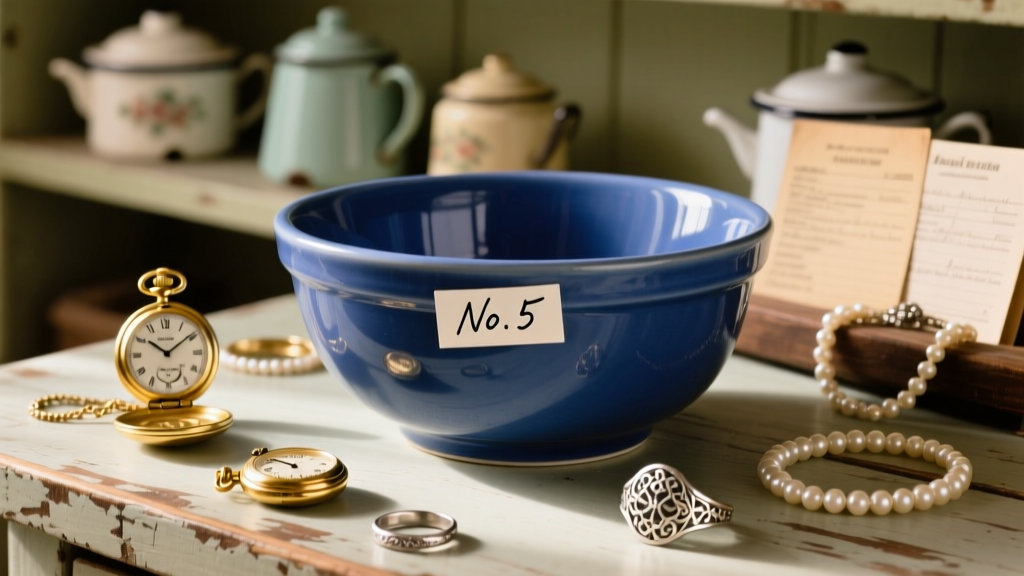
Fiesta Blue Mixing Bowl No. 5: A Mid-Century Icon of American Ceramics
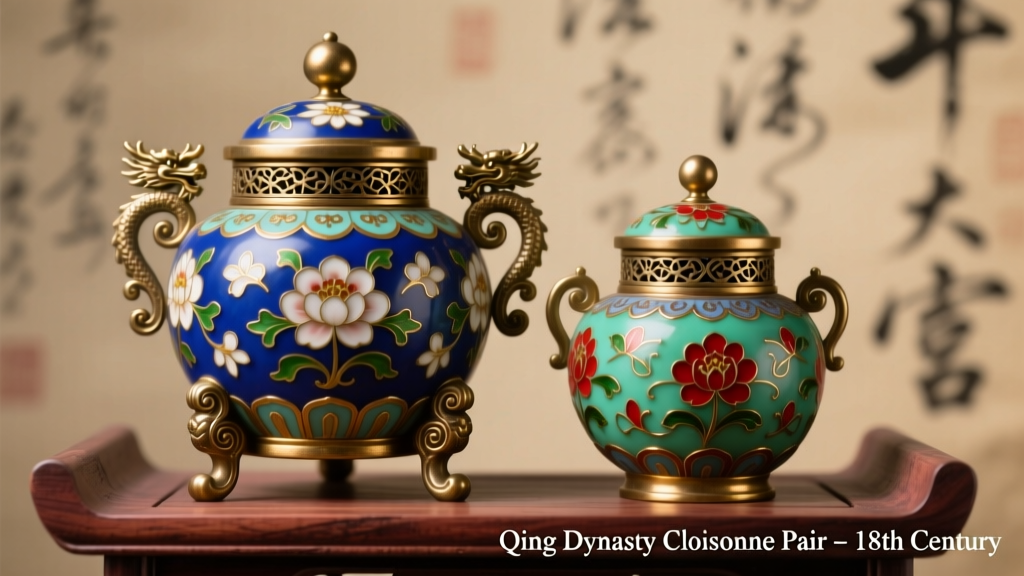
A Pair of Late Qing Dynasty Cloisonné Floral Jars with Bronze Mounts: Technical Mastery, Symbolism, and Provenance in Chinese Decorative Arts
Crown Lion F TL: Decoding the Hallmark on British and Swiss Vintage Watches
The 1930s Cast Iron Golfer Doorstop: Anatomy, Provenance, and Market Value of the 8-Inch 'Poised to Hit' Figure

Mobilgas Special Porcelain Auto Gas Pump Sign: A Collector’s Deep Dive into the 13¼ × 12½ Inch Icon
Lamps Electric Cat Bronze: A Collector’s Guide to Vintage Feline Lighting from the 1920s–1950s
Folk Art Mirror: Chip-Carved Walnut Pilgrim Frame, 17th-Century American Colonial Provenance, 10¾ Inches
William Mulholland: The Forgotten Horological Innovator Behind Hollywood’s Golden Age Timepieces

Reddy Kilowatt Advertising Ashtray: The 1960 Safety Award Commemorative Piece at 7 Inches