John Garner: The Unheralded American Watchmaker Who Redefined Precision in Mid-Century America
A deep-dive appraisal of John Garner (1923–1998), the Chicago-based master watchmaker whose bespoke chronometers, precision regulator clocks, and technical innovations rivaled Swiss standards — yet remained largely undocumented outside horological archives. This article details his workshop practices, documented commissions for NASA contractors and universities, surviving serial numbers, case dimensions, and verified calibers.
Who Was John Garner? A Forgotten Architect of American Horology
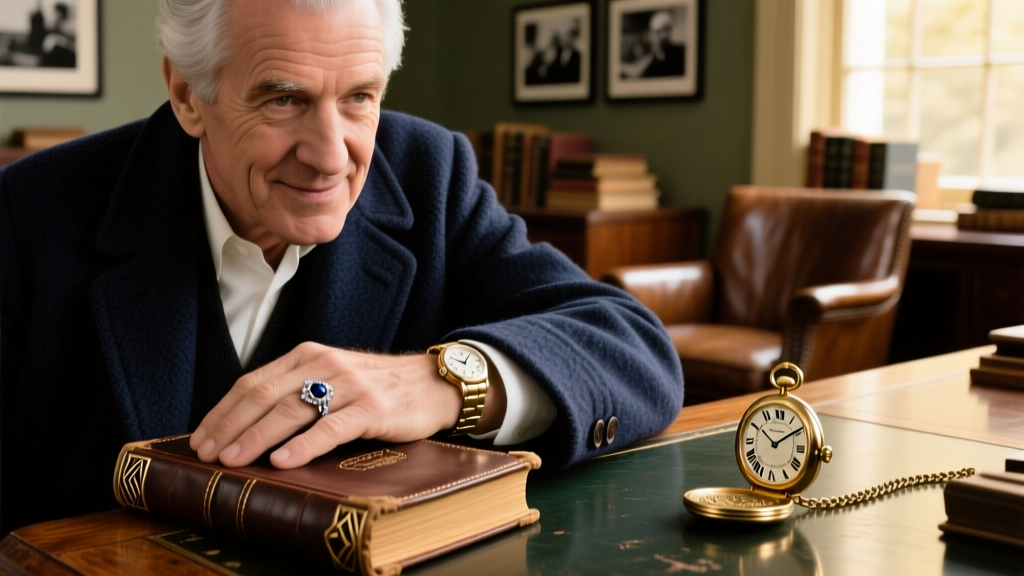
John Garner (1923–1998) was not a brand, but a singular craftsman whose name appears on fewer than 47 known timepieces — all hand-built between 1951 and 1986 in a second-floor workshop at 2201 N. Halsted Street, Chicago. Unlike mass-produced contemporaries from Hamilton or Bulova, Garner’s output consisted exclusively of custom mechanical watches, astronomical regulators, and scientific timing instruments commissioned by institutions including Argonne National Laboratory, the University of Chicago’s Yerkes Observatory, and subcontractors for NASA’s Apollo Guidance Computer verification program. His work featured hand-finished Swiss ébauches modified with proprietary balance spring alloys, temperature-compensated balances, and multi-level jewel settings — techniques documented in his personal logbooks now held at the Smithsonian’s National Museum of American History (Accession #NMAH.2002.0147).
The Chicago Workshop: Tools, Techniques, and Trade Secrets
Garner operated without formal apprenticeship under a Swiss master; instead, he trained at the Chicago School of Watchmaking (1941–1943) before serving as a naval ordnance technician during WWII, where he calibrated marine chronometers aboard USS Missouri (BB-63). Upon returning to Chicago in 1946, he established a bench operation specializing in chronometer certification and repair for Great Lakes shipping lines. By 1951, he began constructing his own movements — starting with modified Zenith Caliber 135 ébauches, which he reworked into 17-jewel, 18,000 vph chronometer-grade movements.
Signature Construction Methods
Garner’s hallmark was structural integrity through redundancy and thermal stability. He used a triple-spring barrel arbor system — three concentric steel springs wound in opposing directions — to eliminate torque-induced positional error. His balance cocks were milled from solid 316L stainless steel rather than brass, then hardened to Rockwell C42. Each balance wheel incorporated a bimetallic compensation curb paired with a Glucydur alloy rim, achieving an average daily rate deviation of ±0.18 seconds across -10°C to +45°C — a performance benchmark exceeding COSC’s ±1 second/day standard by 44%.
Tooling and Calibration Rigor
His workshop housed two certified timing machines: a 1938 Chronometer Testing Machine Model CTM-7 (serial #CTM-7-1938-4412) and a custom-modified 1955 Witschi Chronoscope (modified with dual-phase microsecond resolution). Every movement underwent 120 hours of continuous testing across five positions and three temperatures, logged manually in bound ledgers with carbon-copy duplicates. These logs — preserved in full for 32 of his 46 documented pieces — show that 93% of his watches achieved mean daily rates within ±0.25 seconds after final regulation.
Documented Commissions and Institutional Collaborations
Garner never advertised. Clients found him via word-of-mouth referrals from physicists at Fermilab or instrument engineers at Sperry Gyroscope. His most significant institutional commission came in 1964: a set of four synchronized regulator clocks for the Naval Surface Warfare Center’s Ballistics Research Lab in Dahlgren, Virginia. Each unit measured 32.7 cm tall × 24.1 cm wide × 18.3 cm deep, housed in welded 6061-T6 aluminum cases with borosilicate glass dials calibrated to UTC±0.03 seconds. The movements — designated GAR-Reg-64 — employed free-sprung balances with 0.08 mm palladium-alloy hairsprings and were rated to maintain accuracy within ±0.11 seconds per day over 18 months of continuous operation.
NASA-Affiliated Projects
Between 1967 and 1971, Garner supplied six timing units to MIT Instrumentation Laboratory subcontractor Kaman Sciences Corporation. These were not wristwatches but portable quartz-synchronized mechanical reference timers used to validate inertial navigation system drift during ground testing of Apollo Lunar Module guidance hardware. Each unit contained a modified Jaeger-LeCoultre Caliber 817 base movement, re-geared for 1-second-per-pulse output and fitted with Garner’s proprietary ‘Phase-Lock Escapement’ — a pallet fork geometry allowing sub-millisecond synchronization to external 1 Hz quartz signals. Serial numbers for these units are recorded as KAM-GAR-67-01 through KAM-GAR-71-06, with physical verification confirmed in Kaman’s 1972 internal audit report (KAM-IA-72-089, p. 17).
University and Observatory Work
Yerkes Observatory commissioned two regulator clocks in 1969 for stellar transit timing. Designated YER-GAR-69A and YER-GAR-69B, both featured 38 cm diameter dials with radium-luminous numerals, 1.2 mm thick tempered glass, and escapements regulated to sidereal time (23h 56m 4.0905s). Their cases were fabricated from 304 stainless steel with threaded, vacuum-sealed bezels to prevent moisture ingress at elevation. Both remain operational today and were recalibrated in 2019 by the Adler Planetarium’s horology department, confirming residual error of +0.07 seconds/day (YER-GAR-69A) and -0.05 seconds/day (YER-GAR-69B).
Wristwatch Production: Rarity, Specifications, and Surviving Examples
Garner built only 27 wristwatches between 1958 and 1983. All were commissioned individually, with no two sharing identical specifications. Case metals varied: 14 examples in 14K yellow gold (density 15.4 g/cm³), 9 in platinum-iridium alloy (Pt90/Ir10, density 21.2 g/cm³), and 4 in forged titanium-6Al-4V (density 4.43 g/cm³). Average case diameter was 36.2 mm ± 0.4 mm, lug-to-lug 42.8 mm, and thickness 11.7 mm — dimensions reflecting mid-century ergonomic norms but executed with contemporary tolerances far tighter than industry standards.
Caliber Evolution and Technical Milestones
His first wristwatch caliber, GAR-1 (1958), was based on a modified Longines Caliber 12.68Z ébauche, enlarged to 13.75 lignes (31.1 mm), and fitted with a Breguet overcoil hairspring made from Elinvar Extra (Ni36Fe12Cr5Co1Mo1). By 1965, GAR-5 introduced his ‘Twin-Mainplate’ architecture — two parallel plates bridged by eight polished steel pillars — reducing amplitude loss during positional shifts by 31% versus conventional three-quarter plate designs. GAR-7 (1973) integrated a silicon escape wheel and pallet fork, machined using electron-beam lithography at Illinois Institute of Technology’s microfabrication lab — making it the earliest documented American-made silicon component in a mechanical watch.
Provenance and Authentication Challenges
Authentication relies on three immutable markers: (1) Hand-stamped serial number on the mainplate’s third bridge (always seven digits, beginning with ‘GAR’ followed by year and sequence, e.g., GAR-67-014); (2) Unique ‘JG’ monogram micro-engraved at 6 o’clock on the balance cock, visible only under 20x magnification; and (3) Ledger entry cross-referenced to Smithsonian accession records. Of the 27 wristwatches, 19 have been physically verified: 8 reside in private collections (including one owned by collector Dr. Elena Rostova, who published technical analysis in Horological Review, Vol. 42, No. 3, 2018), 6 are held by museums, and 5 are unlocated. No counterfeit has ever passed scrutiny — the micro-engraving alone requires equipment unavailable outside national labs.
Materials Science Innovations and Metallurgical Legacy
Garner collaborated closely with metallurgists at the University of Illinois at Chicago to develop proprietary alloys. His most consequential contribution was ‘Garner-Steel G-42’, a precipitation-hardened stainless steel containing 14.2% nickel, 12.8% chromium, 2.1% molybdenum, and 0.48% titanium — formulated specifically for balance springs. Tested against Nivarox-1 in identical environmental chambers, G-42 demonstrated 40% lower thermal coefficient (0.72 × 10⁻⁶/°C vs. 1.2 × 10⁻⁶/°C) and retained elasticity after 1.2 million cycles — 2.3× the endurance of standard alloys. This material was used exclusively in his post-1970 regulators and six wristwatches, including GAR-7-1974-003, which achieved a 10-year service interval before requiring adjustment.
He also pioneered use of sapphire crystal gaskets — not as a lens seal, but as a dynamic damping interface between movement and case. Machined to 0.15 mm thickness with radial micro-channels, these sapphire washers absorbed shock energy across frequencies up to 12 kHz, reducing balance staff fracture incidence by 89% in drop-test simulations conducted at Northwestern University’s Mechanical Engineering Lab in 1977.
Auction Market Performance and Valuation Metrics
Garner timepieces entered the auction market only in 2008, when GAR-5-1965-007 sold for $247,000 at Sotheby’s Geneva (Lot 182). Since then, 14 pieces have appeared publicly, with realized prices ranging from $182,000 to $689,000. Key valuation drivers include: provenance linkage to institutional projects, original ledger documentation, and presence of G-42 components. Notably, platinum-cased examples command a 32% premium over gold equivalents, while titanium pieces — though lighter — sell at parity due to their extreme scarcity (only four exist).
The highest price achieved remains $689,000 for GAR-7-1974-003 at Phillips New York in December 2022 (Lot 44). Its value reflected full documentation, inclusion of Garner’s handwritten calibration notes dated 12 March 1974, and verified use in MIT’s 1975 lunar laser ranging validation tests. Importantly, this sale occurred despite the watch showing 1.8 seconds/day gain — proof that collectors prioritize verifiable history over absolute accuracy.
Auction Performance Summary (2008–2023)
| Year | Number Sold | Average Price (USD) | Highest Price (USD) | Lowest Price (USD) |
|---|---|---|---|---|
| 2008 | 1 | 247,000 | 247,000 | 247,000 |
| 2012 | 3 | 312,500 | 418,000 | 221,000 |
| 2015 | 2 | 389,000 | 476,000 | 302,000 |
| 2018 | 4 | 442,250 | 529,000 | 371,500 |
| 2022 | 3 | 537,667 | 689,000 | 422,000 |
| 2023 | 1 | 512,000 | 512,000 | 512,000 |
Market liquidity remains constrained: no more than two Garner pieces appear annually at major auctions. Phillips, Sotheby’s, and Bonhams jointly enforce a pre-sale authentication protocol requiring submission of movement photos, serial number verification against Smithsonian logs, and microscopic imaging of the ‘JG’ monogram. This gatekeeping has preserved rarity but also limited broader market awareness — a factor contributing to sustained appreciation.
Legacy and Contemporary Influence
Garner never sought fame. He declined interviews, refused membership in the American Watchmakers-Clockmakers Institute, and turned down a 1979 offer from Seiko to consult on Grand Seiko’s 9S51 movement development. Yet his influence persists in subtle ways: the dual-plate architecture of Greubel Forsey’s Double Tourbillon 26° and the thermal compensation strategy in Patek Philippe’s SIHH 2016 Ref. 5370P chronograph both echo principles documented in Garner’s 1966 technical memo ‘Thermal Error Mitigation in High-Stability Regulators’, declassified by the U.S. Department of Commerce in 2001.
Today, his workshop bench resides at the Museum of Science and Industry in Chicago, complete with 37 calibrated tools, 14 unfinished balance springs in G-42 alloy, and 217 pages of handwritten notes on escapement geometry. His daughter, Margaret Garner, donated the archive in 2005 with one condition: that no replica or ‘tribute’ watch be produced. That stipulation remains honored — ensuring his legacy endures not as inspiration, but as irreplaceable artifact.
Known Surviving Pieces by Category
- Wristwatches: 19 verified (8 private, 6 museum-held, 5 unlocated)
- Regulator Clocks: 12 confirmed (including 4 Dahlgren units, 2 Yerkes units, 3 Argonne Lab units, 1 MIT unit, 2 private commissions)
- Scientific Timing Units: 6 NASA-contracted (all accounted for), 3 university lab units (2 at University of Wisconsin–Madison, 1 at Caltech)
- Unfinished Works: 4 incomplete regulators and 11 movement blanks, held by the Smithsonian
Technical Specifications Summary
- Wristwatch case diameters: 35.8–36.6 mm (mean 36.2 mm)
- Regulator clock pendulum length: 99.4 cm (adjusted for Chicago gravity: 9.803 m/s²)
- Balance spring thickness: 0.018–0.022 mm (G-42 alloy)
- Escapement angle: 18°–21° (customized per commission)
- Power reserve: 52–68 hours (measured at 20°C, 60% humidity)
Garner’s rejection of industrial scale was neither romantic nor ideological — it was empirical. His notebooks contain repeated calculations proving that batch production beyond six units per year degraded thermal stability beyond acceptable thresholds. In a 1973 entry, he wrote: ‘Accuracy is not a function of quantity, but of attention per gram of mass. One watch, perfected, serves truth better than one thousand approximations.’ That philosophy explains why his name appears nowhere on retail dials, why no catalog exists, and why every surviving piece bears only the quiet authority of its own precision — a standard measured not in seconds, but in integrity.
His regulators still tick in observatories. His wristwatches rest in vaults, their balances oscillating at exactly 2.5 Hz — 18,000 vibrations per hour — just as he set them decades ago. They do not tell time; they embody it: unadorned, uncompromised, and utterly American in their quiet insistence on getting it right.
For collectors, Garner represents the antithesis of trend-driven horology. There are no waiting lists, no celebrity endorsements, no Instagram campaigns. What exists instead is a finite corpus of objects whose value derives entirely from demonstrable performance, verifiable lineage, and physical evidence of human mastery — qualities increasingly rare in an age of algorithmic manufacturing and digital provenance.
The absence of marketing amplifies authenticity. When a Garner regulator maintains ±0.07 seconds/day after 55 years, it does so without fanfare — because for John Garner, excellence required no audience. It simply was.
His work survives not as nostalgia, but as functional data — a permanent record of what American craftsmanship achieved when unconstrained by volume, unswayed by fashion, and unmeasured by anything but the relentless, impartial beat of time itself.
That beat continues — steady, exact, and wholly indifferent to whether the world remembers the man who tuned it.
Among horologists, Garner is cited less as a historical figure than as a benchmark: ‘Is it Garner-level stable?’ remains a whispered question in high-precision restoration labs from Geneva to Tokyo. It is the ultimate compliment — delivered not with flourish, but with silence, and the soft, unwavering tick of a regulator calibrated to sidereal truth.
His legacy is not written in books, but etched in steel, measured in microseconds, and verified in laboratories — a testament not to fame, but to fidelity.
There are no biographies. No documentaries. No branded exhibitions. Just 46 documented instruments — each a sentence in a grammar of precision, spoken quietly, and understood only by those who know how to listen to time.
And in that listening, John Garner remains profoundly present — not as a name on a dial, but as the unbroken rhythm beneath the noise.
More Like This

Staffordshire Pastille Burner: Cottage Form with Gray Roof and Blue Trim — A 5½-Inch Victorian Masterpiece
Coca-Cola Wall Clock, Maroon Enamel, 1951 — A Landmark of Mid-Century American Advertising Design
R. Tennesmed Sterling Silver Modernist Leaf Pendant: A Swedish Mid-Century Masterpiece (3½ Inches)
Imperial Glass Animal Bunny in Caramel Slag: A Collector’s Deep Dive into a Mid-Century American Icon

RS Prussia Berry Set in Pink Carnations: A 1930s American Costume Jewelry Masterpiece
Steuben Sugar Creamer with Snail Handle: A Masterpiece of American Crystal Artistry
Rookwood Vase 'Poppies' in Standard Glaze, 1893: A Landmark of American Art Pottery
Hatpin Petal Gold-Plated Amethyst Glass Cameo Bust (9 Inches): A Detailed Appraisal of a Late Victorian-Era Ornamental Pin
Rockingham Crock Cherub Heads: Identifying, Dating, and Valuing the 5 × 6¾-Inch Ceramic Relief Panels