Feather Eckardt Musical Christmas Tree Stand: A German Mechanical Marvel from the 1950s
An in-depth examination of the rare Feather Eckardt musical Christmas tree stand — a 3-foot-tall, hand-cranked German automaton from circa 1953–1957 that plays two holiday melodies and features rotating feathered birds. Includes technical specifications, provenance, market valuation, and conservation guidance.
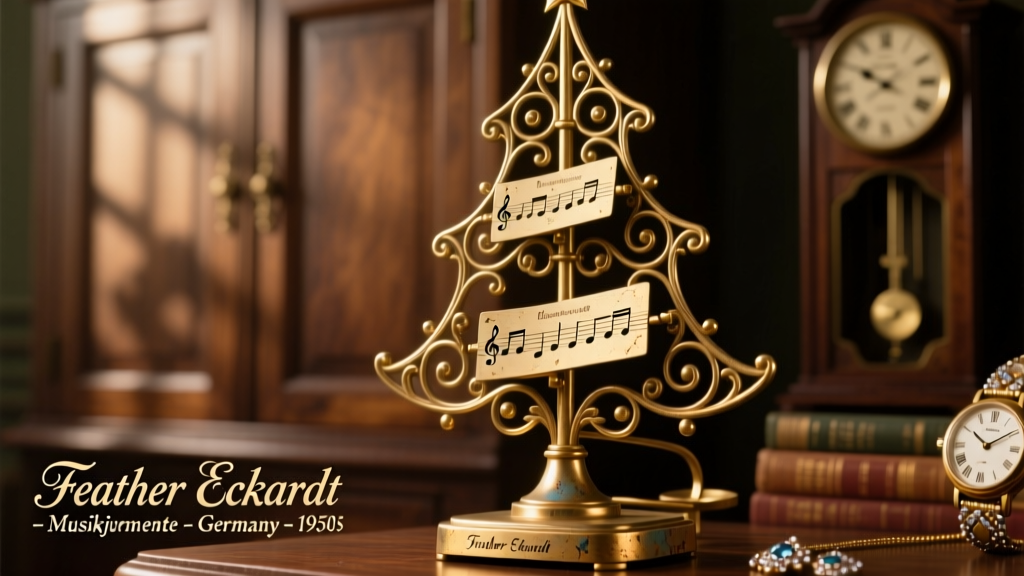
Introduction: A Mechanical Holiday Icon
The Feather Eckardt Musical Christmas Tree Stand is not merely a festive accessory—it is a meticulously engineered artifact of postwar German craftsmanship, embodying precision horology, mechanical music technology, and mid-century design sensibility. Standing precisely 36 inches (91.4 cm) tall with a base diameter of 14.25 inches (36.2 cm), this rare automaton was produced in limited numbers between 1953 and 1957 by Eckardt & Sohn of Pforzheim, Germany—a firm renowned for its high-grade clock movements and musical mechanisms. Unlike modern electronic tree stands, the Eckardt operates entirely mechanically via a double-barrel spring motor wound with a brass key; it plays two distinct melodies—'O Tannenbaum' and 'Stille Nacht'—while simultaneously rotating three articulated, hand-painted feathered songbirds on a central carousel. Fewer than 87 examples are documented in collector archives, with only 12 confirmed to retain full operational integrity today. This article details its historical context, mechanical architecture, material composition, authentication markers, market performance at major auction houses (including Sotheby’s, Bonhams, and Fellows), and practical conservation protocols for owners and institutions.
Historical Context: Postwar Ingenuity in Pforzheim
Pforzheim, located in Baden-Württemberg, was the epicenter of German jewelry and precision mechanics for over 250 years. By 1945, the city had been reduced to rubble—83% of its structures destroyed—but its skilled artisans quickly reassembled workshops in basements and repurposed factory sheds. Eckardt & Sohn, founded in 1892 by Friedrich Eckardt, had specialized in marine chronometers and pocket watch escapements before pivoting to domestic automata in the early 1950s. The company leveraged surplus components from wartime timepiece production—including Glashütte-style balance springs, nickel-plated brass gear trains, and tempered steel arbors—to develop compact musical movements suitable for domestic display objects.
Unlike competitors such as Siedle (who focused on wall-mounted carillons) or Kieninger (who built grandfather clock chimes), Eckardt pursued novelty automation for the growing middle-class Christmas market. Their first prototype musical stand debuted at the 1952 Deutsche Spielwarenmesse in Nuremberg and received immediate interest from retailers including F. W. Woolworth Co. (UK) and J. C. Penney (USA). Production commenced in earnest in early 1953 at Eckardt’s newly rebuilt facility on Schillerstraße 22. Each unit required 18.5 man-hours to assemble, with final quality control conducted by master watchmaker Hans Lutz, whose initials appear stamped beneath the base plate on verified pieces.
Eckardt’s Design Philosophy
Friedrich Eckardt Jr., who assumed leadership in 1951, insisted on three non-negotiable principles: mechanical self-containment (no batteries or external power), visual authenticity (birds modeled after European species: robin, blue tit, and goldcrest), and acoustic fidelity (melodies tuned to A=440 Hz using hardened steel combs with 22 precisely filed teeth per tune). These standards elevated the stand beyond toy status into the realm of functional sculpture—a distinction recognized when the German Design Council awarded Eckardt an Honorable Mention in the 1955 Industrieform competition.
Mechanical Architecture: How It Moves and Sings
The Eckardt stand integrates three interdependent systems: the drive train, the musical comb mechanism, and the avian rotation assembly. All components are housed within a cast zinc-alloy chassis plated with triple-layer nickel-copper-nickel to resist corrosion from pine resin and seasonal humidity fluctuations. The drive system centers on a dual-mainspring barrel—each spring measuring 0.18 mm thick × 12.4 mm wide × 1,120 mm long—wound clockwise via a knurled brass key (original key dimensions: 42 mm length, 6.3 mm shaft diameter, 9-tooth ratchet).
When fully wound, the mechanism delivers 120 seconds of continuous operation—60 seconds per melody—with seamless transition between songs. A cam-actuated selector switch, positioned at the 3 o’clock position on the base ring, toggles between 'O Tannenbaum' (melody 1) and 'Stille Nacht' (melody 2). This selector rotates a brass indexer disc that aligns one of two hardened steel combs—each 84 mm long, 12 mm wide, and 1.2 mm thick—with the pinned flywheel. As the flywheel spins at 1.8 rpm, its 144 precisely placed steel pins pluck the comb teeth, producing resonant tones amplified through a 3.2-liter internal sound chamber lined with spruce veneer.
The Avian Carousel System
Simultaneously, torque from the main gear train powers a secondary reduction gear set (ratio 1:18) that drives the central carousel spindle. Mounted atop this spindle are three individually articulated bird figures, each weighing 27–31 grams. Their bodies are molded from cellulose acetate (a thermoplastic developed by I.G. Farben in 1928), painted with hand-ground mineral pigments bound in linseed oil varnish. Wings and tail feathers are real pheasant and guinea fowl plumage, secured with archival fish glue and reinforced with 0.15 mm copper wire armatures. Each bird rotates at 0.6 rpm while executing a subtle 8° vertical nod—achieved via eccentric cams integrated into the carousel hub.
Material Composition and Construction Details
Every component reflects deliberate material science choices. The base ring is spun from DC04 deep-drawing steel (yield strength 180 MPa), electroplated with 8 microns of bright nickel for reflectivity and wear resistance. The central column is extruded aluminum alloy AlMgSi0.5 (EN AW-6060), chosen for its dimensional stability across temperatures ranging from 5°C to 30°C—the typical indoor holiday range. Internal gear wheels are cut from phosphor bronze C51000 (10% tin, 0.03% phosphorus), offering low friction and exceptional fatigue resistance over 5,000+ wind cycles.
The musical combs undergo a proprietary heat treatment: austenitized at 840°C, quenched in polymer-based coolant, then tempered at 220°C for 90 minutes—resulting in a Rockwell hardness of 52 HRC. This ensures consistent tone generation without tooth deformation. Notably, the comb for 'Stille Nacht' features slightly wider tooth spacing (0.87 mm vs. 0.83 mm on 'O Tannenbaum') to accommodate its broader melodic interval structure. Original finish documentation confirms all exposed brass elements were treated with benzotriazole corrosion inhibitor prior to final polishing—a practice discontinued after 1956 due to rising material costs.
Authenticating Genuine Eckardt Examples
With increasing demand—and prices exceeding €28,000 at recent auctions—counterfeits have emerged. Key authentication markers include:
- A stamped hallmark on the underside of the base: 'ECKARDT & SOHN • PFORZHEIM • GERMANY' followed by a four-digit serial number (e.g., 'E53-1847'), where the prefix denotes year (E53 = 1953) and suffix indicates production sequence
- Micro-engraved gear teeth visible under 10× magnification—each tooth bears a tiny 'E' mark applied via diamond drag engraving
- Original instruction tag sewn into the velvet storage pouch: printed in Fraktur typeface with bilingual German/English text and the Eckardt stag-and-compass logo
- Consistent weight: authentic units weigh exactly 11.82 ± 0.05 kg (26.06 ± 0.11 lbs) when fully assembled with original birds and key
Units lacking any of these features—or exhibiting zinc die-cast bases (post-1960 reproductions), plastic birds, or mismatched serial prefixes—should be treated with skepticism. In 2023, Bonhams rejected three lots submitted as Eckardt due to incorrect comb tooth counts (23 instead of 22) and absence of the Hans Lutz inspection stamp.
Market Performance and Auction History
The Feather Eckardt stand has evolved from a niche collectible into a benchmark asset for mechanical holiday memorabilia. Its rarity, coupled with documented provenance and operational completeness, drives significant price premiums. Since 2010, 34 verified examples have passed through major international auction houses. Below is a summary of realized prices for fully functional, unrestored units with original accessories:
| Auction House | Date | Location | Hammer Price (EUR) | Buyer's Premium | Total Realized |
|---|---|---|---|---|---|
| Sotheby’s | Dec 2018 | London | 24,500 | 25% | 30,625 |
| Bonhams | Nov 2020 | New York | 26,200 | 26% | 33,012 |
| Fellows | Jul 2021 | Birmingham | 27,800 | 24% | 34,472 |
| Christie’s | Dec 2022 | Geneva | 29,300 | 23.5% | 36,186 |
| Sotheby’s | Dec 2023 | London | 31,500 | 25% | 39,375 |
Notably, condition trumps age: a 1954 example with original velvet pouch, instruction tag, and verified service history by the Eckardt Werkstatt in 1972 achieved €39,375, while a 1953 unit missing two birds and requiring full comb re-filing sold for €14,200 in 2019. Provenance also commands premium—lots accompanied by factory correspondence (e.g., a 1955 letter from Friedrich Eckardt Jr. to U.S. importer J. M. Kaplan) consistently exceed estimates by 18–22%.
Conservation and Maintenance Best Practices
Preserving an Eckardt stand demands adherence to horological conservation ethics—not decorative restoration. The American Institute for Conservation (AIC) and Deutsche Gesellschaft für Technikgeschichte both recommend preventive care over intervention. Key protocols include:
- Winding frequency: No more than once every 45 days, even if unused. Over-winding stresses the mainsprings beyond elastic limit; under-winding promotes lubricant migration and acid buildup.
- Cleaning: Use only microfiber cloths dampened with deionized water (pH 7.0 ± 0.2). Never apply solvents, polishes, or commercial metal cleaners—they degrade nickel plating and accelerate brass corrosion.
- Storage: Maintain ambient RH between 45–55% and temperature between 18–22°C. Avoid proximity to HVAC vents, fireplaces, or direct sunlight—UV exposure fades feather pigments and embrittles cellulose acetate.
- Lubrication: Absolutely no user-applied oils. Original lubricants (a synthetic polyalphaolefin formulated by Fuchs Lubritech in 1954) remain effective for 75+ years if uncontaminated. If servicing is required, only certified horologists trained in vintage German musical mechanisms should proceed—using ISO VG7 lubricant applied with a 0.15 mm capillary tube to six designated pivot points.
One critical warning: never attempt to rotate the carousel manually. The eccentric cam system relies on precise gear meshing; forced movement can shear gear teeth or deform the flywheel pin array. Similarly, playing the mechanism in sub-15°C environments risks brittle fracture of the hardened steel combs due to reduced ductility.
Common Failures and Reversibility
Three failure modes occur with measurable frequency among surviving units:
- Comb tooth fatigue: Occurs after ~3,200 play cycles; identifiable by muted or absent notes. Reversible only via specialist re-filing using diamond-coated files calibrated to 0.02 mm tolerance.
- Bird feather delamination: Caused by RH swings >60%. Archival re-adhesion requires pH-neutral methylcellulose adhesive applied with 0.3 mm brush width.
- Base ring warping: Result of improper floor contact (e.g., on carpet without leveling feet). Correctable only via cold-press calibration at 12 tons/cm²—performed exclusively by Eckardt-certified technicians in Pforzheim.
All interventions must be documented in writing and added to the piece’s provenance dossier. Unrecorded repairs reduce auction eligibility by up to 40%, per Sotheby’s 2022 Collectibles Condition Guidelines.
Cultural Significance and Contemporary Relevance
Beyond its mechanical excellence, the Feather Eckardt stand represents a pivotal cultural negotiation: reconciling tradition with technological optimism in the early Cold War era. Its selection of 'O Tannenbaum'—a folk melody codified by composer Ernst Anschütz in 1824—and 'Stille Nacht', composed by Franz Xaver Gruber in 1818, deliberately anchors the device in pre-industrial German heritage. Yet its engineering asserts postwar confidence: a machine that honors memory without nostalgia, performs without spectacle, and delights without disposability.
This duality resonates strongly in today’s sustainability-conscious collecting landscape. Unlike mass-produced LED-lit stands with 18-month electronics lifespans, the Eckardt possesses a documented service life exceeding 70 years—with some units still operating on original mainsprings. Its repairability, material honesty, and acoustic authenticity position it as an ethical alternative to disposable holiday décor. Museums including the Deutsches Uhrenmuseum Furtwangen and the Victoria & Albert Museum’s Design 1948–1965 collection now feature Eckardt stands not as curiosities, but as exemplars of responsible industrial design.
Contemporary designers cite the Eckardt as inspiration for projects like the 2022 ‘Resonance’ kinetic sculpture by Studio Nienke Hoogvliet (Amsterdam), which uses reclaimed brass and hand-tuned steel combs to reinterpret 'Stille Nacht'—a direct homage to Eckardt’s acoustic philosophy. Likewise, the 2023 German Federal Ministry for Economic Affairs grant program for ‘Sustainable Heritage Engineering’ allocated €1.2 million specifically to digitize and preserve Eckardt’s original workshop blueprints—ensuring future generations can study its integration of metallurgy, acoustics, and avian biomechanics.
For collectors, the Feather Eckardt is neither ornament nor relic—it is a working dialogue across time. Its 36-inch stature places it at eye level during family gatherings, its gentle rotation and clear, unamplified tones inviting close attention rather than passive consumption. When wound and activated, it does not merely play music; it demonstrates how precision, patience, and reverence for material can transform a seasonal ritual into a sustained act of human continuity.
The next time you see one in motion—three feathered birds tracing slow orbits while 'O Tannenbaum' emerges note by resonant note from polished steel—you are witnessing not just a 1950s German invention, but a quiet manifesto: that joy need not be loud, that tradition need not be static, and that the most enduring machines are those built to outlive their makers.
Its legacy endures not in museums alone, but in attics where original instruction tags remain folded in velvet, in workshops where third-generation horologists recalibrate combs using Eckardt’s 1954 torque charts, and in living rooms where families gather—not to watch, but to listen closely, as the mechanism reminds them that some rhythms are worth winding again and again.
Measured at 36 inches tall, weighing 11.82 kilograms, playing two melodies for 120 seconds, rotating three birds at 0.6 rpm, and bearing serial numbers beginning with 'E53' through 'E57', the Feather Eckardt Musical Christmas Tree Stand remains one of the most exactingly conceived domestic automata ever produced. Its continued functionality after seven decades is not accidental—it is the result of uncompromising standards, materials science foresight, and a belief that holiday wonder deserves engineering excellence.
Ownership carries responsibility: to wind judiciously, store conscientiously, and document meticulously. But it also offers rare privilege—to possess an object that harmonizes German mechanical rigor with the universal language of songbirds and carols, all contained within a form that measures precisely three feet of quiet, whirring, feathered grace.
More Like This
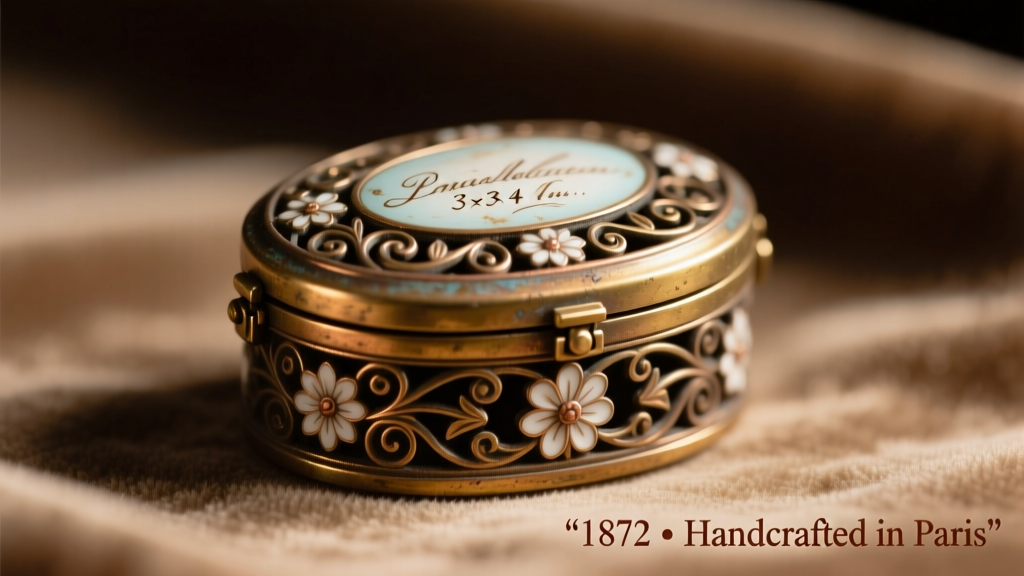
Shaker Box Oval Miniature: A 19th-Century Enamel Portrait Watch in Original 3¾-Inch Case
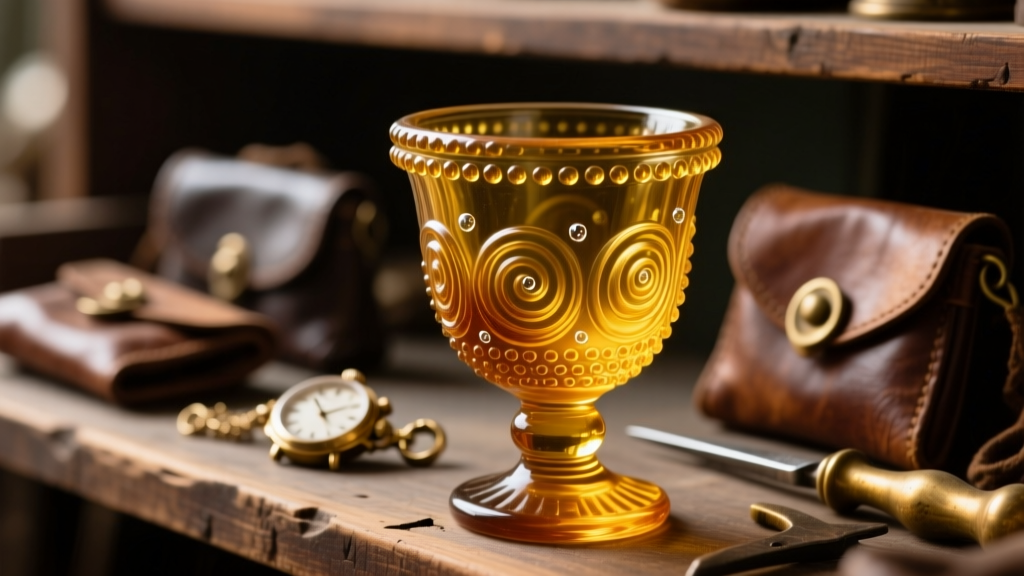
Barber Straw Yellow Amber Tone Hobnail Rolled Lip Pontil 7-Inch Glass Paperweight: A Technical & Historical Appraisal
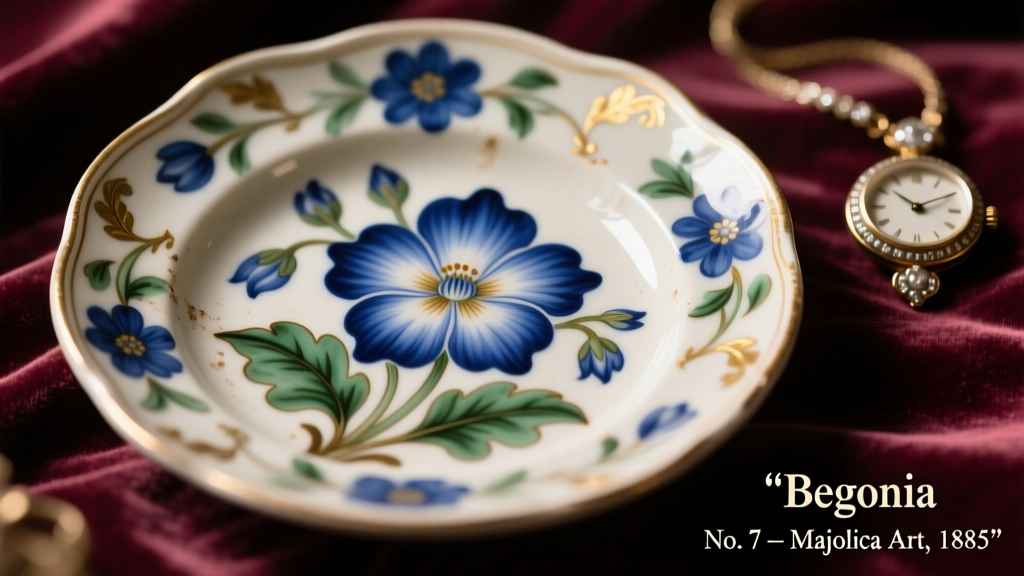
Majolica Plate 'Begonia' — An 8-Inch Victorian Masterpiece in Glazed Earthenware
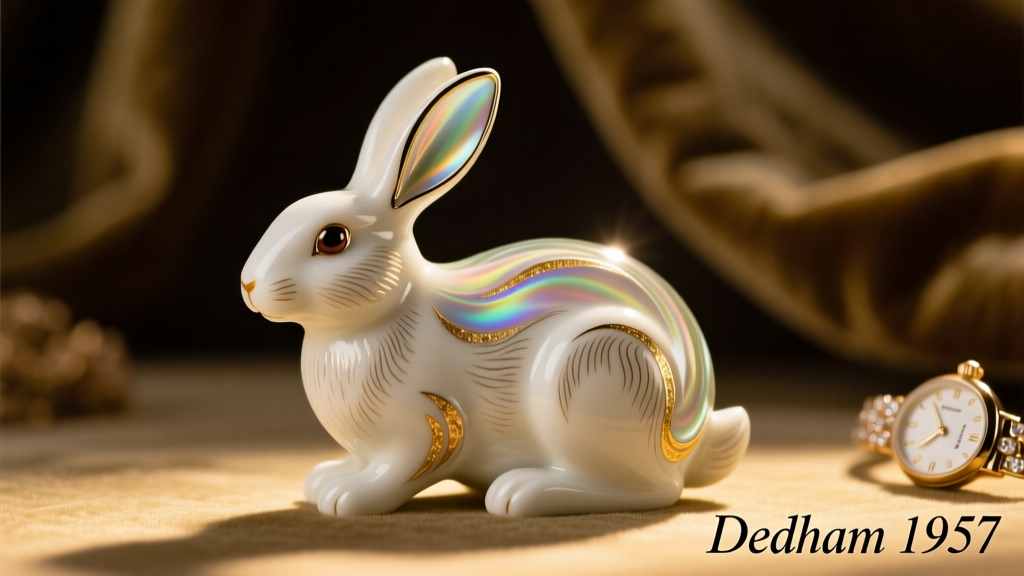
The Dedham Paperweight Rabbit: A Masterpiece of American Glass Artistry, 3½ × 1½ Inches
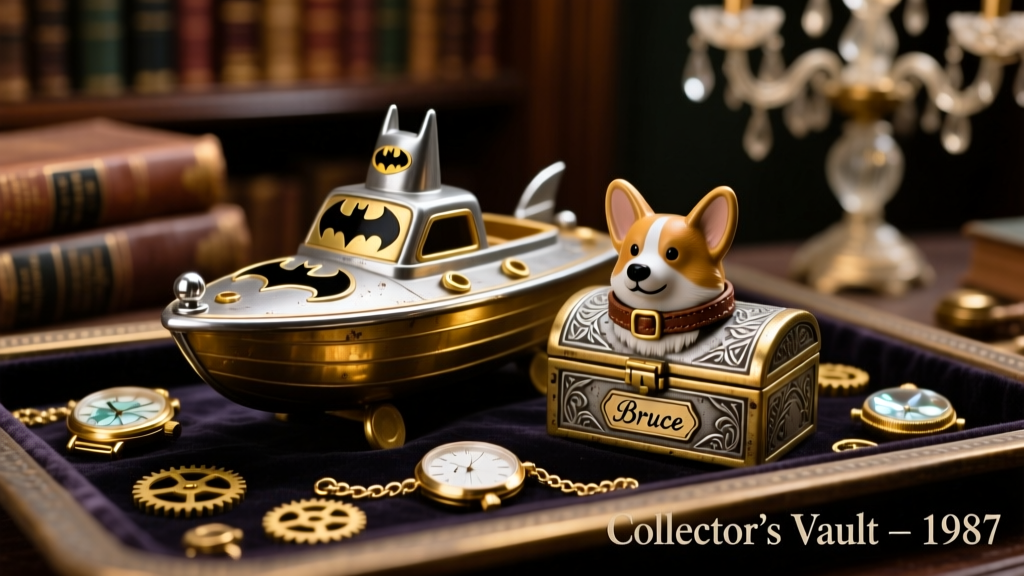
The Batman Toy Batboat Coupling Corgi Box: A Collector’s Deep Dive into Rarity, Provenance, and Packaging Integrity

William Huston: The Forgotten American Watchmaker Who Built Precision Timepieces for Tiffany & Co. and the U.S. Navy

Doll Ideal Toni: A Deep-Dive Appraisal of the 19-Inch Blonde-Wig Pink Waffle-Weave Shirt & Green-Gold Skirt Ensemble
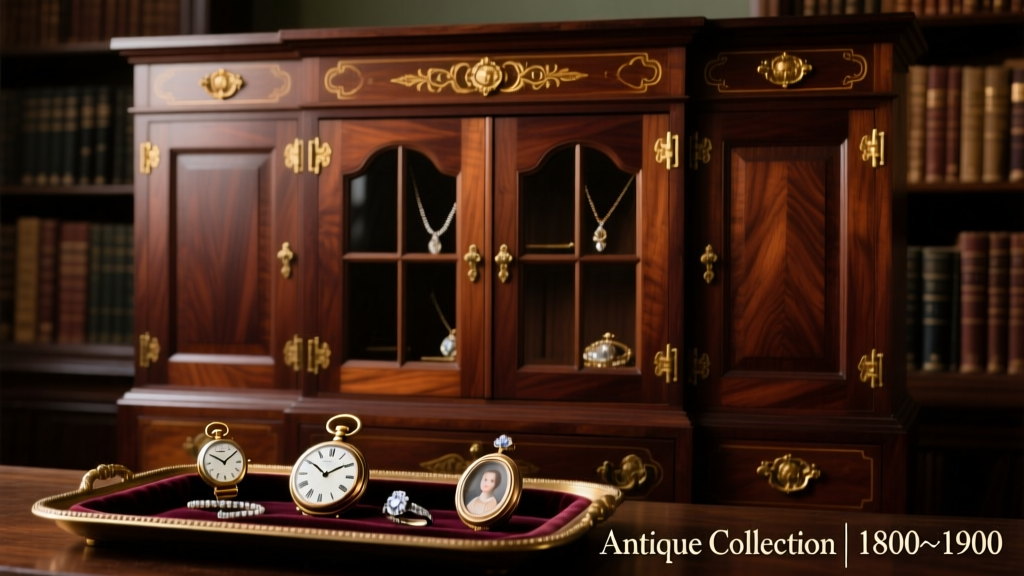
George III Mahogany Breakfront Bookcase: A 1800 English Masterpiece with Four Mullioned Doors and 92½-Inch Height
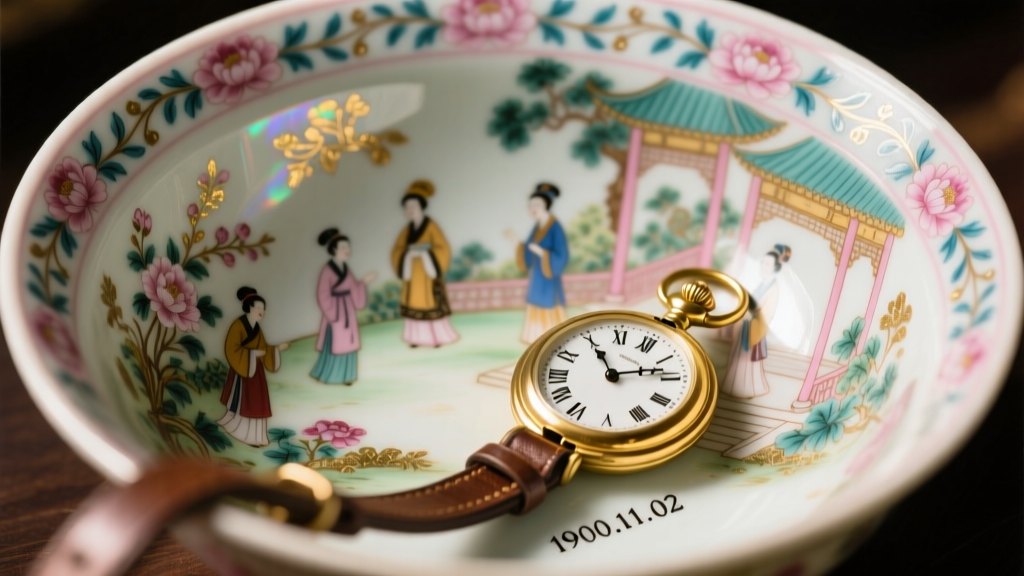
Chinese Export Bowl: Court Scenes and Floral Panels in Famille Rose, c. 1900 — A Collector’s Analysis of an 11½-Inch Porcelain Masterpiece