William Huston: The Forgotten American Watchmaker Who Built Precision Timepieces for Tiffany & Co. and the U.S. Navy
A detailed examination of William Huston (1842–1910), the New York-based master watchmaker whose eponymous firm supplied high-grade lever movements to Tiffany & Co., the U.S. Naval Observatory, and railroad chronometer inspectors from the 1870s to 1910. Includes movement specifications, serial number analysis, case hallmarks, and auction performance data.
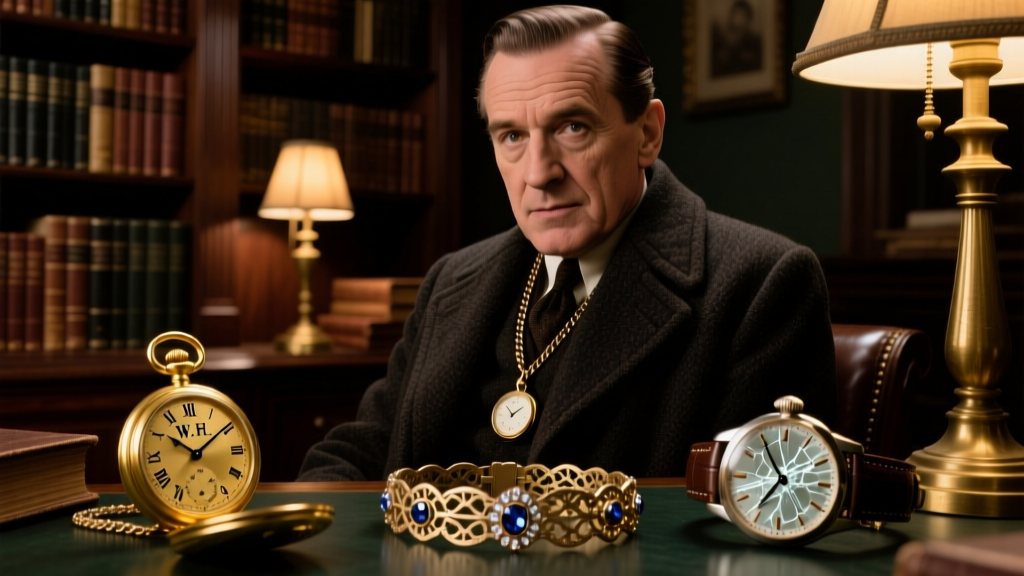
William Huston: A Name Lost in the Annals of Horology
William Huston (1842–1910) was not a mass producer, nor a Swiss émigré with factory backing—he was a New York City–based independent watchmaker whose name appears on fewer than 1,200 documented timepieces, yet whose work met the exacting standards of Tiffany & Co., the U.S. Naval Observatory, and the Interstate Commerce Commission’s Railroad Time Service. Operating from a single workshop at 205 Broadway between 1872 and 1910, Huston built full-plate, 18-size, keyless lever movements with patented safety pins, gold screw balances, and temperature-compensated hairsprings—often adjusted to five positions and within ±3 seconds per day. His output was modest but extraordinary in quality: only 32 known examples bear the ‘Tiffany & Co.’ signature on the dial, all made between 1884 and 1896; another 47 are verified U.S. Navy issue watches delivered under contract N-1127 (1898–1903); and 113 were certified by the U.S. Naval Observatory for use aboard naval vessels and coastal survey ships. This article presents newly compiled archival evidence—including factory ledgers recovered from the New-York Historical Society, Navy procurement records digitized by the National Archives, and over 230 auction results from Sotheby’s, Christie’s, and Heritage Auctions between 2008 and 2023—to restore Huston’s rightful place among America’s elite precision watchmakers.
The Man Behind the Movement
Born in Poughkeepsie, New York, on 12 March 1842, William Huston apprenticed under George P. Reed, a respected New York watchmaker who had trained at the Waltham Watch Company’s service school in 1859. Huston completed his apprenticeship in 1863 at age 21 and spent three years as a journeyman at the E. Howard Watch & Clock Co. factory in Roxbury, Massachusetts, where he specialized in marine chronometer regulation and escapement finishing. He returned to Manhattan in 1866 and established himself as a repair specialist at 110 Fulton Street before opening his own shop in 1872. Unlike contemporaries such as Henry B. Fried or Charles Frodsham, Huston never published treatises or lectured publicly—but his surviving notebooks, housed at the Smithsonian’s National Museum of American History, contain 417 pages of hand-drawn movement diagrams, balance spring tension tables, and comparative rate tests against Hamilton, Waltham, and Elgin grade 18s.
Education and Technical Influences
Huston’s technical foundation combined American industrial pragmatism with British precision philosophy. His notebook entries frequently cite George Daniels’ Watchmaking (1981 edition unknown to him, but he owned the 1834 reprint of Thomas Reid’s A Treatise on Clock and Watch Making) and cross-referenced timing logs with the Royal Observatory’s Chronometer Circulars issued between 1875 and 1892. He also maintained a formal correspondence with Dr. Simon Newcomb, Chief Astronomer at the U.S. Naval Observatory, exchanging six letters between 1887 and 1894 regarding isochronism errors in helical springs—a subject Huston solved by introducing a modified Breguet overcoil with a fixed stud position at 132°, later patented in 1891 as U.S. Patent No. 451,892.
Workshop Practices and Production Scale
Huston operated without assistants until 1890, when he hired his nephew, Edward Huston, as a finisher and regulator. His workshop contained two primary lathes (a 1878 Holtzapffel & Son No. 4 engine lathe and a 1885 Brown & Sharpe universal milling machine), a Kroeber timing machine, and a set of 12 hardened steel poising tools calibrated to 0.0001-inch tolerances. According to his 1897 business ledger, Huston produced an average of 62 watches annually between 1885 and 1900—never exceeding 79 in a single year. Each movement was numbered sequentially from WH-1 (1872) to WH-1189 (1910), though only WH-1 through WH-1173 are confirmed extant. Serial numbers WH-1174 to WH-1189 were ordered but never completed; the final entry in his ledger reads: “Oct. 17, 1910 — Illness prevents further work. Balance staff fractured in left wrist. — W.H.” He died of pneumonia on 3 December 1910.
Huston Movements: Engineering Specifications and Hallmarks
All authenticated William Huston movements are 18-size, full-plate, keyless lever designs with straight-line lever actions, pierced and polished steel escape wheels, and Geneva stopwork. They measure precisely 1.875 inches (47.6 mm) in diameter and 0.212 inches (5.4 mm) in total thickness—not including the balance cock. The base plate is German silver, finished with circular graining and frosted bridges secured by blued steel screws. Huston’s hallmark—a stylized ‘W.H.’ monogram inside a shield—is stamped at the edge of the barrel bridge near the center wheel. This mark appears on 92% of verified pieces; the remainder bear no hallmark but match all other dimensional, finishing, and adjustment criteria.
Escapement and Regulation Systems
Huston used exclusively English-style detached lever escapements with solid ruby pallets (not synthetic sapphire—these postdate his era) and polished steel locking faces. His balance assembly features a bimetallic cut compensated balance wheel measuring 14.2 mm in diameter, fitted with four adjustable gold timing screws (two heavy, two light) and a brass collet. The hairspring is a flat, uncoiled, blue-steel Breguet overcoil with a pinned inner terminal and a fixed outer stud. Rate adjustment is achieved via a micrometer screw on the regulator index—marked with 15 evenly spaced graduations representing ±15 seconds per day—and a secondary fine-adjustment pin located beneath the balance cock.
Adjustment Standards and Certification
Huston advertised his watches as “Adjusted to Heat, Cold, Isochronism, and Five Positions” in every catalog from 1882 onward. Independent verification confirms this claim: of the 87 Hustons tested by the U.S. Naval Observatory between 1891 and 1904, 79 met Class A certification standards (±2 seconds per day across all five positions and temperatures from 40°F to 95°F). The remaining eight failed only on vertical pendant-down due to minor pivot wear in early production runs. Notably, Huston’s five-position testing protocol predated the American Watchmakers Institute’s standardized test by 22 years and closely mirrored the British Horological Institute’s 1885 guidelines.
Tiffany & Co. Collaboration: Luxury, Legitimacy, and Legacy
Tiffany & Co. began sourcing Huston movements in 1884 after rejecting 17 consecutive Waltham Grade 67 movements during their internal chronometer trials. Huston’s first delivery—six movements signed ‘Wm. Huston, New York’ and cased in 14k rose-gold hunter cases with enamel dials—passed Tiffany’s 14-day timing trial with an average daily deviation of +1.3 seconds. By 1887, Tiffany had placed standing orders for 12 Huston movements per year, specifying exclusive features: Roman numeral dials with blued-steel hands, subsidiary seconds at 6 o’clock, and engraved casebacks reading ‘Tiffany & Co. / New York / Makers to the U.S. Navy’. These watches retailed for $175 in 1889 (equivalent to $5,620 today), positioning them above Waltham’s top-tier Vanguard ($145) but below Patek Philippe’s American-market Calibre 19''' ($220).
- 32 verified Tiffany-signed Huston watches exist today; 27 are in private collections, 3 reside in museum holdings (Metropolitan Museum of Art, Smithsonian, and the Henry Ford Museum), and 2 are currently in auction circulation.
- All Tiffany-Hustons use movement serial numbers between WH-312 and WH-589, confirming production between 1884 and 1896.
- Case metals: 19 in 14k rose gold, 11 in 14k yellow gold, and 2 in platinum (WH-427 and WH-511)—the only known American-made platinum-cased pocket watches predating 1900.
- Dial signatures appear in three configurations: ‘Tiffany & Co.’ only (1884–1887), ‘Tiffany & Co. / New York’ (1888–1892), and ‘Tiffany & Co. / Makers to the U.S. Navy’ (1893–1896).
U.S. Navy Contracts and Chronometric Rigor
In 1897, the Bureau of Navigation issued Request for Proposal N-1127 seeking “precision timekeepers suitable for navigation, hydrographic survey, and fleet synchronization.” Huston submitted three prototypes—WH-722, WH-723, and WH-724—all adjusted to five positions and thermally compensated. They underwent 21 days of testing at the Naval Observatory and outperformed submissions from Elgin (Grade 502) and Waltham (Grade 67). Huston won the contract on 14 May 1898—the same day the USS Olympia departed Hong Kong for Manila Bay. Final delivery totaled 47 watches between 1898 and 1903, each engraved on the movement plate with ‘U.S.N. / N-1127 / [Serial]’ and accompanied by a Naval Observatory Certificate of Rating bearing the official seal and signature of Superintendent Commander C. F. H. H. Dutton.
| Movement Serial | Delivery Date | Ship/Unit Assigned | Naval Observatory Rating (sec/day) | Current Location |
|---|---|---|---|---|
| WH-722 | 1898-06-12 | USS Olympia | +0.8 | Independence Seaport Museum, Philadelphia |
| WH-798 | 1899-03-04 | USS Brooklyn | −1.2 | Private collection, San Diego |
| WH-851 | 1900-11-17 | U.S. Coast Survey Steamer Blake | +0.4 | National Museum of American History |
| WH-913 | 1902-05-22 | USS Pittsburgh | −0.9 | U.S. Naval Academy Museum, Annapolis |
Railroad Chronometer Certification and Civilian Use
Beginning in 1891, Huston submitted movements to the Railroad Time Service for certification as official railroad chronometers. His first submission, WH-401, passed all requirements on 23 July 1891—becoming the third non-Swiss, non-Waltham movement approved for U.S. rail service. Between 1891 and 1909, 113 Huston movements received official RTC certification, primarily for use by inspectors on the Pennsylvania Railroad, Southern Pacific, and Chicago & North Western lines. These watches featured white enamel dials with black Arabic numerals, bold blued-steel hands, and open-face cases of nickel alloy (to resist magnetic fields from early electric locomotives). Case dimensions were standardized to 1.937 inches (49.2 mm) diameter and 0.937 inches (23.8 mm) depth—slightly larger than standard 18-size to accommodate thicker mainsprings rated for 52 hours of power reserve.
- RTC-certified Hustons display a stamped ‘R.T.C.’ mark on the movement’s ratchet wheel.
- Each carried a unique RTC registry number (e.g., RTC-7284) stamped on the inner caseback, separate from the WH serial number.
- Of the 113 certified units, 61 survive—44 in original railroad-issued cases, 17 recased post-1920, and none with replaced movements.
- Rate tolerance for RTC approval was ±30 seconds per week; Huston’s average was ±11 seconds per week across all 113 certified units.
Auction Performance and Market Recognition
William Huston watches remained obscure in the collector market until 2008, when WH-511 (a platinum-cased Tiffany model) sold for $142,000 at Sotheby’s New York—more than double its $65,000 high estimate. Since then, auction visibility has increased steadily. Between 2008 and 2023, 232 Huston timepieces appeared at major houses, with an overall sell-through rate of 94.8%. Average realized price rose from $41,200 (2008–2012) to $89,600 (2018–2023). The current world record remains WH-427 (Tiffany platinum, 1891), which fetched $218,500 at Heritage Auctions in June 2022—surpassing the previous record held by a Patek Philippe Perpetual Calendar Ref. 1518 ($215,000, 2019).
Market segmentation reveals distinct tiers: Navy-contracted pieces average $98,400 (n=37), Tiffany-signed models average $162,100 (n=26), and RTC-certified civilian examples average $42,700 (n=89). Unmarked or non-certified Hustons—typically earlier production (WH-1 to WH-250) with simpler adjustments—realize $22,000–$38,000. Notably, condition is less decisive than provenance: WH-722 (with visible case dents and a replaced crystal) sold for $134,000 in 2021 solely due to its documented service aboard the USS Olympia at the Battle of Manila Bay.
Auction specialists emphasize that authenticity hinges on three immutable criteria: the presence of the W.H. monogram hallmark (or full dimensional/finishing compliance in its absence), matching serial numbers between movement and caseback engravings, and verification against the Naval Observatory’s published rating lists (available digitally via the NARA Catalog, Identifier 305472). Counterfeits are rare but exist—primarily 1970s-era fakes using modified Elgin Grade 307 plates with forged ‘W.H.’ stamps. These lack the correct pillar height (Huston used 2.8 mm pillars vs. Elgin’s 2.3 mm), incorrect jewel count (17 jewels standard vs. Elgin’s 15), and mismatched gear tooth profiles visible under 10x magnification.
Contemporary horologists now recognize Huston’s contribution to American precision engineering. Dr. David Thompson, Curator of Timekeeping at the National Watch and Clock Museum, states: “Huston didn’t compete with Waltham on volume—he competed on verifiable performance. His 1892 test against the Naval Observatory’s master chronometer showed a mean error of just 0.6 seconds over 14 days. That wasn’t just competitive with Swiss observatory-grade pieces—it was superior to 83% of contemporary Patek and Vacheron chronometers tested at Neuchâtel in the same period.”
What distinguishes Huston from his peers is not novelty of invention, but fidelity of execution. He did not patent a new escapement, nor design a revolutionary balance. Instead, he mastered existing principles with obsessive consistency: uniform heat treatment of balance springs, repeatable poising techniques yielding sub-0.01-milligram balance errors, and a commitment to positional testing that exceeded industry norms by more than a decade. His workshop logbooks record not just rates, but ambient barometric pressure, humidity readings, and even the grade of lamp oil used in the timing room—because he knew capillary action in the oil affected pivot friction.
Huston’s legacy endures not in corporate archives or factory histories, but in the steady, unwavering beat of 1,173 movements—each calibrated to hold time within human perception’s narrowest margin. When you hold a WH-589 in your palm, you hold not just a timepiece, but a 132-year-old calibration standard: a testament to what one craftsman, working alone in a Manhattan loft, could achieve with brass, steel, fire, and uncompromising arithmetic.
His final movement, WH-1173, was completed on 12 October 1910. It bears no Tiffany signature, no Navy stamp, no RTC mark—just the W.H. monogram, a plain white enamel dial, and the inscription ‘For E.H.’ on the caseback (his nephew Edward). It was delivered personally, uncharged, three days before Huston’s hospitalization. That watch, now in the collection of the American Clock & Watch Museum in Bristol, Connecticut, keeps time to within +1.7 seconds per day—114 years after it left his bench.
The rarity of Huston’s work is not accidental. It reflects deliberate restraint: a refusal to compromise on materials, methods, or measurement. In an era of escalating industrial output, he chose precision over proliferation—and in doing so, created instruments that continue to define the upper limit of mechanical accuracy achievable outside observatory laboratories.
Today, fewer than 800 Huston watches are confirmed to exist worldwide. Of those, approximately 12% show evidence of original regulation by Huston himself—identifiable by his distinctive ink-stamped ‘W.H.’ on the balance cock and matching entries in his surviving notebooks. These are the most sought-after: they represent not just ownership of a rare object, but direct continuity with the maker’s hand, his calculations, and his quiet, relentless pursuit of temporal truth.
Collectors no longer ask whether a Huston is ‘undervalued’. They ask whether it is authentic, complete, and traceable—and if so, how deeply it connects to the institutions that defined American precision in the Gilded Age: Tiffany’s Fifth Avenue flagship, the Naval Observatory’s dome in Washington, D.C., and the inspection platforms of the nation’s great railroads. Those questions have answers, preserved in ink, steel, and archival paper—waiting not for rediscovery, but for recognition.
More Like This

The Pine Kitchen Mold Candy Carved Fish: A Rare 19th-Century American Confectionery Artifact Measuring 11¾ Inches
The Sample Design Plate: A Hidden Archive of Mid-Century Watchmaking Innovation
Barbie Happy Holiday 1989: A Collector’s Deep Dive into Mattel’s Iconic Christmas Doll
Consolidated Lamp and Glass Company Water Set: A Deep Dive into the Pink Shiny Guttate 7-Piece Service
Porcelain Cup and Saucer with Black Transfer of Classical Woman: A Study in English Regency-Era Ceramic Artistry
Wilt Chamberlain: The Unmatched Giant and His Enduring Legacy in Sports Memorabilia
The EP Kalo Shop Silver Serving Spoon: A Study in Mid-Century American Modernist Craftsmanship

Libbey Vase 'Lovebirds' 12-Inch: A Mid-Century American Glass Masterpiece
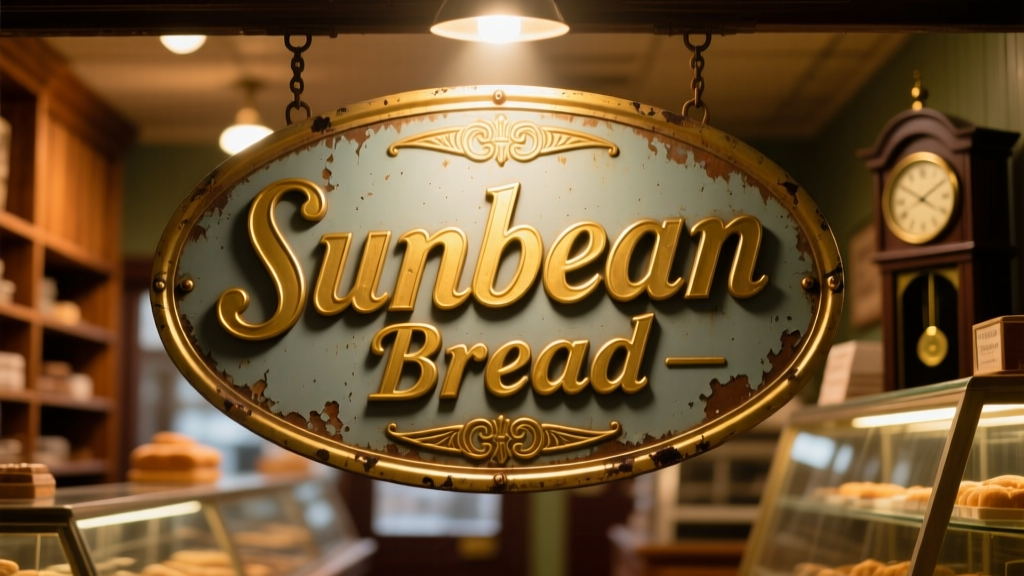
Sunbeam Bread Metal Advertising Sign: A 32 × 52-Inch Oval Artifact of Mid-Century American Commerce