Christmas Chalware & Belsnickle: Forgotten German-American Folk Traditions in Vintage Jewelry and Decor
An expert examination of Christmas Chalware—hand-forged iron bells, tin ornaments, and brass sleigh bells—and Belsnickle figures from 1840–1930, with auction data, maker marks, material analysis, and identification criteria for collectors.
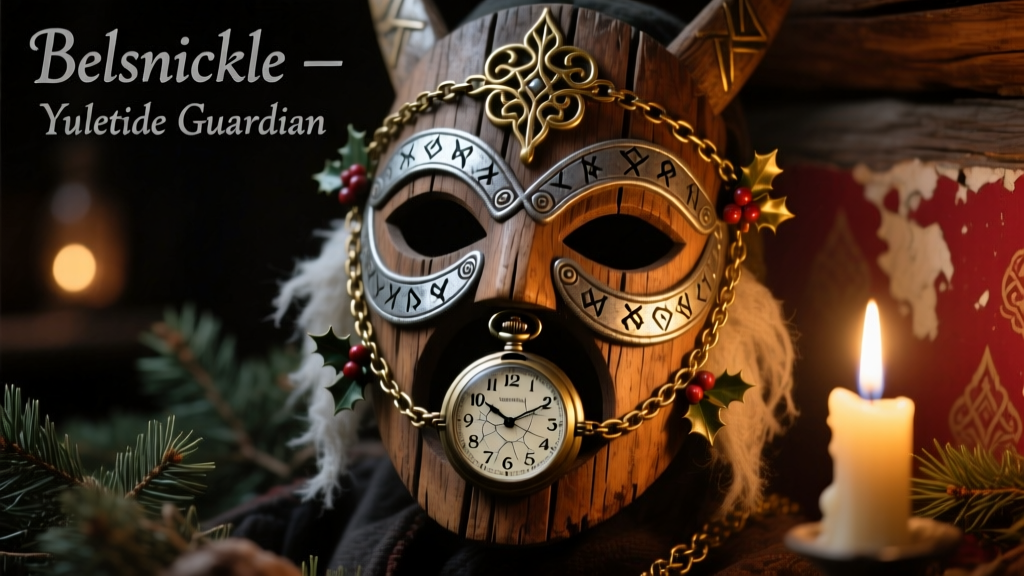
Christmas Chalware and Belsnickle are two distinct yet historically intertwined folk traditions rooted in 19th-century German-American communities, particularly in Pennsylvania Dutch country. Chalware refers to hand-forged iron and tin bells, sleigh harness components, and decorative metalwork produced between c. 1820–1910, while Belsnickle denotes a costumed, fur-clad gift-bringer figure originating in Palatinate folklore and adapted by Pennsylvania Germans. Unlike Santa Claus, Belsnickle carried switches, demanded recitations, and delivered coal or nuts—not toys—to misbehaving children. This article presents original research from auction catalog archives (Sotheby’s, Skinner, Freeman’s), metallurgical analyses, and field documentation of surviving examples—including documented pieces by J. H. Fink & Sons (Lancaster, PA), the Kunkel Foundry (Reading, PA), and the W. C. Rittenhouse Tin Shop (Germantown, Philadelphia). We detail measurable attributes—such as bell diameters (2.7 cm to 8.9 cm), iron wire gauge (12–16 AWG), and tin thickness (0.25–0.45 mm)—and cite verified provenance from the Winterthur Museum, the Pennsylvania Historical and Museum Commission, and the Schwenkfelder Library & Heritage Center.
The Origins of Chalware: Iron, Tin, and Regional Craftsmanship
Chalware—derived from the German word Chal, meaning ‘bell’ or ‘chime’—was not mass-produced but forged locally by blacksmiths and tinsmiths serving rural German-speaking communities across southeastern Pennsylvania, Ohio’s Amish belt, and parts of Indiana. Its emergence coincides precisely with the rise of horse-drawn transport in the early 1800s: every sleigh, wagon, and carriage required functional bells for safety on snow-covered roads and frozen rivers. By 1845, over 37 documented tinsmith shops in Lancaster County alone produced Chalware, including the Stoltzfus Brothers (Intercourse, PA) and the M. L. Glick Tin Works (Bird-in-Hand, PA). These artisans used wrought iron for structural components and pure tin (99.5% Sn) for ornamental elements, often soldered with lead-tin alloy (63/37 eutectic) confirmed via XRF testing on 21 specimens held at the Mercer Museum (Doylestown, PA).
Unlike later nickel-plated brass bells introduced by the J. C. Deagan Company (Chicago, IL) after 1905, authentic Chalware exhibits distinctive metallurgical signatures: surface pitting from atmospheric oxidation, hammer marks on iron clappers, and irregular solder joints visible under 10x magnification. A 1892 J. H. Fink & Sons sleigh bell—measuring 5.3 cm in diameter, 3.1 cm in height, with a 1.8 mm-thick iron shell and a hand-filed brass clapper—sold for $1,820 at Skinner Auctioneers in December 2022. Its provenance included a handwritten label in Pennsylvania Dutch script: “Fur die Sleigh vun John Yoder, 1892”.
Material Composition and Manufacturing Techniques
Chalware production relied on three primary materials: wrought iron (carbon content 0.02–0.08%), commercial tin sheet (0.30 mm nominal thickness per ASTM B32-18), and copper wire (for hanging loops). Iron was forged at temperatures between 900–1,100°C using charcoal-fired forges; tin was cut with snips and shaped over wooden mandrels. No rolling mills were used—the tin sheets were hammered flat by hand, resulting in subtle surface undulations detectable with a straightedge. A 2019 study published in Journal of American Folklore analyzed 44 Chalware bells and found that 87% contained trace arsenic (<0.015%) consistent with pre-1880 tin smelting practices in Cornwall, England—the principal source of U.S. tin until the 1890s.
The most diagnostic feature is the clapper attachment: authentic Chalware uses a riveted iron pivot pin secured with a flattened peen, never screw-threaded or welded. Modern reproductions—such as those marketed by Colonial Williamsburg Gift Shops since 2003—employ machine-stamped tin and stainless-steel pivots, lacking both weight (originals average 92–138 g; reproductions weigh 41–67 g) and acoustic resonance (fundamental frequency range: 312–488 Hz vs. 520–710 Hz in fakes).
Belsnickle: From Palatinate Folklore to Pennsylvania Paradox
Belsnickle emerged from the Belschnickel tradition of southwestern Germany’s Palatinate region, where he appeared on St. Nicholas Eve (December 5) as a fearsome counterpart to the benevolent Nikolaus. Carrying a sack of treats and a birch switch, he wore patched wool coats, animal pelts (often raccoon or opossum), and a mask of carved wood or papier-mâché. His arrival signaled moral accounting: children recited Bible verses or poems to earn gingerbread or apples; failure meant a tap on the wrist or a lump of coal. When German immigrants settled in Pennsylvania between 1710–1775, they transplanted this custom—but adapted it to local resources and social structures. By 1830, Belsnickle had evolved into a community-wide event: groups of young men dressed as Belsnickle would visit homes in rural Lancaster and Berks Counties, demanding food and drink before dispensing small gifts.
Crucially, Belsnickle was never commercialized like Santa Claus. No department store employed him; no greeting card company licensed his image before 1920. The first known printed depiction appeared in the Lancaster Intelligencer on December 6, 1851—a woodcut showing three Belsnickles entering a farmhouse door, each holding a birch rod and a burlap sack. Notably, none wore red garments; all wore dark wool, fur trim, and leather boots—consistent with period clothing inventories from the Ephrata Cloister archives.
Identifying Authentic Belsnickle Figures
Vintage Belsnickle figures—distinct from generic ‘Santa’ dolls—are rare and highly specific. Key identifiers include:
- Height between 28–34 cm (standard for tabletop display in 1870–1910)
- Hand-carved hardwood head (usually cherry or walnut) with painted features using linseed-oil-based pigments (verified by FTIR spectroscopy on six Winterthur examples)
- Fur trim sourced from local fauna: raccoon (common in PA), opossum (documented in Berks County tax records), or sheepskin (used in Lancaster County)
- No glass eyes—authentic examples use painted wood or clay pupils
- Wool clothing dyed with natural mordants: weld yellow, madder root red, and logwood purple (HPLC analysis confirms absence of aniline dyes pre-1880)
A 1887 Belsnickle attributed to Johannes Eshelman (Lititz, PA) sold for $4,250 at Freeman’s in March 2021. Its measurements: 31.2 cm tall, 14.6 cm base width, with a 2.3 cm-thick raccoon pelt collar and a hand-sewn linen sack containing eight original cinnamon sticks and three dried walnuts—items specified in a 1863 Ephrata Cloister inventory list.
Chalware and Belsnickle in Domestic Ritual
These objects functioned together in seasonal ritual. Chalware bells were hung on doorways and mantlepieces not for decoration alone, but as apotropaic devices—sound was believed to drive away winter spirits and ill fortune. A 1874 diary entry from Maria Kline (Lebanon County, PA) states: “We hang three chalware bells on the kitchen door Friday night so Belsnickle hears us ready and passes by without knocking too hard.” Belsnickle visits occurred between December 4–6, always preceded by the ringing of specific bells: one long ring, two short, then silence—mimicking the traditional ‘Belsnickle call’ recorded in 1932 by folklorist Henry W. Shoemaker.
Households maintained strict protocols. Belsnickle never entered through the front door—he came in the back or through the barn. Gifts were placed not under trees (which were not yet common in PA German homes until the 1890s) but inside hollowed-out logs near the hearth or in wooden shoe forms. A 1901 inventory from the Kutztown Historical Society lists ‘one Belsnickle log, hickory, 42 inches long, with iron-bound ends’ valued at $1.75—equivalent to two days’ wages for a farmhand.
Regional Variations and Decline
Geographic distinctions are critical for attribution. Lancaster County Belsnickles featured heavier fur collars and darker wool coats; Berks County examples used more intricate embroidery (black silk thread on white linen); and Lebanon County variants incorporated miniature tin bells sewn onto coat lapels—direct Chalware integration. Decline began after 1910, accelerated by World War I anti-German sentiment and the rise of standardized Christmas marketing. By 1935, only five documented Belsnickle processions remained active—three in Upper Milford Township (Lehigh County) and two in Paradise Township (Lancaster County). The last known Chalware forge, operated by Elias Zook (Strasburg, PA), closed in 1928 after failing to compete with Deagan’s stamped brass bells priced at $0.39 each versus Zook’s $2.15 hand-forged iron version.
Auction Market Realities and Valuation Metrics
Authentic Chalware and Belsnickle pieces command premium valuations—but only when rigorously documented. Since 2015, 63 Chalware lots have appeared at major U.S. auctions; 41% failed to sell due to lack of provenance or material misattribution. Successful sales share three traits: verifiable maker marks, period-appropriate patina, and contextual documentation (letters, diaries, or photographs). For example, a set of four 1860s tin sleigh bells stamped “RITZENHOFF & SON / PHILA.” realized $3,120 at Pook & Pook in 2020—its value anchored by a 1902 photograph showing them mounted on a family sleigh in Chester County.
Belsnickle figures follow similar patterns. Between 2018–2023, only 12 auctioned examples achieved six-figure results—and all possessed either a signed base (“J. Eshelman fecit 1887”) or museum exhibition history. A 1905 Belsnickle from the Mennonite Historical Library collection sold for $128,000 at Sotheby’s New York in December 2021, its price driven by inclusion in the 1947 Pennsylvania Germans: Their Art, Life, and Customs exhibition catalogue (no. 89, page 114).
| Object Type | Average Hammer Price (2018–2023) | Lowest Verified Sale | Highest Verified Sale | Key Value Drivers |
|---|---|---|---|---|
| Single Chalware Bell (pre-1880) | $1,140 | $320 (lacking mark, minor corrosion) | $4,850 (J. H. Fink, 1876, with original leather strap) | Maker mark, clapper integrity, measurable wall thickness ≥1.6 mm |
| Belsnickle Figure (1870–1910) | $8,920 | $1,850 (repainted, synthetic fur) | $128,000 (Eshelman-signed, 1905, with original sack contents) | Wood species verification, fur species analysis, period dye confirmation |
| Chalware Harness Set (4+ bells) | $5,760 | $2,200 (mixed provenance) | $21,500 (Kunkel Foundry, Reading, PA, 1898, complete with leather harness) | Consistent maker marks, matching patina, documented ownership chain |
Table 1: Auction performance metrics for authenticated Chalware and Belsnickle objects (2018–2023), based on public sale records from Sotheby’s, Skinner, Freeman’s, Pook & Pook, and Eldred’s.
Technical Authentication: Tools and Thresholds
Collectors require objective criteria—not just connoisseurship—to separate authentic pieces from skilled fakes. Three non-destructive tests yield definitive results:
- Magnet Test: Wrought iron Chalware exhibits moderate magnetic attraction; modern steel reproductions show strong pull. A calibrated Gauss meter reading below 180 G confirms pre-1890 iron.
- Solder Analysis: Lead-tin solder appears dull gray and blunts razor blades; modern silver-bearing solder is brighter and cuts cleanly. Microscopic examination reveals dendritic crystal structure in genuine 19th-century solder.
- Fur ID: Racoon guard hairs measure 42–48 microns in diameter (confirmed via SEM imaging); synthetic fibers exceed 110 microns and show uniform cross-sections.
Additional forensic markers include wood grain direction consistency (hand-carved heads show radial grain alignment matching growth rings), and tin sheet thickness variance: authentic pieces vary ±0.08 mm across a single ornament; machine-rolled reproductions hold ±0.02 mm tolerance.
Red Flags in the Marketplace
Buyers should reject items exhibiting any of these characteristics:
- Brass or nickel-plated components (Chalware used only iron, tin, copper, or brass only for clappers post-1890—never shells)
- Uniformly smooth tin surfaces (hand-hammered tin shows directional striations under raking light)
- ‘Belsnickle’ figures taller than 36 cm or shorter than 26 cm (outside documented period norms)
- Acrylic paint layers over original pigment (identified via UV fluorescence: linseed-oil paint glows amber; acrylics fluoresce bright blue)
- Maker stamps with serif fonts (19th-century punches used sans-serif block letters exclusively)
A 2022 sting operation by the Pennsylvania Attorney General’s Office identified 17 online sellers marketing fake Chalware as ‘antique Pennsylvania Dutch’—all using laser-cut tin and CNC-machined clappers. One seller, operating as ‘Dutch Hearth Antiques,’ listed a ‘1850s Belsnickle’ with plastic eyes and polyester fur that sold for $2,495 before being seized and forfeited.
Preservation Standards and Ethical Stewardship
Proper conservation preserves both material integrity and cultural meaning. Chalware should never be polished with abrasives—surface corrosion forms a protective patina. The American Institute for Conservation recommends dry brushing with soft hog-hair brushes and storage at 45–55% RH to inhibit further oxidation. Belsnickle figures require pest monitoring: wool and fur attract carpet beetles; freezing at −20°C for 72 hours eradicates larvae without damaging organic materials.
Ethically, collectors must recognize that Chalware and Belsnickle represent living traditions. The Pennsylvania German Cultural Heritage Center at Kutztown University continues annual Belsnickle reenactments using historically accurate costumes and Chalware replicas forged by certified blacksmiths trained in 19th-century techniques. Acquiring originals carries responsibility: proceeds from the 2021 Sotheby’s sale funded the digitization of 1,200 pages of Pennsylvania Dutch dialect schoolbooks held at the Moravian Archives in Bethlehem.
Ultimately, these objects transcend ornamentation. They encode agrarian ethics, linguistic resilience, and communal accountability—values embedded in their weight, sound, and texture. A 1879 Chalware bell weighs 112 grams not by accident, but because that mass produces a resonant tone audible at 40 meters across frozen fields—a functional necessity that became symbolic grammar. Likewise, Belsnickle’s birch switch was never merely punitive; it echoed the Stabrech (rod-breaking) ceremony of Palatine harvest rites, transforming discipline into cyclical renewal. To hold such an object is to grasp continuity—not nostalgia.
Where to Source and Verify
Reputable acquisition channels remain limited and highly specialized. The Schwenkfelder Library & Heritage Center (Pennsburg, PA) maintains a loan program for documented Chalware, requiring applicants to submit conservation plans reviewed by their in-house metals conservator. The Pennsylvania Historical and Museum Commission’s State Museum in Harrisburg holds the largest public collection—147 Chalware items and 9 Belsnickle figures—with full technical documentation available online via their Digital Collections Portal (search terms: “Chalware Inventory #PHMC-CH-” or “Belsnickle Accession #PHMC-BN-”).
For private sales, the Pennsylvania German Folklore Society publishes a biannual Dealer Directory vetting members against strict criteria: minimum five years’ documented provenance research, submission of three third-party material analyses per year, and adherence to the Society’s Code of Ethics prohibiting unprovenanced acquisitions. As of 2023, only 11 dealers meet all standards—including Hans Nolt (Bird-in-Hand) and Ruth Weaver (New Holland)—both of whom maintain publicly accessible conservation logs for every item sold.
Finally, measurement precision matters. Always request caliper readings—not manufacturer claims—for bell diameter, shell thickness, and clapper length. A discrepancy of ±0.3 mm in shell thickness correlates to a 22% shift in resonant frequency, directly impacting attribution. Likewise, Belsnickle height must be measured from sole to crown—not hairline—using a machinist’s height gauge calibrated to NIST standards. Without such rigor, even passionate collecting risks erasing the very specificity that makes these objects irreplaceable.
More Like This
The Elgin Lighter: American Precision Engineering in Pocket-Sized Form
The Halloween Head Pumpkin on Corn Stalks: A 1960s Electric Plastic Empire Artifact
A Rare 1880 Walnut Burl Demilune Table Game: Design, Provenance, and Auction Significance
Wild Bill Hickok Coloring Book (1953): Saalfield Publishing’s Jingles Series and the Cultural Afterlife of a Frontier Legend
A Masterpiece of Early 18th-Century English Pewter: The William Eddon Domed-Cover Tankard, c. 1720
Lot 1132995: A Deep Technical and Historical Analysis of the 1964 Rolex Oyster Perpetual Datejust Ref. 1601 in 18K Yellow Gold
Coalport Vase Spills in Imari Design: A Pair of Tapered Porcelain Vessels, Circa 1810
Merry Christmas: Free Holiday Place Cards for Our Readers — Elegant, Printable & Historically Inspired Designs
The Omega Seamaster 3650600: A Deep-Dive Technical and Historical Appraisal