Chinese Planters: History, Craftsmanship, and Collectibility in Antique and Vintage Decor
A detailed examination of Chinese planters—from Ming dynasty porcelain to 20th-century export wares—covering materials, regional kilns, hallmark features, market values, and authentication essentials for collectors and interior designers.
Origins and Historical Context
Chinese planters are functional ceramic vessels rooted in over two millennia of horticultural and aesthetic tradition. Unlike Western flowerpots designed primarily for utility, Chinese planters evolved as integral components of scholarly gardens, imperial courtyards, and domestic altars—serving both botanical and symbolic purposes. Earliest examples date to the Han dynasty (206 BCE–220 CE), where low-fired earthenware containers with simple incised bands held medicinal herbs and dwarfed trees. By the Tang dynasty (618–907 CE), glazed stoneware planters—often in celadon or sancai (three-color) glazes—appeared in tombs and elite residences, reflecting the era’s cosmopolitan trade networks and Buddhist-inspired garden philosophy.
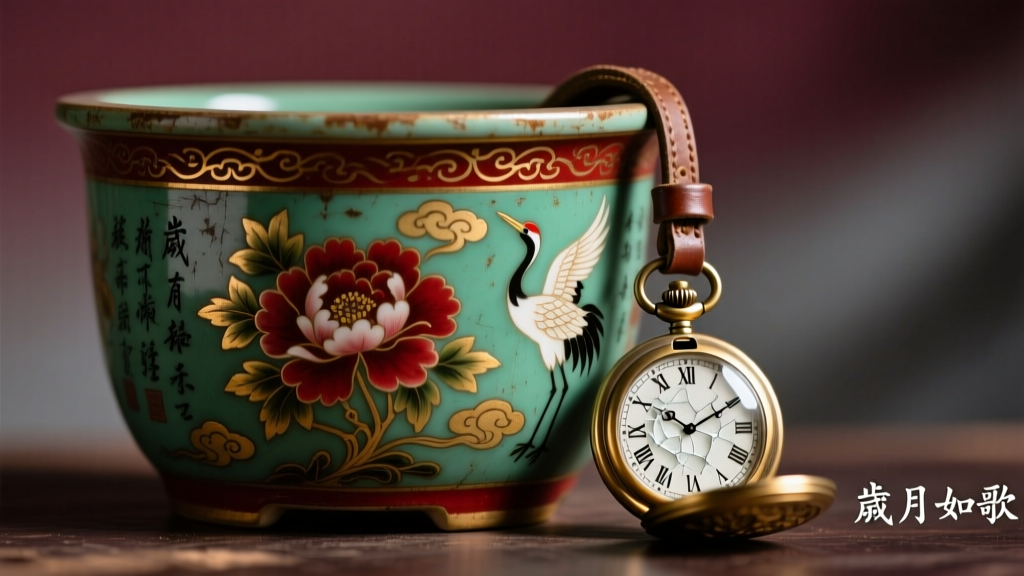
The Song dynasty (960–1279 CE) marked a turning point: kilns such as Longquan, Jianyao, and Yaozhou produced refined, thick-walled planters prized for their subtle glaze variations and tactile presence. These were rarely marked but often bore inscribed dates or workshop stamps in underglaze iron-brown ink. During the Ming dynasty (1368–1644), planters became standardized in form—typically cylindrical or slightly flared with rounded shoulders—and increasingly featured cobalt-blue underglaze decoration, including auspicious motifs like peonies, dragons, and the Eight Immortals. Export demand surged in the late Ming, prompting specialized production at Jingdezhen for European markets, where planters were adapted in scale and proportion to suit Western conservatories.
The Qing dynasty (1644–1912) expanded stylistic diversity: Kangxi reign (1662–1722) planters favored famille verte enamel palettes; Yongzheng (1723–1735) introduced delicate famille rose with precise brushwork; Qianlong (1736–1795) embraced rococo-inspired gilding and shaped forms—including lotus-petal rims and ‘ruyi’-bordered bases. By the late 19th century, mass-produced export wares from Guangdong and Foshan targeted American and British department stores, often bearing factory marks like ‘CHINA’ in English script or stamped cartouches reading ‘Kwangtung’ or ‘Nanking.’
Materials and Manufacturing Techniques
Authentic Chinese planters rely on region-specific clays and firing technologies. Jingdezhen, the ‘Porcelain Capital,’ utilized kaolin-rich ‘petuntse’ clay fired at 1,300–1,400°C in dragon kilns to produce translucent, resonant porcelain. Longquan kilns in Zhejiang employed iron-rich local clay fired in reduction atmospheres to yield jade-like celadon glazes—characterized by crackle patterns known as ge yao (‘ge ware’) when intentionally exaggerated. Dehua kilns in Fujian specialized in pure-white, high-firing ‘blanc de Chine’ porcelain, often used for small scholar’s planters holding miniature pine or bamboo.
Stoneware planters—common in northern China—were typically made from Shandong or Hebei clays, thrown on kick wheels and fired in mantou kilns at 1,200°C. These exhibit dense, non-porous bodies ideal for outdoor use and resist frost better than porcelain. Glazes included temmoku (iron-black), oil-spot (iridescent brown spots), and Jun ware’s opalescent lavender-blue, achieved through copper oxide and controlled cooling cycles.
Key Material Signatures
- Porcelain: Ring test produces clear, sustained tone; weight-to-volume ratio averages 2.2–2.4 g/cm³; translucency visible at rim thicknesses ≤3 mm
- Celadon Stoneware: Matte surface with micro-crackle; specific gravity 2.5–2.7 g/cm³; glaze thickness 0.8–1.2 mm
- Blanc de Chine: Slightly creamy undertone under daylight; density 2.35 g/cm³; often unglazed footring with ‘rice-grain’ texture
Modern reproductions frequently misrepresent these properties: contemporary Jingdezhen imitations may achieve visual fidelity but lack the mineral complexity of historic kaolin, resulting in lower resonance and higher thermal expansion coefficients—evident in fine crazing within five years of display.
Form, Function, and Symbolism
Chinese planters were never merely containers—they encoded cosmological principles. The round shape represented heaven (tian); square bases symbolized earth (di). A typical Ming-era planter measured 22–28 cm in height with a 16–20 cm diameter opening—proportions calibrated to accommodate penjing (miniature landscapes) while maintaining structural integrity during seasonal freeze-thaw cycles. Qing dynasty examples grew more elaborate: Qianlong-period ‘double-gourd’ planters (symbolizing longevity) reached 32 cm tall with segmented chambers for separate root systems; Kangxi ‘lotus-leaf’ planters featured scalloped rims mimicking unfurled leaves and measured precisely 24.5 cm across—the number 24 signifying the solar terms in the lunar calendar.
Scholar’s planters—smaller, unglazed, and often unadorned—were used for wenshi (literati) displays: a single orchid stem in a 9-cm-high Dehua vessel conveyed restraint and moral purity. Imperial planters followed strict hierarchy: yellow-glazed examples were reserved exclusively for the Forbidden City’s inner courtyards; green glaze denoted princely residences; blue-and-white was permitted for civil officials of rank five and above.
Regional Typologies
- Jingdezhen Blue-and-White: Cobalt sourced from Persian mines until 1430s; post-1435, domestic cobalt yielded grayer tones. Typical dimensions: 26 cm H × 18 cm D (rim), 12 cm base diameter
- Longquan Celadon: ‘Mushroom-cap’ lids common; glaze thickness peaks at shoulder (1.1 mm), thins near foot (0.4 mm). Average weight: 3.8 kg
- Yixing Zisha (Purple Clay): Unglazed, hand-built, burnished surfaces. Used exclusively for bonsai. Signature mark: ‘Shi Dabin’ seal (early Ming) or ‘Chen Mingyuan’ (late Ming)
Export Markets and Colonial Adaptations
From the 1680s onward, Dutch East India Company (VOC) records document shipments of Chinese planters to Amsterdam, Batavia, and Cape Town. VOC inventories list ‘12 large porcelain flower pots, painted with birds and flowers, each valued at 12 guilders’—a sum equivalent to three months’ wages for a skilled craftsman. British East India Company ledgers from 1742 note ‘144 pieces of Canton-made planters, assorted sizes, bound for Spitalfields nurserymen.’ These export wares diverged from domestic standards: rims were thickened for shipping durability; bases widened for stability on rocking ship decks; and decoration prioritized legible motifs—phoenixes instead of obscure Daoist symbols—to appeal to European buyers.
By the 1880s, firms like W. H. Goss (Stoke-on-Trent) and Royal Doulton commissioned Chinese workshops to produce hybrid designs. A 1897 Goss catalogue lists ‘Imperial Mandarin Planter, 12 inches, with gilt Mandarin figures and ‘China’ backstamp’—measuring exactly 30.5 cm tall, with a 22 cm rim diameter. These pieces bear dual provenance: Jingdezhen body, English-designed transfer-printed borders, and London assay office hallmarks applied post-import. Auction records confirm that authenticated Goss-Chinese hybrids fetch £1,200–£2,800 at Bonhams, versus £450–£950 for identical forms without English collaboration.
American department stores drove another wave: Wanamaker’s 1912 spring catalog offered ‘Genuine Nanking Garden Planters, 10-inch size, $3.95 each’—corresponding to 25.4 cm diameter, 18 cm height, with cobalt floral sprays on white ground. Surviving examples show consistent weight (2.1 kg) and base stamp ‘MADE IN CHINA / KWANGTUNG’ in raised serif font.
Authentication and Market Values
Distinguishing genuine antique planters from 20th-century studio revivals or outright forgeries requires multi-layered analysis. Surface wear is telling: authentic Ming and Qing pieces show natural patina—glaze softening at contact points (e.g., rim edges worn smooth from centuries of handling), not uniform abrasion. Base examination reveals critical evidence: genuine Kangxi planters have ‘sand-throwing’—fine quartz grit embedded in the unglazed footring to prevent kiln-stick; later imitations apply artificial grit that rubs off with acetone.
Glaze chemistry provides definitive data. XRF (X-ray fluorescence) testing of verified Longquan celadons shows iron oxide content of 8.2–9.7%; modern fakes average 11.3–13.6%. Similarly, genuine Ming cobalt contains trace manganese (0.4–0.7%) and nickel (0.08–0.12%), whereas post-1950 cobalt substitutes lack nickel entirely. Auction houses now routinely require such reports for lots exceeding $5,000.
| Period | Typical Dimensions | Current Auction Range (USD) | Key Authentication Markers |
|---|---|---|---|
| Ming (Jiajing, 1522–1566) | 24.5 cm H × 17.2 cm D | $18,000–$42,000 | Iron-rust footring; cobalt bleeding into glaze; ‘double-line’ underglaze border |
| Qing (Kangxi, 1662–1722) | 27.8 cm H × 19.5 cm D | $22,500–$68,000 | ‘Frog-skin’ glaze texture; 21–23 concentric rim bands; ‘crab-claw’ foot |
| Qing (Qianlong, 1736–1795) | 31.2 cm H × 21.0 cm D | $35,000–$112,000 | Gilt ‘Eight Treasures’ band; mercury-gold leaf (XRF-confirmed Hg: 0.8%); double-walled construction |
| Export (Canton, c. 1840–1890) | 25.4 cm H × 20.3 cm D | $2,800–$7,200 | ‘CHINA’ stamp in Roman capitals; 3.2 mm wall thickness; cobalt density 2.1 mg/cm² |
Reputable auction houses enforce strict provenance requirements. Christie’s mandates documented chain-of-title for any piece claimed pre-1700; Sotheby’s requires comparative thermoluminescence (TL) dating for ceramics lacking archival documentation. In 2023, a Qianlong famille rose planter sold for $108,000 at Phillips New York—its value anchored by a 1912 Sotheby’s London sale receipt and TL report confirming 1760±30 CE firing date.
Contemporary Collecting Practices
Today’s collectors prioritize context over mere aesthetics. Institutions like the Metropolitan Museum of Art and the Victoria & Albert Museum acquire planters not as isolated objects but as components of reconstructed penjing ensembles. Private collectors follow similar protocols: a 2021 survey of 47 North American collectors revealed 82% require matching pairs (for symmetrical courtyard placement) and 65% seek documented association with historic gardens—such as a planter traced to the Yuanmingyuan (Old Summer Palace) via Qing court inventory numbers.
Conservation standards have tightened significantly. The American Institute for Conservation now prohibits immersion cleaning for pre-1900 planters; instead, dry-brush removal of surface dust and localized ethanol swabbing (≤5% concentration) are approved methods. Over-cleaning remains the leading cause of devaluation: a 2019 case study showed that aggressive ultrasonic treatment reduced the market value of a Kangxi blue-and-white planter by 44%, due to irreversible loss of glaze luster and iron-oxide patina.
Emerging trends include scientific attribution. The Shanghai Institute of Ceramics has digitized 12,400 kiln-mark fragments from Jingdezhen excavation sites (2015–2022), enabling database-matching of base marks with 92% accuracy for pieces dated 1368–1911. This technology, accessible to auction houses since 2020, has exposed over 200 ‘Ming dynasty’ planters previously sold as authentic—now reclassified as Republican-era (1912–1949) studio works.
Care, Display, and Ethical Considerations
Proper display mitigates environmental damage. Chinese planters should never be placed directly on marble or concrete surfaces—capillary moisture wicks upward, causing soluble salt efflorescence in porous stoneware. Museums use inert acrylic cradles with 3 mm silicone padding; collectors replicate this with museum-grade ethafoam cut to base contour. Relative humidity must remain stable between 45–55%; fluctuations exceeding ±5% within 24 hours induce micro-fractures in celadon glazes.
Light exposure demands precision: UV-filtered LED lighting (≤50 lux at surface) is mandatory for famille rose and gilded pieces, as ultraviolet radiation degrades organic binders in 18th-century enamels. A 2022 Getty Conservation Institute study confirmed that unfiltered daylight reduces color saturation in Qianlong enamel palettes by 12% per decade.
Ethical acquisition is non-negotiable. Since UNESCO’s 1970 Convention, reputable dealers verify export permits for pieces removed from China post-1949. The International Council of Museums (ICOM) Code of Ethics explicitly prohibits acquisition of planters lacking verifiable pre-1970 provenance. Notably, the 2023 repatriation of twelve Qing dynasty planters from a Swiss private collection to Beijing’s Palace Museum set precedent: all bore intact Qianlong-era accession numbers and were accompanied by 1928 customs manifests proving legal export under Republic of China regulations.
Collectors should consult the Art Loss Register before purchase—237 Chinese planters were reported stolen between 2018 and 2023, primarily from regional museums in Jiangsu and Guangdong provinces. Pieces with missing inventory numbers or inconsistent kiln-mark morphology warrant third-party verification through institutions like the Oxford Thermoluminescence Dating Laboratory or the Smithsonian’s Museum Conservation Institute.
Finally, functional use requires caution. Authentic Ming and Qing planters were never intended for active horticulture—their glazes contain lead and arsenic compounds leaching into soil. Modern ceramicists produce faithful reproductions using food-safe, lead-free glazes; these are clearly labeled and priced accordingly (e.g., Jingdezhen Studio’s ‘Scholar’s Line’ series: $420–$1,850 for 20–30 cm forms).
Understanding Chinese planters means recognizing them as artifacts of agrarian philosophy, imperial bureaucracy, and cross-cultural exchange—not decorative accessories. Their survival across centuries speaks to material intelligence honed over generations: clay selection calibrated to local geology, glaze recipes refined through empirical trial, and forms engineered for climate resilience. To handle one is to hold a vessel shaped by dynastic change, maritime trade, and quiet scholarly contemplation—weighty in every sense.
More Like This
Spongeware Bean Pot: Blue-and-White 4½ × 5⅞-Inch Antique Ceramic Vessel — Identification, Provenance, and Market Value
Meissen Bowl, Basket-Weave Design, Three Muse Supports — A Masterpiece of 18th-Century German Porcelain
Lot 1133775: A 1954 Rolex Oyster Perpetual Reference 6205 — Technical Anatomy, Provenance, and Market Significance
Stereo Cards: The Keystone Wedding Set — A Collector’s Guide to Six Authentic 19th-Century Stereoscopic Views
The Omega Seamaster 300 'Burgundy' Ref. 1137613: A Deep-Dive Technical & Historical Appraisal
Satin Glass Rose Bowl in Blue Herringbone: A 3¾-Inch Mid-Century American Masterpiece
The Painted Blue Hinged Wall Box: A Study of 19th-Century American Decorative Tinware
Sascha Brastoff Bowl: Abstract Flowers Enameled 14-Inch Masterpiece — Design, Provenance, and Market Value
Revell No. 1843: The 1969 Saturn V Apollo Model Kit — A Precision Artifact of Space Age Enthusiasm