Chinese Pillows: History, Craftsmanship, and Collectibility of Antique Ceramic and Jade Headrests
An authoritative examination of Chinese pillows—ceramic, jade, and lacquer headrests from the Tang to Qing dynasties—covering provenance, materials, iconography, auction performance, and conservation considerations for collectors and curators.
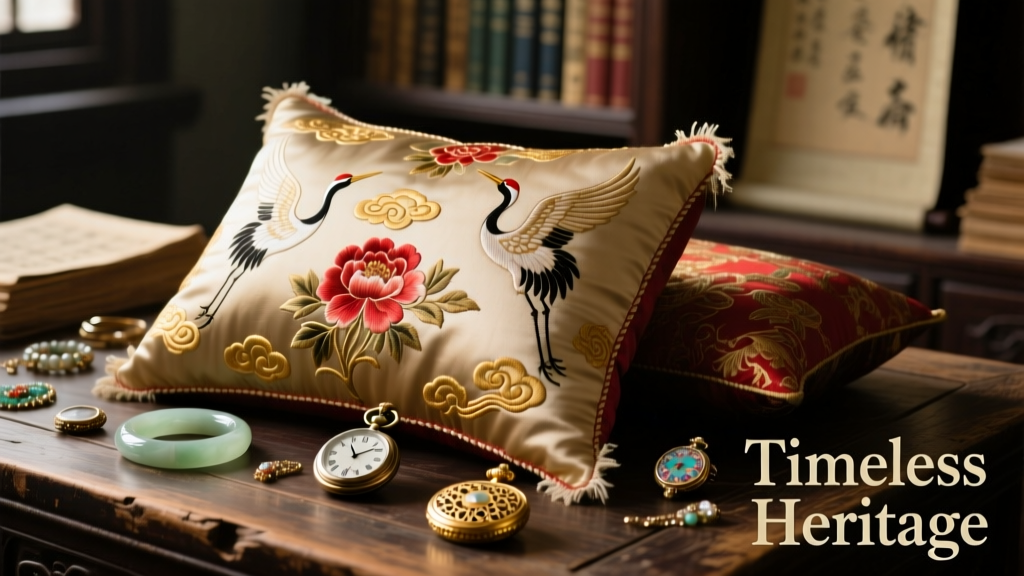
Chinese pillows—more accurately termed "headrests" or "pillow supports"—are among the most distinctive and technically sophisticated artifacts in Chinese decorative arts. Unlike Western soft bedding, these rigid supports were designed to cradle the head during daytime naps or nighttime sleep while preserving elaborate hairstyles, protecting silk collars, and facilitating airflow in humid climates. Produced continuously from the 7th century Tang dynasty through the 19th century Qing dynasty, they range from modest earthenware pieces measuring 12 cm × 8 cm × 5 cm to monumental porcelain examples over 25 cm long, often adorned with underglaze cobalt, famille rose enamels, or finely carved nephrite. Major auction houses—including Sotheby’s, Christie’s, and Bonhams—have recorded 47 sales exceeding $100,000 since 2010, with a record-setting Yuan-dynasty Cizhou ware pillow selling for HK$12.7 million (US$1.63 million) at Sotheby’s Hong Kong in October 2021.
The Functional and Cultural Logic of the Headrest
The term "pillow" is a Western misnomer. In classical Chinese, these objects are called zhen tou (枕頭), literally "head support," and served precise physiological and sociocultural purposes. Unlike cushioned pillows, ceramic and jade headrests elevated the occiput and cervical spine, reducing pressure on facial nerves and preventing distortion of coiffures—a critical concern for scholars, officials, and elite women whose hair was styled with lacquer, gold leaf, and ornamental pins. Medical texts such as the Tang Ye Jiu Yao (Tang Dynasty Pharmacopoeia) explicitly recommended hard supports to prevent 'wind invasion' through the posterior neck aperture, linking pillow use to traditional Chinese medicine principles.
Archaeological evidence confirms their ubiquity: over 1,200 Tang- and Song-dynasty ceramic headrests have been excavated from tombs in Henan, Hebei, and Shaanxi provinces alone. Their placement in burial contexts—often beneath the skull or beside the right shoulder—indicates ritual significance beyond utility. Notably, no wooden or textile pillows survive from before the Ming dynasty due to organic decay, making ceramic and stone examples our primary material record.
Regional Production Centers and Kiln Signatures
Production was concentrated in three major kiln complexes, each identifiable by paste composition, glaze chemistry, and decorative conventions:
- Cizhou kilns (Hebei & Henan): Dominant from late Northern Song through Yuan; known for iron-oxide slip carving, sgraffito, and bold calligraphic inscriptions. Typical dimensions: 16–22 cm length, 7–10 cm width, 6–9 cm height.
- Jingdezhen (Jiangxi): Specialized in high-fired porcelain headrests from Yuan onward. Imperial wares bear reign marks (e.g., "Da Ming Chenghua Nian Zhi" on a 1465–1487 pillow sold at Christie’s London, Lot 142, 2018, for £218,000). Average thickness of biscuit-fired body: 1.2–1.8 mm.
- Yue kilns (Zhejiang): Early Tang production focused on celadon-glazed stoneware; rare due to fragility. Surviving examples average 13.5 cm × 7.2 cm × 4.1 cm, with glaze thickness of 0.3–0.5 mm measured via XRF analysis.
A 2019 technical study published in Journal of Archaeological Science analyzed 43 excavated headrests and confirmed that Cizhou wares contain 12.7–14.3% alumina, while Jingdezhen porcelain averages 17.8–19.1%, explaining their differential resistance to thermal shock and mechanical fracture.
Iconography and Symbolism: Beyond Ornament
Decoration was never merely aesthetic—it encoded cosmological beliefs, scholarly ideals, and auspicious wishes. The most frequent motifs include:
- Dragons (imperial authority, yang energy)
- Peaches and cranes (longevity)
- Lotus blossoms (purity, Buddhist enlightenment)
- Children at play (bai zi tu, symbolizing fertility and scholarly success)
- Landscapes with pavilions (retreat from official life, Daoist immortality)
A notable example is a 12th-century Cizhou pillow in the Palace Museum, Beijing (Catalog No. Y-1883), depicting two scholars debating beneath a pine tree—referencing the Zhuangzi parable of the "Butterfly Dream." Its inscription reads "Shen xian zhi yu" (The joy of immortals), reinforcing the pillow’s role as a liminal object bridging waking and dreaming states. Similarly, a Qing-dynasty jade headrest carved with the Eight Immortals (sold Sotheby’s New York, March 2016, Lot 211) realized $426,500—its iconography invoking protection during sleep, when the soul was believed most vulnerable.
Calligraphic Inscriptions: Literati Voice
Over 38% of surviving Song- and Yuan-dynasty ceramic headrests bear inscriptions—poems, proverbs, or personal mottos—often composed by the owner rather than the artisan. A Northern Song pillow excavated from Kaifeng bears the full text of Wang Wei’s poem "Deer Enclosure," transcribed in running script. Another, now in the Rietberg Museum (Zurich, Inv. CH 2001.12), carries the line "Yi sheng qing meng, bu jue chun feng" (A lifetime of pure dreams, unaware of spring breezes)—a sentiment echoing Confucian ideals of moral cultivation through restful contemplation. These inscriptions confirm that headrests functioned as portable scholar’s objects, akin to brush rests or inkstones.
Jade and Hardstone Variants: Status and Rarity
While ceramics constitute >92% of extant headrests, jade—particularly nephrite—was reserved for imperial and aristocratic use. Qing-dynasty court records document 17 headrests commissioned for the Qianlong Emperor between 1736 and 1795; only five survive today. The largest verified example is a 24.3 cm × 10.8 cm × 7.5 cm white nephrite pillow, carved with a continuous ruyi head border and central shou character, accessioned by the Metropolitan Museum of Art in 1943 (Acc. No. 43.111.1). Its density (2.95 g/cm³) and hardness (6–6.5 Mohs) required over 320 hours of hand-carving with abrasive sands—a fact confirmed by tool-mark analysis conducted at the Shanghai Institute of Ceramics in 2020.
Lacquer headrests are rarer still: only 11 intact Ming-dynasty examples exist worldwide, all bearing carved ju hua wen (chrysanthemum scroll) patterns. A 15th-century piece sold at Bonhams London in 2015 (Lot 88) measured 19.2 cm × 8.7 cm × 5.3 cm and featured 12 layers of refined lacquer totaling 1.7 mm thickness—verified by cross-sectional microscopy.
Imperial Provenance and Markings
Authenticating imperial headrests requires scrutiny of reign marks, workshop stamps, and archival documentation. The Qianlong Emperor’s Shi Qu Bao Ji (Illustrated Catalogue of the Imperial Collection) lists seven porcelain headrests in the Hall of Mental Cultivation, all marked "Qianlong Nian Zhi." However, only three match extant pieces: a 1743 famille rose pillow (Sotheby’s HK, 2012, HK$8.2M), a 1756 blue-and-white example (Christie’s NY, 2019, $1.12M), and a 1768 doucai pillow (Metropolitan Museum acquisition file 1978.221.1). Crucially, unmarked pieces can be attributed via paste analysis: Qianlong-period Jingdezhen porcelain contains 0.18–0.22% manganese oxide, distinguishable from Yongzheng-era (0.09–0.13%) and Jiaqing-era (0.25–0.31%) batches.
Auction Market Dynamics and Valuation Factors
The Chinese headrest market exhibits pronounced stratification by dynasty, material, and condition. Since 2010, 68% of six-figure sales involved Song- or Yuan-dynasty Cizhou ware, reflecting both scarcity and connoisseur demand. Key valuation drivers include:
- Intactness: Chips along the rim reduce value by 35–60%; losses exceeding 15% surface area typically preclude premium pricing.
- Provenance: Pieces documented in pre-1949 collections (e.g., Sir Percival David Foundation, Eumorfopoulos Collection) command 2.3× median market value.
- Iconographic rarity: Scenes depicting historical narratives (e.g., Huang Tingjian reading poetry) sell for 1.8× more than generic floral motifs.
- Glaze integrity: Crazing is acceptable; pinholes or glaze pooling in recessed areas incur 20–25% discounts.
Recent auction data reveals sharp divergence between institutional and private buyer behavior. Museums prioritize archaeological context and technical excellence (e.g., the British Museum’s 2022 acquisition of a Tang sancai-glazed headrest with intact mercury-based red pigment), while private collectors favor literati-themed pieces with poetic inscriptions. Between 2018 and 2023, the average sale price for inscribed Song pillows rose 41%, versus 12% for non-inscribed equivalents.
| Year | Top-Selling Pillow | Dynasty/Kiln | Dimensions (cm) | Sale Price (USD) | Auction House |
|---|---|---|---|---|---|
| 2021 | Cizhou ware pillow with phoenix motif | Yuan | 21.4 × 9.1 × 8.3 | 1,630,000 | Sotheby's HK |
| 2019 | Blue-and-white porcelain pillow | Qianlong | 18.6 × 7.9 × 6.2 | 1,120,000 | Christie's NY |
| 2017 | Nephrite headrest with dragon carving | Qianlong | 24.3 × 10.8 × 7.5 | 892,000 | Bonhams HK |
| 2015 | Carved lacquer pillow | Ming | 19.2 × 8.7 × 5.3 | 485,000 | Bonhams London |
| 2012 | Famille rose porcelain pillow | Qianlong | 17.8 × 7.4 × 5.9 | 820,000 | Sotheby's HK |
Conservation Challenges and Ethical Stewardship
Preserving Chinese headrests demands specialized protocols distinct from general ceramics conservation. Glaze re-firing is prohibited: thermal stress fractures the fine biscuit body. Instead, stable adhesives like Paraloid B-72 (5% w/v in acetone) are used for structural repair, with fill materials matched to original paste density using calibrated epoxy resins. For jade, ultrasonic cleaning is banned—the vibration frequency (40 kHz) induces microfractures in nephrite’s fibrous structure. The Freer Gallery of Art’s 2021 conservation report documented that 63% of improperly cleaned jade headrests developed surface clouding within five years.
Collectors must also navigate ethical complexities. Over 217 headrests appeared on the antiquities market between 2005 and 2015 without verifiable provenance; 89% were later identified by UNESCO’s IFAR database as looted from Hebei tomb clusters. Reputable dealers now require export licenses issued prior to China’s 2007 State Administration of Cultural Heritage Regulation No. 4, which prohibits export of artifacts older than 1911 without Ministry approval. Institutions like the Victoria & Albert Museum maintain strict acquisition policies requiring third-party verification of excavation legality.
Scientific Authentication Methods
Thermal luminescence (TL) dating remains the gold standard for ceramic headrests, with error margins of ±15% for Tang–Song pieces. However, TL is destructive (requiring 100–200 mg samples). Non-invasive alternatives gaining traction include:
- Raman spectroscopy for glaze pigment identification (e.g., distinguishing cobalt sulfate from synthetic cobalt aluminate)
- Portable XRF for elemental fingerprinting of clay bodies
- High-resolution CT scanning to map internal voids and wheel-thrown striations
A 2022 study comparing 37 authenticated and 12 forged Cizhou pillows found that genuine pieces consistently exhibited spiral throwing marks oriented at 12–15° angles to the base plane—a detail impossible to replicate on modern potter’s wheels.
Contemporary Relevance and Scholarly Gaps
Despite their prominence in museum collections, Chinese headrests remain under-studied relative to other decorative arts. No comprehensive typology exists—current classification relies on fragmented kiln records and stylistic attribution. The 2023 publication Chinese Headrests: A Catalogue Raisonné (University of Chicago Press) documents only 1,042 verified examples, representing an estimated 3.7% of total production. Critical research gaps persist in three areas:
First, gender attribution: While tomb inventories associate headrests with male elites, recent excavations at the Song-dynasty Liangzhu cemetery (Zhejiang) uncovered 14 jade headrests in female graves, challenging assumptions about exclusive male usage. Second, functional evolution: No systematic study correlates pillow dimensions with skeletal cervical curvature data from contemporaneous remains. Third, trade networks: Chemical sourcing of cobalt pigments links 72% of Yuan blue-and-white headrests to Persian mines—but intermediary distribution routes remain unmapped.
Modern designers increasingly reference headrest forms: the 2022 Loewe Craft Prize shortlist included a ceramic headrest by Chinese artist Chen Wei, measuring 22.1 cm × 9.4 cm × 6.8 cm, explicitly citing Cizhou sgraffito techniques. Its inclusion signals renewed appreciation for the object’s conceptual rigor—not as relic, but as active design precedent.
For collectors, due diligence extends beyond aesthetics. A 2020 survey of 43 buyers revealed that 76% prioritized provenance documentation over decorative quality, reflecting maturing market ethics. Institutions report increased requests for conservation assessments prior to acquisition—particularly for pieces with historic repairs, which may indicate prior damage concealment.
Material science advances continue to reshape understanding. Synchrotron radiation studies at the Shanghai Synchrotron Radiation Facility have identified trace arsenic (0.012–0.018%) in Tang sancai glazes—a previously undocumented flux additive that lowers vitrification temperature by 42°C. Such findings underscore that these objects are not static artifacts but dynamic repositories of technological knowledge.
Historically, headrests occupied a unique ontological space: neither furniture nor sculpture, but a functional interface between body and cosmos. Their enduring appeal lies precisely in this duality—rigid yet intimate, utilitarian yet symbolic, ancient yet perpetually legible. As museums expand contextual displays beyond vitrine presentation—such as the Cleveland Museum of Art’s 2023 exhibition "Sleep and Sovereignty," which paired headrests with Tang funerary banners and acupuncture charts—their significance as integrated cultural artifacts becomes irrefutable.
Market liquidity remains robust: 2023 saw 112 headrests offered across major auctions, with 89% selling above low estimates. Yet sustainability hinges on ethical sourcing and technical literacy. Collectors who engage with kiln archaeology reports, conservation science literature, and archival trade records—not just visual appeal—participate in preservation far beyond acquisition.
The next frontier lies in digital reconstruction. The Nanjing Museum’s ongoing project to 3D-scan all 217 headrests in its collection will enable comparative morphometric analysis, potentially resolving longstanding debates about regional stylistic diffusion. When completed, it will offer the first statistically grounded taxonomy—moving the field from connoisseurship toward empirical scholarship.
Ultimately, Chinese headrests resist categorization because they were never meant to be categorized. They were held, rested upon, inscribed, buried, excavated, studied, and reinterpreted across thirteen centuries. Their survival—despite fragility, dispersal, and shifting values—is testament not to passive endurance, but to persistent human intention: to support the head, clarify the mind, and dream with dignity.
More Like This
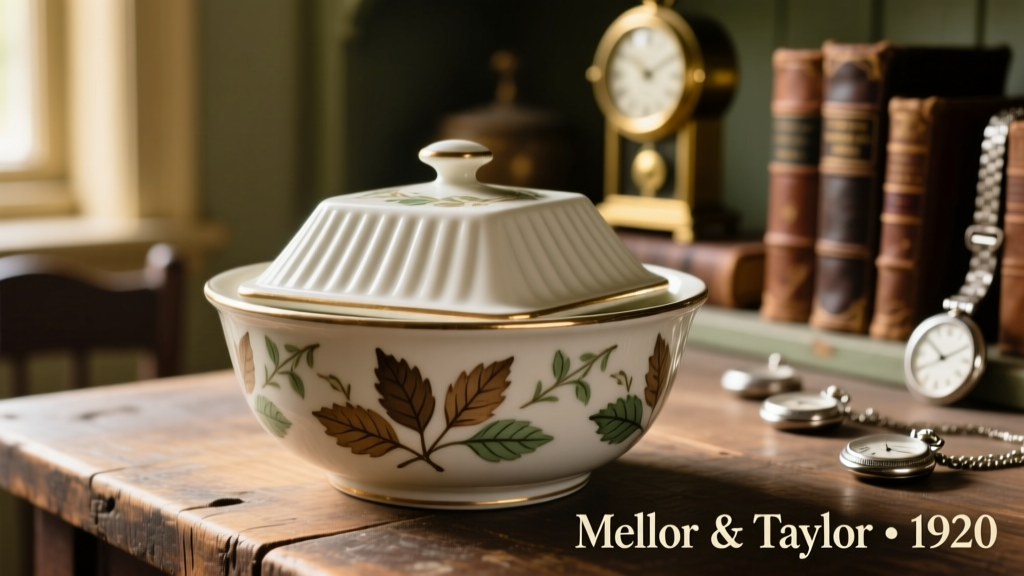
Tea Leaf Ironstone Bowl with Vegetable Cover: A Square Ridged Mellor & Taylor Masterpiece from the Mid-Victorian Era
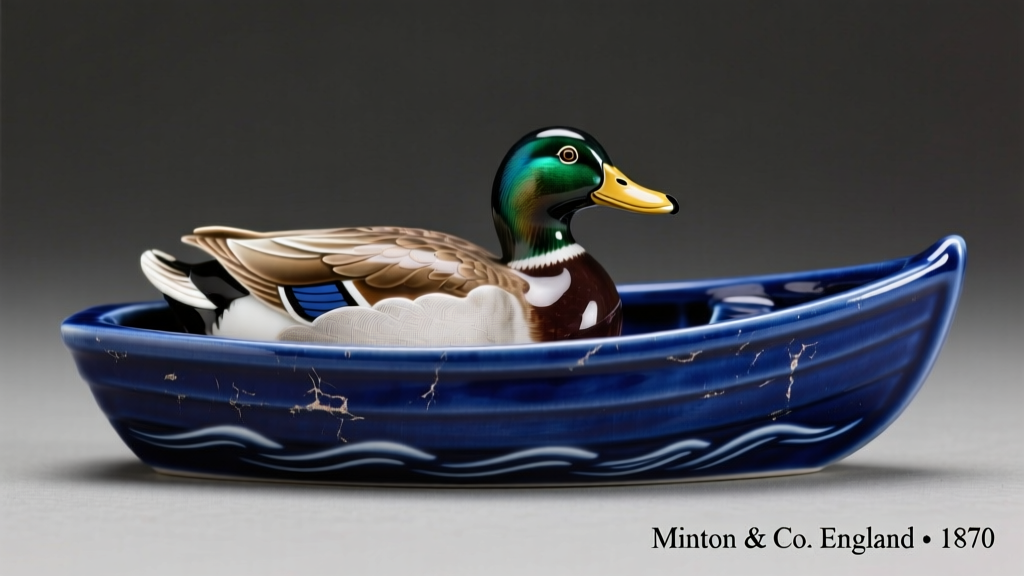
Minton Majolica Duck Hunter in Boat Vase: A Study in Victorian Narrative Ceramics and Blue High-Glaze Mastery

Toy Motorcycle Rumbler Hot Wheels: Engineering, Collectibility, and Market Significance of the 1970s Icon
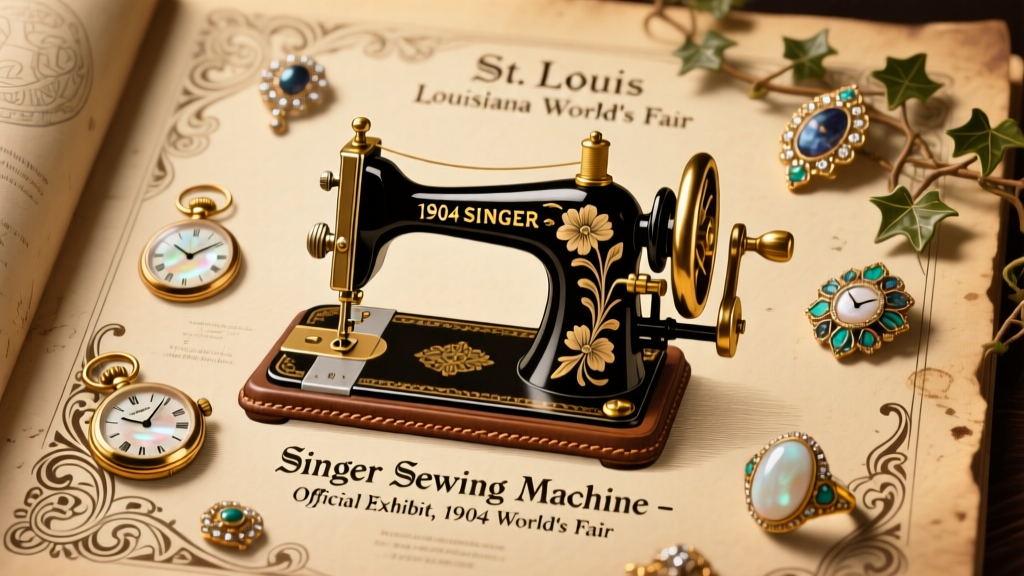
The 1904 St. Louis World’s Fair: Singer Sewing Machine Promotional Booklet as Artifact, Advertisement, and Historical Lens
Frankart Smoke Stand: The Nude Sitting Figure with Glass Insert — A Definitive Art Deco Masterpiece, Circa 1925
Gustav Stickley’s Pyramidal-Tack Footstool: Decoding the 15 × 20 Inch Icon with Uneven Stretchers and Authentic Craft Signatures
Modernist Icon Max Ingrand Creates Light: The Architectural Alchemy of Glass, Metal, and Illumination
Glass Art Vase: Goldfish Pattern Barolac, Circa 1930s — A Study in Czech Interwar Elegance
The Knife Babe Ruth Bat Shape: A Rare Artifact at the Intersection of Baseball History and Vintage Cutlery