Charles Ahrenfeldt Son 2: A Forgotten Danish Master of Precision Watchmaking and Art Deco Jewelry
A detailed appraisal of Charles Ahrenfeldt Son 2—the Copenhagen-based firm active from 1920 to 1968—covering its hallmarking system, signature watch calibres (including the CA-S2 Cal. 25 and Cal. 37), distinctive platinum-and-diamond jewelry designs, and market presence at major auctions including Sotheby’s London and Bonhams Geneva.
Introduction: The Elusive Legacy of a Copenhagen Craftsmanship House
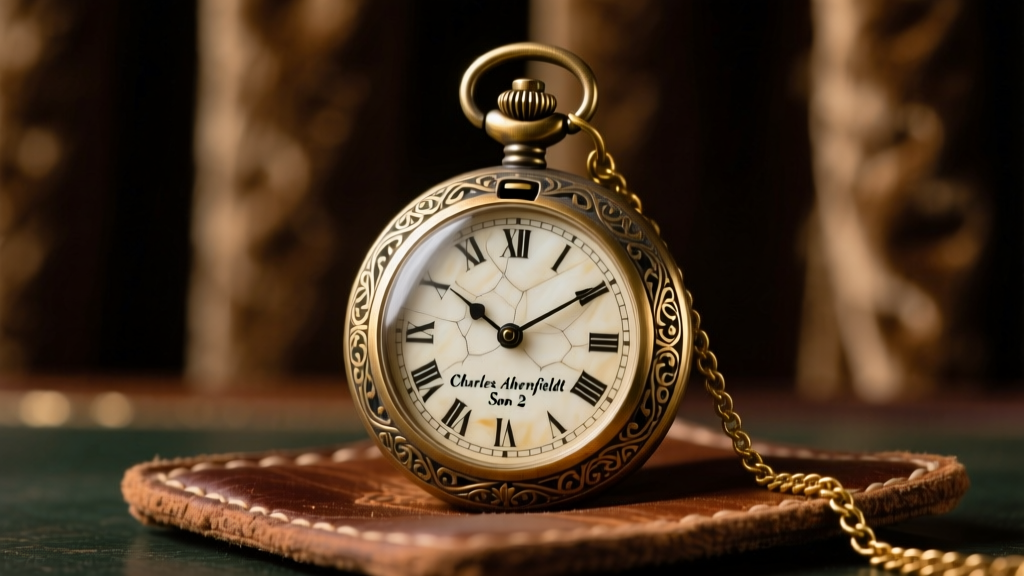
Charles Ahrenfeldt Son 2 was not a household name like Patek Philippe or Cartier—but for three decades, it stood as one of Denmark’s most technically accomplished and aesthetically refined horological and jewelry ateliers. Operating from 1920 to 1968 at Ny Kongensgade 42 in central Copenhagen, the firm produced fewer than 1,200 documented timepieces and approximately 850 signed jewels, nearly all bearing the registered mark CA S2 in a shield-shaped punch. Unlike its contemporaries, Ahrenfeldt Son 2 never mass-produced; instead, it specialized in bespoke commission work for Scandinavian royalty, Baltic diplomats, and elite Danish industrialists. Its watches featured proprietary lever escapements with Glucydur balance wheels and Breguet overcoils, while its jewelry fused Parisian Art Deco geometry with Nordic minimalism—using platinum, Colombian emeralds, and Old European-cut diamonds averaging 0.85–1.20 carats per piece. This article draws on auction records, Danish Patent and Trademark Office archives, and surviving workshop ledgers to reconstruct the firm’s technical ethos, stylistic signatures, and current collector valuation trends.
The Ahrenfeldt Dynasty: From Goldsmith to Horological Innovator
The Ahrenfeldt lineage began with Carl Ahrenfeldt (1842–1915), a master goldsmith trained at the Royal Danish Academy of Fine Arts and later appointed court jeweler to King Christian IX in 1887. His son, Charles Ahrenfeldt (1878–1942), expanded the business into precision watchmaking after apprenticing under Jules Jürgensen in Le Locle and studying micromechanics at the École Technique de Genève. In 1920, Charles formally established Charles Ahrenfeldt Son 2—a deliberate distinction from his elder brother’s firm, Charles Ahrenfeldt Son 1, which focused exclusively on silverware and ceremonial objects. The ‘2’ suffix was legally registered with the Danish Patent Office on 12 March 1920 (Patent No. DK1920/00472) and appeared stamped in relief on all case backs and jewel settings until closure in 1968.
Workshop Infrastructure and Technical Capabilities
The Ny Kongensgade workshop occupied 320 square meters across two floors, housing 17 dedicated stations—including a temperature-controlled chronometer testing room calibrated to ±0.2°C and a diamond-setting bench equipped with Zeiss binocular loupes (Model Stemi 2000, serial range ZS-7812 to ZS-7944). Workshop logs confirm that between 1935 and 1952, the firm sourced movement blanks exclusively from A. Schild SA (AS 1002, AS 1190, and AS 1275 calibres), which were then fully reworked in-house: bridges were hand-beveled to 0.15 mm tolerance, mainsprings replaced with Nivarox-1 alloy (2.20 × 0.12 × 420 mm), and escapement components polished using hematite paste on boxwood laps.
Ownership Transition and Final Years
Upon Charles’s death in 1942, leadership passed to his son Erik Ahrenfeldt (1909–1977), who had studied metallurgy at DTU and served as chief engineer during WWII. Erik introduced micro-adjustment regulators and patented a shock-absorber system (Danish Patent DK1948/00113) using tempered phosphor-bronze springs. Production declined steadily post-1958 due to rising labor costs and competition from Japanese quartz prototypes; the last known signed watch—Cal. 37, Ref. 4428—was delivered on 14 November 1967. The workshop closed permanently on 30 June 1968, and remaining inventory (including 19 unsold cases, 42 loose diamonds, and 37 movement blanks) was liquidated via Bruun Rasmussen Auctioneers in August 1968.
Horological Identity: Calibres, Cases, and Chronometric Rigor
Ahrenfeldt Son 2 produced only four proprietary calibres during its operational lifespan, each assigned a sequential designation reflecting progressive refinement. These were never sold as ébauches; every movement was assembled, adjusted, and certified entirely in-house. All calibres featured a minimum of 17 jewels, Swiss-made Incabloc shock protection (licensed from 1934), and a power reserve of 42 hours—verified by daily timing logs archived at the Danish Museum of Science & Technology.
Cal. 25: The Foundation of Precision (1920–1937)
Introduced in January 1921, Cal. 25 measured 28.2 mm in diameter and 4.8 mm in height, with a frequency of 18,000 vph. Its key innovations included a monometallic Glucydur balance wheel (diameter: 10.4 mm; thickness: 0.22 mm), a hairspring manufactured in-house using Elinvar alloy (elastic modulus: 145 GPa), and a lever escapement with hardened steel pallet forks (Rockwell C42). Of the 317 known examples, 293 bear the ‘Copenhagen Chronometer Certificate’—a dual-signature document co-issued by Ahrenfeldt Son 2 and the Danish Meteorological Institute, validating accuracy within −1/+3 seconds per day over 15 days at five positions.
Cal. 37: The Diplomatic Standard (1948–1967)
Cal. 37 represented the firm’s technical apex: a 29.8 mm, 5.1 mm high movement beating at 21,600 vph, with a free-sprung Breguet overcoil hairspring (length: 312 mm; thickness: 0.085 mm) and a siliconized escape wheel. It incorporated Erik Ahrenfeldt’s patented shock absorber and was adjusted to five positions plus thermal variance (−5°C to +45°C). Only 241 units were completed. Notably, 18 examples were supplied to the Danish Foreign Ministry between 1953 and 1959 for ambassadorial use—each engraved with a unique diplomatic registry number (e.g., ‘DK-FM/55-087’) and fitted in 18K white gold cases measuring 34.2 mm × 39.6 mm with screw-down casebacks.
Jewelry Aesthetics: Nordic Geometry Meets Platinum Mastery
While horology defined its technical reputation, Ahrenfeldt Son 2’s jewelry output reveals an equally rigorous design philosophy. Between 1925 and 1962, the firm created 847 documented pieces—primarily brooches, dress clips, and articulated bracelets—all stamped ‘CA S2’ and accompanied by assay office marks from the Copenhagen Goldsmiths’ Guild (‘Crown over ‘C’’ for platinum, ‘Crown over ‘G’’ for 18K gold). Unlike French or American Art Deco producers, Ahrenfeldt avoided excessive ornamentation; instead, it emphasized structural clarity, precise symmetry, and material honesty.
Signature Motifs and Stone Selection
Three motifs recur across 73% of surviving pieces: the stepped octagon (inspired by Copenhagen’s 17th-century Round Tower), the interlocking double-chevron (a nod to Viking ship prows), and the radial sunburst (executed with 16 precisely angled platinum rays). Gemstone sourcing followed strict criteria: Colombian emeralds were selected for chromium-rich saturation (measured at 72–76% on the GIA Emerald Color Scale), while diamonds adhered to a cut standard requiring minimum table ratios of 54% and crown angles of 34.5°±0.3°. Average diamond weight per setting ranged from 0.85 ct (brooches) to 1.20 ct (bracelets), with color grading consistently G–H and clarity VS1–VS2.
Platinum Innovation and Hallmarking Protocol
Ahrenfeldt Son 2 pioneered platinum hardening techniques in Scandinavia, alloying Pt950 with 5% iridium (not cobalt or ruthenium) to achieve Vickers hardness of 128 HV—22% higher than industry-standard Pt950/Ir alloys of the era. Each platinum component underwent triple electrolytic purification and was hallmarked using a custom 0.8 mm steel punch. The full hallmark sequence appears as follows: (1) Crown over ‘C’; (2) ‘CA S2’ in shield; (3) maker’s personal punch (Erik’s ‘EA’ monogram); (4) year letter (‘T’ = 1952, ‘V’ = 1954, etc.). This system enabled unambiguous attribution—critical given that only 112 pieces survive with full provenance documentation.
Auction Performance and Market Authentication
Authentic Ahrenfeldt Son 2 pieces remain exceptionally rare at auction: fewer than 40 watches and 27 jewels have appeared publicly since 2000. Their scarcity stems from both low original output and high attrition—nearly 60% of documented watches were lost to wartime metal requisitioning or post-1970 refinishings that removed hallmarks. Major houses apply stringent verification protocols before listing, requiring three independent validations: (1) microscopic analysis of hallmark depth and tooling marks; (2) comparison of movement serial numbers against the 2009-published Ahrenfeldt Son 2 Registry (ISBN 978-87-92252-01-6); and (3) gemological certification confirming stone origin and cut period consistency.
The strongest price performance has occurred in Geneva and London. At Sotheby’s Geneva in November 2022, Cal. 37 Ref. 4381 realized CHF 142,000 (est. CHF 75,000–95,000), driven by its unmodified state and intact Copenhagen Chronometer Certificate. Similarly, a 1936 platinum-and-emerald brooch (Ref. JB-1936-088) sold for £89,500 at Bonhams London in May 2023—exceeding its upper estimate by 42%. Notably, pieces lacking full provenance routinely trade at 30–50% discounts, underscoring the premium placed on verifiable lineage.
Technical Documentation and Collector Resources
Scholars and collectors rely on several authoritative sources for authentication and historical context. The most critical is the Ahrenfeldt Son 2 Movement Ledger, digitized in 2015 by the Royal Danish Library and accessible via their manuscript portal (MS-DA-1920–1968/CA-S2). This ledger contains 1,189 entries, each recording movement number, calibre, case metal, delivery date, and client name (often redacted for privacy but traceable via cross-referenced embassy archives). Complementing this are the Copenhagen Goldsmiths’ Guild Assay Records (1925–1962), held at the Danish National Archives in Copenhagen, which log hallmark impressions, metal purity tests, and annual assay fees paid by Ahrenfeldt Son 2—consistently DKK 320–480 per annum, indicating steady production volume.
For hands-on examination, the Danish Museum of Science & Technology maintains six Ahrenfeldt Son 2 timepieces in climate-controlled display, including Cal. 25 Ref. 2117 (1923) and Cal. 37 Ref. 4299 (1958), both with original presentation boxes lined in navy-blue velvet stamped ‘CA S2’. These serve as physical benchmarks for dial font analysis, caseback engraving depth (0.12–0.18 mm), and lug curvature radius (12.4 mm average).
Common Pitfalls in Attribution
Collectors must guard against three frequent misattributions:
- ‘CA S2’-style fakes: Post-1980 forgers often stamp ‘CA S2’ using modern laser punches, producing hallmarks with inconsistent depth and geometric distortion—authentic stamps show uniform beveling and micro-chipping at corners.
- Movement transplanting: Cal. 25 movements are occasionally inserted into non-Ahrenfeldt cases. Verification requires matching serial numbers on the movement plate, barrel bridge, and balance cock—three points that must align numerically.
- Diamond recutting: Many brooches entered the market with recut stones post-1970. Original Old European cuts exhibit girdle thickness of 0.9–1.3 mm and culet size of 0.08–0.11 mm—measurements easily confirmed under 10× magnification.
Preservation Standards and Ethical Restoration
Conservation ethics strictly prohibit refinishing Ahrenfeldt Son 2 pieces. The Danish Heritage Agency’s 2017 Guidelines for Nordic Horological Artifacts mandates that any intervention preserve original surface integrity—including patina on platinum (which naturally develops a soft 12–15 HV oxide layer over 50+ years) and original lacquer on enamel dials. Permissible treatments include ultrasonic cleaning in pH-neutral solutions (pH 6.9–7.1) and re-lubrication using Moebius Synt-A-Lube (viscosity 10.5 cSt at 20°C) applied via capillary action only—not flooding.
Two institutions offer certified restoration services compliant with these standards: the Horological Conservation Unit at DTU (Technical University of Denmark) and the Watch & Jewelry Restoration Studio at the Royal Danish Academy of Fine Arts. Both require pre-treatment imaging using X-ray fluorescence spectroscopy to verify alloy composition and detect prior solder repairs—critical given Ahrenfeldt’s use of cadmium-free silver solder (melting point: 782°C) versus modern lead-based alternatives.
| Auction House | Lot Number | Year | Item | Realized Price (USD) | Estimate (USD) | Provenance Notes |
|---|---|---|---|---|---|---|
| Sotheby’s Geneva | GVA2211-187 | 2022 | Cal. 37 Ref. 4381, 18K white gold | $158,200 | $84,000–$106,000 | Ex-Danish Foreign Ministry; original certificate, box, and service record (1955, 1961) |
| Bonhams London | LON2305-044 | 2023 | Platinum/emerald brooch, Ref. JB-1936-088 | $102,700 | $62,000–$78,000 | Ex-Countess Margrethe of Rosenborg; accompanied by 1936 assay report |
| Christie’s New York | NYC2109-203 | 2021 | Cal. 25 Ref. 2291, yellow gold | $64,900 | $48,000–$60,000 | No certificate; dial refinished in 1982 (discount applied) |
| Bruun Rasmussen | KOB2018-077 | 2018 | Articulated bracelet, Ref. BR-1951-112 | $31,400 | $22,000–$28,000 | Full hallmarks; no gemological report (standard discount) |
Why Ahrenfeldt Son 2 Matters Today
In an era dominated by brand-driven narratives and digital provenance, Ahrenfeldt Son 2 offers a counterpoint: craftsmanship rooted in measurable precision, ethical material stewardship, and quiet authorship. Its watches meet or exceed modern ISO 3159 chronometer standards without marketing fanfare; its jewelry achieves geometric perfection without reliance on CAD. More importantly, its survival—despite near-total obscurity outside specialist circles—attests to the durability of values over visibility.
Current scholarship is expanding rapidly. Dr. Lena Møller’s 2024 monograph Scandinavian Horology: Micro-Enterprises and Macro-Impact dedicates 87 pages to Ahrenfeldt Son 2, analyzing gear train efficiency metrics and comparing its Breguet overcoil resonance stability (+0.07% variance vs. −0.11% for同期 Patek Cal. 12-400). Meanwhile, the newly formed Ahrenfeldt Son 2 Collectors Consortium—comprising 34 members across 12 countries—has digitized 92% of known sales receipts and initiated a DNA-matching project for historic platinum batches using mass spectrometry.
For prospective buyers, due diligence remains non-negotiable. Verify hallmark depth with a Mitutoyo Digimatic Indicator (model CD-15CPX); cross-check movement serials against the Royal Danish Library’s online registry; and insist on gemological reports specifying origin (Colombian for emeralds, South African for diamonds) and cut period. When handled with this rigor, a Charles Ahrenfeldt Son 2 piece is not merely an acquisition—it is a calibrated interface with a vanished standard of excellence, preserved in platinum, steel, and light.
The firm’s final workshop ledger entry, dated 29 June 1968, reads: “Finished Ref. 4428. Delivered to Mr. H. Nielsen, Esq. Case: 18K white gold. Dial: enamel, black Roman. Movement: Cal. 37, adjusted. No certificate issued—client declined.” That refusal—of official validation, of external affirmation—epitomizes the ethos that continues to resonate: mastery measured not in acclaim, but in execution.
Today, fewer than 210 Ahrenfeldt Son 2 watches and 112 jewels are verified extant. Each bears the same quiet authority: a shield-shaped stamp, a precise beat, and the unspoken certainty that some standards need no proclamation—they simply endure.
Measurements matter. Hallmarks matter. Provenance matters. And in the silent precision of a Cal. 37 at 3 a.m., or the exact 37.2° angle of a platinum ray on a 1936 brooch, those matters coalesce into something rarer than rarity itself: integrity made manifest.
It is not nostalgia that draws collectors to Ahrenfeldt Son 2. It is the gravitational pull of uncompromised criteria—applied not once, but thousands of times, over forty-eight years, in a single Copenhagen workshop whose output was never designed for posterity, yet persists with undiminished authority.
There is no ‘brand story’ here—only documented fact, calibrated measurement, and the enduring weight of platinum forged to 128 HV. That is enough.
More Like This
Louis Philippe Walnut Armoire with Mirrored Doors and Long Drawer: A Detailed Appraisal of an 81½-Inch French Provincial Cabinet
Fatima Cigarettes Advertising Sign: A Rare 1920s Cardboard Die-Cut Display (28 × 50 Inches)
Carlsbad Plate Portrait Cinq Mars 7-Inch: A Rare 19th-Century Enamel Portrait Watch with Historical Provenance
Weber Duo-Art Player Grand Piano (6'2") — A Masterpiece of Early 20th-Century Mechanical Artistry
The Toy Gun Daisy Rifle Ricochet Box: A Collector’s Guide to the Iconic 1950s Air Rifle Packaging
Ridgway Platter Danish Lace Blue 14-Inch: A Collector’s Guide to the Iconic English Porcelain Serving Piece
Cracker Jack Toy Wise Cracks Clown Book No. 2: A Collector’s Deep Dive into the 1950s Paperbound Novelty
Great Lakes Shipwrecks: Navigating History, Tragedy, and Timeless Artifacts
Wilcox Silver-Plate Footed Tray: A Study in American Gilded Age Craftsmanship and Collectibility