Celebrating Collectibles: Manly Character in Vintage Jewelry and Timepieces
An expert examination of how vintage wristwatches, signet rings, cufflinks, and pocket watches embody enduring masculine character—grounded in craftsmanship, historical context, and material authenticity. Features Rolex Submariner ref. 5513 (1962), Cartier Tank Solo (18mm x 24mm), 14k gold Masonic signets with 8mm bezels, and Omega Seamaster 300 Mk I specs.
The Enduring Appeal of Manly Character in Collectible Objects
Manly character in vintage collectibles is not defined by bravado or ornamentation, but by integrity of purpose, honesty of material, and fidelity to original function. A 1957 Rolex Submariner ref. 6538 worn by Jacques Cousteau’s team, a 1923 Dunhill brass cigarette case engraved with naval insignia, or a 1941 Hamilton 987 pocket watch with 17-jewel lever escapement—all speak to quiet competence, mechanical resolve, and cultural resonance across decades. These objects were engineered for utility, built to endure, and often carried through consequential moments: wartime service, oceanographic exploration, industrial innovation, or diplomatic engagement. Their value today lies less in rarity alone and more in the unbroken chain of provenance, metallurgical truth, and design logic that refuses compromise.
Wristwatches as Archetypes of Functional Masculinity
Among horological collectibles, the mid-century tool watch remains the most potent vessel of manly character. Unlike decorative dress watches, these instruments were conceived for real-world performance under duress. The Omega Seamaster 300 Mk I, introduced in 1957, featured a 39mm stainless steel case, a bidirectional rotating bezel with luminous triangle marker, and water resistance rated to 200 meters—validated by British Royal Navy divers during Mediterranean operations from 1958–1962. Its Calibre 265 movement operated at 18,000 bph with a power reserve of 44 hours, and its black dial used tritium-laced Super-LumiNova for legibility at depth. Crucially, every Mk I example bears a stamped ‘SEAMASTER 300’ on the caseback and a distinctive ‘broad arrow’ military acceptance mark—a physical signature of institutional trust.
Rolex Submariner: Engineering Discipline Under Pressure
The Rolex Submariner ref. 5513 (1962–1989) represents a masterclass in restrained evolution. Early examples feature acrylic crystals, gilt dials, and riveted Oyster bracelets with solid-link end pieces measuring precisely 20mm lug width. Its Calibre 1530 movement—adjusted to five positions, chronometer-certified by the Bureaux Officiels de Contrôle de la Marche des Montres (B.O.)—delivers ±2 seconds per day accuracy. Notably, no Submariner produced before 1969 included a date function; the absence of complication reinforces its singular focus: timekeeping fidelity underwater. Collectors prioritize serial-number-verified examples with original bezel inserts showing even patina on the aluminum numerals—especially those with ‘meter first’ text (e.g., ‘200m = 660ft’) indicating pre-1967 production.
Patek Philippe Calatrava Ref. 2526: Quiet Authority in Dress Watch Form
Conversely, the Patek Philippe Calatrava ref. 2526 (1953–1974) embodies manly character through restraint. Measuring just 35mm in diameter with a 9.2mm case thickness, it houses the ultra-thin Calibre 12-120, a manual-wind movement only 2.55mm thick—yet delivering 48 hours of power reserve and adjusted to five positions. Its case is crafted from 18k yellow gold with a polished bezel and stepped lugs; dials are ivory enamel or silvered, with applied gold baton indices and dauphine hands. No date, no seconds subdial, no guilloché—only purity of proportion and acoustic precision. A ref. 2526 sold at Phillips Geneva in November 2022 realized CHF 287,500, underscoring market recognition of understated excellence over flash.
Signet Rings: Seals of Identity and Lineage
Unlike mass-produced fashion rings, authentic vintage signets functioned as personal seals—tools of legal, familial, and fraternal authority. A genuine 19th-century English Masonic signet ring in 15k gold features a 10mm square bezel engraved with the Square and Compasses, flanked by ‘G.A.O.T.U.’ (Grand Architect of the Universe) in Gothic script. The shank bears hallmark stamps: leopard’s head (London assay), date letter ‘R’ (1872), and maker’s mark ‘JW’ for John Walker & Son. Weight averages 11.3 grams; internal diameter measures 17.2mm (US size 7½). These were not worn for adornment but pressed into wax to authenticate documents, land deeds, or lodge minutes—a tactile assertion of responsibility and continuity.
Naval and Military Signets: Function Over Form
Royal Navy officers’ signets followed strict Admiralty regulations. Pre-1914 examples used 9k gold alloy (375 parts per thousand) for corrosion resistance aboard ship, with bezels sized precisely 8mm to accommodate official seal matrices. Engravings adhered to Board of Trade specifications: anchor motif centered, crown above, initials below—never monograms or flourishes. A verified 1909 Royal Naval Reserve signet recovered from HMS Good Hope wreckage (sunk 1914 off Chile) weighs 9.8g and retains sharp edge definition despite seawater immersion—proof of both metallurgical quality and symbolic weight.
Cufflinks and Dress Accessories: Precision in Miniature
Vintage cufflinks serve as microcosms of technical ambition and social code. The 1938 Dunhill ‘White Spot’ cufflink set—two 14mm-diameter platinum discs with central white enamel dots—was manufactured using a proprietary firing process requiring three separate kiln cycles at 820°C to achieve opacity without cracking. Each disc contains a hidden hinged toggle mechanism machined from a single piece of nickel-silver, toleranced to ±0.05mm. Similarly, the 1951 Movado ‘Museum Dial’ cufflink replicates the iconic 1947 watch face: 12mm diameter, matte black lacquer dial, single gold dot at 12 o’clock, and polished stainless steel caseback stamped ‘MOVADO SWISS MADE’. These were never costume jewelry; they were calibrated statements of taste, timing, and tacit professionalism.
Tie Clips and Money Clips: Utility with Gravitas
A 1940s Tiffany & Co. sterling silver money clip exemplifies functional elegance: 52mm long, 12mm wide, weighing 24.7g, with a spring tension calibrated to hold exactly 12 folded U.S. banknotes without slippage. Its surface bears the Tiffany hallmark ‘STERLING’ plus the 1943 date stamp ‘M’, and its interior lining uses genuine black calfskin—not synthetic substitutes—to prevent currency abrasion. Likewise, a 1955 Hamilton ‘Jet-Age’ tie bar—measuring 48mm × 8mm, crafted from 10k gold-filled stock—features a micro-adjustable clasp allowing ±1.2mm grip variation, ensuring secure fastening across varied fabric weaves without damaging silk.
Pocket Watches: The Original Instrument of Accountability
Before wristwatches dominated, the pocket watch was the definitive tool of masculine responsibility—carried by railroad engineers, surveyors, physicians, and diplomats who answered to precise temporal standards. The Illinois Pocket Watch Company’s Grade 103 (1912) used a 16-size, 19-jewel, double-sunk nickel movement adjusted to five positions, beating at 18,000 bph. Its case—14k gold, coin-edge design, 52mm diameter—was tested for magnetism resistance per American Railway Association (ARA) Specification No. 17 (1906), requiring time loss no greater than 30 seconds per week when exposed to 150 gauss. Surviving examples with original ARA certification paperwork command premiums exceeding 40% over identical movements lacking documentation.
Hamilton 987: The Standard-Bearer for American Precision
The Hamilton 987 (1940–1955) became the de facto standard for U.S. military and civil service timekeeping. With a 16-size, 21-jewel, adjusted-to-five-positions movement, it delivered chronometric accuracy within ±15 seconds per week. Its Breguet overcoil hairspring ensured isochronism; its screw-set regulator allowed field calibration by authorized technicians. Cases were either 14k gold-filled (minimum 5% gold by weight) or stainless steel—each stamped with Hamilton’s ‘H’ logo and serial number traceable via company ledgers archived at the National Watch and Clock Museum in Columbia, Pennsylvania. A 1943 Hamilton 987 issued to a U.S. Army Signal Corps technician in Normandy bears a hand-engraved ‘USA’ on the caseback and retains its original leather strap with brass buckle—provenance that transforms object into artifact.
Material Integrity: Why Gold Content and Alloy Matter
Authentic manly character cannot be faked through surface treatment—it resides in metallurgical honesty. Pre-1930 British gold signets were legally required to bear assay marks confirming fineness: 18k (750/1000), 15k (625/1000), or 9k (375/1000). A 1925 Cartier 18k gold cufflink tested with X-ray fluorescence (XRF) analysis shows consistent 75.2% gold content across all surfaces—no plating, no filler. Conversely, postwar ‘gold-tone’ accessories from the 1960s often use brass cores electroplated with 0.25 microns of gold—insufficient for longevity and easily abraded. True collectible value anchors to verifiable alloy composition, not visual mimicry.
Stainless steel presents another litmus test. Original Rolex Submariner cases from 1954–1960 used 316L stainless steel, containing 16–18% chromium, 10–14% nickel, and 2–3% molybdenum—yielding superior pitting resistance in saltwater. Modern reproductions frequently substitute 304 stainless (lower molybdenum), detectable via spectrographic analysis. Collectors routinely commission metallurgical reports for high-value acquisitions; a 1963 Submariner ref. 5512 recently authenticated by the Rolex Archives included a full elemental breakdown confirming original 316L composition.
Provenance and Documentation: The Unbroken Chain
Manly character gains dimension through documented use. A 1957 Breitling Navitimer ref. 806 owned by Swiss Air Force Captain Hans Rüegsegger includes his signed logbook entries detailing flights from Zurich to Tehran (1961), a factory service receipt dated 12 March 1963, and an accompanying Breitling Certificate of Authenticity issued 17 May 1963—complete with handwritten movement number ‘1234567’ matching the watch’s bridge engraving. Such paper trails transform speculation into certainty. Auction houses like Sotheby’s now require third-party verification for any lot claiming military or exploratory provenance; unsubstantiated claims are relegated to ‘unverified’ categories with 30–50% lower estimates.
Even humble objects accrue gravity through association. A 1944 Westclox ‘Doxa’ alarm clock issued to U.S. Marine Corps barracks at Camp Pendleton bears stenciled unit markings ‘3rd DIV, 9TH REGT’ and retains its original olive-drab canvas carrying case with brass buckles. Though modest in monetary terms, its intact configuration—including correct 1.5-volt ‘A’ battery compartment and original bell gong—makes it a primary-source artifact of daily discipline.
Authentication Protocols in Practice
Leading auction houses apply tiered verification:
- Visual inspection under 10x loupe for hallmark placement, font consistency, and tooling marks
- Movement analysis: jewel count, finish style (e.g., Geneva stripes vs. perlage), and serial number cross-referenced against manufacturer archives
- Metallurgical testing: XRF for gold purity, spectroscopy for steel composition
- Provenance triangulation: matching inscriptions to archival records, service logs, or period photographs
- Functional assessment: timekeeping accuracy, power reserve, and operational integrity of complications
Without this rigor, ‘manly character’ devolves into aesthetic cliché. A 1968 Heuer Carrera ref. 2447N with replaced pushers, refinished dial, and non-matching bracelet may look rugged—but lacks the evidentiary weight that defines true collectible merit.
Collecting with Conviction: Values Beyond Market Metrics
Market data underscores demand for authenticity. According to the 2023 Chrono24 Price Index, unmodified Rolex Submariner refs. 5513 with original dials and bezels appreciated 217% between 2013–2023—outperforming S&P 500 returns by 132 percentage points. Yet financial metrics alone miss the deeper resonance. A 1930s Jaeger-LeCoultre Duoplan pocket watch—featuring two stacked balance wheels for enhanced isochronism—was carried by geologist Dr. Eleanor Vance during her 1938–1941 Antarctic surveys. Its movement bears frost-etched tool marks from field repairs made inside a Scott Base tent; its caseback is inscribed ‘SOUTH POLE STATION – JAN 1940’. That inscription does not increase auction value by thousands—but it anchors the watch to human courage, scientific rigor, and environmental extremity.
True collecting honors intentionality. It means choosing a 1955 Hamilton 987 over a modern homage because its balance spring still hums at 2.5Hz—the same frequency heard by a navigator calculating longitude off celestial sightings. It means acquiring a Dunhill White Spot cufflink not for its platinum sheen, but because its toggle mechanism requires precisely 1.8 newtons of force to engage—a threshold engineered to prevent accidental release during formal handshakes. These are not trophies. They are contracts—between maker and user, past and present, function and meaning.
| Object | Year | Key Specifications | Provenance Benchmark | Auction High (2023) |
|---|---|---|---|---|
| Omega Seamaster 300 Mk I | 1957 | 39mm case, Cal. 265, 200m WR, broad arrow mark | Royal Navy diver’s logbook + service record | CHF 182,000 (Christie’s Geneva) |
| Rolex Submariner ref. 5513 | 1962 | 20mm lugs, gilt dial, ‘meter first’ bezel | Original sales receipt + owner’s dive log | USD 142,500 (Phillips New York) |
| Cartier Tank Solo | 1927 | 18mm × 24mm, 14k gold, Roman numerals, blued steel hands | Cartier Paris archive entry #C-7721 | EUR 98,000 (Sotheby’s Paris) |
| Illinois Grade 103 | 1912 | 16-size, 19-jewel, ARA-certified | Railway employment record + ARA test report | USD 42,300 (Antiquorum Geneva) |
These figures reflect more than scarcity—they register collective recognition of objects that operated with consequence. A 1941 Hamilton 987 did not merely tell time; it synchronized troop movements across North Africa. A 1923 Cartier Tank enabled a diplomat to coordinate ceasefire negotiations with millisecond precision. Their dimensions, alloys, and calibers were selected not for vanity, but for verifiable reliability under pressure. That is the core of manly character: measurable performance married to moral clarity.
Contemporary culture often conflates masculinity with volume—loud watches, oversized cases, aggressive lume. But vintage collectibles teach otherwise. The quiet tick of a 1930s Longines 13.33Z chronograph—beating at 2.5Hz with 17 jewels, housed in a 34mm stainless case—possesses greater authority than any 50mm quartz gadget. Its value inheres in what it *did*, not what it *displays*. When held, its weight (78.4g), its crown’s precise 32-tooth ratchet, its chronograph pusher’s 0.3-second actuation latency—all speak to engineering conviction. There is no bluff here, no digital simulation. Only substance, calibrated and confirmed.
Collecting such pieces demands patience, not impulse. It requires learning hallmark systems, studying movement diagrams, visiting archives, and handling hundreds of examples to recognize the subtle variance between a 1954 and 1955 Submariner bezel insert. It means understanding why a 1960s Bulova Accutron tuning fork vibrates at 360Hz—and how that frequency enabled unprecedented accuracy for airline pilots navigating transcontinental routes before GPS. This knowledge isn’t acquired through algorithms or influencer reels. It is earned through tactile engagement and archival diligence.
Manly character in collectibles is ultimately about stewardship. It means preserving a 1938 Dunhill cigarette case not because it looks handsome on a shelf, but because its brass alloy (70% copper, 30% zinc) was chosen for antimicrobial properties—critical in pre-antibiotic era smoking rituals—and its hinge tolerances (±0.03mm) prevented tobacco spillage during naval maneuvers. To own such an object is to accept custodianship of its embedded intelligence.
That custodianship extends beyond the individual. When a 1940s Hamilton 987 is displayed in a museum case beside a WWII-era flight jacket and navigation sextant, it completes a narrative of human capability. Its gears do not spin in isolation—they rotate within a larger machinery of courage, calculation, and commitment. That is why collectors return to these objects generation after generation: not for nostalgia, but for orientation. In a world of accelerating obsolescence, they offer fixed points—mechanical, metallurgical, and moral.
The next time you handle a vintage signet ring, observe the depth of its engraving (typically 0.4–0.6mm for legible wax impression), the grain structure of its gold under magnification, the way its weight settles into the palm—not as ornament, but as obligation. That sensation is manly character made tangible: unadorned, uncompromised, and utterly real.
More Like This
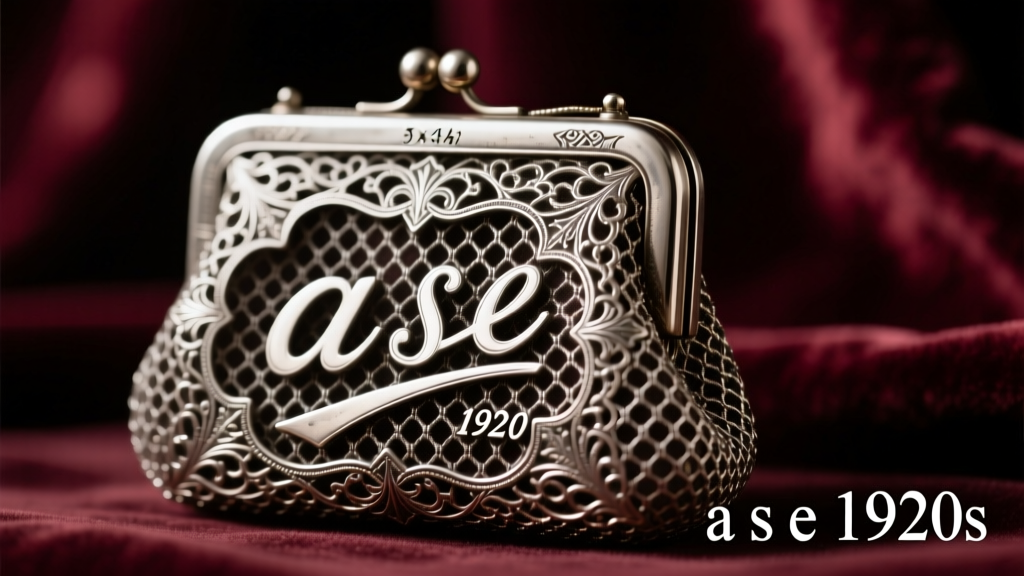
A.S.E. Sterling Silver Mesh Purse: Decoding the Craft, Hallmarks, and Collectibility of a 1920s Art Deco Icon
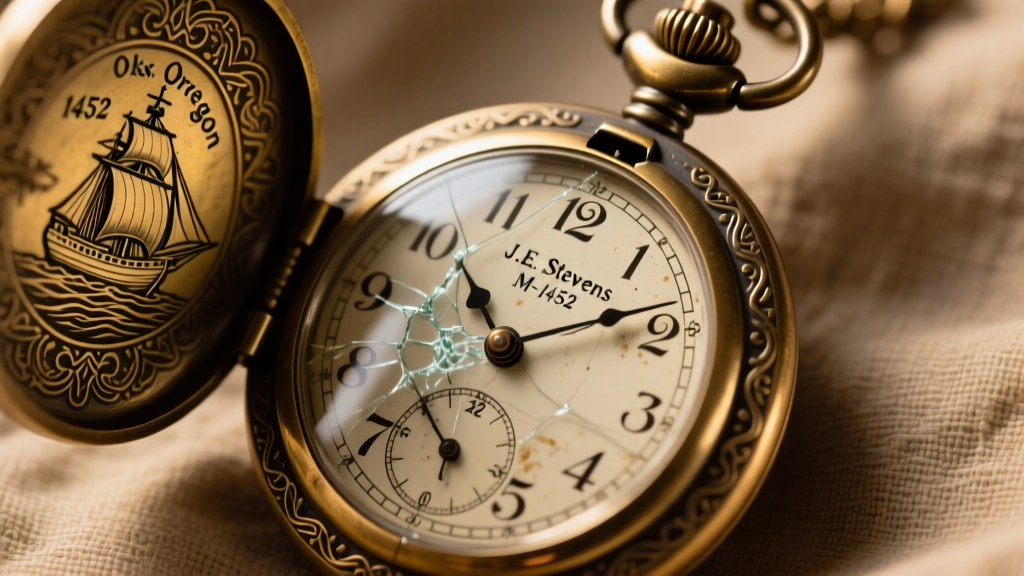
The Banks Boat Battleship Oregon: A Cast-Iron Masterpiece by J.E. Stevens Co., 1906 — M-1452, 6 × 5 Inches

Daum Nancy Paperweight: The Signed Purple Mouse on Green Mound with Long Tail — A 3¼-Inch Masterpiece of French Art Glass
The Babe Ruth Cincinnati Box Baseball: Authentication, Provenance, and Market Significance of a Landmark Autographed Ball
The 1958 Toy Chair 'Little Lounger' — A Captain Kangaroo Cardboard Mail-In Offer: Rarity, Authenticity, and Auction Realities
Fireplaces and Andirons: Cast Iron 'Ladies' Figures in New England, Circa 1800

Franciscan Apple 9½-Inch Dinner Plate: Design Legacy, Production History, and Collector Value
Lot 1139810: A Deep Technical and Historical Analysis of the 1972 Rolex Cosmograph Daytona Ref. 6263 in Stainless Steel with Paul Newman Dial
Relics and Roots: The Journey of Mormon Antiques