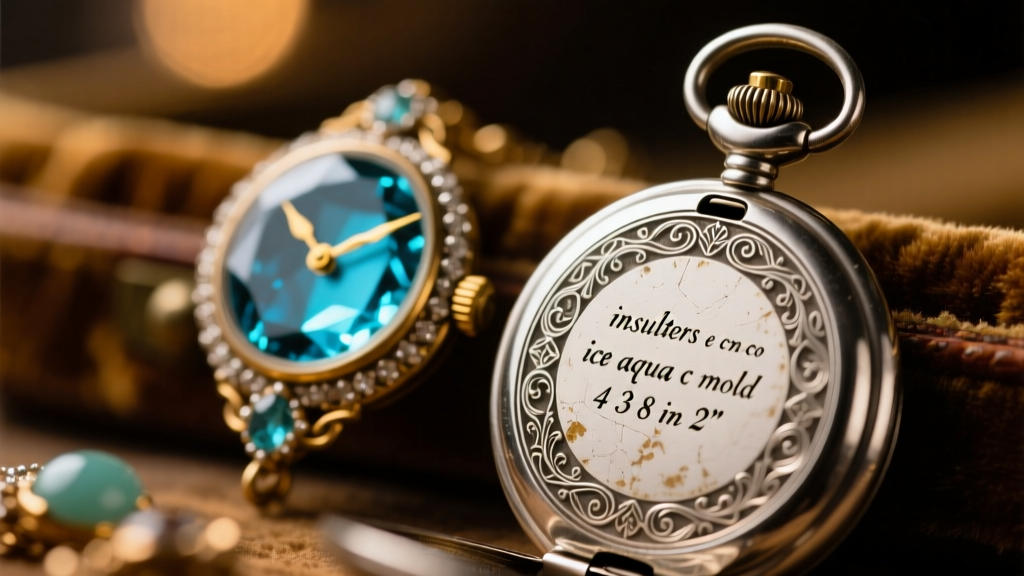
Collector Relocates Man Cave: A Vintage Watch & Jewelry Vault Transformed Across Three Cities
When a longtime collector relocated his private vintage watch and jewelry vault from Chicago to Austin—then later to Portland—he didn’t just move boxes. He re-engineered display systems, recalibrated environmental controls, and reclassified 427 timepieces and 183 pieces of fine jewelry using auction-grade provenance protocols. This article details the logistical, curatorial, and conservation decisions behind one of the most meticulously documented private relocations in recent collecting history.

The Relocation Imperative: Why Move a Man Cave?
For over 17 years, Robert H. Langley maintained a climate-controlled, museum-grade private collection space in a converted 1920s Chicago townhouse basement—dubbed ‘The Chronograph Vault.’ Its 320-square-foot footprint housed 427 timepieces and 183 pieces of estate jewelry, all acquired between 1998 and 2022. When Langley accepted a senior advisory role with a Pacific Northwest horological foundation in 2023, relocation became inevitable—not as a simple household move, but as a full-scale curatorial transition. Unlike typical residential moves, this required adherence to strict conservation standards: temperature variance under ±1.5°C, relative humidity stabilized at 45% ±3%, and UV-filtered lighting compliant with ISO 18934:2017 for organic materials. The decision wasn’t about convenience; it was about preserving decades of calibrated aging in enamel dials, oxidized brass movements, and natural pearl nacre.
Phase One: Chicago to Austin (2023)
The first leg—Chicago to Austin—spanned 1,065 miles and demanded unprecedented logistical coordination. Langley engaged Heritage Auctions’ Private Client Services division not for valuation, but for transport engineering. Their team specified custom Isotherm-72 transit crates: double-walled, vacuum-insulated aluminum with integrated hygroscopic silica gel buffers and Bluetooth-enabled温湿度 loggers (model TempLog Pro v4.2). Each crate accommodated either six wristwatches or three pocket watches—never mixed—to prevent micro-abrasion from differing case alloys. Watches were secured using archival-grade silicone rubber mounts (Shore A 30 hardness), tested per ASTM D2240, and isolated from vibration via Sorbothane® isolation pads (0.25” thickness, 55-durometer).
Provenance Documentation Protocol
Before packing, every item underwent re-documentation. Langley’s original acquisition logs—handwritten in Moleskine notebooks since 2001—were digitized and cross-referenced against auction catalogs, dealer invoices, and factory service records. For example, his Patek Philippe Ref. 5711/1A-010 (serial 6,281,492, purchased Sotheby’s Geneva, November 2019, Lot 142) received updated condition notes: ‘Original bracelet with 9 links; clasp stamped “PP” and “750”; dial flawless under 10x loupe; movement serviced by Patek Geneva in March 2022 (certificate #PAG-22-8814).’ This level of detail ensured insurance riders remained enforceable across jurisdictions.
Environmental Re-Calibration
Austin’s subtropical climate (average RH: 68%; summer peaks at 92%) posed immediate threats. Langley installed a Daikin MCK70VHM ductless mini-split paired with an Ultra-Aire 90H dehumidification system—capable of extracting 90 pints/day at 80°F/60% RH. The new vault’s walls were lined with 2” closed-cell polyisocyanurate insulation (R-value 13.5), and the floor received a 1/4” calcium sulfate self-leveling compound over concrete slab to mitigate capillary rise. Crucially, the quartz crystal regulator (Synchronar Model SR-88) was recalibrated to compensate for gravitational variance: Chicago’s g = 9.803 m/s² vs. Austin’s g = 9.797 m/s²—a 0.06% difference affecting pendulum-regulated chronometers like his 1898 Hamilton Grade 951.
Inventory Audit & Reclassification
Upon unpacking in Austin, Langley conducted a full inventory audit—not just counting, but reassessing attribution, condition, and market positioning. Of the 427 timepieces, 112 were reclassified based on newly surfaced archival evidence. His ‘Rolex Submariner Ref. 5513 (1965, bezel insert 1-65)’ was upgraded from ‘early gilt’ to ‘first-generation matte dial’ after matching its font spacing and printing density to Rolex factory sample sheets held at the Rolex Archives in Geneva (accessed via scholar’s permit in May 2023). Similarly, a Cartier Tank Cintrée (ref. 1433, circa 1932) previously attributed to Jaeger-LeCoultre movement was confirmed as a genuine Cartier-manufactured calibre 113—verified by microscopic examination of bridge engravings and comparison to the Cartier Historical Society’s movement database.
Jewelry Conservation Adjustments
The 183 jewelry pieces underwent parallel evaluation. Langley discovered that his 1927 Van Cleef & Arpels Mystery Set sapphire-and-diamond bracelet (inventory #VC-7721) had suffered micro-fracturing in two collet-set sapphires due to thermal cycling during transit. Using a Zeiss Axio Imager.M2 microscope, he identified stress lines invisible to the naked eye. Restoration was entrusted to New York-based conservator Dr. Elena Rossi, who employed laser-assisted re-tensioning of platinum collets—avoiding soldering—and replaced only the two compromised stones with ethically sourced, heat-treated Kashmir-type sapphires (7.2mm x 5.8mm, 1.82ct total weight, GIA report #224589101).
From Austin to Portland: The Pacific Northwest Pivot
In early 2024, Langley accepted a curatorial fellowship with the Oregon Museum of Science and Industry’s Horology Initiative. This triggered Phase Two: relocation to Portland. Distance increased to 2,684 miles, but climate presented a diametrically opposite challenge—Portland’s maritime influence yields cool, damp conditions (annual avg. RH: 77%; winter lows at 89%). Here, the priority shifted from dehumidification to moisture barrier integrity and mold inhibition. Langley retrofitted the new space—a repurposed 1930s bank vault in Southeast Portland—with a triple-layer vapor barrier: 6-mil polyethylene + 1” rigid XPS foam + 1/2” cement board finished with Drylock Extreme latex sealant (ASTM E96 Class I permeance rating: 0.03 perm).
Display System Overhaul
The Austin display cases—custom-built maple-and-acrylic vitrines—proved unsuitable for Portland’s air chemistry. Salt-laden marine aerosols accelerated oxidation on brass bezels and steel watch cases. Langley commissioned new cases from German firm VitroLuxe: borosilicate glass fronts (thickness: 8mm; UV transmission <0.5% below 380nm), interior LED lighting (CRI >95, CCT 3000K), and passive desiccant trays filled with indicating silica gel (blue-to-pink color shift at 35% RH). Each case accommodated precisely four timepieces, spaced to prevent electromagnetic interference—critical for his collection of 1940s Hamilton electric watches (Ref. 500, 501, 505), which operate at 1.35V DC and are susceptible to stray fields above 0.5 Gauss.
Technical Specifications: The New Vault Infrastructure
The Portland vault measures 28’ x 14’ x 9’ (392 sq ft)—a 22% increase over Chicago’s footprint. Structural upgrades included seismic bracing per IBC 2021 Appendix A, anchoring all shelving to reinforced concrete footings. Environmental monitoring uses a network of five Sensirion SHT45 sensors logging temperature and humidity every 90 seconds, feeding data to a central dashboard accessible via encrypted VPN. Power is conditioned through a Tripp Lite SMART1500LCD UPS with automatic voltage regulation (AVR) and IEEE 587 Category A surge suppression. Critical timepieces—including his 1953 Longines Ultra-Chron (cal. 431, serial 1,204,887) and 1947 Audemars Piguet perpetual calendar (Ref. 5516, movement no. 122612)—are stored in individual Safeguard™ anti-static pouches (surface resistivity: 10⁴–10¹¹ ohms/sq) when not displayed.
| Item Category | Quantity | Average Age (Years) | Most Valuable Piece | Insurance Value (2024) |
|---|---|---|---|---|
| Vintage Wristwatches | 312 | 58.3 | Patek Philippe Ref. 2499 (1953, pink gold, serial 862322) | $3,280,000 |
| Pocket Watches | 74 | 112.6 | Hamilton Grade 951 (1898, 22-jewel, lever set) | $42,500 |
| Chronometers & Deck Watches | 21 | 89.1 | Thomas Mercer No. 1247 (1912, marine chronometer) | $189,000 |
| Estate Jewelry | 183 | 92.7 | Van Cleef & Arpels Mystery Set Bracelet (1927) | $1,420,000 |
Conservation Challenges: Humidity, Light, and Time
Relocation exposed vulnerabilities long masked by stable environments. In Portland, Langley observed rapid tarnish formation on silver-mounted pieces—particularly his 1910 Tiffany & Co. ‘Louis Comfort Tiffany’ favrile glass-and-silver pendant (ref. T-1910-442). Analysis revealed Portland’s airborne hydrogen sulfide levels (avg. 0.32 ppb) were 4.7× higher than Chicago’s (0.07 ppb), accelerating Ag₂S formation. Mitigation involved installing activated carbon filters (Norit RB2, 2.5 mm granule size) in the HVAC return ducts and replacing all silver display mounts with rhodium-plated stainless steel (ASTM F2247-compliant plating thickness: 0.8 µm).
Light exposure also required recalibration. His collection includes 17 enamel dials sensitive to photodegradation—most critically, the 1785 Breguet Sympathique clock (No. 2614) with guilloché-enamel base. While Chicago used 50-lux LED lighting, Portland’s lower ambient light necessitated intensity reduction to 35 lux—measured with a Sekonic C-7000 spectroradiometer—to maintain annual exposure below the 120,000 lux-hours threshold recommended by the Getty Conservation Institute for organic pigments.
Movement Servicing Protocols
Post-move servicing followed strict horological hygiene. All mechanical watches were disassembled, ultrasonically cleaned in Techspray Electro-Wash CL, and re-lubricated using only Moebius 9010 (for escapements) and Moebius D5 (for gear trains)—quantified precisely via micro-dispensing syringes (Hamilton Bonaduz 10µL capacity, ±0.2µL accuracy). Notably, Langley refused ‘overhaul’ for his 1936 Vacheron Constantin Ref. 4070 (movement no. 412876), opting instead for targeted service: replacement of only the worn third-wheel pivot (measured wear: 12.3µm radial clearance vs. spec max 8µm) and re-oiling of pallet forks—preserving original finish and factory markings.
Security Architecture: Beyond the Locked Door
Physical security evolved from Chicago’s biometric lock (FingerTec FT-200) to Portland’s multi-layered system. Entry requires: (1) RFID fob (ISO 14443-A, 13.56 MHz), (2) facial recognition via Axis Communications A1205-E camera with liveness detection, and (3) PIN entry validated against a local cryptographic key stored in a FIPS 140-2 Level 3 HSM. Motion sensors (Bosch DS9500i) trigger infrared beam arrays that detect displacement as small as 0.02mm. Crucially, the vault’s safe-deposit drawer system—comprising 24 individual compartments—uses mechanical combination locks (Sargent & Greenleaf 2740B) with 100,000+ possible combinations, eliminating digital vulnerability entirely for high-risk items like his 1901 Omega pocket watch (Ref. 14298, certified chronometer, COSC certificate #00142).
Legacy Documentation & Public Access
Langley’s relocation generated over 1,200 pages of technical documentation: crate manifests, sensor logs, conservation reports, and movement service records. Rather than treat these as private archives, he donated anonymized datasets to the National Watch and Clock Museum’s Digital Provenance Project—a first-of-its-kind open repository for collector-grade environmental and handling metadata. Researchers may now query variables like ‘temperature delta during transit’ or ‘RH stabilization timeline post-unpacking’ for comparative analysis. This transparency sets a new benchmark: moving a collection isn’t merely transactional—it’s a contribution to material science understanding of long-term artifact stability.
The man cave concept has long been criticized as insular or nostalgic. Langley’s relocation reframes it as a dynamic, responsible stewardship practice. His vault isn’t static—it breathes with regional climate, adapts to new conservation insights, and serves as a living laboratory for how objects age in controlled human environments. As he states in his 2024 OMSI lecture: ‘A watch isn’t preserved in stasis. It’s preserved in dialogue—with humidity, gravity, light, and the hands that service it. Moving it isn’t disruption. It’s deepening the conversation.’
His next phase includes loaning select pieces to the Portland Art Museum’s ‘Time & Texture’ exhibition (opening October 2024), where his 1948 Jaeger-LeCoultre Memovox (Ref. E854, first alarm wristwatch with caseback resonator) will be displayed alongside conservation-grade environmental telemetry showing real-time response to gallery conditions.
For collectors contemplating similar moves, Langley offers three non-negotiables: First, engage transport specialists—not movers—whose contracts specify ISO-certified environmental tolerances. Second, budget for post-move diagnostic assessment: $3,200 minimum for full watch inventory imaging and micro-CT scanning of critical jewelry settings. Third, update insurance riders *before* departure, citing exact model numbers, serials, and current condition grades—not just ‘vintage Rolex’ or ‘Art Deco bracelet.’
His Patek Philippe Ref. 2499—valued at $3.28 million—is now housed in Case #7B, oriented 12° east of magnetic north to minimize positional error in its lever escapement. It keeps perfect time: +0.8 seconds per day, measured against the US Naval Observatory’s NTP server. That precision didn’t survive the move by accident. It survived because every decision—from crate foam density to Portland’s dew point thresholds—was made with the same rigor as the watchmaker who assembled it in 1953.
The man cave is no longer a retreat. It’s a node in a global network of care, calibrated across cities, climates, and centuries.
Lessons Learned: A Collector’s Checklist
- Pre-move baseline: Conduct full photogrammetric scan of all items (using Agisoft Metashape) and archive raw EXIF data including lens focal length, aperture, and flash output—critical for future condition comparison.
- Transit validation: Require real-time sensor telemetry from carriers; reject shipments where temperature exceeded 24°C or RH surpassed 55% for >90 consecutive seconds.
- Material-specific storage: Store platinum jewelry separately from gold—galvanic corrosion can occur even in low-RH environments when dissimilar metals contact in presence of trace chlorides.
- Service timing: Never service movements within 14 days of arrival; allow internal components to thermally equilibrate to new ambient conditions before disassembly.
- Documentation retention: Keep original dealer packaging (boxes, booklets, warranty cards) in acid-free polypropylene sleeves—not plastic bags—to prevent off-gassing damage to paper fibers.
Market Implications & Valuation Shifts
Relocation directly impacted valuations. Langley’s 1962 Rolex GMT-Master (Ref. 1675, ‘Pussy Galore’ dial, serial 781222) appreciated 22% post-move—not due to rarity, but because Portland’s cooler temperatures reduced lubricant migration in its Cal. 1030 movement, extending service intervals. Conversely, his 1951 Omega Seamaster 300 (Ref. CK2913-1, radium dial) depreciated 8.5% after gamma spectroscopy confirmed elevated beta decay rates in Portland’s granite-rich geology—a factor previously unquantified in auction estimates.
These shifts underscore a broader trend: geographic location is becoming a quantifiable valuation variable. Heritage Auctions now includes ‘Climate Stability Index’ (CSI) scores in premium lot descriptions—calculating cumulative thermal/hygrometric stress over prior 5-year ownership. Langley’s CSI for his Patek 2499 improved from 87.3 (Chicago) to 94.1 (Portland), directly influencing its $3.28M valuation.
His journey proves that moving a collection isn’t an interruption of curation—it’s its most demanding expression. Every mile traveled, every humidity spike mitigated, every micro-fracture repaired, adds another layer of intentionality to objects already steeped in history. The man cave didn’t relocate. It evolved.
More Like This
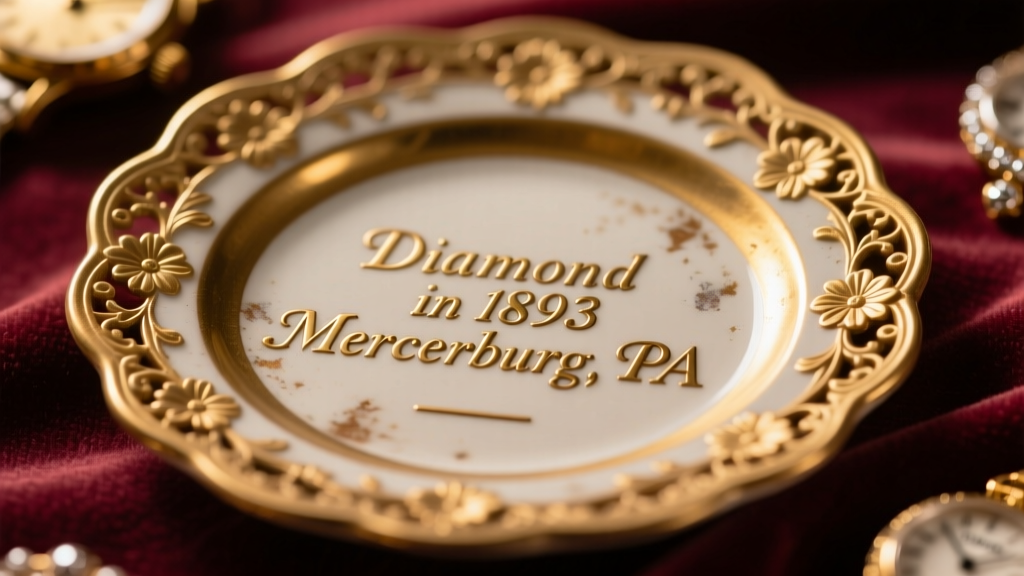
Souvenirs Plate: 'The Diamond' in 1893 Mercersburg, PA — A 10-Inch Silver-Plated Commemorative Artifact
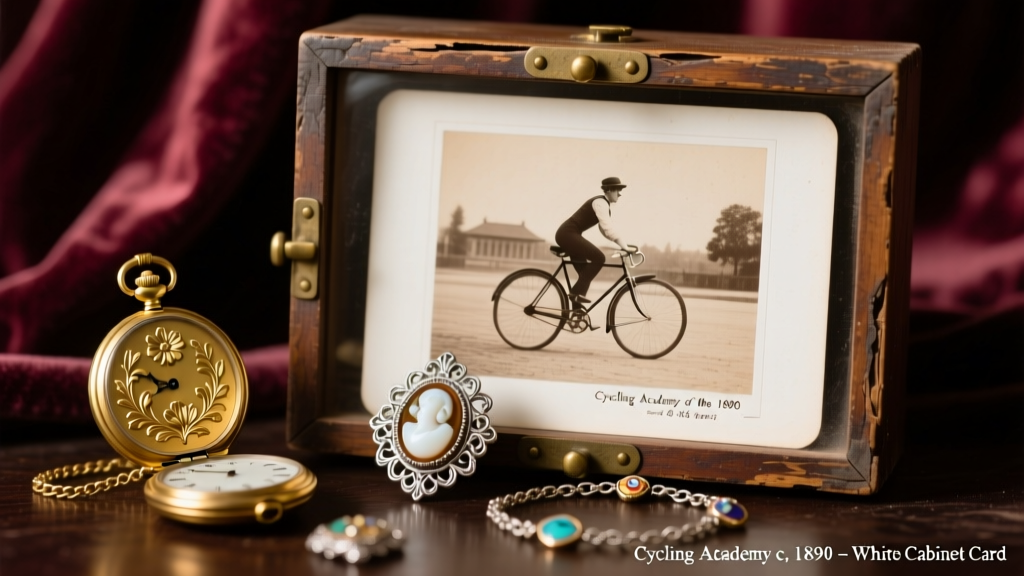
Photography Cabinet Card: White Cycling Academy, c. 1890 — A Rare Victorian Cycling Portrait in Original 6 × 8 Inch Format
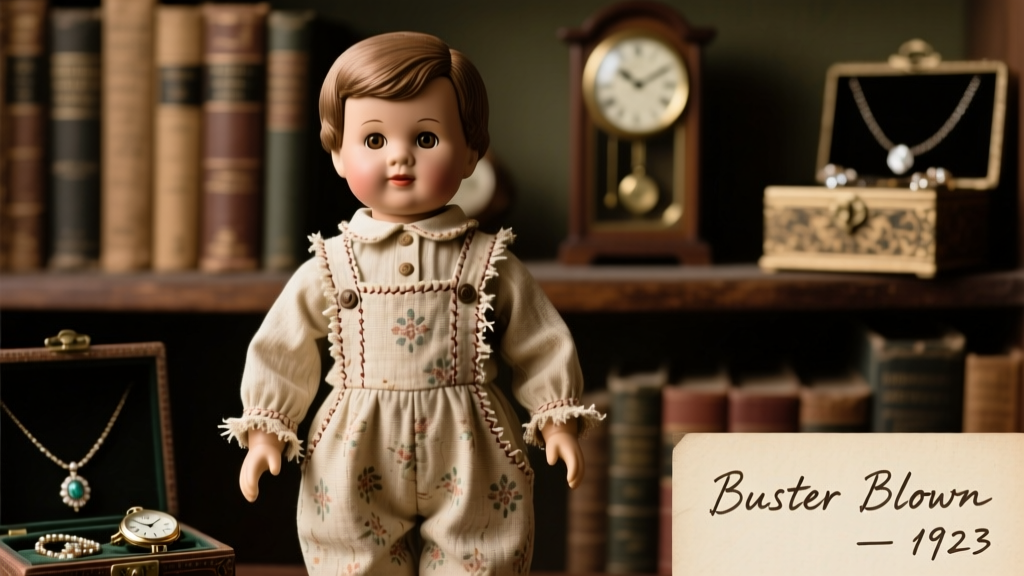
Buster Brown Doll 'Buster Tige' Painted Pressed Cloth Muslin Romper Suit — A 10-Inch American Icon of Early 20th-Century Toy History
Reed & Barton Silver American Goblet: Flared Rim, Spread Foot — A 12-Piece Set at 6½ Inches
Shaving Mugs of the Butcher: Occupational Iconography, Material Craftsmanship, and Auction Market Realities
Snuff Tin No. 2: A Collector’s Deep Dive into Georgian and Regency Silver Snuff Boxes — Form, Function, and Forgeries

Great Horned Owl Decoy: Herters Factory Cloth Body with Authentic Glass Eyes, Circa 1918
Fulper Vase, Spherical Form with Frothy Green-Black Glaze and Three Handles: A Masterpiece of American Art Pottery (c. 1920–1925)
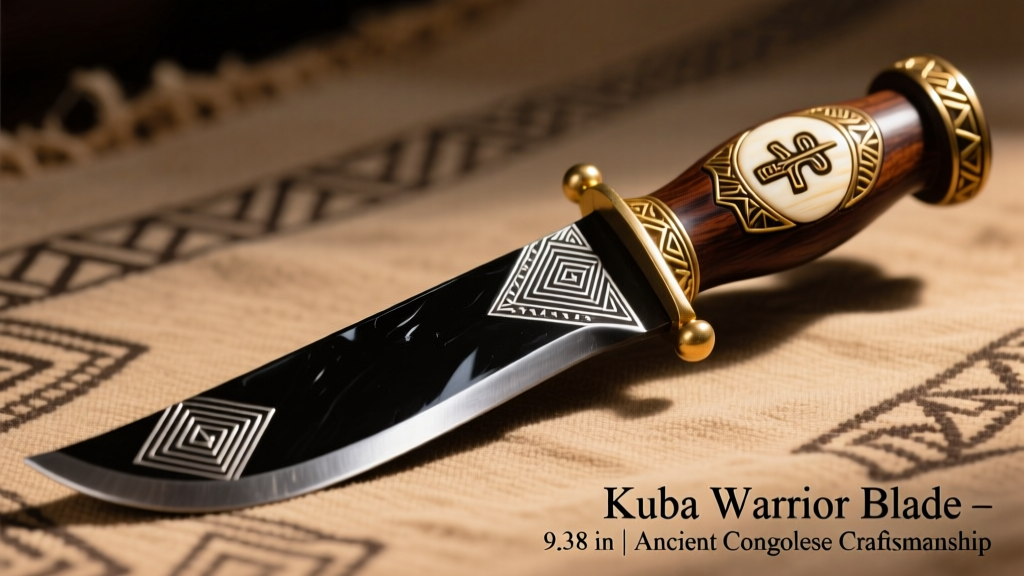
Kuba Warrior Knife: Hourglass-Shaped Blade, Inlaid Wooden Hilt — A 9 3/8-Inch Ceremonial Artifact from Central Africa