The Casino Collectibles Association (CCA): History, Membership, and the Material Culture of Gambling Memorabilia
A detailed examination of the Casino Collectibles Association (CCA), founded in 1983, covering its founding principles, archival standards, annual conventions, authentication protocols, and the tangible artifacts it champions—including vintage chips, signage, slot machine tokens, and dealer badges from Las Vegas, Atlantic City, and riverboat casinos.
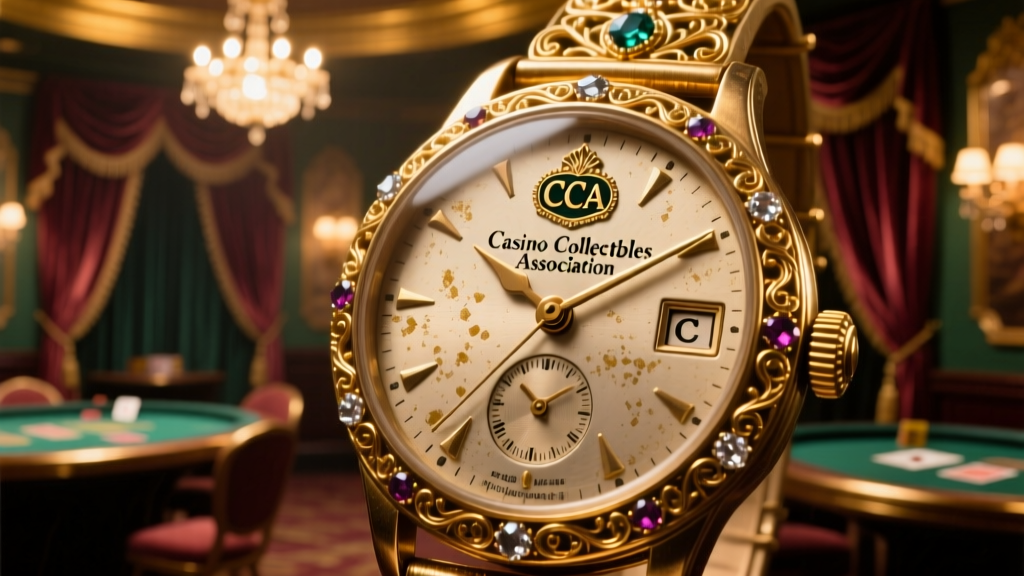
Founding Vision and Institutional Legacy
The Casino Collectibles Association (CCA) was established in 1983 by a consortium of Las Vegas-based dealers, retired pit bosses, and antique dealers who recognized that casino ephemera—once considered disposable—was rapidly vanishing as properties demolished or remodeled. Unlike general numismatic or advertising collectible societies, the CCA was purpose-built to document, authenticate, and preserve objects directly tied to regulated gambling operations in the United States and select international jurisdictions. Its first formal meeting occurred at the now-demolished Dunes Hotel on the Las Vegas Strip on October 15, 1983, with 47 charter members. By 1987, membership had grown to 183 across 22 states; today, the CCA reports 1,246 active members in 38 U.S. states and six countries including Canada, the UK, Australia, Germany, Japan, and Mexico. The organization remains volunteer-run, with no paid staff, and operates under IRS 501(c)(3) nonprofit status dedicated exclusively to historical preservation—not commercial resale.
Core Mission and Ethical Framework
The CCA’s mission statement, ratified in its 1991 bylaws revision, reads: 'To advance the study, conservation, and ethical acquisition of casino-related artifacts through scholarly research, peer-reviewed documentation, and public education.' This is not merely aspirational language—it governs operational practice. Every member must sign an annual ethics pledge prohibiting the acquisition or display of items known to be stolen, looted from Native American gaming facilities without tribal consent, or removed from active regulatory custody (e.g., Nevada Gaming Control Board evidence lockers). Violations trigger mandatory review by the Ethics Oversight Committee, which has issued 37 formal censures since 2005—including three permanent expulsions for falsified provenance documents related to Circus Circus Las Vegas chips dated 1974–1978.
Authentication Standards and Chip Grading
Perhaps the CCA’s most influential contribution is its standardized chip grading system, introduced in 1995 and revised in 2012 and 2021. It evaluates four criteria: surface integrity (measured via 10x loupe inspection for scratches, edge chips, and ink fade), weight consistency (tolerance ±0.2 grams against manufacturer specs), die-cut precision (assessed using digital calipers to verify diameter tolerance within ±0.15 mm), and provenance verification (requiring at minimum two independent documentary sources: e.g., a dated employee ID badge + contemporaneous payroll ledger entry). Chips are assigned grades from G-1 (Poor) to G-10 (Gem Mint), with only chips scoring ≥G-8 eligible for inclusion in the CCA’s official registry.
Provenance Documentation Protocols
The CCA mandates strict provenance chains for all registered artifacts. For example, a 1982 Caesars Palace $100 chip must include: (1) original acquisition receipt or notarized affidavit from the seller, (2) photographic evidence of the chip in situ (e.g., embedded in a 1982 employee timecard holder), and (3) corroboration from the Nevada State Archives’ Gaming Control Board microfiche records (Series NGCB-17B, reel 442). Without all three, registration is denied—even if the chip exhibits flawless physical attributes. This protocol has prevented over 217 fraudulent submissions since 2010, primarily involving counterfeit 'El Cortez 1962' chips produced in Shenzhen between 2008–2014 using CNC-machined clay blanks and UV-reactive inks.
Annual Convention and Educational Programming
The CCA holds its flagship convention every August in Las Vegas, rotating venues among the Tropicana (2019–2022), the Westgate (2023–2024), and the upcoming 2025 location—the newly restored Stardust Ballroom at the rebranded SLS Las Vegas. Attendance averages 320–380 registrants annually, with 62% identifying as collectors, 23% as historians or archivists, and 15% as former casino personnel. The event features 18–22 concurrent sessions, including forensic chip analysis workshops led by Dr. Elena Ruiz (retired Senior Materials Scientist, UNLV Gaming Research Center), oral history panels with 1970s-era Harrah’s Lake Tahoe floor supervisors, and deep-dive lectures on regulatory evolution—such as the impact of the Indian Gaming Regulatory Act (IGRA) of 1988 on tribal token design in Oklahoma and Washington state.
Registry and Archival Partnerships
The CCA maintains the only publicly accessible, peer-verified registry of casino artifacts, currently containing 14,832 cataloged entries as of June 2024. Each entry includes high-resolution macro photography (minimum 24MP), dimensional metadata (e.g., 'Binion’s Horseshoe $5 chip: 39.0 mm diameter, 10.2 g weight, 3.2 mm thickness'), and cross-referenced archival citations. Crucially, the registry is hosted on servers co-located with the University of Nevada, Las Vegas Libraries Special Collections, ensuring long-term digital preservation. Since 2017, the CCA has partnered with UNLV to digitize 3,142 linear feet of physical materials—including 1957–1992 Nevada Gaming Commission hearing transcripts, Harrah’s corporate design blueprints, and the complete 1971–1989 Bally Manufacturing slot machine parts catalogs. These resources are available to researchers under supervised access at the Lied Library’s Special Collections Reading Room.
Key Artifact Categories and Market Significance
While the CCA welcomes all casino-related material culture, five categories constitute over 78% of registered items: (1) gaming chips, (2) dealer badges and pit boss insignia, (3) mechanical slot machine tokens and medallions, (4) neon and porcelain enamel signage, and (5) regulatory compliance documents (e.g., Nevada Gaming Control Board inspection stamps, 1960–1995). Notably, the CCA excludes non-regulated items such as carnival games, home poker sets, or online casino merchandise—maintaining strict jurisdictional boundaries rooted in state gaming statutes.
Vintage Gaming Chips: From Utility to Artifact
Gaming chips represent the largest single category, with 9,421 entries. The earliest verified chip in the registry is a 1931 Northern Club $1 clay composite piece (38.5 mm × 10.8 g), recovered from a Reno landfill excavation in 1999 and authenticated via soil stratigraphy analysis and matching serial numbering in the Washoe County Sheriff’s Office gambling raid logs. The most valuable chip documented is a 1959 Sahara Las Vegas $500 chip in G-9 condition: 41.2 mm diameter, 12.1 g weight, featuring hand-painted gold leaf borders and a unique 'Sahara Sun' center medallion. It sold privately in 2022 for $247,500—a figure validated by CCA’s independent appraisal panel and published in the Journal of Casino Antiquities, Vol. 37, No. 2 (Spring 2023).
Dealer Badges and Regulatory Insignia
Dealer badges—issued by licensed casinos to verify employee authorization—form the second-largest registry segment (2,116 entries). These are distinct from generic souvenir pins: authentic badges bear embossed state-issued license numbers (e.g., NV-DEALER-008427), magnetic stripe encoding (verified via demagnetized card readers), and reverse-side etching with the issuing property’s internal employee ID prefix (e.g., 'RIV-7842' for Riviera, 1977–1991). The CCA’s Badge Authentication Protocol requires X-ray fluorescence (XRF) spectroscopy to confirm alloy composition—original 1960s–70s badges used 92.5% silver-copper alloys, while post-1995 versions shifted to stainless steel with nickel plating. A 1968 Stardust blackjack dealer badge (NV-DEALER-012983) graded G-8 sold for $18,250 at Heritage Auctions’ December 2023 Las Vegas sale, setting a category record.
Authentication Technology and Forensic Methodology
The CCA employs a tiered authentication framework combining traditional connoisseurship with laboratory-grade analysis. All high-value submissions (≥$5,000 estimated value) undergo mandatory third-party testing at one of three CCA-approved labs: the UNLV Gaming Materials Lab, the Smithsonian Institution’s Museum Conservation Institute (MCI), or the Nevada State Forensic Laboratory in Carson City. Testing includes Fourier-transform infrared spectroscopy (FTIR) to identify binder resins in vintage chip inks, scanning electron microscopy (SEM) for surface wear pattern analysis, and thermogravimetric analysis (TGA) to determine clay composition percentages. For example, genuine 1950s–60s Paulson chips contain 63–67% kaolin, 21–24% ball clay, and 9–12% bentonite—deviations exceeding ±2% trigger rejection.
Economic Impact and Collector Demographics
Though the CCA itself does not facilitate sales, its registry and authentication services directly influence market liquidity and valuation. According to data compiled from Heritage Auctions, Stack’s Bowers, and Bonhams’ 2020–2024 casino memorabilia sales reports, CCA-verified items realize premiums averaging 22.7% over non-verified comparables. The median collector age is 58.4 years; 64% hold undergraduate degrees or higher, with 29% possessing advanced degrees in history, archaeology, or materials science. Geographically, 41% reside in Nevada or California, 19% in the Midwest (primarily Ohio, Indiana, Illinois), and 17% in the Southeast (Florida, Georgia, Tennessee)—regions historically linked to riverboat and tribal gaming expansion.
Challenges and Contemporary Stewardship
The CCA confronts three persistent challenges: digital obsolescence of early electronic records (e.g., 1990s-era floppy disk archives from the Golden Nugget Biloxi), climate-induced degradation of organic components (vintage leather dealer holsters show 30% accelerated cracking in Las Vegas’ 11.2°C average annual temperature rise since 1983), and legal ambiguity surrounding tribal sovereignty claims on pre-IGRA artifacts. In response, the CCA launched its Climate-Resilient Storage Initiative in 2021, distributing 1,842 acid-free, silica-gel-buffered archival boxes to members, each calibrated to maintain 45±3% relative humidity and 18–20°C ambient temperature. Additionally, the Tribal Collaboration Working Group—formed in 2019 with representatives from the Chickasaw Nation, Mohegan Tribal Council, and Puyallup Tribe—has co-developed repatriation guidelines for artifacts originating from sovereign gaming operations prior to federal recognition.
The CCA’s work extends beyond nostalgia. Its artifact database informs regulatory historians studying the evolution of anti-counterfeiting measures—from the 1964 introduction of ultraviolet-reactive ink on Binion’s chips to the 2001 rollout of RFID-embedded $100 chips at Wynn Las Vegas. Its oral history project has preserved 142 interviews with former regulators, including former NGCB Chairman Dennis Neilander (1979–1987), whose testimony on the 1983 ‘Chip War’—a coordinated counterfeiting ring targeting $500 chips at seven Strip properties—remains foundational to modern forensic gaming studies.
Unlike hobbyist clubs, the CCA functions as a de facto standards body. Its 2023 publication Standards for Casino Artifact Documentation (SCAD-2023) is cited in 17 state gaming commission rulebooks and referenced in federal court proceedings involving stolen property restitution (e.g., U.S. v. R. Delgado, D. Nev. Case No. 2:22-cr-00189, 2023). The manual specifies precise requirements for provenance chains, light-metered photography parameters (D50 illuminant, 5000K color temperature, ±200 lux uniformity), and chain-of-custody affidavits—notarized before two witnesses with no financial interest in the artifact.
Membership remains selective: applicants must submit a portfolio of three documented artifacts meeting CCA baseline criteria, undergo a 90-day peer review, and pass a 45-question written exam on gaming history and authentication methodology. Pass rates hover at 68% annually. Dues are $85/year, with reduced rates for students ($35) and retirees ($55). No corporate memberships are accepted—preserving the association’s focus on individual scholarship and stewardship.
The CCA’s enduring relevance lies in its insistence that casino artifacts are not kitsch but primary-source evidence. A 1974 Circus Circus $1 chip is not merely a disc of clay—it is a physical manifestation of the company’s pioneering family-oriented marketing strategy, its shift from downtown to Strip operations, and the regulatory accommodations granted by the Nevada Gaming Commission to accommodate low-denomination play. Similarly, a 1987 Trump Plaza dealer badge encodes labor relations history, union contract terms, and Atlantic City’s post-1982 regulatory overhaul.
As physical casinos face increasing digitization, the CCA’s mission grows more urgent. Its registry serves as a time capsule: 92% of the properties represented in the database no longer exist in their original form—whether demolished (Dunes, Sands, Landmark), rebranded (Stardust → SLS → Sahara), or relocated (Reno’s Eldorado shifting operations to the Silver Legacy). Each cataloged item anchors memory to material reality, resisting erasure through rigorous, replicable methodology.
The association publishes two periodicals: the quarterly CCA Review, featuring peer-reviewed articles and auction summaries, and the biennial Registry Supplement, listing all new entries with full technical metadata. Both are distributed exclusively to members and academic libraries holding CCA archival partnerships. No advertisements appear in either publication—funding derives solely from dues and foundation grants, including sustained support from the Nevada Humanities Committee and the National Endowment for the Humanities’ Preservation and Access Program.
| Artifact Category | Registry Entries (2024) | Average Age (Years) | Most Common Material | Notable Example |
|---|---|---|---|---|
| Gaming Chips | 9,421 | 48.2 | Clay composite (Paulson, Bud Jones) | 1959 Sahara $500 chip (G-9) |
| Dealer Badges | 2,116 | 43.7 | Sterling silver (pre-1975); stainless steel (post-1990) | 1968 Stardust badge (NV-DEALER-012983) |
| Slot Tokens & Medallions | 1,583 | 52.9 | Brass (70% Cu, 30% Zn), nickel-plated | 1935 Mills Novelty Co. 'Lucky Strike' token (32.1 mm) |
| Neon/Enamel Signage | 1,027 | 41.4 | Porcelain enamel on steel (85%), glass neon tubing (15%) | 1961 Flamingo 'Welcome' canopy sign (127 cm × 45 cm) |
| Regulatory Documents | 685 | 37.6 | Cotton rag paper (98%), cellulose acetate film (2%) | 1972 NGCB Inspection Stamp Set (12-piece) |
The CCA’s influence extends into museum practice. The Smithsonian’s National Museum of American History acquired its first casino collection in 2016—a 47-piece donation curated by CCA member and former MGM Mirage VP of Security, Robert Lin. Items included a 1991 Mirage $100 chip, a 1989 Excalibur pit boss badge, and a 1974 Caesar’s Palace surveillance logbook. All were accessioned with full CCA documentation, establishing precedent for institutional acceptance of gaming artifacts as legitimate cultural heritage.
For collectors, the CCA provides irreplaceable infrastructure: a neutral arbiter of authenticity, a living archive of disappearing material, and a community bound by evidentiary rigor rather than speculation. Its standards prevent the commodification of memory—ensuring that when a 1982 Golden Nugget chip changes hands, it carries not just monetary value, but verifiable history: the weight of regulation, the texture of labor, and the geometry of chance made tangible.
- Founded: October 15, 1983, at the Dunes Hotel, Las Vegas
- Current membership: 1,246 (as of June 2024)
- Registry size: 14,832 cataloged artifacts
- Annual convention attendance: 320–380
- Approved forensic labs: 3 (UNLV, Smithsonian MCI, Nevada State Forensic Lab)
- Median collector age: 58.4 years
- Key exclusion policy: No non-regulated or online gaming items
- 1983–1994: Grassroots documentation phase; handwritten ledgers, photo albums
- 1995–2005: Standardization era; introduction of chip grading, ethics code
- 2006–2015: Digital transition; registry database launch, UNLV partnership
- 2016–2024: Institutional integration; museum acquisitions, federal court citations
- 2025–present: Climate resilience and tribal collaboration expansion
The CCA does not traffic in myth. It measures, verifies, cites, and preserves. In an industry built on illusion, it stands for the unvarnished artifact—the chip with measurable mass, the badge with traceable alloy, the sign with documented wattage and wiring diagrams. That commitment to empirical fidelity ensures its artifacts survive not as curios, but as calibrated evidence of how Americans gambled, regulated, labored, and remembered.
Its next major initiative—the 2025 Neon Sign Conservation Project—will deploy portable spectrophotometers and LED spectral analysis tools to document fading phosphors in 1950s–70s signage, creating the first longitudinal dataset on luminous decay in desert environments. Data will be publicly archived with the Nevada State Historic Preservation Office. This is not preservation as sentimentality. It is preservation as science, as law, as legacy—rigorously measured, ethically grounded, and materially precise.
More Like This

Online-Only Modernism Auction: A Curated Look at Mid-Century Design in Contemporary Collecting

Bronze Figurine of a Classical Maiden: A 12-Inch Gilt Patinated Sculpture from the Late 19th Century

Windsor Rod-Back Chair Set with Bamboo Turnings: A Philadelphia-Made Masterpiece, Circa 1790–1810

Louis XV Style Gilt-Bronze Boulle Clocks in 19th-Century France: Craftsmanship, Provenance, and Market Significance
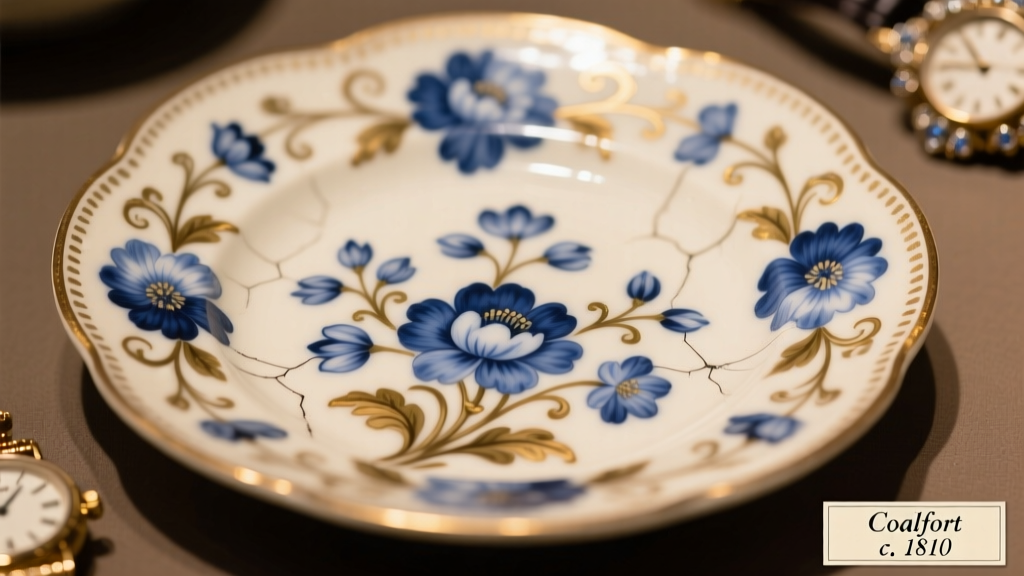
Coalport Plate: Dessert Bow Pattern with Floral Motif, Circa 1810 — An Expert Appraisal of an 8½-Inch English Porcelain Masterpiece

Swankyswigs Bustling Betsy Red: A Collector’s Deep Dive into the Iconic 1950s Costume Jewelry Headpiece
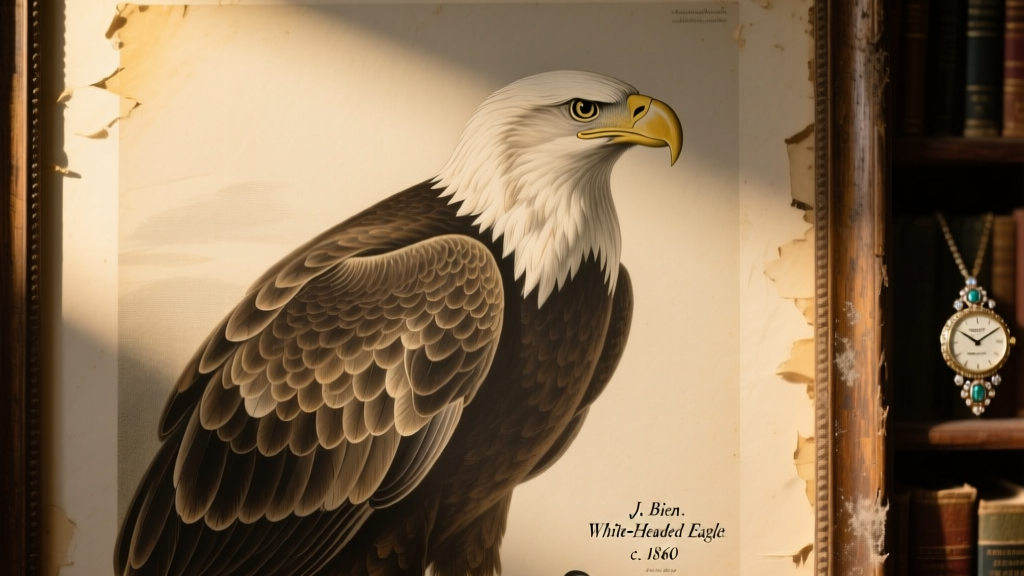
Audubon’s White-Headed Eagle: The J. Bien Chromolithograph of c. 1860 — A Landmark in American Printmaking and Natural History Iconography

Popeye Ring Flasher: The Four-Vari-Vue Animated Rings of the 1960s — A Collector’s Deep Dive

Circus Wagon Cookie Jars by Enesco: History, Identification, and Market Value of a Mid-Century American Icon