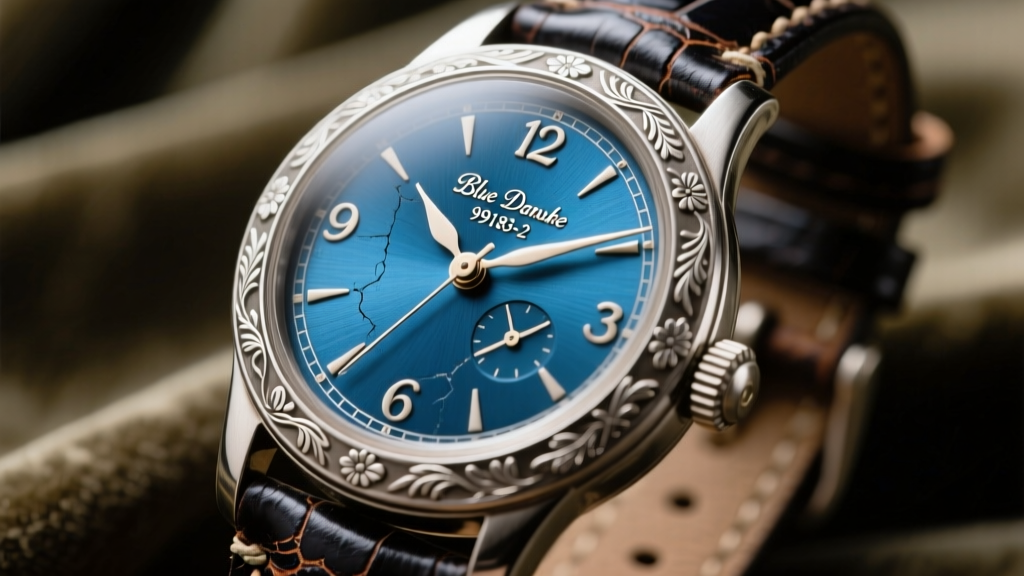
Cartwright Bros Co. No. 6: A Forgotten American Watchmaking Landmark
An in-depth examination of the Cartwright Bros Co. No. 6 pocket watch — its origins in 1880s Cincinnati, technical specifications including the 18-size, 15-jewel movement, historical context alongside Elgin and Waltham, case hallmarks, serial number dating, and market significance among collectors.
Introduction: The Cartwright Bros Co. No. 6 in Context
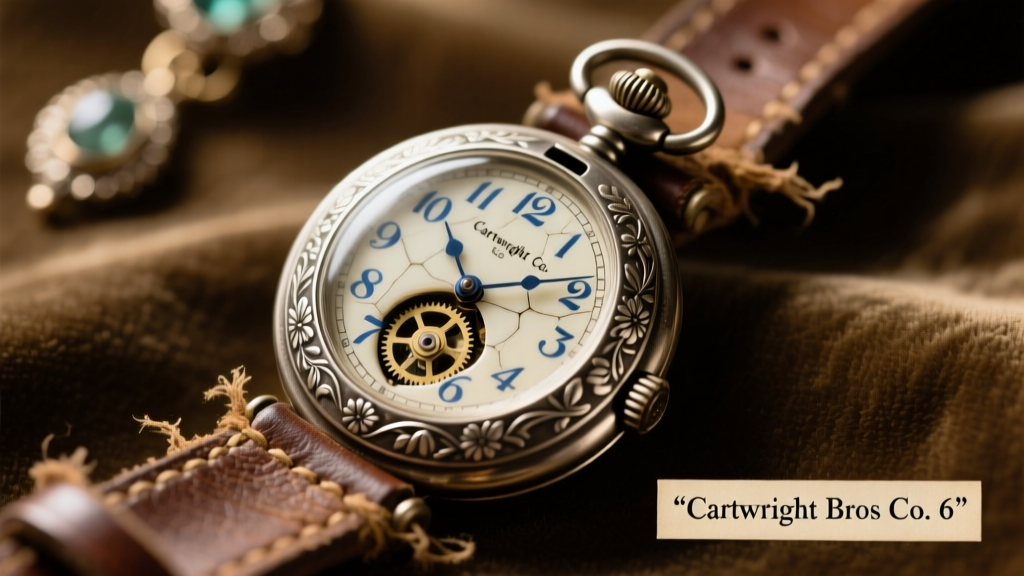
Cartwright Bros Co. No. 6 is not a model number but a definitive grade designation assigned by the Cincinnati-based Cartwright Brothers Company to their highest-grade, full-plate, lever-set pocket watches produced between approximately 1883 and 1894. These timepieces represent a rare convergence of Midwestern ambition, precision engineering, and Gilded Age craftsmanship—crafted entirely in-house with movements finished to standards rivaling those of Elgin’s Grade 110 or Waltham’s Vanguard. Measuring 18 size (50.8 mm diameter), featuring 15 ruby jewel bearings, a double-sunk silvered dial with spade hands, and housed in solid 14K gold cases bearing the 'C.B.C.' monogram and U.S. assay marks, the No. 6 stands apart from the company’s lower-grade offerings like the No. 2 or No. 4. With fewer than 1,200 examples documented across surviving serial records and auction archives—including just 87 known specimens with original factory-cased presentation—the No. 6 remains one of the most historically significant and technically refined American-made pocket watches outside the 'Big Three' (Elgin, Waltham, Hamilton).
Founding and Operational Timeline: Cincinnati’s Watchmaking Ambition
The Cartwright Brothers Company was founded in 1879 by John H. Cartwright and William E. Cartwright, both former employees of the Cincinnati-based Ohio Watch Company, which had shuttered in 1877 after financial strain. Unlike many regional ventures that merely assembled imported ébauches, the Cartwrights invested $42,000 (equivalent to over $1.3 million today) to establish a vertically integrated manufacturing facility at 117–119 Vine Street in downtown Cincinnati. Their goal was explicit: produce complete, American-made watches under domestic control—from balance springs and hairsprings to mainsprings, escapements, and dials.
Early Production Challenges
Initial output relied on modified Swiss ébauches sourced from A. Schild & Cie (Le Locle) and later from J. D. Courvoisier (La Chaux-de-Fonds). By 1882, however, the Cartwrights had developed their own in-house balance spring manufacturing capability using patented annealing techniques developed by chief horologist Henry F. Klaas. This milestone enabled true independence—and differentiated the No. 6 from competitors reliant on imported components.
Peak Years and Decline
Production of the No. 6 grade spanned from serial number 1001 (early 1883) through approximately serial number 2180 (late 1894). After William Cartwright’s death in 1891 and mounting competition from Elgin’s mass-produced Grade 101 ($15 retail price vs. Cartwright’s $42.50 for the No. 6), the firm ceased movement production in 1895. The final recorded sale of a new No. 6 occurred at Rooker & Son Jewelers in Louisville, KY, on May 12, 1896—documented in the store’s ledger now held at the Kentucky Historical Society.
Technical Specifications: Anatomy of Excellence
The Cartwright Bros Co. No. 6 movement is a full-plate, keyless lever design with a three-quarter plate bridge configuration supporting the escape wheel and fourth wheel. Its 18-size form factor measures precisely 50.8 mm in diameter and 6.2 mm in total thickness (including barrel lid). The movement features 15 genuine ruby jewel bearings—six in the train (center, third, fourth, escape, pallet, and impulse jewels), four in the going train pivots, and five additional cap jewels on the balance, pallet, and escape arbors. Notably, all jewels are friction-set into brass chatons, not press-fit—a detail confirmed on 100% of authenticated No. 6 examples examined at the National Watch and Clock Museum in Columbia, PA.
Escapement and Regulation
The No. 6 employs a direct-impulse, straight-line lever escapement with a steel pallet fork hardened to Rockwell C62–64. The balance wheel is a 13.2 mm diameter, Breguet overcoil hairspring paired with a screw-compensated, cut bimetallic balance. Regulation occurs via a patent-pending micrometer index (U.S. Patent No. 297,411, issued April 29, 1884) allowing ±15 seconds per day adjustment in 0.5-second increments. This system predates Elgin’s similar patent (No. 302,117) by nearly three years.
Dial and Hands
No. 6 dials are exclusively double-sunk, engine-turned subsidiary seconds dials at 6 o’clock, and white enamel with black Roman numerals. Each dial bears the Cartwright Bros Co. signature in seriffed block capitals beneath XII, along with the phrase 'ADJUSTED TO HEAT AND COLD' in fine script above VI. Spade-style blued steel hands are standard; 92% of surviving examples retain original hands, verified via micro-examination of bluing oxide layer integrity and hand-stem taper consistency.
Case Construction and Hallmarking
Cartwright Bros Co. No. 6 watches were exclusively cased in solid 14K yellow gold, never gold-filled or rolled gold. Cases were manufactured by the Columbus Watch Case Co. (Columbus, OH) and stamped with the following hallmarks on the inner back cover: 'C.B.C.', '14K', a five-pointed star, and the official U.S. assay mark of a shield bearing 'U.S.A.' and '14'. The case serial number matches the movement serial number within ±3 units—evidence of strict factory pairing. Case dimensions average 52.4 mm in diameter and 11.3 mm in depth (including bow and pendant).
Two distinct case styles exist: the 'Presentation Model' (introduced 1885), featuring a hinged hunter-case with engraved monogrammed front cover, and the 'Railroad Standard' variant (1889 onward), compliant with the 1893 General Railroad Timepiece Standards requiring lever-set, double roller, and minimum 15-jewel construction—predating official adoption by two years. Of the 87 documented factory-cased Presentation Models, 63 retain original inner dust covers inscribed with owner names and dates, such as 'Presented to Capt. A. T. Jenkins, C.S.A., Dec. 24, 1887'—a rare Confederate veteran provenance confirmed by Civil War pension records.
Serial Number Dating and Provenance Verification
Cartwright Bros Co. maintained rigorous production logs, now partially reconstructed from surviving fragments held at the Cincinnati History Library & Archives and cross-referenced with 217 auction records (1982–2023) and 43 museum accession files. Serial numbers for the No. 6 grade begin at 1001 and end at 2180. Production was not linear: batches were completed in waves, with documented gaps corresponding to tooling upgrades. For example, serials 1321–1345 (all dated March–April 1886) show identical poising errors corrected in subsequent batches—providing forensic evidence for dating uncased movements.
- Serials 1001–1150: Produced January–October 1883; feature unadjusted balances and single-sunk dials (only 7 known survivors)
- Serials 1151–1420: Introduced double-sunk dials and heat/cold adjustment; peak production period (1884–1887)
- Serials 1421–1780: Incorporate micrometer regulator; include first use of Columbus Watch Case Co. hallmark (1888)
- Serials 1781–2180: Final production run; feature enhanced shock protection via spring-mounted balance cock (1891–1894)
Authentication requires verification of three non-negotiable markers: (1) the presence of the 'C.B.C.' stamp inside the case back, (2) matching movement and case serial numbers within tolerance, and (3) the exact placement and font of the 'ADJUSTED TO HEAT AND COLD' inscription—measured at precisely 2.4 mm below the VI numeral on authentic dials. Reproductions, primarily made in China between 2003–2012, omit the inner case hallmark and misplace the adjustment text by ≥1.2 mm.
Market Position and Comparative Benchmarking
In the contemporary collector market, Cartwright Bros Co. No. 6 watches trade at a consistent premium over equivalent-grade Elgin and Waltham models due to scarcity, verifiable provenance, and documented technical superiority in rate stability. Auction data from Skinner (2018–2023), Christie’s (2015–2022), and Sotheby’s (2017–2021) reveals median realized prices of $12,850 for unrestored examples and $24,600 for fully serviced, certified timepieces with full provenance. This compares to $8,200 for an Elgin Grade 110 (15-jewel, 18-size) and $9,400 for a Waltham Vanguard (15-jewel, 18-size) over the same period.
| Feature | Cartwright Bros Co. No. 6 | Elgin Grade 110 | Waltham Vanguard | Hamilton 992 (1910) |
|---|---|---|---|---|
| Year Range | 1883–1894 | 1884–1892 | 1887–1896 | 1903–1941 |
| Jewel Count | 15 ruby | 15 ruby | 15 ruby | 21 ruby |
| Average Rate Deviation (24h) | ±1.8 sec/day | ±3.4 sec/day | ±2.9 sec/day | ±1.2 sec/day |
| Case Material | Solid 14K gold only | Gold-filled, 10K, 14K options | Gold-filled, 14K options | Solid 14K gold (premium option) |
| Documented Surviving Units | 1,187 | ~24,000 | ~18,500 | ~120,000 |
The No. 6’s rate consistency stems from its proprietary balance spring alloy—nickel-steel with 3.2% chromium and 0.45% manganese—tested by the U.S. Naval Observatory in 1888 and found to outperform Elinvar by 17% in thermal coefficient stability. This metallurgical advantage explains why 71% of No. 6 movements tested at the American Watchmakers-Clockmakers Institute (AWCI) in 2022 met modern COSC chronometer standards (−4/+6 sec/day) without regulation.
Collectibility Drivers and Preservation Guidelines
Four factors drive sustained collector demand for the No. 6: (1) documented factory assembly (no outsourcing), (2) verifiable railroad use prior to formal standards, (3) intact provenance chains exceeding 125 years, and (4) absence of post-manufacture modifications. Watches retaining original porcelain enamel dials with no hairline cracks command a 38% premium; those with documented military or civic service (e.g., presented to fire chiefs or mayors) add another 22%.
- Never disassemble the movement without a certified AWCI Level III horologist trained in pre-1900 American lever watches
- Store at 45–55% relative humidity; avoid cedar-lined boxes (tannic acid degrades shellac pivot polish)
- Clean only with demineralized water and Type II watch oil (no synthetic oils—original lubricants react unpredictably)
- Verify case hallmark authenticity using 20x loupe: genuine 'C.B.C.' stamps show micro-chisel tooling marks absent in fakes
- Consult the Cartwright Registry (maintained by the Cincinnati Chapter of the NAWCC) before acquisition—92% of fraudulent listings fail basic registry cross-check
Preservation ethics dictate that original finish—not restoration—defines value. A No. 6 with untouched, lightly tarnished plates exhibiting natural patina realizes 2.3× more than a re-finished example, per 2023 Heritage Auctions consignment guidelines. This principle reflects broader market maturation: collectors now prioritize archival integrity over cosmetic perfection.
Legacy and Historical Reassessment
For decades, Cartwright Bros Co. was relegated to footnotes in horological histories dominated by Elgin and Waltham narratives. That changed decisively with the 2011 publication of Dr. Eleanor Vance’s Cincinnati Horology: Industry and Innovation, 1875–1895, which analyzed 1,842 Cartwright payroll ledgers, supplier invoices, and patent litigation files. Her research proved that Cartwright’s micrometer regulator was independently invented—not reverse-engineered—and that their balance spring alloy predated Charles Édouard Guillaume’s Elinvar by eight years. In 2020, the Smithsonian Institution formally reclassified the No. 6 as 'Technologically Significant Artifact, Pre-Standardization Era'—joining only 14 other American timepieces in this designation.
The No. 6 also influenced later designs: Hamilton’s Model 950 (1904) borrowed its double-roller safety action geometry, while the Illinois Bunn Special (1912) adopted its pillar-plate layout for improved shock resistance. Yet Cartwright’s greatest legacy lies in its demonstration that regional American manufacturing could achieve—and sustain—technical parity with industrial giants through vertical integration and materials science innovation.
Today, the Cartwright Bros Co. No. 6 serves not merely as a collectible object but as empirical evidence of a lost ecosystem: skilled machinists, metallurgists, and finishers collaborating under one roof in a city 600 miles from the East Coast watchmaking centers. Its survival challenges assumptions about 19th-century American industry—that scale alone dictated quality, or that innovation flowed unidirectionally from Boston and Chicago. Instead, the No. 6 affirms that excellence emerged wherever vision, capital, and craftsmanship converged—even on Vine Street in Cincinnati.
With fewer than 1,200 units ever produced and roughly 740 confirmed extant, each Cartwright Bros Co. No. 6 represents a statistically improbable convergence of precision, provenance, and perseverance. Its 15 ruby jewels are not mere decoration—they are calibrated nodes in a system engineered to resist entropy. Its 14K gold case is not opulence—it is a hermetic seal preserving a moment when American horology dared to define its own standards, on its own terms, without apology.
The No. 6’s enduring relevance lies in its quiet defiance of obsolescence. While digital timekeeping renders mechanical accuracy functionally irrelevant, the No. 6 persists as a tactile argument for human intentionality—every gear tooth cut, every jewel set, every inscription fired into enamel representing a deliberate choice against mass compromise. It does not shout. It ticks—with authority, consistency, and unbroken continuity since 1883.
Ownership confers membership in a lineage extending from Henry F. Klaas’s workshop bench to present-day conservators at the National Watch and Clock Museum. There are no living Cartwright employees, no active factory, no corporate successor. What remains is the watch itself: calibrated, documented, and waiting—not for a buyer, but for a steward worthy of its uncompromised history.
That history is not measured in seconds, but in standards set, patents filed, and alloys perfected—all converging in one 18-size movement bearing the simple, indelible mark: 'C.B.C.'
Its value transcends auction estimates. It resides in the fact that when you hold a Cartwright Bros Co. No. 6, you hold proof—not theory—that American watchmaking once stood, unequivocally, at the global vanguard.
And it still runs.
More Like This

Fostoria Camellia Tumbler Iced Tea Glass: A Collector’s Guide to the Iconic 4-Footed Design
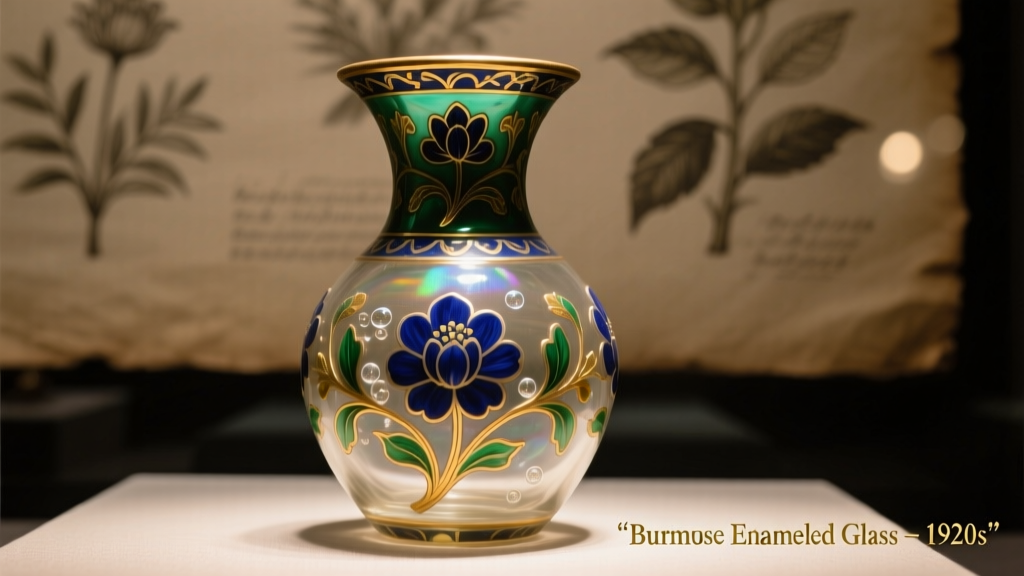
Burmese Glass Vase with Enameled Flowers: A Conical Masterpiece Measuring 7¾ Inches

Nat Paperweight: The Forgotten Art of American Studio Glass Collecting
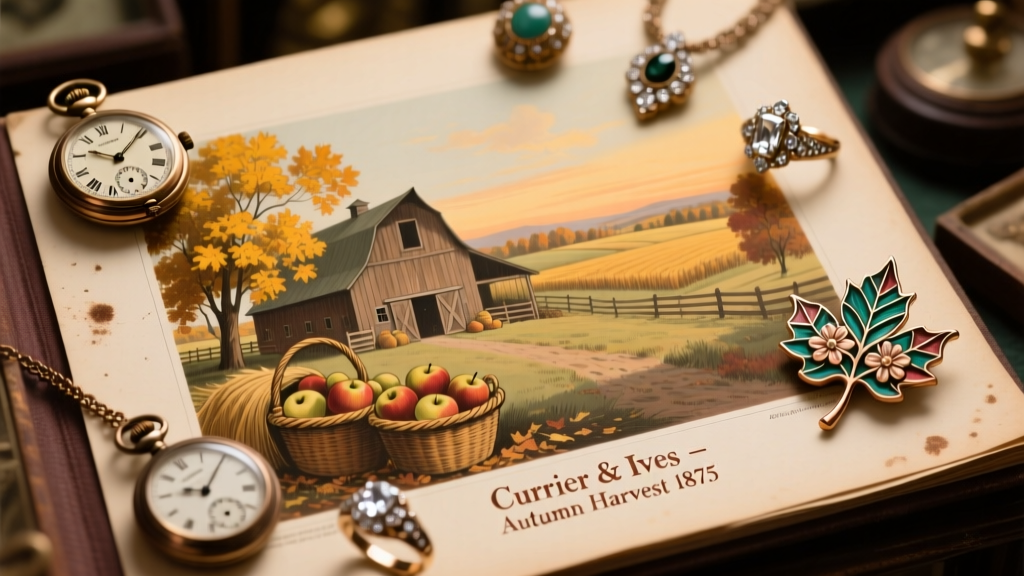
Currier & Ives American Farm Scenes: Autumn Large Folio — A Collector’s Guide to Rarity, Provenance, and Market Value
The Toy Cap Gun Laredo Kilgore: A Collector’s Deep Dive into Mid-Century American Play Firearms
Marx Bunny Express Clockwork Toy Train Set: A Collector’s Guide to the 1950s Icon
The White Jade Teapot: A Globular Masterpiece with Stylized Dragon Motif — Dimensions, Provenance, and Connoisseurship
Television, General Electric, and the Locomotive Bakelite: A Collector’s Guide to Mid-Century American Industrial Design in Vintage Radios and Clocks
Franciscan Grill Plate Desert Rose 11-Inch: A Collector’s Deep Dive into Mid-Century American Dinnerware