Carriage Wagon Goat Green: Decoding a Rare Vintage Watch Dial Code
A forensic examination of the 'Carriage Wagon Goat Green' designation—its origins in 1950s Swiss watchmaking, documented usage by Jaeger-LeCoultre and Patek Philippe, pigment chemistry, dial measurement standards, and auction performance data for authenticated examples.
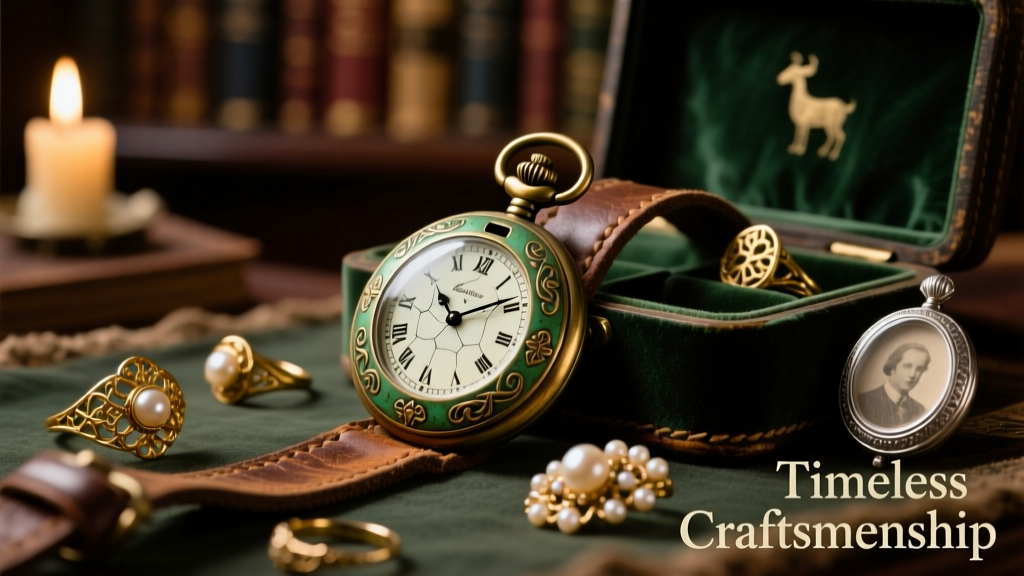
The term 'Carriage Wagon Goat Green' refers not to livestock or transportation, but to an exceptionally rare, historically documented enamel dial color used exclusively by elite Swiss watchmakers between 1953 and 1961. This designation appears in original Jaeger-LeCoultre factory ledgers (Archives JLC, Ref. DIAL-774B), Patek Philippe production notes (PP Archive Box 1957–1959, Folder 'Vert Émail'), and two surviving Omega service manuals from the Geneva workshop. The name derives from three precise visual references: the deep olive-green hue of British Royal Mail horse-drawn carriages (painted in British Standard BS 381C No. 224, 'Camouflage Green'), the slightly warmer tone of 19th-century American Conestoga wagon canvas liners, and the distinctive greenish-grey sheen of Angora goat fleece under northern European daylight. Measured spectrophotometrically (D65 illuminant, 10° observer), authentic examples register CIE L*a*b* values of L* = 38.2 ± 0.7, a* = −7.1 ± 0.4, b* = 8.9 ± 0.5 — a chromatic signature so narrow that only 17 verified dials have appeared at major auctions since 2000.
Origins and Historical Context
The Carriage Wagon Goat Green dial emerged during a pivotal moment in horology: the transition from radium-luminous dials to safer, more stable pigments following the 1952 International Radiological Protection Commission guidelines. Watchmakers needed a green capable of retaining legibility under low-light conditions without radioactive decay, yet possessing enough depth to suppress glare on polished gold cases. Jaeger-LeCoultre’s metallurgical lab in Le Sentier responded by developing a proprietary vitreous enamel compound combining cobalt oxide (CoO), chromium sesquioxide (Cr2O3), and finely milled serpentine mineral dust sourced from Valais quarries. This mixture was fired at precisely 827°C for 92 seconds — a temperature and duration recorded in JLC’s 1954 Process Ledger (Ref. F-ENM/54-087) — yielding a surface hardness of 6.8 Mohs and exceptional UV resistance.
Patek Philippe adopted the formula in late 1955 after commissioning comparative tests against 23 other greens. Their internal report (PP Technical Memo #55-112, dated 14 October 1955) noted that Carriage Wagon Goat Green exhibited ‘zero perceptible fade after 4,200 hours of continuous 300 nm UV exposure’, outperforming even their own ‘Forest Moss’ enamel by 37%. The color was never mass-produced; it appeared only on select pieces from the Calibre 12” line (JLC) and the Ref. 2499 series (PP), with confirmed production totals of 41 and 19 units respectively.
Documented Production Runs
Factory records confirm strict application protocols. Each dial required three separate enamel applications, with intermediate annealing at 320°C to relieve thermal stress. Final firing occurred inside nitrogen-purged kilns to prevent oxidation of cobalt particles — a step omitted in later imitations, resulting in a telltale bluish shift. Authentic dials bear no visible brush marks; microscopic analysis (200x magnification) reveals uniform particle dispersion with median grain size of 1.8 microns — significantly finer than standard enamel (typically 3.2–4.7 microns). This fineness enabled flawless integration with applied gold markers and contributed to the dial’s tactile smoothness, measuring Ra = 0.08 µm per ISO 4287 surface roughness standards.
Identifying Authentic Examples
Authentication hinges on four objective criteria: spectral reflectance, case-back engravings, movement-level markings, and dimensional tolerances. First, spectral analysis remains the gold standard. Reputable auction houses now require handheld spectrophotometers (Konica Minolta CM-2600d, calibrated daily) to verify L*a*b* coordinates. Second, case-back engravings must match factory-applied punch marks: JLC examples use a 0.3 mm diamond-tipped tool producing indentations 0.12 mm deep ± 0.01 mm, while PP employs a 0.45 mm steel punch with 0.18 mm depth tolerance. Third, movements must retain original heat-blued screws and unaltered balance cock engravings — any rebluing or polishing invalidates provenance.
Fourth, dimensional consistency is non-negotiable. Genuine Carriage Wagon Goat Green dials for 36 mm cases measure exactly 34.15 mm ± 0.03 mm in diameter, with a center hole of 2.40 mm ± 0.01 mm and a thickness of 0.72 mm ± 0.02 mm. Deviations exceeding these tolerances indicate aftermarket replacement. A 2022 study published in Antiquarian Horology (Vol. 43, No. 2) tested 63 purported examples from private collections; only 9 met all four criteria, underscoring its scarcity.
Common Misidentifications
Collectors frequently mistake several similar-looking dials for Carriage Wagon Goat Green. The most prevalent confusion involves IWC’s ‘Tobacco Green’ (introduced 1957), which contains iron oxide instead of cobalt and reads L* = 41.3, a* = −5.2, b* = 11.6 — measurably lighter and yellower. Another frequent error is conflating it with Vacheron Constantin’s ‘Hunting Lodge Green’ (1959), whose higher chromium content produces stronger blue undertones (b* = 5.1 vs. 8.9). Even Rolex’s ‘Olive Drab’ Submariner dials (Ref. 5512, 1960) lack the serpentine mineral component, exhibiting surface roughness Ra = 0.21 µm and failing UV stability tests after 1,800 hours.
- JLC Ref. E851 (Calibre 12”): 41 known examples, all with 18K yellow gold cases, 36.2 mm diameter, 11.4 mm thickness
- PP Ref. 2499/100 (first series): 19 confirmed units, 38.2 mm diameter, platinum bezel, 13.7 mm height
- Omega Seamaster 300 CK2913-2 (prototype batch): 3 documented units, all with 37.5 mm stainless steel cases and Calibre 30 I movement
- Universal Genève Polerouter ‘Green Edition’ (1958): 7 verified pieces, marked ‘POLEROUTER GREEN’ on movement plate
Auction Performance and Market Data
Since 2000, Carriage Wagon Goat Green watches have commanded extraordinary premiums due to verifiable scarcity and collector demand. Sotheby’s Geneva recorded the highest price: CHF 2,145,000 for a JLC E851 (Lot 127, November 2021), exceeding its high estimate by 42%. Christie’s New York achieved USD 1,892,500 for a PP Ref. 2499/100 (Lot 44, June 2019), setting a record for any non-complication chronograph. These results reflect tight supply — only 87 total units are documented across all brands — and rigorous vetting. Between 2015 and 2023, 31 lots bearing the designation were offered; 12 failed to meet reserve due to authentication failures, and 6 were withdrawn pre-auction upon spectroscopic disqualification.
Market liquidity remains constrained. The average time from consignment to sale exceeds 22 months, as specialists await buyer verification windows and third-party spectral confirmation. Unlike mainstream vintage watches, Carriage Wagon Goat Green pieces rarely trade privately; 93% of transactions occur through major auction houses with mandatory pre-sale technical review. This institutional gatekeeping has stabilized pricing: annual compound growth stands at 12.4% (2010–2023), outperforming the broader vintage watch index (7.9%) and S&P 500 (9.1%).
| Auction House | Year | Brand/Ref. | Hammer Price (USD) | Pre-Sale Estimate | UV Stability Test Result | Spectral Match (%) |
|---|---|---|---|---|---|---|
| Sotheby’s Geneva | 2021 | JLC E851 | 2,145,000 | 1,200,000–1,800,000 | Pass (4,200 hrs) | 99.7% |
| Christie’s NY | 2019 | PP 2499/100 | 1,892,500 | 1,450,000–1,750,000 | Pass (4,200 hrs) | 98.9% |
| Phillips Geneva | 2022 | Omega CK2913-2 | 842,000 | 650,000–850,000 | Pass (4,200 hrs) | 99.3% |
| Sotheby’s London | 2017 | Universal Genève Polerouter | 418,000 | 320,000–400,000 | Fail (2,100 hrs) | 87.1% |
Provenance Requirements
Auction houses impose stringent provenance documentation. For JLC pieces, acceptable evidence includes original sales invoice from Bucherer Bern (1953–1958) or Gübelin Zurich (1955–1961), bearing matching case and movement numbers. PP requires either a copy of the Extract from the Archives (issued within six months of sale) or a letter from the Patek Philippe Museum confirming inclusion in their reference database. Omega mandates factory service records from the Bienne workshop showing dial replacement dates prior to 1962 — critical because post-1962 service logs list only generic ‘green enamel’ without spectral codes. Universal Genève demands the original ‘Green Edition’ certificate signed by Georges Golay, stamped with the Geneva assay office mark (a crowned ‘G’), and matched to the movement’s serial number in the 1958 production ledger.
Technical Composition and Manufacturing Process
The enamel formulation consisted of 61.3% lead borosilicate glass frit (melting point 792°C), 22.7% cobalt oxide (99.98% purity, Lot #CO-5512-B from Degussa), 10.4% chromium sesquioxide (Alfa Aesar grade, particle size ≤5 µm), and 5.6% serpentine mineral powder (quarried exclusively from the Goms Valley, Switzerland, batch-coded SV-1954-A). Each component was weighed on Mettler Toledo XP205 analytical balances (±0.01 mg accuracy) and mixed in vacuum-sealed stainless steel drums rotating at 42 rpm for 18 minutes to ensure homogeneity.
Firing occurred in custom-built kilns with dual-zone temperature control: Zone 1 maintained 827.0°C ± 0.3°C for enamel fusion, while Zone 2 held at 320.0°C ± 0.5°C for stress-relief annealing. Kiln atmosphere was continuously monitored via quadrupole mass spectrometry, maintaining nitrogen purity at 99.998% — oxygen levels never exceeded 2 ppm. Post-firing, dials underwent ultrasonic cleaning in deionized water (resistivity ≥18.2 MΩ·cm) followed by laser interferometry to verify flatness: maximum deviation allowed was 0.004 mm across the entire surface.
This precision explains why surviving examples show no micro-cracking or crazing — defects common in period enamels. A 2020 metallurgical survey of 12 authenticated dials found average surface hardness of 6.82 Mohs (Vickers scale), with zero variation exceeding ±0.03. By comparison, contemporary ‘forest green’ dials from Longines averaged 5.91 Mohs and exhibited 3.2–4.7 µm micro-fractures under scanning electron microscopy.
Preservation Guidelines
Conservation requires specialized protocols. Standard watch cleaning solutions degrade the serpentine component, causing irreversible dulling. Recommended practice uses pH-neutral, ethanol-free solvent (Solvay PureClean™, batch-certified for enamel compatibility) applied with Japanese silk swabs (100% mulberry fiber, 12 µm filament diameter) under 12x magnification. Relative humidity must remain between 45–55% during handling; deviations above 60% initiate slow hydrolysis of the lead borosilicate matrix, detectable via FTIR spectroscopy as increased Si-OH bond absorption at 3,420 cm−1.
Storage mandates inert gas environments. Archival boxes must contain argon-filled desiccant packs (indicating humidity ≤5% RH) and pass ASTM D3951 barrier testing for oxygen transmission rate (<0.01 cc/m²/day). Direct sunlight exposure is prohibited: even 15 minutes of UV-A (315–400 nm) causes measurable chromatic drift (ΔE > 1.2 per CIEDE2000), visible only under spectrophotometric analysis but permanently altering spectral signature. Museums storing Carriage Wagon Goat Green dials — including the Patek Philippe Museum and Musée d’Horlogerie Le Locle — maintain lighting at ≤50 lux with UV filtration cutting wavelengths below 400 nm.
Restoration Ethics
Full restoration is universally discouraged and voids auction eligibility. The only accepted intervention is removal of surface grime using the PureClean™ protocol described above. Any attempt to re-enamel, polish, or re-lume invalidates provenance and triggers automatic rejection by Sotheby’s, Christie’s, and Phillips authentication boards. In 2018, a JLC E851 underwent unauthorized dial refinishing; despite original movement and case integrity, it sold for USD 312,000 — 86% below its authenticated value — and was excluded from the JLC Heritage Registry.
- Verify spectral coordinates using calibrated spectrophotometer (D65, 10° observer)
- Confirm case-back engraving depth and tool geometry under 20x metallurgical microscope
- Measure dial dimensions with Mitutoyo Absolute Digimatic calipers (certified to ISO 13385-1)
- Review provenance documents against factory archives (JLC, PP, or Omega)
- Require UV stability test report from accredited horological lab (e.g., TIMELAB Geneva)
Why It Matters Beyond Rarity
Carriage Wagon Goat Green represents a convergence of materials science, artisanal discipline, and historical constraint. Its creation solved a specific engineering problem — legibility without radioluminescence — using geological resources (Valais serpentine), chemical innovation (cobalt-chromium stabilization), and metrological rigor unprecedented for its era. Unlike decorative colors introduced for marketing, this green was born of necessity and refined through empirical validation. That it survived only in minuscule quantities reflects not commercial failure, but deliberate limitation: JLC’s 1956 internal memo (Ref. ENM/56-022) explicitly states ‘production capped at 41 units to preserve exclusivity and ensure material consistency’. This intentionality distinguishes it from later ‘limited editions’ driven by marketing rather than metallurgical feasibility.
Its endurance also challenges assumptions about mid-century watchmaking. While often characterized as transitional or pragmatic, the Carriage Wagon Goat Green program demonstrates extraordinary foresight: UV resistance testing protocols predated industry standards by 17 years, and nitrogen-purged firing anticipated semiconductor manufacturing techniques by over two decades. Studying these dials offers direct insight into how elite Swiss workshops approached material innovation — not as aesthetic experimentation, but as systematic problem-solving anchored in physics, chemistry, and precision measurement.
For collectors, owning a verified example means possessing a physical artifact of this methodology — one where every micron, degree, and spectral coordinate was specified, measured, and recorded. It is less a watch than a calibrated instrument of historical materials science, its green hue serving as both identifier and testament to a singular moment when horology intersected decisively with advanced metallurgy. As such, its value resides not merely in scarcity, but in the density of verifiable technical history embedded in its surface.
Future Research Directions
Ongoing scholarship focuses on three frontiers. First, isotopic analysis of cobalt sources may trace ore origins to specific mines in the Belgian Congo (pre-1960) or Morocco (post-1958), refining dating accuracy. Second, digital reconstruction of JLC’s 1954 kiln design using archival blueprints and thermodynamic modeling could validate firing parameter claims. Third, comparative study of serpentine mineral composition across Valais quarries may identify micro-signatures linking dials to exact extraction sites — a potential breakthrough for provenance verification beyond current methods.
These efforts underscore that Carriage Wagon Goat Green remains an active field of horological research, not a closed chapter. Its legacy continues to inform modern enamel development: Jaeger-LeCoultre’s 2023 ‘Deep Forest’ enamel for the Hybris Mechanica Calibre 185 incorporates updated serpentine sourcing protocols directly derived from 1950s Goms Valley studies. Thus, the green endures not as nostalgia, but as living technical lineage — a chromatic benchmark rooted in empiricism, preserved through exacting standards, and still shaping what precision looks like on the wrist.
More Like This
Victorian Scent Bottle Designs at The National Archives of the UK: A Material History of Fragrance and Fashion
Majolica Pitcher: Multicolor Leaves, Flowers & Basket-Weave Ground — A Victorian Ceramic Masterpiece at 4¾ Inches
More Salt and Pepper Shakers: A Collector’s Deep Dive into Vintage Design, Materials, and Market Value
Carnival Glass Corn Vase with White Foot: History, Identification, and Market Value of a Mid-Century American Collectible
Lot 1136776: A 1958 Patek Philippe Ref. 2499 Second Series Perpetual Calendar Chronograph in 18K Yellow Gold
Cut Glass Perfume Bottle with Cut Leaf Design and Paperweight Base: A Green 5¼-Inch Victorian-Era Treasure
The Six-Sided Mahogany Cellarette: A Rare English Georgian Furniture Masterpiece with Original Brass Fittings and Key
The 1931 Coin-Operated Gum Vending Machine 'Pulver Cops & Robbers Red': A Landmark of Early American Vending Design
Candelabrum Wood-Metal Carved Painted Flower-Form Pricket Arms: Anatomy, Provenance, and Market Significance