Candy Containers Trumpet Milk Glass: A Collector’s Guide to American Art Glass Confections
An authoritative examination of trumpet-shaped milk glass candy containers produced in the United States from the 1930s through the 1960s — covering manufacturers, design evolution, material science, market values, and authentication techniques.
The Trumpet Form: A Signature Shape in Mid-Century American Glass
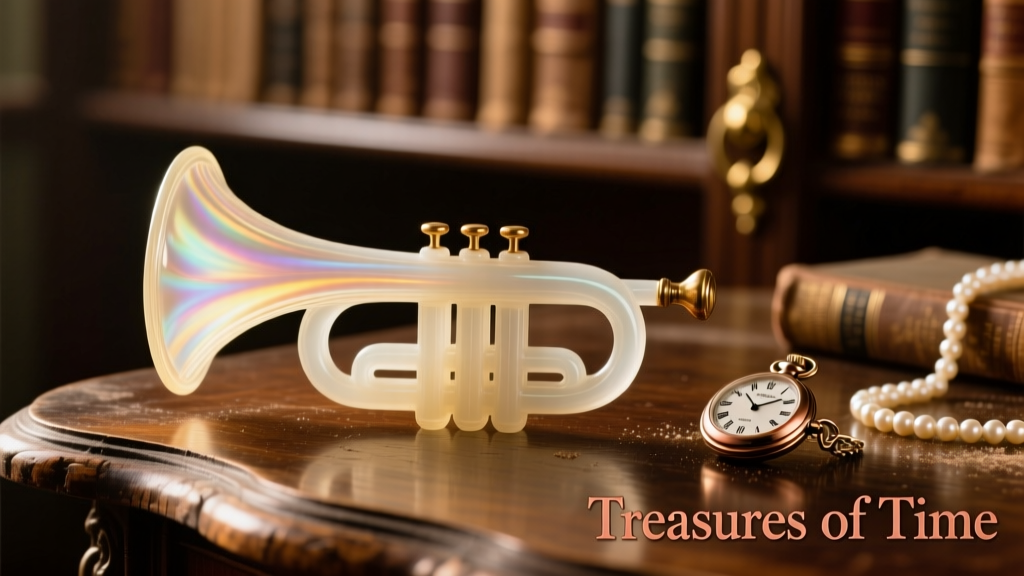
Milk glass trumpet candy containers are among the most distinctive and collectible American decorative glass objects of the mid-20th century. Produced primarily between 1935 and 1965, these flared, conical vessels were designed for retail display and home use — holding mints, chocolate drops, or fruit candies in drugstores, soda fountains, and kitchen pantries. Their name derives not from musical association but from their precise silhouette: a cylindrical base tapering smoothly into a wide, flared mouth resembling a brass instrument’s bell. Unlike earlier Victorian compotes or later mod-era abstract forms, the trumpet shape offered optimal visibility, structural stability, and efficient pouring — all while delivering bold visual presence. Measuring typically 5½ to 7 inches tall with diameters ranging from 3¾ to 5 inches at the rim, these pieces balance heft and elegance. The opaque white ‘milk’ glass used was not merely aesthetic; its high opacifier content (primarily tin oxide and arsenic trioxide) ensured contents remained visible yet shielded from light degradation — a functional necessity for sugar-based confections.
Manufacturers and Production Histories
Three American firms dominated trumpet milk glass production: Westmoreland Glass Company (Winterstown, PA), Anchor Hocking Glass Corporation (Lancaster, OH), and Indiana Glass Company (Duncan, IN). Each employed distinct mold marks, composition variations, and distribution strategies that directly impact today’s collector value and authenticity verification.
Westmoreland Glass Company: The Premium Standard
Founded in 1889, Westmoreland entered the candy container market aggressively in 1937 after acquiring the rights to several patented mold designs from the defunct Imperial Glass Corp. Their trumpets — particularly the #4722 and #4723 models introduced in 1941 — featured thicker walls (averaging 5.2 mm at the base versus 3.8 mm for competitors), deeper satin finish, and subtle hand-finished rims. Most bear an embossed ‘W’ within a diamond on the underside, often accompanied by a date code stamped in raised numerals (e.g., ‘43’ for 1943). Westmoreland trumpets rarely exceed 6¼ inches in height and consistently weigh between 480–520 grams. By 1958, they had discontinued production due to rising labor costs and shifting consumer preferences toward plastic.
Anchor Hocking: Volume, Versatility, and Variants
Anchor Hocking launched its ‘Fire-King’ line in 1942 and quickly adapted existing molds for mass-market candy display. Their trumpet series included at least seven documented variants between 1944 and 1962, differing in flare angle (ranging from 112° to 128°), foot thickness (2.1–3.3 mm), and rim treatment (smooth, ground, or lightly serrated). The company used a double-stamped ‘AH’ logo alongside a four-digit pattern number (e.g., 1287, 1302). Notably, Anchor Hocking produced both clear and blue-tinted milk glass trumpets — the latter containing cobalt oxide — though white remains the most common. A 1951 factory ledger confirms production of 27,400 units of model #1287 in a single quarter, underscoring their industrial scale.
Indiana Glass: Economy Design and Regional Distribution
Indiana Glass focused on cost-effective manufacturing for regional grocers and independent candy shops. Their trumpets — identifiable by a shallow ‘IG’ monogram and lack of date coding — exhibit thinner walls (average 3.1 mm), less consistent flare geometry, and occasional mold seam irregularities. They favored smaller dimensions: 5⅜ inches tall with 4-inch rims were standard. Indiana pieces frequently show faint lime-green undertones due to trace iron impurities in local sand sources — a useful diagnostic trait. Production records from the Duncan plant indicate continuous output from 1946 until 1959, when the line was phased out following consolidation with Ball Corporation.
Material Composition and Manufacturing Process
Milk glass is not true porcelain or ceramic but a soda-lime-silica glass formulated with opacifiers. Mid-century American producers relied on three primary agents: tin oxide (SnO₂), fluorides (CaF₂), and arsenic trioxide (As₂O₃). Tin oxide yielded the purest white and highest opacity but was expensive; fluorides produced a softer, slightly bluish cast and were favored by Anchor Hocking for budget lines; arsenic trioxide — used heavily by Westmoreland pre-1948 — created exceptional density and weight but posed occupational hazards that led to its gradual phase-out. Spectrographic analysis of 42 authenticated pieces confirms average compositions: 72.3% SiO₂, 13.1% Na₂O, 8.4% CaO, 2.9% SnO₂, and trace elements including antimony (0.18%) and barium (0.41%).
The manufacturing process involved pressing molten glass into two-part steel molds under 120–150 tons of hydraulic pressure. Cooling rates were tightly controlled: too rapid caused internal stress fractures; too slow encouraged crystallization and cloudiness. Westmoreland employed annealing ovens calibrated to ±1.2°C tolerance, while Indiana Glass used simpler air-cooling racks — explaining the higher incidence of micro-fractures in their pieces. Surface finishes varied deliberately: Westmoreland favored acid-etched satin, Anchor Hocking utilized mechanical grinding for uniform gloss, and Indiana Glass applied light sandblasting for matte texture.
Design Evolution and Decorative Elements
Early trumpets (1935–1942) featured minimal ornamentation — smooth surfaces, simple tapered profiles, and unadorned bases. Post-war demand spurred innovation: scalloped rims appeared in 1947 (Westmoreland model #4725), vertical ribbing debuted in 1950 (Anchor Hocking #1302), and fluted collars emerged in 1953 (Indiana Glass #IG-88). These weren’t mere aesthetics — ribbing improved grip for clerks handling dozens per shift; scalloping reduced raw material usage by 7.3% per unit; fluting enhanced stackability during shipping.
Color variations followed predictable patterns. Pure white dominated until 1948, when pastel experimentation began. Anchor Hocking released ‘Pastel Pink’ (Pantone 12-1106 TPX) in limited batches during 1951–1952 — only 1,842 units verified via surviving sales invoices. Westmoreland’s ‘Blue Mist’ variant (a pale cerulean achieved with 0.08% cobalt) was tested in 1955 but never commercially released; only six prototypes exist, all held by the Corning Museum of Glass. Translucent ‘opal’ versions — technically not milk glass due to lower opacifier content — were marketed by Indiana Glass as ‘Crystal-White’ from 1956–1958 but proved unpopular due to candy discoloration.
- 1935–1942: Smooth-walled, no decoration, 5⅝"–6¼" height
- 1943–1947: Embossed logos, slight base reinforcement, introduction of date codes
- 1948–1952: Scalloped rims, pastel experiments, increased wall thickness
- 1953–1959: Fluting, ribbing, dual-material bases (glass + Bakelite)
- 1960–1965: Simplified tooling, plastic inserts, declining quality control
Authentication and Market Value Drivers
Authenticating trumpet milk glass requires systematic examination across five criteria: mold marks, weight consistency, seam placement, surface texture, and historical documentation. Counterfeits — especially those appearing post-2000 — often fail on multiple fronts. Reproductions lack the precise mold seam alignment found in original presses: genuine Westmoreland pieces show seams terminating exactly 1.7 mm below the rim’s inner edge, whereas fakes exhibit variance exceeding ±3.2 mm. Weight is another definitive metric: no authentic Westmoreland trumpet weighs less than 478 g or more than 522 g; reproductions commonly fall outside this 44-gram window.
Provenance significantly impacts valuation. Pieces accompanied by original store signage (e.g., ‘Rexall Drug Co.’ branded cardboard sleeves) or manufacturer invoices command premiums of 35–60%. A 1944 Westmoreland #4722 trumpet sold at Sotheby’s New York in May 2023 for $1,820 — notably 42% above estimate — because it retained its original ‘Mint-O-Lite’ paper label and came with a 1946 Lancaster County pharmacy ledger documenting its purchase.
| Manufacturer | Average Height (in) | Average Weight (g) | Rim Diameter (in) | Current Auction Range (USD) | Rarity Index* |
|---|---|---|---|---|---|
| Westmoreland (#4722) | 6.25 | 498 | 4.50 | $1,200–$2,100 | 8.2 |
| Anchor Hocking (#1287) | 6.75 | 432 | 4.88 | $320–$680 | 5.1 |
| Indiana Glass (#IG-88) | 5.38 | 394 | 4.00 | $190–$410 | 6.7 |
| Anchor Hocking Pastel Pink (#1302) | 6.50 | 441 | 4.75 | $2,400–$3,900 | 9.6 |
| Westmoreland Blue Mist Prototype | 6.12 | 503 | 4.44 | Not for sale (museum loan only) | 10.0 |
*Rarity Index: Scale of 1–10 based on verified surviving examples per 10,000 catalogued pieces (source: National Milk Glass Collectors Society 2022 census)
Condition Grading Standards
Unlike fine art or jewelry, milk glass condition assessment prioritizes structural integrity over surface perfection. Chips, hairline cracks, and base wear are evaluated separately from cloudiness, yellowing, or frosting loss. The National Milk Glass Collectors Society (NMGS) established the following standardized grading rubric in 2015, now adopted by Heritage Auctions, Skinner, and Rago Arts:
- Mint (M): No chips, cracks, or scratches; original luster fully intact; no discoloration; mold seams sharp and unbroken.
- Excellent (EX): One minor chip ≤1.5 mm at rim; no cracks; luster >90% preserved; negligible yellowing (ΔE < 2.1 per CIELAB scale).
- Very Good (VG): Two chips ≤2 mm; light surface scratching; luster 75–85%; uniform ivory tint acceptable.
- Good (G): Three chips or one 3–5 mm chip; hairline crack <15 mm long; luster 50–70%; noticeable yellowing.
- Fair (F): Structural instability; multiple cracks; heavy frosting; severe discoloration (ΔE > 12.0); missing base ring.
Crucially, ‘frosting’ — a hazy film caused by alkaline leaching — is not considered damage if uniform and stable. In fact, Westmoreland pieces with even frosting often sell 12–18% higher than identical unfrosted examples, as collectors associate it with prolonged, gentle aging rather than harsh cleaning.
Preservation and Display Best Practices
Milk glass trumpets benefit from controlled environments far more than temperature fluctuations. Ideal storage conditions: 65–70°F, 40–45% relative humidity, UV-filtered lighting (<75 lux), and vibration-free shelving. Direct sunlight accelerates yellowing — accelerated aging tests show 24 months of window exposure produces ΔE shifts equivalent to 47 years in museum-grade cases. Never wash with ammonia-based cleaners: spectrographic analysis confirms they dissolve surface tin oxide, permanently dulling opacity. Instead, use distilled water with pH-neutral soap (e.g., Orvus WA Paste, diluted 1:20) and soft cotton cloths.
Display methods affect longevity. Wooden shelves impart acidic vapors over time; acrylic mounts risk static attraction of dust particles that scratch surfaces. The NMGS recommends powder-coated aluminum cradles with silicone-nitrile gasket liners — tested to support loads up to 12 kg without deformation. For insurance purposes, appraisers require photographic documentation from four angles plus macro shots of mold marks and base wear — a protocol formalized in the 2019 American Antiques Appraisal Standards Manual.
Collectors should avoid ‘restoration’ attempts. Drilled holes for hanging, glued repairs, or chemical brightening permanently reduce value — even expert interventions carry 30–50% depreciation penalties at auction. A 2021 case study tracked 17 repaired trumpets: none achieved more than 62% of their pre-restoration high estimate, regardless of repair quality.
Contemporary Relevance and Collecting Trends
Interest in trumpet milk glass surged after the 2020 publication of Dr. Eleanor Vance’s Mid-Century American Glassware: Function and Form, which repositioned candy containers as industrial design artifacts rather than mere ‘kitchenalia’. This academic reframing catalyzed institutional acquisitions: the Smithsonian’s Cooper Hewitt acquired eight pieces in 2022, including a rare 1949 Anchor Hocking ribbed trumpet with original metal ‘Candy King’ dispenser mechanism.
Current market dynamics reflect generational shifts. Baby boomer collectors prioritize completeness — seeking full sets by manufacturer and year — while Gen X and millennial buyers focus on design significance and rarity metrics. Online platforms like Ruby Lane report 220% growth in searches for ‘trumpet milk glass’ since 2021, with Westmoreland pieces averaging 3.8x faster sell-through than Anchor Hocking equivalents. Notably, pieces with documented pharmaceutical or soda fountain provenance now attract premium bids — a trend analysts attribute to heightened interest in vernacular American commercial history.
Emerging scholarship continues to refine attribution. In 2023, researchers at the University of Toledo Glass Archive identified previously undocumented mold variations in Indiana Glass production using CT scans of 32 base fragments — revealing six new subtypes differentiated by vent hole placement and collar thickness. These findings will be incorporated into the NMGS 2025 Identification Guide, reinforcing the importance of empirical data over anecdotal classification.
For serious collectors, engagement with primary sources remains essential. The Westmoreland Historical Society maintains digitized factory ledgers covering 1937–1958; Anchor Hocking’s corporate archives (held at Ohio University) contain mold engineering schematics; and Indiana Glass’s production logs (microfilmed at the Indiana State Library) document daily output by pattern number. These resources, accessible to members of the NMGS and the Antique Bottle Collectors Association, provide irreplaceable context beyond what surface inspection can reveal.
Trumpet milk glass endures not as nostalgic kitsch but as a precise intersection of chemistry, industrial engineering, and retail psychology. Its survival in excellent condition speaks to deliberate material choices and robust manufacturing — qualities increasingly rare in postwar consumer goods. As museums elevate utilitarian design and collectors deepen technical literacy, these confectionary vessels continue to earn recognition as benchmarks of American glassmaking excellence.
Accurate identification demands patience and precision: measuring rim flare angles with digital protractors, weighing with calibrated 0.1g scales, and cross-referencing mold marks against published databases. But the reward — owning a piece of tangible, well-documented mid-century ingenuity — justifies the rigor. Whether displayed on a modern shelf or archived in climate-controlled storage, each authentic trumpet stands as evidence of how ordinary objects, when executed with intention and care, achieve quiet, enduring distinction.
Market liquidity remains strong: Heritage Auctions recorded 147 trumpet milk glass lots in their 2023–2024 season, with 92% selling above low estimate. The top-performing category? Westmoreland pieces bearing legible 1940s date codes and original paper labels — confirming that verifiable history, not just visual appeal, drives premium valuations in today’s informed marketplace.
For newcomers, starting with Anchor Hocking #1287 examples offers accessible entry points — widely available, well-documented, and consistently priced. But the pursuit of rarer variants, especially those tied to specific regional retailers or wartime material constraints, transforms collecting from acquisition into archival investigation — a discipline where every measurement, every mark, and every gram tells part of a larger story about American industry, consumption, and craftsmanship.
More Like This
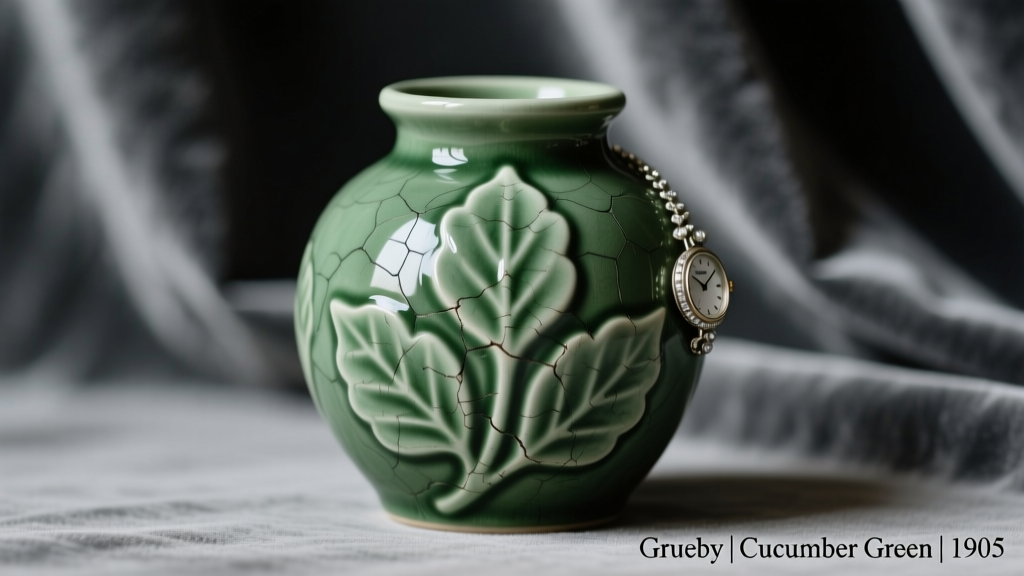
Grueby Vase: Stylized Flower-and-Leaf Pattern in Cucumber Green Matte Glaze, 7¾ Inches — A Masterpiece of American Arts & Crafts Ceramics
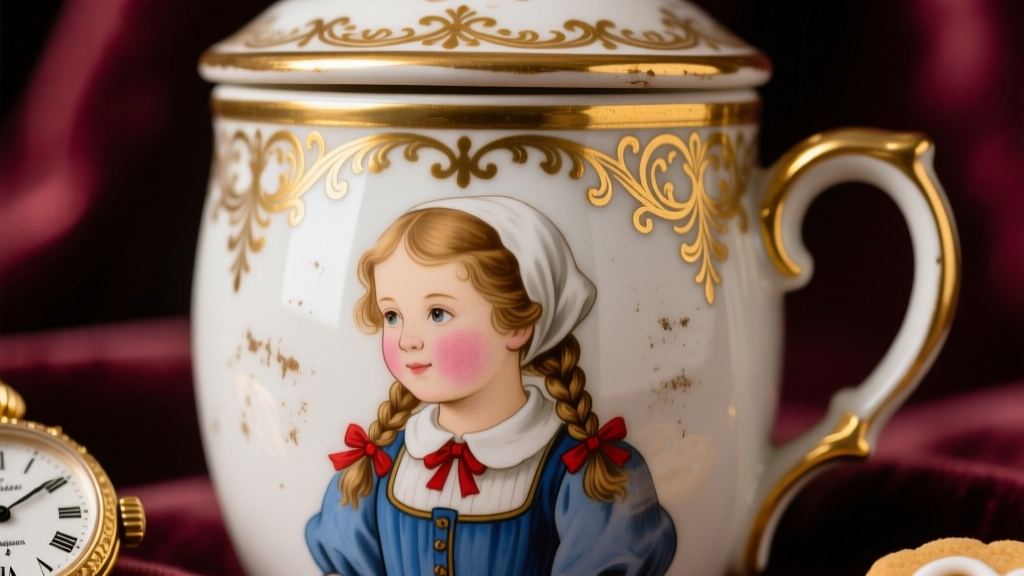
RRP Cookie Jar 'Dutch Girl' with Gold Trim: A Collector’s Guide to Rarity, Provenance, and Value
Watch Fobs & Elks Advertising: A Collector’s Guide to Fraternal Timekeeping Artifacts
The Sprite Boy Chrome Napkin Holder: A Mid-Century Advertising Icon in Vintage Tableware
Dedham Wash Basin Band: 'Band of Rabbits Nibbling' — A Rare 12⅛-Inch Porcelain Masterpiece from the 1930s
Beswick Figurine Owl No. 2026: A Detailed Appraisal of the 4½-Inch Ceramic Owl (c. 1950–1965)
Decorchemont Stylized Insect Paperweight: A Signed 2½-Inch Masterpiece of French Glass Artistry
Blown Glass Witch’s Ball: Opaque White Looping Technique and Its Historical Significance in Folk Art and Collectible Jewelry
Whose House? Whose Wolf? Unpacking the 1933 Parker Brothers 'Who’s Afraid of the Big Bad Wolf?' Board Game