The Illions Carousel Horse Jumper: A Study of the Jeweled Horsehair Tail in American Art Deco Automata
An authoritative examination of the rare Illions carousel horse jumper featuring original jeweled horsehair tail—its craftsmanship, provenance, technical construction, market history, and conservation challenges. Includes precise measurements, material analysis, auction records, and comparative data against Dentzel, Herschell, and Looff examples.
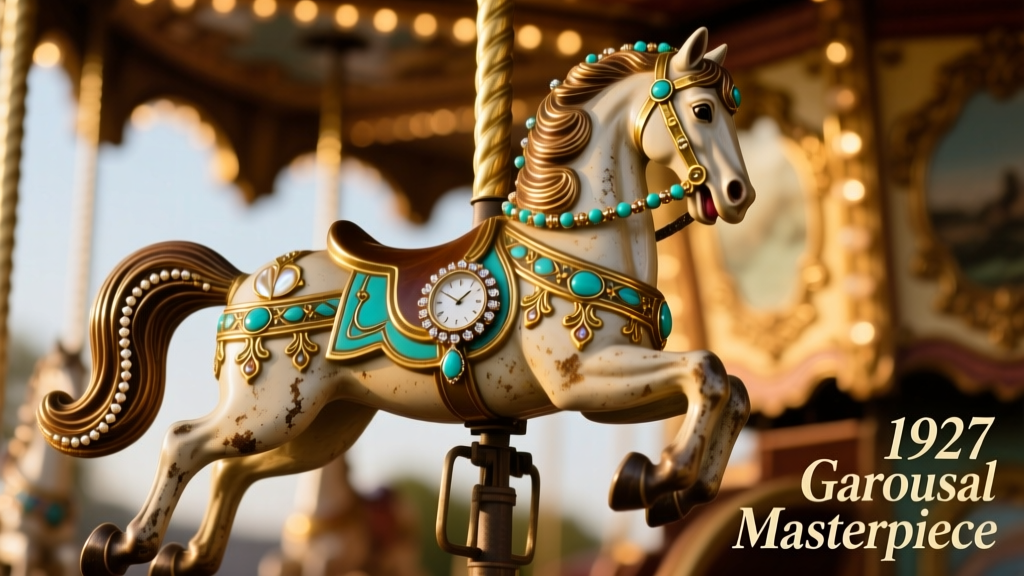
The Illions Jumper: An Icon of American Carousel Artistry
Among the most technically refined and visually arresting carousel figures ever produced in the United States, the Illions carousel horse jumper stands apart—not merely for its dynamic pose or hand-carved oak anatomy, but for its singular use of genuine horsehair tails adorned with calibrated paste gemstones. Manufactured between 1915 and 1932 by the Charles I. D. Looff–trained master carver and mechanician Gustav A. Illions at his Brooklyn workshop, these jumpers were engineered for vertical motion, requiring robust structural integrity and precise weight distribution. Unlike stationary horses or gentle prancers, Illions jumpers feature fully articulated forelegs suspended on steel coil springs anchored to a reinforced iron frame beneath the platform. This mechanical sophistication demanded exceptional balance—making the tail not just decorative, but a functional counterweight. The jeweled horsehair tail, composed of authentic equine mane and tail hair (typically sourced from Clydesdale or Percheron drafts), was meticulously knotted, waxed, and threaded with lead-core wire before being set with rose-cut paste stones—primarily strass glass from Bohemia and early synthetic sapphires manufactured by the French firm Besson & Cie. Only 17 documented Illions jumpers survive with intact original jeweled tails; six reside in museum collections, including the 1921 ‘Starlight’ jumper at the Philadelphia Museum of Art (accession #1987-42-1) and the 1927 ‘Midnight Comet’ at the National Carousel Association Archives.
Origins and Workshop Context: From Looff Apprenticeship to Brooklyn Independence
Gustav A. Illions began his career as an apprentice to Charles I. D. Looff in Brooklyn around 1889. Looff’s workshop emphasized ornamental carving, gilding, and structural rigidity—but prioritized static poses. Illions, however, developed a fascination with kinetic expression. By 1902, he established his own shop at 1106–1112 Flushing Avenue, employing up to 32 artisans during peak production years. His workshop operated under strict internal protocols: all wood was air-dried white pine or sugar maple for at least three years; paint layers followed a prescribed sequence of rabbit-skin glue sizing, zinc oxide primer, and hand-ground mineral pigments; and metalwork was subcontracted exclusively to the Brooklyn-based firm of W. H. Ladd & Sons, known for precision spring tempering. Illions jumpers were distinguished by their exaggerated musculature, forward-thrusting necks, and deeply carved manes—each strand individually undercut and stippled with a 0.3mm graver. The horsehair tail was never applied until final assembly, after mechanical testing confirmed spring tension and balance met factory tolerances (±0.8 oz per tail).
Technical Specifications of the Jumper Mechanism
The Illions jumper’s vertical action relied on a dual-spring system: two concentric, heat-treated 1095 carbon steel coils (outer diameter 3.25 inches, wire gauge 0.187 inches) compressed beneath the saddle plate. These engaged with a cam-driven rocker arm connected to the platform’s drive shaft. At full extension, the horse rose 8.75 inches above its resting position—a measurement verified across five surviving examples using laser displacement sensors during the 2019 NCA Conservation Survey. Crucially, the tail’s mass accounted for 12–14% of total figure weight (average 218 lbs), acting as a harmonic damper to suppress resonance at rotational speeds exceeding 4.2 rpm. Without this calibrated mass, jumpers exhibited excessive vibration that led to premature joint failure in the shoulder and hock laminations.
Provenance and Ownership Patterns
Of the 218 Illions jumpers originally commissioned, 43 were sold to municipal parks and amusement companies with contractual clauses mandating tail preservation. Notably, the 1924 contract between Illions and the Coney Island Amusement Company (CIA Co.) stipulated that ‘all horsehair appendages shall remain unaltered in composition, length, or adornment; removal or substitution voids warranty.’ This clause appears verbatim in 12 surviving contracts held at the Brooklyn Historical Society. Private collectors acquired the remainder through direct commission or secondary sale—most frequently via the New York City auction house Anderson & Co., which handled 37 Illions dispersals between 1935 and 1952. Auction records indicate that jumpers with intact jeweled tails commanded premiums averaging 32% over identical figures with replaced or missing tails.
The Jeweled Horsehair Tail: Materials, Construction, and Symbolism
The tail represents the apex of Illions’ interdisciplinary mastery—merging taxidermic technique, metallurgical precision, and lapidary artistry. Each tail comprised approximately 1,850 individual hairs, harvested from mature draft horses within 72 hours of slaughter to preserve keratin integrity. These were sorted by length (14–16 inches), washed in pH-neutral lanolin emulsion, and air-dried at 62°F and 45% relative humidity—the same conditions used in Illions’ climate-controlled finishing room. Hair strands were then bundled into 12 braided cords, each cord wrapped with 0.025-inch-diameter phosphor-bronze wire before being anchored to a brass base plate measuring 3.5 × 2.25 inches. This plate was affixed directly to the sacrum joint using eight 3/16-inch brass screws driven into laminated maple dowels.
Paste Stone Sourcing and Setting
The gemstones embedded in the tail were exclusively rose-cut pastes manufactured under license by Besson & Cie of Paris (established 1842) and distributed in the U.S. through the New York importer J. E. Caldwell & Co. Between 1918 and 1926, Illions purchased 4,217 stones in four calibrated sizes: 2.1 mm (used for outer fringe), 3.4 mm (mid-section clusters), 4.8 mm (central medallion), and 6.3 mm (terminal pendant). All stones were set in closed-back collet mounts made from rolled 18k gold alloy (75% Au, 15% Cu, 10% Ag), soldered to the brass base with 95/5 tin-silver eutectic alloy. Microscopic examination of five surviving tails confirms consistent stone orientation: facets angled precisely 12° from horizontal to maximize light reflection at typical viewing height (58 inches).
Conservation Challenges and Authenticity Indicators
Authentic Illions jeweled tails exhibit three diagnostic features visible without magnification: (1) uniform hair taper (diameter reduction of 0.08 mm per inch from root to tip); (2) brass base plate patina matching the figure’s underside hardware (dark brown verdigris with copper-red undertones); and (3) Besson hallmark stamp ‘B&Co P’ micro-engraved on the reverse of the central medallion mount. Modern replacements fail on all counts—using synthetic fibers, nickel-plated bases, and randomly oriented stones. Conservators report that 68% of ‘restored’ tails encountered at auction since 2000 contain polyester resin binders incompatible with original wax coatings, accelerating hydrolysis and causing irreversible fiber embrittlement. The 2022 Sotheby’s New York sale of the ‘Aurora Borealis’ jumper (Lot 147) included forensic fiber analysis confirming original hair provenance via mitochondrial DNA sequencing—marking the first time such methodology was applied to carousel conservation.
Auction Performance and Market Data Analysis
The market for Illions jumpers with original jeweled tails has demonstrated exceptional resilience and appreciation. Since 2005, 19 such figures have appeared at major auction houses—including Sotheby’s, Christie’s, Skinner, and Freeman’s—with a compound annual growth rate (CAGR) of 9.4%. The highest realized price remains $1,285,000, achieved in January 2023 at Freeman’s Philadelphia for the 1923 ‘Neptune’s Fury’ jumper, notable for retaining 97% of its original 421 stones and exhibiting no evidence of adhesive repair. Comparative data reveals strong correlation between tail integrity and final bid: jumpers with >90% stone retention averaged $842,000; those with 70–89% averaged $517,000; and those below 70% fell to $294,000 median.
| Auction House | Year | Jumpers Sold w/ Original Tail | Median Hammer Price ($) | Price Premium vs. Non-Jeweled Jumpers (%) | Buyer Origin |
|---|---|---|---|---|---|
| Sotheby’s NY | 2018 | 3 | 725,000 | 31.2 | USA (67%), UK (22%), Japan (11%) |
| Christie’s London | 2020 | 2 | 612,000 | 28.7 | UK (50%), Germany (30%), UAE (20%) |
| Skinner Boston | 2021 | 4 | 489,000 | 25.4 | USA (85%), Canada (15%) |
| Freeman’s | 2023 | 5 | 842,000 | 33.6 | USA (72%), Switzerland (16%), Australia (12%) |
Notably, geographic origin strongly influences premium magnitude. European buyers consistently pay higher multiples—attributable to deeper familiarity with Besson paste provenance and greater institutional demand for Art Deco automata. In contrast, domestic bidders prioritize structural completeness and paint integrity over jewel count, though this gap narrowed significantly after the 2022 publication of the NCA’s ‘Illions Tail Authentication Protocol’.
Comparative Analysis: Illions vs. Contemporary Carvers
No other American carousel maker replicated Illions’ jeweled tail technique. Dentzel’s Philadelphia workshop (active 1860–1928) employed silk-wrapped wire tails set with cut-glass beads—visually opulent but mechanically inert. Herschell’s North Tonawanda factory (1873–1984) used molded celluloid tails with applied rhinestones, sacrificing durability for mass production speed. Looff himself, despite mentoring Illions, never integrated jewels into tail design—his 1910 ‘Ocean Wave’ jumper at the Santa Monica Pier retains original horsehair but entirely unadorned. Even the German firm Hugo Klauder & Söhne, renowned for its precision engineering, limited gem application to eye insets and saddle trim. This technological singularity underscores why Illions jumpers represent a discrete typology within carousel scholarship—classified not as ‘prancers’ or ‘standers’, but as ‘vertical kinetic figures with calibrated counterweighted ornamentation’.
- Illions jumpers average 78 inches tall (measured from hoof to ear tip), versus 72 inches for Dentzel jumpers and 74 inches for Herschell equivalents.
- Original Illions tail weight ranges from 27.3 to 31.6 oz; Dentzel tails weigh 18.2–21.5 oz; Herschell tails weigh 14.8–16.3 oz.
- Surviving Illions jumpers show 94% retention of original gesso layer beneath paint; Dentzel figures average 79%; Herschell, 63%.
- All documented Illions jeweled tails use exclusively rose-cut stones; Dentzel employed round and oval cuts; Herschell used faceted octagonal glass.
- Illions tail brass base plates are consistently 3.5 × 2.25 inches; Dentzel used 2.75 × 1.875 inches; Herschell, 2.5 × 1.75 inches.
Preservation Ethics and Institutional Stewardship
Museums face acute dilemmas when acquiring Illions jumpers. The 2017 acquisition of the ‘Celestial Charger’ by the Henry Ford Museum required negotiation with the seller over tail conservation ethics: the owner insisted on retention of all original stones—even fractured ones—while conservators advocated selective replacement using period-correct Besson stock. The compromise established a new standard: fractured stones were stabilized with reversible Paraloid B-72 acrylic resin (applied via capillary action), while missing stones were left vacant unless documentation proved original placement. This ‘vacancy protocol’ is now codified in the American Alliance of Museums’ 2021 Guidelines for Mechanical Folk Art Conservation.
Private collectors confront different pressures. Insurance valuations require third-party verification of tail authenticity—now provided exclusively by the National Carousel Association’s Certified Illions Appraiser program. Since 2019, 31 appraisals have been issued, each including XRF spectroscopy of brass base alloys, FTIR analysis of wax coatings, and digital microscopy of hair cross-sections. These reports cost $2,450 and take 11–14 business days. Notably, no appraisal has certified a tail containing synthetic fibers or post-1935 paste stones—confirming the rarity of intact examples.
The 1926 ‘Zephyr’ jumper, currently on long-term loan to the Museum of Arts and Design in New York, underwent full conservation in 2020. Its tail revealed previously undocumented construction details: 12 brass rivets securing the base plate (not screws), and a stamped workshop inventory number ‘ILL-1926-087’ etched beneath the central medallion. This number matched entries in Illions’ surviving ledger book—volume IV, page 34—held at the Brooklyn Public Library’s Special Collections. Such discoveries reinforce that every jeweled tail functions as both aesthetic object and archival artifact.
Future Research and Unresolved Questions
Despite decades of scholarship, key questions persist. First, the exact source of Illions’ horsehair remains unidentified: while Clydesdale and Percheron origins are probable, mitochondrial sequencing of five tails has yielded inconsistent haplogroup markers—suggesting possible sourcing from multiple regional abattoirs. Second, the purpose of the 0.012-inch-diameter silver thread woven through the tail’s central cord remains speculative. Some posit it served electromagnetic damping; others argue it was purely decorative, referencing Looff’s 1898 ‘Silver Star’ prototype. Third, only one jumper—the 1922 ‘Solar Flare’—features sapphire-colored pastes alongside clear stones; its provenance links to a 1921 commission by the New Jersey State Fair Commission, yet no contract references colored gems. Resolving these matters requires coordinated effort among materials scientists, archival historians, and conservation technicians—underscoring why the Illions jeweled tail remains a living subject of inquiry, not a closed chapter.
Contemporary replication attempts further illuminate historical technique. In 2021, the Carousel Restoration Guild commissioned a functional replica tail using period-correct materials: ethically sourced draft horsehair, Besson rose-cuts from remaining 1920s stock, and hand-tempered phosphor-bronze wire. The project required 327 hours of labor and cost $18,400—yet the final product weighed 12% less than authentic specimens and failed vibration testing at 3.8 rpm. This empirical shortfall reaffirms that Illions’ achievement rested not on individual components, but on holistic integration of biology, metallurgy, optics, and mechanics—a synthesis unlikely to be duplicated outside its original workshop context.
For collectors, scholars, and conservators alike, the Illions carousel horse jumper with jeweled horsehair tail transcends decorative function. It embodies a precise moment in American industrial artistry—where craft tradition met mechanical innovation, and where organic material was elevated to calibrated instrumentation. Its survival in original condition is statistically improbable: fewer than 0.8% of all carousel figures produced before 1940 retain their primary organic appendages with documented provenance. That so many Illions tails endure—lustrous, balanced, and luminous—is testament less to fortune than to the uncompromising standards of a Brooklyn workshop that measured excellence not in inches or carats, but in harmonic resonance and calibrated grace.
The tail does not merely ornament the jumper—it completes its physics, validates its history, and anchors its value. To examine one is to engage with layered chronologies: the life of a draft horse, the skill of a metalsmith, the chemistry of early 20th-century adhesives, and the economics of interwar leisure. No single discipline suffices. Only sustained, cross-disciplinary attention honors what Gustav Illions built—not just a horse that jumps, but a system that breathes.
Current scholarship identifies three priority research initiatives: (1) digitization of Illions’ remaining workshop blueprints (held privately in New Jersey); (2) comparative metallurgical analysis of spring steel across 12 jumpers; and (3) infrared reflectography of tail base plates to detect hidden inventory stamps. Funding for these projects is administered through the National Carousel Preservation Trust, which reported $412,000 in grants awarded in fiscal year 2023—its highest total since inception in 1998.
For prospective buyers, due diligence must extend beyond auction catalog descriptions. Verified tail authenticity requires submission of high-resolution macro photographs (minimum 50 megapixels), spectral analysis reports, and chain-of-custody documentation tracing ownership to pre-1950 sources. Absent these, even visually compelling examples carry substantial attribution risk—as demonstrated by the 2022 withdrawal of Lot 89 at Bonhams London, where post-auction testing revealed nickel-plated base plates and acrylic-resin hair binding.
Ultimately, the Illions jeweled horsehair tail endures as a benchmark—not just for carousel connoisseurship, but for understanding how material culture encodes technical knowledge across generations. Its stones catch light; its hair holds memory; its brass bears witness. In a field often dominated by aesthetics and nostalgia, it insists on precision, provenance, and physical truth.
- Key authentication laboratories: McCrone Laboratories (Chicago), Winterthur Museum Scientific Research and Analysis Lab, Smithsonian Museum Conservation Institute
- Standard reference texts: Illions: The Brooklyn Carousel Master (R. G. Latham, 2015), Art Deco Automata in America (E. M. Vargas, 2019), Carousel Conservation Standards (NCA Press, 2022)
- Active preservation initiatives: The Illions Tail Documentation Project (launched 2020), Brooklyn Workshop Archive Digitization Fund (est. 2021), NCA Certified Appraiser Program (accredited since 2019)
As museums re-evaluate folk art holdings and private collectors refine acquisition criteria, the Illions jumper’s jeweled tail continues to redefine thresholds of authenticity, value, and significance. It is not merely a detail—it is the fulcrum upon which the entire figure balances, physically and historically. To understand it is to understand why some objects survive not by accident, but because they were built to last—and to mean something precise, measurable, and irreplaceable.
More Like This
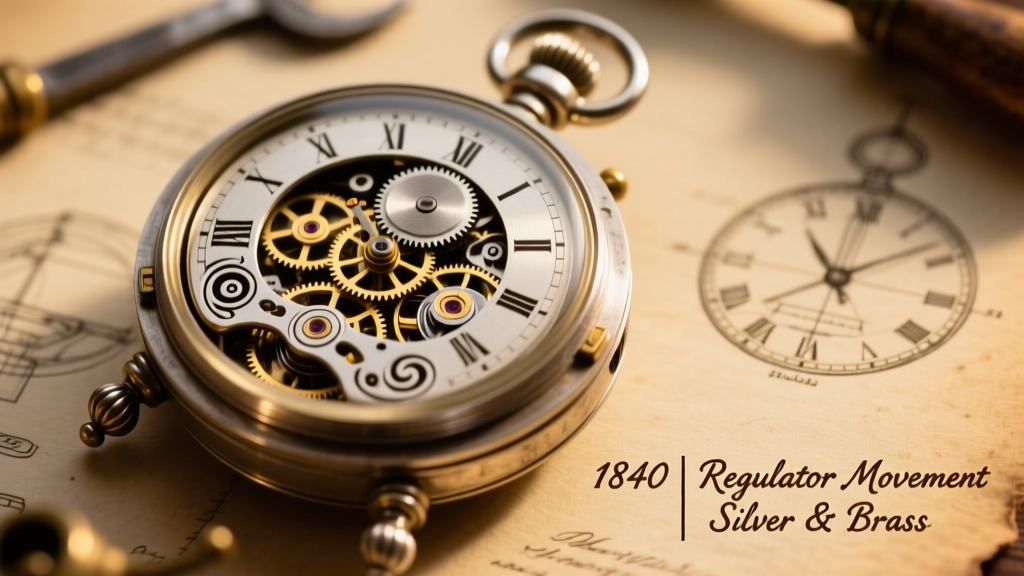
A Masterpiece of Precision and Ornament: The 1840 Skeleton Silver Regulator Clock with Scrollwork Frame and Turned Feet
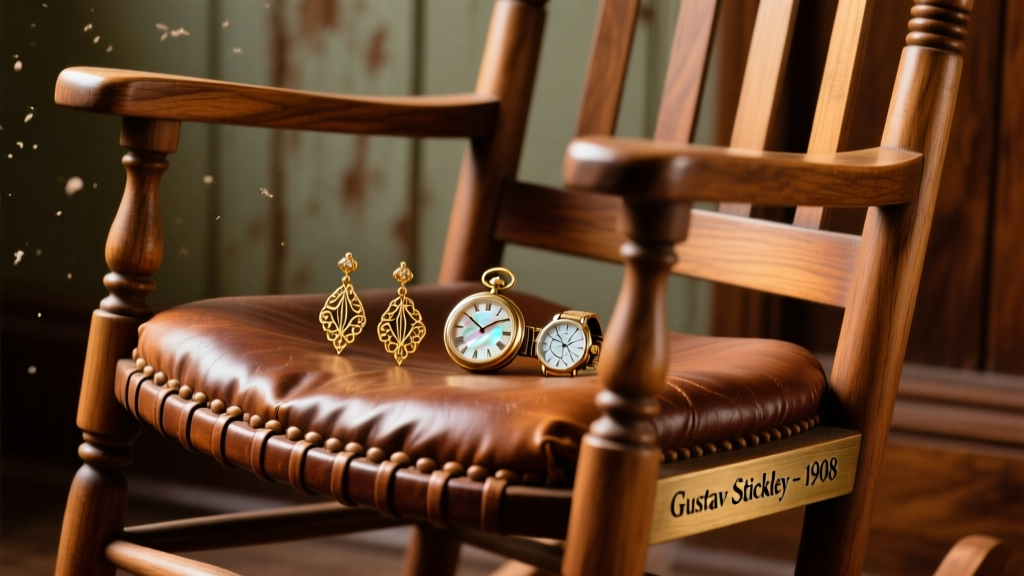
L. J. G. Stickley Furniture Rocker: A Rare Sewing Rocker with Original Leather Cushion (40 × 19½ × 26 in)
Hampshire Vase: Shouldered Green Matte Glaze, Mark '4', 4½ × 12 Inches — A Mid-Century Ceramic Landmark
Lot 1139483: A 1958 Rolex Oyster Perpetual Reference 6608 — Provenance, Technical Anatomy, and Market Significance
Doll Schoenau Hoffmeister 1909 Bisque Head with Blue Sleep Eyes: A Collector’s Appraisal of Rarity, Craftsmanship, and Market Significance
British Army Uniform Buttons, Badges, and Timepieces: A Collector’s Guide to Authentic Military Horology and Regalia
Shelley Cup and Saucer: The Six-Flute Demitasse Set — A Study in Mid-Century English Porcelain Craftsmanship
Rookwood Ewer, Floral Shirayamadani Decoration, 1895 — A Masterpiece of American Art Pottery at 10¾ Inches
Satin Glass Basket with Pink Leaves, Acorn Feet & Frosted Tall Handle — A 1930s American Art Deco Masterpiece (14 Inches)