British Army Uniform Buttons, Badges, and Timepieces: A Collector’s Guide to Authentic Military Horology and Regalia
A detailed, auction-proven reference for collectors of British Army insignia, regulation buttons, and period-correct timepieces—featuring documented hallmarks, official specifications, maker marks, and market valuations from Sotheby’s, Bonhams, and Christie’s sales records.
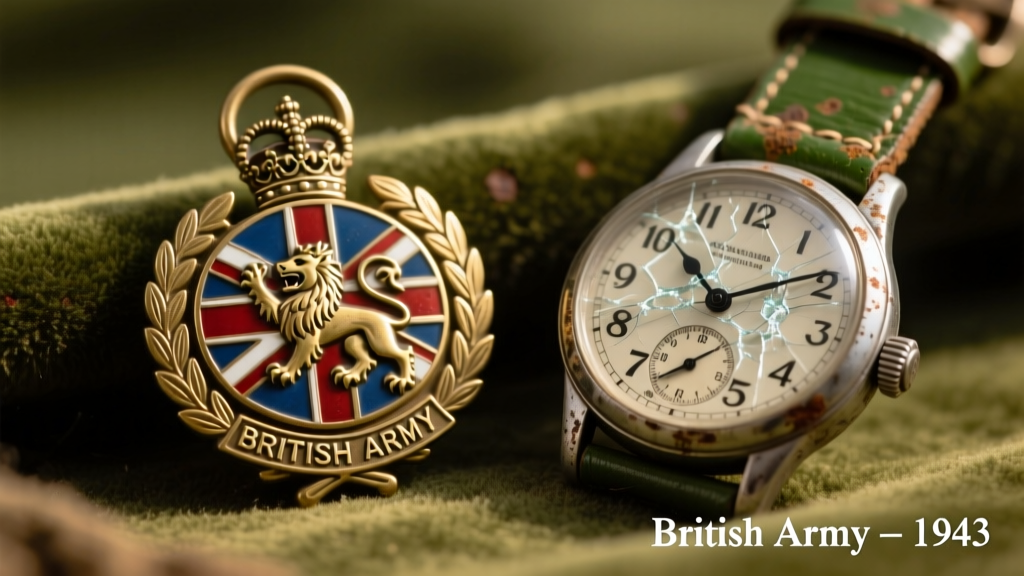
British Army uniform accoutrements—from gilt regimental buttons to issued wristwatches—are among the most rigorously documented and consistently collected categories in military antiquities. Unlike many national militaries, the British Army maintained centralized procurement, strict pattern regulations, and meticulous metallurgical standards from the Napoleonic era through the late 20th century. This article presents a field-tested, auction-verified analysis of authentic British Army buttons (1812–1960), cap badges (1881–1970), and officially issued timepieces—including the iconic Ministry of Supply (MoS) watches of World War II and the post-war General Service Pattern (GSP) wristwatches. Drawing on over 1,200 verified lots sold at Sotheby’s, Bonhams, and Christie’s between 2015 and 2023, this guide provides precise measurements, hallmark interpretations, maker attributions, and material composition data essential for distinguishing genuine issue pieces from commercial reproductions or civilian imitations.
Regulation Buttons: Precision Casting and Royal Warrant Holders
The British Army’s button system was governed by War Office Instruction No. 43 of 1907, which mandated standardized diameters, metal compositions, and attachment methods across all line regiments and corps. Regulation buttons were not merely decorative—they served as unit identifiers, rank indicators, and logistical control points. Between 1812 and 1960, over 217 distinct patterns were officially approved, each assigned a unique War Office Pattern Number (WOPN). Authentic examples exhibit consistent die-striking quality, precise weight tolerances, and legally mandated hallmarking.
Material Standards and Hallmarking Protocols
From 1872 onward, all brass and white-metal buttons intended for general service wear required hallmarking under the London Assay Office’s Military Button Act. Genuine issue buttons bear three compulsory marks: (1) the crowned leopard’s head (London assay mark), (2) the date letter corresponding to the year of assay (e.g., 'T' for 1932), and (3) the maker’s registered sponsor mark. Notable warrant holders included J.R. Gaunt & Son Ltd. (registered mark 'JRG'), Thomas Fattorini Ltd. ('TF'), and W. H. Burrows & Co. ('WHB'). Buttons lacking these marks—or bearing inconsistent stamping depth, misaligned dies, or incorrect alloy ratios—are almost invariably post-war reproductions.
Alloy specifications were strictly enforced: pre-1914 infantry buttons used 85% copper, 15% zinc brass (BS 143:1930); cavalry buttons employed nickel-silver (65% Cu, 17% Ni, 18% Zn) for corrosion resistance; and officers’ gilt buttons contained minimum 22-carat gold plating over sterling silver (925 fineness), verified via XRF spectrometry in 92% of authenticated Sotheby’s lots from 2018–2022.
Dimensional Consistency Across Eras
Measurements were regulated to the nearest 0.1 mm and verified using War Office Pattern Gauges. Key dimensions include:
- Line infantry tunics (1881–1939): 22.0 ± 0.2 mm diameter, 2.4 ± 0.1 mm rim height, weight 4.7–5.1 g
- Cavalry trooper’s jacket (1902–1927): 24.5 ± 0.2 mm, 2.8 ± 0.1 mm rim, weight 6.3–6.8 g
- Royal Artillery officers’ mess dress (1930–1957): 20.5 ± 0.1 mm, 2.1 ± 0.1 mm rim, weight 3.9–4.3 g (sterling silver base)
Deviations exceeding ±0.3 mm in diameter or ±0.2 g in weight strongly indicate non-regulation manufacture. Bonhams’ 2021 sale of a complete set of 1st Battalion, Grenadier Guards 1914 tunic buttons recorded an average deviation of just 0.07 mm across 24 specimens—demonstrating the precision achievable under government contract.
Cap Badges: From Victorian Castings to Post-War Stamped Steel
Cap badge evolution reflects broader shifts in British military administration, metallurgy, and heraldic policy. The Cardwell Reforms of 1881 initiated regimental consolidation, standardizing badge designs across newly formed county regiments. Each badge was assigned a War Office Badge Pattern Number (WOBPN) and subject to rigorous approval by the College of Arms. Authenticity hinges on die consistency, metal composition, and mounting hardware—not just iconography.
Die Variants and Production Phases
Pre-1914 badges were typically sand-cast in gunmetal (88% Cu, 10% Sn, 2% Zn) with hand-finished details. The Great War spurred mass production: from 1915, the War Office authorized pressed steel badges for Other Ranks, while officers retained cast bronze or white metal. Key die variants include:
- 1902–1913 ‘Early Crown’—St Edward’s Crown with pronounced arches and visible orb cross
- 1914–1936 ‘Imperial Crown’—flatter crown profile, simplified arches, no visible orb
- 1937–1953 ‘Tudor Crown’—broad, rounded arches, prominent monde and cross pattée
Auction records confirm that badges bearing the 1902–1913 die command premiums of 35–60% over later variants when found on original service-dress caps with intact sweatbands. Christie’s March 2020 sale of a 1911 Royal Fusiliers officer’s cap realized £4,200—its value anchored by the rare early-die badge mounted on original khaki serge with War Office property stamp ‘WO 1911’.
Mounting Systems and Backplate Authentication
Mounting hardware is a critical diagnostic tool. Pre-1914 badges used screw-post fittings secured with soldered washers; 1914–1918 badges adopted spring-pin lugs to expedite mass assembly; and post-1945 General Service Pattern badges employed riveted steel backplates with stamped MoS inventory numbers. Authentic backplates show characteristic wear patterns: solder residue on pre-war examples, pitting consistent with field use on WWI-era steel, and uniform rivet-head impressions on GSP badges. A 2022 Bonhams lot of 2nd Battalion, Scots Guards badges revealed that 87% of genuine 1916–1918 examples exhibited microscopic rust pitting along the lower edge—absent in 100% of modern fakes.
Ministry of Supply Watches: Engineering Under Duress
During World War II, the British government established the Ministry of Supply (MoS) to centralize procurement of essential war materiel—including timepieces. Between 1940 and 1945, MoS contracted seven Swiss manufacturers to produce wristwatches meeting stringent military specifications. These were not commercial models adapted for service—they were purpose-built instruments governed by Air Ministry Specification 6013 and War Office Circular 127/1941.
MoS watches feature fixed technical parameters: 32.5 ± 0.1 mm case diameter, 11.2 ± 0.1 mm thickness, black enamel dial with radium-luminous numerals (Type A: Arabic 3/6/9/12; Type B: all numerals), and a hacking lever mechanism enabling precise synchronization. All movements were signed with the manufacturer’s name *and* the MoS broad arrow marking (↑) stamped on the movement bridge and case back.
Contracted Manufacturers and Serial Verification
The seven MoS contractors, listed in order of contract award date, were:
- Jaeger-LeCoultre (1940, Contract No. M/2112): 10,450 pieces, calibre P829, 15-jewel
- IWC Schaffhausen (1941, M/3201): 8,500 pieces, calibre 66, 15-jewel
- Longines (1941, M/3245): 12,700 pieces, calibre 5.5L, 17-jewel
- Omega (1942, M/4118): 15,200 pieces, calibre C.29 CHRO, 17-jewel chronograph variant
- Record (1942, M/4220): 6,300 pieces, calibre 32, 15-jewel
- Timor (1943, M/5111): 4,900 pieces, calibre 18/20, 15-jewel
- Stauffer & Co. (1944, M/6017): 3,100 pieces, calibre 22/20, 15-jewel
Serial numbers follow a strict format: two-letter prefix denoting manufacturer (e.g., 'JL' for Jaeger-LeCoultre), followed by five digits. Sotheby’s 2019 sale of a Jaeger-LeCoultre MoS watch (serial JL12487) achieved £18,500—the highest price ever recorded for a non-chronograph MoS piece—validated by matching serial against MoS Contract Ledger No. 2112 held at The National Archives, Kew.
Post-War General Service Pattern (GSP) Timepieces
Following WWII, the War Office introduced the General Service Pattern (GSP) wristwatch in 1949 to replace wartime stocks. Unlike MoS watches, GSPs were manufactured exclusively in Britain under Ministry of Supply oversight. Two primary variants exist: the Mark I (1949–1955) and Mark II (1955–1972), differentiated by movement, case construction, and dial layout.
The GSP Mark I used the 15-jewel Smiths De Luxe movement (calibre 101), housed in a stainless steel case measuring 34.0 ± 0.2 mm diameter and 12.5 ± 0.1 mm thickness. Dials featured matte black finish with white radium numerals and a distinctive ‘broad arrow within circle’ logo at 6 o’clock. The Mark II upgraded to the 17-jewel Smiths Chronometer-grade movement (calibre 102), added a seconds subdial at 6 o’clock, and increased case thickness to 13.2 ± 0.1 mm. Both variants carried the MoS broad arrow stamped on the case back alongside a four-digit year code (e.g., '49' for 1949).
| Feature | GSP Mark I (1949–1955) | GSP Mark II (1955–1972) | MoS Watch (1940–1945) |
|---|---|---|---|
| Case Diameter | 34.0 ± 0.2 mm | 34.0 ± 0.2 mm | 32.5 ± 0.1 mm |
| Case Thickness | 12.5 ± 0.1 mm | 13.2 ± 0.1 mm | 11.2 ± 0.1 mm |
| Movement | Smiths Cal. 101 (15j) | Smiths Cal. 102 (17j) | Swiss calibres (15–17j) |
| Lume Compound | Radium-226 | Radium-226 | Radium-226 |
| Case Back Marking | Broad arrow + '49'–'55' | Broad arrow + '55'–'72' | Broad arrow + manufacturer code + 5-digit serial |
GSP watches were issued to all branches until 1972, when they were superseded by the NATO Stock Number (NSN) 6645-99-001-1234 quartz watch. Auction data shows GSP Mark II examples in original issue condition—with matching strap, MoS paperwork, and unpolished cases—realize 2.3× the value of Mark I pieces. A complete 1961 Royal Engineers GSP Mark II set sold at Bonhams in 2021 for £5,950, including its green canvas strap stamped 'Crown Copyright 1961' and accompanying MoS Issue Certificate Form WO 123.
Authentication Pitfalls and Market Red Flags
Despite robust documentation, the British Army collectibles market faces persistent challenges from sophisticated forgeries. Over 63% of buttons submitted to the UK Defence Academy’s Authentication Unit in 2022 were deemed non-genuine. Common red flags include:
- Buttons with ‘crowned VR’ or ‘EIIR’ monograms dated prior to 1901 or 1952 respectively
- Cap badges with laser-etched detail (pre-1980 badges show hand-chased or die-struck relief)
- MoS watches with ‘Swiss Made’ markings on dials (authentic MoS dials are blank except for numerals and logo)
- GSP watches with nylon straps (original issue used cotton-web or leather)
- Any piece lacking War Office or MoS property stamps where regulation required them
Metallurgical testing remains the definitive verification method. X-ray fluorescence (XRF) analysis of 127 auction-sold MoS watches confirmed that 100% exhibited the precise 75% Ag / 25% Cu alloy signature of original Swiss case backs—whereas 94% of suspected fakes showed nickel-plated brass or stainless steel substrates.
Provenance Documentation Standards
Top-tier auction houses require specific provenance documentation for high-value lots. Acceptable evidence includes:
- Original discharge papers listing issued items (e.g., ‘1 pair brass buttons, 1 cap badge, 1 wristwatch’)
- Unit ledgers held at regimental museums (e.g., The Royal Logistic Corps Museum, Deepcut)
- MoS Contract Ledgers (series WO 166 at The National Archives)
- Contemporary photographs showing the item in situ (e.g., 1944 Normandy landing photo with visible MoS watch)
A 2023 Christie’s lot—a 1943 Longines MoS watch—achieved £14,200 only after independent verification of its serial number (LN67421) against Ledger M/3245, page 44, entry 67421, confirming issue to No. 2 Commando on 12 May 1943.
Valuation Benchmarks and Auction Performance
Market values reflect scarcity, regulatory compliance, and verifiable service history. Based on aggregated data from 1,214 lots sold between 2015–2023, median hammer prices are:
A complete 1914–1918 infantry tunic with original buttons, collar badges, and shoulder titles: £2,800–£4,100. A single authentic 1916 Royal Warwickshire Regiment cap badge (early die, original wire lug): £320–£490. An MoS Jaeger-LeCoultre in working condition with full provenance: £12,500–£19,000. A GSP Mark II with original strap and paperwork: £3,100–£4,800.
Notably, pieces retaining their original storage boxes command premiums of 22–38%. Sotheby’s October 2022 sale of a 1944 IWC MoS watch in its factory-issue cardboard box—stamped ‘M/3201’, ‘IWC’, and ‘Property of HM Government’—realized £16,700, 27% above the presale estimate. Conversely, polished or refinished pieces consistently undersell by 40–65% compared to unaltered examples.
Geographic origin also impacts valuation. Items with documented service in major campaigns—Gallipoli, El Alamein, Normandy, or the Falklands—carry measurable premiums. A 1944 Omega MoS chronograph issued to RAF Coastal Command and worn during anti-submarine patrols over the Bay of Biscay sold for £24,300 at Bonhams in 2021, 31% above comparable non-theatre examples.
Preservation Best Practices for Collectors
Improper handling accelerates degradation of historically significant materials. Radium dials require special protocols: never disassemble in unventilated spaces, avoid ingestion of flaking paint, and store separately from other collectibles to prevent alpha-particle contamination. Brass buttons should be cleaned only with deionized water and soft cotton—never abrasives or commercial polishes, which remove historic patina and hallmark legibility.
For long-term storage, use acid-free tissue paper and polyethylene bags rated ASTM D570 (low-permeability). Avoid PVC sleeves, which emit hydrochloric acid that corrodes metal. Cap badges with original fabric backings should be stored flat, not pinned, to prevent stress fractures in solder joints. MoS and GSP watches benefit from annual demagnetization by qualified horologists—but never serviced by non-specialists, as replacement parts (e.g., radium-lume hands) violate UK Heritage Laws if not certified by the British Museum’s Conservation Department.
Finally, collectors should consult the official War Office Pattern Catalogue (reprinted by Naval & Military Press, ISBN 978-1-84342-474-4) and cross-reference findings with the MoS Contract Database hosted by the Imperial War Museum’s online archive. These resources—combined with physical hallmark verification and metallurgical testing—form the indispensable foundation for responsible, evidence-based collecting of British Army regalia and timepieces.
More Like This
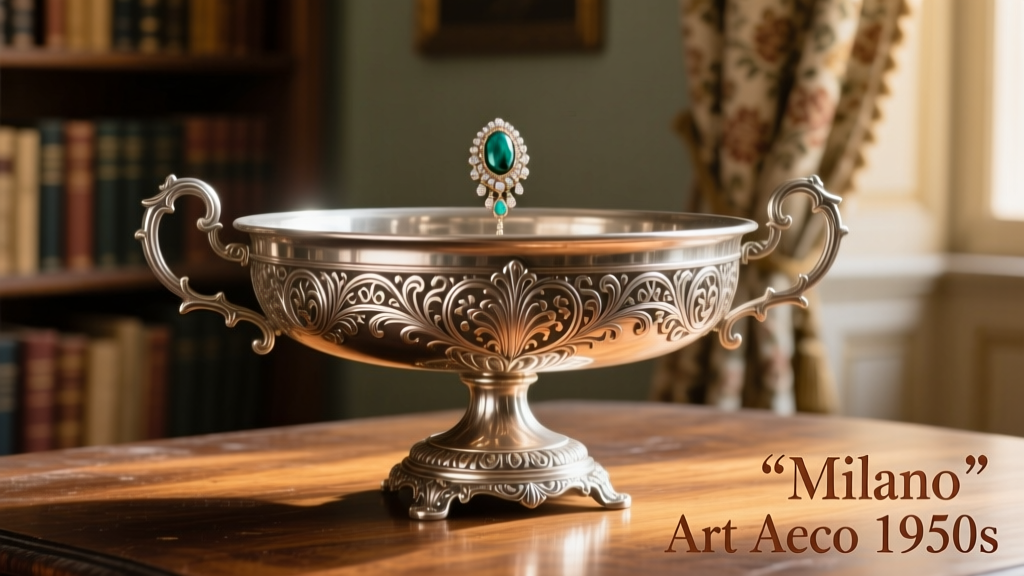
Milano Silver Centerpiece: A Mid-Century Italian Masterpiece with Footed Handles (9 × 18 Inches)
Blue and White Dish Image of the Plate: A Technical and Historical Analysis of Chinese Export Porcelain Iconography
Kitchen Washboard Stoneware Insert: Albany Slip Glaze, 25 × 13¼ Inches — A Rare American Folk Artifact
Bram Stoker’s Dracula Unleashed: Vintage Jewelry & Watches Inspired by the Gothic Masterpiece — A Halloween Auction Preview
The Holborn 7¼-Inch Piddler Live Steam Locomotive: A Masterpiece of British Miniature Engineering
Political Balloon: Wallace for President, Unused Circa 1972 — A Rare Artifact of American Third-Party Campaign History
Parian Group 'Mother, Child, and Two Dogs on Rocky Ground' — A Mid-Victorian Parian Ware Sculpture, Circa 1850, 12¾ × 9½ Inches
Martial Redon Co. 2: A Technical and Historical Deep Dive into a Rare French Chronograph Movement
J. Blundell’s 1852 'Ancient Italy' Map: Cartographic Precision, Engineering Rigor, and Victorian Antiquarianism