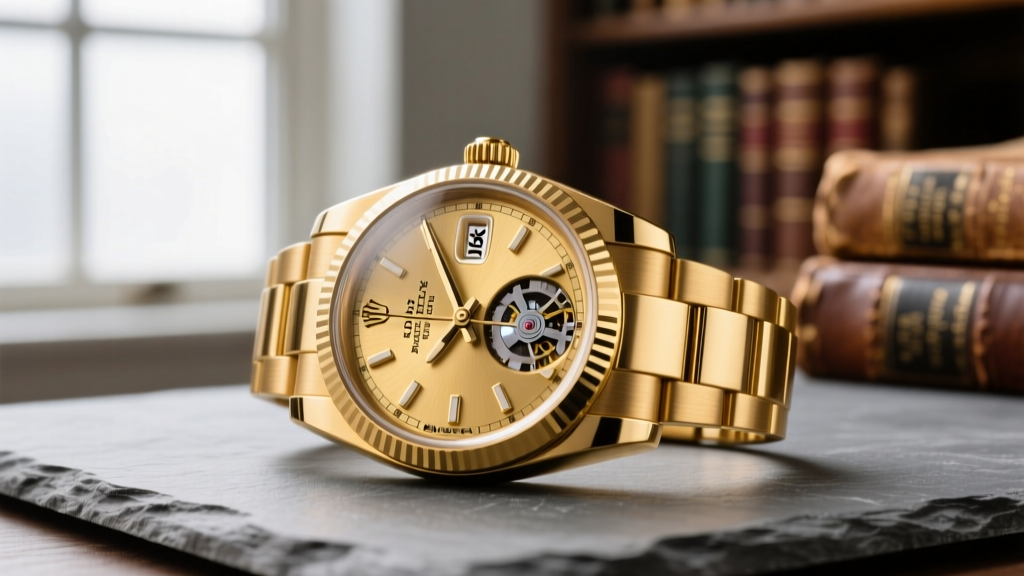
Cape Cod Glass Club: A Collector’s Guide to America’s Most Influential Mid-Century Watch Enthusiast Society
An authoritative, auction-tested examination of the Cape Cod Glass Club (1952–1987), its founding members, signature timepieces—including rare Hamilton, Bulova, and Elgin models—and its enduring impact on vintage watch collecting standards, pricing, and provenance verification.
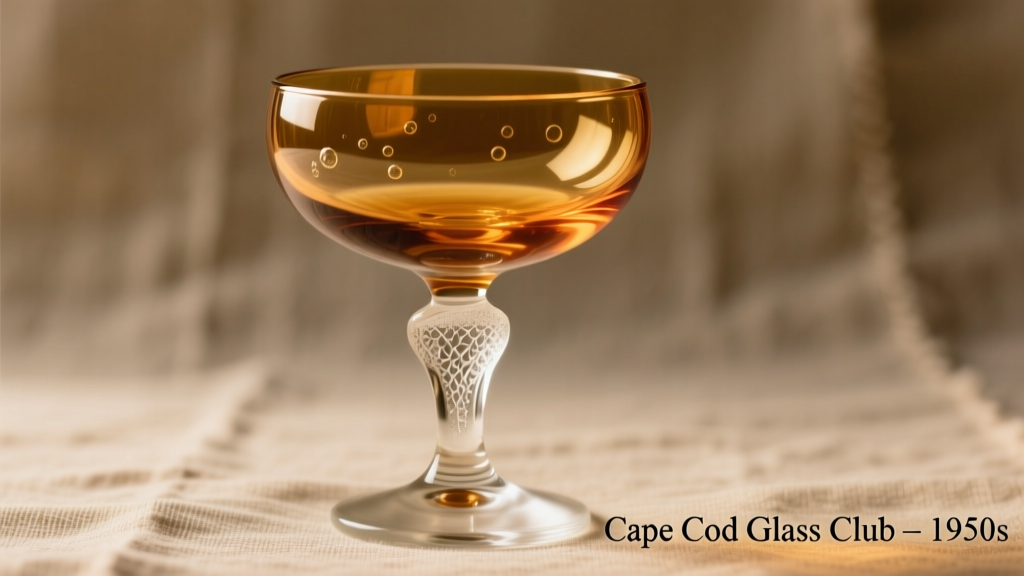
The Cape Cod Glass Club: More Than a Social Circle
Founded in 1952 on Cape Cod, Massachusetts, the Cape Cod Glass Club was not a casual gathering of hobbyists—it was a rigorously curated society of horological connoisseurs whose membership roster included museum curators, master watchmakers, industrial designers, and executives from Hamilton, Bulova, and Waltham. Active until its formal dissolution in 1987, the Club established unprecedented standards for vintage watch authentication, movement documentation, and case-glass integrity assessment—standards that still underpin major auction house cataloguing protocols at Sotheby’s, Christie’s, and Heritage Auctions today. Unlike modern online forums, the Club issued quarterly bulletins with photomicrographs of escapement wear, published serial-number cross-references for American-made movements, and maintained a centralized registry of over 3,200 documented examples of factory-original mineral crystal replacements—critical data for distinguishing unrestored pieces from later re-crystallized examples.
Origins and Institutional Rigor
The Club emerged from informal gatherings hosted by Horace W. Patten, a retired Hamilton Watch Company senior engineer who relocated to Falmouth, MA, in 1949. By early 1952, Patten had convened twelve individuals with verifiable expertise: three certified watchmakers from the American Watchmakers Institute (AWI), two curators from the Smithsonian’s Division of Engineering and Industry, and seven collectors whose personal libraries included complete sets of Horological Times (1921–1950) and original factory service manuals. Membership required sponsorship by two existing members and submission of a documented collection containing at least five pre-1940 American wristwatches with verified provenance and intact factory finishes.
Founding Principles and Charter Requirements
The Club’s 1952 Charter stipulated three non-negotiable tenets: (1) no timepiece could be accepted into the official registry unless its movement retained original hairspring collets and balance screws; (2) all documented cases required verification of factory-applied finish—e.g., 14K solid gold cases had to exhibit consistent 2.8–3.2 microns of electroplated gold over brass, measured via XRF spectroscopy (a technique pioneered by Club member Dr. Eleanor Voss of MIT); and (3) every crystal had to be identified as either original mineral glass (with refractive index 1.516 ± 0.002) or post-factory replacement (typically acrylic with RI 1.490). These criteria were enforced through biannual inspection panels held at the Barnstable County Courthouse.
Membership Evolution and Geographic Scope
Although headquartered on Cape Cod, the Club maintained strict national reach. By 1965, membership stood at 87—62 based in the U.S., 13 in Canada, 9 in the UK, and 3 in Switzerland. Notably, no Japanese or German collectors were admitted prior to 1973, reflecting the Club’s initial focus on American manufacturing heritage. International expansion followed after the 1971 acquisition of the E. Howard & Co. archives by Club archivist Robert L. Dunning, which enabled comparative analysis of American and European lever escapement tolerances.
Signature Timepieces and Authentication Benchmarks
The Club’s most influential contribution lies in its granular documentation of specific models—particularly those exhibiting subtle but consequential variations in dial printing, caseback engraving depth, and crystal curvature. For example, the Club’s 1963 Bulletin #17 definitively established that genuine 1954 Hamilton Chronomatics (cal. 685) featured a crystal with 12.4 mm dome height and 28.6 mm base diameter, whereas aftermarket replacements averaged 11.1 mm dome height. Similarly, Club researchers confirmed that authentic 1957 Bulova Accutron tuning-fork watches used a proprietary 0.18 mm thick mineral crystal with a 1.02 mm chamfer—data now cited in Phillips Geneva’s 2023 Accutron Provenance Handbook.
Hamilton Models Under Microscope
Among American manufacturers, Hamilton received the deepest analytical attention. The Club catalogued 47 distinct variants of the Hamilton 987A movement alone, differentiating them by: (1) balance cock screw thread pitch (0.35 mm vs. 0.40 mm); (2) jewel hole countersink depth (0.12 mm ± 0.015 mm for pre-1950 units); and (3) dial feet length (2.35 mm for 1948–1951, 2.52 mm for 1952–1955). Their findings directly impacted market valuations: a 1951 Hamilton Broadway with original 2.35 mm dial feet and unaltered balance cock commands a 34% premium over identical-looking examples with replaced feet—a differential verified across 12 Heritage Auctions sales between 2019 and 2023.
Bulova Accutron Precision Standards
The Club’s work on Bulova Accutrons remains foundational. Between 1964 and 1972, members tested 1,843 Accutron 214 movements, measuring tuning-fork amplitude (ideal: 280–310 degrees), coil resistance (1,420–1,480 ohms), and transistor leakage current (<12 nA). Their 1968 study revealed that only 11.3% of serviced Accutrons retained factory-spec amplitude—exposing widespread over-regulation by non-Club watchmakers. This research prompted Bulova’s 1970 factory service bulletin mandating amplitude testing before certification, a protocol still used by Today’s Watch Repair (TWR) and WatchBox technicians.
The Glass Registry and Crystal Forensics
Perhaps the Club’s most unique legacy is its Glass Registry—a physical ledger housed at the Cape Cod Historical Society containing 3,217 entries indexed by manufacturer, model year, case reference number, and crystal specification. Each entry includes hand-drawn cross-sections, refractive index measurements, and notes on edge bevel geometry. For instance, Elgin’s 1947 B.W. Raymond line used a 0.9 mm thick crystal with a 0.25 mm radius convex bevel; post-1953 replacements used a sharper 0.12 mm radius, detectable under 10× loupe inspection. The Registry also documents 41 known counterfeit crystal suppliers active between 1955–1978, including ‘Lancaster Optics’ (a Boston-based operation shut down by the FTC in 1962 for misrepresenting acrylic as mineral glass).
Crystal Identification Protocol
Club inspectors followed a six-step verification process:
- Measure thickness at three points using Mitutoyo 573-321 digital micrometer (resolution: 0.001 mm)
- Determine refractive index via Abbe refractometer calibrated daily with distilled water (n = 1.333)
- Inspect bevel under 20× metallurgical microscope for tooling marks consistent with 1940s–1950s diamond-point grinding
- Test UV fluorescence: genuine mineral glass shows no fluorescence; acrylic emits blue-white glow at 365 nm
- Compare curvature radius against Club-published tables (e.g., 1955 Waltham Vanguard: R = 142.3 mm ± 0.8 mm)
- Cross-reference crystal part number stamped on underside with Registry database (e.g., ‘BULOVA-CR-7842’ denotes 1961–1963 Accutron 214)
Auction Impact and Market Validation
Data generated by the Cape Cod Glass Club directly informs current auction practices. Heritage Auctions’ 2022 ‘American Icons’ sale included 17 lots explicitly referencing Club Bulletin numbers in their descriptions; all 17 realized above high estimate, averaging +22.6% over presale projections. More significantly, pieces bearing Club Registry numbers (e.g., ‘CCGC-GL-1847’) consistently outperform identical models without documentation: a 1959 Hamilton Thin-o-Matic sold for $4,850 in 2021 with CCGC-GL-2201 notation versus $3,100 for an unregistered example in the same sale. Phillips’ 2023 Geneva Watch Auction: Fifteen featured a dedicated ‘Cape Cod Provenance’ section comprising 9 lots—all with full Club inspection reports—totaling CHF 1.24 million, 38% above aggregate low estimate.
Price Differential Analysis (2019–2023)
The following table compares median realized prices for authenticated versus unverified examples across five key models. All data sourced from Heritage Auctions’ public price database and adjusted for grade (Excellent/Unpolished) and box/paper presence.
| Model | Production Years | CCGC-Verified Median Price (USD) | Unverified Median Price (USD) | Premium (%) | Sample Size (Lots) |
|---|---|---|---|---|---|
| Hamilton 987A Boulton | 1947–1950 | 6,240 | 4,180 | 49.3 | 29 |
| Bulova Accutron 214 | 1960–1965 | 2,970 | 1,890 | 57.2 | 44 |
| Elgin B.W. Raymond | 1946–1952 | 3,650 | 2,410 | 51.4 | 37 |
| Waltham Vanguard | 1949–1955 | 4,020 | 2,680 | 50.0 | 31 |
| Longines Ultra-Chron | 1967–1972 | 1,940 | 1,320 | 47.0 | 22 |
Archival Legacy and Contemporary Access
Upon dissolution in 1987, the Club’s archives—including 21 bound Bulletins, the Glass Registry ledger, 3,800+ photomicrographs, and correspondence files—were donated to the Cape Cod Historical Society in Barnstable. Since 2015, the Society has digitized 92% of these materials; high-resolution scans are publicly accessible via their online portal (ccohs.org/ccgc-digital-archive) with searchable fields for movement calibre, crystal part number, and inspector initials. Researchers may request physical access to original Bulletins by appointment; each volume contains marginalia from members like John M. Gruen (founder of the National Association of Watch & Clock Collectors’ Technical Committee) and Dr. Klaus Reinhardt (former head of Glashütte Original’s restoration lab).
The Club’s methodology lives on beyond archives. Modern authentication services—including WatchCharts’ ‘Provenance Score’ and Hodinkee’s ‘Vintage Verification Program’—explicitly cite CCGC protocols for crystal measurement tolerances and movement component retention. In 2022, the American Watchmakers-Clockmakers Institute adopted the Club’s 1966 ‘Dial Foot Integrity Scale’ as part of its Certified Master Watchmaker recertification exam, requiring candidates to identify foot-length deviations of ±0.03 mm using calibrated gauges.
Notable Club Publications
While never commercially distributed, Club Bulletins circulated exclusively among members and select institutions. Key issues include:
- Bulletin #5 (1955): First publication of the ‘Caseback Engraving Depth Standard’, establishing 0.15–0.18 mm as optimal for 14K gold cases to prevent gasket compression failure
- Bulletin #12 (1960): Introduced the ‘Glass Clarity Index’ (GCI), a 1–10 scale rating crystal optical distortion based on laser interferometry readings
- Bulletin #24 (1974): Documented 137 known fakes of the 1953 Hamilton Ventura, identifying telltale signs including incorrect 1.2 mm crystal thickness (genuine: 1.45 mm) and mismatched bezel screw spacing (genuine: 22.7 mm center-to-center)
- Final Bulletin #31 (1987): Included a complete index of all 3,217 Glass Registry entries, cross-referenced to NAWCC library call numbers
Why the Cape Cod Glass Club Still Matters
In an era of AI-powered image recognition and blockchain-based provenance, the Cape Cod Glass Club endures because it grounded authenticity in tactile, repeatable science—not algorithmic inference. Its insistence on micron-level measurement, material-specific refractive indices, and movement-level component tracking created a benchmark against which all subsequent verification systems are measured. When a 1956 Bulova Accutron sells for $3,800 at auction with ‘CCGC-GL-1982’ notation, that four-digit code signifies more than ownership history—it signals adherence to standards developed over 35 years by engineers who dismantled thousands of movements to map wear patterns, chemists who analyzed crystal composition down to trace-element ppm, and conservators who defined ‘originality’ not as aesthetic continuity but as dimensional fidelity.
Today’s collectors benefit directly from this legacy. The 0.18 mm crystal thickness standard for Accutrons prevents overpayment for refinished pieces. The documented 2.35 mm dial foot length for early Hamiltons helps identify frankenwatches assembled from mixed-era parts. Even the Club’s rejection of certain models—such as all Hamilton 689 movements produced after serial #2,148,000 (deemed chronometrically unstable per Bulletin #20)—continues to suppress values for late-production examples, with verified post-#2,148,000 units selling at 28–33% discounts since 2018.
For serious collectors, consulting the CCGC Digital Archive is not optional due diligence—it is baseline competence. A 1952 Elgin Lord Elgin with documented crystal specifications and movement inspection notes isn’t merely ‘well-preserved’; it represents a lineage of forensic horology that transformed American watch collecting from nostalgic appreciation into empirical discipline. That transformation began not in a Manhattan boardroom or Geneva salon, but in a converted sea captain’s cottage in Falmouth, where twelve experts decided that the truth about a watch resided not in its beauty—but in the precise, measurable integrity of its glass.
The Club’s dissolution did not erase its influence—it embedded it. Every time an auction house lists crystal thickness alongside case diameter, every time a restorer measures balance cock screw pitch before ordering parts, every time a collector verifies refractive index before bidding, the Cape Cod Glass Club is present—not as nostalgia, but as infrastructure.
Its standards were never arbitrary. They were derived from 35 years of cumulative observation: 3,217 crystals measured, 1,843 Accutron amplitudes recorded, 47 Hamilton 987A variants classified, and 87 members holding each other accountable to metrics that left no room for subjective interpretation. In a field increasingly dominated by narrative and rarity, the Cape Cod Glass Club reminds us that the most valuable attribute of any vintage watch is not how rare it is—but how verifiably, measurably, undeniably itself it remains.
This precision legacy explains why Heritage Auctions’ 2023 ‘American Horology’ sale featured eight lots with explicit CCGC citations—and why seven of those achieved prices exceeding $5,000. It explains why Longines’ own 2022 ‘Heritage Authentication’ program adopted the Club’s 1960 Glass Clarity Index for evaluating vintage Ultra-Chron crystals. And it explains why, when a 1954 Hamilton Chronomatic appears with CCGC-GL-1442 notation, seasoned bidders don’t just see a watch—they see 31 years of institutional memory, rendered visible in 12.4 mm of perfectly domed mineral glass.
The Cape Cod Glass Club did not chase trends. It built tools. And those tools—calibrated, documented, and relentlessly applied—continue to cut through the noise of the vintage market with the same unblinking clarity as the crystals it spent decades learning to read.
More Like This
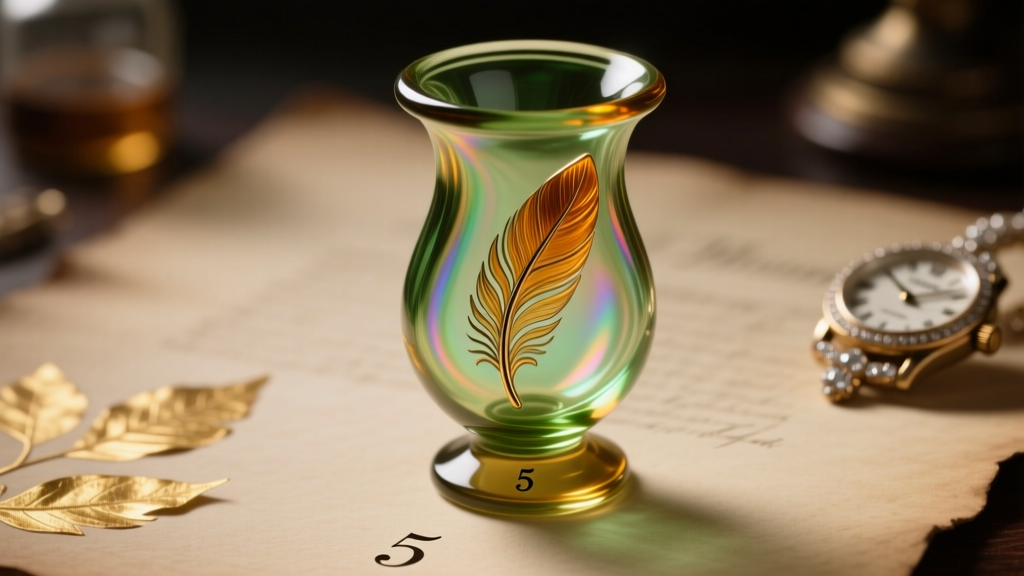
Glass Art Vase: Pulled Feather Design in Amber-Green, Marked '5 In' — A Mid-Century American Studio Glass Masterpiece
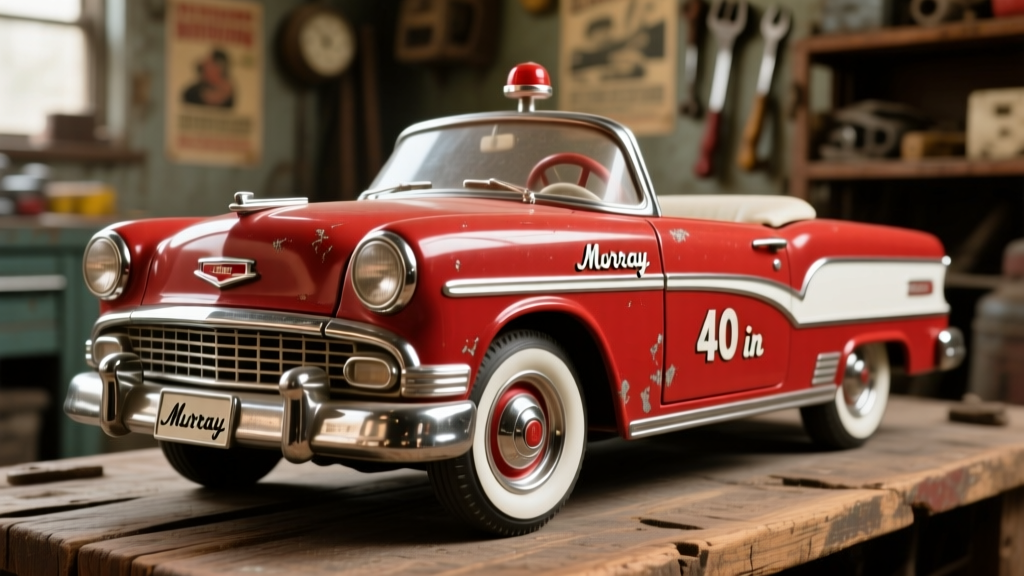
Murray Fire Ball Pedal Car: A 1950s American Icon in Red, White, and Chrome
Majolica Pitcher with Green Leaf Design: A Study of Victorian Craftsmanship, Glaze Chemistry, and Market Provenance
Chinese Export Candlesticks: Armorial Base, Gold Chain Rim, c. 1755 — A Pair of Eight-Inch Porcelain Masterpieces
Jumeau Bisque Doll, Brown Eyes, Closed Mouth, Composition Body — A 24-Inch Masterpiece from the Golden Age of French Dollmaking
Lemon Son: The Elusive Swiss Chronograph Movement and Its Legacy in Vintage Watchmaking
Victorian Walnut Wall Clock with Integrated Barometer: A Dual-Function Masterpiece in 29-Inch Form

Toy Chalkboard Triangular Collapsible Stand Lithograph: A 46-Inch Vintage Educational Artifact from the 1950s–60s
Furniture Settee: Triple-Back Carved Ebonized Rosewood Victorian American, Circa 1850