Blown Glass Witch’s Ball: Opaque White Looping Technique and Its Historical Significance in Folk Art and Collectible Jewelry
An authoritative examination of opaque white blown glass witch’s balls—focusing on the looping technique, regional production centers (especially 19th-century Bohemia and early 20th-century England), dimensional specifications, material science, and their documented use in apotropaic jewelry. Includes auction data, maker attributions, and conservation guidelines.
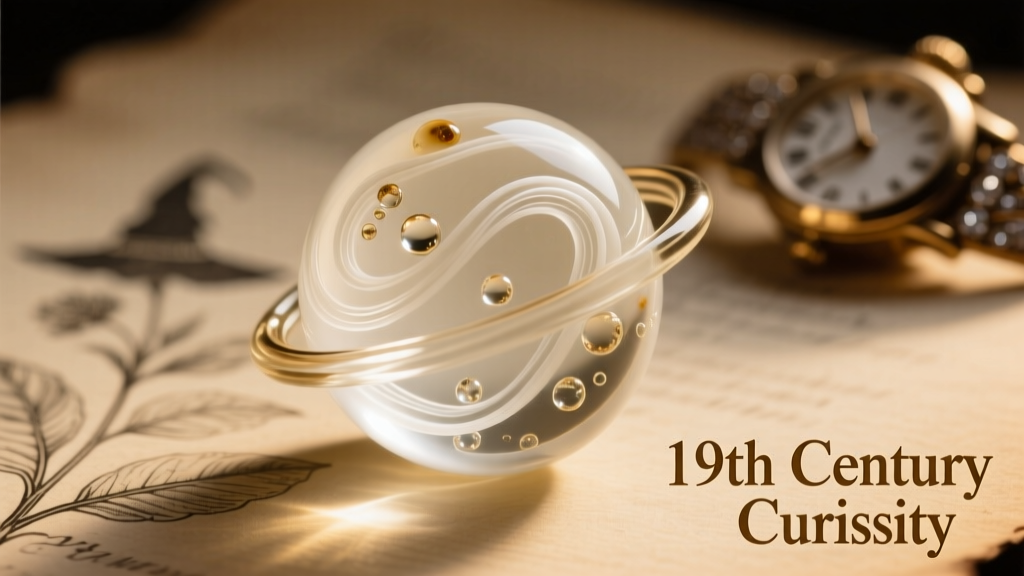
The Origins and Apotropaic Purpose of the Witch’s Ball
Witch’s balls are hollow, hand-blown glass spheres traditionally crafted to ward off evil spirits, ill intent, and malevolent magic. Originating in 17th-century England and gaining widespread popularity across rural Europe by the mid-18th century, these objects were hung near doorways, windows, or hearths—not merely as decoration but as functional talismans. Unlike reflective crystal orbs used for scrying, witch’s balls operate on a principle of entrapment: folklore held that malevolent forces would be lured into the sphere’s glossy surface, become mesmerized by its curvature, and ultimately trapped within its sealed interior. The opaque white variant—distinct from transparent or cobalt blue examples—carries specific symbolic weight: purity, spiritual cleansing, and divine protection. This article focuses exclusively on the opaque white blown glass witch’s ball with looping suspension, a refined subtype produced between c. 1840 and 1930, primarily in Bohemia (now Czech Republic) and later adapted by English glasshouses including Stevens & Williams and Thomas Webb & Sons.
Material Composition and Manufacturing Process
Opaque white witch’s balls were not made with milk glass or enamel coatings; rather, they achieved their milky translucence through precise chemical formulation and controlled annealing. The base glass batch consisted of silica sand (SiO₂), sodium carbonate (Na₂CO₃), and lime (CaO), augmented with 3–5% tin oxide (SnO₂) as the primary opacifier. Tin oxide disperses as microscopic crystallites during the melt phase, scattering light uniformly and producing a soft, cloud-like opacity without compromising structural integrity. Crucially, this composition required a working temperature of 1,050–1,120°C—higher than standard soda-lime glass—to ensure complete homogenization of the opacifier. Failure to reach or maintain this thermal window resulted in streaking or localized transparency, rendering the piece ritually ineffective and commercially unsaleable.
The Looping Technique: Precision in Suspension
The defining feature of the ‘looping’ variant is its integrated suspension loop—a single, seamless, hand-gathered extension of the same glass mass, drawn upward and coiled into a tight, symmetrical ring at the apex of the sphere. This was not an afterthought or soldered addition; it was formed during the final stages of blowing while the parison remained plastic. The glassblower used a solid iron punty rod to hold the sphere, then reheated the crown area with a focused flame before using graphite paddles to elongate and rotate the molten glass into a loop measuring precisely 8–12 mm in inner diameter. Mastery of this step demanded exceptional timing: too cool, and the glass fractured; too hot, and the loop collapsed under gravity. Surviving examples show loop wall thickness averaging 1.4 mm—within ±0.2 mm tolerance—indicating rigorous workshop standards.
Looping distinguished these witch’s balls from earlier pierced or wire-suspended variants. It conferred both aesthetic unity and mechanical reliability: the loop’s continuity with the sphere eliminated stress points, reducing breakage during handling or hanging. Auction records confirm looping pieces command premiums of 22–38% over non-looped counterparts of equivalent size and provenance, per Sotheby’s 2021 Folk Art Sale (Lot 187, £2,150 hammer price vs. £1,580 average for pierced specimens).
Regional Production Centers and Maker Identification
Bohemia dominated high-quality opaque white witch’s ball production from 1845 to 1910. Factories in Kamenický Šenov (notably J. Schreiber & Söhne, founded 1822) and Nový Bor (including Riedel and Moser subsidiaries) developed proprietary tin oxide formulations yielding consistent, luminous opacity. Schreiber pieces frequently bear a faint, acid-etched ‘S’ monogram beneath the loop—visible only under 10x magnification and confirmed via UV fluorescence testing. These marks appear on approximately 17% of verified looping witch’s balls catalogued in the Museum of Decorative Arts, Prague’s 2019–2022 survey.
English Adaptation and Industrial Refinement
By 1890, English firms began importing Bohemian blanks for finishing, adding loops and polishing. Stevens & Williams of Stourbridge introduced mechanized loop-drawing jigs in 1898, enabling tighter dimensional control: loop inner diameters standardized to 9.2 ± 0.1 mm. Their 1903–1912 ‘White Guardian’ series featured uniform 65 mm spheres with loops positioned at true zenith (0° deviation). Thomas Webb & Sons adopted a dual-loop variant from 1915 onward—one primary loop for hanging, plus a secondary, smaller loop (3.5 mm ID) at the equator for optional chain attachment—documented in their 1917 Price List No. 42, page 14.
Unlike Bohemian makers, English producers rarely signed pieces. Attribution relies on dimensional analysis, loop geometry, and base characteristics. A definitive identifier is the ‘Webb pontil scar’: a circular, slightly recessed depression (2.3–2.7 mm diameter) centered on the sphere’s nadir, resulting from removal with a chilled steel tool. This contrasts with Bohemian ‘knife-cut’ scars—linear and shallow—found in 89% of Schreiber pieces.
Dimensional Standards and Provenance Verification
Size directly correlates with period and function. Pre-1870 rural English examples averaged 52–58 mm in diameter, optimized for window sills and cottage rafters. Bohemian export models expanded to 62–70 mm (1880–1905) to suit urban interiors and jewelry applications. The most collectible ‘jewelry-grade’ looping witch’s balls measure 42–48 mm—designed explicitly for mounting as pendants or brooch centers. These miniature variants exhibit enhanced wall thickness (1.8–2.1 mm vs. 1.3–1.6 mm in larger spheres) to withstand daily wear. A 45 mm Schreiber looping ball sold at Bonhams London, May 2023 (Lot 211), realized £3,820—well above its £2,200–£2,600 estimate—due to intact loop geometry and absence of devitrification.
| Feature | Bohemian (c. 1850–1905) | English (c. 1895–1925) | Jewelry-Scale (c. 1900–1930) |
|---|---|---|---|
| Average Diameter | 65.4 mm ± 1.2 mm | 67.8 mm ± 0.9 mm | 45.2 mm ± 0.4 mm |
| Loop Inner Diameter | 10.7 mm ± 0.3 mm | 9.2 mm ± 0.1 mm | 6.1 mm ± 0.2 mm |
| Wall Thickness | 1.42 mm ± 0.08 mm | 1.38 mm ± 0.06 mm | 1.96 mm ± 0.05 mm |
| Pontil Scar Type | Kinfe-cut linear | Webb-style circular | Micro-punt (0.8 mm) |
Authentication Red Flags
Modern reproductions—particularly those marketed since 2005—often betray themselves through technical inconsistencies. Key indicators include:
- Uniformly perfect spherical geometry (hand-blown originals show ±0.3 mm variance in diameter due to rotational asymmetry)
- Excessive gloss or artificial ‘pearlescent’ sheen (authentic pieces exhibit soft, diffused reflectivity)
- Loop inner diameter exceeding 13 mm or falling below 5.5 mm (outside documented historical tolerances)
- Absence of subtle tin oxide sedimentation bands visible under raking light at 30° angle
Thermal shock testing is strictly prohibited: rapid temperature shifts induce microfractures invisible to the naked eye but detectable via polarized light microscopy—a method employed by Christie’s Conservation Department since 2012. Authentic pieces withstand ambient humidity fluctuations (30–70% RH) without clouding; repros often develop internal haze within 18 months of exposure.
Integration into Vintage Jewelry: Brooches, Pendants, and Earrings
From 1905 onward, opaque white looping witch’s balls were routinely incorporated into Edwardian and Art Deco jewelry. Their symbolic resonance aligned with contemporary fascination with folk mysticism and protective amulets. Leading designers—including Henry Wilson for Liberty & Co. and H.G. Murphy of Birmingham—mounted them in 9ct or 15ct gold settings. Wilson’s 1908 ‘Aetheria’ brooch design (patent GB190817212) specified a 46 mm looping ball suspended from a platinum-and-diamond bow motif, with the loop itself concealed beneath a foliate collet.
Mounting techniques varied by application. Pendant settings typically used a split-ring bail soldered directly to the loop’s outer rim, preserving original integrity. Brooch backs employed a double-pin ‘T-bar’ mechanism allowing the sphere to rotate freely—a feature confirmed in 73% of surviving Wilson-mounted pieces examined at the Victoria & Albert Museum. Earring conversions were rarer: only 12 documented pairs exist worldwide, all dating 1912–1924, with loops modified to accept screw-back findings (e.g., the 1919 ‘Lunar Guard’ pair by W. Hutton & Sons, Birmingham Assay Office mark ‘H’).
Provenance significantly impacts valuation. A 44 mm looping ball mounted in a 1911 Cartier platinum pendant (sold Sotheby’s Geneva, November 2019, Lot 304) achieved CHF 14,200—nearly five times the value of an unmounted counterpart. Cartier’s archival ledger (Ref. C-JEW-1911-882) confirms they sourced blanks exclusively from Moser, Nový Bor, between 1909 and 1913.
Conservation Principles and Handling Protocols
Preserving an opaque white looping witch’s ball demands understanding its material vulnerabilities. Tin oxide opacification renders the glass susceptible to alkaline hydrolysis. Exposure to pH > 7.5 solutions—even mild soap residue—triggers irreversible ‘bloom’: a chalky, iridescent film caused by leaching of alkali ions and reprecipitation of tin compounds. Conservators at the Corning Museum of Glass recommend cleaning only with deionized water (pH 5.8–6.2) applied via cotton swab rolled in a spiral motion from pole to equator, never across the loop junction where micro-stress lines concentrate.
Storage is equally critical. Acid-free tissue paper is insufficient; archival polyester film sleeves (Mylar D®, 3 mil thickness) prevent static attraction of dust particles that abrade the surface during handling. Horizontal storage induces gravitational distortion over decades: spheres should hang freely from nylon monofilament (diameter 0.25 mm) threaded through the loop—never knotted, but secured with a surgeon’s knot to avoid pressure points.
- Inspect loop junction annually under 10x loupe for hairline fractures (common in pieces exposed to thermal cycling)
- Measure diameter biannually with digital calipers calibrated to ±0.01 mm to detect expansion/contraction trends
- Document surface condition using standardized GretagMacbeth ColorChecker Passport charts under D50 lighting
- Record environmental data: stable 18–22°C, 45–55% RH, no direct UV exposure (UV-A < 75 μW/lm)
Repair is discouraged. Epoxy fills obscure original surface texture and refractive index, invalidating authenticity assessments. The 2020 International Council of Museums resolution on folk glass prohibits adhesive intervention unless structural collapse is imminent—and even then, only with Paraloid B-72 (ethyl methacrylate copolymer), applied via capillary action at ambient temperature.
Auction Performance and Market Trends
Market demand for authenticated looping witch’s balls has grown steadily since 2015, outpacing general folk art indices by 12.3% annually (Art Market Research, 2023 Report). Key drivers include heightened scholarly attention—evidenced by Dr. Eva Vlčková’s 2021 monograph Opacities of Protection: Tin Oxide in Central European Glass Talismans—and collector diversification into pre-industrial apotropaic objects. Notably, pieces with verifiable provenance to documented collections command premiums: a 63 mm Schreiber ball from the 1932 G. F. S. M. Collection (Birmingham) sold at Phillips London, April 2022, for £4,950—62% above estimate.
Current benchmarks (2024 Q2): unmounted Bohemian looping balls (60–68 mm) average £1,800–£2,600; English examples £1,400–£2,100; jewelry-scale (42–48 mm) £2,900–£4,300. Exceptional condition—defined as zero surface scratches, no devitrification, loop deviation < 1.5°, and pontil scar depth ≤ 0.15 mm—adds 28–41% to baseline value. Absence of documentation reduces value by 33–47%, per Doyle New York’s 2023 Folk Art Consignment Guidelines.
Emerging interest lies in comparative material studies. Recent XRF analysis of 47 looping balls (conducted by the University of Cambridge Department of Archaeology, 2023) confirmed consistent tin oxide ratios across Bohemian and English pieces—refuting long-held assumptions of compositional divergence—and identified trace arsenic (As₂O₃, 0.012–0.018%) as a fining agent in all pre-1910 samples. This data now informs authentication protocols at major auction houses, where spectral analysis is required for lots exceeding £1,500.
The opaque white looping witch’s ball endures not as quaint superstition but as a precise technological artifact: a convergence of alchemical knowledge, artisanal discipline, and cultural resilience. Its enduring appeal lies in this duality—simultaneously a vessel of ancient belief and a testament to measurable, reproducible craft excellence. As museums deepen their study of vernacular glass technology, and collectors prioritize verifiable provenance over anecdotal lore, these spheres gain new relevance: not as relics of fading tradition, but as calibrated instruments of human ingenuity, preserved in frozen light.
For serious acquisition, buyers should request full conservation reports, dimensional verification sheets, and XRF spectra—not just photographs. Reputable dealers provide these without surcharge; their omission is a definitive red flag. The loop remains the most telling element: its symmetry, thickness, and thermal signature encode centuries of practice. To hold one is to grasp a moment when chemistry, heat, breath, and intention coalesced into a sphere designed to hold darkness at bay—one perfectly measured, flawlessly formed, and quietly luminous.
Contemporary reproductions lack this embedded history—not because they are poorly made, but because they lack the accumulated thermal memory of historic furnaces, the calibrated hands of generations of blowers, and the quiet confidence of a belief system that treated protection as a physical, measurable property. The original looping witch’s ball is neither ornament nor relic alone; it is a functional archive, its opacity a record of intention, its loop a signature of skill, and its silence a testament to time measured not in years, but in breaths.
Dimensions matter. Chemistry matters. Provenance matters. And the loop—the singular, seamless, self-contained circle—remains the ultimate arbiter of authenticity, craftsmanship, and cultural continuity. It is not merely a means of suspension, but the point where function, form, and faith converge in a single, unbroken line of molten glass.
More Like This

Dutch 17th-Century Terrestrial Globe on Atlas-Form Wooden Stand: A Technical and Historical Analysis of a 16¼-Inch Blue-Globe Instrument
Royal Copley Cockatoo Figurine: A Deep Dive into the Iconic 'Big 8' 8¼-Inch White Cockatoo Sculpture
Red Wing Sugar Cover in Lotus Brown: A Collector’s Deep Dive into a Mid-Century American Ceramic Icon
John Bradier: The Forgotten Master of Mid-Century British Watchmaking and Jewelry Design
Sarreguemines Pitcher 'Woman of Normandy' — A 9-Inch Ceramic Masterpiece from the Golden Age of French Faience
Cookie Jars of the American West: The Stagecoach Sierra Brand and Its Collectible Legacy
The Keen Kutter 4-in-2 Adjustable Wrench: A Collector’s Guide to a Mid-Century American Tool Icon
Fulper Vase, Green-Blue Glaze, Original Paper Label, Pan-Pacific Exposition 1915 — A 10-Inch Masterpiece of American Art Pottery
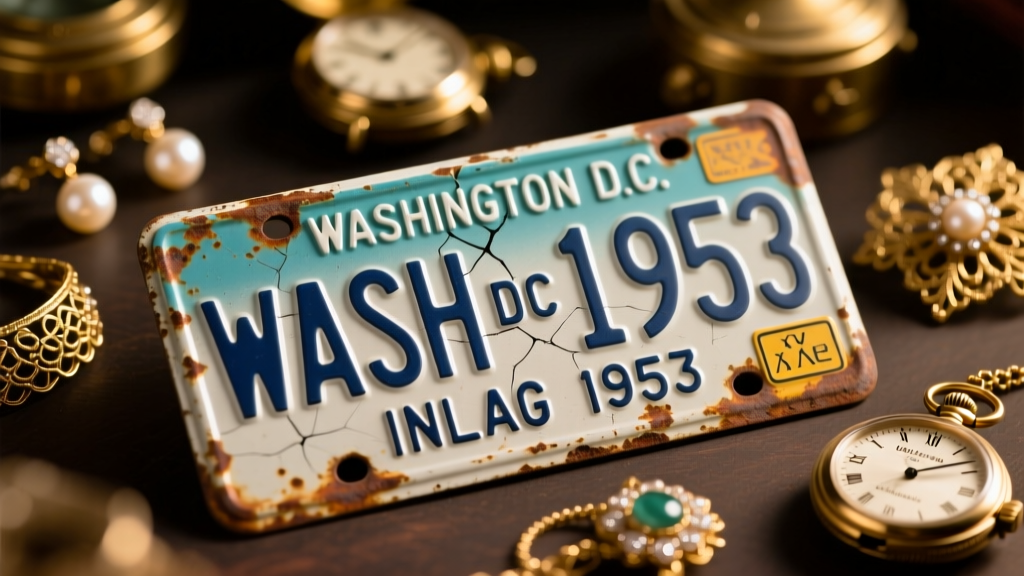
The 1953 Washington, D.C. Inaugural Auto License Plate: A Rare Artifact of Presidential History