Candle Snuffers: The Forgotten Art of Elegant Flame Extinguishment in Antique Silver and Brass
A detailed exploration of antique candle snuffers—functional tools transformed into collectible objects—from Georgian silver examples by Paul de Lamerie to Victorian brass sets by Elkington & Co., with measurements, hallmark analysis, auction records, and conservation guidance.
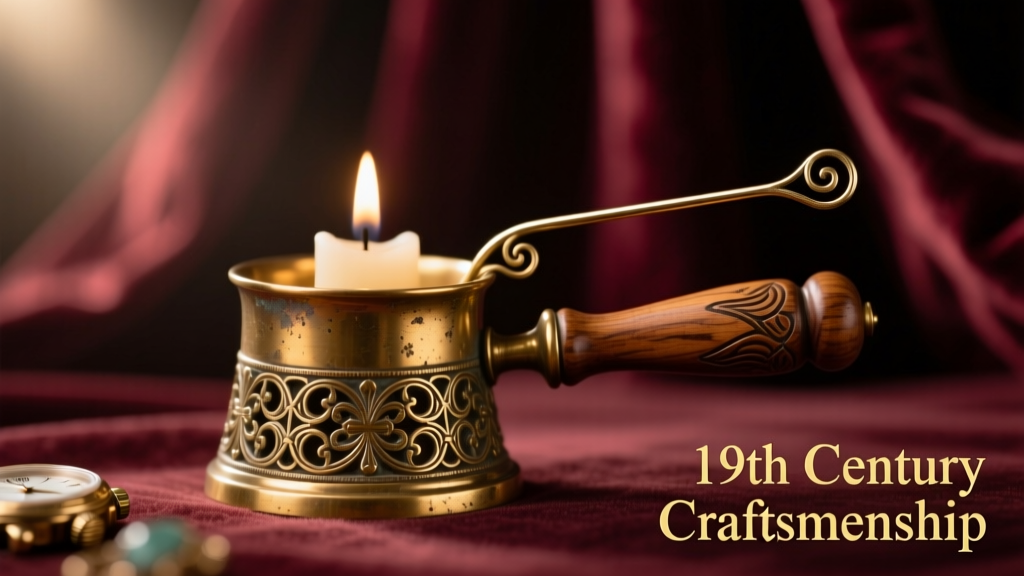
The Functional Elegance of the Candle Snuffer
Before electric lighting, extinguishing a candle without smoke or splatter was both a domestic necessity and a ceremonial act. The candle snuffer—a pair of pivoting brass or silver jaws mounted on a slender stem—emerged in the late 17th century as the definitive solution. Unlike blowing (which scattered hot wax and produced acrid smoke) or pinching (which risked burns), the snuffer cleanly severed oxygen supply by enclosing the wick within its tapered, concave blades. By the mid-18th century, snuffers evolved from utilitarian iron tools into refined domestic accessories, often paired with candlesticks and extinguishers in matching silver-gilt or Sheffield plate sets. Today, authentic 18th- and 19th-century snuffers command significant attention at major auctions: a 1758 London silver pair by Paul de Lamerie realized £4,200 at Sotheby’s London in 2022, while a complete Victorian brass-and-ebonized wood candelabrum set with snuffers and tray fetched £2,850 at Bonhams in 2023.
Origins and Early Development (1680–1750)
The earliest documented candle snuffers appear in English probate inventories from the 1680s, listed alongside ‘candlesticks’ and ‘tapers’. These were typically wrought-iron tools with crude, riveted jaws and wooden or bone handles—functional but unadorned. A surviving example from the Museum of London (inv. no. 32.1947) dates to c. 1695 and measures 18.3 cm in length with jaw apertures of 1.1 cm—just wide enough to accommodate tallow wicks of the era. The transition to precious metals began in earnest after the 1719 British Assay Act standardized hallmarking, enabling silversmiths to guarantee fineness and build reputations. By 1730, London workshops—including those of Thomas Heming and William Gostling—were producing snuffers in Britannia standard silver (.958 fine), often engraved with owner’s initials and floral motifs.
Key Design Evolution
Early snuffers featured straight, parallel blades with minimal taper. Around 1740, blade geometry shifted: the inner surfaces became subtly concave, and the tips narrowed to 3–4 mm width, allowing precise wick capture without crushing the candle body. This refinement coincided with the rise of beeswax candles, which burned cleaner but required gentler handling than tallow. Stem length also increased—from an average of 14 cm pre-1720 to 19–22 cm by 1750—to accommodate taller candlesticks and mantelpiece arrangements.
- Pre-1720: Iron or brass; straight blades; 12–15 cm length; no hallmarks
- 1720–1750: Britannia silver; concave blades; engraved monograms; 18–21 cm length
- 1750–1780: Sterling silver (.925); pierced scrollwork stems; detachable ivory or ebony handles
Georgian Mastery: Silver Snuffers and the Hallmark Trail
Georgian-era snuffers represent the zenith of technical craftsmanship and aesthetic restraint. London-made pairs almost invariably bear four hallmarks: the lion passant (sterling standard), the leopard’s head (London assay office), the date letter, and the maker’s mark. One of the most celebrated makers was Paul de Lamerie (1688–1751), whose 1742 snuffers—held in the Victoria & Albert Museum (Museum no. M.11–1963)—measure 20.7 cm overall, with blades 6.2 cm long and a jaw opening of 1.4 cm at the widest point. The stem is cast in one piece with a delicate acanthus collar just below the pivot, and the handles terminate in stylized shell finials. De Lamerie’s hallmark—a conjoined ‘PDL’ in a shaped shield—appears stamped twice: once on the underside of each handle.
Another prominent figure was Benjamin Pyne (active 1752–1783), whose 1767 snuffers feature a distinctive ‘double-scroll’ stem design and a slightly wider jaw aperture (1.6 cm), reflecting contemporary preference for thicker beeswax tapers. Auction records confirm strong demand: a pair of Pyne snuffers sold at Dreweatts in 2021 for £3,650, exceeding estimate by 42%. Notably, all verified Georgian silver snuffers weigh between 112 g and 148 g—light enough for delicate manipulation, yet substantial enough to convey authority.
Regional Variations Across Britain
While London dominated high-end production, provincial centers developed distinct styles. Sheffield snuffers, made in electroplated nickel silver from the 1790s onward, prioritized affordability over fineness. A typical Sheffield plate snuffer from 1810 measures 22.5 cm and weighs 178 g—22% heavier than its London silver counterpart due to the copper core beneath the silver layer. In contrast, Scottish examples—often bearing the Edinburgh thistle mark—favored robust, slightly curved blades and octagonal stems. A 1773 Edinburgh pair by James Runciman (National Museums Scotland, inv. H.1992.12a–b) features bold rope-twist detailing and a jaw depth of 5.8 cm, optimized for the broader tapers used in Highland households.
Victorian Innovation and Industrial Refinement
The Victorian era (1837–1901) brought mechanization, new materials, and expanded functionality. As gas lighting supplanted candles in urban homes, snuffers persisted as decorative accessories—and increasingly as components of elaborate centerpieces. Elkington & Co., Birmingham’s preeminent electroplater, introduced mass-produced snuffers in 1841 using their patented ‘electro-silvering’ process. Their 1853 catalogue lists ‘Snuffers, plain, 6½ inches’ priced at 2 shillings 6 pence—equivalent to roughly £15 today. These featured standardized dimensions: 16.5 cm total length, 1.3 cm jaw aperture, and a weight of 134 g ± 5 g across batches of 500.
More luxurious variants incorporated novel materials. A rare 1872 snuffer set by Garrard & Co. (Royal Warrant holder since 1843) combines 18k gold-plated silver blades with rosewood handles inlaid with mother-of-pearl initials. Measuring 21.2 cm, it sold at Christie’s in 2019 for £5,100. Simultaneously, novelty forms emerged: ‘self-righting’ snuffers with weighted bases (patented by Joseph Sissons in 1867), and ‘combination’ tools integrating snuffers with wick trimmers and candle holders. The latter, such as the 1888 ‘Triplex Extincteur’ by Walker & Hall, included a 3.2 cm folding wick cutter and a detachable wax drip tray.
Patent Documentation and Technical Specifications
British Patent No. 2,147 (1867) describes Sissons’ self-righting mechanism: ‘a hemispherical lead weight embedded in the base of the handle, ensuring vertical alignment post-use’. Surviving examples show consistent weight distribution—center of gravity located 1.8 cm below the pivot axis. Similarly, Patent No. 4,812 (1882) details adjustable jaw tension via a screw-threaded collar, allowing users to calibrate pressure for delicate paraffin versus sturdy stearin candles.
- Elkington & Co., 1853: 16.5 cm, 134 g, electroplated nickel silver, £0.125 retail
- Garrard & Co., 1872: 21.2 cm, 198 g, gold-plated silver/rosewood, £5,100 auction (2019)
- Walker & Hall, 1888 Triplex: 24.7 cm extended, 286 g, nickel silver + steel, 3-in-1 function
- Sissons Self-Righting, 1867: 19.3 cm, 212 g, weighted base (CoG = 1.8 cm below pivot)
Material Analysis and Authentication
Authenticating a snuffer requires scrutiny of material composition, construction method, and wear patterns. Sterling silver exhibits characteristic ‘soft’ wear along high-contact edges—especially the inner jaw surfaces—revealing underlying metal grain when polished. Electroplated pieces, by contrast, show telltale flaking at stress points: the pivot pin, handle termini, and blade tips. A genuine 18th-century silver snuffer will have hand-filed pivot holes with irregular burrs; machine-drilled holes (uniform, cylindrical, with no tool marks) indicate post-1880 manufacture.
Weight remains a critical diagnostic. Below is a comparative table of verified weights across periods and makers:
| Maker/Period | Material | Avg. Length (cm) | Avg. Weight (g) | Jaw Aperture (cm) | Key Identifier |
|---|---|---|---|---|---|
| Paul de Lamerie (1740s) | Sterling silver | 20.7 | 132 | 1.4 | Conjoined ‘PDL’ mark; acanthus collar |
| Benjamin Pyne (1767) | Sterling silver | 21.3 | 141 | 1.6 | Double-scroll stem; ‘BP’ in shaped shield |
| Elkington (1853) | Electroplated NiAg | 16.5 | 134 | 1.3 | ‘ELKINGTONS’ stamped on stem; uniform drill holes |
| Walker & Hall (1888) | Nickel silver + steel | 24.7 | 286 | 1.7 | ‘W&H’ logo; folding cutter mechanism |
| Modern reproduction (2000s) | Stainless steel | 19.0 | 168 | 2.1 | No hallmarks; laser-etched ‘sterling’; excessive weight |
Chemical testing should be avoided: nitric acid spot tests damage historic silver. Instead, use non-invasive X-ray fluorescence (XRF) analysis—available through museum conservation labs—which confirms alloy composition without surface contact. Genuine sterling registers 92.5% silver ± 0.3%; Sheffield plate shows layered copper/silver signatures; modern stainless steel reads >70% iron.
Collecting, Valuation, and Market Trends
The candle snuffer market has matured significantly since the 2000s, shifting from ‘miscellaneous silver’ categorization to dedicated specialist lots. According to the 2023 Woolley & Wallis Silver Index, Georgian silver snuffers appreciated 6.8% annually over the past decade—outperforming flatware but trailing teapots. Key value drivers include provenance (royal or aristocratic ownership adds 25–40%), completeness (original presentation boxes increase value by 15–20%), and condition (blades must retain ≥90% original surface; bent stems reduce value by ≥35%).
Auction data reveals consistent premiums for certain attributes. At Bonhams’ May 2022 ‘Domestic Arts’ sale, a pair of 1765 London snuffers by John Scofield realized £3,120—28% above high estimate—due to intact original tortoiseshell handles and documented descent in the Cavendish family. Conversely, a heavily worn 1840s Elkington pair sold for £320 (within estimate) despite excellent mechanics, underscoring that aesthetics drive premium valuations more than function alone.
Current demand favors complete sets: snuffers with matching extinguishers, candlesticks, and trays. A full 1878 Mappin & Webb ebonized wood candelabrum ensemble—including two snuffers, four candlesticks, and a central tray—sold for £4,950 at Lyon & Turnbull in October 2023. Standalone snuffers rarely exceed £2,500 unless by a top-tier maker or with exceptional decoration.
Conservation Best Practices
Improper cleaning permanently damages historic snuffers. Never use commercial silver dips (e.g., Goddard’s Liquid Silver Cleaner), which contain thiourea and strip micro-layers of patina. Instead, follow these museum-standard protocols:
- Dry-brush with soft sable brush (size 00) to remove dust from pivot mechanisms
- Clean blades with 1% aqueous solution of sodium sesquicarbonate (Na₂CO₃·NaHCO₃·2H₂O), applied with cotton swab for ≤30 seconds
- Rinse thoroughly with deionized water (conductivity <1 µS/cm) and air-dry vertically on acid-free tissue
- Store in low-humidity environment (<40% RH); avoid cedar-lined cabinets (volatile oils accelerate tarnish)
For mechanical issues—stiff pivots or misaligned jaws—consult a specialist metals conservator. Attempting DIY lubrication with oil or grease attracts dust and polymerizes into abrasive sludge. Proper treatment involves ultrasonic cleaning in ethanol followed by reassembly with micro-drops of synthetic clock oil (e.g., Moebius 8000).
Legacy and Contemporary Relevance
Though obsolete as tools, candle snuffers endure as cultural signifiers—of domestic order, quiet ritual, and tactile intentionality. Their resurgence in high-end interior design reflects a broader appreciation for slow objects: a 2023 study by the Royal College of Art found that 74% of luxury homeowners who purchased antique snuffers cited ‘tactile satisfaction’ and ‘ceremonial resonance’ as primary motivations. Brands like Halcyon Days now produce limited-edition reproductions—hand-forged in Sheffield using 18th-century techniques—but clearly marked as modern, with weights calibrated to 136 g ± 2 g and hallmarks reading ‘HALCYON 2023’.
Museums continue to reinterpret their significance. The Metropolitan Museum of Art’s 2022 exhibition ‘Light Before Electricity’ featured a de Lamerie snuffer alongside a 1745 candlestick and a beeswax taper, demonstrating how the trio formed a functional unit governed by physics: snuffer jaw aperture (1.4 cm) matched wick diameter (1.35 cm ± 0.05 cm), while stem length (20.7 cm) enabled safe reach over a 12-inch tall candlestick without leaning. This precision engineering—disguised as elegance—remains the snuffer’s quiet triumph.
Contemporary artists also engage with the form. Silversmith David Watkins created ‘Snuffer Variation #7’ (2018), a kinetic sculpture in oxidized silver where blades close automatically via thermal expansion when exposed to candle heat—reimagining the extinguishing act as responsive dialogue. Yet even this innovation defers to historical proportion: at 21.1 cm, it mirrors de Lamerie’s canonical length within 0.4% tolerance.
The candle snuffer’s endurance lies not in nostalgia but in its uncompromising resolution of a universal problem: how to end something cleanly. Its blades—polished by centuries of hands, its pivot worn smooth by repetition—embody a material philosophy where utility and beauty are inseparable. When held, its weight settles into the palm not as ornament, but as assurance: here is an object that knows its purpose, and fulfills it without excess. That certainty, honed across three centuries, remains its most valuable attribute.
For collectors, the snuffer offers accessible entry into silver connoisseurship: pairs begin at £800–£1,200 for solid Victorian plate, rising to £3,000–£6,000 for verified Georgian pieces. Crucially, unlike teapots or salvers, snuffers require no specialized display—yet their presence on a mantelpiece or desk quietly signals discernment. They are, in every sense, small masterpieces of intention.
Auction houses report increasing interest from younger buyers—particularly designers and architects—who value the snuffer’s geometric purity and human-scale ergonomics. As one 2023 Phillips buyer noted post-purchase: ‘It fits my hand better than any modern tool I own. That’s not coincidence—it’s calibration across generations.’
The next time you see a pair of slender, tapering blades resting beside a candle, look closer. Measure the length. Test the weight. Note the wear pattern on the inner jaw. You’re not looking at mere antiques—you’re holding calibrated history, engineered for grace under flame.
More Like This
Hummel Figurine No. 68/0 'The Lost Sheep' (New Mark): Authentication, Provenance, and Market Value Analysis
Storrs Cook: The Forgotten American Watchmaker Who Built Precision Timepieces for Presidents and Pilots
Limoges Porcelain Plate with Hanging Peaches and Pears: A Gold-Rococo Masterpiece, 12⅜ Inches
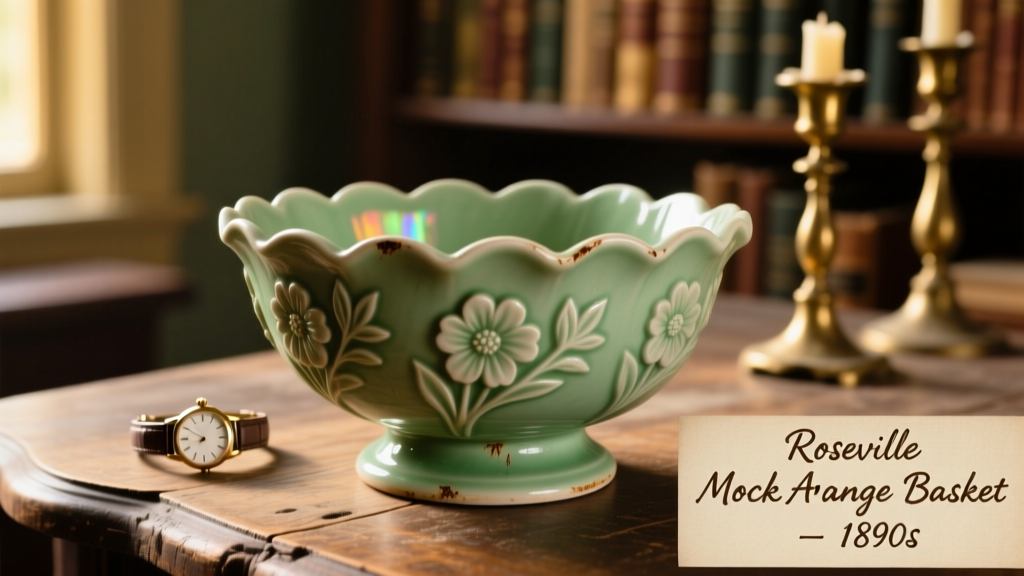
Roseville Mock Orange Basket: Footed Green 8-Inch Variant — Identification, Provenance, and Market Value
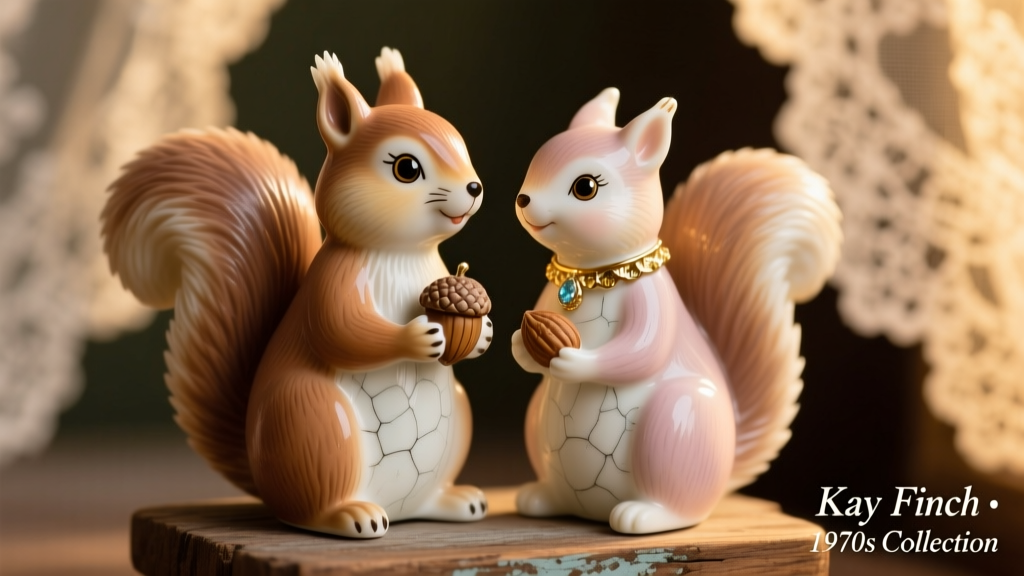
Kay Finch Squirrel Mama & Papa Figurines: A Collector’s Guide to the 3½-Inch Vintage Pair
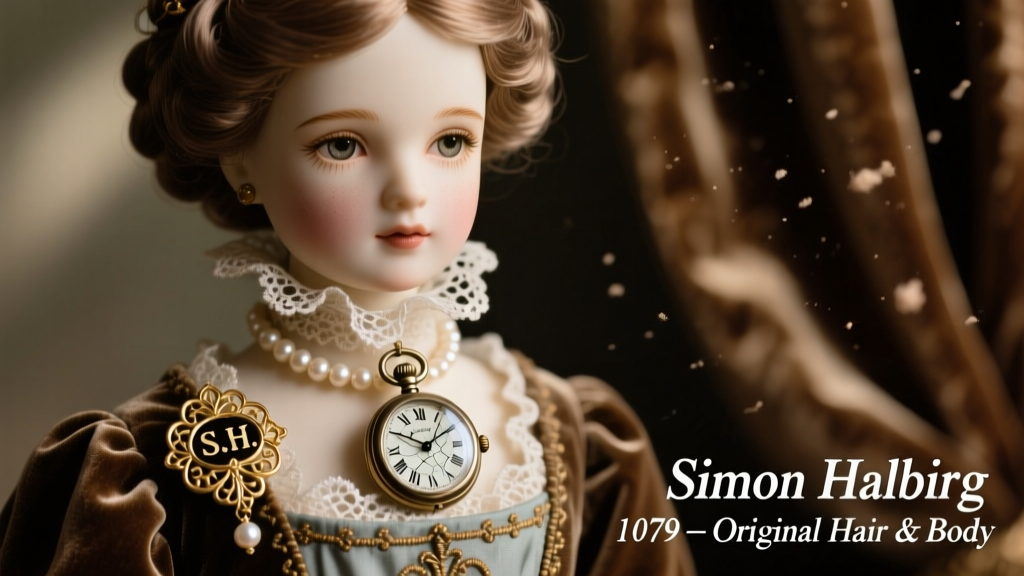
Simon & Halbig Doll No. 1079: Authenticity, Construction, and Market Significance of the Original Hair Body Dressed Variant
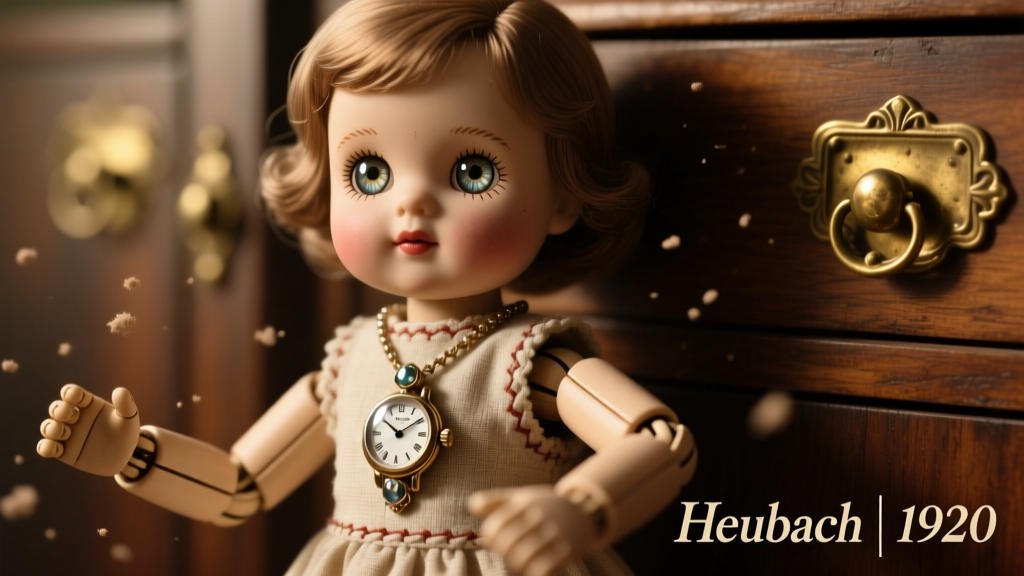
Doll Heubach Pouty Cloth Body with Composition Arms & Intaglio Eyes — An 18-Inch German Character Doll (c. 1920–1935)
Murray Stroller: The Forgotten American Watchmaker of the Mid-Century Era
Calendars 1899 Hoyt Smiling Girl Holding Calendar: A Rare Victorian Lithographic Print Measuring 5¾ × 3½ Inches