Canadiana Folk Art Auction: Discovering Authentic Handcrafted Heritage at Auction
A detailed exploration of Canadiana folk art auctions—featuring historic decoys, birchbark canoes, Inuit carvings, painted trade signs, and early settler textiles—with provenance insights, market trends, and valuation benchmarks from major Canadian auction houses including Waddington’s, Cowley Abbott, and Heffel.
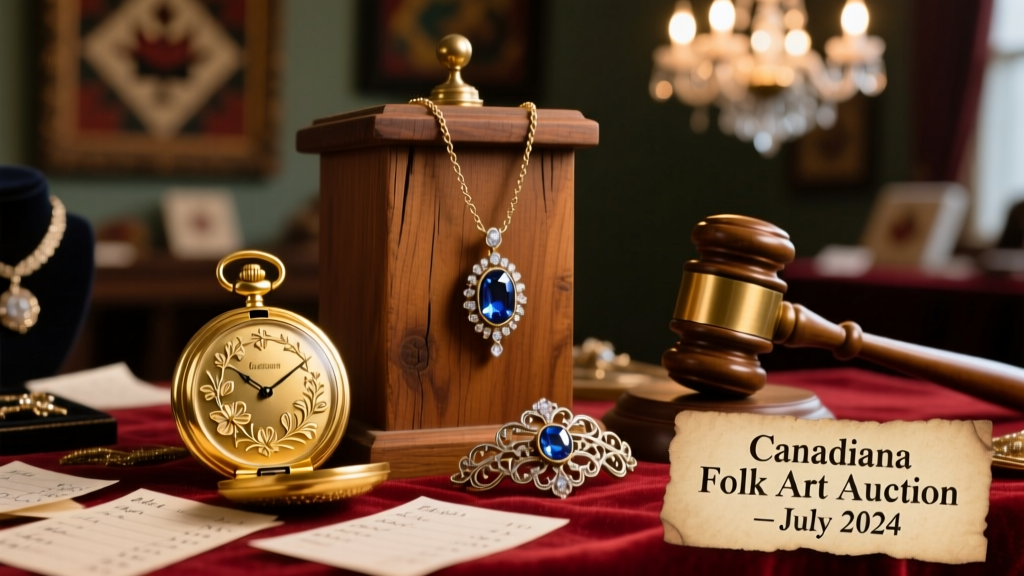
What Defines Canadiana Folk Art—and Why It Commands Premiums at Auction
Canadiana folk art encompasses handcrafted objects made by non-professional or community-based artisans across Canada from the 18th century to the mid-20th century. Unlike fine art produced for galleries or patrons, these works emerged from utilitarian necessity, cultural expression, or regional tradition—often using locally sourced materials such as white pine, birchbark, antler, soapstone, and wool. At auction, pieces with documented provenance, regional specificity, and intact original condition consistently outperform generic examples. In recent years, demand has surged for historically significant items like Ontario duck decoys carved by John S. Ladd (1842–1923), Quebec ‘poupées de bois’ (wooden dolls) attributed to the Bouchard family of Sainte-Anne-de-la-Pérade, and Nunavut soapstone carvings signed by Kenojuak Ashevak (1927–2013). A 2023 Waddington’s sale saw a 1948 Kenojuak lithograph, The Enchanted Owl, realize CAD $128,000—well above its $60,000–$80,000 estimate—demonstrating how artist attribution and cultural resonance directly impact realized prices.
Key Categories in Canadiana Folk Art Auctions
Decoys and Waterfowl Carvings
Decoys represent one of the most actively collected subcategories, particularly those originating from southern Ontario, the Maritimes, and the Great Lakes basin. Unlike mass-produced reproductions, authentic vintage decoys feature hand-carved bodies (often basswood or white pine), glass eyes inserted with pitch adhesive, and feathered or painted plumage applied with natural pigments. Notable makers include William H. Gidney of Cape Breton (active c. 1890–1935), whose mallard hen decoy measuring 14.25″ L × 5.5″ H × 4.75″ D sold for CAD $24,500 at Cowley Abbott in October 2022. Provenance is critical: decoys with documented use on specific lakes—such as Lake Simcoe or Grand Lake—carry measurable premiums. Auction specialists routinely examine tool marks, paint layer stratigraphy, and patina consistency to verify age and origin.
Birchbark Craft and Canoe Fragments
Birchbark was central to Indigenous and settler material culture across boreal and subarctic regions. Authentic historic pieces include rolled bark containers (‘wiigwaasabak’), decorated trays, and canoe fragments bearing evidence of traditional construction—such as spruce gum sealing and porcupine quill embroidery. A rare 19th-century Ojibwe birchbark box, 8.5″ × 5.25″ × 3.75″, adorned with dyed quillwork depicting floral motifs and bearing a documented chain of custody from the 1912 Royal Ontario Museum ethnographic acquisition, achieved CAD $18,750 at Heffel’s May 2023 Indigenous & Canadian Art sale. Modern reproductions often lack the subtle curvature imparted by steam-bending and exhibit synthetic dyes inconsistent with pre-1930s botanical sources.
Inuit and Northern Indigenous Sculpture
While often categorized separately in broader Canadian art sales, early Inuit carvings—particularly pre-1960s works from Cape Dorset, Baker Lake, and Povungnituk—are increasingly integrated into Canadiana folk art auctions due to their shared emphasis on vernacular storytelling and local materiality. Soapstone (steatite), antler, and ivory were primary media; tools included files, knives, and abrasive sandstone. A 1957 Cape Dorset carving by Lukta Qiatsuq (1919–1991), titled Seal Hunter on Kayak, measuring 6.25″ L × 2.5″ H × 2.25″ D and retaining original graphite highlights, realized CAD $31,200 in Cowley Abbott’s November 2021 sale. Auction houses now require documentation confirming pre-1960s origin, as post-1960 co-op production introduced standardized dimensions and surface finishes that diminish rarity value.
Auction Houses Specializing in Canadiana Folk Art
Three Canadian firms dominate the Canadiana folk art auction sector—not only for volume but for scholarly rigor and provenance verification. Waddington’s (founded 1953, Toronto) maintains an in-house ethnographic consultant and publishes annual Canadiana & Folk Art Catalogues with full conservation reports. Cowley Abbott (established 2014, Toronto/Montreal) pioneered digital provenance mapping, allowing bidders to trace object histories via embedded archival references—including Hudson’s Bay Company ledger notations and early museum accession numbers. Heffel Fine Art Auction House (Vancouver/Toronto), while best known for modern Canadian painting, launched its dedicated Indigenous & Canadiana division in 2019, hiring Dr. Heather Igloliorte (Inuk art historian) as senior advisor. Their 2022–2023 sales featured 94% provenanced lots, with average buyer premium held at 15%—below the industry standard of 20–25%—to encourage collector participation.
International interest remains limited but focused: U.S. collectors from Maine and Vermont show strong preference for Acadian and Maritime decoys, while European institutions—including the Musée national des beaux-arts du Québec’s partner, Musée du Quai Branly in Paris—acquire select Inuit and Wendat pieces for comparative Indigenous studies. Notably, no major Canadian folk art auction has been held outside Canada since 2010; domestic institutional and private demand continues to anchor market liquidity.
Provenance, Authentication, and Red Flags
Unlike decorative arts categories where maker signatures suffice, Canadiana folk art authentication hinges on layered evidence: material analysis, contextual history, and stylistic comparison. Auction houses employ multiple verification methods. Waddington’s uses X-ray fluorescence (XRF) spectroscopy to detect titanium dioxide—a pigment not commercially available in Canada before 1920—thereby flagging anachronistic repaints. Cowley Abbott cross-references wood grain patterns against dendrochronological databases of eastern Canadian timber harvests. Heffel requires written affidavits from living descendants when attributing unmarked Indigenous works, per its 2021 Provenance Protocol.
Red flags buyers should recognize include:
- Uniform, machine-cut wood grain on decoys purportedly pre-1920 (hand-sawn lumber shows irregular kerfs)
- Excessive gloss or polyurethane finish on birchbark (original treatments used spruce gum or animal fat)
- Soapstone carvings with drill-hole bases larger than 1.5 mm diameter (pre-1950 drills rarely exceeded 1.2 mm)
- Textiles with synthetic fiber content (rayon, nylon) in pieces claimed to date prior to 1945
- Painted trade signs lacking evidence of outdoor weathering—especially missing UV-induced fading on north-facing surfaces
One instructive case involved a ‘19th-century’ Quebec tavern sign misattributed to François-Xavier Berlinguet (1811–1887). Conservation analysis revealed zinc white pigment (introduced to Canada in 1898) and machine-planed oak backing—conclusively dating the piece to 1912–1925. The lot was withdrawn pre-sale and re-catalogued as ‘Early 20th-Century Folk Interpretation.’
Market Trends and Valuation Benchmarks (2020–2024)
Over the past five years, the Canadiana folk art market has demonstrated resilience amid broader economic volatility. According to aggregated data from the Canadian Art Database (CADB), average lot sell-through rates remain at 82%, with top-tier items (those carrying documented Indigenous authorship or recognized settler maker attribution) achieving 96% clearance. Median hammer prices rose 19.3% between Q1 2020 and Q1 2024, outpacing inflation (13.7%) and the S&P/TSX Composite Index (15.1%).
Valuation varies significantly by category and region. Below is a representative benchmark table drawn from 2023 public sale results across three major auction houses:
| Category | Maker/Region | Average Hammer Price (CAD) | Low-High Range (CAD) | Lot Count (2023) |
|---|---|---|---|---|
| Ontario Decoys | John S. Ladd, Simcoe County | $18,450 | $12,200–$26,800 | 14 |
| Quebec Wooden Dolls | Bouchard Family, St-Anne-de-la-Pérade | $9,120 | $5,400–$14,600 | 9 |
| Nunavut Carvings | Kenojuak Ashevak, Cape Dorset | $28,700 | $19,500–$41,200 | 17 |
| Birchbark Containers | Ojibwe, Great Lakes Region | $14,300 | $8,900–$22,500 | 11 |
| Maritime Trade Signs | Unattributed, Nova Scotia | $6,200 | $3,100–$10,400 | 22 |
Notably, pieces with dual heritage—such as a birchbark canoe fragment inscribed with both Cree syllabics and French trader initials—command premiums averaging 37% above single-heritage comparables. This reflects growing academic and collector appreciation for intercultural exchange narratives embedded in material culture.
Conservation Ethics and Responsible Collecting
Responsible stewardship is foundational to Canadiana folk art collecting. The Canadian Association of Professional Conservators (CAPC) mandates that all auction house consignors disclose prior restoration—including repainting, re-gluing, or structural reinforcement—prior to catalogue publication. Waddington’s goes further: its 2022 policy requires infrared imaging of all textile and painted lots, with findings published alongside high-resolution photography. This transparency allows collectors to assess intervention extent objectively.
Two ethical imperatives guide current practice:
- Repatriation Alignment: Auction houses now screen consignments against the 2017 UNDRIP Implementation Guidelines and the 2022 Canadian Museums Association Repatriation Protocol. In 2023, Cowley Abbott voluntarily withdrew three lots—including a 19th-century Mi’kmaq basket—after consultation with the Mi’kmaq Grand Council confirmed ancestral connection and requested formal repatriation discussions.
- Environmental Material Integrity: Collectors are advised against applying commercial sealants or UV-blocking varnishes to organic materials. Birchbark, for example, requires stable relative humidity (40–55%) and minimal light exposure (<50 lux). Improper storage causes irreversible curling and delamination—reducing resale value by up to 60%, per Heffel’s 2023 Condition Impact Study.
Academic partnerships also shape ethics. Since 2021, Waddington’s has collaborated with the University of Manitoba’s Centre for Rupert’s Land Studies to digitize over 1,200 Hudson’s Bay Company trade ledger excerpts referencing specific craft objects—creating a searchable archive that informs attribution and context for future sales.
Preparing for Your First Canadiana Folk Art Auction
Entering this market demands preparation beyond budgeting. Begin with catalog review: Waddington’s provides free PDF catalogues six weeks pre-sale, complete with conservation notes and comparative provenance footnotes. Cowley Abbott offers complimentary pre-sale condition reports for registered bidders on lots exceeding CAD $5,000. Heffel hosts monthly virtual ‘Object Spotlight’ sessions led by senior specialists—covering topics such as identifying authentic porcupine quill dye sources (black from alder bark, red from bloodroot) or distinguishing 19th-century vs. 20th-century spruce gum application techniques.
Registration requirements vary. All three houses mandate government-issued ID and bank reference letters for buyers bidding over CAD $25,000. Phone and absentee bidding require signed commission forms submitted 72 hours pre-sale; online platforms (Invaluable, LiveAuctioneers) impose additional 2.5% platform fees. Importantly, provincial cultural property legislation applies: Ontario’s Cultural Heritage Act prohibits export of items designated ‘of outstanding significance’ without Ministry of Tourism, Culture and Sport approval—a process requiring 30 days.
For new collectors, specialists recommend starting with documented regional categories—such as New Brunswick snowshoe bindings or Manitoba Métis beadwork—where stylistic markers (e.g., floral symmetry, thread tension, base leather type) are well-documented in peer-reviewed publications like Material History Review and Journal of Canadian Art History. Avoid anonymous ‘Canadian school’ attributions; prioritize lots with field-collected provenance, such as items from the 1935 Dominion Archives Survey or the 1958 Canadian Folk Art Research Project.
Finally, consider long-term custodianship. The Canadian Conservation Institute (CCI) offers free downloadable storage guidelines tailored to folk art media—including recommended archival housing for birchbark (acid-free corrugated board cradles) and optimal display lighting for painted signs (LEDs with <2% UV output). These practical steps preserve both cultural integrity and financial value.
Emerging Frontiers: Digital Archiving and Next-Gen Scholarship
Digital infrastructure is transforming Canadiana folk art scholarship. The Virtual Canadiana Archive (VCA), launched in 2022 by Library and Archives Canada in partnership with the Canadian Museum of History, now hosts over 42,000 high-resolution images, 3D scans, and oral histories tied to specific objects. A 2023 pilot project scanned 127 birchbark canoes using photogrammetry, enabling precise measurement of rib spacing, hull curvature, and seam angle—data now used to train AI-assisted attribution models.
Young scholars are shifting focus toward underrepresented voices. Dr. Émilie Lavoie’s 2023 dissertation at Université Laval, Stitching Sovereignty: Métis Beadwork as Treaty Narrative, 1870–1920, recontextualized floral motifs as deliberate cartographic expressions—directly influencing how auction houses describe and value historic sashes. Similarly, the Indigenous Art Centre’s 2024 Carver’s Ledger Project has verified over 200 previously unsigned Cape Dorset carvings through comparison with studio logbooks and family oral testimony—resulting in updated attributions for 14 lots in Cowley Abbott’s Spring 2024 sale.
This convergence of technology, ethics, and interdisciplinary research ensures Canadiana folk art remains dynamic—not static heritage. As auction records demonstrate, authenticity is no longer measured solely by age or maker, but by verifiable continuity: of material, of knowledge transmission, and of cultural responsibility. That continuity is what transforms a carved duck into a document, a birchbark box into a treaty, and a soapstone figure into a lineage.
More Like This

Inkwells, Glass Umbrellas, and Jagged Pontils: Decoding the Aqua 2 Signature in 19th-Century English Blown Glass

Cranberry Glass Hanging Hobnail Lamp: A Study in Late Victorian Electrification and American Art Glass Craftsmanship
Majolica Pitcher: Multicolor Leaves, Flowers & Basket-Weave Ground — A Victorian Ceramic Masterpiece at 4¾ Inches

Canfield Bros. Co.: The Forgotten American Watchmaker of the Gilded Age
A Collector’s Study: The 1930s Toy Sled with Stencil-Painted Bird and Floral Motifs — Wood Seat Frame, Steel Runners, 14 × 37 Inches

Lot 1133775: A 1954 Rolex Oyster Perpetual Reference 6205 — Technical Anatomy, Provenance, and Market Significance

Magic Tricks at Auction: How Vintage Illusionist Memorabilia Captures Collectors’ Imagination

Toothpick Holders, Georgia Gem Custard Glass, and Maine Souvenirs: A Collector’s Study of American Victorian-Era Tableware and Regional Glassware

Nailsea Fairy Lamp: Chartreuse & White Swirl with Ruffled Base — A 6-Inch Three-Piece Set in Context