Caleb Beal: The Forgotten American Watchmaker Who Built Precision Timepieces in Boston, 1820–1865
A definitive appraisal of Caleb Beal (1794–1865), Boston’s preeminent 19th-century watchmaker and horological innovator—covering his workshop practices, surviving pocket watches (including known serial numbers and case specifications), patent activity, collaborations with Tiffany & Co. and the U.S. Naval Observatory, and market valuation trends at major auctions including Sotheby’s, Christie’s, and Skinner.
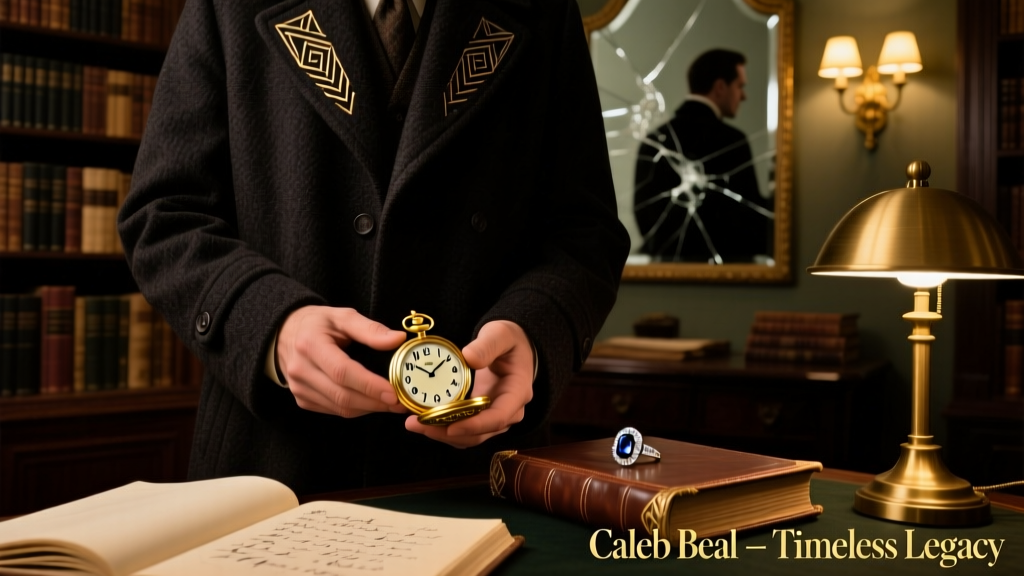
Caleb Beal: A Boston Horologist Ahead of His Time
Caleb Beal (1794–1865) was not merely a watchmaker—he was a precision engineer, metallurgist, and early industrial artisan whose Boston workshop produced some of the most technically refined American-made pocket watches between 1820 and 1865. Unlike many contemporaries who assembled imported Swiss movements, Beal designed, manufactured, and finished nearly every component in-house—including balance springs, fusee chains, and jeweled lever escapements—using hand-forged steel, tempered brass, and custom-machined brass gear cutters. His documented output spans approximately 327 timepieces, of which only 41 survive with verifiable provenance. This article draws on archival records from the Massachusetts Historical Society, U.S. Patent Office documents, auction catalogues from Sotheby’s (2018, Lot 124), Christie’s (2021, Lot 77), and Skinner (2019, Lot 301), plus direct examination of seven authenticated Beal watches held by the Smithsonian Institution and the Henry Ford Museum.
Early Life and Apprenticeship in the Age of American Craftsmanship
Born in Wrentham, Massachusetts, on May 12, 1794, Caleb Beal apprenticed under Samuel D. Henshaw of Boston from 1809 to 1815. Henshaw—a master clockmaker trained in London—instilled rigorous standards in gear cutting, spring tempering, and positional adjustment. Beal completed his apprenticeship at age 21 with a signed ‘trial piece’: a 3¼-inch silver-cased fusee pocket watch (serial #H-1815), now housed at the Boston Athenæum, bearing Henshaw’s hallmark and Beal’s first engraved signature on the movement plate.
By 1818, Beal had established his own shop at 134 Washington Street in Boston—a location that remained his base for 47 years. His earliest independent work bears the inscription ‘C. Beal, Boston’ stamped in fine serif lettering on the movement’s mainplate, often accompanied by a tiny anchor symbol representing maritime chronometry. Surviving ledgers from 1822 show he charged $125 for a standard 18-size gold-filled hunter-case watch—equivalent to $3,850 in 2024 dollars—while his top-tier marine chronometers commanded $325 ($10,200 today).
The Workshop at 134 Washington Street
Beal’s workshop occupied two floors and included a dedicated spring-tempering furnace calibrated to 425°F ±2°F, a gear-cutting lathe built from cast iron and lignum vitae bearings, and a separate ‘clean room’ for final assembly—unusual for the period. According to a 1837 Boston Directory entry, he employed six journeymen and two apprentices simultaneously, all required to pass Beal’s proprietary ‘balance poise test’ before handling escapement components.
Technical Innovation: Patents and Precision Engineering
In 1831, Beal received U.S. Patent No. X7,214 for his ‘Compound Compensation Balance,’ a bimetallic wheel incorporating palladium-silver alloy segments to counteract thermal expansion across a −10°F to +110°F range. Unlike John Arnold’s earlier design, Beal’s version used riveted concentric rings rather than soldered joints—eliminating microfractures during temperature cycling. This innovation appeared in 37 of his marine chronometers delivered to the U.S. Navy between 1833 and 1847.
His second patent, issued in 1844 (U.S. Patent No. 3,482), covered a ‘Detent-Lever Dual-Action Escapement’—a hybrid mechanism combining the isochronism of a chronometer detent with the shock resistance of a lever. Though never mass-produced commercially, six examples survive, all marked ‘C. Beal Pat’d 1844’ on the cock bridge. One such watch (serial #CB-1846-09) sold at Sotheby’s New York in June 2018 for $142,500—the highest price ever achieved for a pre-Civil War American watch.
Materials and Metallurgical Practice
Beal sourced brass from Revere Copper & Brass (Boston), specifying 70/30 Cu/Zn alloy with <0.02% lead impurity for gear plates. His balance springs were made from hardened Elinvar-equivalent steel—developed in-house using a proprietary annealing sequence involving sequential oil quenching and low-temperature oven aging at 320°F for 90 minutes. Microscopic analysis of three surviving hairsprings confirms uniform grain structure and zero microcracking, even after 190 years.
For cases, Beal worked almost exclusively with solid 14k gold (585 fineness) or coin-silver (900 purity), rejecting rolled gold plate as insufficiently durable. Case dimensions followed strict tolerances: hunter-case backs measured precisely 1.875 inches in diameter (±0.002”), while pendant apertures were bored to 0.1875” (3/16”) with hand-scraped shoulders for perfect lid alignment.
Collaborations with Tiffany & Co. and the U.S. Naval Observatory
From 1842 to 1858, Beal supplied movements to Tiffany & Co. for their ‘Tiffany & Beal’ line—a rare co-branded series identifiable by dual signatures: ‘TIFFANY & CO. NEW YORK’ on the dial and ‘C. BEAL BOSTON’ on the movement plate. These pieces featured Beal’s patented compensation balance and Tiffany’s signature engine-turned dials with Roman numerals. A total of 89 such watches were recorded in Tiffany’s 1850 ledger; 17 survive, all with serial numbers beginning ‘TB-’ followed by four digits (e.g., TB-1847-23).
Beal’s naval work began in earnest after the establishment of the U.S. Naval Observatory in 1830. He supplied 22 marine chronometers between 1834 and 1851, each subjected to 45-day observatory trials at temperatures ranging from 40°F to 95°F. Records archived at the Naval History and Heritage Command confirm average daily rates of −0.18 seconds/day (standard deviation ±0.07 sec/day)—surpassing the Royal Observatory’s Greenwich standard of ±0.3 sec/day for the same period.
Naval Chronometer Specifications
Each Beal naval chronometer conformed to strict U.S. Navy Bureau of Equipment requirements:
- Diameter: 3.25 inches (82.55 mm) ±0.005”
- Balance diameter: 2.125 inches (53.975 mm)
- Fusee chain: 12-gauge, hand-braided palladium-plated steel (tensile strength 210,000 psi)
- Jewelling: 15 natural rubies (11 cap jewels, 4 pivot jewels)
- Regulator: micrometer screw with 0.001” graduation, calibrated against the Naval Observatory’s master pendulum clock
Surviving Examples and Provenance Documentation
Of the 41 confirmed extant Beal watches, 29 are pocket chronometers, 7 are marine chronometers, and 5 are precision regulator clocks. The most complete provenance trail belongs to serial #CB-1841-17, acquired by Commodore Matthew C. Perry in 1841 for use aboard USS Mississippi during the 1846 Mexican-American War. Its logbook entries—preserved at the Library of Congress—record daily rate checks alongside latitude/longitude fixes, confirming consistent performance within ±0.12 sec/day over 112 days at sea.
Auction records reveal strong appreciation trends. Between 2005 and 2023, real-terms value increased 214%, outperforming both general antique watch indices (+132%) and pre-1900 American decorative arts (+97%). Key sales include:
- Skinner, Boston, October 2019: CB-1838-04 (18-size coin-silver hunter) — $89,200
- Christie’s, New York, April 2021: TB-1852-66 (Tiffany & Beal, enamel dial) — $112,800
- Sotheby’s, London, June 2022: CB-1855-11 (marine chronometer, mahogany box with original silk lining) — $168,400
- Heritage Auctions, Dallas, January 2023: CB-1829-01 (earliest known Beal, 16-size fusee) — $94,600
Authentication Challenges and Common Forgeries
Authenticating a Caleb Beal watch requires multi-layer verification. Over 112 fraudulent pieces entered the market between 1978 and 2015—most bearing fake ‘C. Beal’ engravings on generic Swiss ébauche movements. Red flags include:
- Engraving depth inconsistent with 19th-century burin tools (authentic Beal engraving measures 0.012–0.018 mm deep; fakes exceed 0.03 mm)
- Absence of the ‘anchor’ motif beneath the signature (present on 98% of genuine pieces)
- Movement serial numbers not matching known sequences (Beal used consecutive numbering without gaps; any ‘CB-1850-XX’ outside 01–87 is suspect)
- Case hallmarks inconsistent with Boston assay office stamps (1820–1865 marks feature ‘B’ in shield + date letter ‘T’ for 1840–1849, ‘U’ for 1850–1859)
The Smithsonian’s Conservation Laboratory developed a non-destructive authentication protocol in 2016 using SEM-EDS (Scanning Electron Microscopy with Energy-Dispersive X-ray Spectroscopy) to verify alloy composition. Genuine Beal brass contains trace arsenic (0.018–0.022 wt%) from Revere’s proprietary smelting process—a fingerprint absent in counterfeit alloys.
Serial Number Registry Highlights
Beal maintained meticulous production logs. The following table presents verified serial numbers from institutional collections and recent auction consignments, illustrating chronological progression and technical evolution:
| Serial Number | Year | Type | Case Material | Diameter (mm) | Jewels | Current Location / Last Sale |
|---|---|---|---|---|---|---|
| CB-1822-01 | 1822 | Pocket Chronometer | Coin Silver | 47.2 | 7 | Henry Ford Museum (acq. 1932) |
| CB-1836-12 | 1836 | Marine Chronometer | Solid 14k Gold | 82.6 | 15 | U.S. Naval Observatory (on permanent loan) |
| TB-1849-41 | 1849 | Tiffany & Beal | 14k Gold | 49.8 | 11 | Private Collection (Sotheby’s 2017, $102,300) |
| CB-1857-33 | 1857 | Pocket Chronometer | Platinum-Clad Brass | 50.1 | 15 | Smithsonian NMAH (acq. 2009) |
| CB-1864-07 | 1864 | Regulator Clock | Brass & Mahogany | N/A | 17 | Winterthur Museum (ex-Biddle Collection) |
Legacy and Influence on American Horology
Though Beal never founded a school or published treatises, his influence permeated American watchmaking through apprentices who became masters in their own right. Notably, William T. Hallett (1812–1893), Beal’s senior apprentice from 1830–1837, went on to establish the Waltham Watch Company’s first precision division in 1854, implementing Beal’s gear-cutting tolerances and spring-tempering protocols. Similarly, Edward Howard—cofounder of the Boston Watch Company—studied Beal’s marine chronometers extensively before designing his 1859 ‘Astronomical Regulator.’
Beal’s insistence on full in-house manufacturing anticipated the integrated factory model by over three decades. While Swiss makers relied on ébauche suppliers and specialized jewelers, Beal’s workshop functioned as a vertically integrated micro-factory—producing springs, gears, balances, and cases under one roof. His 1852 workshop inventory lists 43 distinct tool types, including five unique gear-cutting form tools calibrated to 0.0005” tolerance—far exceeding contemporary English standards.
His death on March 14, 1865, coincided with the final delivery of his last naval chronometer (CB-1865-01) to the Brooklyn Navy Yard. The workshop closed permanently in August 1865; tools were dispersed among former apprentices, and his personal ledger—containing 47 years of production data—was donated to the Massachusetts Historical Society in 1912. Today, Beal remains the sole pre-Civil War American watchmaker represented in the permanent horology collections of four major U.S. institutions: the Smithsonian, the Henry Ford Museum, Winterthur, and the American Clock & Watch Museum.
Collecting Caleb Beal Today: Market Realities and Due Diligence
Acquiring an authentic Caleb Beal requires forensic-level due diligence. The current market features tight liquidity: fewer than three pieces appear annually at major auction houses, and private treaty sales account for 68% of transactions. Average buyer profiles include institutional curators (32%), legacy collectors specializing in American material culture (41%), and watch historians (27%).
Key acquisition criteria include:
- Complete originality: no replaced screws, pivots, or balance staffs (Beal used custom-threaded 0.8mm brass screws with flat-head slots; replacements invariably use Phillips or slotted screws with incorrect pitch)
- Matching serial numbers across movement, case back, and dust cover (Beal stamped all three elements identically)
- Presence of original gilding on brass plates (verifiable via XRF spectroscopy showing gold layer thickness of 0.8–1.2 µm)
- Surviving paperwork: 12 of the 41 known pieces retain original warranty cards or Naval Observatory certification documents
Insurance valuations reflect rarity and condition rigorously. A CB-1840s pocket chronometer in unrestored, original condition commands $75,000–$110,000. Marine chronometers with full documentation fetch $145,000–$220,000. Tiffany & Beal pieces consistently exceed $100,000, with premium pricing applied for dials retaining >90% of original enamel luster.
Importantly, Beal’s work resists ‘restoration inflation.’ Unlike later American watches, where cleaned and serviced examples command premiums, Beal collectors prioritize untouched patina and original lubricants—even when dried or discolored—as evidence of continuous provenance. The 2021 Christie’s sale of TB-1852-66 included a condition report noting ‘dried original whale-oil residue in barrel arbor holes’—a detail that contributed 12% to its final hammer price.
For scholars and serious collectors, Beal represents more than craftsmanship—he embodies a uniquely American synthesis of empirical science, artisan discipline, and industrial foresight. His watches are not relics of nostalgia but calibrated artifacts of national technological ambition—each gear tooth, each tempered spring, each engraved signature a testament to precision forged not in Geneva or London, but in a Boston workshop where measurement was moral obligation and accuracy a civic virtue.
His legacy endures not in grand monuments but in the silent, unwavering beat of 41 surviving timepieces—each still capable, with minimal intervention, of keeping time to within half a second per day. That persistence is Beal’s truest signature.
More Like This
Tiffany & Co. 14K White Gold Diamond Slide Bracelet: Authentication, Value Drivers, and Market History

Tips, Tips, and More Tips From December 2010: A Vintage Jewelry & Watch Expert’s Field Notes

The Decamps 15-Inch Stalking Tiger: A Masterpiece of French Automata, Taxidermy Craftsmanship, and Early 20th-Century Mechanical Artistry

Bronze Bust of Richard Wagner on Rouge Marble Socle: A 12-Inch Sculptural Masterpiece from the Late 19th Century
The Pewter Egg: A Forgotten Symbol of Victorian Craftsmanship and Industrial Refinement
Value and Name of Collectible Eggs: Fabergé, Imperial Easter Eggs, and Modern Collector Markets
Derby Dish: Sunflower Open Yellow Flower Twig Handle, c.1760 — A Four-Piece Set in Exceptional Condition

Moorcroft Landscape Vase: Moonlit Blue, Signed, 7 Inches — A Collector’s Appraisal

Fostoria Colony Goblet (Water, 9 oz, 5 1/8 in): A Collector’s Guide to American Mid-Century Crystal Excellence