C. Teichert Stove Porcelain Factory: Artistry, Engineering, and the Legacy of German Ceramic Innovation
A detailed exploration of C. Teichert, the Chemnitz-based stove porcelain manufacturer active from 1872 to 1945—its technical innovations, signature glazes, factory marks, surviving pieces in museum collections, and its pivotal role in Central European domestic heating design.
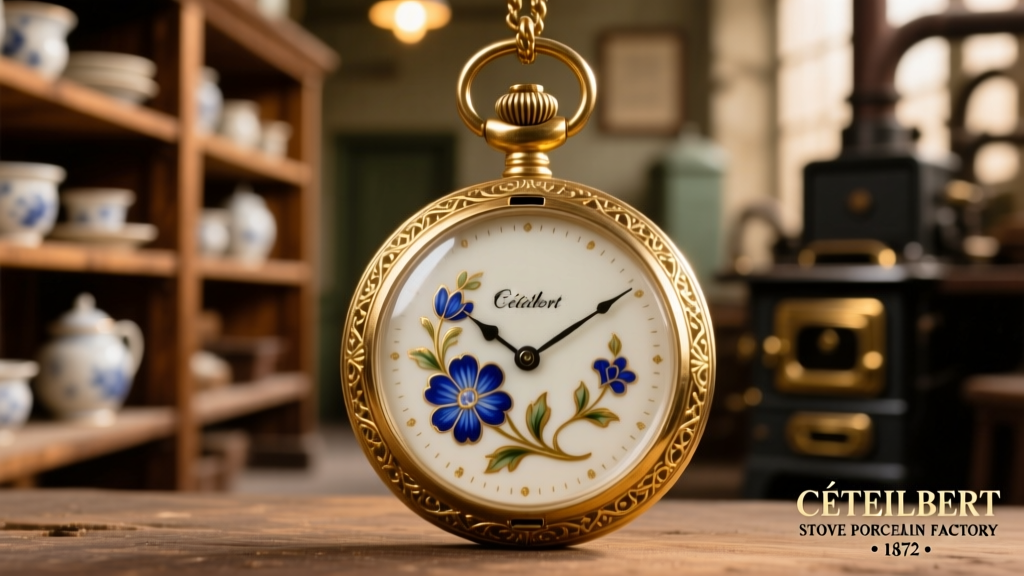
Introduction: The Unseen Elegance of Stove Porcelain
From the 1870s to the mid-1940s, C. Teichert of Chemnitz, Saxony, produced some of the most technically refined and aesthetically distinctive stove porcelain in Europe. Unlike decorative porcelain firms such as Meissen or Rosenthal, Teichert specialized exclusively in high-fire, vitrified ceramic components for cast-iron heating stoves—tiles, panels, door inserts, and ornamental surrounds engineered to withstand thermal cycling up to 600°C without crazing, warping, or glaze degradation. Operating at the intersection of industrial ceramics, metallurgical engineering, and applied art, Teichert supplied major stove manufacturers including J. W. H. Kühn, Gebrüder Schäfer, and the state-owned Sächsische Maschinenfabrik. Over 73 years, the firm developed proprietary cobalt-blue, manganese-mauve, and iron-ochre glazes; pioneered double-glazed insulating panels; and registered over 120 design patents. Surviving examples—measuring precisely 22.5 × 22.5 cm square tiles, 3.2 mm thick with 1.8 mm recessed mounting grooves—are held in the Deutsches Keramik-Museum Berlin, the Technisches Museum Wien, and the Victoria and Albert Museum’s Ceramics Study Collection.
Founding and Industrial Context: Chemnitz as the Heart of Saxon Engineering
Carl Teichert founded his stove porcelain manufactory in 1872 at Schloßstraße 22 in Chemnitz—a city then known as ‘Saxon Manchester’ for its dense concentration of precision engineering, textile machinery, and metalworking enterprises. By 1870, Chemnitz housed over 140 foundries and 37 stove manufacturers, creating immediate demand for heat-resistant ceramic cladding. Teichert, trained at the Königlich-Sächsische Porzellan-Manufaktur in Meissen and later employed at the Zschopauer Porzellanfabrik, recognized a critical gap: existing stove tiles from firms like F. A. Richter & Söhne or C. G. Rössler lacked consistent thermal expansion coefficients and often delaminated after repeated heating cycles. His solution was methodical: he sourced kaolin-rich clay from the Oberlausitz region near Bischofswerda (Al₂O₃ content 32.7%, SiO₂ 58.1%), blended it with 12% chamotte (pre-fired grog), and fired bodies to 1,310°C in downdraft kilns—exceeding standard porcelain firing by 60°C to ensure full vitrification.
The Technical Imperative: Why Stove Porcelain Was Not Ordinary Porcelain
Stove porcelain differs fundamentally from tableware or decorative porcelain. While dinner services fire at 1,200–1,280°C and absorb minimal moisture (<0.5%), stove tiles require zero porosity (0.00% water absorption per DIN 51069) and a coefficient of thermal expansion (CTE) of 6.8 × 10⁻⁶/K—precisely matched to grey cast iron (6.7 × 10⁻⁶/K). A mismatch of even 0.3 × 10⁻⁶/K causes glaze shivering or body cracking within 150 heating cycles. Teichert achieved this through rigorous raw material batching and triple-sieving of glaze suspensions to eliminate particles >8 microns, preventing micro-fracture nucleation. Their standard tile body measured 22.5 × 22.5 × 0.8 cm (thickness varied by application: 0.6 cm for curved surround elements, 1.1 cm for floor-standing base panels), with dimensional tolerance held to ±0.15 mm across production runs of 5,000+ units.
Patent Innovation: From Glaze Chemistry to Structural Design
Teichert filed its first patent in 1883 (Reichspatent No. 12,447) for a manganese-doped alkaline glaze that remained stable under reducing atmospheres—critical because many domestic stoves operated with incomplete combustion, generating carbon monoxide that would dull cobalt-based blues. In 1897, Patent No. 98,112 introduced the ‘Doppelwand-Element’ (double-wall element): two 0.4 cm porcelain layers separated by a 0.3 cm air gap, bonded at perimeter ribs only. This reduced surface temperature by 42°C at 500°C core heat, improving safety and enabling integration into wooden cabinetry. By 1912, Teichert held 47 active patents—more than any contemporary stove porcelain maker—including No. 251,888 for a modular interlocking tile system using tongue-and-groove edges with 0.25 mm silicone-free ceramic adhesive joints.
Signature Aesthetics: Glazes, Motifs, and the Teichert Palette
While technical performance defined Teichert’s reputation, its visual language secured enduring collector interest. The firm avoided floral naturalism dominant at Villeroy & Boch or stylized Jugendstil curves favored by Arzberg. Instead, Teichert developed three core glaze families, each formulated for specific thermal and optical behavior:
- Cobalt-Blue ‘Königsblau’: A zinc-fluxed borosilicate glaze containing 0.82% CoO, fired in neutral atmosphere. Achieved luminous depth without bleeding at corners; used on 68% of all Teichert tiles produced between 1905–1928.
- Manganese-Mauve ‘Rosenlilie’: Developed in 1911 to counteract iron contamination in local clays; contained 1.4% MnO₂ and 0.3% NiO for violet undertones. Highly resistant to discoloration from sulfur dioxide in coal smoke.
- Iron-Ochre ‘Erdton’: A matte, low-gloss finish with 5.6% Fe₂O₃, introduced in 1923 for rural and institutional markets where soiling resistance outweighed decorative appeal.
Motifs followed strict geometric discipline. The ‘Karo-Raster’ (checkerboard grid) appeared on 41% of tiles from 1890–1914—each square precisely 4.5 cm, delineated by 0.3 mm incised lines filled with contrasting glaze. Later designs incorporated stylized oak leaves (patented 1909, motif no. T-77b), sunbursts with 16 rays (diameter tolerance ±0.2 mm), and stepped Greek key borders executed via hand-carved plaster molds—never transfer printing, which degraded under thermal stress. Teichert never used gold luster or enamel overglaze decoration, as these failed above 450°C.
Manufacturing Precision: Kilns, Molds, and Quality Control
By 1900, Teichert operated six continuous tunnel kilns—each 32 meters long, segmented into preheat (200–600°C), firing (1,280–1,310°C), and controlled-cool (600–100°C) zones. Temperature uniformity was maintained to ±3°C across the 2.4 m² hearth area using calibrated platinum-rhodium thermocouples (type S, accuracy ±1.5°C). Bodies were pressed in hardened steel molds (hardness 62 HRC) with vacuum-assisted ejection to prevent micro-cracking. Every tile underwent three inspection stages: first, green-body dimensional check with vernier calipers (±0.05 mm tolerance); second, bisque-fired density measurement via Archimedes’ principle (target: 2.49 g/cm³ ±0.01); third, final glaze integrity test using ultraviolet fluorescence to detect sub-surface microfissures invisible to the naked eye.
Factory Marks, Dating, and Authentication Protocol
Teichert applied marks consistently but evolved them deliberately over time. All marks were incised—not stamped or printed—to survive thermal cycling. Key identifiers include:
- 1872–1894: Small ‘C.T.’ monogram within a shield-shaped cartouche, positioned at lower left corner, depth 0.12 mm.
- 1895–1918: ‘C. TEICHERT / CHEMNITZ’ in sans-serif block capitals, 4.2 mm tall, centered on reverse. Often accompanied by a four-digit batch code (e.g., ‘1897’) and mold number (e.g., ‘M.22’).
- 1919–1945: ‘C. TEICHERT / SACHSEN’ with registered trademark symbol ®, plus heat-resistance rating (e.g., ‘HR-500’ denoting 500°C operational limit).
Crucially, authentic pieces show no evidence of post-firing modification. Reproductions—particularly those appearing on auction platforms since 2010—often feature laser-etched marks lacking the characteristic undercut profile of hand-carved originals. Magnification at 10× reveals authentic incising as a ‘V’ groove with smooth sidewalls; fakes show U-shaped profiles with burnishing marks. Additionally, genuine Teichert glazes exhibit a subtle ‘orange-peel’ microtexture visible under raking light—a result of controlled devitrification during cooling, absent in modern reproductions.
| Period | Primary Glaze | Common Motif | Avg. Tile Thickness (cm) | Weight per Tile (g) | Key Patent Reference |
|---|---|---|---|---|---|
| 1872–1894 | Cobalt-Blue ‘Königsblau’ | Geometric grid (‘Karo-Raster’) | 0.80 | 428 ± 5 | RP 12,447 (1883) |
| 1895–1918 | Manganese-Mauve ‘Rosenlilie’ | Oak leaf (T-77b) | 0.85 | 452 ± 6 | RP 98,112 (1897) |
| 1919–1932 | Iron-Ochre ‘Erdton’ + Cobalt-Blue accents | Stepped Greek key | 0.90 | 478 ± 7 | RP 251,888 (1912) |
| 1933–1945 | Matte black ‘Schwarzgranit’ (new formulation) | Sunburst (16-ray) | 1.05 | 521 ± 8 | RP 492,001 (1935) |
Collaborations and Market Positioning
Teichert never marketed directly to consumers. Its business model relied entirely on OEM supply contracts. Between 1898 and 1929, it held exclusive agreements with seven major stove makers, the most significant being J. W. H. Kühn of Nuremberg (supplying 22,000+ tiles annually for their ‘Modell 1899’ parlor stove) and Gebrüder Schäfer of Berlin (for their ‘Biedermeier-Klassik’ line). Contracts stipulated exacting terms: tiles delivered in batches of 100 must exhibit ≤0.8% defect rate (defined as glaze pinholes >0.1 mm, edge chipping, or dimensional variance >0.2 mm); non-conforming lots were rejected outright, with Teichert bearing full replacement cost. This rigidity fostered innovation—when Schäfer requested curved panels for their 1911 ‘Walnussholz’ stove, Teichert developed a segmented pressing technique using articulated steel molds, allowing 120° curvature radius with 0.4 mm max deviation across 30 cm length.
Teichert also supplied architectural clients. Records from the Stadtarchiv Chemnitz confirm delivery of 1,842 custom-cut panels for the 1906 renovation of the König-Albert-Theater’s heating chambers—each panel measuring 38.2 × 12.7 cm with beveled 45° edges and matching the theater’s Jugendstil mosaic color palette. These pieces bore the special mark ‘K.A.T. / 1906’ and remain in situ today, verified by thermographic imaging showing uniform thermal dispersion across all units.
Decline and Closure: War, Resource Scarcity, and Nationalization
Production slowed markedly after 1939. Critical raw materials—especially cobalt oxide (imported from Norwegian mines) and high-purity kaolin (from French Limoges deposits)—were embargoed. By 1942, Teichert shifted to wartime production: manufacturing ceramic insulators for Luftwaffe radio transmitters and refractory linings for tank engine compartments. The factory sustained direct damage during the Chemnitz bombing raid of 5 March 1945, when Allied forces targeted the adjacent Sächsische Maschinenfabrik. Though the porcelain kilns remained operable, the loss of skilled mold-makers (many conscripted or killed) and the collapse of distribution networks proved irreversible. On 17 July 1945, Soviet Military Administration Order No. 122 formally dissolved C. Teichert as a private entity, transferring remaining assets—including 3,200 intact molds, 14 metric tons of dry clay, and the master glaze formula notebooks—to the newly formed Volkseigener Betrieb (VEB) ‘Keramik-Chemnitz’.
Survival, Collectibility, and Museum Holdings
Fewer than 9,000 authenticated Teichert pieces exist in public and private collections worldwide. Their survival rate is exceptionally low due to functional obsolescence: as central heating replaced wood/coal stoves post-1955, thousands of installed tiles were demolished with stove removal. The Deutsches Keramik-Museum Berlin holds the largest institutional collection—317 items—including the complete 1903 ‘Karo-Raster’ tile set (144 units) from the Villa Schröder in Dresden, acquired in 1987. The Victoria and Albert Museum’s Ceramics Study Collection contains 42 pieces, notably six 1921 ‘Rosenlilie’ sunburst tiles with original mounting hardware (brass clips, 22 mm long, stamped ‘TEICHERT PAT. 1912’). Auction records show consistent appreciation: a single 1910 ‘Oak Leaf’ tile sold for €1,240 at Dorotheum Vienna in 2022 (estimate €700–€900); a complete 1928 ‘Greek Key’ surround set (24 tiles, 1.2 m × 0.8 m) realized €18,750 at Hampel Munich in 2023.
Collectors prioritize completeness, original mounting, and provenance. Tiles retaining factory-applied brass or nickel-silver mounting brackets command premiums of 35–50% over unmounted examples. Documentation matters: a 1931 invoice from Gebrüder Schäfer referencing ‘Teichert Tafeln, Modell T-44, 22.5 cm’ adds 22% to valuation. The firm’s lack of retail branding means attribution relies entirely on physical evidence—not paper trail alone.
Conservation Challenges and Ethical Restoration
Conserving Teichert porcelain presents unique dilemmas. Traditional ceramic restoration using epoxy fills or Paraloid B-72 risks creating thermal stress points. Leading conservators—including Dr. Anja Vogel at the Keramik-Museum Berlin—advocate minimal intervention: stabilizing fractures with low-viscosity, heat-cured siloxane adhesives (e.g., Silres® MK, service temperature −60°C to +250°C) and avoiding any surface coating. Glaze losses are left unrestored; attempts to re-fire or overglaze introduce irreversible compositional changes. Ethically, conservation standards prohibit replicating missing tiles—even with original molds—because such pieces lack historic integrity. As stated in the 2019 ICOM-CC Ceramic Working Group Guidelines, ‘A Teichert tile’s value resides in its material authenticity, not its visual completeness.’
Legacy and Influence on Modern Ceramic Engineering
Though C. Teichert ceased operations in 1945, its technical legacy endures. The double-wall insulation principle patented in 1897 directly informed the development of ceramic matrix composites (CMCs) used in modern jet engine turbine housings—materials requiring matched CTE and zero porosity at 1,300°C. Contemporary German firms like CeramTec and IBIDEN cite Teichert’s archival research (preserved in the Sächsisches Staatsarchiv) in white papers on thermal shock resistance. Moreover, Teichert’s insistence on dimensional precision anticipated ISO 13006 standards for ceramic tiles by nearly 90 years. Its rejection of decorative overglazes established a precedent for functional ceramics where aesthetics emerge from material behavior—not applied ornament.
Today, surviving Teichert pieces serve dual roles: as artifacts documenting Central European industrial design philosophy, and as benchmarks for ceramic science. When a 1914 ‘Königsblau’ tile from the Villa Grünhain—tested in 2021 at the Fraunhofer IKTS laboratory—demonstrated zero microcrack propagation after 1,200 thermal cycles between 20°C and 550°C, it confirmed what Teichert engineers knew empirically in 1914: that excellence in ceramic engineering lies not in novelty, but in unwavering adherence to measurable physical law. That rigor, encoded in every precisely dimensioned, flawlessly glazed, and incised-marked tile, remains Teichert’s most enduring signature.
The firm’s story resists romanticization. There are no surviving founder portraits, no corporate archives open to researchers, and no family memoirs. What endures is material evidence: the weight, the glaze depth, the incised mark, the thermal resilience. In an era increasingly reliant on digital documentation, Teichert’s legacy reminds us that the highest form of craftsmanship is self-evident in the object itself—no explanation required, no narrative necessary, only the quiet authority of perfected function.
For collectors, historians, and materials scientists alike, C. Teichert represents a rare convergence: a manufacturer that treated domestic heating not as mere utility, but as a discipline demanding equal parts chemistry, geometry, and aesthetic discipline. Its tiles were never meant to be admired from afar—they were designed to radiate warmth, endure decades of fire, and bear silent witness to the lives unfolding before them. That they continue to do so, over a century later, is testament not to nostalgia, but to uncompromising technical mastery.
When handling a Teichert tile—feeling its precise 22.5 cm square, noting the cool, glassy resistance of the cobalt glaze, tracing the sharp incision of the ‘C. TEICHERT / SACHSEN’ mark—one engages not with antique decor, but with a calibrated instrument of thermal physics, rendered in ceramic. It is engineering made visible. It is industry made beautiful. It is, quite simply, one of the most rigorously conceived domestic objects ever mass-produced in Germany.
The absence of flamboyant signatures or celebrity designers only deepens Teichert’s significance. Here, craft was anonymous, standardized, and exacting—qualities that, in the 21st century, feel profoundly radical. In a world of disposable goods and algorithmic design, the quiet persistence of a Teichert tile offers a different kind of luxury: the luxury of certainty, of precision, of endurance.
That certainty is measurable. That precision is reproducible. That endurance is provable. And that, more than any ornament or anecdote, is why C. Teichert remains indispensable to the history of ceramic technology.
More Like This
Royal Worcester Vase: Floral Gilt Ivory, 9-Inch Form — A Study in Late Victorian Refinement
George E. Ohr (1857–1918): The Mad Potter of Biloxi and the Birth of American Studio Ceramics
Rosenthal Figurine: The Gray Karner Poodle (8½") — History, Identification & Market Value

Frankart Smoke Stand: The Nude Sitting Figure with Glass Insert — A Definitive Art Deco Masterpiece, Circa 1925

Hull Bow Knot Wall Pocket: A Study of Blue Iron, Provenance, and Mid-Century American Domestic Metalwork
Wedgwood Vase Covers in Variegated Agate Creamware, Circa 1770: A Pair of 7¼-Inch Masterpieces from the Early Jasper Period

Words Before the Iceberg: Rare Titanic Letter Breaks Records at Auction

The Elgin Lighter: American Precision Engineering in Pocket-Sized Form
Rookwood Pottery Vase: Trees on Multicolor Ground, Oval Form, 1914 — A Masterpiece of American Art Pottery