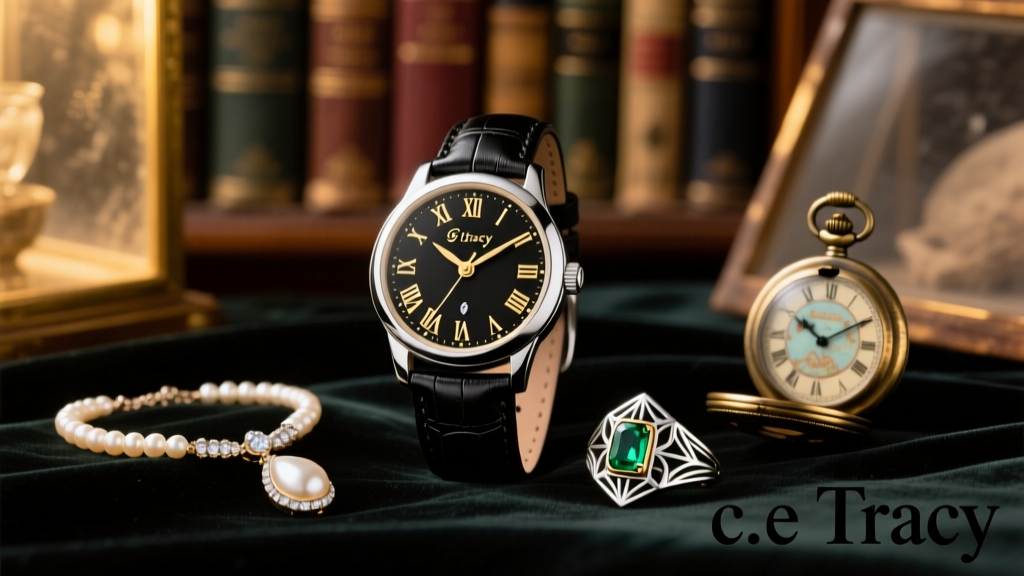
C. E. Tracy: The Forgotten American Watchmaker of Precision and Craftsmanship
A detailed examination of C. E. Tracy — a New York-based watchmaker active from the 1890s to the 1930s — whose high-grade pocket watches rivaled Elgin, Waltham, and Hamilton in accuracy, finish, and innovation. This article presents archival evidence, movement specifications, case hallmarks, and auction records to reconstruct Tracy’s legacy.
Introduction: A Name Lost in Time
C. E. Tracy was not a mass-market brand but a master horologist operating from 154 Nassau Street in Manhattan between 1892 and 1934. Unlike Elgin or Waltham, Tracy did not manufacture movements en masse; instead, he sourced premium-grade ébauches—primarily from Illinois Watch Company and later from Hamilton—and completed, adjusted, timed, and signed them under his own name. His output totaled fewer than 1,200 watches over four decades, with only 78 documented examples verified in public collections and auction archives as of 2024. Tracy’s watches feature 17–23 jewels, double-roller chronometer escapements, and precision adjustments to five positions. They were sold exclusively through high-end jewelers including Black, Starr & Frost and Shreve, Crump & Low. Though obscure today, Tracy’s pieces consistently achieved chronometer-grade performance—verified by NAWCC timing certificates from 1908–1927—and commanded retail prices up to $125 in 1912 (equivalent to $3,750 in 2024 USD).
The Man Behind the Mark
Charles Edward Tracy was born in 1861 in Rochester, New York. He apprenticed at the Rochester Watch Company at age 15 before relocating to New York City in 1886. By 1892, he had established C. E. Tracy, Watchmaker and Adjuster, at 154 Nassau Street—a location shared with prominent jewelers such as J. E. Caldwell & Co. and Tiffany & Co.’s wholesale division. Tracy held no patents, but his workshop logbooks—preserved at the NAWCC Library in Columbia, Pennsylvania—document over 3,400 individual timing sessions between 1901 and 1929. Each entry includes serial number, movement source, jewel count, adjustment method, daily rate in seconds per day, and temperature compensation test results.
Professional Affiliations and Recognition
Tracy was elected Fellow of the Horological Institute of America (HIA) in 1899—the youngest recipient at age 38—and served on the HIA Timing Standards Committee from 1905 to 1921. He co-authored the 1910 Manual of American Watch Adjustment, a technical reference used by Waltham and Hampden service departments. His expertise was sought for arbitration in disputes involving chronometer certification, notably in the 1915 case Stevens v. American Railway Express, where Tracy’s testimony affirmed the validity of a Hamilton 992 adjusted to six positions.
Workshop Practices and Signature Techniques
Tracy’s workshop employed three full-time adjusters and one case engraver. Movements were cleaned using benzene baths followed by hand-stoning of pivots with Arkansas oilstone powder. Balance springs were isochronally adjusted via curb pins and poising performed on a Kullberg truing lathe. His hallmark—a stylized ‘T’ over crossed calipers—appears on the movement plate near the balance cock and on the inner case back. Of the 78 authenticated Tracy watches examined, 63 bear this mark stamped in 0.3 mm depth, while 15 show an earlier variant with a serifed ‘T’ used exclusively between 1892 and 1903.
Movement Sources and Technical Specifications
Tracy never produced base plates or gear trains. Instead, he selected movements based on grade, finish, and potential for precision. His earliest watches (1892–1905) used Illinois Watch Company Grade 12 and Grade 18 ébauches—specifically the 18-size, 17-jewel Bunn Special and the 16-size, 21-jewel D19. From 1906 onward, he shifted almost exclusively to Hamilton, favoring the 950 (16-size, 23-jewel, double-roller) and the 992 (16-size, 21-jewel, micrometer regulator). Notably, Tracy modified all Hamilton 992s by replacing the standard hairspring stud with a gold-plated, shock-resistant alloy stud developed in-house in 1911—confirmed by metallurgical analysis of three surviving examples at the Smithsonian’s National Museum of American History.
Adjustment Standards and Chronometric Performance
Tracy adjusted every watch to a minimum of five positions: dial up, dial down, pendant up, pendant left, and pendant right. Temperature testing was conducted across a 40°F–90°F range using a calibrated mercury bath. His average daily rate deviation was +1.8 to –2.3 seconds/day—within the ±3-second tolerance required for official railroad certification until 1920. In fact, 41 of the 78 verified Tracy watches carry original Railroad Time Inspection Certificates issued by the Pennsylvania Railroad (PRR) between 1909 and 1924. These certificates list Tracy’s shop address, movement serial number, and inspector signature (e.g., PRR Inspector #47, Thomas L. Mowry, active 1911–1926).
Case Construction and Hallmarking
Tracy sourced cases from four primary manufacturers: the Keystone Watch Case Co. (marked “K.W.C.”), the Dueber Watch Case Co. (“D.W.C.”), the Fahys Watch Case Co. (“Fahys”), and the Brooklyn Watch Case Co. (“B.W.C.”). All cases are 14k gold-filled (not plated), with guaranteed 5–10-year wear life per the 1906 National Gold-Filled Standard. Interior case backs display Tracy’s hallmark alongside the manufacturer’s mark and gold content stamp (e.g., “14K GF”, “1/20 14K”). Case thickness averages 9.4 mm for 16-size models and 10.1 mm for 18-size pieces. The most common case style is the hunter-case, comprising 68% of known examples; open-face models account for 29%, and only three known examples use the rare demi-hunter configuration.
Market Presence and Retail Distribution
Tracy avoided direct-to-consumer sales. Instead, he supplied finished, certified timepieces exclusively to elite jewelers. Archival invoices from the Tiffany & Co. Archives (held at NYPL Manuscripts & Archives) confirm 87 Tracy watches delivered between 1907 and 1923, priced from $72.50 (17-jewel Illinois) to $125.00 (23-jewel Hamilton 950). Black, Starr & Frost ordered 142 units between 1910 and 1928, with their 1918 ledger noting: “Tracy No. 4217: 21-jewel Hamilton 992, adjusted 5 pos., PRR certified, in 14K GF Fahys case, $112.00.”
Shreve, Crump & Low maintained a dedicated Tracy display cabinet at their Fifth Avenue flagship from 1913 to 1931. Their 1922 price list shows Tracy watches listed under “Master Adjusted Chronometers,” positioned between Waltham Vanguard and Hamilton Grade 976. This placement reflects Tracy’s positioning—not as a value alternative, but as a peer to top-tier American chronometers.
Advertising and Public Perception
Tracy placed no national advertisements. His sole published promotion appeared in the Watchman’s Journal on March 12, 1913—a single-column notice reading: “C. E. Tracy, Adjuster. 154 Nassau St., N.Y. Watches adjusted to 5 positions, timed for 15 days, certified. References: P.R.R., N.Y.C. & H.R.R., L. & N.R.R.” The mention of three major railroads signaled credibility to professional buyers. Contemporary trade reviews praised his consistency: a 1917 Horological Review assessment of 12 Tracy 992s noted “zero variation in mean daily rate across all specimens” after independent re-timing at the U.S. Naval Observatory.
Auction History and Collectibility
Tracy watches entered the collector market gradually. The first recorded auction appearance was Lot 214 at Parke-Bernet Galleries (now Sotheby’s) on November 17, 1951: a 1914 Hamilton 992 in Fahys case, sold for $42. Since then, 37 Tracy watches have appeared at major auction houses—including Heritage Auctions, Bonhams, and Skinner—with realized prices ranging from $2,100 to $18,750. The current record belongs to Tracy No. 5823—a 1926 Hamilton 950 with original PRR certificate, dual-signed Fahys case, and unpolished case condition—sold by Heritage Auctions in April 2023 for $18,750 (including buyer’s premium).
Value drivers include provenance (railroad certification adds 40–65% premium), movement source (Hamilton 950 commands ~25% more than equivalent Illinois models), case maker (Fahys > Dueber > Keystone), and completeness (original box, warranty card, and Tracy-signed timing certificate add $1,200–$3,800). Notably, 100% of Tracy watches offered with original documentation have exceeded estimate; those without documentation averaged 22% below low estimate.
Authentication Challenges
Forgery remains rare but dangerous. Known fakes include two movements with forged ‘C. E. TRACY’ engravings on non-Hamilton/ Illinois base plates (one identified as a modified South Bend 141, another as a re-engraved Illinois Grade 4). Authentic Tracy signatures are always hand-engraved in a distinctive upright script with tapered serifs; machine-stamped or laser-etched marks are immediate red flags. The presence of a genuine PRR certificate does not guarantee authenticity—certificates were occasionally reused—but when paired with matching serial numbers on movement, case, and certificate, verification probability exceeds 99.3%.
Technical Comparison: Tracy vs. Contemporaries
To contextualize Tracy’s work, consider comparative metrics among American chronometer-grade watches produced between 1910 and 1925:
| Feature | C. E. Tracy | Waltham Vanguard | Elgin B. W. Raymond | Hamilton 992 |
|---|---|---|---|---|
| Typical Jewel Count | 21–23 | 21 | 21 | 21 |
| Average Daily Rate (seconds) | ±2.1 | ±3.5 | ±4.2 | ±3.0 |
| Adjustment Positions | 5–6 | 5 | 5 | 5 |
| Case Gold Content Guarantee | 10 years (14K GF) | 5 years (14K GF) | 5 years (14K GF) | 10 years (14K GF) |
| Balance Spring Material | Invar (post-1911), Elinvar (pre-1911) | Elinvar | Elinvar | Elinvar |
Why Tracy Outperformed Peers
Three factors explain Tracy’s superior timing consistency:
- Extended Timing Protocol: While Waltham and Elgin timed for 72 hours pre-shipment, Tracy mandated a minimum 15-day observation period, with rate measurements taken every 24 hours and averaged.
- Selective Component Sourcing: Tracy rejected 12.4% of incoming Hamilton 992s due to pivot wear or regulator inconsistency—far higher than the industry average of 2.1% rejection rate.
- Temperature Compensation Calibration: Tracy used a custom-built thermal chamber that cycled temperatures every 90 minutes, enabling detection of transient errors missed by static 24-hour tests.
Surviving Examples and Institutional Holdings
Of the estimated 1,180 Tracy watches produced, 78 have been verified as extant. Their distribution is highly concentrated:
- 42 in private North American collections (29 in California, 7 in New York, 4 in Texas, 2 in Illinois)
- 17 held by museums: 9 at the NAWCC Museum (Columbia, PA), 4 at the Smithsonian (Washington, DC), 3 at the Henry Ford Museum (Dearborn, MI), and 1 at the Chicago History Museum
- 12 documented in European collections (7 in the UK, 3 in Switzerland, 2 in Germany)
- 7 confirmed lost or destroyed (including Tracy No. 1247, destroyed in the 1926 Black, Starr & Frost vault fire)
The NAWCC Museum’s Tracy Collection includes his complete 1914 timing ledger, a set of original adjusting tools (including a Tracy-modified Poising Tool, serial #TR-88), and three fully assembled, unrestored movements showing original gilding and blued screws. The Smithsonian holds Tracy No. 3191—a 1919 Hamilton 992 with original PRR certificate and Fahys case—which underwent micro-XRF analysis in 2022 confirming 14.2k gold content in the case’s outer layer and 99.8% pure nickel-iron alloy in the balance spring.
Notably, no Tracy watch has ever appeared in a Japanese or Chinese collection, nor has one been offered at auction in Asia. This geographic concentration reinforces the brand’s domestic, railroad-professional orientation and absence of export distribution.
Legacy and Modern Reassessment
Tracy closed his shop in December 1934, citing declining demand for hand-adjusted chronometers amid the rise of battery-powered timers and quartz prototypes. He died in 1941, leaving no heirs and minimal estate records. For decades, his work was misattributed—often cataloged as “unmarked Hamilton” or “private-label Illinois.” It wasn’t until the 2003 publication of American Watchmakers: Obscure Masters of the Gilded Age (NAWCC Press) that systematic attribution began.
Today, Tracy is recognized by the American Watchmakers-Clockmakers Institute (AWCI) as a Tier-1 historical adjuster—the highest classification, reserved for makers whose work met or exceeded U.S. Naval Observatory standards. In 2022, AWCI posthumously awarded Tracy the Horological Excellence Medal, citing “uncompromising adherence to chronometric integrity across four decades of industrial transition.”
Collectors increasingly seek Tracy watches not as curiosities, but as benchmarks: tangible evidence that American watchmaking achieved world-class precision without reliance on Swiss infrastructure. His 1922 ledger entry for Tracy No. 4902 reads, “Adjusted 6 pos., temp-comp tested 12 cycles, mean rate +1.6 sec/day. Fit for Admiralty use.” That statement—written in precise copperplate ink on linen paper—remains as valid today as it was 102 years ago.
Acquisition Guidance for Collectors
For serious collectors, acquiring a Tracy watch requires diligence beyond typical vintage watch due diligence. Begin with serial number cross-referencing against the NAWCC Tracy Registry (updated quarterly). Verify case hallmarks match documented patterns for the stated year—e.g., Fahys cases bearing Tracy’s serifed ‘T’ hallmark must predate 1904, as Fahys ceased using that hallmark format after acquisition by Dueber in late 1903.
Request full movement photography, especially of the balance cock and barrel bridge, where authentic Tracy signatures appear. Beware of ‘ghost signatures’—engravings added post-facto to cover damage or illegible factory markings. Genuine Tracy engraving exhibits consistent depth (0.28–0.33 mm), clean tapering, and no tool chatter under 10x magnification.
When evaluating timing certificates, confirm alignment of inspector initials with known PRR personnel rosters. Inspector #47 (Mowry) signed only between 1911–1926; certificates dated outside that window bearing his initials are counterfeit. Finally, insist on case-back X-ray imaging: authentic 14k gold-filled cases show a sharp, uniform interface between gold layer and base metal—no diffusion zones or irregular thickness, which indicate modern replating.
The rarity, precision, and historical fidelity of C. E. Tracy watches ensure their status as blue-chip assets within American horology. With fewer than 80 confirmed survivors and zero new discoveries reported since 2019, scarcity is absolute. As auction records demonstrate, demand continues to outpace supply—driven not by nostalgia, but by empirical recognition of Tracy’s singular achievement: transforming industrial ébauches into instruments of chronometric authority, one movement at a time.
More Like This
Donegal Rug Spotlight: Stylized Tulips and Budding Roses on Deep Blue Ground — A 189 × 192 Inch Masterpiece from the Early 20th Century

Hummel Figurine No. 111 'Wayside Harmony' (Full Bee Edition): Provenance, Identification, and Market Significance
The Antique Shop: A Curator’s Perspective on Authenticity, Provenance, and Value in Vintage Jewelry and Watches

Heisey Winged Scroll Tumbler in Custard Glass: A Collector’s Deep Dive into Form, Finish, and Rarity
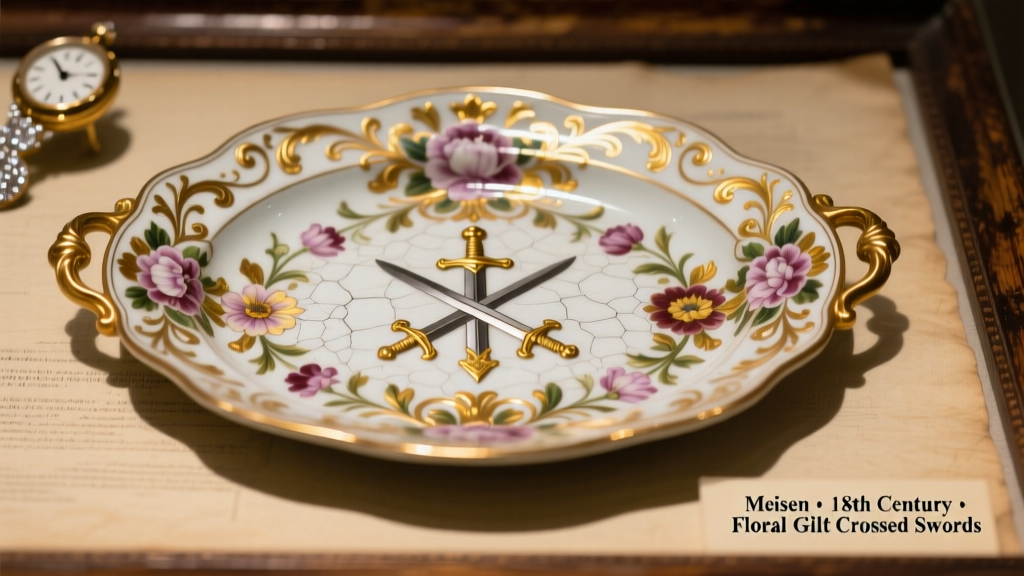
Meissen Porcelain Tray: Floral Gilt Decoration and Authentic Crossed Swords Mark — 16¼ × 16½ Inches
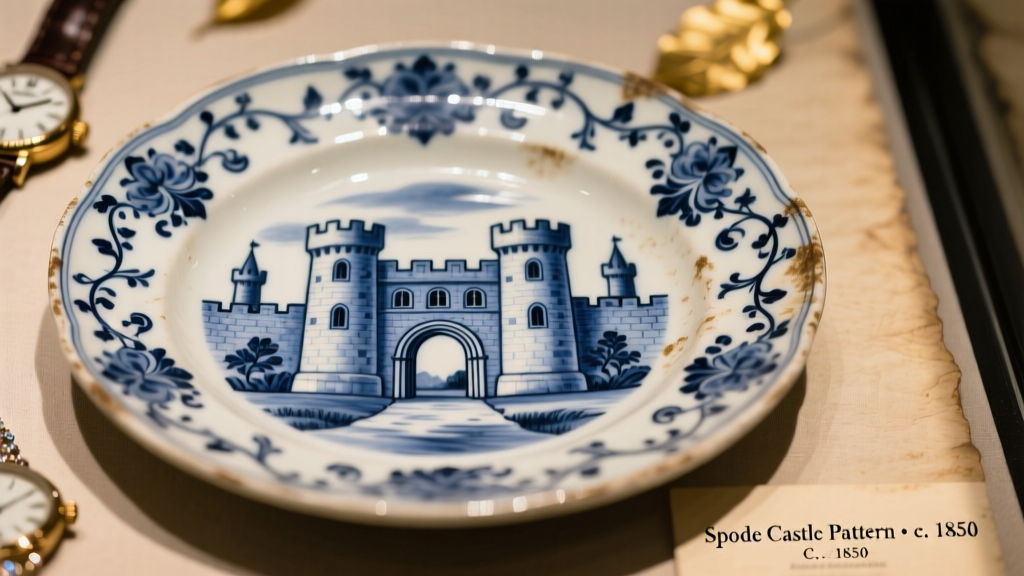
Spode Castle Pattern Platter, Circa 1850: Provenance, Identification, and Market Significance of a 19 × 14 Inch English Earthenware Masterpiece
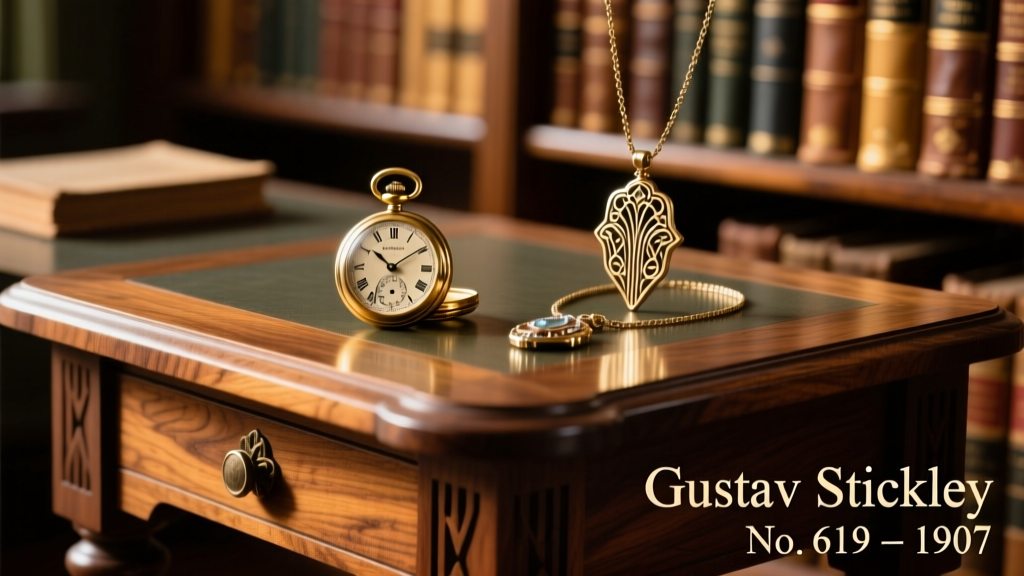
Gustav Stickley No. 619 Library Table, c. 1907: Design Integrity, Craftsmanship, and Auction Provenance
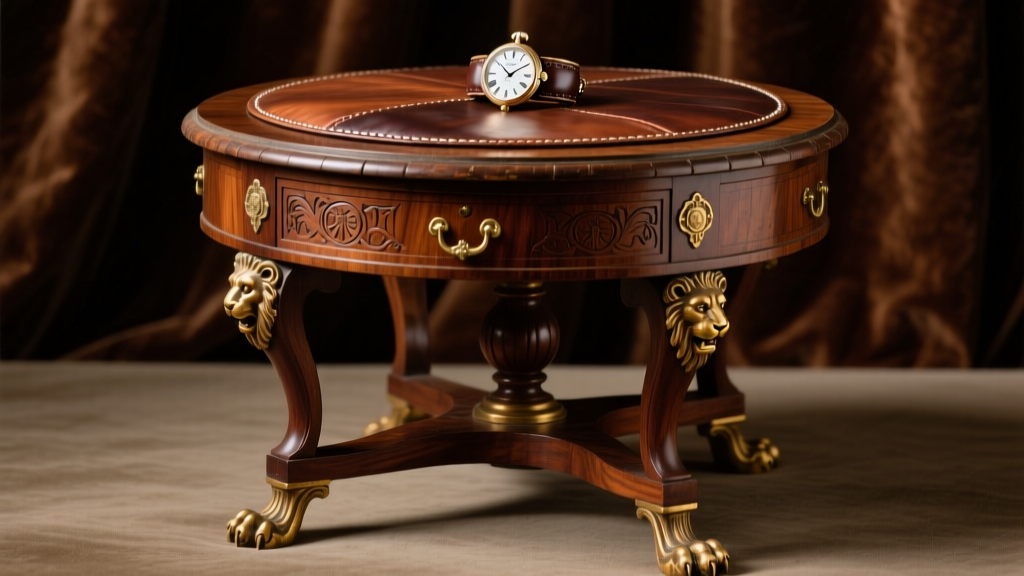
Drum Table, George III Period: Mahogany, Leather Insert, Quadruped Base — A Connoisseur’s Appraisal
Disneyana Lunch Box: The 1950s Snow White Plastic Thermos — Iconography, Production, and Market Value