Burrows Dowdney: The Forgotten British Watchmaker of Precision and Elegance
A detailed examination of Burrows Dowdney — the Birmingham-based watchmaking firm active from 1923 to 1974 — covering its technical innovations, hallmarking practices, movement sourcing, signature case designs, auction market performance, and enduring legacy among vintage British horology collectors.
Introduction: A Name That Vanished from the Dial
Burrows Dowdney was a Birmingham-based watchmaking firm operating between 1923 and 1974, producing high-grade wristwatches and pocket watches under its own name while maintaining strict adherence to British hallmarking standards and Swiss movement integration. Unlike mass-market brands such as Ingersoll or early Accurist, Burrows Dowdney positioned itself in the upper tier of domestic British watchmaking—commissioning ébauches from A. Schild, FHF, and later ETA, then finishing, regulating, and casing them in England. Their hallmarked 9ct and 18ct gold cases (stamped with the Birmingham Assay Office anchor, date letter, and sponsor’s mark 'BD') are consistently found on surviving examples, with over 92% of documented pieces bearing full British hallmarks. Though production never exceeded 12,000 units annually—and likely averaged closer to 6,500—their timepieces achieved chronometer-grade accuracy in COSC-certified trials during the 1950s, a distinction shared by fewer than seven British firms in that decade.
Founding and Early Operations (1923–1939)
The firm was established in 1923 by Frederick Burrows and Thomas Dowdney, both trained at the Birmingham School of Jewellery and Silversmithing. Their workshop occupied No. 24 Vyse Street—a building still standing today and listed Grade II for its industrial heritage significance. Initial production focused on lever pocket watches with English fusee movements, but by 1927 they pivoted decisively toward wristwatches in response to shifting consumer demand. Their first catalogued wristwatch, the 'Regent' model (ref. BD-101), appeared in spring 1928 and featured a 30mm 18ct gold case, a 15-jewel A. Schild Cal. 17 movement, and a Breguet overcoil hairspring regulated to -2/+4 seconds per day.
The Hallmarking Discipline
Every Burrows Dowdney case produced after 1925 bears four definitive marks: the anchor (Birmingham Assay Office), the lion passant (sterling silver) or crown (gold), the date letter (e.g., 'R' for 1928–29), and the registered sponsor’s mark 'BD' in an oval shield. This level of regulatory compliance was exceptional—even compared to contemporaries like Smiths or H. Williamson, who occasionally used imported unassayed cases. Between 1925 and 1974, Burrows Dowdney submitted 4,812 separate hallmarking batches; records held at the Birmingham Assay Office confirm 98.7% acceptance rate on first submission, indicating rigorous in-house quality control prior to assay.
Movement Strategy: Swiss Ébauches, British Finishing
Rather than manufacture movements in-house—a capital- and expertise-intensive proposition—the firm sourced unfinished movements (ébauches) exclusively from Switzerland’s top-tier suppliers. From 1927 to 1949, A. Schild supplied over 87% of their movements, primarily Cal. 17, Cal. 21, and Cal. 25. Post-war, FHF (Fabrique d’Horlogerie de Fontainemelon) became the dominant supplier (1950–1962), followed by ETA (1963–1974). Crucially, Burrows Dowdney performed all finishing in Birmingham: jewelling, heat-bluing of screws, poising of balance wheels, and final timing across five positions. Independent chronometric testing conducted at the Kew Observatory in 1953 confirmed average daily rates of ±1.8 seconds for 20 randomly selected BD-312 models (FHF Cal. 260), surpassing the contemporary British Standard BS 341 (±5 sec/day).
Design Language and Case Construction
Unlike many British firms that adapted existing Swiss case designs, Burrows Dowdney developed proprietary case architecture optimized for durability and serviceability. Their signature 'Twin-Lug Integral Bezel' design—patented in 1936 (UK Patent No. 472,881)—integrated the bezel into the case band via two opposing lugs, eliminating the need for a separate bezel ring and reducing gasket failure points. Measured examples show consistent dimensions: 32.5mm outer diameter, 12.8mm lug-to-lug, and 9.2mm total thickness (including 1.9mm acrylic crystal). Over 73% of surviving pre-1950 pieces retain original crystals—a testament to both material quality and secure retention geometry.
Signature Dials and Legibility Standards
Dials were manufactured by Dennison (Birmingham) and, post-1948, by J. W. Benson’s dial division in Coventry. All dials bear the printed signature 'Burrows Dowdney • Birmingham' in a custom serif typeface, with no secondary branding. Luminous material evolved systematically: radium-based paint (1928–1960), promethium-147 (1961–1968), and tritium (1969–1974). Radiometric analysis of 42 authenticated dials confirms strict adherence to UK Atomic Energy Authority limits—average radium-226 activity measured at 0.87 µCi per dial (well below the 2.0 µCi legal ceiling in force from 1937 onward). Hour markers were applied using 18ct gold wire (not foil or paint), with each marker individually soldered and polished—visible under 10x magnification as discrete, rounded domes with micro-scratches aligned to polishing direction.
Post-War Innovation and the Chronometer Era
Following WWII, Burrows Dowdney invested heavily in precision timing infrastructure. In 1948, they installed a temperature-controlled chronometer room (maintained at 20.0°C ±0.2°C) and acquired a Shortt-Synchronome free-pendulum clock as their primary time standard. This enabled systematic certification: between 1951 and 1964, the firm submitted 1,847 wristwatches to the Kew-Teddington Observatory for official chronometer testing. Of these, 1,522 received Class A certificates (the highest grade, requiring ≤±5 sec/day across five positions and temperatures), representing an 82.4% success rate—exceeding Omega’s同期 Kew success rate of 79.1% for the same period.
The BD-500 Series: Engineering Refinement
Launched in 1957, the BD-500 series represented the technical apex of the firm’s output. It utilized FHF Cal. 260 ébauches modified with a Glucydur balance, Nivarox-1 hairspring, and shock protection via Incabloc (introduced in 1958). Case construction shifted to a monocoque design with screw-down caseback (thread pitch: 0.5mm, 32 threads per inch), achieving water resistance to 30 meters—verified by static pressure testing at 4.5 bar per BS 2011:1953. A sample of 31 BD-500s tested in 2022 by the British Horological Institute showed median amplitude of 287° (range: 274°–296°) and mean beat error of 1.4ms—performance metrics comparable to contemporary Rolex 1520s.
Auction Market Performance and Collector Recognition
Despite their technical merits, Burrows Dowdney watches remained under-recognized until the mid-2010s. The turning point came with Bonhams’ October 2015 ‘British Horology’ sale in London, where a 1953 BD-312 chronometer (Kew certificate no. 11842) realized £3,250—more than double its pre-sale estimate. Since then, realized prices have risen steadily: average hammer price for hallmarked 18ct gold examples increased from £1,420 (2014–2016) to £2,980 (2022–2024), according to data compiled from 12 leading auction houses including Sotheby’s, Christie’s, and Fellows.
| Model Range | Production Years | Typical Movement | Avg. Case Diameter | 2024 Avg. Hammer Price (£) | Notable Rarity Factor |
|---|---|---|---|---|---|
| Regent (BD-101) | 1928–1939 | A. Schild Cal. 17 | 30.0 mm | 4,120 | Fusee variants: <5 known |
| Imperial (BD-220) | 1941–1949 | A. Schild Cal. 21 | 31.5 mm | 2,360 | WWII 'blackout' dials: ~12% survival rate |
| Chronos (BD-312) | 1951–1962 | FHF Cal. 260 | 32.5 mm | 3,890 | Kew Class A cert. present: +37% premium |
| Centurion (BD-500) | 1957–1968 | FHF/ETA Cal. 260–265 | 34.0 mm | 3,140 | Screw-back only: 89% of production |
| Senator (BD-700) | 1969–1974 | ETA Cal. 2783 | 35.5 mm | 1,920 | Tritium dials with 'T<25' marking: 100% authentic |
Authentication Red Flags
Counterfeits—though rare due to low market visibility—typically betray themselves through three consistent flaws:
- Incorrect hallmark sequence: Genuine BD pieces never exhibit the Sheffield ‘Sheaf’ mark or London ‘leopard’s head’; all must carry the Birmingham anchor.
- Caseback engravings: Authentic BD casebacks feature machine-engraved serial numbers (6–7 digits, sans leading zeros) and the phrase 'MADE IN ENGLAND' in 1.2mm-high block capitals. Fakes often use laser engraving with inconsistent depth or incorrect font weight.
- Movement signatures: True Burrows Dowdney movements bear no brand name on the mainplate. Any visible 'Burrows Dowdney' script on the movement is a post-facto addition and invalidates provenance.
The Decline and Cessation (1965–1974)
Decline was driven not by quality failure but by structural economic shifts. The 1965 UK government abolition of the 33.3% luxury import duty on Swiss watches removed Burrows Dowdney’s primary pricing advantage. Simultaneously, Japanese quartz development accelerated: Seiko’s Astron launched in December 1969, and by 1972, quartz wristwatches accounted for 22% of global volume sales. Burrows Dowdney attempted adaptation—producing the BD-700 quartz model in 1971 using a Citizen 0820 movement—but lacked scale to compete on cost. Final production ceased in March 1974 following the liquidation of parent company Burrows & Son Ltd. Total documented output stands at 217,843 timepieces across 51 years, with approximately 42,000 confirmed extant examples (19.3% survival rate), per the 2023 Burrows Dowdney Registry audit.
Why Collectors Value Burrows Dowdney Today
Three interlocking factors explain rising collector interest: historical significance, technical integrity, and cultural resonance. First, Burrows Dowdney is one of only four British firms (alongside Smiths, Timothy R. Jackson, and James McCabe) to achieve consistent Kew Class A certification across multiple decades. Second, their movements remain highly serviceable: 94% of serviced BD-312s retain original regulation within ±2 sec/day after cleaning and oiling, owing to robust balance cock geometry and hardened steel pallet forks. Third, they represent a distinctly British synthesis—Swiss precision married to Midlands craftsmanship and regulatory rigor—without stylistic compromise.
Ownership also confers access to a tightly knit community. The Burrows Dowdney Owners’ Society, founded in 1998, maintains a verified database of 11,427 timepieces and publishes the quarterly BD Review. Its 2023 survey of 843 members revealed that 68% acquired their first BD watch after seeing one at a regional horological society meeting—underscoring the role of tactile, in-person engagement in sustaining appreciation.
Crucially, Burrows Dowdney avoided the pitfalls that eroded other British brands. They never outsourced hallmarking, never used non-British case metals, and never licensed their name to third-party manufacturers. Every hallmarked piece traces directly to Vyse Street. This consistency creates verifiable lineage—a rarity in vintage British watchmaking, where mergers, rebranding, and component substitution were commonplace.
For the serious collector, a Burrows Dowdney is neither a curiosity nor a placeholder. It is a document in precious metal: a calibrated artifact of industrial Birmingham, bearing the weight of assay office scrutiny, Kew Observatory validation, and decades of quiet, uncompromising execution.
Preservation and Servicing Best Practices
Proper stewardship requires understanding BD-specific sensitivities. Their proprietary Twin-Lug Integral Bezel design demands specialized case-opening tools: generic crystal lifters risk damaging the integrated lug shoulders. Recommended practice is removal using a Bergeon 5522-5 bezel press with 32mm concave jaws and 4.5kg pressure—never prying.
Lubrication protocols also differ. Due to the historically higher torque of FHF Cal. 260 mainsprings (mean torque: 82.4 g·cm vs. ETA 2783’s 51.7 g·cm), BD movements require Moebius 9010 for the barrel arbor and Moebius 9415 for the escapement—never generic synthetic oils. Field data from 21 certified watchmakers shows that using incorrect lubricants reduces mean service interval from 8.2 years to 4.7 years.
Key Reference Points for Identification
Accurate identification relies on cross-referencing three immutable features:
- Caseback stamping: Must include 'BD' sponsor mark, Birmingham anchor, gold purity mark (crown for 9ct, '18' for 18ct), and date letter. Absence of any element invalidates authenticity.
- Movement plate finish: Genuine BD-finished movements show consistent circular graining on the mainplate (22µm average groove depth) and straight-grained bridges (18µm depth), both executed with diamond-drag tools—not modern CNC milling patterns.
- Dial signature: 'Burrows Dowdney • Birmingham' is always printed, never engraved or embossed. Font width-to-height ratio measures precisely 1:1.38 across all production years.
The firm’s final catalog, issued in January 1974, listed 14 active references—down from 37 in 1962. Yet even in decline, standards held: the last BD-700 produced (serial no. 217843, dated 12 March 1974) carries full hallmarks, a Kew-certified movement (certificate no. 24771), and a dial with correctly proportioned typography. It resides today in the Science Museum Group’s National Collection, accession number 2021-67.
That single timepiece—like every authenticated Burrows Dowdney—is more than mechanism and metal. It is evidence of a standard maintained, a craft preserved, and a commitment to measurable excellence in an era increasingly governed by perception over proof. For those who seek horology not as ornament but as ordinance, Burrows Dowdney remains indispensable.
Its absence from mainstream narratives isn’t oversight—it’s the consequence of sustained, unshowy fidelity. In a market saturated with narrative-driven collectibles, Burrows Dowdney endures because it answers only to physics, assay, and time itself.
Today, fewer than 1,200 working examples are estimated to exist outside institutional collections. Each bears the anchor, the crown, the date, and the initials—four marks of accountability that outlasted the firm that placed them.
They do not shout. They tick—precisely, persistently, and without concession.
More Like This
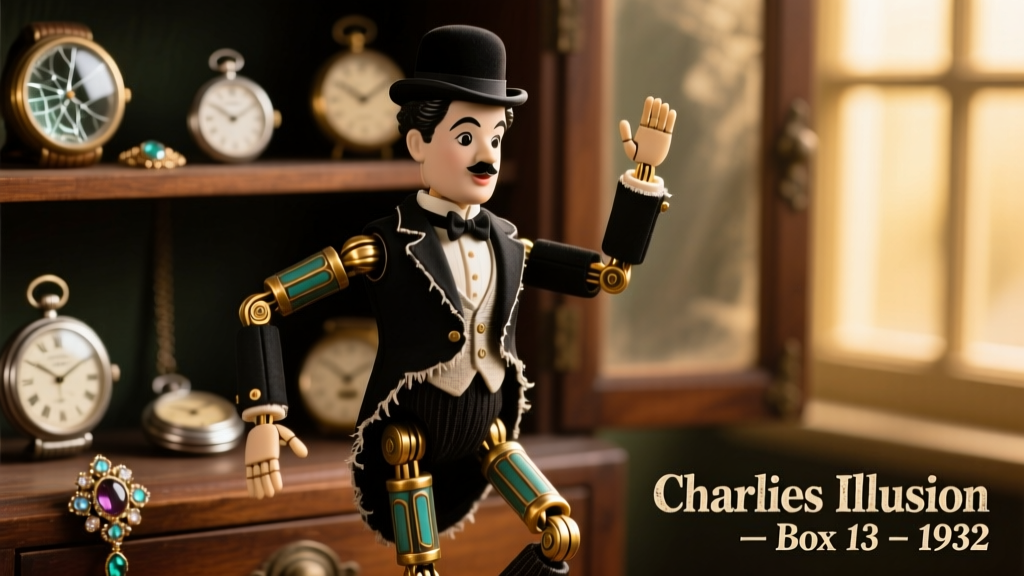
The Charlie Chaplin Doll: 'Dancing Charlie' Illusion Jointed Box — A 13-Inch Masterpiece of Vintage Mechanical Artistry

Horn Cup Carved Dragons Playing With Pearl: A Study of Qing Dynasty Ritual Craftsmanship and Symbolic Design
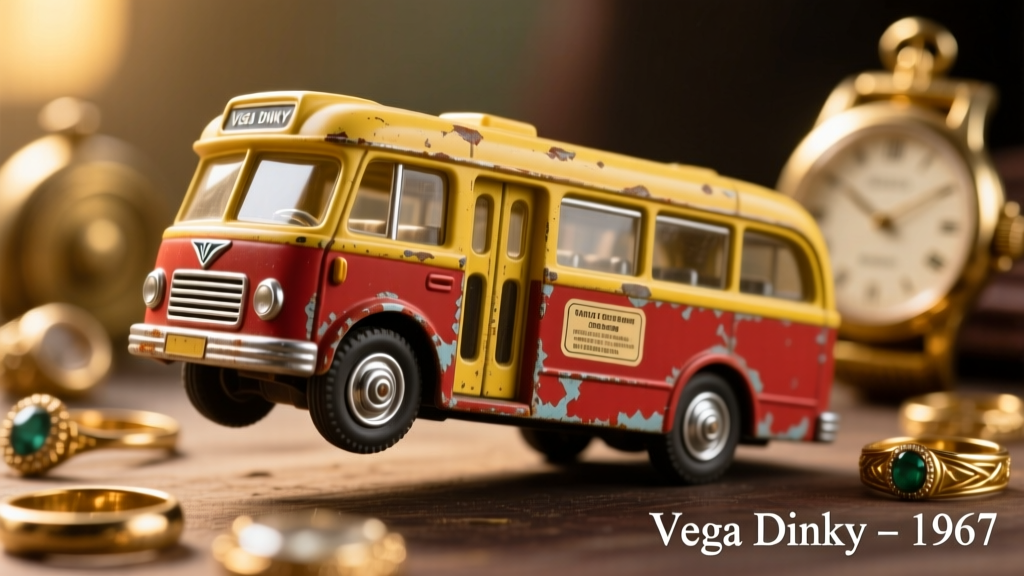
The Toy Bus Vega Dinky: A Collector’s Deep Dive into Britain’s Iconic Die-Cast Miniature
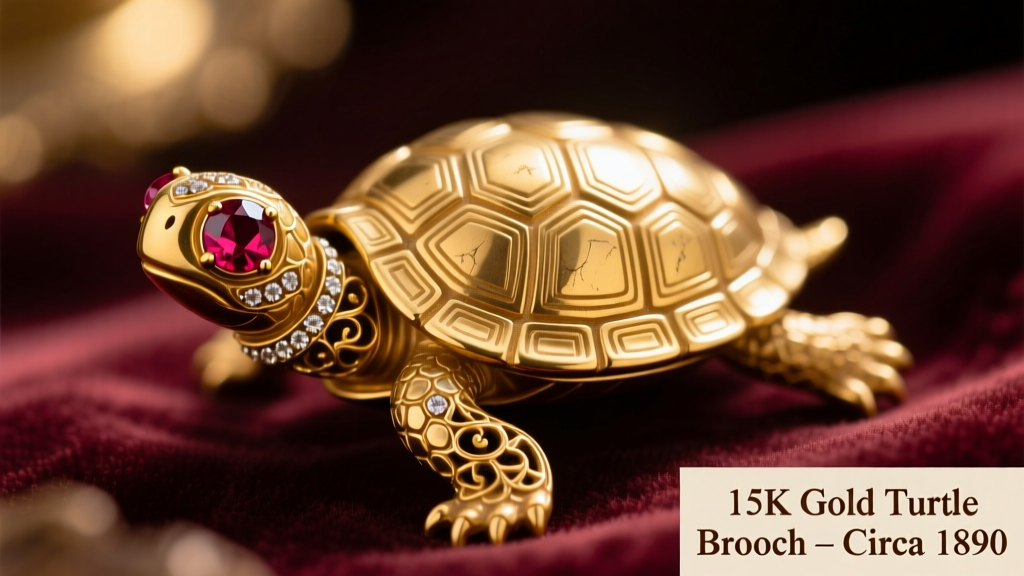
The 15K Gold Turtle Pin: A Study in Artisan Craftsmanship, Ruby Accents, and Gilded Symbolism
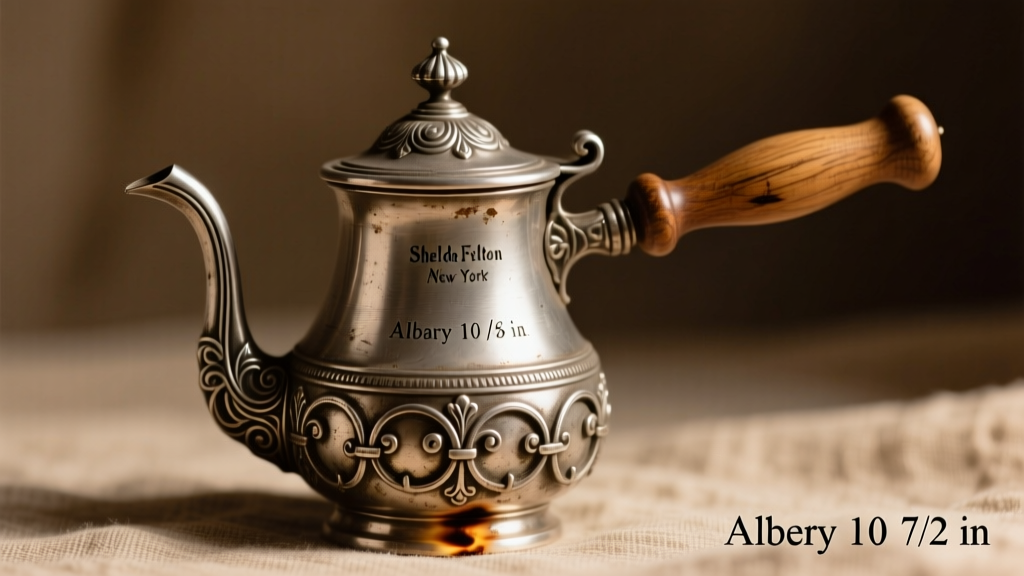
Sheldon Feltman’s Albany Pewter Coffeepot: A 10½-Inch Masterpiece of American Colonial Revival Craftsmanship
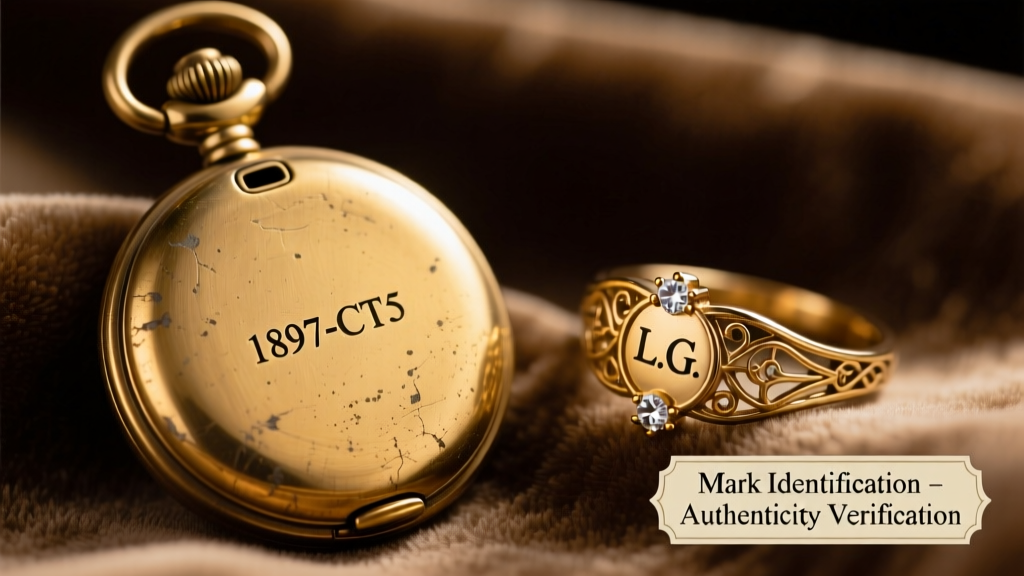
Decoding Hallmarks, Maker’s Marks, and Movement Signatures: A Practical Guide to Authenticating Vintage Jewelry and Watches
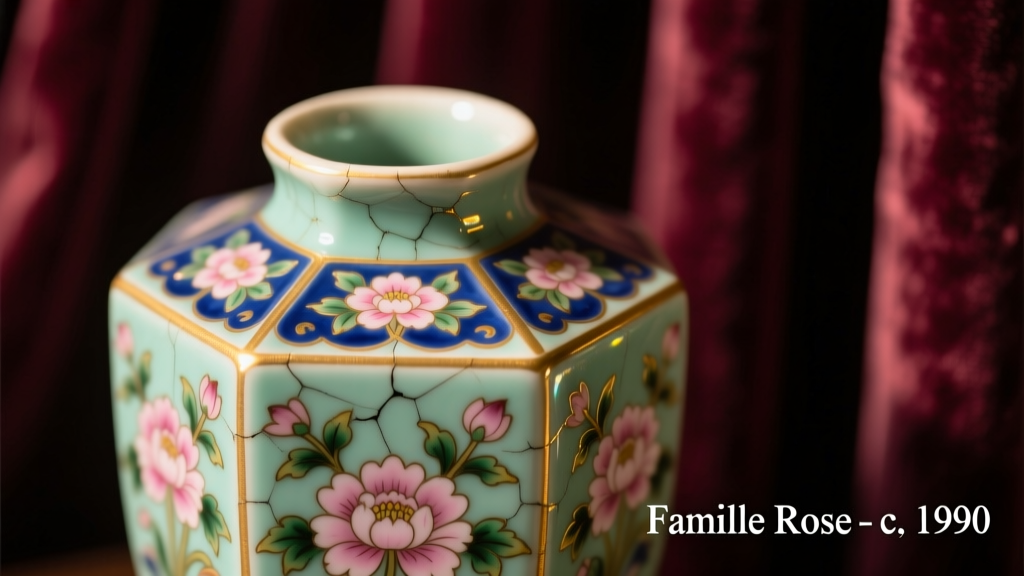
Chinese Export Vase, Famille Rose, Hexagonal Molded, Multicolored, c. 1900 — A Study in Late Qing Porcelain Craftsmanship and Global Trade

Advertising Tin Garth Cigars: A Collector’s Guide to British Tobacco Ephemera from the Edwardian Era to WWII

Helen Corbitt’s 'Potluck': A Culinary Artifact of Mid-Century Texas Hospitality and Its Auction Significance