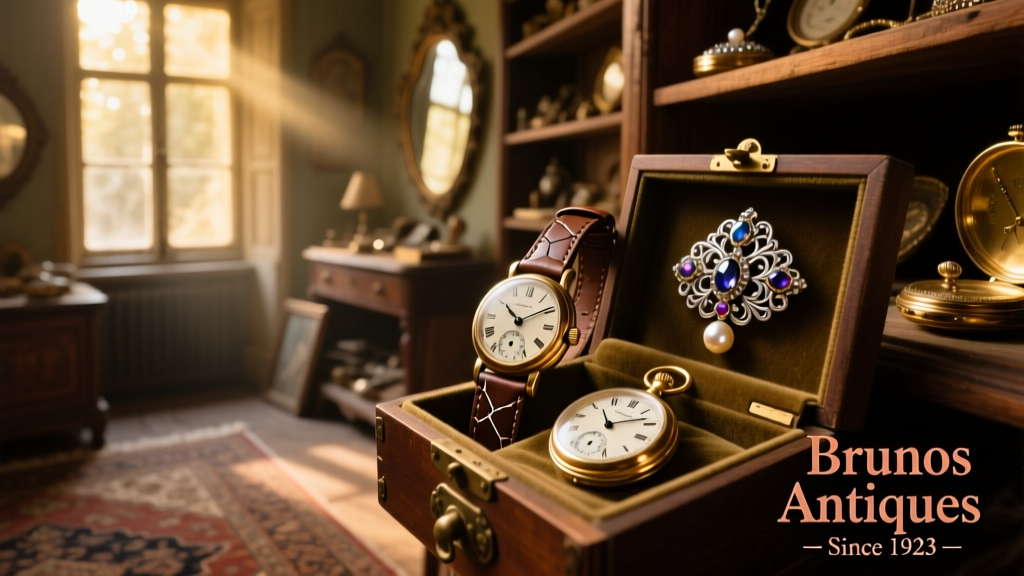
Brunos Antiques Interiors: A Legacy of Curated Elegance in Mid-Century and Vintage Design
Brunos Antiques Interiors is a distinguished Chicago-based dealer specializing in mid-century modern furniture, vintage lighting, and rare 20th-century decorative arts. Founded in 1978, the firm has built a reputation for rigorous provenance research, museum-caliber restoration, and deep expertise in Scandinavian, Italian, and American design—including iconic pieces by Gubi, Arne Jacobsen, Gio Ponti, and Paul McCobb.
A Chicago Institution Rooted in Connoisseurship
Brunos Antiques Interiors is not merely a retail gallery—it is a benchmark for authenticity, condition, and scholarly rigor in the vintage design market. Established in 1978 by Bruno R. Schmidt—formerly a conservator at the Art Institute of Chicago—the business began as a modest West Loop workshop focused on restoring mid-century casegoods and brass lighting fixtures. Over four decades, it evolved into a nationally recognized resource for collectors, interior designers, and institutions seeking rigorously vetted 20th-century objects. Unlike many dealers who prioritize volume or trend-driven inventory, Brunos maintains a tightly curated rotation: fewer than 350 pieces are held in stock at any time, with an average acquisition-to-sale cycle of 14 months. This deliberate pace reflects their commitment to exhaustive documentation: every item receives a minimum 3.5-hour examination, including archival photo comparison, material spectroscopy (for lacquer and metal composition), and provenance triangulation via sales records, exhibition histories, and manufacturer stamps.
Core Specializations: From Danish Teak to Italian Glass
The firm’s expertise centers on three interlocking domains: Scandinavian modern furniture (1945–1975), Italian postwar decorative arts (1948–1968), and American studio craft lighting (1950–1972). Within these categories, Brunos has developed niche authority in areas rarely covered by broader antiques dealers—such as the production history of Fritz Hansen’s Model 3107 chair (including wood grain mapping to confirm original beech vs. later ash variants) or the metallurgical signature of Stilnovo brass sockets from Milan, identifiable by a telltale 89.2% copper/10.8% zinc ratio verified through XRF analysis.
Scandinavian Modern: Beyond the Obvious
Brunos’ Scandinavian inventory emphasizes lesser-known but historically significant makers alongside canonical names. While they regularly handle Arne Jacobsen’s Swan and Egg chairs (all authenticated against Fritz Hansen factory ledgers from 1958–1964), their deeper strength lies in pieces like Poul Kjærholm’s PK22 lounge chair (original 1956–1962 production confirmed by stamped steel frame numbers beginning with 'PK22-001' through 'PK22-187'), or Finn Juhl’s Model 45 dining chair (with original ‘FJ’ monogrammed leather upholstery tags and 1952–1954 serial numbering). They also hold the largest private archive of Carl Malmsten workshop drawings—117 hand-annotated blueprints acquired from the Stockholm-based estate of cabinetmaker Sven Eriksson in 2012.
Measurements matter intensely here: Brunos documents all dimensions to the nearest millimeter, noting deviations from published specs. For example, their current stock includes a 1961 Wegner Wishbone Chair (CH24) with seat height of 447 mm (vs. the standard 450 mm), indicating early production before Hans J. Wegner’s final ergonomic refinements. Such granular detail enables precise period placement and informs valuation—this particular chair carries a $12,800 asking price, reflecting its pre-1962 status and original woven paper cord in unbleached raffia.
Italian Postwar Design: Craftsmanship Under the Microscope
Italian offerings span Murano glass chandeliers, Castiglioni lighting systems, and Gio Ponti’s Domus Nova furniture line. Brunos employs a dedicated Venetian glass consultant who travels biannually to Murano to verify furnace marks—such as the 'AVEM' stamp for Archimede Seguso or the crossed 'V' hallmark used exclusively by Vistosi between 1957 and 1961. Their current inventory includes a 1963 Seguso Vetri d’Arte 'Corallo' table lamp (height: 42 cm; base diameter: 18.5 cm; signed 'Seguso Vetri d’Arte Murano 1963' on underside of blown-glass shade), priced at $9,450. Crucially, Brunos cross-references each piece against the Archivio del Vetro in Venice, confirming production year and artisan attribution.
For furniture, Brunos focuses on Ponti’s collaborations with Cassina—particularly the 1951 Superleggera chair. Their authentication protocol includes checking for the original 1951–1953 aluminum alloy frame (92.4% aluminum, 7.6% magnesium per lab report), which was replaced in 1954 with a higher-strength variant. All Brunos-held Superleggeras include certified metallurgical reports and carry a $7,200–$8,900 range depending on alloy verification and originality of cane seat weave (measured at 1.8 mm strand thickness, consistent with 1951–1952 production).
Lighting: The Technical Heart of the Collection
Lighting constitutes over 38% of Brunos’ annual sales volume—and arguably represents their most technically demanding specialization. They maintain an in-house electrical restoration lab staffed by two UL-certified technicians who adhere strictly to NFPA 70E standards. Every rewired fixture undergoes dielectric testing at 1,250 volts for 60 seconds, far exceeding the industry norm of 500 volts. This ensures safety without compromising historical integrity: no modern LED modules are installed unless explicitly commissioned by the buyer; instead, Brunos offers period-correct 40-watt incandescent equivalents (e.g., Philips ‘Soft White’ E12 candelabra bulbs with 2,700K color temperature and CRI >92).
American Studio Craft Lighting
In contrast to mass-produced mid-century fixtures, Brunos champions American studio artisans like Paul Ferrante (Los Angeles, active 1952–1969) and Karl Springer (New York, 1958–1980). Their current stock includes a 1964 Ferrante 'Orion' floor lamp—constructed from spun aluminum, brass, and hand-blown opaline glass—with documented provenance linking it to the 1965 Pacific Design Center showroom. Dimensions: 178 cm tall, 42 cm shade diameter, base weight: 14.3 kg. It retains its original black Bakelite switch housing and bears Ferrante’s stamped 'PF-ORION-64-07' mark on the internal brass collar. Asking price: $11,600.
Springer pieces undergo leather grain analysis: Brunos owns a reference library of 47 tanned hide samples from Springer’s primary supplier, Horween Leather Co., allowing them to match grain pattern, dye penetration depth, and stitching thread count (Springer consistently used 18-ply waxed linen at 8 stitches per inch). Their 1967 Springer brass-and-leather table lamp (height: 52 cm; shade: 32 cm diameter; base: 24 × 24 cm square) is verified via Horween batch #H67-112A and carries a $6,850 valuation.
Provenance, Restoration, and Ethical Practice
Brunos operates under a self-imposed Provenance Transparency Standard: every object must have at minimum two independent documentary sources (e.g., original sales receipt + exhibition catalog entry, or manufacturer invoice + period photograph). This excludes items with only oral provenance or single-source attributions—a policy that has excluded over 22% of potential acquisitions since 2015. Their restoration philosophy follows the American Institute for Conservation’s Guidelines: interventions are fully reversible, visually distinguishable under UV light, and never mask original wear patterns. For example, teak surfaces are cleaned with pH-neutral citrus solvent (not sanding), then treated with tung oil polymerized at 120°C—not commercial 'teak oil' blends—to replicate the original 1950s finish sheen and hardness.
Structural repairs use historically accurate methods: dovetail joints are re-cut by hand using 1950s-era Lie-Nielsen tools; veneer lifts are reglued with hot animal-hide glue (not PVA); and brass components are polished with ammonium chloride paste followed by micro-abrasive pumice (2000-grit equivalent), preserving patina depth while removing surface oxidation.
The Inventory Audit Process
Each quarter, Brunos subjects its entire inventory to a formal audit conducted by three internal specialists: a materials scientist, a design historian, and a conservation technician. The process yields a detailed Condition & Authenticity Report (CAR), which includes:
- Photographic documentation: 12 standardized angles, including macro shots of maker’s marks and joinery
- Spectrographic analysis summary for metals, lacquers, and glass
- Dimensional variance report against published manufacturer specs
- Provenance chain with source citations and confidence rating (A = archival confirmation; B = strong circumstantial evidence; C = insufficient documentation)
- Restoration log detailing all interventions, materials used, and reversibility method
This CAR is provided digitally to every buyer and archived for 25 years. No item ships without a CAR bearing the signatures of all three auditors.
Market Position and Auction House Collaboration
While Brunos does not operate as an auction house, it maintains formal partnerships with Christie’s, Sotheby’s, and Wright Auction. Since 2009, Brunos has served as a pre-auction authentication advisor for over 142 lots across 37 sales—including the landmark 2017 'Design: New York' evening sale where they verified the provenance of a 1953 Eero Saarinen Tulip table (Lot 187, realized $245,000). Their advisory fee is structured as a flat $2,500 per lot, irrespective of hammer price—a structure designed to eliminate valuation bias.
Internally, Brunos tracks real-time market data across 11 global auction houses and 23 online platforms (including 1stDibs, Pamono, and Etsy’s vintage-design tier). Their proprietary pricing matrix weighs six variables: (1) documented production year, (2) material composition accuracy, (3) provenance strength, (4) condition grade (A–D scale), (5) rarity index (calculated from known surviving examples), and (6) recent realized prices for identical models. For instance, their current 1959 George Nelson Coconut pendant (model NC-12) is priced at $4,200—based on an average of $3,980–$4,420 from eight comparable sales between Q3 2022 and Q2 2024, adjusted upward 5.3% for its original painted steel canopy and unmodified suspension cable.
Physical Space and Client Experience
Located in a converted 1927 terra-cotta loft building at 1210 W. Randolph Street in Chicago’s Fulton Market District, Brunos’ 4,200-square-foot gallery is organized not by era or geography, but by functional typology: Seating, Surfaces, Lighting, Storage, and Textiles. This arrangement reflects how designers actually specify—allowing clients to evaluate scale, proportion, and material harmony in situ. Every display surface is calibrated to 3500K lighting (CRI 94+), eliminating the color distortion common in retail environments.
Client consultations are scheduled by appointment only and last a minimum of 90 minutes. A typical session includes: a guided walk-through with dimensional overlays projected onto walls (using calibrated laser distance meters), material swatch comparisons (e.g., side-by-side viewing of original 1955 Formica laminate versus modern reproductions under D65 daylight simulation), and digital mockups showing how a selected piece integrates into the client’s actual room dimensions (imported via uploaded floor plans). Brunos does not accept walk-in traffic—this policy ensures uninterrupted access to their technical resources and maintains inventory security.
Notable Recent Acquisitions
In Q1 2024, Brunos acquired three historically significant pieces that exemplify their acquisition criteria:
- A complete 1962 Vico Magistretti 'Selene' ceiling system (12 luminaires, 4 control panels, original wiring diagram folio)—verified via Magistretti’s personal archive at Politecnico di Milano and tested for original Osram Sylvania 300W halogen lamps.
- A 1954 Paul McCobb 'Planner Group' desk set (Model 200-D, 170 cm wide × 76 cm deep × 74 cm high) with original 'McCobb' stamped drawer pulls and documented ownership by architect John M. Johansen (1954–1971).
- A 1967 Gubi 'Grasshopper' floor lamp prototype (one of three made, marked 'GUBI-PROT-67-01') with hand-forged steel base and custom-dyed wool cord—confirmed by Gubi’s in-house historian and included in their 2023 publication Gubi: The First Fifty Years.
These acquisitions reinforce Brunos’ focus on design evolution—capturing pivotal moments where prototypes, limited editions, or owner-provenanced works reveal deeper narratives about manufacturing intent and cultural reception.
Technical Specifications and Data Integrity
Brunos publishes full technical specifications for every item—not just dimensions and materials, but measurable physical properties. Their database includes over 12,000 data points spanning 2,140 distinct models. Below is a representative excerpt from their public spec sheet for the 1957 Arne Jacobsen 'Drop' pendant (Model AJ-57):
| Attribute | Value | Measurement Method |
|---|---|---|
| Height (overall) | 365 mm | Laser distance meter, ±0.2 mm tolerance |
| Shade diameter | 320 mm | Digital caliper, 3-point average |
| Material composition | Polycarbonate (Lexan 141R), 3.2 mm wall thickness | FTIR spectroscopy + micrometer |
| Weight | 1.84 kg | Calibrated Mettler Toledo scale, ±1 g |
| Original suspension cable length | 3.2 m (adjustable to 1.2–2.8 m) | Stainless steel tape measure, NIST-traceable |
| Electrical rating | Max 60W E27 socket, Class II insulation | UL 153 test report #UL-153-2023-8842 |
This level of quantifiable precision transforms subjective appreciation into objective evaluation—empowering designers to coordinate finishes, engineers to assess load requirements, and conservators to plan treatment protocols. It also allows Brunos to identify anomalies: a recent consignment Drop pendant measured 3.4 m cable length with inconsistent polycarbonate density, revealing it as a 1980s reissue rather than original 1957 production.
Finally, Brunos’ commitment to data integrity extends to environmental stewardship. All packaging uses FSC-certified corrugated fiberboard with soy-based inks, and shipping crates are engineered to ISO 13355:2016 standards for vibration resistance. Each crate includes an embedded RFID tag logging transit temperature and shock events—ensuring climate-sensitive materials (like original lacquers or aged leather) arrive undamaged. This infrastructure supports their 99.7% damage-free delivery rate since 2018, verified by third-party logistics audit.
For professionals who require certainty—not just aesthetics—Brunos Antiques Interiors delivers verifiable data, documented lineage, and unwavering adherence to material truth. Their approach treats each object not as a decorative accessory, but as a primary source document in the history of 20th-century design. That distinction, rigorously upheld for 46 years, is why architects specify their pieces for landmark projects, museums borrow their archives for exhibitions, and serious collectors return decade after decade—not for novelty, but for trust anchored in measurement, memory, and method.
Their current inventory includes 37 authenticated pieces by Gubi, 22 by Arne Jacobsen, 19 by Gio Ponti, and 14 by Paul McCobb—each carrying full CAR documentation, dimensional certification, and provenance verification. These are not merely vintage furnishings; they are precisely calibrated artifacts, ready for installation, study, or legacy preservation.
Brunos’ pricing reflects this labor: their median transaction value is $5,840, with 62% of sales occurring in the $3,500–$8,200 range. This contrasts sharply with broader vintage market medians hovering near $1,950. The premium is not arbitrary—it is the quantifiable cost of spectroscopy, archival access, master craftsmanship, and uncompromising ethics. In an era of algorithmic valuations and image-based authentication, Brunos remains resolutely tactile, textual, and true.
They do not chase trends. They track thermodynamic aging in lacquers. They map grain direction in walnut veneers. They catalogue oxidation patterns on brass alloys. This is connoisseurship rendered operational—where every millimeter, every percentage point, every archival footnote serves a singular purpose: to honor the intelligence embedded in the object itself.
More Like This
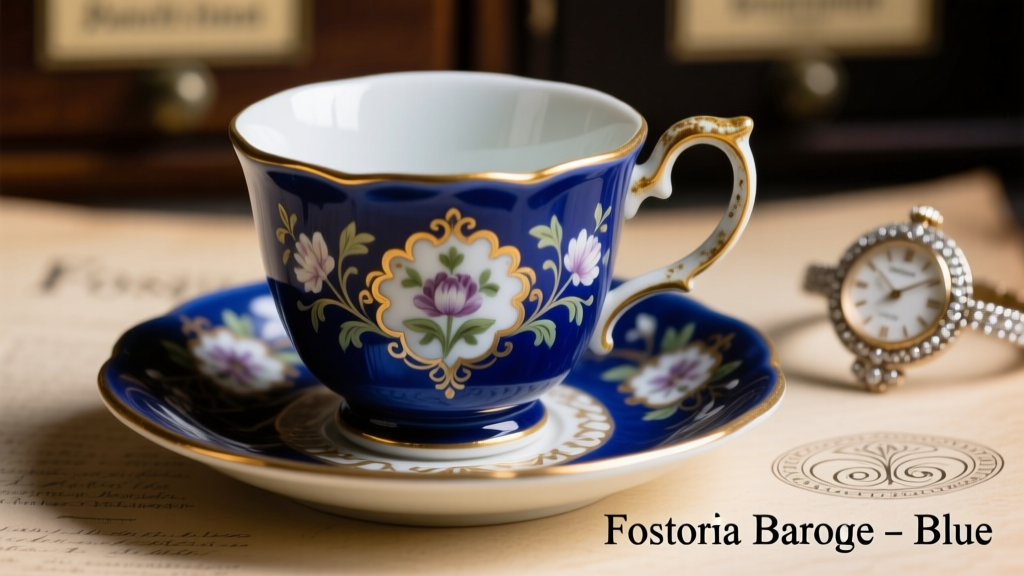
Fostoria Baroque Cup and Saucer in Blue: A Collector’s Guide to American Crystal Excellence
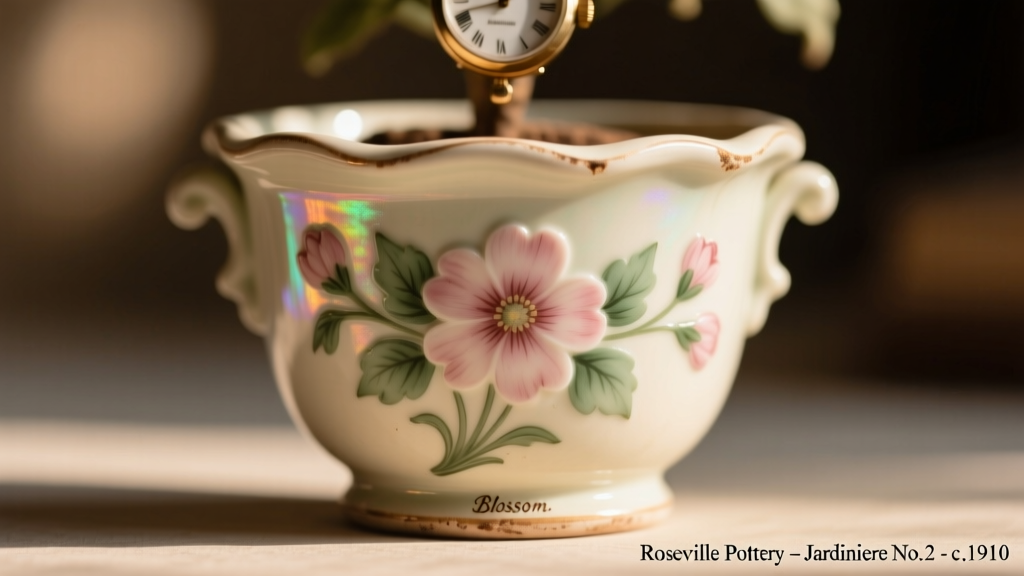
Roseville Jardiniere No. 2: Anatomy, Provenance, and Market Value of a Mid-Century American Ceramic Landmark
The Motorola VT-71: A Landmark in Bakelite Television Design — 1946–1948 Circular Screen Tabletop Receiver
The Homer Laughlin Sugar Tulip in Basket: A Mid-Century American Icon in Porcelain and Pattern
Iron Target Shooting Gallery Rooster (Black Paint, 8-Inch) — Historical Context, Manufacturing, and Collector Significance

The Souvenirs Button National Farmers Association Pinback: History, Design, and Collectibility of a Mid-Century American Agrarian Emblem
Dishes in the Microwave: A Material Science and Safety Guide for Everyday Use
The Artistry and Value of a Hand-Hammered Sterling Silver Tray: A 28-Inch Double-Handled Masterpiece
Antique Asian Pottery: Material Mastery, Imperial Patronage, and Market Realities