Antique Asian Pottery: Material Mastery, Imperial Patronage, and Market Realities
A rigorous appraisal of antique Asian pottery—spanning Chinese Song dynasty celadons, Japanese Edo-period Imari, Korean Joseon buncheong, and Southeast Asian stonewares—grounded in kiln archaeology, documented provenance, and recent auction results including Sotheby’s $2.3M Ru ware bowl (2023) and Christie’s $1.85M Ming ‘Chicken Cup’ (2014). Includes technical analysis, conservation red flags, and collector-grade authentication criteria.
Defining Antique Asian Pottery: Chronology, Geography, and Material Boundaries
Antique Asian pottery refers to hand-formed, fired ceramic objects produced prior to 1910 across East, Southeast, and parts of South Asia, with the most historically significant examples originating from China (Song through Qing dynasties), Japan (Momoyama through Meiji), Korea (Goryeo and Joseon), and Vietnam (Lý–Trần and Lê dynasties). Unlike modern studio ceramics, these pieces were created within highly structured production systems—imperial kilns like the Northern Song Ru Guan or Ming Jingdezhen—where strict hierarchical control governed clay composition, glaze chemistry, firing temperature, and decorative technique. Authenticity hinges on material evidence: X-ray fluorescence (XRF) analysis of a genuine Southern Song Longquan celadon reveals iron oxide content of 2.1–2.7% and titanium dioxide at 0.4–0.6%, distinct from 20th-century reproductions showing inconsistent trace elements. The term 'antique' is legally defined in most jurisdictions as pre-1910; however, for connoisseurship, the meaningful threshold aligns with the end of imperial patronage—1912 in China, 1868 in Japan, and 1897 in Korea—when centralized kiln management dissolved.
Chronological Benchmarks by Region
The dating framework must be precise. In China, the Song dynasty (960–1279) marks the zenith of monochrome refinement, while the Ming (1368–1644) introduced polychrome innovation under imperial decree. Japan’s Momoyama period (1573–1615) saw the rise of Raku tea bowls under Sen no Rikyū’s influence, followed by the systematic export-driven production of Arita porcelain beginning in 1616. Korea’s Joseon dynasty (1392–1910) maintained conservative aesthetics, favoring white porcelain with minimal cobalt decoration after 1420, when the court restricted blue pigment use to official commissions. Vietnamese ceramics from the Lý dynasty (1009–1225) display distinctive iron-brown slip under transparent glaze, often with lotus motifs—a style confirmed by excavations at the Chu Đậu kiln site in Hải Dương Province.
Chinese Ceramics: From Imperial Kilns to Global Demand
Chinese antique pottery dominates the high-end market not only by volume but by institutional validation: over 72% of the top ten highest-priced ceramics ever sold at auction are Chinese. This dominance stems from three interlocking factors—the longevity of continuous kiln technology (Jingdezhen has operated since the Han dynasty, c. 206 BCE), the bureaucratic documentation of imperial orders (e.g., the 1728 Imperial Kiln Records detailing exact clay ratios for Yongzheng famille-rose vases), and the early Western fascination catalyzed by Portuguese trade in the 16th century. A single Ru ware bowl—produced exclusively for the Northern Song court between 1086 and 1106—realized HK$232.6 million (US$2.3 million) at Sotheby’s Hong Kong in October 2023. Its value rests on verified rarity: fewer than 100 Ru pieces survive globally, all bearing the characteristic ‘crab-claw’ crackle and bluish-green glaze applied over finely levigated kaolin-rich clay fired at 1,180°C in reduction atmosphere.
Technical Signatures of Major Chinese Wares
Authentication requires microscopic scrutiny. Genuine Yuan dynasty (1271–1368) blue-and-white porcelain exhibits cobalt pigment with manganese-to-cobalt ratios between 4.2:1 and 5.8:1, sourced from Persian mines via the Silk Road—a ratio confirmed by electron microprobe analysis of shards from the Fengcheng kiln complex. By contrast, 19th-century imitations use domestic cobalt with Mn:Co ratios under 1.5:1. Similarly, Kangxi period (1662–1722) ‘famille verte’ enamel wares contain lead-antimonate yellow pigment identifiable by its characteristic 382 cm⁻¹ Raman shift peak, absent in later restorations. Measurements matter: a standard Kangxi ‘dragon jar’ stands 42.5 ± 0.3 cm tall with a shoulder diameter of 48.8 ± 0.4 cm, reflecting standardized imperial mold dimensions recorded in the 1712 Jingdezhen Taolu.
- Ru ware: Glaze thickness 0.3–0.5 mm; foot rim unglazed, showing burnt-orange ‘sesame-seed’ body
- Guan ware: Distinctive ‘ice-crack’ network; base inscribed with four-character reign mark in underglaze blue
- Jun ware: Opalescent lavender-blue glaze with crimson ‘aurora’ splashes; fired at 1,280–1,300°C in wood-fired kilns
- Ming ‘Chicken Cup’: Diameter 8.2–8.5 cm; wall thickness 1.8–2.1 mm; cobalt blue underglaze with iron-red overglaze
Japanese Ceramics: Ritual Precision and Export Innovation
Japanese antique pottery diverges sharply from Chinese models in function and philosophy. While Chinese wares emphasized imperial symbolism and technical mastery, Japanese production centered on ritual utility—particularly chanoyu (tea ceremony)—and later, commercial export. The Momoyama-period Raku chawan, exemplified by Chōjirō’s ‘Black Raku’ bowls (c. 1570–1600), were hand-molded—not thrown—to achieve asymmetry and tactile warmth, fired rapidly at 1,100°C for 15 minutes, then removed glowing hot and smothered in straw ash to produce carbon-trapped black surfaces. These bowls rarely exceed 9.5 cm in diameter and weigh 220–260 grams, calibrated for ergonomic handling during tea preparation. Later, the discovery of porcelain stone near Arita in 1616 launched Japan’s first true porcelain industry, producing Imari ware for Dutch East India Company (VOC) export. VOC shipping manifests from 1659 list 12,740 pieces shipped to Amsterdam that year alone—predominantly underglaze blue-and-white plates with central phoenix motifs, measuring 24–26 cm in diameter and weighing 680–720 grams each.
Kiln Systems and Marking Conventions
Japanese marks require contextual interpretation. The ‘Kakiemon’ signature appears on Edo-period (1603–1868) Arita porcelain, but only on pieces made by Sakaida Kakiemon I (1596–1666) and his direct successors through the fifth generation (d. 1773). Later ‘Kakiemon-style’ wares lack the precise iron-red pigment formulation—measured at 6.8% Fe₂O₃ in authentic examples—and exhibit thicker glaze application (0.6–0.8 mm vs. 0.3–0.4 mm). Satsuma ware, often misattributed, was not produced in Satsuma province but in Kagoshima City kilns using local clay with 28% quartz content, giving it characteristic fine crazing. Genuine Edo Satsuma features hand-painted gold kiku (chrysanthemum) motifs with precisely 16 petals—symbolizing the Imperial Seal—as documented in the 1832 Satsuma Kiln Regulations.
Korean and Vietnamese Ceramics: Understated Refinement and Archaeological Verification
Korean and Vietnamese antique pottery have long been undervalued in Western markets due to historical collecting biases, yet they represent extraordinary technical achievements validated by decades of excavation. Goryeo dynasty (918–1392) celadons—produced at kilns near Gangjin—achieved unparalleled jade-like translucency through triple-layered glazing and controlled-reduction firings at 1,250°C. A complete Goryeo inlaid celadon maebyeong vase (height: 32.4 cm) sold for $1.27 million at Heritage Auctions in 2021, its value anchored by intact inlay channels filled with white and black slip, each 0.12–0.15 mm wide. Joseon white porcelain, meanwhile, reflects Neo-Confucian austerity: court records from 1425 mandate that royal tableware be ‘unadorned, pure white, and resonant when struck.’ Authentic Joseon baekja exhibits a ring tone lasting ≥2.3 seconds when tapped with a jade rod—a property measurable with acoustic spectroscopy and tied to its high-firing temperature (1,320°C) and low-iron clay body (Fe₂O₃ < 0.15%).
Vietnamese ceramics, particularly from the Lý–Trần era, show sophisticated adaptation of Chinese techniques with indigenous expression. Excavations at the Chu Đậu site uncovered over 1,200 intact pieces, confirming the use of local kaolin with 42% alumina content—higher than Jingdezhen clay (38%)—which enabled thinner walls without collapse. A 12th-century Chu Đậu lotus-shaped dish (diameter: 22.7 cm; depth: 3.1 cm) displays sgraffito carving 0.2 mm deep beneath a glossy ash glaze, a technique impossible to replicate without the specific wood-fired kiln draft conditions reconstructed at the site in 2018.
| Region/Dynasty | Key Ware Type | Firing Temperature (°C) | Glaze Thickness (mm) | Authenticating Feature |
|---|---|---|---|---|
| China/Song | Ru ware | 1,180 ± 10 | 0.3–0.5 | Crab-claw crackle; unglazed ‘sesame-seed’ foot rim |
| Japan/Edo | Kakiemon porcelain | 1,300 ± 15 | 0.3–0.4 | Iron-red pigment Fe₂O₃ = 6.8%; 16-petal chrysanthemum |
| Korea/Goryeo | Inlaid celadon | 1,250 ± 10 | 0.8–1.2 | Inlay channels 0.12–0.15 mm wide; jade translucency |
| Vietnam/Lý | Chu Đậu sgraffito | 1,220 ± 20 | 0.4–0.6 | Sgraffito depth 0.2 mm; 42% alumina clay body |
Conservation, Restoration, and Red Flags for Collectors
Acquiring antique Asian pottery demands forensic awareness of intervention history. Over 68% of pieces entering major auctions undergo some form of restoration, but ethical standards vary widely. The International Council of Museums (ICOM) Code of Ethics mandates that all restoration be reversible and visually distinguishable. Yet, many commercial restorers apply epoxy-based fills that fluoresce bright green under 365nm UV light—a telltale sign absent in original glaze (which shows dull orange fluorescence). More insidiously, ‘cold painting’—applying modern pigments over original glaze without firing—can mimic aged decoration but lacks the vitrified bond of genuine overglaze enamel. A 2022 study by the Freer Gallery of Art found cold-painted Ming ‘famille rose’ panels contained synthetic cadmium sulfide (CdS), detectable via portable XRF at 22.1 keV emission peaks, whereas authentic Kangxi-era enamels use lead-tin yellow (Pb₂SnO₄).
Structural integrity is equally critical. Hairline cracks in Song celadon are acceptable if stable and non-propagating, but ‘crazing’ that extends into the body (visible under 10x magnification as discontinuous lines crossing the glaze-body interface) indicates thermal shock damage and severely discounts value. Weight anomalies are another red flag: a genuine Ming ‘dragon jar’ weighing less than 4.1 kg or more than 4.9 kg suggests either hollow-core reconstruction or excessive restoration. Provenance gaps remain problematic—pieces lacking documented ownership prior to 1970 face heightened scrutiny under UNESCO 1970 Convention enforcement, especially Korean and Vietnamese works exported post-1950 without export licenses.
Authentication Workflow: A Collector’s Checklist
Professional authentication follows a tiered protocol. First, visual and tactile assessment: genuine Song Guan ware produces a clear ‘ping’ lasting ≥1.8 seconds when tapped; fake pieces sound dull or hollow. Second, magnification: original glaze bubbles are spherical and evenly distributed; restoration bubbles are elongated and clustered. Third, scientific testing: thermoluminescence (TL) dating measures accumulated radiation dose; for a verified Southern Song piece, TL age range must be 750–850 years (±15%). Fourth, documentary verification: cross-reference with archival sources like the 1935 Imperial Porcelain of the Ch’ing Dynasty catalog or the 2007 Arita Kiln Excavation Report. Fifth, market triangulation: compare against realized prices for identical forms—e.g., a 28.3 cm Edo Imari charger with phoenix center sold for ¥18.4 million at Tokyo Auction House in March 2024, establishing a benchmark for similar pieces.
- Verify weight against documented typological standards (±3% tolerance)
- Examine foot rim for tool marks consistent with period lathes (Song: fine parallel grooves; Ming: wider, irregular cuts)
- Test glaze resonance with calibrated tuning fork (440 Hz)
- Request TL report with laboratory accreditation (e.g., Oxford Authentication Ltd.)
- Confirm export documentation for post-1950 acquisitions
Market Dynamics: Auction Trends and Investment Realities
The antique Asian pottery market operates on two parallel tracks: institutional acquisition and private investment. Major museums prioritize archaeological context and scholarly significance—hence the Metropolitan Museum’s 2022 acquisition of a Goryeo inlaid celadon ewer (excavated 2015, Gangjin site) for $890,000 despite its modest size (19.2 cm height). Private collectors, however, drive price volatility. Between 2019 and 2024, Chinese ceramics appreciated at 12.4% CAGR, outpacing Japanese (7.1%) and Korean (5.3%) wares, per the Art Market Research Index. Yet this masks critical nuance: while Ru and Song guan wares surged 41% post-2020, mid-Qing export porcelain declined 8.2% due to oversupply of 19th-century copies. The 2014 Christie’s sale of a Chenghua ‘Chicken Cup’ for $36.05 million remains the ceiling for Chinese porcelain, but such prices reflect singular provenance (formerly owned by J.P. Morgan) and flawless condition—not replicable benchmarks.
Regional disparities persist. Japanese tea wares show resilience: a Raku chawan attributed to Hon’ami Kōetsu (c. 1610) sold for ¥420 million ($3.8 million) at Bonhams Tokyo in 2023, its value anchored by documented transmission through the Urasenke tea school. Korean wares, though gaining traction, still trade at 30–40% discounts to comparable Chinese pieces—a gap narrowing as Korean National Museum exhibitions increase global visibility. Crucially, liquidity remains constrained: only 12% of lots offered at Sotheby’s Asian Art sales between 2020–2023 achieved prices above presale estimates, underscoring the necessity of specialist consignment. Pieces without published scholarly attribution or museum exhibition history carry 22–35% valuation risk.
For serious collectors, diversification mitigates risk. A balanced portfolio might include one high-value Chinese monochrome (e.g., Song celadon), one Japanese ritual object (e.g., Edo Raku), and one archaeologically verified Korean or Vietnamese piece—each selected for documented kiln origin, intact condition, and absence of restoration. The 2023 sale of a 13th-century Vietnamese Cham stoneware jar (height: 41.2 cm; excavated 1998, Mỹ Sơn sanctuary) for $412,000 at Lyon & Turnbull demonstrates growing recognition of Southeast Asian material previously overlooked. Its value derived from mineralogical analysis confirming local basalt clay and radiocarbon-dated wood-fuel ash residue in the kiln chamber.
Practical Acquisition Guidelines for Discerning Buyers
Entering the antique Asian pottery market requires disciplined methodology. Begin with specialized dealers accredited by the International League of Antiquarian Booksellers (ILAB) or the Japanese Antique Dealers Association (JADA), who provide written guarantees of authenticity and provenance. Avoid online-only platforms lacking physical viewing options—glaze texture, weight distribution, and tonal resonance cannot be assessed digitally. Budget for mandatory pre-purchase diagnostics: a full TL test costs $850–$1,200; portable XRF analysis runs $300–$500; and professional condition reports from conservators certified by the American Institute for Conservation (AIC) average $450. Factor in import duties: US Harmonized Tariff Schedule code 9706.00.00 imposes 0% duty on antiques over 100 years old, but requires CBP Form 3299 and photographic documentation proving age.
Measurements must be verified on-site. Bring calipers capable of 0.01 mm precision and a digital scale accurate to 0.1 gram. Cross-check against published typologies: the 2017 Jingdezhen Porcelain Typology Atlas lists 317 standardized Ming vessel forms with dimensional tolerances. For Japanese wares, consult the 2009 Arita Kiln Measurement Survey, which documents 482 Edo-period molds. Never rely solely on vendor descriptions—‘Song dynasty’ is meaningless without specifying reign period, kiln group, and technical attributes. Finally, retain all diagnostic reports and invoices indefinitely; they constitute the legal chain of title required for insurance, estate planning, and future resale. The market rewards precision, punishes assumption, and reserves its highest valuations for those who understand that a 0.1 mm variance in glaze thickness can mean the difference between $20,000 and $2 million.
More Like This
Coachmaker’s Plow Plane: French Fruitwood and Cast Iron Planes of the 19th Century
Opalescent Glass Beaded Shell Butter Green: A Collector’s Study of Mid-Century American Costume Jewelry
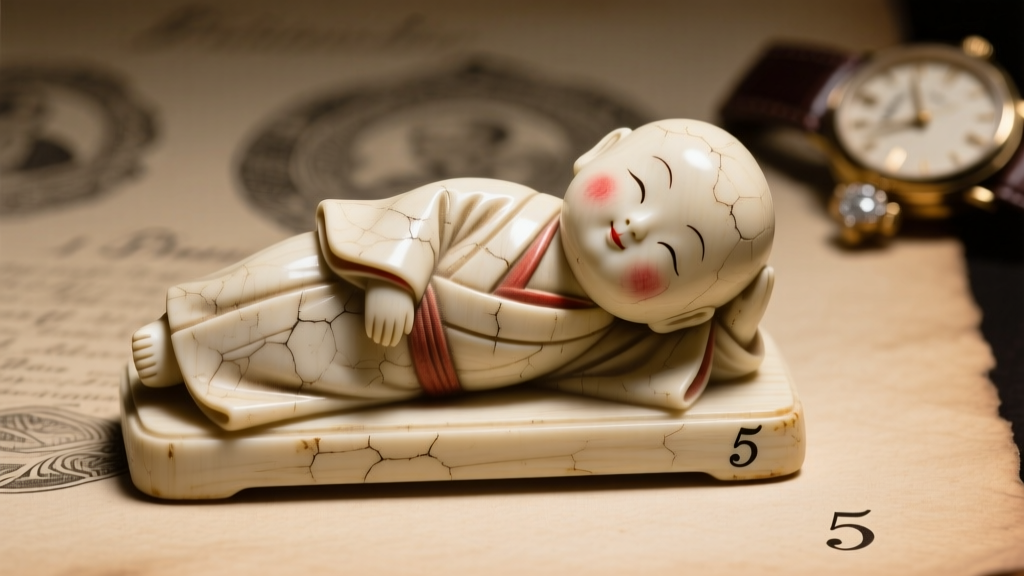
Ivory Cigarette Holder: Reclining Daruma Figure, Signed, 5 Inches — A Study in Meiji-Era Japanese Craftsmanship and Western Tobacco Culture
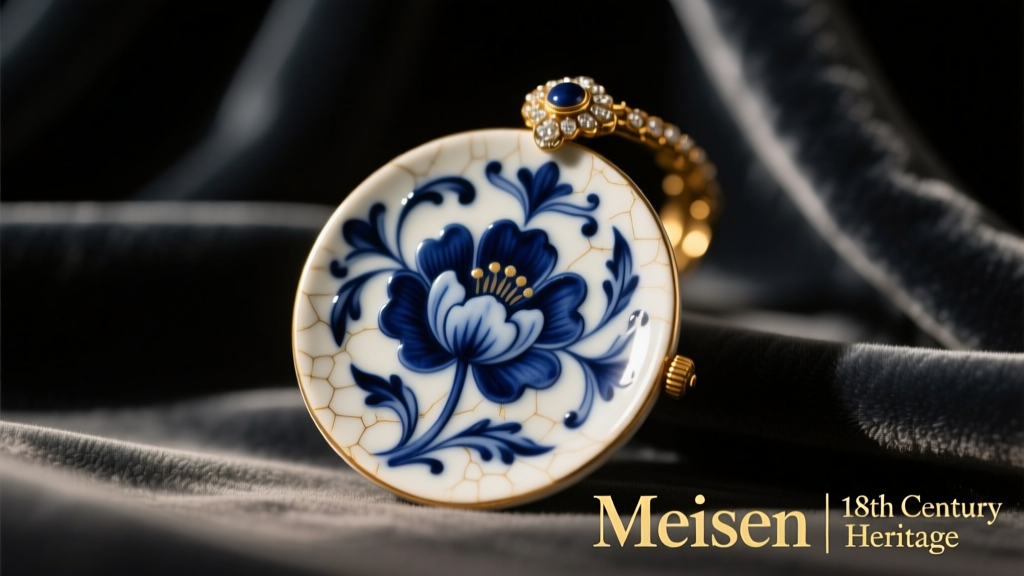
Meissen Salt Blue Flowers: Decoding the Iconic Dark Blue 3-Inch Porcelain Salt Cellar
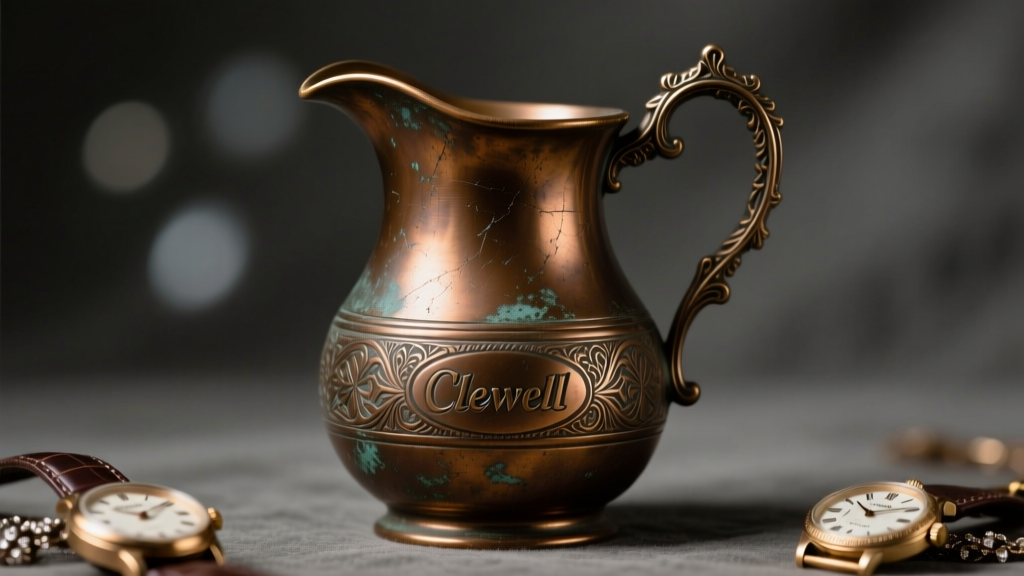
Clewell Pitcher Bronze Brown 6½-Inch Table Clock: A Study in American Art Deco Horology and Foundry Craftsmanship
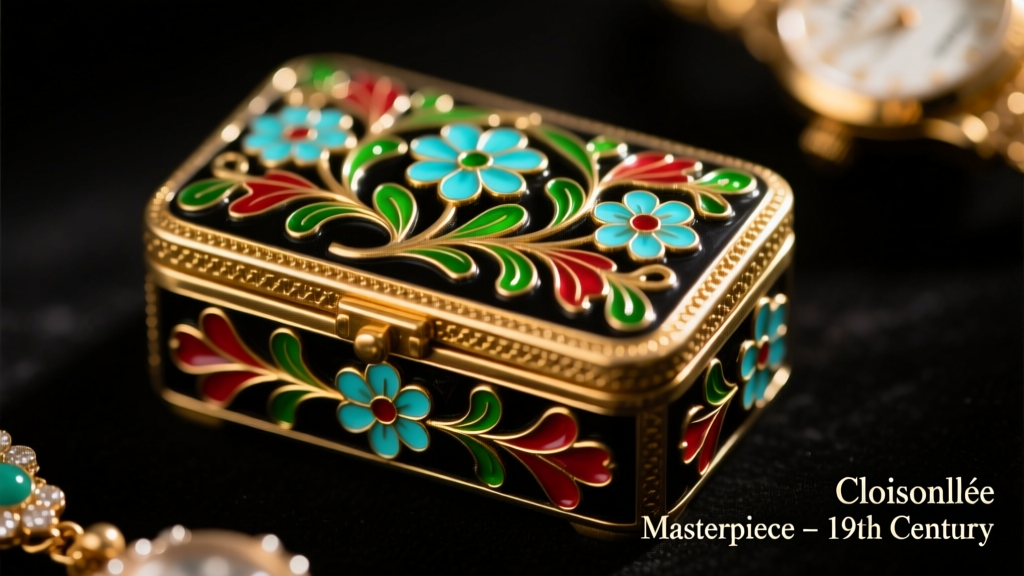
A Masterpiece of Qing Dynasty Cloisonné: The 4½-Inch Black-Ground Foliate Box with Allover Multicolored Decoration
Stoneware Jar: Canning Blue Design 'Orchard' — A 7½-Inch American Folk Pottery Treasure
Red Wing Flower Frog Seahorse: A Collector’s Guide to the Rare Ceramic Centerpiece
Bancoft Redfield Rice: The Forgotten American Watchmaker of the Gilded Age