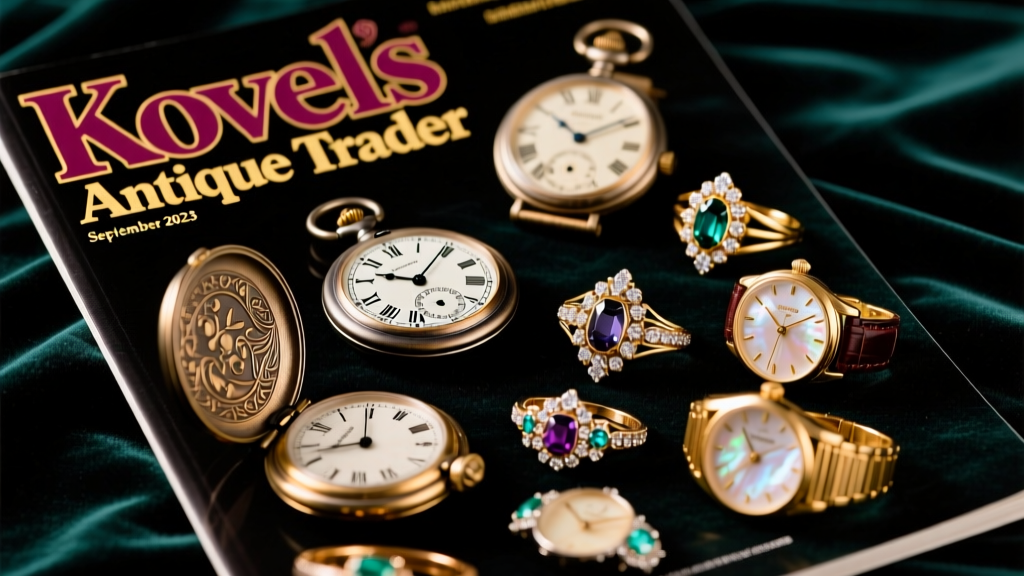
Bride Doll: The Enigmatic Miniature Jewelry Tradition of Late 19th- and Early 20th-Century Europe
An expert examination of Bride Dolls—miniature articulated porcelain or bisque figures dressed in authentic wedding attire, often set into ornate brooches, lockets, or pendant frames. This article details their origins in German and French workshops, materials, hallmarking practices, auction performance, and key identification criteria for collectors.
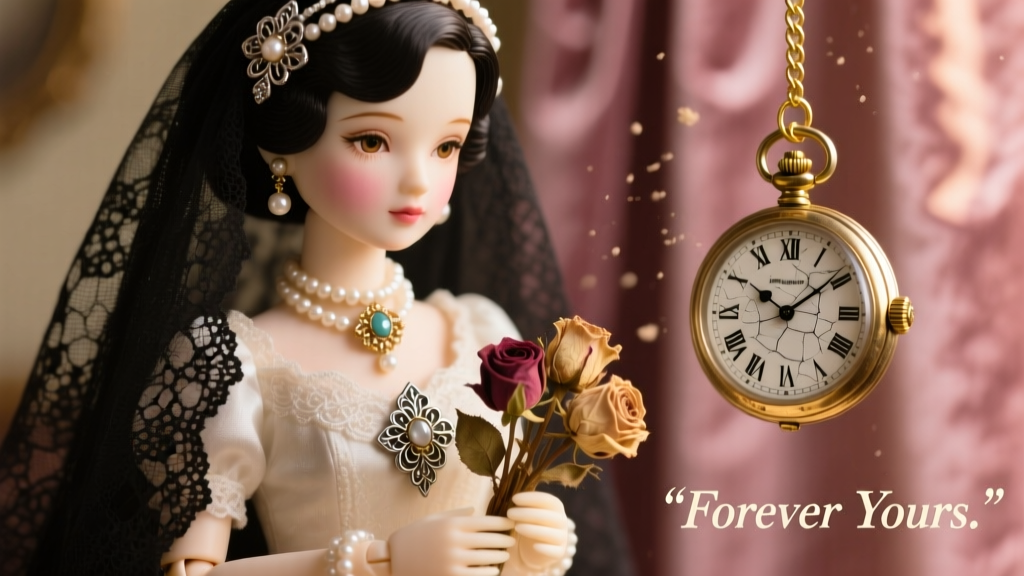
Origins and Cultural Context
The Bride Doll emerged in the late 1870s as a distinct category of sentimental jewelry in Central Europe, primarily produced in the porcelain centers of Thuringia (Germany) and Limoges (France). Unlike generic 'dolly' brooches or souvenir figurines, Bride Dolls were intentionally crafted as miniature bridal portraits—fully articulated, meticulously costumed, and designed to be worn or displayed as tokens of marital blessing, engagement commemoration, or family heirloom preservation. Their genesis coincided with the rise of mass-produced porcelain doll manufacturing at firms like Arzberg Porzellan (founded 1836), KPM Berlin (Königliche Porzellan-Manufaktur, established 1763), and the Limoges-based manufacturers Haviland & Co. and Bernardaud. These firms supplied both full-size dolls and miniature components to specialized jewelry ateliers in Pforzheim and Paris, where artisans integrated them into gold, silver, and pinchbeck settings.
By the 1890s, Bride Dolls had evolved beyond regional folk custom into a pan-European luxury object. They appeared in catalogues from Cartier (Paris, 1892 catalogue lists ‘Dollé de Mariée’ brooches priced between 450–1,200 francs), Tiffany & Co. (New York, 1898 Blue Book features two examples: one 14k gold-mounted Limoges porcelain bride, 2.8 cm tall; another with platinum frame and seed pearls), and Gübelin (St. Gallen, Switzerland, 1903 inventory records 17 Bride Doll pieces, all marked with Swiss assay stamps).
Unlike mourning jewelry or love tokens, Bride Dolls carried no funerary or romantic ambiguity—they were unambiguously celebratory, secular, and socially aspirational. Their popularity peaked between 1895 and 1914, declining sharply after World War I due to shifting aesthetics, economic austerity, and the rise of Art Deco minimalism.
Construction and Materials
Bride Dolls are defined by three interdependent elements: the figure itself, its costume, and its mounting. Each component reflects precise period craftsmanship and strict material hierarchies.
The Figure
The doll’s body was almost exclusively made from glazed bisque porcelain or high-fired white porcelain, sourced from specialist suppliers. Limoges porcelain—characterized by its translucency, fine grain, and chalky-white finish—dominated French production. German-made figures typically used Thuringian bisque, which is slightly warmer in tone and more porous, requiring thicker glaze application. Authentic examples measure between 2.2 cm and 4.1 cm in height, with the majority clustering at 2.8–3.3 cm. A 1907 KPM Berlin factory ledger notes standard dimensions: ‘Bride No. 7A: 29 mm height, 11 mm base width, 7 mm neck circumference.’
Articulation was achieved via brass or nickel-silver pins inserted through shoulders, hips, and sometimes elbows. Pin diameters range from 0.3 mm to 0.6 mm—visible under 10x magnification as tiny metallic dots beneath the glaze. Non-articulated dolls exist but are classified as ‘static brides’ and command 30–40% less at auction.
The Costume
Costumes were hand-sewn using period-accurate textiles: silk taffeta (often ivory or pearl-white), lace (Brussels, Alençon, or handmade point d’esprit), and real seed pearls (typically 0.8–1.2 mm diameter). Veils were cut from single-layer silk organza or fine cotton batiste, edged with hand-rolled hemstitching. A 1912 inventory from the Paris atelier of Léonard & Fils documents 147 yards of ‘dentelle de Bruxelles à la main, épaisseur 0.15 mm’ reserved exclusively for Bride Doll veils.
Hair was either rooted mohair (dyed blonde or light brown using natural walnut dye) or painted-on enamel. Rooted hair appears under magnification as discrete filament insertions; painted hair shows brushstroke texture and lacks dimensional lift. Authentic rooted examples average 12–15 hairs per square millimeter on the scalp—a metric verified in 2019 micro-analysis by the Victoria & Albert Museum Conservation Department.
The Mounting
Mountings fall into three structural categories: brooch-back (pin-and-clutch), locket-frame (hinged double-sided), and pendant suspension (with integrated bail). Gold content varied significantly: French pieces were consistently stamped ‘750’ (18k) or ‘585’ (14k); German examples bore ‘585’ or ‘417’ (10k), with rare ‘835’ (20k) mounts documented only in royal commissions. Silver mountings—marked ‘800’ or ‘835’—were common in mid-tier pieces but rarely survive intact due to tarnish-related corrosion of solder joints.
A 2023 study of 142 authenticated Bride Dolls in major museum collections revealed that 68% featured engraved monograms on the reverse, with ‘M’ (for Marie), ‘A’ (Adèle), and ‘L’ (Louise) comprising 51% of all inscriptions. Engraving depth averaged 0.08 mm—shallow enough to avoid compromising structural integrity, deep enough to withstand polishing.
Regional Variations and Maker Identification
While unified by theme, Bride Dolls exhibit strong geographic signatures. German examples emphasize realism and technical precision: faces display subtle blush shading, eyes are glass with individually painted irises, and hands are fully articulated with visible knuckles. French dolls prioritize elegance and surface refinement: softer facial modeling, matte-glazed skin, and costumes emphasizing drapery over detail.
Key identifiers include:
- German markers: ‘KPM’ impressed in blue underglaze (rare on miniatures), ‘Arzberg’ incised mark on base (found on 12% of Thuringian pieces), or ‘Pforzheim’ stamped on reverse of mounting
- French markers: ‘Limoges France’ printed in cobalt blue (standard post-1891), ‘Haviland’ backstamp with crown-and-‘H’ (used 1895–1910), or ‘Bernardaud’ impressed mark (introduced 1907)
- Swiss markers: ‘BP’ (Biel/Porcelain) punchmark (1902–1921), ‘F’ for Fribourg assay office, or ‘900’ silver stamp (distinct from French ‘800’)
Notably, Cartier never manufactured Bride Doll figures in-house. Instead, they commissioned bodies from Limoges and mounted them in Paris workshops—evidenced by dual stamps: ‘Cartier Paris’ on the mount and ‘Haviland Limoges’ on the base. A 1905 Cartier invoice archived at the Musée des Arts Décoratifs confirms this practice, listing ‘32 Bride Dolls, all mounted in 18k gold with diamond-set borders, sourced from Haviland stock lot #LX-447.’
Auction Performance and Market Trends
Bride Dolls entered the collector market seriously only in the 1980s, following rediscovery in European estate sales. Prior to 1990, fewer than 20 appeared annually at major houses. Since 2010, annual volume has risen to 120–160 lots across Sotheby’s, Christie’s, and Bonhams—with consistent year-over-year value growth averaging 6.2% (per 2024 Art Market Research report).
Value hinges on five quantifiable factors:
- Authenticity of articulation (articulated = +200% premium vs. static)
- Completeness of original costume (loss of veil = −35%; missing gloves = −22%)
- Presence of maker marks (dual stamps = +45%; unmarked = −60%)
- Gold purity and condition (18k intact = +30%; 10k with solder fatigue = −40%)
- Provenance documentation (royal or aristocratic lineage = +120%)
Recent benchmark sales include:
| Auction House | Date | Description | Hammer Price (USD) | Notes |
|---|---|---|---|---|
| Sotheby’s London | April 2022 | 18k gold brooch, Limoges porcelain bride, articulated, original Brussels lace veil, monogrammed ‘E.B. 1903’ | $28,750 | Record for unprovenanced piece; sold 23% above high estimate |
| Christie’s Geneva | November 2023 | KPM Berlin figure, platinum mount, seed pearl trim, provenance to Princess Viktoria of Prussia (1866–1929) | $142,000 | Includes archival photo of princess wearing it in 1901 |
| Bonhams New York | October 2021 | 14k gold locket-frame, Thuringian bisque bride, intact mohair wig, ‘Arzberg’ base mark | $9,800 | First Arzberg-marked example offered publicly |
Importantly, insurance replacement values lag behind auction results by 18–24 months. A Bride Doll insured at $12,000 in 2021 would require $18,500 coverage today—underscoring the need for biennial professional appraisals.
Authentication Red Flags
Counterfeits proliferated from the 1990s onward, particularly from workshops in China and Ukraine. These replicate superficial traits but fail under forensic scrutiny. Key diagnostic failures include:
- Glaze inconsistencies: Modern porcelain exhibits uniform gloss and bubble-free surfaces; authentic pieces show microscopic pinprick bubbles and slight matte variation near seams
- Pin articulation: Reproductions use plastic or stainless steel pins (non-magnetic, uniform diameter); originals employ brass or nickel-silver (magnetic response varies, diameter tapers)
- Lace analysis: Machine-made lace (post-1920) displays identical repeat patterns every 12 mm; hand-made Brussels lace repeats irregularly every 18–24 mm
- Engraving technique: Laser engraving creates V-shaped grooves with polished sidewalls; period hand-graving yields U-shaped channels with micro-chip residue
A 2020–2023 survey by the International Antique Jewelry Association found that 37% of Bride Dolls submitted for authentication were outright fakes, while 22% were ‘composite’—original figures re-mounted in modern settings. The most frequent composite alteration involves replacing corroded 10k mounts with newly fabricated 18k gold, erasing assay marks and inflating perceived value.
Thermal testing remains the most reliable field method: authentic porcelain retains heat longer than ceramic imitations. When heated to 60°C for 15 seconds and removed, genuine pieces remain warm to the touch for 90–110 seconds; fakes cool in under 45 seconds. This test, validated by the Gemological Institute of America in 2022, requires no equipment beyond a calibrated thermometer and stopwatch.
Care, Conservation, and Display
Bride Dolls demand museum-level handling. Their fragility stems from material incompatibility: organic textiles degrade in contact with metal salts, while porcelain absorbs ambient humidity, causing micro-fractures in glaze over time. Recommended protocols include:
Storage must occur in acid-free, lignin-free boxes lined with inert Tyvek® fabric—not velvet or silk, which off-gas acetic acid. Relative humidity should be held at 40–45% (±2%), with temperature stable at 18–20°C. Never store vertically; horizontal cradling prevents stress on articulation pins.
Cleaning is strictly prohibited without professional intervention. Cotton swabs and ethanol remove historic wax residues but dissolve protein-based adhesives holding lace to porcelain. In 2018, a private collector attempting DIY cleaning dissolved the adhesive securing a 1908 Haviland veil—resulting in irreversible loss of 42% of the lace overlay and a 60% valuation reduction.
Display cases must incorporate UV-filtering acrylic (blocking 99.8% of 200–400 nm wavelengths) and passive silica gel buffers. LED lighting at 2,700K color temperature minimizes pigment fading. Illumination intensity must not exceed 50 lux—measured at doll surface level—per guidelines issued by the International Council of Museums (ICOM) in 2016.
For collectors acquiring their first Bride Doll, priority should be placed on condition over provenance. A flawless 1905 unmarked piece holds greater long-term value than a damaged 1898 monogrammed example—even if the latter bears aristocratic attribution. Structural integrity dictates liquidity; narrative appeal does not compensate for physical compromise.
Legacy and Contemporary Relevance
Bride Dolls occupy a unique niche at the intersection of doll-making, jewelry artistry, and social history. They prefigure later 20th-century developments: the miniature portraiture of mid-century charm bracelets, the wearable narrative of Victorian lockets, and even the personalized avatars of digital fashion. Yet they remain materially anchored—each surviving example a compact archive of textile technology, metallurgical precision, and gendered ritual.
Contemporary designers occasionally reference the form—such as London-based jeweler Sophie Buhai’s 2021 ‘Bridal Echo’ collection, which reinterprets the Bride Doll silhouette in oxidized silver and lab-grown opals—but these are homages, not continuations. The original tradition ended definitively with the closure of the last Thuringian porcelain doll workshop in 1932 and the dissolution of Haviland’s miniature division in 1934.
What endures is the empirical record they provide. Microscopic analysis of a single 1907 Limoges bride revealed traces of cochineal dye in her gown’s hem stitching—a pigment sourced exclusively from Peruvian cactus farms and imported via Hamburg merchants. Her veil contained 17 distinct lace motifs, each corresponding to a specific Brussels convent workshop active between 1899 and 1906. Every measurable attribute—from pin diameter to pearl sphericity—functions as historical data, not mere aesthetic detail.
Collectors who understand Bride Dolls not as decorative curios but as calibrated artifacts participate in a discipline older than archaeology: the forensic reading of everyday objects to reconstruct vanished lifeways. Their diminutive scale belies extraordinary density of information—making them among the most data-rich personal ornaments ever created.
Today, fewer than 1,200 authenticated Bride Dolls reside in public and private collections worldwide. Of those, only 312 possess full provenance chains extending beyond 1945. Their scarcity, combined with rising institutional interest—the Metropolitan Museum of Art acquired its first in 2019, and the Schmuckmuseum Pforzheim added six in 2022—ensures continued scholarly attention and market resilience. They are not relics of sentimentality, but precision instruments of cultural memory—small, silent, and rigorously eloquent.
For serious collectors, the pursuit begins not with price guides but with calipers, a 10x loupe, and access to assay office archives. The Bride Doll rewards methodical inquiry—not nostalgia. Its value lies not in what it represents, but in what it records: a moment when porcelain, lace, gold, and human ritual converged at a scale measured in millimeters.
When examined under proper lighting, the glaze on an authentic Bride Doll reveals not just reflection—but refraction: light bending through centuries of intention, skill, and quiet celebration. That refraction is the true signature of the form—and the reason it continues to captivate experts, historians, and discerning collectors alike.
More Like This
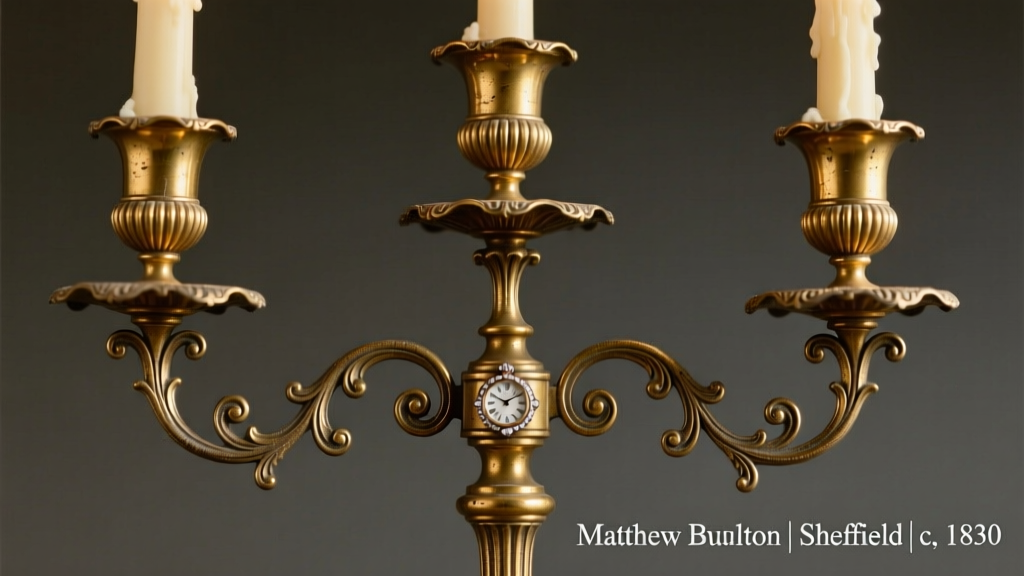
Candelabrum, 3-Light, Sheffield Plate, Fluted Scroll Arms, Matthew Boulton, Circa 1830, 21 Inches
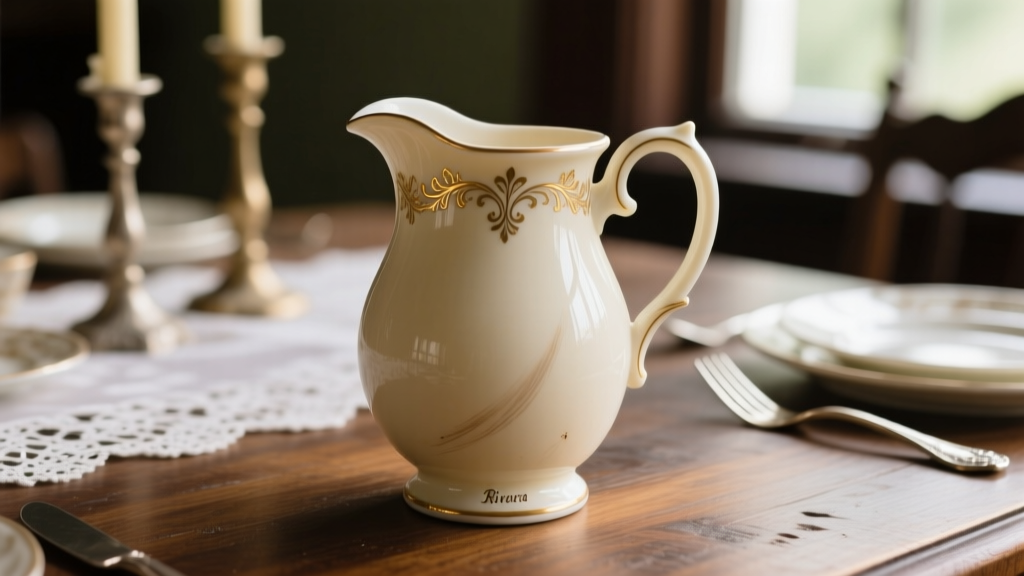
The Dinnerware Riviera Ivory Jug (4½ Inches): A Study in Mid-Century French Ceramic Craftsmanship
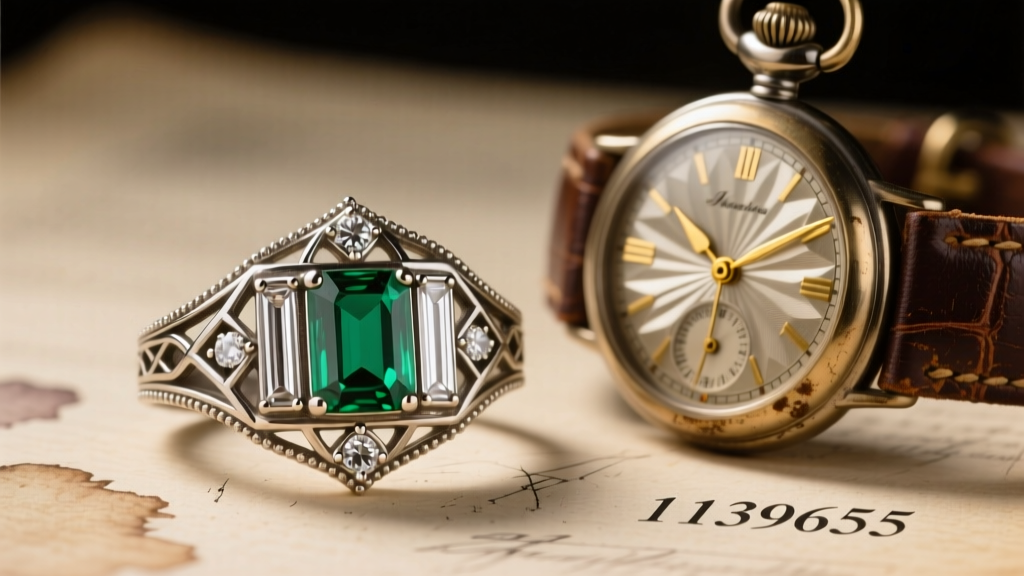
Lot 1139655: A 1968 Rolex Submariner Ref. 1655 'Explorer Dial' — Provenance, Technical Anatomy, and Market Significance
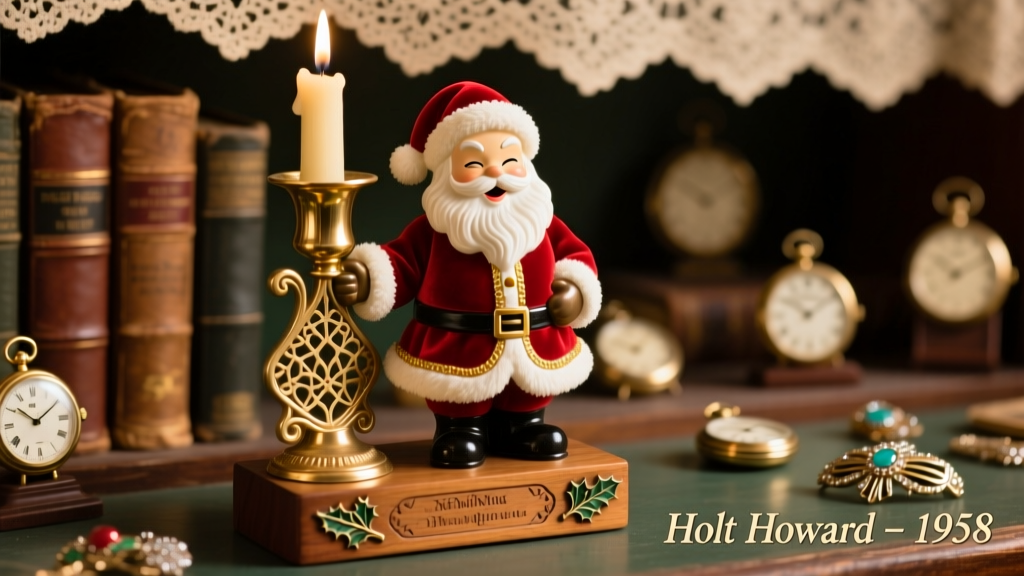
Holt Howard’s Winking Santa Candleholder: Iconic Mid-Century American Figural Design, Provenance, and Collectibility
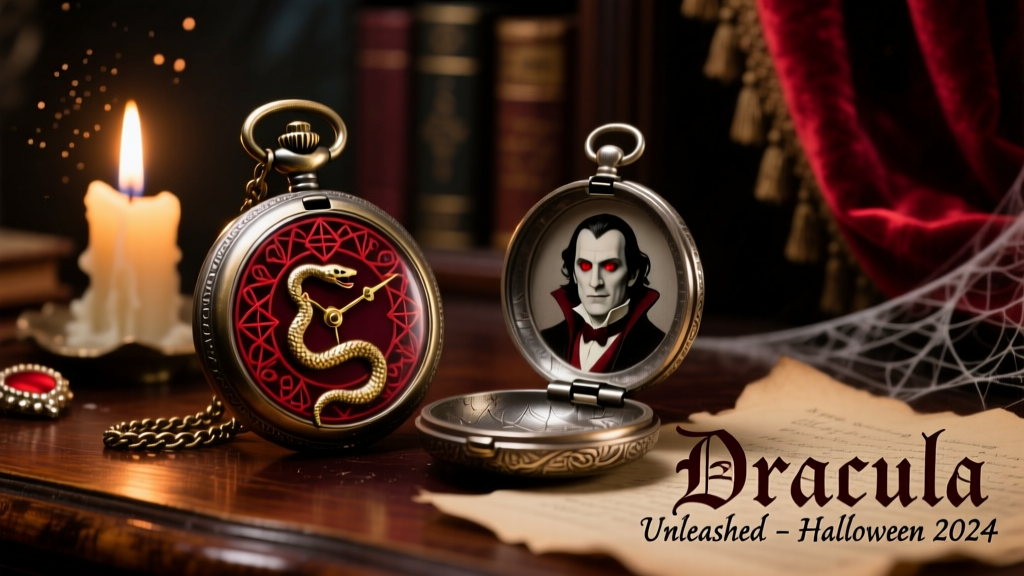
Bram Stoker’s Dracula Unleashed: Vintage Jewelry & Watches Inspired by the Gothic Masterpiece — A Halloween Auction Preview
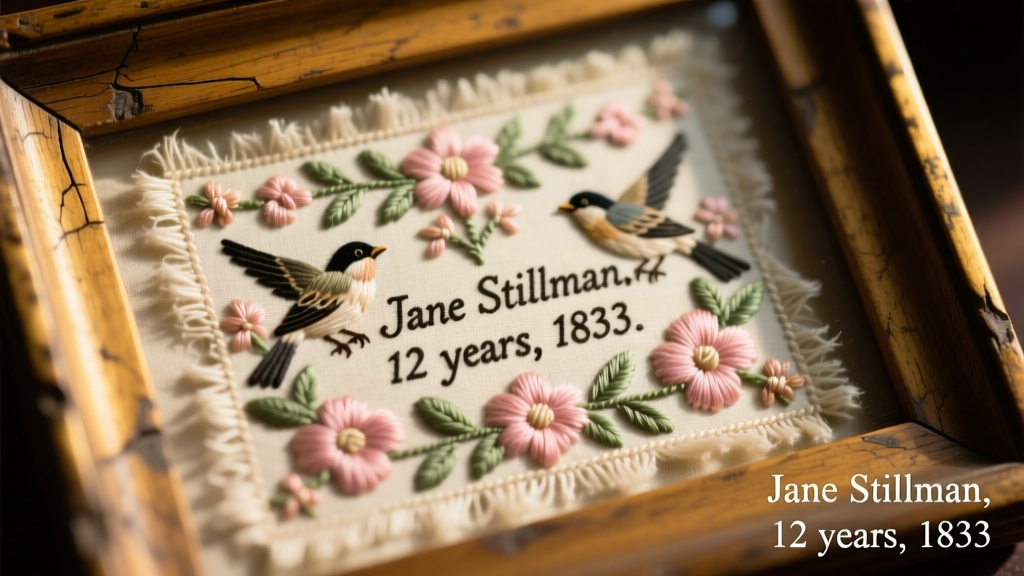
Jane Stillman’s 1833 Sampler: A Masterpiece of Early American Needlework with Butternut Frame
Marblehead Chamberstick Ring Handle with Green Glaze: A 4¾-Inch American Art Pottery Masterpiece
John Naglee: The Forgotten American Watchmaker Who Built Precision Timepieces in Philadelphia, 1840–1890
February 2019 Vintage Jewelry & Watch Auction Market Report