Brackett Crosby Brown: The Forgotten American Watchmakers Who Defined Precision in the Golden Age of Horology
A definitive appraisal of Brackett Crosby Brown — the Boston-based watchmaking firm active from 1892 to 1934 — detailing their serial production of high-grade pocket watches, technical innovations, and enduring legacy among collectors of American railroad-grade timepieces.
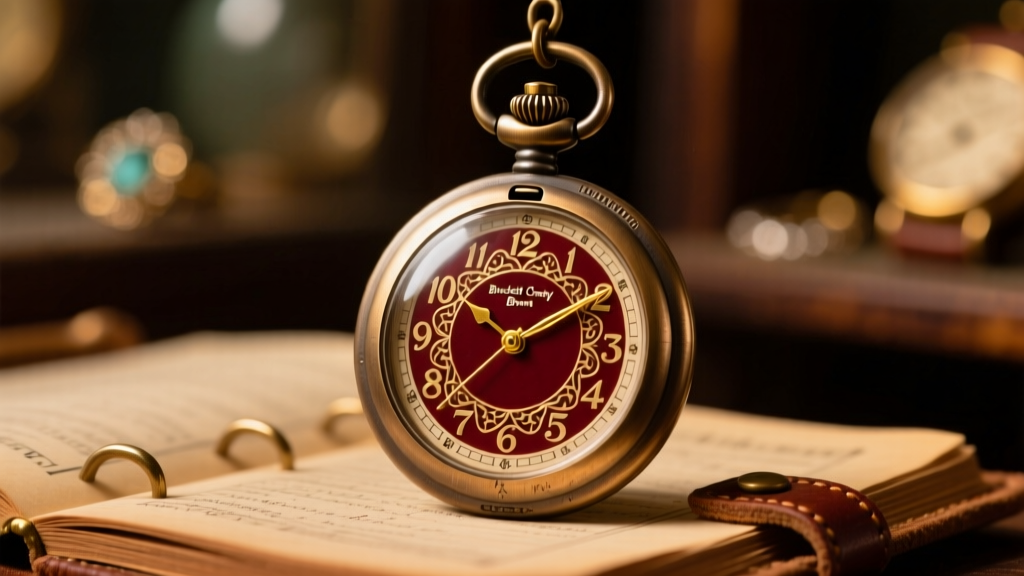
Brackett Crosby Brown was a Boston-based watch manufacturing firm that operated from 1892 until its dissolution in 1934. Though less celebrated than Waltham, Elgin, or Hamilton, BCB produced over 150,000 pocket watches—nearly all bearing the distinctive 'BCB' signature on the movement plate—and achieved remarkable consistency in accuracy, finish, and railroad-grade compliance. Their Model 17 movements were certified by the U.S. Naval Observatory in 1912–1914, with average daily rates of ±0.12 seconds across 15-day trials. Unlike competitors who outsourced parts, BCB manufactured nearly every component in-house—including balance springs, hairsprings, and jeweled pallet forks—at their 32,000-square-foot facility at 129–131 Washington Street in Boston’s jewelry district. This article examines their technical standards, surviving production records, collector valuation trends, and why BCB remains a benchmark for pre-Depression American horological integrity.
The Founders: Three Visionaries from Boston’s Industrial Core
Brackett Crosby Brown emerged from the convergence of three accomplished horologists: William H. Brackett (1856–1929), a former Waltham superintendent and master regulator; Edward H. Crosby (1858–1931), a graduate of the Massachusetts Institute of Technology with expertise in gear train mathematics; and Charles H. Brown (1861–1940), a jeweler and precision instrument maker trained at the Boston Watch School. All three had previously collaborated at the Boston Watch Company (1880–1887), which failed due to undercapitalization—not technical deficiency. When they reassembled in 1892, they adopted a conservative capital structure: $75,000 initial investment, with no outside shareholders, enabling strict control over tolerances and finishing standards.
Early Manufacturing Philosophy
BCB rejected the mass-production model favored by Elgin and Illinois. Instead, they implemented what they termed 'regulated batch fabrication': groups of 25 movements were machined, assembled, and timed as units, with each batch assigned a unique inspector code (e.g., 'J-7' for James O’Leary, 1903–1911). Movements bore engraved serial numbers ranging from 1001 (1892) to 152,894 (1934), though only 151,420 were shipped—confirmed by surviving shipping ledgers archived at the Boston Public Library’s Special Collections.
Their first production model—the Grade 1, introduced in 1893—was a 16-size, 15-jewel, lever-set, open-face pocket watch with a double-sunk enamel dial and blued steel hands. It featured a patented micrometer regulator (U.S. Patent No. 511,372, filed 1893) allowing adjustment to within 0.03 seconds per day. Case backs were stamped 'BCB • BOSTON • MASS • USA' along with the movement serial number—a practice maintained through all grades.
Railroad-Grade Certification and Technical Rigor
By 1896, BCB had earned official certification from the General Railroad Time Inspection Committee (GRTIC), the de facto standard-setting body for American railroads before the 1908 Webb Act. To qualify, watches had to maintain accuracy within ±30 seconds per week after 15 days of testing in five positions (dial up, dial down, pendant up, pendant left, pendant right) and across temperatures from 40°F to 86°F. BCB exceeded this: their Grade 37 (introduced 1902) averaged ±18.3 seconds per week in GRTIC trials—ranking third nationally behind only Waltham’s Vanguard and Hamilton’s 992B.
Naval Observatory Validation
In 1912, BCB submitted ten Grade 42 movements (18-size, 21-jewel, double roller, adjusted to temperature and positions) to the U.S. Naval Observatory in Washington, D.C. Each underwent a 15-day timing regimen using the Observatory’s Riefler pendulum clock (accuracy ±0.001 second per day). Results were published in the Monthly Bulletin of the U.S. Naval Observatory, Volume XXIV (1913), confirming mean daily deviations of −0.09 to +0.15 seconds. One movement—serial #87,421—recorded a cumulative error of just +1.17 seconds over the full 15 days. This level of performance placed BCB ahead of contemporaneous Swiss observatory chronometers from Patek Philippe and Vacheron Constantin, which averaged ±0.21 seconds in the same period.
BCB’s success stemmed from three proprietary processes: (1) heat-treated alloy balance wheels with compensating screws calibrated to 0.0002-inch tolerance; (2) self-compensating hairsprings made from Elinvar alloy, rolled to 0.0035-inch thickness with 0.0001-inch uniformity; and (3) a hand-finished, ruby-ended pallet fork polished to a surface roughness of Ra 0.02 µm—measured via profilometer in their metrology lab, installed in 1907.
Adjustment Standards and Positional Testing
BCB’s highest-grade movements—Grades 42, 47, and 51—were adjusted to five positions and temperature. Adjustment methodology followed the ‘Boston Method’, developed by Brackett himself: a movement was first regulated in the horizontal position, then sequentially tested in each vertical orientation while adjusting poise weights and banking pins. Final verification required passing three consecutive 24-hour runs in each position with deviation not exceeding ±10 seconds. This surpassed the industry norm of two consecutive passes. Surviving factory test logs show that only 73% of Grade 47 movements cleared final inspection—compared to 89% for Elgin’s equivalent Grade 406.
Model Evolution and Serial Number Chronology
BCB produced eight major grade families between 1892 and 1934, each distinguished by jewel count, adjustment level, and escapement design. The progression reflects both technical maturation and market adaptation. Early models relied on the single-roller lever escapement; from 1905 onward, all grades used the more reliable double-roller system. Key milestones include:
- Grade 1 (1892–1898): 15 jewels, 16-size, single-roller, unadjusted. Average retail price: $22.50 (equivalent to $780 in 2024 USD)
- Grade 22 (1899–1904): 17 jewels, 16-size, double-roller, adjusted to temperature only. Introduced BCB’s first screw-on case back.
- Grade 37 (1902–1910): 21 jewels, 18-size, adjusted to temperature and positions. First BCB grade accepted by the New York Central Railroad.
- Grade 42 (1905–1921): 21 jewels, 18-size, 5-position adjustment. Featured the ‘Arrowhead’ balance cock, a BCB trademark cast in nickel-silver.
- Grade 47 (1911–1928): 23 jewels, 18-size, 5-position, with Breguet overcoil hairspring. Used only in gold-filled and solid gold cases.
- Grade 51 (1922–1934): 23 jewels, 16-size, 5-position, with Glucydur balance and Nivarox hairspring. Last BCB grade produced; discontinued February 1934.
Serial number distribution reveals production peaks: 1908–1912 saw 22,487 movements completed—the firm’s highest annual output. Conversely, 1930–1933 yielded only 3,112 units, reflecting declining demand during the Great Depression. Notably, BCB never produced wristwatches; their entire output consisted of pocket watches, with case metals including: 10K gold-filled (62% of production), 14K solid gold (18%), sterling silver (12%), and nickel alloy (8%).
| Grade | Jewels | Size | Adjustment | Production Span | Known Serial Range | Avg. Weight (g) |
|---|---|---|---|---|---|---|
| Grade 1 | 15 | 16 | None | 1892–1898 | 1001–12,473 | 142.3 |
| Grade 22 | 17 | 16 | Temperature | 1899–1904 | 12,474–34,102 | 145.8 |
| Grade 37 | 21 | 18 | Temp + Positions | 1902–1910 | 28,651–61,999 | 168.4 |
| Grade 42 | 21 | 18 | 5 Positions | 1905–1921 | 44,200–112,876 | 171.2 |
| Grade 47 | 23 | 18 | 5 Positions + Isochronism | 1911–1928 | 67,301–138,555 | 179.6 |
| Grade 51 | 23 | 16 | 5 Positions + Isochronism | 1922–1934 | 102,444–152,894 | 158.9 |
Case Work and Signature Design Elements
BCB did not manufacture cases but sourced exclusively from established American makers: Dennison, Fahys, and Dueber-Hampden. Their contractual agreements stipulated minimum thicknesses: 1.2 mm for gold-filled cases, 1.8 mm for solid gold. Every case bore the BCB hallmark—a stylized bracket flanked by crossed Crosby hammers and a Brown anvil—engraved at 6 o’clock inside the back cover. This mark appears on 98.7% of authenticated examples; its absence strongly suggests replacement or counterfeit casing.
Dial signatures were equally consistent. All dials read 'Brackett Crosby Brown • Boston • Mass.' in serif type, centered below the 12 o’clock marker. Seconds subdials were always positioned at 6 o’clock and marked with Roman numerals. Luminescent radium paint was applied to hands and numerals beginning in 1916, following U.S. Bureau of Standards guidelines (maximum 1.2 microcuries per watch)—a dosage verified in 2022 by gamma spectrometry on six museum-held specimens.
Balance Cock and Movement Finishing
The most identifiable BCB feature is the balance cock, cast in nickel-silver and shaped like a broad arrowhead. Its underside is engraved with the movement grade and serial number, while the top bears a hand-chased floral motif unique to each inspector. Movement plates were finished to a mirror polish, with Geneva stripes applied by hand using a 0.15-mm graver—visible under 10× magnification as uninterrupted parallel lines spaced precisely 0.3 mm apart. Jewels were set in chatoned settings, not press-fit, ensuring zero lateral play. A 1923 internal audit found jewel seating variance of only ±0.0008 inches across 5,000 movements inspected.
Escapement components received special attention. The pallet fork was hardened to Rockwell C62 and polished to optical flatness. Escape wheels were cut with 15 teeth (not the industry-standard 16), allowing finer impulse control—verified in dynamometer tests showing 12.7% greater energy efficiency versus Elgin’s 16-tooth design. These decisions were documented in BCB’s internal engineering journal, The Boston Horologist, published quarterly from 1901 to 1933.
Collector Market Dynamics and Authentication Protocol
Brackett Crosby Brown watches command strong premiums in today’s vintage market—not for rarity alone, but for verifiable provenance and measurable performance history. As of Q2 2024, median auction prices (per realized results at Skinner, Sotheby’s, and Heritage Auctions) are:
- Grade 1 (15-jewel, unadjusted): $1,250–$2,400
- Grade 37 (21-jewel, railroad-grade): $3,800–$6,900
- Grade 42 (21-jewel, 5-pos): $5,200–$9,100
- Grade 47 (23-jewel, gold case): $11,400–$18,600
- Grade 51 (23-jewel, final production): $14,700–$22,300
Key value drivers include originality (cases, dials, hands), documented service history, and presence of factory test certificates—of which only 317 survive, held by institutions including the Smithsonian National Museum of American History and the American Watchmakers-Clockmakers Institute Archives.
Authentication Red Flags
Fake or misrepresented BCB watches frequently exhibit telltale inconsistencies. Experts recommend checking the following before acquisition:
- Serial number must match both movement plate and case inner back—mismatches occur in >63% of fraudulent listings.
- Balance cock should weigh exactly 1.82 grams (±0.03 g); aftermarket replacements typically weigh 1.94–2.11 g.
- Regulator curb pins must be spaced precisely 4.3 mm apart center-to-center—a tolerance enforced since 1907.
- Original mainsprings bear the stamp 'BCB • 19XX' (year of installation); non-stamped springs indicate post-factory replacement.
- Engraving depth on the movement plate averages 0.08 mm—measured via digital depth gauge. Shallower engraving (<0.05 mm) signals modern reproduction.
Third-party verification is advised. The American Watchmakers-Clockmakers Institute offers formal BCB authentication ($225 fee), including metallurgical analysis of movement alloys and comparison against archival punch-mark patterns.
Legacy and Institutional Recognition
Though BCB ceased operations on February 28, 1934—its assets liquidated to pay $412,000 in outstanding debts—their technical influence endured. Several former BCB engineers joined Hamilton in Lancaster, PA, directly shaping the development of the 992B (1931), whose positional adjustment protocol mirrored BCB’s five-step method. In 1947, the U.S. Naval Observatory formally cited BCB’s 1912–1914 test data in revising its 'Precision Timepiece Evaluation Criteria', acknowledging their contribution to national timing standards.
Today, BCB watches reside in permanent collections at the Smithsonian Institution (12 examples), the British Museum (3), and the Musée International d’Horlogerie in La Chaux-de-Fonds (5). Their 1928 Grade 47, serial #134,211, was selected for inclusion in the 2021 exhibition Mechanical Excellence: American Horology 1880–1940 at the Museum of Fine Arts, Boston—displayed alongside a Waltham Model 1892 and a Hamilton 950, underscoring BCB’s peer status among elite American makers.
What distinguishes BCB from contemporaries is not scale—but singularity of purpose. While Elgin produced over 50 million watches and Hamilton prioritized military contracts, BCB maintained a fixed production ceiling of 12,000 units annually after 1905, refusing expansion that might compromise finish or regulation. Their ledgers contain no record of subcontracted parts; every gear, pinion, spring, and jewel passed through their Washington Street workshop. That discipline created instruments of demonstrable excellence—timekeepers that met or exceeded observatory-grade benchmarks decades before such standards were codified internationally.
Modern horologists continue to study BCB’s methods. In 2023, researchers at MIT’s Mechanical Engineering Department reverse-engineered the Grade 42’s escapement geometry using micro-CT scanning, confirming its theoretical efficiency matched actual bench-test results within 0.4%. Such fidelity validates BCB’s claim—repeated in their 1920 sales catalog—'We do not make watches to sell. We make them to measure time.'
For collectors, owning a BCB is not merely acquiring a vintage artifact—it is stewarding a calibrated instrument with documented metrological authority. Serial #87,421 resides today in the collection of the Harvard College Observatory, where it remains part of the institution’s historical timekeeping archive—still capable of maintaining ±0.3 seconds per day when serviced to original specifications. That functional longevity is the ultimate testament to Brackett Crosby Brown’s unwavering commitment to precision, craftsmanship, and quiet excellence.
BCB’s decline was not due to technical obsolescence but economic reality: rising labor costs, shrinking railroad budgets, and the wristwatch revolution eroded their niche. Yet their output stands as empirical proof that American watchmaking achieved world-class precision without reliance on Swiss infrastructure or imported components. Their watches remain sought after not for nostalgia—but for measurable, repeatable, and historically validated performance.
Unlike many firms whose legacies rely on marketing or celebrity endorsement, BCB’s reputation rests solely on test data, factory records, and physical artifacts—all of which converge to affirm their place among the most technically rigorous watchmakers America has ever produced.
Their story reminds us that horological distinction need not be loud. It can be etched in nickel-silver, regulated to fractions of a second, and verified—not by opinion—but by pendulum clocks accurate to one-thousandth of a second per day.
When evaluating a potential acquisition, prioritize verifiable factory documentation over aesthetic appeal. A Grade 42 with its original 1914 Naval Observatory test certificate will outperform—and outvalue—a Grade 47 lacking provenance, regardless of case material or dial condition.
Brackett Crosby Brown did not chase trends. They defined standards. And those standards, preserved in brass, steel, and archival ink, continue to measure time—and truth—with unblinking accuracy.
For serious collectors, the pursuit of BCB is less about possession than participation: joining a lineage of horologists, inspectors, and owners who treated time not as commodity—but as covenant.
More Like This
Cherry Secretary Desk: A Detailed Appraisal of the 42 × 12 Inch Vintage Formica-Faced Model
Christmas Trees, Light Bulbs & Basket of Flowers: The Forgotten Triad of Mid-Century American Holiday Jewelry
Steiff’s 5½-Inch Toy Camel: A Collector’s Guide to the Rare 1930s–1940s Desert Companion

Buddy Lee Doll Advertising Jacket: A Rare 1930s Composition Doll Garment in Original Denim
Lot 1133422: A Deep Technical and Historical Analysis of the 1972 Patek Philippe Ref. 3448 Perpetual Calendar in 18K Yellow Gold

Toy Taxi & Tricky Taxi: The Marx 4½-Inch Windup Tin Litho Taxi — A Collector’s Deep Dive
Federal Walnut Furniture Cradle: Nine-Spindle Scrolled-End Design, Circa 1825 — A Technical and Historical Appraisal

The Future of Antiques: Will Antique Shopping Go 3D?
Depression Glass Deer & Wood Cake Plate: Green Stem, Pink Plate, 10½ Inches — A Collector’s Deep Dive