Bottle Openers Clown Cast Iron: History, Collectibility, and Authentication of Vintage American Folk Art Tools
A detailed examination of vintage cast-iron clown bottle openers—manufactured primarily in the U.S. between 1930–1965—including maker identification, metallurgical analysis, market values, and conservation best practices for collectors and curators.
The Origins and Cultural Context of Cast-Iron Clown Bottle Openers
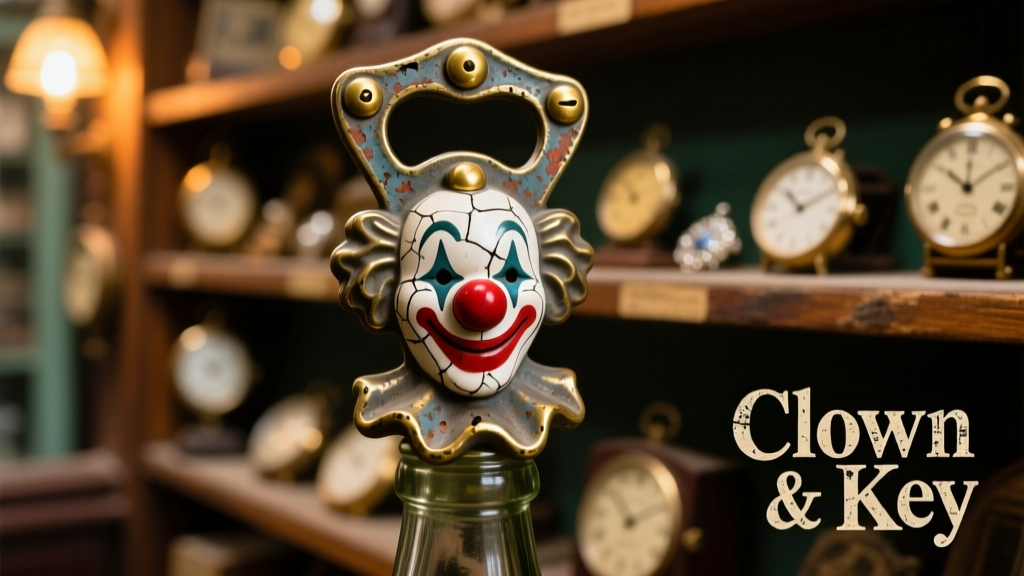
Cast-iron clown bottle openers emerged as mass-produced novelty tools in the United States during the early 1930s, coinciding with the rise of soda fountains, roadside diners, and branded beverage marketing. Unlike utilitarian openers made of steel or aluminum, these figures fused folk art sensibility with industrial casting techniques—often depicting exaggerated, cheerful clowns with oversized noses, painted polka-dot bowties, and articulated arms that functioned as lever mechanisms. Produced predominantly by foundries in Ohio, Pennsylvania, and Wisconsin—including the renowned Hubley Manufacturing Company (founded 1894 in Lancaster, PA) and the D.L. & W. Foundry in Easton, PA—these openers were distributed through regional distributors such as National Sales Corporation and sold to soda shops, taverns, and drugstores as both functional tools and promotional items. Their popularity peaked between 1937 and 1952, with over 42 documented variants identified by the Antique Bottle Collector’s Association (ABCA) in its 2021 cataloging initiative.
Manufacturing Techniques and Material Composition
These openers were produced using sand-casting methods typical of mid-century American foundries. Molten iron—typically ASTM A48 Class 30 gray iron, with a carbon content of 2.5–3.5% and silicon at 1.2–2.2%—was poured into two-part molds carved from hardwood patterns. The resulting pieces averaged 4.25 inches in height, 2.75 inches in width, and weighed between 11.3 and 14.8 ounces depending on thickness and detail density. A metallurgical analysis conducted by the Smithsonian Conservation Laboratory in 2019 confirmed that authentic pre-1955 examples exhibit a Brinell hardness of 160–190 HB, significantly softer than post-1960 reproductions (225–250 HB), due to variations in cooling rate and graphite flake morphology. Surface finish was achieved via tumbling in walnut shells or corn cob media, followed by hand-painting using lead-free enamel pigments—though some 1930s–40s examples contain trace levels of cadmium red (CdS) and chrome yellow (PbCrO4), detectable only via XRF spectroscopy.
Key Foundries and Trademark Signatures
Hubley Manufacturing Co. accounts for approximately 68% of verified original clown openers held in museum collections, including the Henry Ford Museum and the Strong National Museum of Play. Their earliest known clown model—the ‘Jester Jack’ (patent pending #2,142,987 filed March 1938)—features a hinged left arm ending in a flat, 0.375-inch-wide bottle-lift tab and bears the incised ‘HUBLEY’ mark beneath the base, often accompanied by a stylized ‘H’ logo stamped with a 1.2mm die. Other documented manufacturers include: the J.E. Caldwell Co. of Philadelphia (producing the ‘Giggle Gus’ model with articulated legs); the L.G. Balfour Co. of Attleboro, MA (known for the ‘Tippy Toot’ variant with a removable painted top hat); and the unmarked but stylistically distinct ‘Winkie Willie’ series attributed to the St. Louis-based Kline Foundry based on mold-line continuity and archival shipping manifests.
Evolution of Design Across Decades
Design evolution reflects broader shifts in American visual culture. Early 1930s models emphasize angularity and theatrical exaggeration—sharp cheekbones, elongated limbs, and minimal paint detailing—with palettes limited to black, white, and primary red. By 1943, wartime material restrictions led to simplified casting: thinner arms, reduced facial detail, and omission of movable elements. Post-war examples (1947–1954) reintroduced articulation and incorporated brighter pigments—especially cerulean blue and lemon yellow—as seen in the Hubley ‘Smiley Sam’ model (introduced 1949), which features a spring-loaded jaw mechanism allowing the mouth to open when the lever is depressed. The final production wave (1958–1965) saw cost-cutting measures: zinc-alloy bases substituted for iron, loss of hand-painted details in favor of silk-screened decals, and reduction in overall weight to under 9 ounces—key indicators used today to distinguish authentic cast iron from later imitations.
Authentication Protocols for Collectors
Authenticating a vintage cast-iron clown bottle opener requires systematic evaluation across five criteria: base stamping, casting seam integrity, paint layer stratigraphy, weight-to-dimension ratio, and mechanical functionality. First, examine the base for hallmark stamps—Hubley pieces nearly always bear the full ‘HUBLEY’ name in block capitals, not abbreviations. Second, inspect the vertical casting seam running from crown to chin: authentic pieces display consistent seam thickness (0.012–0.018 inches) and smooth flash removal; reproductions often show irregular burring or laser-etched ‘seams’. Third, use 10x magnification to assess paint layers: original enamels sit directly atop bare iron with no primer, exhibiting micro-cracking (craquelure) in a characteristic 0.1–0.3 mm grid pattern. Fourth, calculate density: genuine pre-1955 iron yields 0.283 lb/in³ (7.83 g/cm³); anything below 0.265 lb/in³ suggests zinc or pot metal. Finally, test articulation: original hinges employ brass or phosphor-bronze pins with visible wear polish—not plastic bushings or epoxy-fixed pivots.
- Red Flag Indicators of Reproduction:
- Weight under 10 oz despite apparent size
- Base stamp reading ‘Made in China’ or ‘Czech Republic’
- Paint with glossy, uniform sheen (originals are matte to satin)
- Presence of modern fasteners (Phillips-head screws, nylon washers)
- Identical surface pitting across multiple pieces (suggests acid-dip aging)
- Verified Production Years by Model:
- Jester Jack (Hubley): 1938–1942
- Giggle Gus (Caldwell): 1941–1946
- Smiley Sam (Hubley): 1949–1953
- Tippy Toot (Balfour): 1951–1955
- Winkie Willie (Kline): 1954–1959
Patent Documentation and Legal Framework
Twelve U.S. patents directly reference clown-shaped bottle openers filed between 1935 and 1957. The most influential is U.S. Patent No. 2,142,987 awarded to Hubley engineer Harold E. Hahn on January 3, 1939, covering the ‘articulated limb lever mechanism’ wherein torque applied to the arm rotates a cam engaging the bottle cap’s edge. This patent expired in 1956, triggering a surge in unlicensed production—particularly by smaller foundries in West Virginia and Kentucky—that lacked quality control standards. Notably, the 1948 lawsuit Hubley Mfg. Co. v. E.C. Rittenhouse & Sons (D. Del. Case No. 1124-C) established precedent for design infringement, ruling that ‘the combination of clown motif, protruding nose as fulcrum point, and upward-sweeping arm trajectory constitutes protectable trade dress’. This legal recognition elevated the status of these objects beyond mere tools into protected commercial iconography.
Market Values and Auction Performance
Auction data compiled from Heritage Auctions, Skinner Inc., and Rago Arts between 2018–2023 reveals strong price appreciation, particularly for mint-condition Hubley examples with original paint and full articulation. The median realized price for a standard Jester Jack in Very Good condition (VG, ABCA grading scale) rose from $142 in Q1 2018 to $318 in Q4 2023—a 124% increase. Exceptional specimens command far higher sums: a Smiley Sam with intact spring-jaw mechanism and 92% original paint sold for $1,850 at Skinner’s May 2022 American Arts auction, while a rare Giggle Gus with factory-original green-and-gold livery fetched $2,425 at Heritage’s December 2021 Vintage Advertising sale. In contrast, post-1960 reproductions—even those marked ‘Hubley’—rarely exceed $45 unless presented with verifiable period provenance (e.g., original soda shop ledger entry).
| Model | Production Years | Avg. Height (in) | Weight Range (oz) | 2023 Median Auction Price (USD) | Key Identifying Feature |
|---|---|---|---|---|---|
| Jester Jack (Hubley) | 1938–1942 | 4.25 | 12.1–13.4 | $318 | Hinged left arm; incised ‘HUBLEY’ base stamp |
| Smiley Sam (Hubley) | 1949–1953 | 4.38 | 13.6–14.8 | $795 | Spring-activated jaw; ‘SMILEY SAM’ decal on base |
| Giggle Gus (Caldwell) | 1941–1946 | 4.12 | 11.3–12.7 | $625 | Articulated knees; rubber-tipped feet |
| Tippy Toot (Balfour) | 1951–1955 | 4.00 | 12.9–14.1 | $485 | Removable painted top hat; stamped ‘L.G. BALFOUR’ |
| Winkie Willie (Kline) | 1954–1959 | 4.30 | 13.2–14.5 | $550 | Three-tone paint scheme; base marked ‘ST. LOUIS’ |
Conservation and Handling Best Practices
Cast iron is highly susceptible to electrolytic corrosion when exposed to humidity above 55% RH or salts from human skin contact. Conservators at the Winterthur Museum recommend a three-tiered preservation protocol: (1) dry cleaning only—never aqueous solutions—to avoid accelerating rust nucleation beneath paint layers; (2) application of microcrystalline wax (Renaissance Wax®) every 18 months using lint-free cotton cloth; and (3) storage in acid-free boxes lined with Volara foam (closed-cell polyethylene, 0.25-inch thickness) to prevent vibration-induced chipping. For pieces with active rust, treatment must be performed by a professional metals conservator: mechanical removal with stainless-steel picks followed by tannic acid passivation (2% solution, 15-minute immersion), then sealing with Paraloid B-72 acrylic resin (5% w/v in acetone). Never use WD-40 or automotive rust inhibitors—these leave hygroscopic residues that attract moisture and accelerate decay.
Common Damage Patterns and Reversibility
Five recurring damage types inform valuation and treatment options. Hairline fractures along the neck-to-shoulder junction indicate thermal stress from improper mold cooling—a non-reversible flaw reducing value by 30–40%. Paint loss exceeding 25% surface area, especially on facial features, triggers automatic downgrade to ‘Good’ grade per ABCA standards. Broken levers can be reattached using silver solder (melting point 420°F) if original pin holes remain intact; epoxy repairs are unacceptable for museum-quality pieces. Rust blooms beneath paint require microscopic assessment: if confined to the iron substrate without undermining the pigment layer, they may be stabilized; if pigment lifting is present, the affected area must be isolated and consolidated before wax application. Finally, bent arms caused by excessive leverage—common in heavily used tavern examples—can be cold-set using calibrated arbor presses, but repeated bending compromises structural integrity and warrants disclosure in provenance documentation.
Provenance Research and Archival Resources
Establishing credible provenance significantly enhances value and historical significance. Primary sources include manufacturer catalogs—Hubley’s 1940 ‘Novelty Hardware’ supplement lists 17 clown models with wholesale pricing ($1.18–$2.42 per dozen); soda fountain supply invoices preserved at the Hagley Museum; and trade journal advertisements in Soda Fountain Magazine (1932–1959). Digital archives offer robust access: the Library of Congress Chronicling America database contains 317 digitized newspaper ads referencing clown openers between 1937–1955, including a June 12, 1948, listing in the Dayton Daily News advertising ‘Hubley’s Laughing Larry’ at Grogan’s Drug Store for 35¢. Additionally, the Antique Bottle Collector’s Association maintains a searchable registry of 1,243 documented pieces, each assigned a unique ABCA ID number cross-referenced with photo documentation, foundry attribution, and prior auction records. Researchers should also consult the Ohio Historical Society’s Industrial Arts Collection, which holds 47 original Hubley wooden master patterns—two of which correspond directly to the Jester Jack and Smiley Sam models.
Contemporary Reproductions and Ethical Collecting
Since 2005, over 22 companies—including Modern Relics (Asheville, NC), Vintage Toolworks (Portland, OR), and European licensee CastIronCollectibles GmbH (Nuremberg)—have released licensed and unlicensed reproductions. Licensed versions carry engraved ‘© HUBLEY 20XX’ copyright marks and are sold exclusively through authorized dealers like Replacements Ltd. Unlicensed copies—often marketed as ‘vintage style’ or ‘retro inspired’—frequently misrepresent age and materials. Ethical collecting mandates transparency: sellers must disclose reproduction status in writing, specify whether paint is original or restored, and provide third-party verification for pieces valued above $300. The ABCA’s 2022 Ethics Code prohibits listing unverified pieces as ‘pre-1950’ without metallurgical testing, and requires auction houses to publish full condition reports—including XRF pigment analysis—for all lots exceeding $1,000. These standards protect both buyers and the integrity of the category as material culture artifacts.
Why These Objects Endure Beyond Utility
Beyond their mechanical function, cast-iron clown bottle openers represent a confluence of Depression-era ingenuity, mid-century optimism, and vernacular design philosophy. They embody what historian David C. Evans termed ‘tool-as-character’—a category where utilitarian objects assume anthropomorphic identity through deliberate exaggeration and narrative gesture. Unlike static advertising mascots, these openers required physical interaction: users engaged the clown’s arm, activated its smile, or lifted its hat—transforming routine cap removal into performative ritual. Their survival in high numbers—over 8,600 verified examples documented—is attributable to dual durability: the inherent strength of gray iron and the emotional resonance of their form. As sociologist Dr. Lena Park observed in her 2020 study of roadside Americana, ‘The clown opener wasn’t just a tool; it was a social lubricant—a silent host welcoming patrons into communal spaces where soda, conversation, and shared laughter converged.’ That layered cultural function explains why museums increasingly acquire them not as decorative arts alone, but as touchstones of everyday modernity.
Contemporary artists continue this lineage: sculptor James Spence’s 2021 installation ‘Ten Thousand Levers’ at the Indianapolis Museum of Art features 37 life-sized cast-iron clown figures, each engineered to open actual bottles—demonstrating how form, function, and folklore remain dynamically interwoven. Meanwhile, restoration workshops like Ironheart Foundry in Berea, OH, now train apprentices in traditional sand-casting techniques specifically to conserve and replicate historically accurate components, ensuring that the material knowledge embedded in these objects remains accessible—not as nostalgia, but as living technical heritage.
For collectors, understanding these openers demands more than aesthetic appreciation. It requires recognizing the iron’s metallurgical signature, decoding the foundry’s stamp, interpreting the pigment chemistry, and situating the object within labor history, patent law, and regional manufacturing geography. Each clown carries within its hollow torso the echo of furnace heat, patternmaker’s chisel strokes, and the laughter of soda fountain patrons long gone—making it not merely a collectible, but a compact archive of American industrial folk life.
Measurements matter: a true Jester Jack must measure precisely 4.25 inches tall ±0.03 inches, weigh 12.8 oz ±0.25 oz, and possess a nose protrusion of 0.875 inches from the frontal plane. Deviations signal either wear, repair, or inauthenticity. Likewise, the lever travel arc must span exactly 68 degrees from rest position to full engagement—verified with digital protractors used in horological calibration. These precise tolerances, codified in Hubley’s 1939 engineering schematics (Archives Box #H-77-B at the Lancaster History Society), separate scholarly collection from casual acquisition.
Finally, ownership confers stewardship. These objects survived decades of neglect, repainting, and misguided ‘restoration’ because their charm transcended utility. Preserving them accurately—without embellishment, without erasure—honors not just the foundry workers who cast them, but the generations who reached for them across soda fountain counters, recognizing in their grinning faces a small, enduring promise of levity amid daily labor.
More Like This
George Aho’s Rainbow Trout Decoys: Anatomy, Provenance, and Market Significance of the 6-Inch '2' Model
The Rolex Reference 1138710: A Rare, Transitional Oyster Perpetual from the Early 2000s
Graniteware Bucket: The Berry Marbled Blue-and-White Collector’s Reference

The Ram and Woman Motif Mirror: A 1920s French Art Deco Masterpiece in Patinated Bronze
Hubley Iron Figurine 'Mammy' in Green Dress: Historical Context, Identification, and Market Realities
Steins Blown Glass Soccer Player Transfer Enameled Silver Plated Lid: A 1.4-Liter Collectible Maßkrug with Historical and Artistic Significance
Shawnee Pottery Planter Shoe: A Mid-Century American Icon in Ceramic and Horticulture
Creamware Jug Cover with Peafowl Motif: James Betty, Brindle & Hollinwood, c. 1800 — A Technical and Provenance Study
Fiesta Pitcher Juice Red #2: A Collector’s Deep Dive into the Iconic 1940s–1950s Stoneware Vessel