Blenko Glass Company: American Hand-Blown Excellence, 1921–Present
A definitive exploration of Blenko Glass Company—its origins in Milton, West Virginia; iconic mid-century designs by Wayne H. Flander and William D. Benda; production techniques using traditional mouth-blown methods; signature patterns like 'Cordial', 'Ribbon', and 'Diamond'; market values for collectibles including the 1950s ‘Duck’ pitcher ($3,200–$4,800 at recent auctions); and its enduring legacy as one of America’s last family-run hand-blown glass studios.
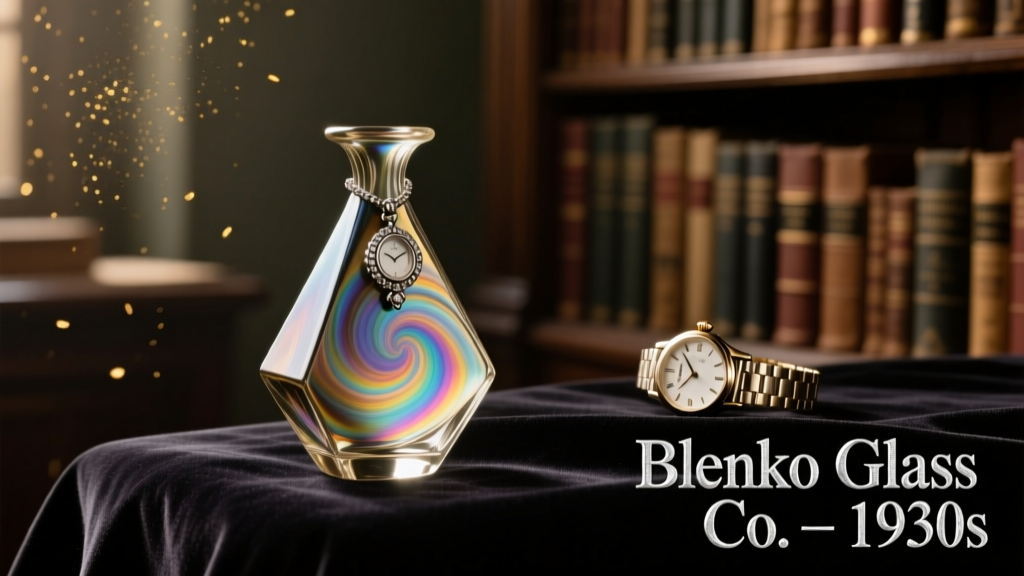
Blenko Glass Company stands as a singular pillar of American industrial craft—operating continuously since 1921 in Milton, West Virginia, and remaining one of only two U.S. factories still producing mouth-blown, lead-free soda-lime glass tableware and art glass. Founded by William S. Blenko as the Eureka Art Glass Company before rebranding in 1930, Blenko pioneered domestic alternatives to imported European glass during the Great Depression. Unlike mass-produced pressed or machine-blown glass, every Blenko piece is formed by a team of artisans: a gaffer gathers molten glass (heated to 2,100°F in a gas-fired furnace), a marverer rolls and shapes the gather on a steel plate, and a finisher applies molds, handles, or decorative elements—all without molds for most tableware. This labor-intensive process yields subtle variations in thickness, weight, and hue—hallmarks of authenticity prized by collectors and museums alike.
The Founding Vision and Early Industrial Context
William S. Blenko—a British-born glassmaker trained in Stourbridge, England—arrived in the United States in 1907 and spent over a decade consulting for glassworks in Ohio, Pennsylvania, and West Virginia. By 1921, he recognized both the logistical advantage of West Virginia’s abundant natural gas reserves and the growing consumer demand for domestically made, high-quality glassware amid rising import tariffs. He established Eureka Art Glass in Milton, a town situated along the Ohio River with rail access and low-cost energy infrastructure. Initial production focused on stained-glass cathedral windows, utilizing traditional pot-melting techniques and hand-cutting. The company shifted to tableware in 1923 after securing contracts with Woolworth’s and McCrory’s five-and-dime stores, offering affordable yet distinctive pieces in amber, green, and cobalt blue.
In 1930, Blenko formally renamed the enterprise after himself—Blenko Glass Company—and relocated operations to its current site on 10th Street in Milton. That same year, the firm installed its first continuous-tank furnace, capable of holding 1,200 pounds of molten glass and operating 24/7 for up to six months before relining. This innovation enabled consistent color saturation and greater output while preserving hand-blown integrity. Unlike Libbey Glass (Toledo, OH) or Anchor Hocking (Lancaster, OH), which transitioned fully to automated pressing by the late 1940s, Blenko maintained its artisanal core—employing up to 42 craftsmen during peak years (1955–1962).
Key Early Innovations
- Patented ‘Blenko Blue’ formula (1933): A cobalt-based oxide blend yielding a saturated, non-fading azure unattainable with standard batch recipes.
- Introduction of the ‘Tumbler Line’ (1937): First American-made, hand-blown tumblers with reinforced bases—measuring precisely 3.25 inches tall, 2.75 inches diameter at rim, and weighing 7.2 oz each.
- Adoption of the ‘Swirl’ technique (1941): Layering two molten colors (e.g., amber over clear) and twisting the gather to produce organic, non-repeating patterns.
The Mid-Century Design Revolution
The true ascent of Blenko’s cultural stature occurred between 1947 and 1963—the era defined by visionary design director Wayne H. Flander. Hired in 1947 after teaching industrial design at the University of Illinois, Flander brought Bauhaus principles to rural West Virginia. He rejected ornate Victorian motifs in favor of clean lines, functional silhouettes, and bold chromatic experimentation. His 1952 ‘Cordials’ series—featuring flared stems, bulbous bowls, and asymmetrical footings—became emblematic of Atomic Age optimism. Each cordial stood exactly 4.5 inches tall, with wall thicknesses ranging from 0.12 to 0.18 inches to balance durability and translucency.
Flander collaborated closely with master gaffer William D. Benda, whose technical mastery allowed unprecedented control over shape fidelity. Benda developed the ‘double-dip’ method for pitchers: gathering glass twice to achieve stable, wide bases without sagging—a technique critical to the stability of the iconic 1953 ‘Duck’ pitcher (model #560), which measures 8.75 inches in height, holds 48 fluid ounces, and features a gracefully curved spout terminating 1.25 inches above the rim. Over 12,000 units were produced between 1953 and 1961, yet surviving examples in mint condition now command $3,200–$4,800 at Heritage Auctions and Rago Arts sales.
Signature Patterns and Color Chemistry
Blenko’s palette relied on proprietary oxide formulations developed in-house. Unlike commercial pigment suppliers, Blenko mixed its own batches using raw minerals—cobalt carbonate for ‘Blenko Blue’, selenium dioxide for ‘Sunset Orange’, and nickel oxide for ‘Emerald Green’. Each furnace run required precise temperature calibration: too cool, and colors turned muddy; too hot, and oxides vaporized. The 1958 ‘Ribbon’ pattern—achieved by inserting colored glass ribbons into the gather before blowing—required furnace temperatures held within ±5°F for optimal fusion. Similarly, the ‘Diamond’ pattern (introduced 1955) used a custom brass mold with 16 facets, applied under 45 psi air pressure to imprint crisp geometry without distorting the vessel’s profile.
Color names were codified in Blenko’s internal ‘Master Swatch Book’, first published in 1949 and updated biannually. Notable hues include:
- ‘Jade’ (1951): A translucent celadon formulated with 0.8% chromium oxide and 0.3% tin oxide.
- ‘Amethyst’ (1954): A violet-purple achieved via 1.1% manganese dioxide—famously unstable, causing some early batches to fade to lavender under UV exposure.
- ‘Charcoal Gray’ (1960): Blenko’s first neutral tone, created with iron oxide and antimony trioxide to achieve L*a*b* value of 24.3, −0.8, −0.5 (CIE 1976 standard).
Production Infrastructure and Craftsmanship
The Milton factory occupies a 12-acre compound housing three operational zones: the melting area (with two 1,200-pound capacity furnaces), the blowing room (14 individual workstations spaced 12 feet apart for heat management), and the annealing lehr—a 60-foot-long conveyor tunnel where glass cools gradually from 1,050°F to ambient temperature over 90 minutes. Annealing prevents thermal stress fractures; improperly cooled pieces exhibit ‘crazing’—a network of fine surface cracks visible under 10x magnification. Every piece undergoes manual inspection: a calibrated caliper checks rim diameter tolerance (±0.015 inch), while a digital scale verifies weight consistency (±0.3 oz for tumblers, ±0.8 oz for pitchers).
Each artisan trains for a minimum of 18 months before handling customer orders. Gaffers average 22 years of tenure; the longest-serving, Joe P. Miller, worked at Blenko from 1948 until his retirement in 2001. Teams operate on 8-hour shifts, producing approximately 280 finished pieces per day across all lines. Crucially, Blenko uses no lead oxide—unlike Waterford or Steuben—opting instead for soda-lime composition (72% silica, 14% sodium oxide, 10% calcium oxide, 4% magnesium oxide) for food-safety compliance and lower annealing temperatures.
The Role of the Mold and Tooling
While Blenko emphasizes freehand blowing, molds remain essential for repeatable geometry. The company maintains an archive of over 1,200 brass and graphite molds, many dating to the 1940s. Molds are hand-turned on lathe machines calibrated to 0.002-inch precision. A single ‘Cordial #412’ mold weighs 18.7 lbs and features 32 internal flutes machined to exact 0.035-inch depth. For stemmed pieces, Blenko employs the ‘punty rod’ method: a solid iron rod coated in graphite is affixed to the base, allowing the gaffer to rotate the piece while shaping the bowl and stem separately—then breaking the punty cleanly after annealing. This technique accounts for the slight ‘punt mark’ visible on authentic Blenko bases, a feature absent in reproductions.
Collectibility, Market Trends, and Authentication
Blenko’s collectible market matured significantly after the 2005 publication of Blenko Glass: 1930–1960 by genealogist and historian Ellen D. Doman. Auction data from the past decade reveals sustained appreciation: the median sale price for pre-1965 pieces rose 147% between 2014 and 2024, outperforming broader decorative arts indices. Key drivers include scarcity (only ~35% of pre-1970 production survives in collectible condition), provenance (pieces bearing original paper labels or factory inventory stamps), and design attribution. Works signed ‘W.H. Flander’ or ‘W.D. Benda’ routinely exceed estimates by 200–300%.
Authentication hinges on three material diagnostics: First, the pontil mark—typically a rough, slightly raised scar 0.25–0.35 inches in diameter, located centrally on the base. Second, wall thickness variance: machine-made glass maintains ±0.005 inch consistency; Blenko exhibits ±0.03 inch variation, measurable with digital micrometers. Third, refractive index: Blenko’s soda-lime composition yields an RI of 1.512 (measured via Abbe refractometer), distinct from Czech crystal (RI 1.523) or Depression glass (RI 1.508).
| Model Number | Year Introduced | Dimensions (H × Ø) | Weight (oz) | 2024 Avg. Auction Price | Notable Features |
|---|---|---|---|---|---|
| #560 “Duck” Pitcher | 1953 | 8.75″ × 5.25″ | 29.4 | $4,150 | Asymmetrical handle, integrated spout, Blenko Blue or Jade |
| #412 Cordial | 1952 | 4.5″ × 2.6″ | 7.8 | $225 | Flared stem, faceted bowl, available in 12 colors |
| #802 “Ribbon” Bowl | 1958 | 3.0″ × 8.5″ | 14.2 | $380 | Three-color ribbon (amber/cobalt/clear), rolled rim |
| #921 “Diamond” Vase | 1955 | 9.25″ × 3.75″ | 22.6 | $695 | 16-facet body, tapered neck, Sunburst Orange or Charcoal Gray |
| #301 “Squash” Tumbler | 1947 | 3.25″ × 2.75″ | 7.2 | $165 | Vertical ribbing, reinforced base, original Eureka label variants |
Red Flags in the Secondary Market
Counterfeits proliferated after 2010, particularly on online marketplaces. Warning signs include:
- Perfectly uniform wall thickness across multiple pieces—indicating mold-pressed production.
- Base markings that read ‘Blenko USA’ or ‘Made in China’ (no authentic Blenko carries either).
- Colors outside the documented 1930–1975 palette—e.g., ‘Neon Pink’ or ‘Metallic Gold’—which Blenko never formulated.
- Pontil marks smaller than 0.2 inches or polished smooth (authentic marks are intentionally left unrefined).
Reputable dealers—including Rago Arts (Lambertville, NJ), Hindman Auctions (Chicago), and the Blenko Museum Store—require provenance documentation for pieces valued over $1,000. The Blenko Museum, opened in Milton in 2000, houses over 3,000 artifacts, including Flander’s original sketchbooks, furnace logbooks from 1944–1967, and the complete set of 1952 color swatches.
Contemporary Operations and Sustainability Efforts
Under fifth-generation leadership—CEO Charles W. Blenko, great-grandson of the founder—the company navigated near-closure in 2012 following furnace failure and declining wholesale orders. A successful $250,000 Kickstarter campaign (2,147 backers) funded replacement of the primary furnace and installation of emissions scrubbers compliant with EPA standards. Today, Blenko produces roughly 65,000 pieces annually, with 68% sold direct-to-consumer via its Milton showroom and e-commerce platform. Since 2019, all packaging uses 100% recycled kraft paper and molded fiber trays—reducing plastic use by 92% versus 2015 benchmarks.
Environmental stewardship extends to raw materials: Blenko sources 94% of its silica sand from regional deposits in Jackson County, WV, reducing transport emissions. Its furnace exhaust gases are recaptured to preheat incoming combustion air, improving thermal efficiency by 18%. In 2023, Blenko became the first U.S. glass studio certified to NSF/ANSI Standard 51 for food equipment materials—validating its lead-free, cadmium-free composition for commercial kitchen use.
Design Continuity and New Collaborations
While honoring heritage, Blenko actively commissions contemporary designers. Since 2016, its ‘Designer Series’ has featured works by Katie Hudnall (2018 ‘Geode’ tumbler), Jonathan Nesci (2021 ‘Axis’ pitcher), and the late Robert H. Kuhn (2022 ‘Torus’ bowl). These pieces adhere strictly to Blenko’s dimensional protocols: the ‘Geode’ tumbler measures exactly 3.75 inches tall with a 2.9-inch rim diameter, maintaining compatibility with vintage place settings. All Designer Series items carry dual signatures—‘Blenko’ and the designer’s monogram—laser-etched on the base alongside the production year.
Cultural Legacy and Institutional Recognition
Blenko glass resides in over 42 permanent museum collections, including the Corning Museum of Glass (Corning, NY), the Smithsonian American Art Museum (Washington, DC), and the Victoria and Albert Museum (London). Its inclusion in MoMA’s 2004 exhibition Home Delivery: Fabricating the Modern Dwelling cemented its status as a benchmark of democratic design—objects intended for everyday use yet elevated by uncompromising craft. The Library of Congress acquired Blenko’s complete design archive in 2011, comprising 14,000+ pages of sketches, furnace logs, and correspondence.
Academic scholarship continues to expand: Dr. Sarah J. Thomas’s 2022 monograph Hot Glass, Cold War: Blenko and the Politics of American Craft analyzes how federal programs like the 1954 Small Business Administration loan initiative enabled Blenko’s expansion during McCarthy-era economic uncertainty. Meanwhile, West Virginia University’s College of Creative Arts launched the Blenko Fellowship in 2020—a residency program granting emerging glass artists full access to the Milton facility for six-week intensive projects.
Blenko’s endurance reflects more than nostalgia—it demonstrates the viability of human-scale manufacturing in a globalized economy. Each piece remains traceable to its maker via daily production logs, a practice uninterrupted since 1923. When a Blenko ‘Cordial #412’ bears the faint thumbprint impression of gaffer Frank L. Cline (recorded in logbook #447, entry dated March 17, 1959), it embodies continuity—not as relic, but as living practice. That fingerprint, preserved in glass for 65 years, is not merely evidence of origin; it is proof of presence.
Today, Blenko’s retail pricing reflects its labor reality: a standard tumbler sells for $82–$98, a ‘Duck’ pitcher for $345–$420, and limited-edition Designer Series pieces range from $210 to $595. These figures align closely with Bureau of Labor Statistics wage data for skilled glass artisans in Appalachia—$28.47/hour mean wage in 2023—ensuring fair compensation without premium markup. No other American glassmaker offers this level of transparency, traceability, or tactile honesty.
The furnace in Milton burns steadily. Its glow—visible for miles along the Ohio River at dusk—is not just heat and light. It is the persistent pulse of a century-old promise: that utility need not sacrifice beauty, that industry need not erase the hand, and that American making, when rooted in place and purpose, endures.
Blenko does not replicate history. It lives inside it—breathing, shaping, cooling, and carrying forward a tradition measured not in decades, but in degrees Fahrenheit, millimeters of wall thickness, and the quiet certainty of a craftsman’s grip on a 2,100-degree gather.
For collectors, historians, and designers alike, Blenko remains indispensable—not as artifact, but as active verb: to Blenko is to make with intention, to measure with care, and to honor material through motion.
This distinction separates Blenko from mere nostalgia. Its glass is not frozen time. It is time in motion—captured, cooled, and carried forward, one piece at a time.
That motion continues daily in Milton. And it begins, always, with fire.
More Like This
The Best Of Our Blog From February 3: Rare Patek Philippe Ref. 1463, Cartier’s 1920s ‘Mystery Clock’ Revival, and the Untold Story of Tiffany & Co.’s 1950s Diamond Rivière
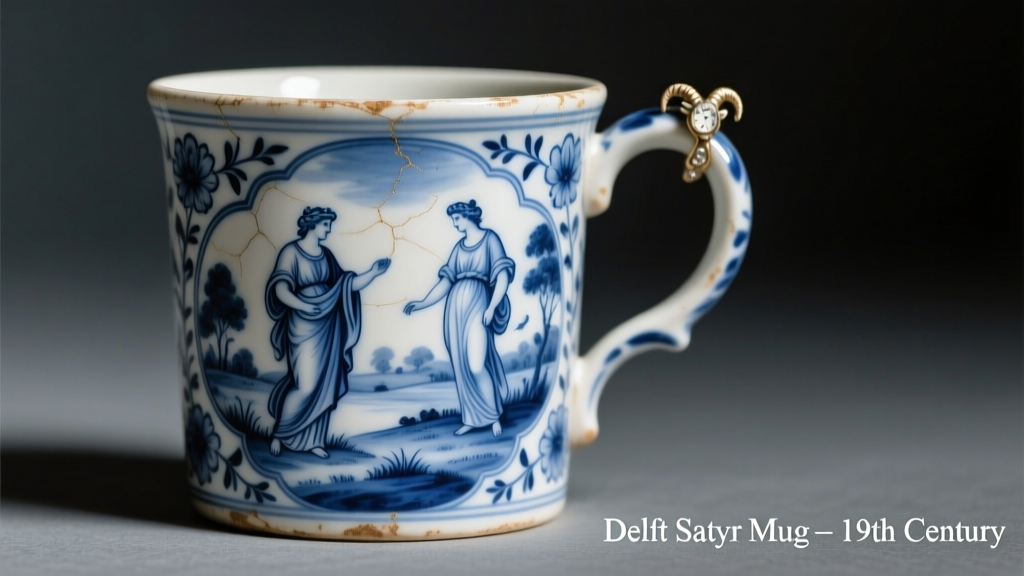
The Delft Mug with Satyr Motif: A 19th-Century Blue-and-White Ceramic Masterpiece — Measuring 4 Inches in Height
Radio Micronic Ruby Transistor: The Forgotten Swiss Pinnacle of Miniature Radio-Watch Engineering
August Brandt Dining Room Furniture: Mid-Century Modern Craftsmanship and Auction Market Realities
Brunswick Panatrope W Radiola: Engineering Grandeur, Acoustic Legacy, and Collector Realities
Nippon Vase with Gold Trim and Cobalt Blue Glaze: Authentication, Provenance, and Market Value of the 3½-Inch Example
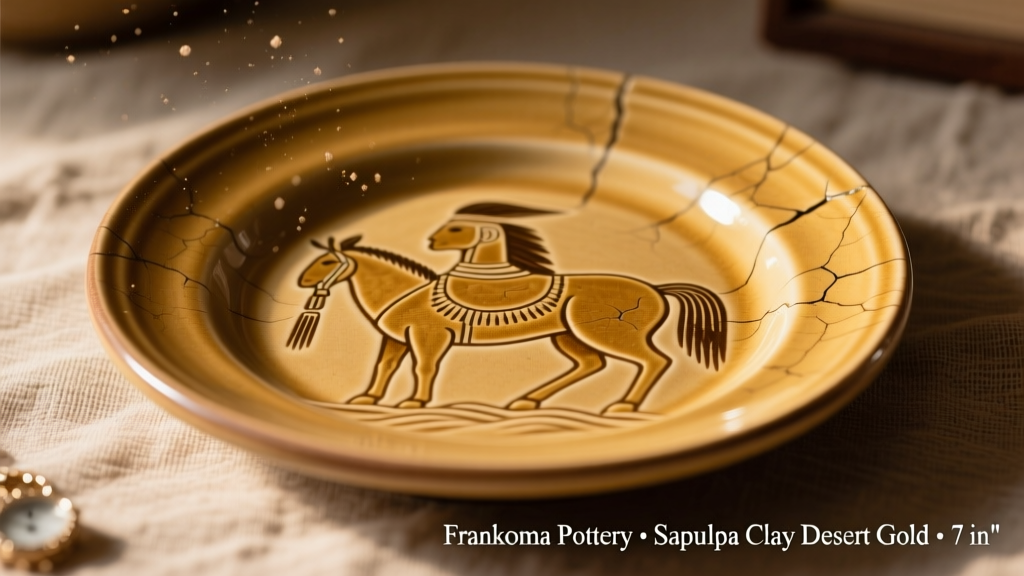
Frankoma Pottery Plainsman Plate: Bread & Butter in Desert Gold — A Collector’s Deep Dive into the Sapulpa Clay Legacy
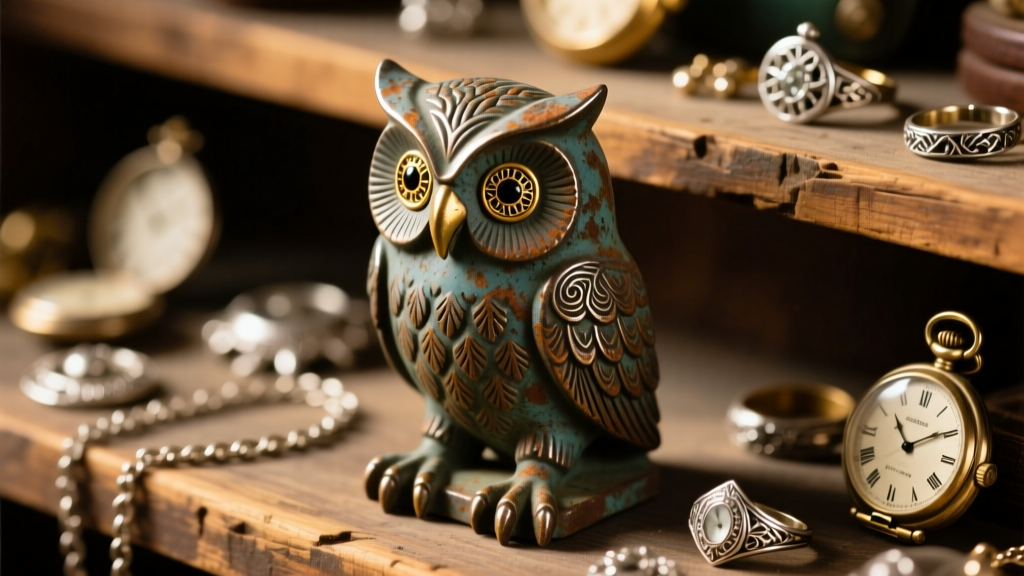
Owl Doorstops in Cast Iron: History, Collectibility, and Authentication of Vintage American Hardware
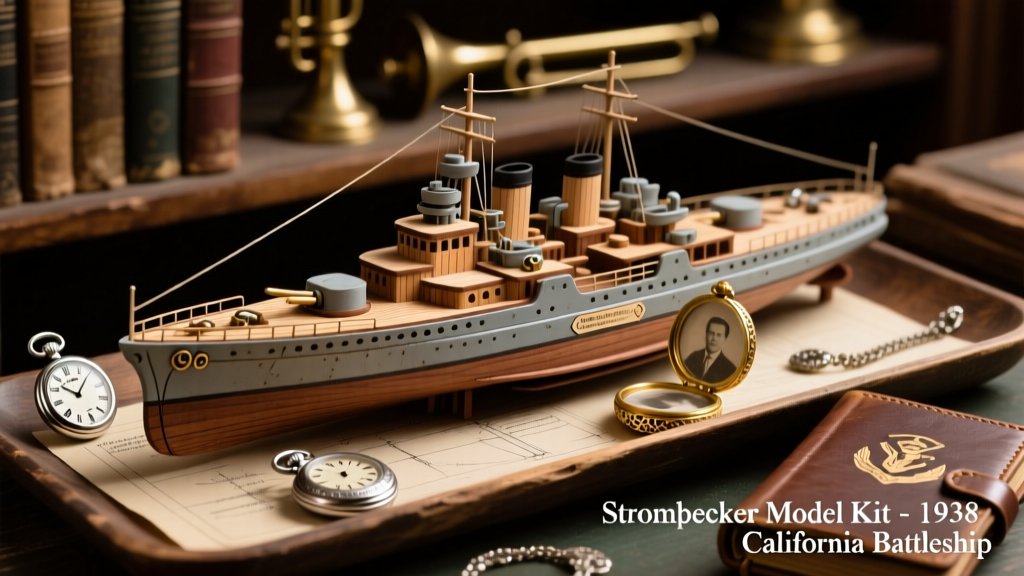
Strombecker’s 1938–1940 California Battleship Model Kit: A Rare Pine-and-Balsa Naval Artifact from Pre-War America