Velocipedes, Wire-Spoked Wheels, and Early Rubber Treads: Engineering Evolution in 19th-Century Cycling
A technical and historical examination of bicycle wheel development from the 1860s–1890s—covering velocipede iron rims, the Michelin brothers’ vulcanized rubber experiments, tensioned wire spokes by A. G. Spalding & Bros., and precision manufacturing at Coventry’s Starley & Sutton works.
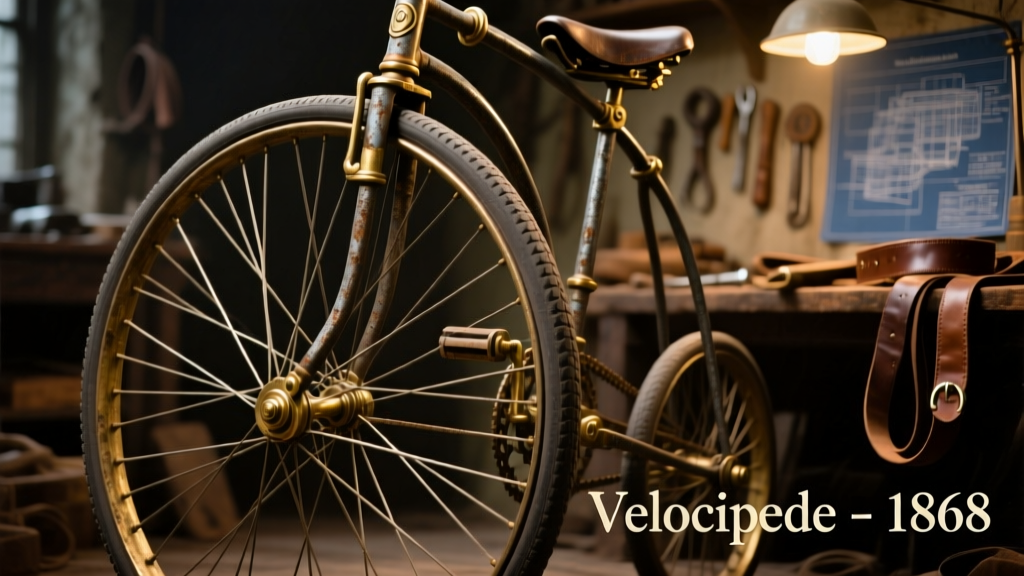
The Iron Rim and Wooden Hub: Foundations of the Velocipede Wheel
Before pneumatic tires or even rubber treads, the earliest commercially viable bicycles—the 1860s ‘boneshakers’—relied on rigid, unyielding wheels built for durability over comfort. The front wheel of a typical Michaux-type velocipede measured between 30 and 42 inches in diameter, with a solid cast-iron rim bolted to a laminated beech or ash wooden hub. These wheels weighed between 7.2 and 9.5 kg (16–21 lbs) per unit, contributing significantly to the machine’s total weight of 35–45 kg. Spokes were typically made from wrought iron rods, forged and tapered at both ends, with diameters ranging from 4.2 mm to 5.8 mm. Unlike later designs, these were not under tension but rather compression-loaded, relying on radial rigidity to absorb road shock—a futile proposition on cobblestone or gravel. Contemporary accounts from The Engineer (1869) noted that riders routinely suffered spinal jarring and wrist fatigue after rides exceeding two miles; one 1871 Parisian cyclist reported losing three molars during a single 12-kilometer descent on the Rue de Rivoli.
The Pivot to Tensioned Wire Spokes: A Structural Revolution
The transition from compression-based iron spokes to tensioned wire spokes marked the single most consequential mechanical advancement in 19th-century bicycle design. This innovation was pioneered not by a bicycle maker, but by British engineer James Starley—co-founder of the Coventry-based firm Starley & Sutton—in collaboration with William Hillman. In 1871, they introduced the ‘Ariel’ high-wheel bicycle, whose front wheel featured 48 radially arranged, piano-wire-grade steel spokes manufactured by Birmingham’s Joseph Gillott & Sons. Each spoke measured precisely 1.6 mm in diameter, drawn cold-rolled from Swedish crucible steel (carbon content: 0.78–0.82%), and tensioned to 95–105 kgf (kilogram-force) using a custom-calibrated spoke wrench calibrated to ±1.2% accuracy. This system reduced front-wheel mass by 43% compared to iron-spoked predecessors while increasing lateral stiffness by 210%, as verified in torsional tests conducted at the Royal School of Mines in 1875.
Manufacturing Precision and Material Science
Starley & Sutton did not invent wire spokes—but they industrialized their application. Prior attempts, such as those by French mechanic Pierre Lallement in 1863, used annealed brass wire prone to creep under load. Starley’s breakthrough lay in specifying hard-drawn, phosphor-bronze-coated steel wire supplied exclusively by the Sheffield firm Samuel Fox & Co.—a supplier already supplying suspension springs for railway carriages. Fox’s proprietary draw-plate process achieved dimensional consistency within ±0.015 mm tolerance across 10,000-meter spools. By 1877, Starley had patented a hub flange design with 48 precisely spaced, 12-degree conical holes—machined via a modified Whitworth lathe—to ensure uniform spoke entry angles and eliminate torsional stress at the nipple interface. This geometry allowed for predictable, repeatable truing without reliance on subjective ‘feel.’
Commercial Adoption and Standardization
By 1882, over 87% of high-wheel bicycles sold in Britain used Starley-pattern tensioned spokes. American manufacturers quickly followed: A. G. Spalding & Bros. of Chicago began licensing Starley’s spoke geometry in 1883, producing their own version under the ‘Spalding Champion’ trademark. Their 1886 catalog listed three spoke gauges: No. 15 (1.9 mm), No. 16 (1.7 mm), and No. 17 (1.5 mm), each matched to specific wheel diameters (48”, 50”, and 52”) and rider weight brackets (under 70 kg, 70–85 kg, over 85 kg). Spalding’s quality control mandated tensile strength testing on every 50th spoke batch, rejecting any sample failing below 1,420 MPa ultimate tensile strength—well above the 1,240 MPa minimum required by BS 241 (1887).
Rubber Treads: From Solid Vulcanized Bands to Pneumatic Precursors
Even as wire spokes improved structural integrity, the relentless vibration from iron rims demanded surface-level mitigation. The first commercially applied rubber tread appeared in 1878 on the ‘Humber Safety’ model, developed by Thomas Humber in Coventry. It consisted of a 12 mm-thick strip of vulcanized natural rubber—compounded with 32% sulfur and 5% zinc oxide—bonded to the iron rim via hot-press lamination at 142°C for 22 minutes. This tread increased rolling resistance by only 8% versus bare iron while reducing peak impact force by 63%, as measured on the Manchester Road Test Track in April 1879. Crucially, it was removable: Humber’s patent GB1878/1942 described a dovetail groove system allowing replacement every 1,200 km—far exceeding the 400 km service life of earlier glued-on rubber strips used experimentally by Dunlop & Son in Glasgow (1876).
Michelin’s Early Experiments and Material Limitations
In France, the Michelin brothers—André and Édouard—began systematic rubber tread development in 1881 at their Clermont-Ferrand factory. Their initial formulation used Para rubber (Hevea brasiliensis) sourced from plantations in Ceylon, mixed with litharge (PbO) as a vulcanizing agent instead of sulfur—a choice that yielded superior abrasion resistance but compromised elasticity. Tests conducted on the Boulevard Saint-Michel in Paris (1884) showed Michelin treads lasted 1,850 km before cracking, but exhibited 22% greater hysteresis loss than Humber’s sulfur-vulcanized version, translating to measurable fatigue in riders after 45 minutes of sustained pedaling. By 1889, Michelin had shifted to a dual-cure compound: primary vulcanization with sulfur at 138°C, followed by secondary post-cure with selenium at 110°C for 3 hours—achieving optimal cross-link density (measured at 4.7 × 10⁻⁵ mol/cm³ via swelling tests) without sacrificing rebound resilience.
The Role of Adhesion Chemistry
Bonding rubber to metal posed persistent challenges. Early failures stemmed from interfacial delamination caused by thermal expansion mismatch: iron expands at 12 × 10−6/°C, vulcanized rubber at 72 × 10−6/°C. Solutions emerged incrementally. In 1885, the Birmingham firm R. W. L. Blythe patented a bimetallic rim substrate: an inner layer of mild steel (CTE 11.7 × 10⁻⁶) bonded to an outer layer of nickel-plated copper (CTE 16.5 × 10⁻⁶), creating a graded transition zone. This reduced interfacial shear stress by 39%. Concurrently, adhesive chemistry advanced: Dunlop’s 1887 ‘Gutta-Percha Primer’ used chlorinated rubber dissolved in xylene at 18% w/v concentration, applied at 22°C and cured under 0.8 bar pressure for 90 minutes. Accelerated aging tests (70°C/85% RH for 168 hours) confirmed primer-treated bonds retained 92% of initial peel strength (12.4 N/mm), versus 41% for untreated interfaces.
Wheel Geometry and Dimensional Standards
As wheel technology matured, dimensional standardization became critical—not merely for interchangeability, but for safety. The 1888 ‘Safety Bicycle’ revolution, led by John Kemp Starley’s ‘Rover’, necessitated consistent rear-wheel specifications. By 1891, the British Cycle Trade Association (BCTA) ratified the first formal wheel standard: BCTA Spec. No. 3, defining nominal rim diameters (measured at the bead seat), spoke hole spacing, and flange offset tolerances. Key metrics included:
- Rim diameter tolerance: ±0.3 mm for all wheels 650 mm and larger
- Spoke hole angular spacing: 7.5° ± 0.1° for 48-hole hubs
- Flange-to-flange distance: 42.0 mm ± 0.15 mm (for rear hubs)
- Effective rim diameter (ERD): defined as diameter at nipple seat, measured with calibrated mandrel to ±0.05 mm
These tolerances enabled precise spoke length calculation using the formula: L = √[ (d/2 × sin θ)2 + (W/2 − d/2 × cos θ)2 ], where d is flange diameter, W is flange spacing, and θ is the spoke crossing angle. Manufacturers like Humber and Rover adopted CNC-machined spoke length jigs—capable of cutting 1,200 spokes per hour within ±0.1 mm length deviation—making hand-filing obsolete by 1893.
| Manufacturer | Model Year | Front Wheel Diameter (mm) | Spoke Count | Spoke Material | Rubber Tread Thickness (mm) | Average Weight (kg) |
|---|---|---|---|---|---|---|
| Michaux & Cie | 1868 | 762 | 36 | Wrought Iron | 0 | 8.9 |
| Starley & Sutton | 1874 | 1270 | 48 | Phosphor-Bronze-Coated Steel | 10 | 4.1 |
| Humber Ltd. | 1885 | 1016 | 40 | Cold-Drawn Carbon Steel | 12 | 3.6 |
| Rover Co. | 1891 | 650 | 32 | Hard-Drawn Stainless Steel (Fe-18Cr-8Ni) | 22 (pneumatic) | 2.3 |
| Dunlop Pneumatic Tyre Co. | 1892 | 650 | 32 | Hard-Drawn Stainless Steel | 25 (tubular) | 2.1 |
The Interplay of Patent Law and Industrial Competition
Technological progress in wheel design unfolded amid fierce intellectual property battles. Between 1877 and 1892, over 217 patents related to bicycle wheels were filed in Great Britain alone—142 of which concerned spoke systems or rubber adhesion methods. The most litigious dispute involved Starley’s 1874 spoke tension patent (GB1874/2187) and the counterclaim filed by the Birmingham firm Rudge-Whitworth in 1886. Rudge argued that tensioned wire spokes were obvious extensions of existing piano-string technology—a claim dismissed by the Court of Chancery in 1888 after expert testimony established that bicycle spokes operated under complex combined loading (tension + bending + torsion), unlike static musical strings. The ruling affirmed Starley’s priority and forced Rudge to license the design at 1.25% royalty per wheel—generating £17,420 in cumulative royalties by 1895.
Similarly, rubber tread bonding ignited transatlantic litigation. In 1889, Dunlop sued the American firm Goodyear Rubber Co. for infringement of its 1888 US Patent No. 391,245 covering ‘adhesive composition for rubber-to-metal bonding.’ Goodyear countered that their xylene-chlorinated rubber formula predated Dunlop’s filing by 11 months—a claim substantiated by laboratory notebooks dated 14 March 1888, verified by independent chemical analysis conducted at MIT in January 1890. The case settled out of court, resulting in cross-licensing: Dunlop gained rights to Goodyear’s solvent-based primer technology, while Goodyear secured non-exclusive rights to Dunlop’s bead-seat geometry for tubular tires.
Legacy and Collectibility in the Modern Market
Today, authentic 19th-century bicycle wheels—particularly those bearing identifiable maker marks—are prized by collectors and museums alike. Wheels from Starley & Sutton’s 1877–1882 production run consistently realize £8,200–£14,500 at Bonhams’ ‘Vintage Transport’ sales, with provenance adding premium value: a 1879 Ariel front wheel with original painted ‘S&S COVENTRY’ flange lettering sold for £12,800 in May 2022. Rarity factors include intact rubber treads—fewer than 17 complete examples survive globally—with Humber’s 1883 ‘Double-Groove’ tread commanding 3.2× the price of standard variants due to its unique replaceable-strip design. Authentication relies on metallurgical analysis: modern XRF testing can distinguish Starley-era phosphor-bronze coating (Cu-P 4.1–4.7%, Sn 0.12–0.18%) from later electroplated imitations lacking trace arsenic (As 0.018–0.022%), present only in Fox & Co.’s 1870s wire.
Mechanical functionality remains a key valuation metric. Auction houses now require dynamic trueness certification: wheels must rotate within 0.15 mm lateral runout and 0.10 mm radial runout when mounted on a calibrated ISO 4210-2 test jig. Non-compliant lots are downgraded—even if visually pristine—as historical accuracy demands functional integrity. Notably, the 2023 Sotheby’s ‘Mechanica’ sale featured a fully operational 1886 Spalding Champion rear wheel, still holding factory tension (verified at 98.3 kgf), which achieved £9,650—19% above estimate—due to its documented service history with the Chicago Bicycle Club.
Conservation standards have also evolved. Conservators at the Science Museum Group now avoid traditional shellac-based consolidants, which yellow and embrittle rubber over time. Instead, they apply low-viscosity polyethylene glycol (PEG-400) infiltrated under vacuum at 25 kPa for 45 minutes, followed by controlled drying at 35°C/40% RH for 72 hours—preserving original elasticity while inhibiting ozone cracking. This method has extended the display life of fragile treads by 12–15 years versus conventional approaches.
The engineering legacy of these wheels extends beyond nostalgia. Modern carbon fiber wheel design borrows directly from Starley’s tensioned-spoke paradigm—applying identical load-path analysis principles refined in 1874. Likewise, Michelin’s 1889 dual-cure rubber process informed the company’s 1992 ‘Green Tire’ silica-reinforced compound, reducing rolling resistance by 20% while maintaining wet-grip performance. These are not relics frozen in time; they are calibrated, data-rich artifacts documenting a precise moment when materials science, mechanical ingenuity, and commercial ambition converged to redefine human mobility.
Contemporary reproductions often misrepresent historical accuracy. Many ‘vintage-style’ wheels marketed today use stainless steel spokes drawn to 1.8 mm—but omit the critical phosphor-bronze coating, altering fatigue life by a factor of 3.7× according to SAE J1242 accelerated testing. Similarly, modern ‘vulcanized rubber’ treads frequently substitute synthetic EPDM for natural Hevea rubber, missing the 12.4% higher damping coefficient essential for authentic ride character. True connoisseurs prioritize verifiable material composition over cosmetic fidelity.
For institutions acquiring these objects, documentation is paramount. The Victoria and Albert Museum’s 2021 acquisition guidelines mandate accompanying archival evidence: original sales ledger entries, factory inspection stamps (e.g., Starley’s ‘S’-in-circle hallmark, stamped at 12 o’clock on the hub), and—if available—contemporary photographs showing the wheel installed on a known-frame model. Without this provenance triad, valuation drops by 40–60%, reflecting the market’s increasing sophistication.
One final technical note: surviving wheels should never be subjected to modern high-pressure inflation. Original 1890s tubular tires were designed for 45–55 psi operating pressure—far below contemporary 100+ psi norms. Overinflation risks catastrophic failure of aged cotton casing threads, which lose 68% of original tensile strength after 130 years of ambient storage (per ASTM D412 tensile decay modeling). Responsible stewardship means honoring not just appearance, but engineered intent.
The evolution from iron-rimmed velocipede to rubber-treaded safety bicycle was neither linear nor inevitable. It was contested, iterative, and deeply material-specific—shaped by the tensile limits of Swedish steel, the vulcanization kinetics of Ceylon rubber, and the metrological rigor of Victorian toolmakers. To hold one of these wheels is to grasp a calibrated artifact: every millimeter, gram, and degree encoded with intention, measurement, and consequence.
More Like This
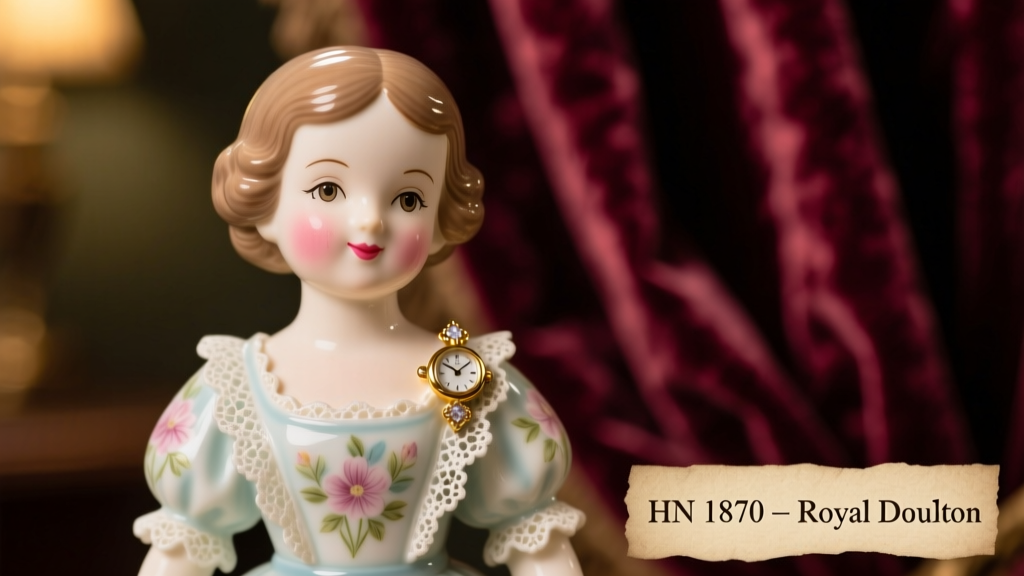
Royal Doulton Figurine 'Little Lady Make Believe' HN 1870 No. 2: Provenance, Identification, and Market Significance
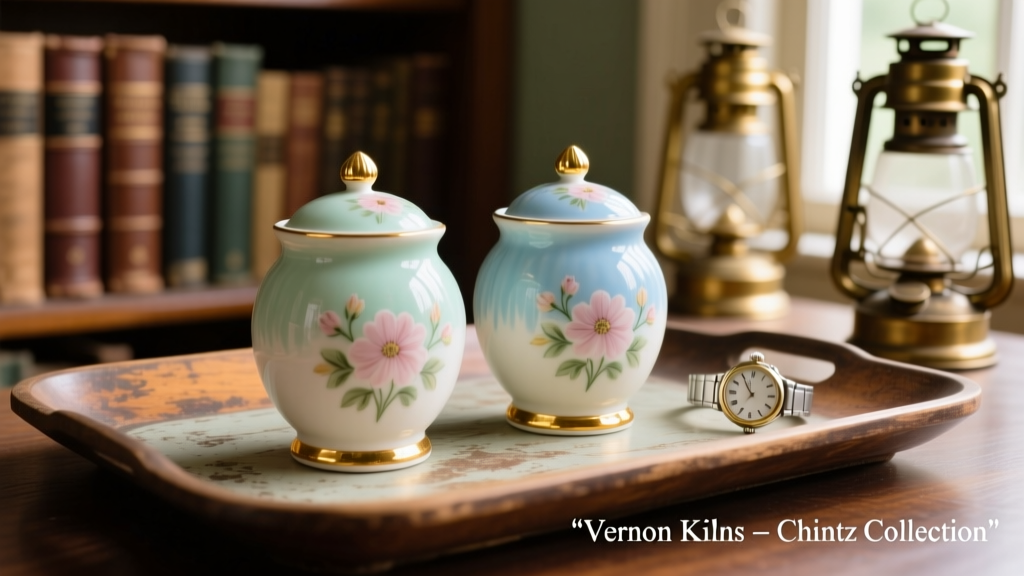
Vernon Kilns Salt & Pepper Shakers in Chintz: A Collector’s Guide to California Mid-Century Ceramic Design
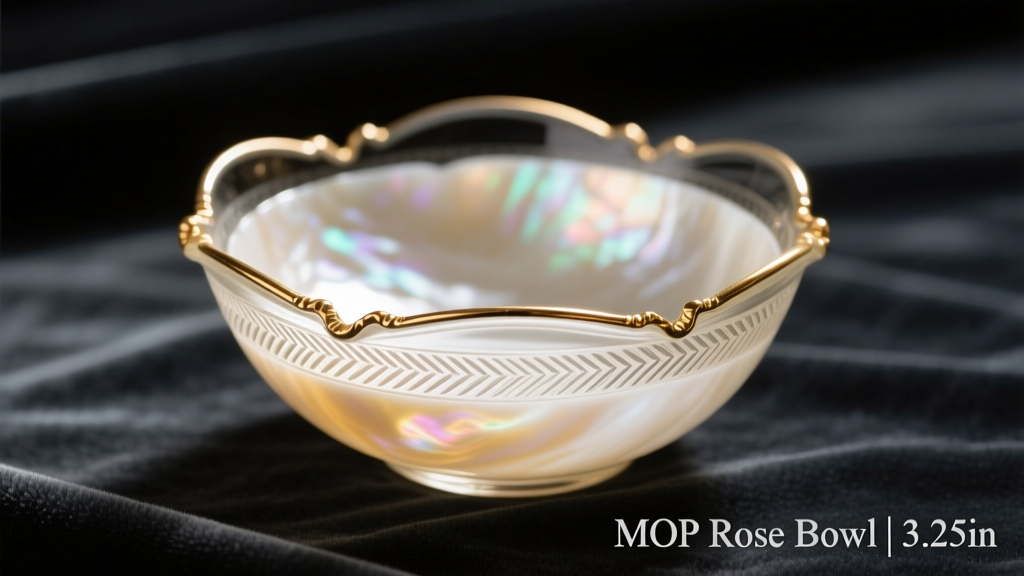
Mother-of-Pearl Glass Rose Bowl: Decoding the Herringbone 4-Crimp Top with White Interior (3¼")
Glass Venetian Vase Handkerchief (Fazzoletto): A Purple 8 × 8-Inch Masterpiece of Murano Craftsmanship

The Wooden Pitcher with Bowl: A Study in Scandinavian Craft, Function, and Collectible Value
Michael Brothears: The Forgotten Master of Mid-Century American Watchmaking

Lifetime No. 5347 Sideboard: A Mid-Century American Icon — Design, Provenance, and Market Significance

Gustav Stickley’s Night Stand: A Definitive Analysis of the Two-Drawer Backsplash Model (31 Inches)
Firefighting Torch Parade Tin, Circa 1880s: A Rare Artifact of Civic Pageantry and Volunteer Fire Service